Tag: Puranas

  • Hindus Yaksha City Yaxchilan In Mexico Mayans and Tamils

    The Americas were the Patalas  as described by Hinduism in the Puranas.

    Yakshas are described as a Superior Benevolent beings and Kubera, God of Wealth, is their Chief.

    The Rishis of India, Narada included were connected to the Mayans.

    Yachilan Lintel.Image.jpg
    Yaxichilan Litel.Yaksha of Hinduism?

    There are two architects in Hindu Puranas.

    Mayasura was an ancient King of India and he was the architect of the Patala Loka.

    The Mayans have a close relationship with this legend.

    Mayans were great Astronomers and were the Hindus.

    I shall be posting on the Astronomy connection between Mayas and the Hindus.

    Yaksha Sclupture India.Image.jpg
    Yaksha Sculpture Saranath,India

    And the The Nagas were also connected to the Mayans.

    To the topic on hand ,

    Yaxchilan pronounced: [ʝaʃtʃiˈlan] is an ancient Maya city located on the bank of the Usumacinta River in what is now the state of Chiapas, Mexico. In the Late Classic Period Yaxchilan was one of the most powerful Maya states along the course of the Usumacinta, with Piedras Negras as its major rival.(wiki)

    ‘Epigraphers think that the ancient name for the city was probably the same as that of its’ realm, Pa’ Chan, meaning “Cleft (or broken) Sky“.
    The lintels of Yaxchilan Temples are decorated with carvings that can be connected to carvings ofYakshas in India.
    In Sanskrit PaShan (पाषण) also means stone and this could be distorted as Pa’Chan.
    In Ancient India, Yakshas(यक्ष) are a class of benevolent spirits or super-natural guards who are the custodians of treasures that are hidden in the earth and in the roots of trees…


    Maya, who built mystical and phenomenal structures for Yakshas and Asuras (demons) was also a Yaksha and we can related him as origin of Mayan civilization, that thrived in mexico and south america.

    Sila (शिला) means stone or stone-sculpture or stone plate in sanskrit.
    Yaksha-Sila (यक्षशिला) are the Yaksha’s stone-lintels in Mexico and thus the name Yaxchilan (distorted version of Yaksha-Sila).
    Yakshas are mentioned in Hindu, Buddhist and Jain traditions.

    There is definitely an important connection between the old Vedic people and Maya-ancestors. The Mayas are actually referred to in The Mahabharata, one of the main Hindu scriptures, as a tribe having left the Indian subcontinent. There are sources who have revealed those people to be the same as the Nagas, one of the oldest Indian tribes recorded. Those Nagas seem to have been a people, later called Danavas, with a capital Nagapur. They are referred to in another main Hindu-scripture, the Ramayana, as belonging to a Naga-Maya tribe, who is said to have transmitted their culture towards Babylonia, Egypt and Greece.” 

    Naga is the Sanskrit word for serpent or snake. The feathered serpent represents the Mayan God Kukulcan or Quetzacoatl, a Christ/Krishna-like figure. In those days the ancient serpent  religion referred to the Serpents of Wisdom. Mercury or Hermes (Narada – see further in text) – his symbol is the caduceus : two serpents entwined around a staff.

    The Tamil Connection.
    “The four principal groups in ancient India were the Asuras (Assyrians or Indus Valley people), Panis (Phoenicians), Yakhus or Yakshas (subjects of Kubera, god of gold and treasure a.k.a. Nagas) and Mayas. We know them today as the Dravidians (Tamils, Malayalam, etc.)

    The non Indus Valley people in ancient days were exceedingly superstitious and fearful of the Mayans. The latter were excellent international shippers and traders, builders and astronomers. Their superstitious enemies thought their accomplishments had to be magic and beyond human ability. They were ultimately driven to Ceylon where they inhabited the province of Maya. Later, they went to the Americas, having been taken there by Kubera and his Yakshas.” [12] ‘Ceylon’ in those ancient times was more than likely the now sunken land to the south of India and connected geographically to the Ceylon of today, Sri Lanka. This is the ancient Tamil country of which today’s Tamil Nadu in India is but a small remnant..

    This is a major key to the understanding of their ancient Sri Lankan origins which, with southern Tamil India, extended much further south, now since sunk hundreds of thousands of years ago.When speaking of their origins, the Mayans (like the Hopis) had several names for their land: Shilanka(Xilanca) – an ancient name of Ceylon (Zeilan-Ka) Shikalanka (Xicalanca) – Ceylon. In Tamil, Shikalam.A Mayan culture hero was Ishbalanka (Xbalanca) meaning in Tamil, “Shiva of Lanka” who was supposed to have made the footprint on top of Adam’s Peak in Sri Lanka; modernly, in line with the prevailing Buddhist culture, it is known as (Gautama) ‘Buddha’s footprint.’Palenque, the ancient capital of Guatamala, Palenke (Palenque) derives from the Tamil Pal-Lanka, meaning “Protectorate of Lanka.” Guatemala (the main habitat of the Mayans) may derive from Gautemala, meaning “A Subsidiary Land of Gautama Buddha.”

    References and Citation.

    Una Vision del Mundo, Prof. G. Zapata Alonzo, Merida, Mexico, 1994, p.71.

    “Ophiucus : Astronomy , Astrology & the “Thirteenth Constellation” in Soul Cycles of the Seven Rays, Phillip Lindsay.
    Will the Maya Prophecy Really Happen? Gene D. Matlock.

    The Mayans

  • Indra’s Amravathi Baikal Ilavarsha In Russia

    I have written on Baikal being of Indian origin and Arkaim being the land of Sanatana Dhrma, not to speak of the fact that the Rig Veda was composed in the Arctic.

    Sudharshana Dweepa of Bharatavarsha.png
    Sudharshana Dweepa of Bharatavarsha.

    The Puranas describe, while talking about the Earth, say that there was Ilavarsha and they talk, along with the Ithihasas Ramayana and Mahabharata bout Amaravathi, the capital of Deva Loka of Indra.

    The huge circle in the above diagram shows the extent of“Sudharshana Dweepa” where the rule of Sanatan Dharma was in place.

    It had Bharath in the South (rectangle area in the bottom of this picture) with

    Hemakuta or Himalayas in its northern limits,

    an intermediary Ilavarsha to the north of Himalayas (noted in dark red square in the middle) and

    a vast Airavatha varsha in extreme north of the Sudharshana dweepa..

    Most of  Russia come Airavatha Varsha  and Airavatha is the name of Indra’s Elephant.

    The Deva territory is close to the North pole where there was sunlight continuously for 6 months and darkness continuously for 6 months. The elephant, Airavatha  in all probability was the Woolly mammoth ,which became extinct about 10,000 years ago. ..

    Part of Uttarakuru Region.

    Uttar kuru means the land of Kuru (a clan) settled in the North. They were the early settlers much before Mahabharatha times (which was about 5000 years ago.) The men and women of that territory were said to have led a free life and mingled with each other as they wished. The probable reason could have been procreation which was minimal owing to climatic conditions that existed there.

    There is an opinion that the name Russia was derived from Rishi varsha.  There is a mention of Rishi varsha in scriptures which goes well with this region. The presence of Devas  in this part of the globe in a distant past had attracted  sages to this place. We have a number of references in Puranas of sages going to the Deva territory. Perhaps their overwhelming presence gave the name Rishi varsha which later became Russia.

    There is yet another root to the name Russia as being derived from the olden name of Volga river. Volga was called as  ‘rasa’ or ‘rosa’. People think that it is derived from the Persian word ‘rana’ or ‘ra’. But this word ‘rasa’ is a straight Sanskrit word meaning essence, juice, nectar, elixir, soup, love, the finest part of anything and so on. This name perfectly fits with the river of fine water quality From the river’s name Rasa, the name Russia was derived.  

    Citation.

    Russia a part of Sanatana Dharma

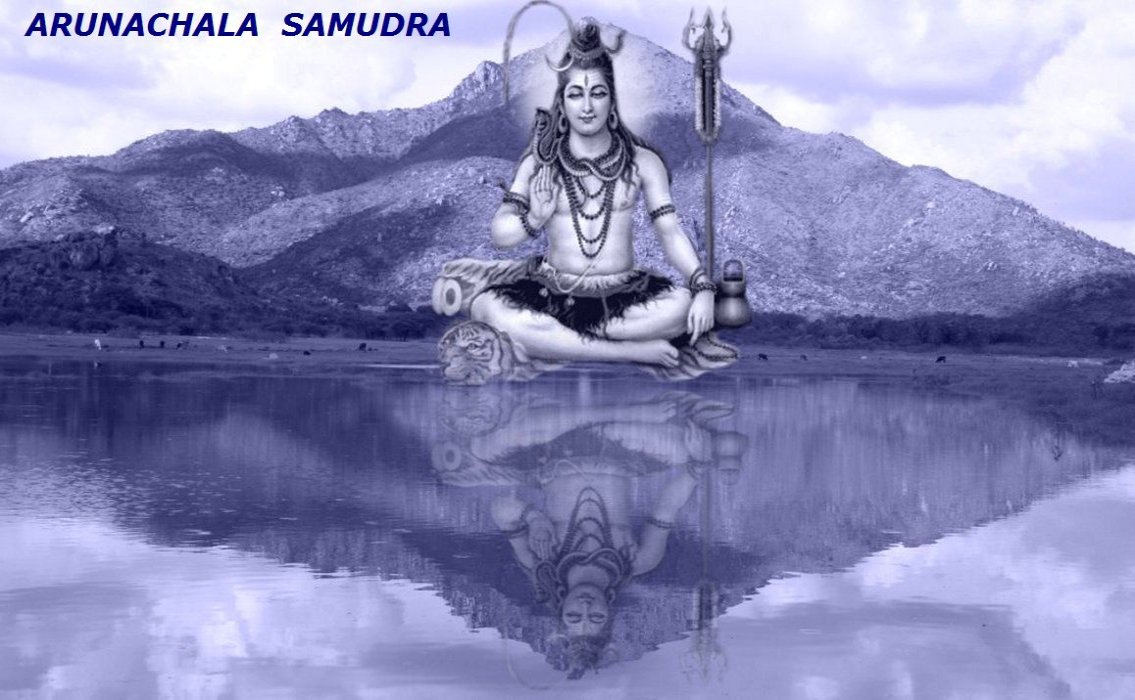
  • Mount Shastha, California,Thiruvannamalai’s Twin

    The Puranas state that the Americas are the Patala.

    I have a detailed post on this, including geographical evidence.

    Ramana Maharishi.jpg
    Bhagawan Ramana Maharishi,Thiruvannamalai

    Taking this further, what the Puranas state being underneath something in Bharatavarsha, it is reasonable to assume to find such objects in the Americas.

    Mount shastha, California,US.jpg
    Aerial photo of Mount Shasta taken while flying from en:San Jose, California to en:Portland, Oregon. “MtShasta aerial” by Ewen Denney – en. Licensed under CC BY-SA 3.0 via Wikimedia Commons – http://commons.wikimedia.org/wiki/File:MtShasta_aerial.JPG#mediaviewer/File:MtShasta_aerial.JPG

    Mayan Civilization falls under this category and I shall be posting on this in detail.

    Sunrise in Arunachala.jpg
    Sunrise in Arunachala, Thiruvannamalai.

    Now to Mount Shastha In California,

    Arunachala is the most sacred holy place of all…….. The Hindu sage Ramana Maharshi said that Arunachala was the top of the spiritual axis of the earth and that there must be another mountain corresponding to it at the opposite side of the globe. I am suggesting that the other mountain is Mt. Shasta. But whether that is true or not, there is no doubt in my mind that Mt. Shasta and Mt. Arunachala are two of the major spiritual power spots of planet Earth“..”-Kenneth Grant,

    “The earlier forms – such as Saste, Shaste, Sasty, Shasty, Chasty, Shasti, Shastika – have given place to the form Shasta…. The origin and meaning of this term are obscure.”

    Referring to the the mid 1850s, Dr. R.B. Dixon says, “After persistent inquiry, the only information secured which throws any light on the matter is to the effect that about forty or fifty years ago there was an old man living in Shasta Valley whose personal name was Shastika (Stisti’ka). He is reported to have been a man of importance; and it is not impossible that the name Shasta came from this Indian (Native American), an old and well-known man…..” Could it then be that the mountain is named after this old, quite possibly learned and wise man. Maybe then he was referred to as Shastri (शास्त्री). In Sanskrit, Shastri means “the wise one or the learned one”.

    Head of the native American Shasta tribe was Sambho.

    The Shasta tribe inhabited the area close to the Klamath River. The Klamath River was known to them by the name ‘Ish-Keesh’ (ईश-कीश). In Sanskrit ‘Ish-Keesh’ (ईश-कीश) translates as ‘Lord Sun’.

    Native Americans also called Mt. Shasta ‘Uytah-Ku’ or ‘White Mountain’, possibly a corruption of ‘Shweta-Naku’ (श्वेता- नाकु) also meaning ‘White Mountain’ in Sanskrit. Another name for Mt. Shasta was ‘waika’, which is also probably a corruption of the Sanskrit ‘shweta’ (श्वेत) meaning ‘white’. In fact, the English word ‘white’ itself derives from the Sanskrit ‘shweta’. Another Sanskrit word also meaning white is ‘shuchi’ (शुचि) and could have been distorted into ‘shasta’ over time.

    Mount Shasta (Karuk: Úytaahkoo or “White Mountain”)[5][6] is a potentially active volcano located at the southern end of theCascade Range in Siskiyou County, California. At 14,179 feet (4,322 m),[1] it is the second highest peak in the Cascades and thefifth highest in California. Mount Shasta has an estimated volume of 85 cubic miles (350 km3) which makes it the most voluminous stratovolcano in the Cascade Volcanic Arc”

    The lore of some of the Klamath Tribes in the area held that Mount Shasta is inhabited by the Spirit of the Above-World, Skell, who descended from heaven to the mountain’s summit at the request of a Klamath chief. Skell fought with Spirit of the Below-World, Llao, who resided at Mount Mazama by throwing hot rocks and lava, probably representing the volcanic eruptions at both mountains.[21]

    Italian settlers arrived in the early 1900s to work in the mills and as stonemasons and established a strong Catholic presence in the area. Many other faiths have been attracted to Mount Shasta over the years—more than any other Cascade volcano.[citation needed] Mount Shasta City and Dunsmuir, California, small towns near Shasta’s western base, are focal points for many of these, which range from aBuddhist monastery (Shasta Abbey, founded by Houn Jiyu-Kennett in 1971) to modern-day Native American rituals. A group of Native Americans from the McCloud River area practice rituals on the mountain.[22]

    Mount Shasta has also been a focus for non-native American legends, centered on a hidden city of advanced beings from the lost continent of Lemuria.[23] The legend grew from an offhand mention of Lemuria in the 1880s, to a description of a hidden Lemurian village in 1925. In 1931, Wisar Spenle Cerve wrote Lemuria: the lost continent of the Pacific, published by the Rosicrucians, about the hidden Lemurians of Mount Shasta that cemented the legend in many readers’ minds”

    Does this Mountain have anything to do with Shastha,Lord Ayyappa?

    I am researching.

    Citation.

    Mount Shastha Twin Mountain of Arunachala, Thiruvannamalai


  • Bilva Dynasty Saka Era Of Hinduism Indonesia

    Indonesia is one of the lands which have been most influenced by Sanatana Dharma.

    The earliest references to Indonesia are found in the Ramayana, Mahabharata, and ancient Tamil Classics dated somewhere between 2000 -3000 BC.

    It is referred as Javakam, named after Java in Indonesia.

    The earliest inscriptions found in the archipelago are known as the Kutai-inscriptions and originate from East Kalimantan, dated around 375 AD when the Kutai Martadipura kingdom ruled. These inscriptions were written in Sanskrit (the liturgical language of Hinduism) using the Pallava script, a script developed in Southern India around the third century AD. In these inscriptions three rulers of Kutai Martadipura are mentioned and they describe a ritual that is characteristic of archaic Hinduism. Approximately one century later, the first (known) stone is inscripted on Java. This inscription, also in Sanskrit, states king Purnavarman of the Tarumanagara kingdom (fourth to seventh century) in West Java and associates him with a Hindu deity (Vishnu). Together, these inscriptions show evidence of major influences from Indian Hinduism within the ruling elites of the first known indigenous ancient kingdoms in the archipelago.

    However, trade contacts between present-day India and the archipelago are known to have been established centuries prior to the Kutai inscriptions. The Strait of Malacca, a sea-lane linking the Indian Ocean with the Pacific Ocean, has been the main shipping channel for seaborne trade between China, India and the Middle East since human memory. A large part of Sumatra’s coastline is conveniently located next to this sea-lane causing merchants between India and China to stop over here or on the other side of the Strait (present-day Malaysia) to wait for the right monsoon winds that would carry them further. But it is assumed that Hinduism and Buddhism were not spread to the archipelago by these Indian traders. More likely, kings and emperors in the archipelago were drawn to the prestige of the Brahmans (the Hindu priestly class which forms the highest ranking of the four social classes). These Brahmans, supposedly, introduced a religion to the archipelago which enabled the indigenous kings to identify themselves with a Hindu deity or a Buddhist Bodhisattva (an enlightened mystical being), thereby replacing the ancestor worship that was adhered to previously. This new religious doctrine, therefore, implied more prestige for the kings. Empires in the archipelago that copied such Indian concepts were found on the islands of Kalimantan, Java, Sumatra and Bali….


    Tamil Kings have been conquering Indonesia quite frequently and have established their rule.


    The Mahabajit(Mahpahit) Dynasty of Indonesia ruled Indonesia from 1293 for two hundred Years.

    Suhita,Queen of Indonesia.jpg
    “Suhita” by Gunawan Kartapranata – Own work. Licensed under CC BY-SA 3.0 via Wikimedia Commons – http://commons.wikimedia.org/wiki/File:Suhita.jpg#mediaviewer/File:Suhita.jpgSuhita

    The name Majabahit means the Bilva Tree,Aegle marmelos.

    ‘The name Majapahit derived from local Javanese which means “bitter maja“. German orientalist Berthold Laufer suggested that maja came from the Javanese name of Aegle marmelos, an Indonesian tree.The name originally refer to the area in and around Trowulan, the cradle of Majapahit, which linked to the establishment of a village in Tarik timberland by Raden Wijaya. It was said that the workers that clearing the Tarik timberland, encountered some bael trees, as they consumed the bitter-tasted fruits that subsequently become the village’s name. In ancient Java it is common to refer the kingdom with its capital’s name. Majapahit (sometimes also spelled Mojopait) also known in other name; Wilwatikta, although sometimes the native refer their kingdom as Bhumi Jawa or Mandala Jawa instead.”

    The Bilva Leaves are used for the worship of Lord Shiva.

    Bilva leaves , like Tulsi can be used repeated for Pooja  after washing them.

    Indonesia abounds in Bilva and Rudraksha Trees.which, again, is used for Shiva worship.

    The names of the Indonesian Rulers have Sanskrit base.

    Gito[padesha form Mahbharata-Monument in Jakarta.jpg
    Mahabharata Monument in Jakarta, Indonesia Mahabharata Monument in Jakarta, Indonesia
    Some of them are,

    Firts King Jayavardana, one who is adorned by Victory.

    Names of His wives,

    ThribhuvaneswariNarendrathuhita,

    Prahyabramita,

    Gayatri Rajapatni.

    Look at these names in the Image below.

    Mahpahit Geneology Chart.gif
    Mahpahit Geneology Chart.

    The Mahabharata of India has a different version of the Indian Epic.

    Indonesia has a different version of the Mahabharata from the Indian version of Mahabharata in many parts of the story. The Mahabharata was translated into (old) Javanese under the reign of king Dharmawangsaof Medang (r. 990-1006).

    It is also known as ‘Bharat Yudha’ etc. and is often portrayed through the form of Javanese Wayang. A Characteristic feature of the Indonesian Mahabharata is that it gives more autonomy to other characters apart from the main characters – Krishna, Arjuna, Bhisma, Duryodhana. In the Indonesian version of Mahabharata more is said about the character of Shalya.”

    And these Kings followed th Indian Calendar ‘Saka’

    Citation.

    Indonesia


  • Gaya In Greece Palasha Dweepa Greeks Ancestor Pelasgus From India

    There is a sloka for the Palnet Ketu in Hinduism,

    ‘Palasa Pushpa Sanakaasam Thaarakarka Mastakam,

    Roudram Roudraatmakam Goram Tham ketum Pranamaamyakam’

    This is a Navagraha Mantra dedicated to Ketu.

    The Flower palasa is dedicated to him.

    ‘Butea Frondosa’ is the botanical name for what is known in Sanskrit as ‘Palasha’ (पलाश) tree, commonly called ‘the Flame of the Forest’ in English.

    Palasha Flower.jpg
    Palasha’ (पलाश) The Sanskrit name for ‘Butea Frondosa’ The Greek name ‘Pelasagus’ originates from Sanskrit ‘Palasha.

    The Puranas while describing the Earth, state that there is an Island Palasa dweepa.

    Petra Jordan Temple.jpg
    Petra Jordan Shiva Temple? The Petra Temple in Jordan has also been identified as Rekem-Gaya which means ‘Red-Gaya
    https://ramanisblog.in/2014/02/16/petra-jordan-ancient-shiva-temple/

    In Greek history, Pelasgus was the ancestor of the Pelasgians, a population that were the ancestors of the Greeks – that is they preceded the Greeks and were the source of all knowledge that one sees later in the so-called Greek civilization.

    There is no translation for the name ‘Pelasgus’ in Greek , because Pelasgians spoke a language that pre-dated Greek.

    “”Godlike Pelasgus, on the mountain chase,
    The sable (black) earth gave forth her mortal race.

    The couplet is originally in Greek, and Asius uses the Greek word ‘gaia’ in the couplet which later interpreters translated as ‘earth’. But Edward Pococke in his book ‘India in Greece’ written in 1851 AD clarifies. He says that it was the word ‘Gaya’ that was tweaked by interpreters into ‘gaia’ in Asius’s work – it was Gaya (in Bihar in India) that ‘gave forth Pelasgus its race’.-Asius,Greek Poet ,700 BC.

    The word ‘Gaya’ that was tweaked by interpreters into ‘gaia’ in Asius’s work – it was Gaya (in Bihar in India) that ‘gave forth Pelasgus its race’

    “It is entertaining to view the process by which the Greeks first misunderstood a Pelasgic term, then fitted out a tale upon on their own translation of what they imagined to be Greek….”

    “The history and origin of ancient Greece were not clearly written down by the Greeks themselves, but ancient Indian writings such as the Puranas, the Mahabharata, and the Rajput genealogies may hold keys to solving some of these questions.”-Coen Vonk.

    The ancient Sanskrit texts Mahabharata, YoginiTantra, and the Vayu Purana mention the city of ‘Gaya’ in Bihar, then called ‘Pelasa’. According to the Vayu Purana the city of Gaya was named after an asura by the name ‘Gayasura’ – who practiced asceticism by praying to God Vishnu. He chanted and sang praises in the name of Vishnu, hence ‘geya’ (गेय) or ‘song’ – from Sanskrit ‘gai’ (गै), to ‘sing’, ‘chant’, or ‘sing praises’.

    ‘a race that in its slow migration towards the West took along with itself the glories of ancient Gaya, they have left their footprints on way. For en-route in their journey is the temple of Rekim-Gaya! The original Aramaic texts (Aramaic was the language that Jesus Christ spoke) say that the name of Petra, the ancient temple of Jordan, was Rekem-Gaya. ‘Rechin’ Gaya translates as Red-Gaya from Sanskrit – ‘rechin’ (रेचिन्) means ‘red’ as against the ‘black’ Gaia that Asius, the Greek poet wrote about in his verses on Pelasgus.

    Pococke traces the exodus of a huge number of people from Bihar (then called by various names including Pelasa and Magadh) towards the Western reaches of the world. In fact, he traces the name Macedonia to Magadha via Makadonia.

    The Greek language is a derivation from Sanskrit, therefore Sanskrit speaking people, i.e Indians must have dwelt in Greece, and the dwelling must have preceded the settlement of those tribes which helped to produce the corruption of the old language; or in other words, the people who spoke that language – i.e., the Indians, must have been the primitive settlers, or at least, they must have colonized the country so early, and dwelt their so long, as to have effaced all dialectic traces of any other inhabitants…

    References.

    Mysteries of Ancient Greece, Coen Vonk.

    India In Greece by Edward Pococke (1851)


    Citation.

    Vedic Cafe.

    Petra Jordan Ancient Shiva Temple?

    1. Varaha Avatar Validated By Continental Shift Triassic Animals