Tag: Navaratri Pooja

  • Devi Mahatmiyam Durga Sapthasati Parayana Procedure

    The three forms of the female principles embodied in Durga, Lakshmi and Sarasvati are the expressions of Valour,Wealth and Knowledge needed for the Humans.

    All the three have to stay together if one were to lead a successful Life.

    Hindu festivals represent these principles and they remind one of these Life’s Truths.

    Durga represents Valor, Lakshmi wealth and Sarasvati Knowledge.

    The Nine days’ festival, Navaratri represents this.

    I have written articles on the procedure Mantras and dates assigned to each Goddess.

    There is a sacred text, called Devi Mahatmiyam in Markandeya Purana which delivers the results  equivalent  to accruing by reciting all the mantras of the three Devis.

    Durga, Lakshmi, Sarasvathi.jpg
    Durga, Lakshmi, Sarasvathi.

    The Devi (mother Goddess) killed Madhu and Kaidabha as Vishnu Maya (Thamasic-base), killed Mahishasura as Lakshmi (Rajashic form-materialistic) and killed Shumbha and Nishumbha in the form of Goddess Saraswathi (Sathvic-spiritual).

    All the three are combined in this Stotra.

    It consists of Chapters 74 to 86 (13 chapters) of the Markandeya Purana and has 700 stanzas.
    This is known as Devi Mahatmya in South India, Chandi in West Bengal and as Durga Sapthasathi in the northern parts of the country including Varanasi.

    How to do Devi Mahatmiya Parayan

    There are two methods.

    Trayangam is a method in which we need to chant three prayers – Devi Kavacham, Argala Stotram and Devi Keelakam followed by Navakshari Mantram.

    Navangam is a method for which nine prayers are recited prior of starting reading the book. Navangam stotrams are: Devi Nyasa, Devi Avahana, Devi Namani, Argala Stotram, Keelaka Stotram, Devi Hrudaya, Dhala, Devi Dhyana and Devi Kavacha.

    As per the prescribed methods in ancient scriptures, Devi Mahatmya should be read in one sitting. After finishing the recital of Devi Mahatmya, one should chant the Devi Suktam (slokas 7 to 36 of Chapter 8).

    Devi Saptashati Parayana in 3 days & 7 days

    Apart from one sitting recital, devotees read Devi mahatmya for three consecutive days: Prathama Charitra or 1st Chapter on first day, Madhyama Charitra (2, 3, 4 chapters) on 2nd day, and Uttama Charitra (5-13 chapters) on third day.

    Some devotees also read Devi Mahatmya in 7 days. They chant 1st Chapter on first day, 2-3 chapters on 2nd day, 4th chapter on 3rd day, 5-8 chapters on 4th day, 9-10 chapters on 5th day, 11thchapter on 6th day and 12-13 chapters on 7th day.

    Each chapter should be read in single sitting. Due to any reason, Parayana is stopped in between a chapter; the whole chapter should be read again.

    The order of reciting Durga Saptashati Parayana daily is: Trayanga Mantra, Devi Mahatmya text followed by Devi Suktam.

    Many devotees read Durga Saptashati during Navratri Durga Puja 9/10 days.. Here is the procedure to read Devi Mahatmyam during Navratri

    How to read Durga Saptashati (Devi Mahatmyam) during Navratri festival

    1st day: Chapter 1 (Madhu kaitabha samhaaram)

    2nd day: Chapter 2, 3 and 4 (Mahishhasura samhaara)

    3rd day: Chapter 5 and 6 (Dhuumralochana vadha)

    4th day: Chapter 7 (Chanda Munda vadha)

    5th day: Chapter 8 (Rakta biija samhaara)

    6th day: Chapter 9 and 10 (Shumbha Nishumbha vadha)

    7th day: Chapter 11 (Praise of Narayani)

    8th day: Chapter 12 (Phalastuti – reciting merits or benefits)

    9th day: Chapter 13 (Blessings to Suratha and the Merchant)

    10th day: Chapter 14 (Aparadha Kshamaprarthana) on 10th day

    You can also complete the recital on 9th day by chanting Devi Aparadha Kshama Prarthana Stotram on 9th day itself.

    You should read Siddha Kunjika Stotram after completing the recital of every chapter.

    Siddhakunjika Stotra.

    *

    This manthra is of very great power and should not be chanted unless, it is taught by a Guru.

    The other is Navangam, where nine prayers are recited before starting reading of the book. They are chanting of 1. Nyasa, 2. Avahana, 3. Namani, 4. Argala, 5. Keelaga, 6. Hrudhaya, 7. Dhala, 8. Dhyana and 9. Kavacha.

    It is recommended that the entire Devi Mahatmya should be read in one sitting. After completion of the reading it is necessary to chant the Devi Suktham consisting of the slokas seven to 36 of chapter 8, is to be chanted. If the Guru has taught the navakshari manthra, then it should also be meditated up on.

    Citation.

    http://stotraratna.sathyasaibababrotherhood.org/pm1.htm

    Devi Mahatmiyam Sanskrit Text

    Devi Mahatmiyam English

  • Sri Vidya Tripura Sundari Upasna Maha Shoda  Nyasa

    Sri Vidya Tripura Sundari Upasna Maha Shoda Nyasa

    Devi is worshiped in the 51 Aksharas.

    I have posted an article on this in detail.

    The 51 Shakti peetas correspond to these letters.

    Soundaryalahari of Adi Shankaracharya has these letters embed in the slokas.

    Now there is the Shodha Nyasa, six fold purification of the Body and the invoking of the Goddess in the Human Body.

    Nyasa is a ritual of the Hindus.

    While performing Pooja, not to be confused with stotra or Parayana, one must have the Nyasa done.

    Nyasa is a ritual where the individual touches various parts of the body with specific Mantras to purify these parts.

    In Tripurasundari Upasana, Sri Vidya  as well, the performing of the ritual is mandatory.

    I have been hunting down for information on these texts and I mentally vowed six months ago. to start writing on Shakti again, I have published quite a few articles on on Shakti and Shakthi Peetha.

    I have found some information on these subjects which I am sharing.

    This information is rare and is not easily available.

    This information is copyrighted up to 2007.

    I am posting this information with a Link to the site in Public interst.

    If the site owner objects to this, I may have to remove this.

    I suggest, those who are interested , to have this material printed or saved in their system.

    Thou art the body of Shambhu with two breasts which are the Sun and Moon. Oh, Bhagavati, thou art the all pervading stainless one; therefore the connection between each, of thee as part and whole is the nature common to both, the same lordship and supreme bliss – Wave of Bliss (Woodroffe’s translation)

    The Sodha Nyasa (sixfold nyasa), which is part of the daily worship of Tripurasundari, is here for the first time translated into English, from the work called Nityotsava, itself a commentary on the famous Kalpasutras of Parashuram.

    Parashurama was a brahmana initiated by Lord Dattatreya into the worship of Shri Shri Mahatripurasundari Lalita Devi. The Kalpasutras provides a compendium for the worship of that Devi. Various forms of nyasa, which means ‘placing’, enter into this and all other forms of tantrika puja. The dialogue between Parashuram and Dattatreya is contained in the Tripura Rahasya, a wonderful work which is available in an English translation published by the Sri Ramana Ashram in Tiruvannamalai.

    The Sodha Nyasa in which Devi outspreads as Ganeshas, planets, 27 nakshatras (asterisms), yoginis of the seven dhatus or bodily elements of ayurveda, sidereal zodiac, and sacred sites (pithas) is described in very many agamas such as Vamakeshvara Tantra, Gandharva Tantra, Jnanarnava, The 1,000 Names of Lalita, etc.. It is described in detail in the Yogini Hridaya, itself said to form the latter part of the Vamakeshvara Tantra.

    The ritual centres the worshipper as one with She whose true nature is Chit or Consciousness Shakti. She is triple in Her manifestation as the three gunas — represented by Her three Saktis of Iccha (will), Jnana (knowledge), and Kriya (action) — and rays out as the 15 Nityas or Eternities who express the phases of the Moon or Candrakalas, and form the body of time.

    According to the tradition, Shiva, without characteristics is awareness. And Shiva is one with Shakti. Her parts as represented by the Shodha Nyasa amount to 156, and comprise all visible manifestation. She is Maya Shakti, the Matrika or letters of the alphabet Devi, the heap of words and letters which delude men and women, and also those letters transformed by awareness into mantra.

    Her yantra is the Shri Chakra, which contains all letters within its heap of petals, lotuses and lines. This yantra, which is a diagrammatic representation of the human body, is within the wheel of time.

    Worship via this ritual is intended to assist a sadhvini or sadhaka to realise her or his oneness with the Shakti, with the yantra, and with time itself in all its manifestations.

    Mahashodha Nyasa

    In this wonderful abbreviated six way nyasa, obeisance to Dakshinamurti, the Rishi, on the head; to the metre Gayatri in the mouth; to the Devi Mahatripurasundari, to Ganeshas, Planets, (27) Sidereal Constellations, Yoginis, 12 Rashis, the Sacred Sites (pithas) in the heart; obeisance to the application of this Shri Vidya limb nyasa, in the palm of the hand.

    Aim Hrim Shrim Am Kam Kham Gam Gham Nam Am Aim obeisance to the thumbs
    Aim Hrim Shrim Im Cam Cham Jam Jham Nam Im Klim, index fingers
    Aim Hrim Shrim Um Tam Tham Dam Dham Nam Um Sauh, middle fingers
    Aim Hrim Shrim Em Tam Tham Dam Dham Nam Aim Aim, ring fingers
    Aim Hrim Shrim Aum Pam Pham Bam Bham Mam Aum Klim, little fingers
    Aim Hrim Shrim Am Yam Ram Lam Vain Sam Sam Sam Ham Lam Ksham Am Sauh, front & back of hand
    (similarly for heart &c. nyasa)

    Meditation
    Radiant as 1000 rising suns, with full, magnificent breasts, wearing red garlands and clothes, smeared with red unguent, with red gems and red ornaments, holding goad, noose, bow and arrows in Her radiant four hands, with three beautiful eyes, with a gold ornament on Her head — thus we meditate on the Supreme Sundari, consisting of Ganeshas, Planets, (27) Nakshatras, (6) Yoginis, (12) Rashis, Pithas, and the letters of the alphabet.

    Thus is declared the collective form of the Shri Devi, together with Her weapons and instruments of action. Now meditate on Ganeshas, the first of the individual forms:

    Ganesha Nyasa

    Meditation: resembling the newly risen Sun, with an elephant’s face, soft eyes, holding goad, noose, and granting boons, with Shakti, of vermilion lustre, decorated with all manner of gems. One of (her) hands holds a lotus, the other touches (Ganesha’s) lingam. His trunk is coiled to the left. When meditating, the noose comes first. The Shakti holds a lotus in Her left hand, and Her right hand embraces (Ganesha’s lingam).

    Having meditated thus, nyasa should be done in the places where the letters of the alphabet reside, prefixing each with three syllables thus:

    Aim Hrim Shrim Am obeisance to the Lord of Obstacles with Shri. On head.
    Aim Hrim Shrim Am to the King of Obstacles with Hri. On forehead.
    Aim Hrim Shrim Im to the Guide with Tushti. On right eye.
    Aim Hrim Shrim Im to the Most Auspicious with Shanti. On left eye.
    Aim Hrim Shrim Um to the Heart of Obstacles with Pushti. On right ear.
    Aim Hrim Shrim Um to the Maker of Obstacles with Sarasvati. On left ear.
    Aim Hrim Shrim Rm to the Chief of Obstacles with Rati. Right nostril.
    Aim Hrim Shrim Rm to the Chief of Hosts with Medha. On left nostril.
    Aim Hrim Shrim Lm to the One Tusked with Kanti. On right cheek.
    Aim Hrim Shrim Lm to the Two Tusked with Kamini. On left cheek.
    Aim Hrim Shrim Em to the Elephant Faced with Mohini. On upper lip.
    Aim Hrim Shrim Aim to the Guileless with Jata. On lower lip.
    Aim Hrim Shrim Om to the One with Hair Twisted like a Cowrie with Tivra. On upper teeth.
    Aim Hrim Shrim Aum to the Long Faced with Jvalini. On lower teeth.
    Aim Hrim Shrim Am to the One with Pointed Ears with Nanda. On tongue.
    Aim Hrim Shrim Ah to the One with Bull as Banner with Surasa. On throat.
    Aim Hrim Shrim Kam to the Lord of Numbers with Kamarupini. On right shoulder.
    Aim Hrim Shrim Kham to Indra’s Elephant with Subhra. On right elbow.
    Aim Hrim Shrim Gam to the One with Ears Like Winnowing Baskets with Jayini. R. wrist
    Aim Hrim Shrim Gham to the three Eyed One with Satya. Base of right fingers.
    Aim Hrim Shrim Nam to the Pot Bellied One with Vignneshi. On right finger tips.
    Aim Hrim Shrim Cam to the Great Noisy One with Surupa. Left shoulder.
    Aim Hrim Shrim Cham to the four Armed Form with Kamada. Left elbow.
    Aim Hrim Shrim Jam to Sadashiva with Madavihvala. Left wrist.
    Aim Hrim Shrim Jham to the Gladdening One with Vikata. Left root of fingers.
    Aim Hrim Shrim Nam to the Ugly Faced with Puma. Left finger tips.
    Aim Hrim Shrim Tam to the Beautiful Faced One with Bhutida. Right thigh.
    Aim Hrim Shrim Tham to the Delightful One with Bhumi. Right knee.
    Aim Hrim Shrim Dam to the One Footed with Shakti. Right ankle.
    Aim Hrim Shrim Dham to the Dual Tongued with Rama. Right foot.
    Aim Hrim Shrim Nam to the Hero with Manushi. Right toes.
    Aim Hrim Shrim Tam to the Warrior with Makaradhvaja. Left thigh.
    Aim Hrim Shrim Tham to the Peaceful Faced One with Virini. Left knee.
    Aim Hrim Shrim Dam to the Boon Giver with Bhrukuti. Left ankle.
    Aim Hrim Shrim Dham to the Left Hand God with Lajja. Left foot.
    Aim Hrim Shrim Nam to the One with Crooked Trunk with Dirghagona. Left toes.
    Aim Hrim Shrim Pam to the One with two Tusks with Dhanurdhara. Right side.
    Aim Hrim Shrim Pham to the Leader of the Army with Yamini. Left side.
    Aim Hrim Shrim Bam to the Village Lord with Ratri. Back.
    Aim Hrim Shrim Bham to the Intoxicated One with Chandrika. Navel.
    Aim Hrim Shrim Mam to the Clear Headed with Sashiprabha. Belly.
    Aim Hrim Shrim Yam to Intoxication’s Vehicle with Lola. In heart.
    Aim Hrim Shrim Ram to the Ascetic with Chapala. Right collar bone.
    Aim Hrim Shrim Lam to the One with Shorn Hair with Riddhi. Shoulder hump.
    Aim Hrim Shrim Vam to the One with a Tusk with Durbhaga. Left collar bone.
    Aim Hrim Shrim Sham to the Pre-eminent One with Subhaga. Heart to right palm.
    Aim Hrim Shrim Sham to the Bull Bannered with Shiva. Heart to left palm.
    Aim Hrim Shrim Sam to the Greedy One with Durga. Heart to right foot.
    Aim Hrim Shrim Ham to Ganesha with Kali. Heart to left foot.
    Aim Hrim Shrim Lam to the One like Thunder with Kalakubjika. Heart to genitals.
    Aim Hrim Shrim Ksham to the Lord of Obstacles with Destroyer of Obstacles. On heart.

    Planet Nyasa

    Meditation: the Sun &c., in the colours red, white, red, dusky, yellow, pale yellow, black, purple, smoky. Of the form of Kamadeva, the Lord of Love, ornamented with celestial gems. His left hand rests on his left thigh, and his right hand shows the sign of giving. Meditate also on the Shaktis, with their hands dispelling fear and granting boons. Each one is highly appealing, and decked with every kind of jewel. Having meditated in this way:

    Aim Hrim Shrim Am Am Im Im Um Um Rm Rm Lm Lm Em Aim Aum Om Am Ah obeisance to the Sun with Ranuka. In heart.
    Aim Hrim Shrim Yam Ram Lam Vam to the Moon with Amrita. Centre of brow.
    Aim Hrim Shrim Kam Kham Gam Gham Nam to Mars, with Dharma. In eyes.
    Aim Hrim Shrim Cam Cham Jam Jham Nam to Mercury, with Yashasvini. Ears.
    Aim Hrim Shrim Tam Tham Dam Dham Nam to Jupiter, with Shankari. Throat.
    Aim Hrim Shrim Tam Tham Dam Dham Nam to Venus, with Jnanarupa. In heart.
    Aim Hrim Shrim Pam Pham Bam Bham Main to Saturn, with Shakti. In navel.
    Aim Hrim Shrim Sham Sham Sam Ham to Rahu, with Krishna. Mouth.
    Aim Hrim Shrim Lam Ksham to Ketu, with Dhumra. Genitals.

    Nakshatra Nyasa

    Meditation: as flame, like the fire of All Destroying Time, their hands dispelling fear and granting boons, all ornamented with jewels. Bow to Ashvini first. Having meditated thus:

    Aim Hrim Shrim Am Am obeisance to Ashvini. Forehead.
    Aim Hrim Shrim Im to Bharani. Right eye.
    Aim Hrim Shrim Im Im Urn to Krittika. Left eye.
    Aim Hrim Shrim Rm Rm Lm Lm to Rohini. Right ear.
    Aim Hrim Shrim Em to Mrigasiras. Left ear.
    Aim Hrim Shrim Aim to Ardra. Right nostril.
    Aim Hrim Shrim Om Aum to Punarvasu. Left nostril.
    Aim Hrim Shrim Kam to Pushya. Throat.
    Aim Hrim Shrim Kham Gam to Ashlesha. Right shoulder.
    Aim Hrim Shrim Gham Nam to Magha. Left shoulder.
    Aim Hrim Shrim Cam to Purvaphalguni. Back.
    Aim Hrim Shrim Cham Jam to Uttarphalguni. Right elbow.
    Aim Hrim Shrim Jham Nam to Hasta. Left elbow.
    Aim Hrim Shrim Tam Tham to Chitra. Right wrist.
    Aim Hrim Shrim Dam to Svati. Left wrist.
    Aim Hrim Shrim Dham Nam to Vishakha. Right hand.
    Aim Hrim Shrim Tam Tham Dam to Anuradha. Left hand.
    Aim Hrim Shrim Dham to Jyeshta. Navel.
    Aim Hrim Shrim Nam Pam Pham to Mula. Pelvis.
    Aim Hrim Shrim Bam to Purvashadha. Right thigh.
    Aim Hrim Shrim Bham to Uttarashadha. Left thigh.
    Aim Hrim Shrim Mam to Shravana. Right knee.
    Aim Hrim Shrim Yam Ram to Dhanishta. Left knee.
    Aim Hrim Shrim Lam to Shatataraka. Right ankle.
    Aim Hrim Shrim Vam Sham to Purvabhadrapada. Left ankle.
    Aim Hrim Shrim Sham Sam Ham to Uttara Bhadrapada. Right foot.
    Aim Hrim Shrim Lam Ksham Am Ah to Revati. Left foot.

    Yogini Nyasa

    Meditation: In the Vishuddha chakra in the cavity of the throat, in the 16 petal lotus, is Dakini, rosy, three-eyed, armed with club, sword, trident and shield, with 1 face, striking the ignorant with terror, always fond of milk food, presiding over the skin, whose form is surrounded by very beautiful Amrita &c., worshipped by auspicious holy heroes. Having meditated thus:

    Aim Hrim Shrim Dam Dim Da Ma La Va Ra Yum obeisance to Dakini.
    Aim Hrim Shrim Am Am Im Im Um Um Em Em Lam Lim Em Aim Aum Om Am Ah, Being of Skin, protect! protect me! Obeisance to you.

    The nyasa of Dakini should thus be performed in the 16 petals of the Vishuddha in the throat, with 16 golden letters. On the eastern petal first, meditate in clockwise order on the attendant Shaktis thus:

    Aim Hrim Shrim Am obeisance to Amrita; Am to Akarshini; Im to Indrani; Im to Ishani; Um to Uma; Um to Urdhvakeshi; Em to Riddhida; Em to Rikara; Lm to Likara; Lm to Likara; Em to Ekapada; Aim to Aishvaryatmika; Om to Omkara; Aum to Aushadhi; Am to Ambika; Ah obeisance to Akshara.

    Meditation: in the heart, in the 12 petal Sun lotus, meditate on Rakini with Kalaratri &c. as attendants, as having two faces, fanged, black in colour, holding rosary, trident, skull cup and damaru, three eyed, who presides over Blood, who likes greasy food, worshipped by auspicious holy heroes, who gives freedom from fear. Thus having meditated:

    Aim Hrim Shrim Ram Rim Ra Ma La Va Ra Yum obeisance to Rakini. Aim Hrim Shrim Kam Kham Gam Gham Nam Cham Ccham Jam Jham Nam Tam Tham, 0 Being of Blood, protect! protect me! Obeisance to you.

    In the Anahata, the 12 petal lotus, the golden lotus blossom of the day, one should do Rakini nyasa in the petals starting from the east, and going clockwise thus:

    Aim Hrim Shrim Kam obeisance to Kalaratri; Kham to Khandita; Gam to Gayatri; Gham to Ghantakarshini; Nam to Narna; Cham to Chanda; Ccham to Chaya; Jam to Jaya; Jham to Jhahkarini; Nam to Jnanarupa; Tam to Tankahasta; Tham to Thankarini obeisance.

    Meditation: meditate on Lakini in the 10 petal navel lotus, as having three faces, fanged, of red colour, holding dart, thunderbolt, club and the (mudra) banishing fear, very terrific, inspiring terror, the Flesh devata, liking sweetmeats, bestowing all happiness, attended by Damari and others. Thus having meditated:

    Aim Hrim Shrim Lam Lim La Ma La Va Ra Yum obeisance to Lakini. Aim Hrim Shrim Dam Dham Nam Tam Tham Dam Dham Nam Pam Pham, 0 Being of Flesh, protect! protect me!

    Thus one should do Lakini nyasa in the golden-red coloured Manipura lotus of 10 petals, and then one should place Her surrounding attendants in the various petals from the east direction:

    Aim Hrim Shrim Dam obeisance to Damari; Dham to Dhamkarini; Nam to Narna; Tam to Tamasi; Tham to Sthani; Dam to Dakshaya; Dham to Dhatri; Nam to Nari; Pam to Parvati; Pham to Phatkarini.

    Meditation: meditate in the six petal Svadishtana lotus on Kakini, with four faces, three eyes, holding trident, noose, skull, and the mudra banishing fear, ever proud, presiding over Fat, fond of mead, yellow, fond of food mixed with curd, giving desired objects, with Bandhini &c. as attendants. Thus having meditated:

    Aim Hrim Shrim Kam Kim Ka Ma La Va Ra Yum obeisance to Kakini. Aim Hrim Shrim Bam Bham Mam Yam Ram Lam, 0 Being of Fat, protect! protect me! Obeisance to yon.

    In the petals of the Svadishtana lotus, of six petals, golden in colour, in the genitals, the abode of Kakini, one should place Her retinue of Shaktis, in the east petal first:

    Aim Hrim Shrim Barn obeisance to Bandhini; Bham to Bhadrakali; Mam to Mahamya; Yam to Yashasvini; Ram to Rakta; Lam to Lamboshti obeisance.

    Meditation: meditate on Sakini, in the four petal Muladhara lotus, as having five faces, three eyes, of smoky colour, presiding over Bone, holding elephant hook, lotus, book, knowledge mudra, liking mudga beans, intoxicated with liquor, attended by the soft Varada &c. Thus having meditated:

    Aim Hrim Shrim Sham Shim Sa Ma La Va Ra Yum obeisance to Sakini. Vam Sham Sham Sam, 0 Being of Bone, protect! protect me! Obeisance to you.

    In the abode of Sakini, the golden petal Muladhara lotus, one should place Her attendants in the petals, from the East first:

    Aim Hrim Shrim Vam obeisance to Varada; Sham to Shri; Sham to Shanda; Sam obeisance to Sarasvati.

    Meditation: meditate on Hakini, between the eyebrows, in the two petal bindu lotus, as of white colour, showing the Knowledge mudra, holding damaru, lotus, rudraksha rosary, skull; abiding in the Marrow, with six faces and three eyes, with Hamsavati &c. as attendants, liking saffron flavoured food, doing good to all. Thus having meditated:

    Aim Hrim Shrim Ham Him Ha Ma La Va Ra Yum obeisance to Hakini. Aim Hrim Shrim Ham Ksham, 0 Being of Marrow, protect! protect me! Obeisance to you.

    In Hakini’s place, the two petal Ajna lotus in the middle of the forehead, in the right and left petals: Aim Hrim Shrim obeisance to Hamsavati; Ksham obeisance to Kshamavati. One should place these two Shaktis and then:

    Meditation: Meditate on the auspicious Devi Yakini, residing in the Moon in the pericarp of the 1000 petal lotus in the Brahma Randhra, the presiding devata of Semen, armed with every kind of weapon, with faces on every side, with a host of Shaktis from A to Ksha as attendants, 1000 in number, Amrita first, Kshamavati last, the first of these in the eastern direction, liking every kind of food, devoted to Para Shiva. Having meditated thus:

    Aim Hrim Shrim Yam Yim Ya Ma La Va Ra Yum obeisance to Yakini. Aim Hrim Shrim A to Ksha (51), 0 Being of Semen, protect! protect me! Obeisance to you.
    In the 1000 petals one should place Her attendants 1000 in number, Amrita first and Kshamavati last.

    Rashi Nyasa

    Red, white, yellowish white, variegated, black, orange, brown, russet, purple, black and smoky is the order they should be remembered in. Having meditated thus:

    Aim Hrim Shrim Am Am Im Im obeisance to Aries. Right foot.
    Aim Hrim Shrim Um Um to Taurus. Right of penis.
    Aim Hrim Shrim Rm Rm Lm Lm to Gemini. Right of belly.
    Aim Hrim Shrim Em Aim to Cancer. Right of heart.
    Aim Hrim Shrim Om Aum to Leo. Right shoulder joint.
    Aim Hrim Shrim Am Ah Shhm Sham Sam Ham Lam to Virgo. Right of head.
    Aim Hrim Shrim Kam Kham Gam Gham Nam to Libra. Left of head.
    Aim Hrim Shrim Cham Ccham Jam Jham Nam to Scorpio. Left shoulder joint.
    Aim Hrim Shrim Tam Tham Dam Dham Nam to Sagittarius. Left of heart.
    Aim Hrim Shrim Tam Tham Dam Dham Nam to Capricornus. Left of belly.
    Aim Hrim Shrim Pam Pham Bam Bham Mam to Aquarius. Left of penis.
    Aim Hrim Shrim Yam Ram Lam Vam Ksham to Pisces. Left foot.

    Pitha Nyasa

    White, black, red, dusky, green, yellow are, in sequence, the colours of the 50 sacred sites (Pithas). Having meditated thus, the devotee should place these Pithas using the letters of the alphabet:

    Aim Hrim Shrim Am obeisance to Kamarupa. Head.
    Aim Hrim Shrim Am Varanasi. Circle of face.
    Aim Hrim Shrim Im Nepala. Right eye.
    Aim Hrim Shrim Im Paundrardhana. Left eye.
    Aim Hrim Shrim Um Purasthira Kashmira. Right ear.
    Aim Hrim Shrim Um Kanyakubja. Left ear.
    Aim Hrim Shrim Rm Purnashaila. Right nostril.
    Aim Hrim Shrim Rm Arbudachala. Left nostril.
    Aim Hrim Shrim Rm Amritakeshvara. Right cheek.
    Aim Hrim Shrim Lm Ekamraya. Left cheek.
    Aim Hrim Shrim Em Trisrotasi. Upper lip.
    Aim Hrim Shrim Aim Kamakoti. Lower lip.
    Aim Hrim Shrim Om Kailasa. Upper teeth.
    Aim Hrim Shrim Aum Bhrigunagara. Lower teeth.
    Aim Hrim Shrim Am Kedara. Tongue tip.
    Aim Hrim Shrim Ah Chandra Puskarini. Throat.
    Aim Hrim Shrim Kam Shripura. Right shoulder joint.
    Aim Hrim Shrim Kham Omkara. Right elbow.
    Aim Hrim Shrim Gam Jalandhara. Right wrist.
    Aim Hrim Shrim Gham Malaya. Right hand finger root.
    Aim Hrim Shrim Nam Kulantaka. Right hand finger tips.
    Aim Hrim Shrim Cham Devikota. Left shoulder joint.
    Aim Hrim Shrim Ccham Gokarna. Left elbow.
    Aim Hrim Shrim Jam Maruteshvara. Left wrist.
    Aim Hrim Shrim Jham Attahasa. Left hand finger root.
    Aim Hrim Shrim Nam Viraja. Left hand finger tips.
    Aim Hrim Shrim Tam Rajageha. Right leg joint.
    Aim Hrim Shrim Tham Mahapatha. Right knee.
    Aim Hrim Shrim Dam Kolapura. Right ankle.
    Aim Hrim Shrim Dham Elapura. Right sole of foot.
    Aim Hrim Shrim Nam Koleshvara. Right foot toes.
    Aim Hrim Shrim Tam Jayantika. Left leg joint.
    Aim Hrim Shrim Tham Ujjayini. Left knee.
    Aim Hrim Shrim Dam Chitra. Left ankle.
    Aim Hrim Shrim Dham Kshirika. Left sole of foot.
    Aim Hrim Shrim Nam Hastinapura. Left foot toes.
    Aim Hrim Shrim Pam Uddisha. Right side.
    Aim Hrim Shrim Pham Prayag. Left side.
    Aim Hrim Shrim Bam Shashtisha. Back.
    Aim Hrim Shrim Bham Mayapuri. Navel.
    Aim Hrim Shrim Mam Jalesha. Belly.
    Aim Hrim Shrim Yam Malaya. Heart.
    Aim Hrim Shrim Ram Shri Shaila. Right shoulder.
    Aim Hrim Shrim Lam Meru. Back of neck.
    Aim Hrim Shrim Vam Girivara. Left shoulder.
    Aim Hrim Shrim Sham Mahendra. Heart to right hand palm.
    Aim Hrim Shrim Sham Vamana. Heart to left hand palm.
    Aim Hrim Shrim Sam Hiranyapura. Heart to right foot sole.
    Aim Hrim Shrim Ham Mahalakshmi Pura. Heart to left foot sole.
    Aim Hrim Shrim Lam Oddiyana. Heart to genitals.
    Aim Hrim Shrim Ksham obeisance to Chayachatra. Heart to top of head.

    Thus the shodha nyasa is completed.

    Citation.

    http://www.shivashakti.com/shodha.htm

    http://ramanisblog.in/2014/03/08/devis-51-alphabets-15-syllables-details/

    Aghora Pasupatha Homa Evil Eye Protection Mukthi

    Removal of Evil eye, Protection from forces that hinder Spiritual development. Protection from Black magic,Animals. Increases self confidence and self assurance. Clarity of thought.. Above all,Mukthi and Gnana are facilitated.

    Rig Veda Inflenced Civilizations Outside India

    Date of Rig veda in Ramanisblog According to Ramanisblog, the date of the Rig Veda is subject to considerable debate, with modern scholarly estimates generally ranging between 2000 BCE to 1000 BCE[1]. However, Ramanisblog highlights that Hindu tradition considers the Vedas to be timeless and without a specific beginning[1]. Perspectives on Rig Veda Dating Ramanisblog…

    Navavarana Pooja 1 Guru Stuthi

    Following in the Ai Generated transcript of the Navavarana Pooja Mantras . Recorded and sent to my Shishyas. This is being made public so that this secret knowledge is not lost to posterity. Those who want to be initiated may contact me through mail at ramanan50@gmail.com. Also they can contact through the comment column. If…

    Join 4,576 other subscribers

    Join 4,576 other subscribers
  • Navavarana Kritis Text Meaning Nine Chakras

    Navavarna Kritis(lyrics set to Carnatic Music), by Muthuswamy Dikshitar combines Mantra ans Tantra Shastra.


    Sri Lalita Tripurasundari
    Sri Lalita Tripurasundari (Photo credit: Wikipedia)


    It has Srividya principles embedded .


    Music is the easiest way to communicate with the Self/God.


    The Nine songs correspond to Nine Chakras and the dwelling place of Devi.


    Here is the text in English.

    kamalAmbikE AshritakalpalatikE caNDikE (dhyAna kRti)

    rAga: tODi / tALa: rUpakaM (2 kaLai)

    pallavi

    kamalAmbikE AshritakalpalatikE caNDikE
    kamanIyAruNAMshukE karavidhRta shukE mAmava

    anupallavi

    kamalAsanAdi pUjita kamalapatE bahuvaradE
    kamalAlaya tIrthavaibhavE shivE karuNArNavE

    caraNaM

    sakala lOkanAyikE saHNgItarasikE
    sukavitva pradAyikE sundari gatamAyikE
    vikaLEbaramuktidAnanipuNE aghaharaNE
    viyadAdi bhUtakiraNE vinOdacaraNE aruNE
    sakaLEguruguhakaraNE sadAshivAntahkaraNE
    akacaTatapAdivarNE akhaNDaikarasa pUrNE

    English

    Oh Kamalambike, You are the Kalpaka tree to those who seek refuge in You. You, the Candika-fierce one wearing beautiful red silk and sporting a parrot in the hand, protect me.

    Her lotus-like feet are worshipped by Brahma and others. She who bestows abundant blessing, who is the cause of the glory of Kamalalaya Lake, consort of Shiva, ocean of compassion.

    She, the sovereign ruler of all the world, is fond of music. She who bestows the talent of poesy and is lovely. She who is beyond Maya-delusion, expert in granting salvation, remover of distress, whose rays are the five elements i.e. ether, etc. She whose feet are beautiful and red in color, who is radiant, mother of Guruguha and resides in the heart of Sadashiva. She who is the personification of the alphabet i.e. A, Ka, Ca, Ta, Ta, Pa, etc. She is the only essence of all the pervasive universe.


    kamalAmbA saMrakSatu mAM hRt (AvaraNa 1)

    rAga: Anandabhairavi / tALa: mishra cApu

    pallavi

    kamalAmbA saMrakSatu mAM hRt
    kamalAnagara nivAsinI

    anupallavi

    sumanasArAdhitAbjamukhI sundara manahpriyakara sakhI
    kamalajAnanda bOdhasukhI kAntAtAra paHnjarashukI

    caraNaM

    tripurAdi cakrEshvarI aNimAdi
    siddhIshvarI nitya kAmEshvarI
    kSitipura trailOkyamOhana cakra
    vartinI prakaTayOginI
    suraripu mahiSAsurAdi marddinI
    nigama purANAdi saMvEdinI
    tripurEshI guruguha jananI
    tripura bhaHnjana raHnjani
    madhuripu sahOdarI talOdarI
    tripura sundarI mahEshvarI

    English

    May goddess Kamalamba, who resides at the heart of Kamalangara, protect me.

    Her lotus-like face is praised by virtuous people. She who is the beloved companion of Lord Sundara-Shiva, who revels in joy deriving from wisdom and is very beautiful. She is like the she-parrot in the center of the cage known as Tara.

    She is suzerain of the Chakra cosmogram, i.e. tripura etc., goddess for the Siddhi powers such as Anima. She is eternal and beloved of Kameshvara-Nityakameshvari. She is the sovereign ruler of the Trailokya Mohana Chakra, the circle which beguiles the three worlds. She is the manifestation of Yogic power, conqueror of the enemies of celestials such as Mahishasura. She is revealed in holy scriptures. She is the spouse of Tripuresha-Shiva and the mother of Guruguha. She enjoyed the destruction of Tripura. She is the sister of Vishnu, who is the enemy of the demon Madhu. She is slender-waisted, Tripurasundari the great goddess and spouse of Maheshvara.


    kamalAmbAM bhajarE rE mAnasa (AvaraNa 2)

    rAga: kalyANi / tALa: Adi (2 kaLai)

    pallavi

    kamalAmbAM bhajarE rE mAnasa
    kalpita mAyA kAryam tyajarE

    anupallavi

    kamalAvANI sEvita pArshvAm
    kambujaya grIvAM nata dEvAM

    kamalApura sadanAM mRdu gadanAM
    kamanIya radanAM kamala vadanAM

    caraNaM

    sarvAshA paripUraka cakra svAminIM parama shiva kAminIM
    dUrvAsArccita gupta yOginIM duhkha dhvamsinIM hamsinIM
    nirvANa nija sukha pradAyinIM nityakalyANIM kAtyAyanIM
    sharvANIM madhupa vijaya vENIM sad guruguha jananIM niraHnjanIM
    garvita bhaNDAsura bhaHnjanIM kAmAkarSaNyAdi raHnjanIM
    nirvishESa caitanya rUpiNIM urvI tatvAdi svarUpiNIM

    English

    Oh mind, worship goddess Kamalamba, and cast aside attachment to this illusory world.

    She is attended on by Lakshmi and Sarasvati. The beauty of Her neck surpasses that of the conch. She is worshiped by the celestials and resides at Kamalapura. She speaks softly and has beautiful teeth. She possesses a lotus-like face.

    She is the presiding deity of Sarvasha Paripuraka Chakra and is the beloved of Paramashiva. She is the mystic Yogini, worshiped by the sage Durvasa. She annihilates miseries. She is Hamsini, the supreme one in the company of great sages. She is the bestower of true bliss through salvation. She is the ever-auspicious one. She is also known as Katyayani and Sharvani. Her dark tresses exceed the dark hue of a swarm of bees. She is the mother of noble Guruguha and is blemishless. She destroyed the arrogant Bhandasura. She delights Shaktis such as Kamakarshani. She is the attributeless supreme spirit and is the form of the world.


    shrI kamalAmbikayA kaTAkSitOhaM (AvaraNa 3)

    rAga: shaHNkarAbharaNaM / tALa: rUpakaM (2 kaLai)

    pallavi

    shrI kamalAmbikayA kaTAkSitOhaM
    saccidAnanda paripUrNa brahmAsmi

    anupallavi

    pAkashAsanAdi sakala dEvatA sEvitayA
    paHNkajAsanAdipaHnca kRtya kRt bhAvitayA

    shOkahara catura padayA mUka mukhya
    vAkpradayA kOkanada vijaya padayA
    guruguhatatraipadayA

    caraNaM

    anaHNga kusumAdyaSTa shaktyAkArayA
    aruNavarNa saMkSObhaNa cakrAkArayA
    anantakOTyaNDanAyaka shaHNkara nAyikayA
    aSTa vargAtmaka gupta tarayA varayA
    anaHNgA dyupAsitayA aSTadaLAbjasthitayA
    dhanur bANadhara karayA dayA sudhA sAgarayA

    English

    Shri Kamalambika has cast Her gracious glance on me, and now I am identified with the nature of Absolute Brahman, the fullness of existence, consciousness and bliss.

    Indra and other celestials attend on Her. She is adored by Brahma and others who perform the Pancakritya, the five cosmic acts. Her feet are adroit at removing grief. She endowed the gift of speech in Muka and made him a Kavi. Her victorious feet are like red lotus. She is the embodiment of the three-word mantra Tat-Tvam-Asi imparted by Guruguha.

    Her form is of eight Shaktis, Anangakusuma and the rest. She is the color of dawn, Aruna, and is enshrined in the Samkshobhana Chakra. She is the consort of Shankara, who is the Lord of innumerable universes. She is of the nature of eternal and hidden Ashtavarga, the eight groups of alphabets. She is worshipful, seated on an eight-petalled lotus. She is worshiped by Ananga the Cupid. She holds a bow and arrows, and is an embodiment of the nectar of compassion. May Lord Tyagaraja, who conferred boons on Muchukunda, be victorious. He has beautiful hands, lotus-like feet, and sports an enchanting benign smile on his face. He is the all-pervasive one, adored by Mukunda the Vishnu, and has a fair-complexioned form. He makes Nandikeshvara happy and is worshiped by a host of celestials. He is the progenitor of Guruguha. May he be victorious.


    kamalAmbikAyai kanakAMshukAyai (AvaraNa 4)

    rAga: kAmbhOji / tALa: khaNDa aTa

    pallavi

    kamalAmbikAyai kanakAMshukAyai
    karpUra vIDikAyai namastE namastE

    anupallavi

    kamalA kAntAnujAyai kAmEshvaryai ajAyai
    himagiri tanujAyai hrIM kAra pUjyAyai

    kamalAnagara vihAriNyai khala samUha saMhAriNyai
    kamanIya ratna hAriNyai kali kalmaSa parihAriNyai

    caraNaM

    sakala saubhAgya dAyakAmbhOja caraNAyai
    saMkSObhiNyAdi shaktiyuta caturthyAvaraNAyai
    prakaTa caturddasha bhuvana bharaNAyai
    prabala guruguha sampradAyAntahkaraNAyai
    akaLaHNka rUpa varNAyai aparNAyai suparNAyai
    sukara dhRta cApa bANAyai shObhanakara manukONAyai
    sakuHNkumAdi lEpanAyai carAcarAdi kalpanAyai
    cikura vijita nIlaghanAyaicidAnanda pUrNa ghanAyai

    English

    I salute You, Kamalamba, You who wear golden clothes and enjoy camphor-flavored betal.

    You are the younger sister of Vishnu, the spouse of Lakshmi. You are Kameshvari, and are the unborn one, daughter of Mount Himalaya, worshiped with the sound Hrim. You who reside in Kamalanagara destroy the lots of dishonest ones, wear lovely golden chains, and remove the sins we commit in the Kali age.

    You possess lotus-like feet, which bestow all fortune. You embody the fourth Avarana containing the Shakti Samkshobhini, and rule the fourteen manifest worlds. You are the heart of the strong tradition to which Guruguha belongs. You are of flawless beauty and complexion. You are called Aparna[1]. You are the bird Hamsa[2]. You hold in Your charming hand a bow and arrows. You as the Chakra contain fourteen Konas triangles. You are besmeared with Kunkuma, etc. You are the creator of movable as well as unmovable phenomena. You whose black hair triumphs over the blue clouds are the plenitude[3] of consciousness and bliss.

    Notes
    1. In Her deep penance and meditation to please Shiva, she refused all food, even the fallen leaf.
    2. The Prana is envisioned as a wild goose.
    3. This represents the grossest manifestation of Shakti belonging to the manifest worlds.

    shrI kamalAmbikAyAh paraM nahirE rE citta (AvaraNa 5)

    rAga: bhairavi / tALa: mishra jhaMpa (2 kaLai)

    pallavi

    shrI kamalAmbAyAh paraM nahirE rE citta
    kSityAdi shivAnta tatva svarUpiNyAh

    anupallavi

    shrIkaNTha viSNu viriHncAdi janayitryAh
    shivAtmakavishvakartryAh kArayitryAh

    shrIkara bahirdashAra cakra sthityAh
    sEvita bhairavI bhArgavI bhAratyAh

    caraNaM

    nAdamaya sUkSmarUpa sarva siddhipradAdi
    dasha shaktyArAdhita mUrrtE
    shrOtrAdi dashakaraNAtmaka kuLa kauLi
    kAdi bahuvidhOpAsita kIrttE
    abhEda nitya shuddha buddha mukta saccida
    anandamaya paramAdvaita sphUrttE
    Adi madhyAnta rahitApramEya guruguha
    mOditasarvArtthasAdhakasphUrttE
    mUlAdi navAdhAra vyAvRtta dashadhvani
    bhedajHna yOgibRnda saMrakSaNyA
    anAdi mAyA vidyAkArya kAraNa vinOda
    karaNa paTutarakaTAkSa vIkSaNyAh

    English

    Oh mind, there is nothing other than the glorious Kamalamba, the one who is the essence of all categories from the earth up to Shiva.

    She who is creator of Shrikanta, Brahma and others, She who created the universe, which is in essence nothing but Shiva, She is the agent of all actions, resides in the sacred outer Chakra possessing ten triangles, and is served by Bhairavi-Kali, Bhargavi-Lakshmi and Bharati-Sarasvati.

    She who is of the subtle form Nada and is propitiated by the ten Shaktis, Sarvasiddhiprada, etc. She who is famous for being worshiped in various religious modes, such as Kula and Kaula, as the power identical with the ten sense and motor organs. She who is the manifestation of the supreme non-dual non-differentiated ever pure enlightened and free self, the reality of which is consciousness and bliss. She who is an integral whole without any parts such as the first, middle and the last. She who is knowledgeable and is entertained by Guruguha, She manifests as Sarvartthasadhaka Chakra, achieving all purposes. She who is inherent in the nine centers such as Muladhara, etc. and who, surpassing these, knows how to pierce through the sounds. She who protects the Yogis, Her mere glance is capable of dispelling beginningless delusion and ignorance and the laws of cause and effect.


    kamalAmbikAyAstava bhaktOhaM (AvaraNa 6)

    rAga: punnAgavarALi / tALa: tishra EkaM

    pallavi

    kamalAmbikAyAstava bhaktOhaM
    shrI shaHNkaryAh shrIkaryA saHNgItarasikAyAh shrI

    anupallavi

    sumasharEkSu kOdaNDa pAshAHNkusha pANyAh
    atimadhurataravANyAh sharvANyAh kalyANyAh
    ramaNIyapunnAgavarALi vijita vENyAh shrI

    caraNaM

    dashakalAtmaka vahni svarUpa prakAshAntardashAra
    sarva rakSAkara cakrEshvaryAh
    tridashAdinuta kacavarga dvaya maya sarvajHnAdi
    dashashaktisamEta mAlinI cakrEshvaryAh
    tridashaviMshadvarNa garbhiNI kuNDalinyAh
    dashamudrA samArAdhita kauLinyAh
    dasharathAdinuta guruguha janaka shiva bOdhinyAh
    dashakaraNa vRtti marIci nigarbha yOginyAh shrI

    English

    I am the devotee of Kamalambika, who is the spouse of Shankara. She, the bestower of prosperity, is fond of music.

    She who sports in Her four hands the arrows of flowers, sugar cane as bow, the rope noose Pasha, and the goad Ankusha. She whose speech is mellifluous, is the spouse of Shiva and the personification of goodness. She whose braided hair excels the beauty of lovely black bees which swarm around the Punnaga tree.

    She is the goddess of the Chakra Sarvarakshakara, protecting all. Her essential nature is the fire. She is established in the ten Kalas and manifests in the inner circle having ten triangles. She is the goddess of the circle of Malini, which has ten Shaktis such as Sarvajna etc. She is of the form of the ten letters of the Ka and Ca groups and is worshiped by gods and others. She is Kundalini, encompassing the fifty letters. She is the goddess Kaulini, propitiated by ten Mudras. She is worshiped by Dasharatha and others, and bestows knowledge on Shiva, the father of Guruguha. The rays of Her inner radiance constitute the functioning of the ten Indriyas, the ten sense and motor organs.


    shrI kamalAmbikAyAM bhaktiM karOmi (AvaraNa 7)

    rAga: sahAna / tALa: tishra tripuTa

    pallavi

    shrI kamalAmbikAyAM bhaktiM karOmi
    shritakalpa vATikAyAM
    caNDikAyAM jagadambikAyAM

    anupallavi

    rAkAcandra vadanAyAM rAjIvanayanAyAM
    pAkArinuta caraNAyAM AkAshAdi kiraNAyAM hrIMkAra vipinahariNyAM hrIMkArasusharIriNyAM
    hrIMkAra taru maHnjaryAM hrIMkArEshvaryAM gauryAM

    caraNaM

    sharIratraya vilakSaNa sukhatara svAtmAnu bhOginyAM
    viriHnci harIshAna harihaya vEdita rahasyayOginyAM
    parAdi vAgdEvatArUpavashinyAdi vibhAginyAM
    carAtmaka sarvarOgahara nirAmaya rAjayOginyAM
    karadhRta vINA vAdinyAM kamalAnagara vinOdinyAM
    suranaramunijanamOdinyAM
    guruguhavaraprasAdinyAM

    English

    I offer my devotion to my mother, Shri Kamalambika, to She who resides in the garden palace of the wish-fulfilling gem Kalpavatika, and to Chandika, the mother of the universe.

    She who has a lovely moon-like face, whose eyes are like the lotus bud, whose feet are praised by Indra, whose rays are the five elements such as space, She is the gazelle-eyed in the forest of Hrim. She who is the embodiment of Hrim, She is the presiding deity for the Mantra Hrim. She is Gauri.

    She rejoices in Her own self of supreme bliss, the self which transcends the three states of existence: the casual, the subtle, and the gross. She who is the mystic Yogini, known only to Brahma, Vishnu, Rudra, and Hayagriva, She is differentiated as the Shakti Vasini, etc. and as the four states of development, the deity of speech. She is the healing Raja Yogini, who removes all illness, which is essentially transient. She who plays the Vina, which She holds in Her hands, who delights the Kamalanagara, who charms the Gods, men and sages, grants Guruguha the boon of Her grace.


    shrI kamalAmbikE avAva (AvaraNa 8)

    rAga: ghaNTa / tALa: Adi (2 kaLai)

    pallavi

    shrI kamalAmbikE avAva
    shivE karadhRta shuka shArikE

    anupallavi

    lOkapAlini kapAlini shUlini lOkajanani bhagamAlini sakRdA
    lOkaya mAM sarva siddhipradAyikE tripurAmbikE bAlAmbikE

    caraNaM

    santapta hEma sannibha dEhE sadAkhaNDaikarasapravAhE
    santApahara trikONagEhE sakAmEshvari shaktisamUhE
    santataM mukti ghaNTAmaNi ghOSAyamAna kavATadvArE
    ananta guruguha viditE karAHNguli nakhOdaya viSNu dashAvatArE
    antahkaraNEkSu kArmuka shabdAdi paHnca tanmAtra vishikhAtyanta
    rAgapAsha dvESAHNkusha dharakarE atirahasya yOginIparE

    English

    May goddess Kamalambika, spouse of Shiva, She who holds a parrot in Her hand, protect me.

    She is the protector of the world, adorning the Kapala skull and the Shula trident. Mother of the universe and also known as Bhagamalini, may She bestow Her glance on me, and confer all accomplishments on me. She is Tripurambika, the Balambika.

    Her body is like burnished gold, and is the eternal stream of undifferentiated unique bliss. She is the remover of sufferings and resides in the Trikona triangle, which obliterates the three kinds of miseries. She is in the company of Kameshvari and a host of Shaktis. In the wide doorway of Her abode, wherein the jewelled bell constantly announces salvation, She is understood by Guruguha, who is eternal. From Her ten fingernails, She created the ten incarnations of Vishnu. She is the supremely secret Yogini, who holds in Her four hands the sugar cane bow symbolising the mind, five arrows symbolising the five Tanmatras – essences, sounds etc. of the five elements, the noose symbolising attachment, and the goad symbolising hatred.


    shrI kamalAmbA jayati ambA (AvaraNa 9)

    rAga: Ahiri / tALa: rUpakaM (2 kaLai)

    pallavi

    shrI kamalAmbA jayati ambA
    shrI kamalAmbA jayati jagadAmbA
    shrI kamalAmbA jayati
    shRHNgAra rasa kadambA madambA
    shrI kamalAmbA jayati
    cidbimbA pratibimbEndu bimbA
    shrI kamalAmbA jayati
    shrIpura bindu madhyastha
    cintAmaNi mandirastha
    shivAkAra maHncasthita shivakAmEshAHNkasthA

    anupallavi

    sUkarAnanAdyarccita mahAtripura
    sundarIM rAjarAjEshvarIM
    shrIkara sarvAnandamaya cakravAsinIM
    suvAsinIM cintayEham
    divAkara shItakiraNa pAvakAdi vikAsakarayA
    bhIkara tApatrayAdi bhEdana dhurINatarayA
    pAkaripu pramukhAdi prArthitasukaLEbarayA
    prAkaTya parAparayA pAlitOdayAkarayA

    caraNaM

    shrImAtrE namastE cinmAtrE sEvita
    ramA harIsha vidhAtrE
    vAmAdi shaktipUjita paradEvatAyAh
    sakalaM jAtam
    kAmAdi dvAdashabhirupAsita
    kAdi hAdi sAdi mantrarUpiNyAh
    prEmAspada shiva guruguha jananyAm
    prItiyukta maccittaM vilayatu
    brahmamaya prakAshinI nAmarUpa vimarshinI
    kAmakalA pradarshinI sAmarasya nidarshinI

    English

    Hail my mother, Shri Kamalamba. Hail to the mother of the world, Shri Kamalamba. You are the personification of Shringara Rasa, the essence of the sentiment of love. Oh my mother, You are the reflection of the entity of consciousness, Cidbimba, residing at the orb of the moon that shows the reflection of the original orb, void of consciousness. She who resides in Bindu Chakra, which is the center of Shripura, inside the temple, which is made of the wish-fulfilling gem Chintamani, She is in the embrace of Shiva on the couch of the form of Shiva.

    I meditate on Mahatripurasundari, who is propitiated by the goddess with the boar’s face, Varahi, and others, the suzerain empress, the auspicious one who dwells in the circle replete with all bliss. She is Suvasini. I am protected by Her. She makes the sun, the moon and the fire manifest themselves. She is skillful in removing the three terrible sufferings such as Adhyatmika, etc. She possesses the beautiful form assumed to grant the prayers of Indra and the other gods. She manifests both as the supreme and as empirical objects.

    She is compassionate. I salute Her, auspicious mother, pure consciousness, worshiped by Lakshmi, Vishnu, Rudra, and Brahma. Everything is born of the supreme deity who is worshiped by the Shaktis such as Vama, etc. She has the form of the Mantra which begins with the letters Ka, Ha, Sa, etc., the mantra which is worshiped and meditated upon by the twelve savants, Kama and others. Let my loving mind be dissolved in Her, whose beloved is Shiva, and who is the mother of Guruguha. You embody the light which is Brahman, are the divine omniscience which contains all phenomena and their names, reveal Kamakala and the insights revealing one’s perfect identity.


    shrI kamalAmbikE shivE pAhimAM lalitE (maHNgaLa kRti)

    rAga: shrI / tALa: khaNDa EkaM (2 kaLai)

    pallavi

    shrI kamalAmbikE shivE pAhimAM lalitE
    shrIpativinutE sitAsitE shiva sahitE

    samaSThicaraNaM

    rAkAcandramukhI rakSitakOlamukhI
    ramAvANIsakhI rAjayOga sukhI
    shAkambari shAtOdari candrakalAdhari
    shaHNkari shaHNkara guruguha bhakta vashaHNkari
    EkAkSari bhuvanEshvari Ishapriyakari
    shrIkari sukhakari shrI mahAtripura sundari

    English

    Shri Kamalambika, the spouse of Shiva, oh Lalita, please protect me. You are worshiped by Vishnu and You are always with Shiva.

    Your face is like the full moon, You who protected Kolamukhi-Varahi. You are the companion of Lakshmi and Sarasvati. You enjoy the Rajayoga, oh Shakambari, the mother of nature, of slender waist, oh wearer of the crescent moon. Oh benevolent one, You are fascinated by the devotees of Shiva and Guruguha. You are the single syllable Om, oh empress of the world, one who enchants Lord Shiva. You are the the bestower of prosperity and happiness. You are Shri Maha Tripurasundari.


    • he first Avaranam is Bhoopuram and the Chakram is Trailokyamohana chakra ‘enchants the three worlds’;The yogini is Prakata, the mental state of the aspirant is Jagrata, Chakra Iswari is Tripura and the Saktis are 28 that include the ten starting with Anima, the eight starting with Brahmya and the ten Mudra Saktis. [Ragam Anandhabhairavi: Kamalamba Samrakshatu]
    • The second Avaranam is Shodasa Dalam, and the Chakram is Sarvasaparipuraka chakra, ‘fulfills all expectations’; The yogini is Gupta Yogini. The mental state is Swapna, the Chakra Iswari is Tripurasi and the Saktis are the sixteen starting with Kamakarshini. [Ragam Kalyani: Kamalambam Bhajare]
    • The third Avaranam is Ashtha Dalam; The Chakram is Sarvasamkshobana chakra, ‘agitates all’; the Yogini is Gupta Tara Yogini. The mental state is Sushupti, the Chakra Iswari is Tripura Sundari and the Saktis are the eight starting with Ananga Kusuma. [Ragam Sankarabharanam: Sri Kamalambikayaa Katakshitoham]
    • The fourth Avaranam is Chaturdasaram; the Chakram is Sarvasaubhagyadayaka chakra, ‘grants excellence’; the Yogini is Sampradaya Yogini. The mental state is Iswara Vicharam, Chakra Iswari is Tripura Vasini and the Saktis are the fourteen starting with Samkshobhini. [Ragam Kambhoji: Kamalambikaayai Kanakamshukayai]
    • The fifth Avaranam is Bahirdasaram; the Chakram is Sarvarthasadhakachakra, is the ‘accomplisher of all’; the Yogini is Kulotteerna yogini. The mental state is Guroopa Sadanam; the Chakra Iswari is Tripura Sri and the Saktis are the ten starting with Sarva Siddhi Prada. [Ragam Bhairavi: Sri Kamalambikayaha Param Nahi re re chitta]
    • The sixth Avaranam is Antardasaram; the Chakram is Sarvaraksakara chakra, ‘protects all’; the Yogini is Nigarbha Yogini. The mental state is Upadesam; the Chakra Iswari is Tripura Malini and the Saktis are the ten starting with Sarvagnya. [Ragam Punnagavarali: Kamalambikayastava Bhaktoham]
    • The Seventh Avaranam is Asthakonam; the Chakram is Sarvarogahara chakra, ‘cures all ills’; the Yogini is Rahasya Yogini. The mental state is Mananam; the chakra Iswari is Tripura Siddhaa and the Saktis are the eight, starting with Vashini. [Ragam Sahana: Sri Kamalambikayam Bhaktim Karomi]
    • The eighth Avaranam is Trikonam; the Chakram is Sarvasiddhiprada chakra, ‘grants all perfection’; the Yogini is Ati Rahasya Yogini. The mental state is Nitidhyasanam; the Chakra Iswari is Tripuramba and the Saktis are the three starting with Kameshwari. [Ragam Ghanta: Sri Kamalambike Avaava]
    • The ninth Avaranam is the Bindu and the highest Chakram is Sarvanandamaya chakra, ‘replete with bliss’. The mental state is Savikalpa Samadhi; the Chakra Iswari is Maha Tripura Sundari and the Shakti is Maha Tripura Sundari, the very personification of Para Brahman. [Ragam Ahiri: Sri Kamalamba Jayati]


    https://www.youtube.com/watch?v=cYoVpHvwuvs&list=PLZi7qOknQJ7L_skw723wvhkSObQbVkxKD


    Click the Link above for Navavarana Kritis by D.K. Jayaraman


    Citation.

    http://www.medieval.org/music/world/carnatic/lyrics/srao/kamala.html


  • Balambika Dasakam Text Sanskrit English

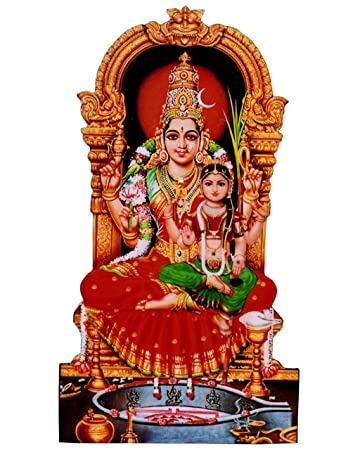
    Balambika is the child form of Lalitha Devi.


    Detailed posts follow on this.


    Balambika Dasakam is a rare stotra.


    Here is the text.


    1.Velathi langya karune vibhudhendra vandhye, Leela vinirmitha charachara hrun nivase, Mala kirreeta mani kundala madithange, Balambike mai nidehi Krupakadaksham. Please shower a merciful glance at me, Oh Balambika, Who is blessed with limitless mercy and saluted by the Lord of heaven, Who lives in the heart of moving and non moving things , who weremade by her as a sport, And who is decorated by garlands , crown and gem studded ear globes.


    2.Kanjasanadhi mani manju kireeta koti, Prathyuptha rathna ruchiranchitha pada padme, Manjeera manjula vinirjitha hamsa naadhe, Balambike mai nidehi Krupakadaksham. Please shower a merciful glance at me, Oh Balambika, Who sits on a golden throne and wears a crown studded with billions of gems, And wears on her very pretty lotus like feet, Anklets filled with gems making a sound ,which is better than the swan song.


    3.Praaleya bhanu kalikaa kalithathi ramye, Padagra javali vinirjitha moukthikabhe, Praneswari pramadha loka pathe pragadbhe, Balambike mai nidehi Krupakadaksham. Please shower a merciful glance at me, Oh Balambika, Whose is prettier than the snow , the moon and the flower bud, Whose anklets emit a shine which beats the luster of pearls, Who is the expert and who is the queen of the king of Pramadhas.


    4.Jangadhibhir vijitha chithaja thooni bhage, Rambhadhi mardhava kareendra karoru yugme, Shampa shathadhika sammujwala chela leele, Balambike mai nidehi Krupakadaksham. Please shower a merciful glance at me, Oh Balambika, Whose shanks are like the arrows starting from the quiver, Whose thighs are like the elephants trunk and beat in prettiness Rambha and other damsels, And whose attire is hundred times more resplendent than lightning.


    5.Manikhya maulika vinirmitha mekhaladye, Maya vilagna vilasan mani patta bandhe, Lolambaraji vilasan nava roma jale, Balambike mai nidehi Krupakadaksham. Please shower a merciful glance at me, Oh Balambika, Who wears a girdle made of top quality rubies, Who shines in a mind entangling and has in her head gear made of jewels, Who shines in loose cloths and has new magical growth of hair.


    6.Nyagrodha pallava thalodhara nimna naabhe, Nirdhootha haara vilasad kucha chakravake, Nishkaadhi manju mani bhooshana bhooshithange, Balambike mai nidehi Krupakadaksham. Please shower a merciful glance at me, Oh Balambika, Who has got a sunken navel, which appears like the river of sprouts of Banyan tree, Who has shining and moving garlands over her pretty breasts. And who wears ornaments of gold and gems over her body.


    7.Kandharpa chapa madha banga kruthadhi ramye, Broo vallari vividha cheshtitha ramya maane, Kandharpa sodhara samakruthi phaladese, Balambike mai nidehi Krupakadaksham. Please shower a merciful glance at me, Oh Balambika, Who is so pretty that she defeats the pride of the bow of God of love, Who quivers her eye brows in a very pretty manner, And whose forehead has a form which makes one conclude that it is brother of God of love.


    8.Mukthavali vilasa dhoorjitha kambhu kande, Mandasamithanana vinijitha chandra Bimbe, Bhaktheshta dhana niratha amrutha poorna drushte Balambike mai nidehi Krupakadaksham. Please shower a merciful glance at me, Oh Balambika, Whose pretty conch shaped neck and wears a gem studded necklace, Who wins with her pretty gentle smile on her moon like face, And who has a look full of nectar which satisfies the wishes of devotees.


    9.Karnaa vilambi mani kundala ganda bhage , Karnaantha deerga nava neeraja pathra nethre, Swarnaaya khadhi guna moukthika shobhi naase, Balambike mai nidehi Krupakadaksham. Please shower a merciful glance at me, Oh Balambika, Whose gem studded ear stud hangs up to her neck, Who has a lotus leaf like eye extending up to the ears, And whose nose shines with a stud of pure gold and gem.


    10.Lolaamba raji lalitha alaka jhala shobhe, Malli naveena kalika nava kundha jale, Balendu manjula kireeta virajamaane, Balambike mai nidehi Krupakadaksham. Please shower a merciful glance at me, Oh Balambika, Who shines with her pretty dangling hair and her dress, Whose hair is decorated with new buds of jasmine, And who shines with a crown decorated with a crescent. 11.Balambike Maha Rajni Vaidyanatha priyeswari, Pahi maam amba kripayaa thwath padam saranam gatha. Oh great queen Balambika, the darling of Vaidyanatha, Oh mother be kind enoughto protect me, Who has taken refuge at your feet.


    ( The sanskrit original of this great stotra is available in


    http://www.kamakotimandali.com/stotra/balamba.pdf .


    Translation by P.R.Ramchander.


    Some references in the web indicate that it is from Kandha Puranam)

  • Navavarana Pooja Lalitha Tripura Sundari Principle

    The Navarana Pooja for Devi is considered  as Supreme in the worship of Lalitha Devi, Tripura Sundari.


    This forms a part of Tantra Shastra of Hinduism.


    Avarana means concealment,masking, obstruction.


    The attempt to realize self is  is paved the path of Obstructions.


    This lies with the individuals mind and ego.


    Lalitha Tripurasundari image.image
    Lalitha Tripurasundari


    Losing one’s ego and the impediments of the mind clears the way for realization, first the Saguna Brahma,Reality of Name and Form.


    Once the level is reached, one is automatically guided to the Ultimate Reality, the Nirguna Brahman.


    The Avaranas of are of two kinds.


    1.Klesa Avarana.

    Klesa means confusion, unable to decide.

    Sinful desires, Lust,hankering after Wealth, lead to misery.

    These obstruct the individual in spiritual path.

    The removal of these obstacles,Klesaprahan is essential.( Gaudapadakarika)

    Kama, Krodha, Lobha, Madha, Mathsarya, Dvesha, Moha, Maana are some of the Klesas.


    The other in Jneya Avarana.

    Here the object of worship is seen as different from the subject, from the one who is worshiping.

    The merging of the worshiper and the worshiped is Realization.


    There are procedures laid down in the Tantra Shastras for the removal of the Avaranas.


    A form of Pooja performed to Goddess Lalitha Devi, Tripura Sundari is called the Navarana Pooja.


    This Pooja is performed for the Sri Chakra.


    It is essential to understand the construction of Ari Yantra before starting the Pooja.


    Five downward pointing triangles representing Devi intersect with four upward pointing triangles representing Siva, forming 43 triangles including the central triangle.


    From the five Shakti triangles comes creation and from the four Shiva triangles comes the dissolution.


    The union of five Shaktis and four Fires causes the chakra of creation to evolve.


    At the centre of the bindu of the Shri Yantra is Kamakala.


    It has three bindus. One is red, one is white and one is mixed.


    The red bindu is Kurukulla the Female form, the white bindu is Varahi the Male form, and the mixed bindu is the union of Shiva & Shakti – the individual as the potential Shri Cakra. Varahi, the father-form, gives four dhatus to the child and Kurukulla, the mother-form, gives five dhatus to the child. Theses represent the nine dhatus of the human body.


    Varahi’s four fires are the 12 (4 x 3) sun Kalasa, the 12 Zodiac constellations. Kurukulla’s five triangles are the 15 (5 x 3) Kalas of the moon, 15 lunar Tithis.


    These nine triangles also represent the nine stages of growth of the human child in the womb.


    Surrounding the 43 triangles formed by the intersection of the nine triangles is the 16 petals circle.


    Surrounding the 16 petal circle is an 8 petal circle.


    After that the 3 lines and at the outermost part of the Sriyantra there are 3 lines called the Bhupura.


    The 43 triangles constitute the six inner sections called Avaranas, the two circles of petals are two more avaranas and the Bhupura of 3 lines is the last Avarana.


    These 9 Avaranas of the Sri Yantra have various presiding Devis.

    They are the Devi’s Parivar (retinue) of total 108. In the Srichakra pooja they are systematically worshipped one by one with their names and mantras.


    The presiding Deity of Srichakra, Devi, is Known as Lalita Tripura Sundari.


    The form of Devi Kamakshi of Kancheepuram is the closest resemblance of the Devi as described in the scriptures.


    Lalita means The One Who Plays.


    All creation, manifestation and dissolution is considered to be a play of Devi.


    Tri-Pura means the three worlds and Sundari means beauty.


    She is the transcendent beauty of the three worlds.


    She is the ruler of the the three gunas of Satva, Rajas and Tamas; and sun, moon and fire – the zodiac and the planets, and therefore Time itself;

    She is also “tripura” as Will (Iccha), Knowledge (Jnana) and Action (Kriya).


    She is also “tripura” as intellect, feelings & physical sensation; and She is triple as the three states of the soul – awakening, dreaming and -sleeping states.


    Her five triangles also represent the Pancha Tatwas and the Pancha Bhootas. ( ”Panchami pancha bhuteshi pancha sankhyopacharini “. Lalitha Sahasranama)


    Lalita holds five flowery arrows, noose, goad and bow. The noose represents attachment, the goad represents repulsion, the sugarcane bow represents the mind and the flowery arrows are the five sense objects.


    Names of Devis in Navarana Pooja.


    First Line:

    Anima Sidhamba, Laghima Sidhamba, Mahima Sidhamba, Isitva Sidhamba, Vasitva Sidhamba, Prakamya Sidhamba, Bhuti Sidhamba, Iccha Sidhamba, Prapti Sidhamba and Sarva Kama Sidhamba.
    Second Line: Sri Brahmi Matruka, Maheswari Matruka, Kaumari Matruka, Vaishnavi Matruka, Varahi Matruka, Mahendri Matruka, Chamunda Matruka, and Mahalakshmi Matruka.


    Third Line:


    Sarva Sankshobhini Devi, Sarva Vidravini Devi, Sarvakarshini Devi, Sarva vashankari Devi, Sarvonmadini Devi, Sarva Mahankusa Devi, Sarva Khechari Devi, Sarva Beeja Devi, Sarva Yoni Devi, Sarva Trikhanda Devi, Trilokya Mohana Chakraswamini Devi and Prakata Yogini Devi.
    ‘Dvitheeya Avarana’(Second Enclosure): Kamakarshini Shakti, Buddhyakarshini Shakti, Ahankarakarshini Shakti, Sabdakarshini Shakti, Sparshakarshini Shakti, Rupakarshini Shakti, Rasakarshini Shakti, Gandhakarshini Shakti, Chittakarshini Shakti, Dhairyakarshini Shakti, Smrutyakarshini Shakti, Namakarshini Shakti, Beejakarshini Shakti, Atmakarshini Shakti, Amrutakarshini Shakti, Sharirakarshini Shakti, Sarva Aasha Paripurka Chakraswamini and Gupta Yogini.
    ‘Truteeya Avarana’ ( Third Enclosure): Anga Kusuma Shakti, Ananga Mekhala Shakti, Ananga Madana Shakti, Ananga Madanatura Shakti, Ananga Rekha Shakti, Ananga Vegini Shakti, Ananga Ankusha Shakti, Ananga Malini Shakti, Sarva Sankshobhana Chakraswamini, and Gupta thara Yogini.
    ‘Chaturdha Avarana’


    Fourth Enclosur:

    Sarvakshobini Devi, Sarva Vidravini Devi, Sarvakarshini Devi, Sarvahladini Devi, Sarva Sammohini Devi, Sarva-Sthambhini Devi, Sarvajhrumbhini Devi, Sarvavashankari Devi, Sarva Ranjani Devi, Sarvonmadini Devi, Sarvatha Sadhika Devi, Sarva Sampatti Purani Devi, Sarva Mantramayi Devi, Sarva Dvandva Kshayankari Devi, Sarva Soubhagya Dayaka Chakraswamini Devi and Sampradaya Yogini Devi.
    ‘Panchama Avarana’


    Fifth Enclosure:

    Sarva Siddhiprada Devi, Sarva Sampathprada Devi, Sarva Priyankari Devi, Sarva Mangala Karini Devi, Sarva Kamaprada Devi, Sarva Dhuhkha Vimochani Devi, Sarva Mrithyu Prasamani Devi, Sarva Vighna Nivarini Devi, Sarvanga Sundari Devi, Sarva Sowbhagya Dayani Devi, Sarva Ardha Sadhaka Chakraswamini and Kulotheerna Yogini.
    ‘Shashtha Avarana’

    Sixth Enclosure: Sarvagya Devi, Sarva Shakti Devi, Sarva Aishvarya Pradayani Devi, Sarva Jnanamayi Devi, Sarva Vyadhi Vinasini Devi, Sarvadhara Swarupa Devi, Sarva Papahari Devi, Sarva Anandamayi Devi, Sarva Raksha Swarupini Devi, Sara Epsitha Phalaprada Devi, Sarva Rakshakara Chakra Swamini and Nigarbha Yogini.
    ‘Saptama Avarana’  Seventh Enclosur: Vasini Vagdevi, Kameswari Vagdevi, Modhini Vagdevi, Vimala Vagdevi, Aruna Vagdevi, Jayani Vagdevi, Sarva Eswari Vagdevi, Kaulini Vagdevi, Sarva Rogahara Chakraswaini, Rahasya yogini, Banini, Chapini, Paasini and Ankusini.
    ‘Ashta’ Avarana’ (Eighth Enclosure): Maha Kameswari Devi, Maha Vajreswari Devi, Maha Bhagamalini Devi, Sarva Siddhiprada Chakraswamini and  Ati Rahasya Yogini.
    ‘Nava Avarana’  Ninth Enclosure: Sri Sri Bhattarika, Sarvanandamaya Chakraswamini and Parapara Rahasya Yogini.


    Citation.

    http://www.astrojyoti.com/scpooja.htm


    http://books.google.co.in/books?id=Lz08gSuuLQkC&pg=PA210&lpg=PA210&dq=avarana+sanskrit+meaning&source=bl&ots=BLEYAJuCUB&sig=i0Twxd_–jo5mD1WMKJRzG9z8c0&hl=en&sa=X&ei=00wWVLa_C9KzuASel4GwAw&ved=0CFUQ6AEwCA#v=onepage&q=avarana%20sanskrit%20meaning&f=false


    Devi Bhagavatham