Tag: Lunar Dynasty

  • Manu Dynasties Saptha Rishi Star Visitations Study  Part I

    Manu Dynasties Saptha Rishi Star Visitations Study Part I

    Manu’ s Sons and Their Kingdoms.

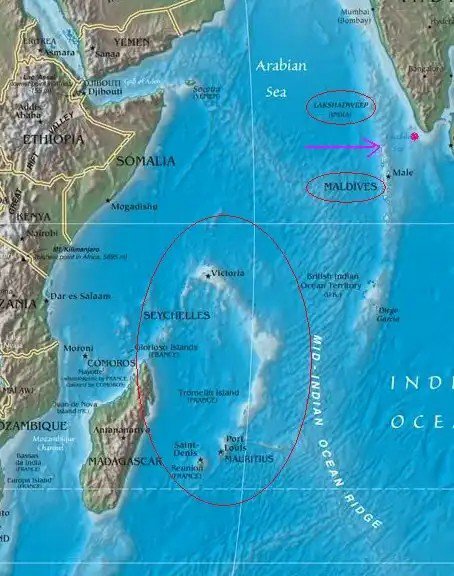
    Manu was the first Man . He was from the South of Vindhyas. When a Tsunami struck, he moved to Ayodhya . His son Ikshvaku founded the Suryavansh,Solar Dynasty.Manu had ,apart from Ikshvaku ,one Daughter Ila and Nine brothers.Ila married Chandra’s son Budha and their Dynasty was called Chandravansh,after Pururavas.This Dynasty is also called as Aila Dynasty and Ailas seemed to have lived in the western region of the Present Indian landmass,probably around Arabia.Please read my articles on this. Manu’s other sons, for various reasons did not seem to be as enterprising as Manu’s son Ikshvaku in establishing a Dynasty.

    It is recorded that Ila ,along with Budha founded the Lunar Dynasty, Chandravansh;from One of the sons of Manu, Agnivesa,Brahmin Dynasty came into being; From Trinabindu, descendant of Nabhaga,son of Manu,came Ilavida and she gave birth to Kubera, who ruled what is now Lanka. Kubera is recorded to be the elder brother of Ravana.Ravana was the son of Vishrava, Brother of Sage Pulasthya, Brother Agastya.Agastya was the son of Brahma..* Here comes a point. Though Manu is reported to have sprung from Vivaswan,Surya,Sun, and recorded as first Human, Offspring of Saptha Rishis are shown as progenitors of Human race.For example Daksha.Saptha Rishis change for each Manvantara.For the present Vaiwasvatha Manvantara,the Saptha, Seven Rishis are, Atri, Bhrigu,Kuthsa, Vasishta,Gautama,Kasyapa and Angirasa.( There are variations to these names).The possibilities are a) Some Rishis like Angirasa,Bharatwaja founded some Kingdoms which are not under the landmass of present India; b) the beings like Ramba,Kubera, are beings of a different plane like the Adithyas,Rudras and Devas who are the children of Sage Kasyapa.So, this opens the possibility of a) Visitation by beings from outer space or b) existence of such beings in a different plane and c ) they visit us.Though it sounds preposterous, facts mentioned in Purana,which I had checked till now,stand the test of scrutiny.So, it is logical to search further to unravel the seemingly impossible.

    One may note that Ila Dynasty progressed in what is now the South and Far East, in ancient days and we can find Hinduism remains and practices there even today,including Angkorvat temple complex,Siva trinetra dance in Australia,presence of Kasyapa in New Zealand.Except those belonging to Ikshvaku and Chandravansh,other dynasties do not seem to have survived, though the other dynasties like Yadu sprang from them.Notable exception is the The Three Great Kings’ Dynasties of Tamils,Chera,Chola and Pandya. Yet these three trace their origin to Ikshvaku and Lunar Dynasty.Lunar Dynasty was mostly ,as far as Tamils are concerned, through Ila ,thrived in South,Lanka and around that area,which included? Tamilakam. So, this gives rise to Lemuria, Kumarikandam , Atlantis and MU civilisations.

    More to follow.

    Northern North  Central Kingdoms

    • Kuru
    • Panchala
    • Vatsa ||

    Kingdoms of North-Central India

    • Kosala
    • Kasi
    • Videha
    • Dakshina Kosala
    • Malla

    Kingdoms of Western and West-Central India

    • Surasena
    • Dwaraka
    • Anarta
    • Saurashtra
    • Heheya
    • Nishada
    • Gurjara
    • Karusha
    • Chedi
    • Dasrana
    • Kunti
    • Avanti
    • Malava

    North-Northwestern (Fishermen’s) kingdoms

    • Matsya

    Western kingdoms

    • Trigartha
    • Salwa
    • Madra
    • Sindhu
    • Sauvira
    • Sivi
    • Kekeya
    • Gandhara
    • Youdheya
    • Pahlava

    Northwestern kingdoms

    • Bhalika
    • Parma Khamboja
    • Uttara Madra
    • Uttara Kuru
    • Yavana
    • Lhasa
    • Saka

    Northern kingdoms

    • Kasmira
    • Kamboja
    • Drada
    • Parada
    • Parasika
    • Tushara
    • Huna
    • Harahuna
    • Rishika
    • China
    • Paramus China

    Eastern kingdoms

    • Magada
    • Kikata
    • Anga
    • Pragjyotisha
    • Sonita
    • Lauhitya
    • Pundra
    • Sushma
    • Vanga
    • Odra
    • Utkala

    Kingdoms South of the Vindhya Range

    • Vidarba
    • Anupa
    • Suparaka
    • Nasikya
    • Konkana
    • Asmaka
    • Danda
    • Kalinga

    Kingdoms in the extreme South

    • Telinga
    • Andhra
    • Kishkinds
    • Gomanta
    • Karnata
    • Kanchi
    • Chola
    • Pandya
    • Chera
    • Mushika
    • Satyaputra
    • Tulu
    • Sinhala

    Saraswati Valley kingdoms

    • Saraswatha
    • Abhira
    • Sudra
    • Nishada

    Reference and citation.

    http://veda.wikidot.com/kingdoms-of-ancient-india

    Following is the detail of what had happened to Ikshvaku’s brothers (Manu’s sons)

    This Second Chapter describes the dynasties of the sons of Manu, headed by Karūṣa.After Sudyumna accepted the order of vānaprastha and departed for the forest, VaivasvataManu, being desirous of sons, worshiped the Supreme Personality of Godhead and consequently begot ten sons like MahārājaIkṣvāku, all of whom were like their father. One of these sons, Pṛṣadhra, was engaged in the duty of protecting cows at night with a sword in his hand. Following the order of his spiritual master, he would stand in this way for the entire night. Once, in the darkness of night, a tiger seized a cow from the cowshed, and when Pṛṣadhra came to know this, he took a sword in his hand and followed the tiger. Unfortunately, when he finally approached the tiger, he could not distinguish between the cow and the tiger in the dark, and thus he killed the cow. Because of this, his spiritual master cursed him to take birth in a śūdra family, but Pṛṣadhra practiced mystic yoga, and in bhaktiyoga he worshiped the Supreme Personality of Godhead. Then he voluntarily entered a blazing forest fire, thus relinquishing his material body and going back home, back to Godhead.Kavi, the youngest son of Manu, was a great devotee of the Supreme Personality of Godhead from his very childhood. From Manu’s son known as Karūṣa, a sect of kṣatriyas known as Kārūṣas was generated. Manu also had a son known as Dhṛṣṭa, from whom another sect of kṣatriyas was generated, but although they were born of one who had the qualities of a kṣatriya, they became brāhmaṇas. From Nṛga, another son of Manu, came the sons and grandsons known as Sumati, Bhūtajyoti and Vasu. From Vasu, in succession, came Pratīka, and from him came Oghavān. Descending in order from the seminal dynasty of Nariṣyanta, another son of Manu, were Citrasena, Ṛkṣa, MīḍhvānPūrṇaIndrasenaVītihotra, Satyaśravā, Uruśravā, Devadatta and Agniveśya. From the kṣatriya known as Agniveśya came the celebrated brāhmaṇa dynasty known as Āgniveśyāyana. From the seminal dynasty of Diṣṭa, another son of Manu, came Nābhāga, and from him in succession came Bhalandana, Vatsaprīti, Prāṁśu, Pramati, Khanitra, Cākṣuṣa, Viviṁśati, Rambha, Khanīnetra, Karandhama, Avīkṣit, Marutta, Dama, Rājyavardhana, Sudhṛti, NaraKevalaDhundhumānVegavānBudha and Tṛṇabindu. In this way, many sons and grandsons were born in this dynasty. From Tṛṇabindu came a daughter named Ilavilā, from whom Kuvera took birth. Tṛṇabindu also had three sons, named Viśāla, Śūnyabandhu and Dhūmraketu. The son of Viśāla was Hemacandra, his son was Dhūmrākṣa, and his son was Saṁyama. The sons of Saṁyama were Devaja and Kṛśāśva. Kṛśāśva’s son, Somadatta, performed an Aśvamedha sacrifice, and by worshiping the Supreme Personality of Godhead, Viṣṇu, he achieved the supreme perfection of going back home, back to Godhead.

    https://prabhupadabooks.com/sb/9/2?d=1

  • Siva Related To Rama Krishna Siva’s Daughter Chandravanshi

    Siva Related To Rama Krishna Siva’s Daughter Chandravanshi

    As I have written in my earlier articles about the Dynasties of India,there were two primary ones, Suryavansh,Solar Dynasty and Chandravansh,Lunar Dynasty. Both dynasties had sprung from Vaiwaswatha Manu. From the Suryavansh,founded by Ikshvaku, son of Manu came the Chandravansh.

    Chandravansh, Lunar Dynasty gave rise to other Dynasties like Yadava or Yadu Dynasty.

    Nahusha of Lunar Dynasty was the grandson of Purururavas of Lunar Dynasty.

    Nashusha married Ashokasundari, Daughter vof Shiva ,Parvati

    So Nashusha was the son in-law of Siva and Parvati.

    As Nahusha is from Chandravansh,Lunar Dynasty, Siva’s daughter belongs to Chandravansh.

    Krishna belongs Yadava Dynasty,which is an offshoot of Lunar Dynasty.

    And Lunar Dynasty Dynasty is from Solar Dynasty to which Sri Rama belongs.

    Therefore, Ashokasundari, daughter of Siva and Parvati is related to Rama and Krishna by matrimonial alliance.

    So are Siva and Parvati related to Rama and Krishna.

    *Some may not like Siva being called a Human being. I too share the idea. However, the term Siva does not refer to a person but it means ‘auspiciousness’.Siva is described as Adi Yogi,the First Yogi, who practiced the Vaasi Yoga. Kindly read my articles Siva a Human being,Siva worship precedes Sanatana Dharm, and Vaasi Yoga

    Nahusha (Sanskrit: नहुष) was a king of the Aila dynasty (Lunar dynasty) and the 3,698,256th Indra. He was the son of Āyu, the eldest son of Pururavas and Prabha, the daughter of Svarbhānu. Nahusha reigned from Pratishthana. He married Viraja, the daughter of the Pitrs. They had six or seven sons, according to different Puranas. His eldest son Yati became a muni (ascetic). He was succeeded by his second son Yayati.

     In another variation of his story, he is said to have married Ashokasundari, a regional goddess who is said to be daughter of Shiva and Parvati and is said to have given birth to Yayati and a hundred daughters of Nahusha.

    Reference and citation https://en.m.wikipedia.org/wiki/Nahusha

    Ashokasundari (Sanskrit: अशोकसुंदरी, Aśokasundarī) or Ashoka Sundari, is a goddess and the daughter of Shiva and Parvati in Hinduism. She gives blessings beauty and luxury. She is referenced to in the Padma Purana (पद्म पुराण), which narrates her story.

    The birth of Ashokasundari is recorded in the .Padma Purana. In one of the variants of the tale of Nahusha, Parvati once requested Shiva to take her to the most beautiful garden in the world. As per her wishes, Shiva took her to Nandanvana, where Parvati saw a tree known as Kalpavriksha which could fulfill any wish. Since Kartikeya, the son of Parvati, had grown up and left Kailash, as a mother it caused immense grief and loneliness to Parvati. She asked for a daughter from the wish-fulfilling tree to get rid of her loneliness. Her wish was granted and Ashokasundari was born. Parvati promised that she would marry according to her destiny Nahusha of the lunar dynasty, who would be equal to Indra, the king of heaven. Once, Ashokasundari was roaming in Nandanvana with her maids, a rakshasa (demon) called Hunda saw her and fell in love with her. However, the goddess rejected the advances of the demon and informed him about her destiny to marry Nahusha. Hunda disguised himself as a widow, whose husband was killed by him, and asked Ashokasundari to accompany her to her hermitage. The goddess went with the disguised demon and reached his palace. She came to know of his treachery and cursed him to be killed by Nahusha and escaped to her parents’ abode Mount Kailash. Hunda kidnaps the infant Nahusha from his palace, however, he is rescued by a maid of Hunda and given under the sage Vashistha’s care. After a few years, Nahusha grows up and understands about his destiny to kill Hunda. Hunda abducts Ashokasundari and tells her that he had killed Nahusha. The goddess was consoled by a Kinnara couple who informed her of Nahusha’s wellbeing and prophesied that she would mother a powerful son called Yayati and a hundred beautiful daughters. Nahusha fought Hunda and defeated him after a fierce battle and rescued Ashokasundari, whom he married. Over course of time, in absence of Indra, Nahusha was temporarily made the regent of heaven’

    Reference and citations.

    https://en.m.wikipedia.org/wiki/Ashokasundari

  • Yadava Dynasty Was Formed From Chandravansh

    Yadava Dynasty Was Formed From Chandravansh

    It requires a study of Puranas to understand the dynasties of India. While Indians can name the various Dynasties of Europe and the British Dynasty in detail, they cannot name the various Dynasties of India. Worse still, is that they end up claiming India has no History and its history is a myth.

    There is no point in blaming them,for Children in India are brought up with a diet of Invaders’ History with a claimer that Indian history is a myth.

    There were two Dynasties in India initially.

    First human was Vaiwaswatha Manu. His son Ikshvaku founded the Suryavansh,Solar Dynasty.Manu’s Daughter Ila ,by marrying Budha,son of Chandra, founded the Chandravansh, Lunar Dynasty.

    There was a king of Chandravansh, Lunar Dynasty,Yayati.

    His son Yadu refused Yayati’s wish of exchanging his old age for youth, Yayati forbade Yadu from using the name of Chandravansh. So, Yadu named his progeny as belonging to Yadava Dynasty.

    Sri Krishna belongs to the Vrishni branch of Yadava Dynasty.

    More articles to follow on the Dynasties of India.

    Yadu is one of the five Indian tribes (panchajanapanchakrishtya or panchamanusha) mentioned in the Rig VedaKrishna is the descendant of Yadu from Vedic tribe.[1]

    The Hindu epic Mahabharata, the Harivamsha and the Puranas mention Yadu as the eldest son of king Yayati and his queen Devayani. The prince of King Yayati, Yadu was a self-respecting and a very established ruler. According to the Vishnu Purana, the Bhagavata Purana and the Garuda Purana, Yadu had four sons, while according to the rest of the Puranas he had five sons.The kings between Budha and Yayati were known as Somavanshi. According to a narrative found in the Mahabharata, and the Vishnu Purana, Yadu refused to exchange his years of youth with his father Yayati. So he was cursed by Yayati that none of Yadu’s progeny shall possess the dominion under his father’s command.Thereby, he could not have carried on the same dynasty, called Somavamshi. Notably, the only remaining dynasty of King Puru was entitled to be known as Somavamshi. Thereby King Yadu ordered that the future generations of his would be known as Yadavas and the dynasty would be known as Yaduvanshi. The generations of Yadu had unprecedented growth and got divided into two branches.

    Reference and citation. https://en.m.wikipedia.org/wiki/Yadu

  • Solar Lunar Dynasties Surya Chandra Vamsa From One Woman Ila, A Dravida

    There were two ancient dynasties in India.

    Other dynasties have sprung from the two.

    These two dynasties are,

    Surya Vamsa, the Solar Dynasty and

    Chandra Vamsa, the Lunar dynasty.

    Lord Rama belonged to Ikshvaku Dynasty which is the same as Surya Vamsa, Solar Dynasty.

    Pandavas and Kauravas belonged to Chandra Vamsa,Lunar Dynasty.

    When one tries to find out the origin of Man Genealogy, and the first pair , one gets stuck, either with Incest or the origin of one of the pair remaining with no visible parentage.

    I seek the indulgence of the readers for my vagueness in the foregoing sentence.

    This is to avoid that useless controversy.

    Those who can read between the lines would understand.

    Now to the point at hand.

    Ila with Budha, son of Moon,Chandra.image
    Ila with Budha, son of Moon,Chandra.

    If there were two dynasties, then who was the first one; how did the second dynasty come into play;how these two are related?

    Indian texts are clear on Cosmology and Genealogy, besides pther things.

    There are Eighteen Puranas and many Upa Puranas.

    Please read my post on list of Indian Texts.

    There may be minor variations in details among the Puranas, but all agree on essential major facts.

    Thus Genealogy and Cosmology descriptions, explanations do not have discrepancies among the Puranas.

    Thus under Genealogy, Puranas describe the dynasties and list the Kings.

    It may not be of place to mention that Cosmology and Genealogy are two of the characteristics laid down for a text to be qualified as Purana.

    Please read my article on Characteristics of Purana.

    The Firs human was Manu, He is called Vaivaswatha Manu for the present Time scale, Kali Yuga, which has a span of 4,32,000 years.

    He had one daughter and nine sons.
    Manu begot ten other children named Vena, Dhrishnu, Narishyan,Nabhaga, Ikshvaku, Karusha, Sharyati, the eighth, a daughter named Ila, Prishadhruthe ninth, and Nabhagarishta, the tenth. ( https://en.m.wikipedia.org/wiki/Shraddhadeva_Manu#Descendants )

    His son Ikshvaku was from the south of the Vindhya mountains, Dravida Desa.

    His kingdom was centered around Madagascar.

    When a Tsunami struck , Manu mediatated in a plateau near Madagascar.

    He left south with his sons for Ayodhya, where he founded the Solar Dynasty, called as Surya Vamsa.

    Manu had left his only daughter Ila in the South.

    She remained in the South,Dravida Desa.

    Her descendants ruled from the south.

    This dynasty is the Chandra Vamsa, Lunar Dynasty.

    The descendants of Ila and Ikshvaku are first cousins.

    In Hindu way of explaining relationships, children of aunt and uncle.

    Though both Ila and Ikshvaku belong to the Genealogy of Manu, the Dynasty is called Ikshvaku, Manu’s son.

    I shall write as to why.

    While the dynasty of Ikashvaku is called Solar, that of Ila is Lunar, Chandra Vamsa.

    Chandra Vamsa is named after Chandra, Moon.

    Ila was both a man and woman.

    ‘According to the Ramayana, when Ila approached Shiva for help, Shiva laughed with scorn but the compassionate Parvati reduced the curse and allowed Ila to switch genders every month. However, as a male he would not remember his life as a female and vice versa. While Ilā roamed the forest in her new form with her female attendants, Budha, the god of the planet Mercury and the son of the moon-god Chandra, noticed her. Although he had been practising asceticism, Ilā’s beauty caused him to fall in love with her at first sight. Budha turned Ilā’s attendants into Kimpurushas (hermaphrodite, lit. “is it a man?”)[10][14] and ordered them to run away, promising that they would find mates as Ilā had.

    Ilā married Budha and spent an entire month with him and consummated the marriage. However, Ilā woke one morning as Sudyumna and remembered nothing about the past month. Budha told Ila that his retinue had been killed in a rain of stones and convinced Ila to stay with him for a year. During each month she spent as a woman, Ilā had good time with Budha. During each month as a man, Ila turned to pious ways and performed austerities under the guidance of Budha. In the ninth month, Ilā gave birth to Pururavas, who grew to become the first king of the Lunar dynasty. Then, as per the advice of Budha and Ila’s father Kardama, Ila pleased Shiva with a horse sacrifice and Shiva restored Ila’s masculinity permanently.

    Another legend from the Vishnu Purana credits Vishnu of restoring Ilā’s manhood as Sudyumma. The Bhagavata Purana et al. texts tell that after Pururavas’s birth, the nine brothers of Ila – by horse sacrifice – or the sage Vasistha – the family priest of Ila – pleased Shiva to compel him to give the boon of alternate month manhood to Ila, turning him into a Kimpurusha.The Linga Purana and the Mahabharata record the birth of Pururavas, but do not narrate the end of Ila’s alternating gender condition. In fact, the Mahabharata describes Ilā to be the mother as well as the father of Pururavas.According to another account found in the Vayu Purana and the Brahmanda Purana, Ilā was born female, married Budha, then was transformed into a male called Sudyumna. Sudyumna was then cursed by Parvati and transformed once again into a female, but became a man once again through Shiva’s boon.

    In almost all versions of the tale, Ila wants to live as a man, but in the Skanda Purana, Ila desires to be a woman. The king Ela (Ila) entered Parvati’s grove at Sahya mountain and became the woman Ilā. Ilā wished to remain a woman and serve Parvati (Gauri) and Ganga, the goddess of the Ganges river. However, the goddesses dissuaded him. Ilā bathed in a sacred pool and returned as Ela, bearded and deep-voiced.’

    The Bhagavata Purana, the Devi-Bhagavata Purana and the Linga Purana declare that Ila ascended to heaven with both male and female anatomy.[18] Ila is considered the chief progenitor of the Lunar Dynasty through Pururavas and of the Solar Dynasty through his brother Iksavaku and sons Utkala, Gaya, and Vinatashva.[9][22] The marriage of Ilā, a descendant of the Sun, and Budha, the son of the Moon, is the first union of the solar and lunar races recorded in the scriptures.[11]

    Reference and citation.

    https://en.m.wikipedia.org/wiki/Ila_(Hinduism)

  • Why Tamil Kings Are From Solar Lunar Dynasty Second Capital in Pakistan

    Why Tamil Kings Are From Solar Lunar Dynasty Second Capital in Pakistan

    I visited Thiruvellarai,about fifteen kilometres from Srirangam,Tamil Nadu.

    Srirangam is the second Divya Kshetram,Sacred Dwelling Place of Lord Vishnu,the first being Vaikuntam,the Celestial Abode of Vishnu.

    I was informed by the Archaka of Srirangam that there is a older temple of Vishnu at Thiruvellarai.

    On visiting the temple I found three unique features.

    I wrote an article on this and on Indhumathi, Lord Rama’s grandmother,a Pandyan Princess.

    This temple is reported to have been built by Chola King Sibi.

    Sibi is the ancestor of Lord Rama.

    He built this temple after vanquishing Asuras,meaning powerful(Asuras are different from Rakshasas)in Dravida Desa.

    Sibi ruled from the what is now the North West Province of Pakistan.

    The founder of Ikshvaku Dynasty,Ikshvaku,to which Sibi and Rama beling belongs to Dravida Desa,that is South of Vindhya Mountains in India.

    Manu,after whom the term ,’Man’ is coined is the first Human and he was from the Dravida Desa.

    After a Tsunami,Ikshvaku left for Ayodhya in North India,founded Ikshvaku Dynasty from Ayodhya.

    The Kings of South India,Chera,Chola belong to Surya Vamsa,the Solar Dynasty of Ikshvaku.

    Some of these Kings belong to Lunar Dynasty,Chandra Vamsa.

    Now,after visiting Thiruvellarai, I had some questions.

    1.If Ikshvaku founded the Dynasty from Ayodhya,

    how is it that Tamil Kings declare that they are from Solar Dynasty?

    2.If these Kings ruled from South ,how come that Sibi ruled from the North of India,where his second capital was?

    Answer lies with Ila, daughter of Manu and sister of Ikshvaku.

    Ila,after whom the term Ezham,the Tamil word denoting Tamil land is derived from,is the founder of the Lunar dynasty.

    She was married to Budha,son of Chandra.

    Hence her offsprings belong to Lunar Dynasty.

    The Ailas of the world descended from Ila.

    Ila was given a portion of Dravida Desa,Lanka.

    Lanka is from Ila.

    There is controversy over the fact whether the present Lanka is the Lanka mentioned in the Ramayana.

    Please refer my post on Lanka is not Ramayana Lanka.

    Ila was birn a woman,became a Man,then again woman to be finally Man for a month and woman the next month.

    Those who question this transformation may note people today change genders after Surgical Procedure.

    During the period when Ila was a Man,he married and had children.

    Children through this lineage belong to Lunar Dynasty and they ruled the Matsya Kingdom from North India.

    Matsya in Sanskrit means Fish.

    Manu the first Man was advised by A Fish of the impending Tsunami.

    Hence Manu moved out , meditated in Madagascar, while his son Ikshvaku moved to Ayodhya.

    His daughter Ila moved to South after the Tsunami

    It is curious to note that the Pandya Kings’ Emblem is Fish.

    Another reference to Manu and Matsya.

    Either the offspring of Ila moved to Matsya desa at the same time when Ikshvaku moved to North,while Ila moved to South or

    Ila’s children moved to north later,but before Lird Rama.

    This cound account for Sibi having had a second capital in North India.

    Matsya Kingdom.

    Matsya Kingdom was probably founded by fishermen community who later attained kingship. The Sanskrit word Matsya means fish. Satyavati, the wife of Kuru king Santanu was from this community. King Virata, a Matsya king, founded the kingdom of Virata. He was the father-in-law of Abhimanyu the son of Arjuna. The epic Mahabharata relates the founder of Matsya kingdom to the ruler of Chedi, viz Uparichara Vasu.An interesting fact is that fishing was the main occupation of the people who lived near river Saraswati. After the Saraswati River dried up, they migrated to river Charmanwati now known as Chambal meaning fish in Dravidian languages. Krishna Dwaipayana Vyasa, was son of Satyavati who belogned to this fishermen community and yet was a Vedic scholar, thus attesting the origin of Vedas from the Saraswati basin.

    Other than the Matsya kingdom to the south of Kuru Kingdom, which falls in the Alwar, Bharatpur districts of Rajasthan, the epic refers to many other (as many as, six other) Matsya kingdoms. The Pandya Kingdom in the extreme south, also bears the icon of a fish on its official banner showing some connection with the Matsya kings. The main Matsyas under Virata had its capital named Viratanagari which is now known as Bairat in Jaipurdistrict of Rajasthan. Upaplavya was another famous city in this kingdom.

    References in Mahabharata

    Matsya is mentioned in the list of kingdoms of Bharata Varsha (ancient India) at (6,9).

    Origin of Matsya Kings

    The first Matsya king was mentioned to be the son of a Chediking named Uparichara Vasu. He was a Paurava, meaning a king beloning to the Puru dynasty (1,63). Apart from the five royal sons of this king, he had a son and a daughter born of a women of fisherman community. The male child, in due cource established the Matsya Kingdom and founded the royal dynasty called Matsya Dynasti. The female child lived as a member of fishermen community. Her descendants established as fishermen on the banks of river Yamuna, in the kingdom of Kurus. The famous Kuru king Santanu’s wife Satyavati was from this fishermen community. The author of Mahabharata, vis Krishna Dwaipayana Vyasa and the Kuru kings viz Chitrangada and Vichitravirya were the sons of Satyavati. Pandavas and Kauravaswhere the grandsons of Vichitravirya.(1,63).A king named Sahaja ruled the united Chedis and Matsyas. As per Bhima he became cause for the destruction of his own race (5,74).

    Source.

    http://ancientvoice.wikidot.com/matsya

    Ila ,Sudhyumna.

    While many versions of the tale exist, Ila is usually described as a daughter or son of Vaivasvata Manu and thus the sibling of Ikshvaku, the founder of the Solar Dynasty. In versions in which Ila is born female, she changes into a male form by divine grace soon after her birth. After mistakenly entering a sacred grove as an adult, Ila is either cursed to change his/her gender every month or cursed to become a woman. As a woman, Ilā married Budha, the god of the planet Mercury and the son of the lunar deity Chandra (Soma), and bore him a son called Pururavas, the father of the Lunar dynasty. After the birth of Pururavas, Ilā is transformed into a man again and fathered three sons.

    In the Vedas, Ilā is praised as Idā (Sanskrit: इडा), goddess of speech, and described as mother of Pururavas.

    The tale of Ila’s transformations is told in the Puranas as well as the Indian epic poems, the Ramayana and the Mahabharata.

    Source.

    https://en.m.wikipedia.org/wiki/Ila_(Hinduism)

    Ilā married Budha and spent an entire month with him and consummated the marriage. However, Ilā woke one morning as Sudyumna and remembered nothing about the past month. Budha told Ila that his retinue had been killed in a rain of stones and convinced Ila to stay with him for a year. During each month she spent as a woman, Ilā had good time with Budha. During each month as a man, Ila turned to pious ways and performed austerities under the guidance of Budha. In the ninth month, Ilā gave birth to Pururavas, who grew to become the first king of the Lunar dynasty. Then, as per the advice of Budha and Ila’s father Kardama, Ila pleased Shiva with a horse sacrifice and Shiva restored Ila’s masculinity permanently.

    Another legend from the Vishnu Purana credits Vishnu of restoring Ilā’s manhood as Sudyumma.The Bhagavata Purana et al. texts tell that after Pururavas’s birth, the nine brothers of Ila – by horse sacrifice – or the sage Vasistha – the family priest of Ila – pleased Shiva to compel him to give the boon of alternate month manhood to Ila, turning him into a Kimpurusha. The Linga Purana and the Mahabharatarecord the birth of Pururavas, but do not narrate the end of Ila’s alternating gender condition. In fact, the Mahabharata describes Ilā to be the mother as well as the father of Pururavas.According to another account found in the Vayu Purana and the Brahmanda Purana, Ilā was born female, married Budha, then was transformed into a male called Sudyumna. Sudyumna was then cursed by Parvati and transformed once again into a female, but became a man once again through Shiva’s boon.

    Source.

    https://en.m.wikipedia.org/wiki/Ila_(Hinduism)