Those who have followed the procedures in Homas,Sacrificial 🔥 Fires Ceremonies conducted would have noticed terms like Acharya,Hotar and Rikvik.While people can identify Acharya, not many people know about Ritvik.
Ritvik
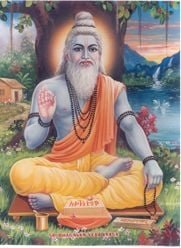
The Vedic priest who officiates Vedic sacrifices or rituals known as Yajnas is known as Ritvik . Qualification as below.
Qualification
Well-versed in the Vedas.
Should have gained his knowledge the guru, in the guru-shishya tradition of learning.
Of good lineage.
He should have been leading a pure life.
Types of Rikviks
Hotar representing the Rig Veda
Adhvarya representing the Yajur Veda
Udgatar representing the Sama Veda
Brahma representing the Atharva Veda
Each one of these Ritviks has three assistants . Details.
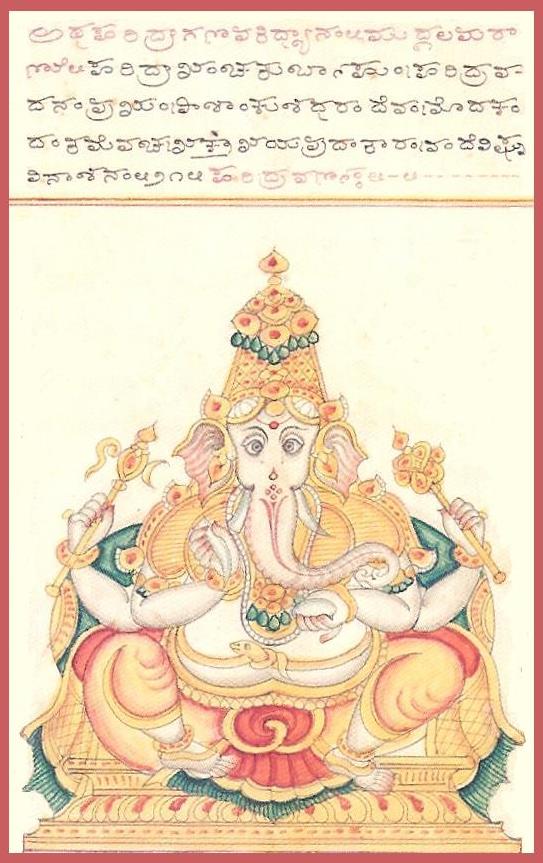
Ganpathi Homa is most auspicious Homa and is performed when,
One ventures into new business,
Moves to a new house,
To succeed in Endeavour which is plagued by difficuties,
Ill health and for
Any auspicious occasion.
The ideal day is Krishna Paksha,waning Moon,Chaturthi ,the othe days ,Shukla Paksha,Waxing Moon,Chaturthi,Panchami,Sashti,Sapthami and Poornima
Ideal time between 4.30 am and 6.30 am.
This article is meant for those who would like to know what the details are in performing Ganapathi Homa.
This article is prepared by checking with various sources and therecare differences in practice,though there is no difference in the Moola Mantra and Ahuthi.
The differences might be in the introductory ,concluding mantras and procedures.
The Homa is to performed by facing East or North.
Feeding Brahmins and the poor recommended.
There is bound to be errors in this article.
Please offer corrections with source.
But as general information and to help people follow the Homa,this article will be useful.
Materials required.
One homa kundam (a copper container with preferably a square shaped base). If a homa
kundam is not available, one can dig a square shaped pit in the ground (with 1-2 foot sides
and half to one foot deep) and arrange a few layers of bricks around the pit. It is symbolic of
the mooladhara chakra.
• A small idol of Ganesha. If you have none, use a metallic coin or any metallic object.
Actually, you can do without any idol and just invoke Mahaganapathi in fire.
• Dry coconut halves (available in Indian stores)
• Ghee from cow’s milk (clarified butter from cow’s milk). It is available in Indian stores. If
unable to find, just get some butter and melt it in low heat. After it melts, some black stuff
will separate from the melted liquid. Filter out the black deposit and use the liquid. It will
solidify after a time. Before the homam, melt it again and use it.
• A mixture of various auspicious materials, from the havan samagri (available in India
stores), if possible.
• Some sesame seeds, some mamra/murmura (puffed white rice), some nuts, some mildly
popped corn and other materials that can be offered in fire. Small fruits are also fine. All
these are optional. The absolute minimum needed is coconut pieces and ghee.
• A wooden spoon/ladle to put ghee into the fire
• Some akshatas. Those can be made by mixing raw (uncooked) white rice grains with a drop
of sesame oil (or some other oil) and a pinch of turmeric powder. Instead of turmeric powder,
one can also use vermilion (kumkum) powder used for the dot on the forehead.
• Some darbhas (dried blades of sacred grass). Check with a local temple priest to find out how
to procure them. If darbhas are unavailable, you may think of creative alternatives. For
example, find some other dry grass or dry leaves or just thin twigs and pray to your ishta
devata before the homam to make them acceptable.
• A small container to light a sesame oil/ghee deepam (lamp). A candle can also be used as an
alternative, though it is better to burn ghee and sesame oil than wax.
• A wick to place in oil to light the fire.
• A match box to light fire
• An incense stick (agarbatti) if available and a holder to stick it to (a banana can be used
instead)
• Camphor and a container or plate for lighting camphor and offering haarati
• Some flowers, if available.
• Some food that you can offer to god. Preferably onion, garlic, spices and too much of chillies
should be avoided. Fruits are also fine.
• Some honey, if available.
• Some milk, if available.
• One tumbler or cup to store water. It should preferably be made of silver or copper or clay. If
unavailable, you may use steel or glass.
One spoon (preferably silver or copper) and two small bowls (preferably silver or copper).
Preparation for Ganapathi Homa.
Instead of arranging homa kundam directly on the floor, place a wood plank or something on
the floor, wrapped with aluminum foil (or some such thing), and put 4 bricks of the same
height on it and place the homa kundam on the bricks. Thus, there is some air and a wooden
plank under the homa kundam and the floor does not get heated up.
(2) If you want easy cleaning, place some aluminum foils on the floor all around the plank
containing homa kundam. If ghee or something is spilled in that area, it is easy to clean.
(3) If you want, you can also cover the interior of homa kundam with some aluminum foils, so
that it is easy to clean.
(4) Mix a little honey and a little ghee (e.g. half spoon each) and make a paste. Keep it aside.
(5) Make a couple of different food items you can offer to god. You can just use rock sugar
candy or raisins or dates or fruits also. Try to not use eggs, meat, onion or garlic in that food.
(6) Cook a little plain white rice. I put a few grains of rice and a little water in a small container
and put it in microwave oven before my homam and cooked rice is ready at the end when I
need it.
(7) Fill water in the tumbler/cup and place the spoon in it. Put one small empty bowl next to it.
Fill the other small bowl with water.
(8) Make a seat for yourself in front of the homa kundam. Ideally you should be facing east, i.e.
homa kundam should be on the east from you. On the east of the homa kundam, place a small
plate or a wooden plank, make a pile of some rice grains on it and place the idol on it. You
ॐ आपोज्योति रसोमृतं ब्रह्म भूर्भुवस्सुवरोम् ||
(Apply water to eyes and understand that you are of the
nature of Brahman)
४ संकल्पः
(Stand and hold a fruit in hand during sankalpa) Sankalpa is Right determination. For more details please read my article on Sankalpa /Sankalpa for US.
ॐ श्रीमान् महा गणाधिपतये नमः ||.
श्री गुरुभ्यो नमः ||.
श्री सरस्वत्यै नमः ||.
श्री वेदाय नमः ||.
श्री वेदपुरुषाय नमः ||.
इष्टदेवताभ्यो नमः ||.
कुलदेवताभ्यो नमः ||.
स्थान देवताभ्यो नमः ||.
ग्राम देवताभ्यो नमः ||.
वास्तु देवताभ्यो नमः ||.
शचीपुरंदराभ्यां नमः ||.
उमामहेश्वराभ्यां नमः ||.
मातापितृभ्यां नमः ||.
लक्ष्मीनारायणाभ्यां नमः ||.
निर्वीषि करणार्थे तार्क्ष मुद्रा (to remove poison)
अमृति करणार्थे धेनु मुद्रा (to provide nectar )
पवित्री करणार्थे शंख मुद्रा (to make auspicious)
संरक्षणार्थे चक्र मुद्रा (to protect)
विपुलमाया करणार्थे मेरु मुद्रा (to remove maayaa)
Offer Gandha, Chandana etc. Sprinkle water around.
Chant OM vaM 108 times. It is the amRita bIjaM
Treat it is as amRita and offer dhUpaM and dIpaM
and naivedhyaM
६ अग्नि पीट पूजा
(In the Homa kuNDA draw shrI Keep some banyan leaf sticks
or dharbha and tiirtha. Then arrange the wooden pieces on top.
The agni should be brought by a lady (Sowbhaagyavathi). It can be brought
with camphor or ghee and the fire should not get extinguished)
बलं वर्धन नाम्नां अग्निं प्रतिष्ठापयेत्
(Now do piiTha puuja, pouring ghee for each mantra)
Now, you have to prepare a package for poornaahuti (“complete offering”). The normal
procedure is to place a full dry coconut, some metal coins, some turmeric, some sandalwood,
some kumkum, some akshatas, samples of some of the materials used in homam as offerings and
tie the cloth. We have a special wooden ladle called “srk”. We pour a little melted ghee in the
hole in srk, place the poornahuti package on it and place the other normal wooden ladle on top of
it, then say the poornaahuti mantra and drop the poornaahuti package in fire. Then, while reading
“Rudra Chamakam”, we pour the ghee in srk into fire.
For a simple homam with a small fire, the following is suggested. Place a few akshatas, one coin,
little sandalwood powder, turmeric powder, kumkum powder, samples of materials offered
earlier, in a dry coconut half. Make everyone attending the homam touch it and then say the
moolamantra given earlier 4/8/12 times while holding the poornaahuti in hand. Then place it on
the wooden ladle, say the mantra below and then place the coconut half in fire carefully with
hand (if you drop it on a small fire, it can extinguish the fire and also materials from the coconut
can spill everywhere in the homa kundam).
When offering poornaahuti, imagine that you are completely surrendering yourself to
Mahaganapathi. Poornaahuti basically means “complete surrender”. The full (or half) coconut
used in the poornaahuti is a symbol of one’s head, i.e. ego (“I-ness”), which is to be sacrificed
(surrendered) to Mahaganapathi. Without that inner sense of surrender, an elaborate poornaahuti
ritual has no purpose.
Spread the burning dry coconut pieces that are already in the homa kundam and re-arrange them
around this new dry coconut half (poornaahuti), so that it can catch fire. Then take a little ghee
into the ladle and pour it slowly inside and along the edges of the dry coconut half while reading
the third verse from “Rudra Chamakam”. It is given below.
‘śaṃ ca’ me maya’śca me priyaṃ ca’ meஉnukāmaśca’ me kāma’śca me saumanasaśca’ me bhadraṃ ca’ me śreya’śca me vasya’śca me yaśa’śca me bhaga’śca me dravi’ṇaṃ ca me yantā ca’ me dhartā ca’ me kṣema’śca me dhṛti’śca me viśva’ṃ ca me maha’śca me saṃvicca’ me ṅñātra’ṃ ca me sūśca’ me prasūśca’ me sīra’ṃ ca me layaśca’ ma ṛtaṃ ca’ meஉmṛta’ṃ ca meஉyakṣmaṃ ca meஉnā’mayacca me jīvātu’śca me dīrghāyutvaṃ ca’ meஉnamitraṃ ca meஉbha’yaṃ ca me sugaṃ ca’ me śaya’naṃ ca me sūṣā ca’ mesudina’ṃ ca me ||’
Don’t pour too much ghee if you don’t want much smoke. Just take one teaspoonful of ghee in
the wooden ladle and manage with it.
Uttarangam.
om prajä×pateÞ na tvadeÞtänyaÞnyo viçvä× jäÞtäniÞ pariÞ tä ba×bhüva| yatkä×mäste juhuÞmastanno× astu
va×yað syä×maÞ pata×yo rayéÞëäm| svähä÷| prajäpataya idaà na mama||
Homa, a Hindu Ritual where one use Fire to purify self and for the grant of one’s wishes is an important one. The Homa also called Havan, is mainly intended to purify the Mind and spirit. Homa is of two types. Yaaga that is performed with a specific purpose in mind. Yagnya is performed because it has to be performed as a Duty and no results are intended. In a Homa, Fire, Agni is invoked and oblations are made to the Deities in the Fire.
Homa being performed
Agnihotra, a Homa, is an essential Homa that is to be performed by all the Varnas daily. Human Body has two aspects. One is the physical one that one sees and perceives, the Sthoola Sareera. The other one is Sukshma Sareera, the Finer One, which is invisible. While the Sthoola Sareera is made of Matter vibrating at a velocity that can be perceived, the Sukshma Sareera vibrates at a higher velocity and hence can not be perceived by the Naked eye. The energy which is produced by eating nourishes the subtle body as well, hence some foods are recommended to keep the Sthoola and Sukshama sareea healthy and pure from impurities. The same principle is followed in Tibetan Buddhism, where the Human Body is described to have, The Physical frame, The Etheric body which surrounds the physical frame for about one eighth of an Inch. Auric body, that surrounds the Etheric body, and The Aura. More details can be had from the Third Eye by Lobsang Rampa. The sukshma sarrea is affected by what we eat and think. As we may not be able to follow the diet strictly, the purify the Mind Agniphtora is performed. This also helps in spiritual awakening on a daily basis. The external fire which is kindled in the Homa kindles the inner fire . There are various Homas. Popular ones are Ganapahy Homa,Navagraha Homa,Vaasthu Homa, Ayush Homa,Mrithyunjaya Homa. There are specific Homas for Individual Deities. Specific Homas for specific purpose like wealth, Children are also prescribed. Some Homas. ”
Ceremony
Purpose
Aayushya homa
to ward off evil influences present in a child’s life immediately following its birth, thereby ensuring longevity
Mrutyunjaya homa
for ward off life threatening situations like accidents and ensure longetivity of life
Dhanavantri homa
for good health
Durga homa
to cancel negative energies; for self-confidence
Chandi homa
For Victory in all endeavors
Gayatri homa
to facilitate positive thinking and subsequently performing good karma
homam performed for warding of the evil effects of departed soul.It is performed only once in life time preferably at Rameswaram/ Thrupullani( sethu karai)
Mangala Samskarana homa
to celebrate auspicious events; to attain Moksha
Mahadevi homa
for the stimulation of a marriage and for marital felicity among those already married
Navagraha homa
to appease the Nine planets and limit the evil influences in one’s horoscope
Punyahavachana homa
for the naming of a child
Sudarshana homa
for success in an undertaking
Santhana Gopala homa
for blessings for a Child
Rudra homa
Getting rid of all negative influences
Vastu homa
a house-warming; to encourage good Vastu (energy in buildings)
Vidya homa
to benefit students; to facilitate learning
Vishwa Shanthi homa
for universal peace and harmony, as also harmony between the self and the universe
Viraja Homa
purification rites performed as part of the formal ceremonies by which a person takes the vows of renunciation (Sannyas), thereby becoming a Sanyasi (monk)
You must be logged in to post a comment.