Tag: Devi Tantra

  • Narayana Balatripura Sundari In Vaasi Yoga

    Narayana Balatripura Sundari In Vaasi Yoga

    It was amazing to find that Sri Narayana is associated with Yoga!I had written on the fact that there are no known Tantra Sastra texts associated with Sri Narayana except Vaishnava-Sahajiya

    I have, as is usual with me,while searching for something else to write on Vaasi Yoga, I landed on information that speaks of Yoga and Sri Narayana in the same breath. Not only that it identified Narayana with Devi as Bala Tripurasundari.. To top it, all this is directly linked to Yoga!
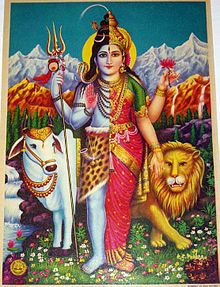
    Kamakshi,Bala and Kanchi Periyavar.

    I understand the text is from Valmiki Gnana in Tamil. I am checking it. Readers are requested to inform me if they come across the text or Link.I have provided the text from Siva Sambo Group from Facebook. The meaning is as below.

    Holding your Body steady,tighten the Anus raise Vaasi, concentrate on the point between Ears,Nose,Mouth( Anahatha located in the forehead),Chant the Ashtakshara ‘Om Namo Naraayanaaya’ directing it to Anahatha.Listen to the sound therein and follow it. Mind shall be overcome and Bliss will Be.That is Devi As Vaalai.( Bala Thiripura Sundari). Bala Worship in Tantra Sastra is very powerful and secretive.Will write what I know.

    குதத்தை இறுக்கி அங்கென்று வாசியை ஏற்றி காது மூக்கு வாய் சுவையுணர் நாக்கு யாவிற்கும் மத்தியாய் இருக்கின்ற சுழுமுனை வாசலுக்கு மேலே நட்ட நடுவாக நிற்கின்ற பொருளிலே எட்டெழுத்தை ஓதித் தாக்கி
    உடல் அசைவற்று மௌனமாய் இருந்து அங்கே எழுகின்ற நாத ஓசையை உற்று உணர்ந்து அது போகும் இடத்தினில் மனதை நிறுத்தி அதையே உற்று கவனிக்க நாதம் மேலோங்கி மனம்தான் அடங்கி அங்கே உணர்வு மட்டுமே நிலை நிற்கும்…
    அந்த நாதம் மற்றும் உணர்வே வாலையாம் அன்னை பராசக்தி என்றுணர்து பணிந்து அங்கே நின்று வணங்கே
    இதுவன்றி வேறு பூசை ஏதும் உண்டோ.. வால்மீகி

    Get new content delivered directly to your inbox.

    Rating: 1 out of 5.

  • How To Invoke Shiva in Devi Worship

    How To Invoke Shiva in Devi Worship

    Recently I was asked by a reader in Twitter how to add in Shiva in Devi worship , especially in Devi Tantra Sadhana.

    Shiva is included in Shakti.Shiva is Jada and Devi is Shakti and only when they are together, they become effective.

    Shiva is the Inert principle and Devi is the Driving Force.

    This does not mean one is powerless. Shiva and Shakti are like word and meaning, one is not complete without another. Trying to argue one is higher than the other is not the path of the Sadhaka, Practitioner.

    Wherever Shiva is present Devi is there and wherever Devi is present Shiva IS.

    Therefore, there is no necessity of specially invoking Shiva in Devi Upasna.Shiva is embedded and present Devi Upasna.

    For more on this and on Japa,Parayana and signs of Mantras helping spiritual evolution of a Sadhaka, watch the video.

  • Tantra  Forty One Devis Sixty Texts To Follow List

    While there are four suggested ways to realize the Self/God, based on one’s disposition,there is yet another approach the goal of Life,Realization of Self.

    This is based on the processes that evolved from following any of the four paths,Gnana,Karma,Raja and Bhakthi Yogas.

    One must remember that the term Yoga means Union,that is the union of the individual self with the Universal Self.

    Hence there is no question of debating which Yoga is superior.

    One follows a Yoga that suits one’s disposition.

    While following a Yoga, the processes might vary,though basics remain the same,the tools one develops as he goes along and the processes are as many as there are individual dispositions.

    One such process that belongs to this categorization is Tantra.

    Tantra finds a place in the Vedas,though they are not stated explicitly.

    In Tantra one finds an amalgam of all four yogas.

    And there are three processes to Realize self through Sound ,the fundamental principle of the Universe and Abstract Thought.

    Mantras,Sounds,

    Yantra,Geometrical patterns to facilitate abstract thinking to still Chitta and

    Tantra, an amalgam of all yoga and the above two.

    The Tantra also uses physical senses to realize Self.

    There are innumerable treatises on Tantra Shastra.

    I have written on authentic texts to follow in Tantra.

    Devi,Shanmugha,Lakshmi,Shiva,Bhairava are some of the Deities invoked.
    I have written a few articles on Tantra ,detailing procedures,texts and Deities.

    Lalitha Tripurasundari image.image
    Lalitha Tripurasundari

    As the subject is vast and complex , I keep updating.

    Also, I do not write with a preset notion on what I write.

    I write when I feel the urge,the topic presents itself and material pops up as it were.

    I write, not that I know much, but I seem to get information at specific time.

    It is since a year I wrote on Devised and Tantra.

    A reader has been asking a specific intricate question on Tantra for the past year.

    I hope I shall answer him through my articles in the present burst.

    Hope he reads this article,though his specific query is yet to be answered here.

    The Tantra Sastra,though deals with Deities with Form,in essence it is with Principles and Abstract Thought.

    The symbolism is Jewel or Flame,Lustre.

    These are expressions of experiences which can not be described.

    The source for deatils is given below.

    A scholarly site.

    https://archive.org/stream/TantrasOfTheReverseCurrent27HinduTextsAbstractedMichaelMagee/Tantras_of_the_Reverse_Current_27_Hindu_Texts_Abstracted+Michael+Magee_djvu.txt

    Now to the Central figures,

    Central Figure

    
    1. Jvalamukh! 2. Tripurasundarl 3. Kalika 4. Jat! 5. Jatinl 6. Jvalin! 7. 
    Jalandhar! 
    
    Ten Petals - the ten flames or Jvalas 
    
    8. Brahml 9. Ugratara 10. Bhadrakal! 11. Matang! 12. Kaumar! 13. 
    Narasimh! 14. Kulakamin! 15. Varah! 16. Durga 17. Sambhavl 
    
    Eight Petals - the Eight Maidens 
    
    18. Maya 19. Baindavesvarl 20. Mrdan! 21. Bhlrunda 22. Bhagavasa 23. 
    Bhagarupin! 24. Bala 25. Mohini 
    
    Sixteen Petals - the sixteen flames or Jvalas 
    
    26. Varum 27. Krt! 28. Karun! 29. Kucar! 30. Kunta 31. Kumbhesvarl 
    32. Kunt! 33. Kuhu 34. Kutila 35. Kutsita 36. Kunth! 37. Kulika 38. 
    Kuvar! 39. Kulasundar! 40. Varah! 41. Vatyal! 
    
    Earth Square 
    
    42. Vasuki 43. Narasimha 44. Ganesa 45. Dharmaraja 46. Dadhisamudra 47. 
    Lavanasamudra 48. Sudhasamudra 49. Kslrasamudra 50. Plthatrayasana 51. 
    Rudrabjaplthasana 52. Savasana 53. Padmasana 54. Dispelling fear 55. 
    Granting boons 56. Arrow 57. Holding lotus 
    
    DS Daksinamurti Samhita 
    
    J Jnanarnava Tantra 
    
    N Nityotsava 
    
    YoH YoginI Hrdaya 
    
    SN Srlnathanavaratnamalika 
    
    Gu Guhyakallkakhanda 
    
    KT Kalltantra 
    
    KaT Kankalamalinltantra 
    
    Nir Niruttaratantra 
    
    GuS Guptasadhanatantra 
    
    SSP Siddhasiddhantapaddhati 
    
    Yo Yogavisaya 
    
    AKu Akulavlratantra 
    
    Kula Kulanandatantra 
    
    JK Jnana Karika 
    
    BT Brhannllatantra 
    
    Ta Tararahasya 
    
    BrT Brhat Tantrasara 
    
    S Saktanandatarangini 
    
    De Devlrahasyatantra 
    
    Me Merutantra 
    
    YoT Yoginltantra 
    
    RuY Rudrayamala 
    
    KDh Kamadhenutantra 
    
    MV Malinlvijayottaratantra 
    
    NT Netratantra 
    
    UT Uddamaresvaratantra 
    
    KC Kulacudamanltantra
       MaK Mahakalasamhita
    KiY Kiss of the Yogini 
    MT Matrkabhedatantra 
    Ga Gandharvatantra 
    Ta Tantrarajatantra 
    NiS Nityasodasikarnava 
    VT Vamakesvaratantra 
    KJN Kaulajnananirnaya 
    ORC Obscure Religious Cults 
    YoV Yogavija 
    Kar Karunamaya 
    
    
    DeR Devlrahasyatantra 
    MeT Merutantra 
    YoT Yoginltantra 
    RT Rudrayamalatantra 
    HTS Hindu Tantric and Sakta Litera- 
    ture 
    
    SaS Sakti and Sakta 
    PR Pancaratraraksa 
    LT Laksmltantra 
    TAB The Alchemical Body 
    Sau Saundaryalahari 
    KP Kalikapurana 
    KV Kaulavalmirnaya 
    PoT Principles of Tantra 
    GaV GanesavimarsinI 
    WGK Worship of the Goddess accord- 
    ing to the Kalikapurana 
    SS Siva Sutras 
    
    SVA Shri Vilakshan Avadhoot 
    
    ST Saradatilaka 
    
    TT Todalatantra 
    
    GoL The Garland of Letters 
    
    MaN Mahanirvanatantra
  • Essentials Of Devi Srividya Upasana

    Essentials Of Devi Srividya Upasana

    What is Upasna?

    Srichakra of Devi
    The Srichakra

    Upasana’ in Sanskrit literally means “Sitting near” but normally the term is used in Hinduism to denote a prescribed method for approaching a Deity or God or getting close to a deity/deities. In the Vedas, some Upasanas are prescribed whereby one meditates on the all-pervading Brahman as some aspect of creation, such as fire, water, directions, food, mind, joy, etc. Thus, Upasana can be described as a systematic practice of a prescribed method of worship for pleasing and winning the attention of the deity or it can be a deity-less practice of austerities involving meditating upon some aspect of nature as told in specific texts.

    “The seeker of knowledge does not achieve his end merely by a study of scriptures. Without upasana there cannot be attainment for him, this is definite.”—Sri Ramana Leela, Ramana Gita I.22, quoted in Sri Krishna Bihkshu, Sri Ramana Leela (Pingali Surya Sundaram tr. 2004), p. 80.

    Pooja and external disciplines are essential in the path of attaining Godhead or Realizing Brahman.

    All are not Ramana Maharishi, to say I have known Reality.

    We are at the lowest level and have to evolve by practice by way of the practices mentioned in the Sruthi and Smritis.

    I have mentioned in my earlier Post ‘Lalitha Sahasranama, An Introduction’, I listed the different ways of worshipping The Divine Mother, Sri Lalitha Devi.

    I am planning to post articles on the Varivasya Rahasyam of Bhaskararaya.

    To understand the Varivasya Form of worship, familiarity with the worship of Devi in this Form will be helpful.

    The Sri Vidya is to be practised by any of the following Four ways,traditions

    1.Samayacharam. Worshiping in The Mind.

    Worship is done mentally, internally and no object is used in this tradition

    2.Dakshinacharam,Worshiping through an Object, Sri Chakra or an Idol.

    3.Vamacharam is worshiping through the terrible aspects of The Divine, Laya Pradhana

    4.Kaulacharam is worshiping through the Human Body/parts.

    This includes Rituals some which are erotic in nature.

    This Mode of worship is considered by some the Ultimate practice of Bhakti Yoga, while the Advaitins consider this to be best form of Advaita in full flow.

    I am making this as a passing remark as my purpose is to familiarize the Practice of Tantra;so let us not get nto the philosophical discussions on this subject.

    “Shakti is the power of Shiva.

    Her activity at will towards manifestation becomes evident while Shiva, the source of all power remains in volute.

    As such, the Eternal Shakti emanates as form and assumes different phases while the Eternal Shiva remains in the subtle state of Chaitanya.

    This is depicted in the Shakta lore as Shiva lying as if dead and Shakti stands on him in full vigor of awareness.

    The sleeping Sadashiva forms the berth of the palanquin in which Sri Mahatripurasundari is borne by the four powerful deities:

    Brahma, Vishnu, Rudra and Ishwara.

    ‘Panchapredha Manchaathsaayini” Lalitha Sahasranama.

    Brahma,Vishnu,Rudra, Shiva and Sadashiva.

    Her four arms represent the powers of four prominent parts (Kalaa) of the creative divinity.”

    Her three eyes connote the three luminary powers i.e. the sun, the moon and the fire, which correspond to knowledge (Pramaana), object of knowledge (Prameya) and empirical experiencer (Pramaata).

    The Third Eye also connotes Wisdom.

    Her breasts connote the meaning of alert awareness of light and sound or Prakasha and Vimarsha.

    Her bending waist is the sign of inclination towards manifestation.

    Decoding this symbolism, we obtain the nine enclosures of the Srichakra.

    1. valiitrayaa~Nkitatanum – Moolaadhaara Chakra – Bhoopura Trailokyamohana Chakra.

    2. madhye nimna – Swadhishthana Chakra – Sodasha dala Padma – Sarvashaparipooraka Chakra.

    3. aapiinottu~Ngastaniim – Manipooraka Chakra – Ashtadala Padma Sarvasamkshobhana Chakra.

    4. trinayanaam – Anahata Chakra – Chaturdashara Sarvasaubhagyadayaka Chakra.

    5. chaturbhujaam – Visuddhi Chakra – Bahirdasara Sarvarthasadhaka Chakra.

    6. pretaasanaadhyaasiniim – Ajna Chakra – Antardashara Sarvarakshakara Chakra.

    7. bandhuukaprasavaaruNaambaradharaam – Manasa Chakra – Ashtara Sarvarogahara Chakra.

    8. nR^imuNDasrajam – Soma Chakra – Trikona sarvasiddhiprada Chakra.

    9. shashikhaNDamaNDitajaTaajuuTaam – Sahasrara – Bindu Sarvanandamaya Chakra.

    Note: This is the Samhara Krama accepted by Dakshinamurthy sampradaaya.

    Hayagriva tradition and Anandabhairava traditions omit triple girdle from Sri Chakra.

    The three worlds (of which she is the supreme queen) refer in the microcosm to BhuH, BhuvaH and SvaH (earth, space and heaven) or to Vishwa, Praajna and Taijasa or Virat, Hiranyagarbha and Ishwara in terms of Vedanta.

    Sridevi is the supreme ruler of these and hence she is Turiya, the incomprehensible fourth.

    There are basically only three castes, as there are the three Vedas, the three Gunas etc.

    The three castes represent the three qualities viz. Satva, rajas and Tamas, as suggested by the pet offerings made by devotees who are quite established in their respective modes of worship.

    A Brahmana should offer Tarpana only with milk and sugar during Navavarana Pooja.

    Using other articles is banned by the Agamas. Ghee and honey are prescribed for the other two castes.

    These may not necessarily mean castes, but instead may refer to different stages of spiritual advancement.

    More information on this may be obtained in a work called `Srividya Sudhodaya’, a classic by Deepakanatha Siddha.

    This also finds sanction in the Shubhagama Panchaka.

    As mentioned earlier, milk, ghee and honey represent Satva, rajas and Tamas in the devotees belonging to different levels of consciousness.

    In offering oblations or doing any kind of worship to the Divine Mother, one must not involve oneself in the desire of a return or fruit thereof.

    If one does, the earnestness and one-pointed ness required for its success lose their intensity.

    puujaa naama na puShpaadyairyaa matiH kriyate dR^iDhaa |
    nirvikalpe mahaavyomni saa puujaa hyaadaraallayaH ||

    `Worship does not mean merely offering of flowers etc. It rather consists in setting one’s heart on that highest ether of consciousness, which is above all thoughtconstructs. It is dissolution of individuality with perfect ardor’.

    Before performing the Pooja, Sandhyavandana must be performed by all the Three varnas.

    Ladies are allowed to perform Pujas and they also must perform Sandhyavandana,

    On this.please read my post on Can Women Learn Vedas?;Upakarma for

    Women”.

    http://www.kamakotimandali.com/srividya/urahasya.html

    Image:http://www.bloguez.com


    Join 4,576 other subscribers