In the course my research about Chozha dynasty, I came across Information that Chozha Kings ‘ Coronation was performed at Chidambaram Nataraja Temple. I had not heard of this earlier,though I was aware that Chidambaram Nataraja was one of the Deities Chozhas worshipped along with Durga,called Kotravai in Tamil. Darasuram Temple was built for Her. History of Rajaraja Chola and Rajendra Chola confirm this. Afer the disintegration of the Chozha Empire in 1279 ,during the period of Rajendra Chola III, it is surmised by historians that the Chozhas moved to a place called ‘Theevukkottai’, where Kollidam River joins the sea near Cuddalore.The descendants of Cholas ,who are called ‘ Pichavaram Cholas’ had/ have their Coronation perfomed at Thillai Nataraja Temple, Chidambaram.The Three Thousand Brahmins,called Thillai Vaazh Andhanar Moovayiravar, தில்லை வாழ் அந்தணர் மூவாயிரவர்,perform this ceremony and they would not perform this for anyone else. This is recorded in a eighteenth century painting in Chidambaram Nataraja temple.
On an auspicious day, the Coronation is done in front of the Nataraja Idol,in the Panchakshara steps .He is given the Tiger Flag and Athi Garland and Sceptre.
During the Tamil month of Aani(Mid June – Mid July) and Margazhi(December/January), special Deeparadhana is done for Nataraja at Chidambaram temple.This is done in Surya, Chandra Sannidhi ( sanctum for Surya and Chandra,in recognition of Chozhas ancestors Solar and Lunar dynasty), near the Gold-plated Vimana of the Chidambaram temple. The Goldplating was done by a Chozha King ,Ponthakadu Veintha ,Aditha Chozha and his son Paranthaka Chozha.
The empire of Chozhas was extended upto Kalinga during and after the period of Rajaraja Chola and Rajendra Chola . Rajendra Chola’ s grandson,(son of his daughter) was Kulothunga I.The present city of Vishakapatnam was called then as Kulothunga Chozha Patnam.Inscriptions found in Jaggarao Observatory of Vizakapatam taluk (during East India Company days) confirm this. There is also reference to a trader having gifted a garden and the mention of 500 ‘Perumballi of the 500” refers to a merchant guild of the Anjuvannam Group, hailing from Malamandala (Kerala)’..This talkies with Tamil Trader group of 500. Thodai Vanigar Ainnootruvar.’ திசை வணிகர் ஐநூற்றுவர்.
India’s East Coast has had an enduring connection to the ocean, dating back to the 3rd Millennium BC. Maritime traffic, from this region, has spread Hinduism as far away as Indonesia, and Buddhism to Thailand and beyond. India’s most ancient text, the Rig Veda, chronicles India’s earliest maritime activity to 1700 BC whereas the Buddhist Jatakas relate ocean travel back to 500 BC. Many residents of Visakhapatnam believe that the city was just a fishing village that grew into a city only after the English set up their trading post here in 1682 AD. But is there an untold story of the origins of Visakhapatnam? For the reconstruction of the lost history of Visakhapatnam, stone or copper inscriptions can be relied upon as an authentic source.
The first recorded history of a place by the name “Visakhapatnam” can be seen on a stone inscription inside the Lord Bhimeswara Swamy Temple in Draksharamam (in present-day East Godavari District, Andhra Pradesh). A text of that inscription as recorded and published by the Government Epigraphical branch of the Archaeological Survey of India (ASI) is reproduced in Fig 1.
This inscription reads – ‘in the year Saka 990 (which corresponds to 1068 AD) a merchant by the name Papaya, son of Mediya setti from Visakhapatnam, made a donation to ‘Bhimeswara’, the presiding deity of that temple. The donation consisted of one metal lamp stand for lighting a lamp. He also donated 50 cows for the supply of ghee to light that lamp to burn perpetually as long
Inscription regarding Vishakapatnam as Kulothunga Chozha Pattana.
the other inscription against serial no. 61 in fig 2, it also refers to thea sale of a land and a house to a merchant in Visakhapatnam in the year 1199 AD. This inscription also mentions the merchant guild. The name of Kulottunga Chola Pattana continues to be applied to Visakhapatnam for about two hundred years.
The inscription, showed against serial no. 62 in fig 2 in Tamil, mentions a gift of a mantapa to a temple by a merchant in the year 1250 AD. This inscription gives new information onf the existence of a temple, called “Karumanikka Alvar”, in Visakhapatnam. This is the only inscription available about this temple and there is no evidence of it in any literary sources. It was recorded in the Epigraphical report of the year 1909 AD that the inscriptions of AD 1199 and AD 1250 were found near Paravastu Rangacharya’s house. Paravastu Rangacharya’s family were living in Kancheraveedi of the old town near Venkateswara Temple (Embermannar). In all probability, this Karumanikka Alwar temple might have been in the old town of Visakhapatnam. Kollam, in this inscription, refers to the Port of Kollam near the present Kozikode in Kerala.
The inscription against serial no. 63 in the above figure relates to the period of Anantavarman Chodaganga Deva, a Eastern Ganga King related to Kulottunga I, inscribed in the Saka year 1012, corresponding to 1090-91 AD. “Perumballi of the 500” refers to a merchant guild of the Anjuvannam Group, hailing from Malamandala (Kerala). So, the inscription records a gift by the guild to a merchant of Kerala. This gives evidence that there were merchant guilds, and merchants from Kerala, at Visakhapatnam during the 11th Century. It also says that the name of the city was changed as Kulottunga-Cholapattana in honour of the king of the Chola dynasty, which was ruling Chola, Vengi and Kalinga areas at that time. three inscriptions in Fig 2, mention merchants of trade guilds residing in Visakhapatnam. Considerable history of maritime trade in Visakhapatnam during the period between 1099 AD and 1250 AD. It is also clear that there was much Tamil influence in Visakhapatnam during Chalukya Chola’s time.
Inscription regarding gift of Garden Other inscriptions in Vishakapatnam.
One more inscription given in Fig. 4 is also from the Simhachalam Temple wherein it is mentioned that a person, who appears to be Tamil, purchased a garden from a local resident of Visakhapatnam and gifted it to the temple in the year 1421 AD. This gives evidence of an agrarian society in Visakhapatnam.
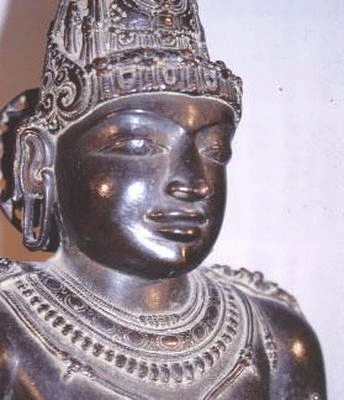
Kulottunga Chola I ( சக்ரவர்த்தி குலோத்துங்க சோழதேவர் “Chakravarti Kulottunga Chozhadeva”; r. 1070 CE – 1122 CE) also spelt Kulothunga, was an 11th-century Chola Emperor who reigned for fifty-two years.He was one of the sovereigns who bore the title “Kulottunga”, literally meaning “the exalter of his race” in Tamil, succeeding his cousin Athirajindra. He did not belong to the main line of Cholas but was rather a prince of the Venki belongs to Eastern Chalukya dynasty, but also he is known as tamil chola. His mother, Ammangaidevi, was a Chola princess and the daughter of emperor Rajendra Chola I. His father was king Rajaraja Narendra of the Eastern Chalukya dynasty who was the nephew of Rajendra Chola I and maternal grandson of Rajaraja chola.According to historian Sailendra Nath Sen, his accession marked the beginning of a new era and ushered in a period of internal peace and benevolent administration. .. The Chola kingdom remained formidable under Kulottunga in his 45th regnal year (c. 1115 CE). Except for the loose hold over Lanka, the rest of the empire remained intact. The boundary between the Cholas and the Western Chalukyas was as always the Tungabhadra river. The hold over Vengi was quite firm, and Dakkina Kosala (south-west Kalinga) and some parts of Kalinga (proper) including the capital Kalinganagara, the modern Mukhalingam in the Srikakulam district, was under the Chola rule.[ Port Quilon, on the Malabar Coast, was recovered by prince Vikrama Chola sometime between c. 1102 and c. 1118 CE Kulothunga Chozha I
Reality, Brahman,is beyond Attributes.It is beyond description.It transcends Space and Time; beyond Mind; beyond senses; Words fail.It can, at best , be described, but never defined.
IT is an experience and can never be brought under Logic and Reason as these fail in their attempt to decipher IT .How to describe the Indescribable? Avaktavya?
Unless you know what It Is,at least an idea about It,how can you attempt to Realise It? Upanishads attempt by describing It by a method of Negation of known Attributes. ‘Not this,Not This’.That is ,’ It is Neither tall,nor short,nor in between; Neither big, nor small, nor in between; Neither Make,nor Female, nor the Third Gender: Neither the Known,nor the Knower…..’ This is called the ‘ Neti Nyaya’.. Not this, Not This…Process in Tharka,Logic.
However, those who Realised Brahman,have suggested some Attributes for the One that is beyond Attributes.It is an attempt to catch in words the Experience that can not be caught in words.Just as however hard we try to explain what hunger/pain is,when we know we can not really convey what we feel.
One set of Attributes is,
Sat,Being.
Chit, Consciousness.
Anand,Bliss.
For those who find this too as difficult, It, Brahman, is suggested to be expressed in the form of Light,which in real terms,does not have a beginning and end,nor middle Even this is merely an attempt at describing Brahman. Yet, this simple mode has helped people to meditate and help in Self Realisation.
Then comes the Advice from Vedas. If you find contemplating on Brahman as an abstract principle, have one with Names and Forms. This can be what you like. And meditate upon it. Then you shall evolve spiritually towards Realisation of Brahman per se. This is called Saguna Upasana or Saguna Aradhana. Contemplating on The Brahman as Beyond Attributes is called Nirguna Upasna or Nirguna Aradhana.
In Saguna Upasana, one finds Gods with Names and Forms.Even here these Gods are expressed in the form of Light, Jyothi.
Such a thought is exquisitely conveyed in a Tamil poem by Saint Thirunavukkarasar, also called Appar. Appar in Tamil means father .Appa is a familiar term . Appar is a term of respect. Siva called out to Thirunavukkarasar as ‘Appa’.
The following poem is by Thirunavukkarasar.He is one of the Four foremost Saints who worshipped Siva. The others are,
Sundarar
Thirugnanasambandar
Manikkavasagar.
These four have sung hymns in praise of Siva and the collection is called Thevaram and it forms the core of Saiva worship, along with Thiruvasakam by Manikkavasagar.
Thirunavukkarasar was a Saivite and switched over to Jainism. Distressed at this, his sister, a great devotee of Siva ,prayed Siva that her brother should be back to Shaivism.Siva did so.( I shall write about it later)
After Thirunavukkarasar returned to Shaivism,Jain monks egged the King to torture Thirunavukkarasar. Thirunavukkarasar was tortured, thrown out fro a hill,given poison ,thrown into 🔥.
When he was tortured thus, Thirunavukkarasar sang Ten Hymns,Namasivaya Pathikam,Tem Hymns of Namasivaya.I provide the Tamil text below. This song is to be sung while lighting the Lamp at home.
About 43000 inscriptions are found in Tamil Nadu. Apart from a wealth of information, what interested me most was the number of languages used in these records. Eight languages have been used! To my surprise Prakrit occupies the second place to Tamil.And Local language is also used. I am not sure what it is. Might be local dialect. Am providing image showing the percentage of languages used in these records.
Inscriptions.Languages used.
Reign details
Wars won,lost,
Genealogy,
Grants provided to the Temples,if any has been made or a temple built
Or if a donation to a group of people are made
Or donation by an individual to the temple or the Kings’ Coffers.
Information such as these are recorded in
Temple walls.
In Copperplates,which are left in the custody of some people or buried in a safe place.
Written on Palm leaf 🍂.
Indian copper plate inscriptions are historical legal records engraved on copper plates in India.
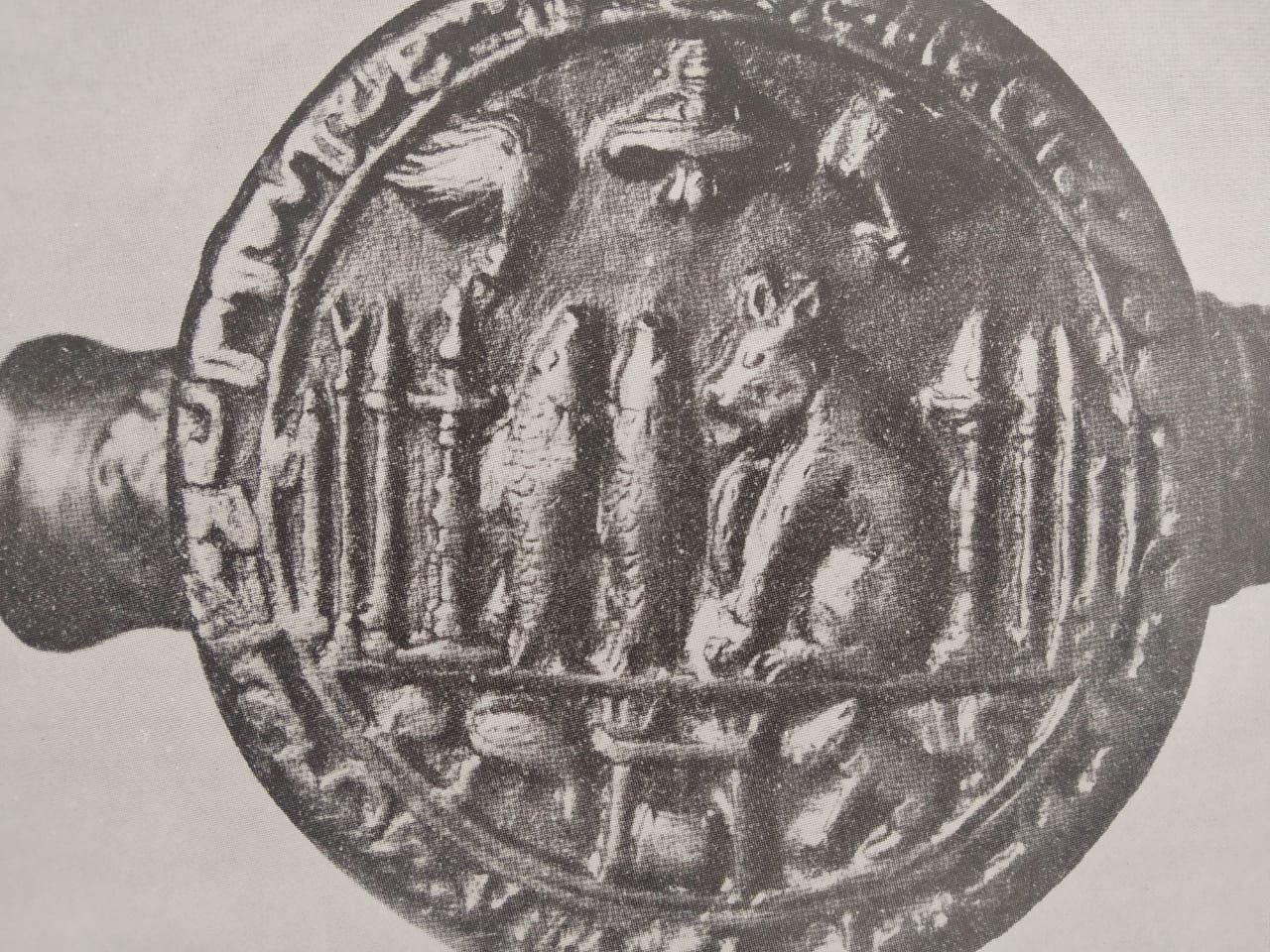
Donative inscriptions engraved on copper plates, often joined together by a ring with the seal of the donor, was the legal document registering the act of endowment. It was probably necessary to produce them when required to prove ownership/ the claim to the rights. The retrievability of the copper plates was perhaps crucial in the newly settled lands. Detailed information on land tenures and taxation available from these copper plate grants….
Indian copper plate inscriptions (tamarashasana), usually record grants of land or lists of royal lineages carrying the royal seal, a profusion of which have been found in South India. Originally inscriptions were recorded on palm leaves, but when the records were legal documents such as title-deeds they were etched on a cave or temple wall, or more commonly, on copper plates which were then secreted in a safe place such as within the walls or foundation of a temple, or hidden in stone caches in fields. Plates could be used more than once, as when a canceled grant was over-struck with a new inscription. These records were probably in use from the first millennium.
Some of the oldest inscribed copper plates to be found in the Indian subcontinent date to the Mature Harappan era, consisting of up to 34 characters and thought to be used for copper plate printing…Indian Copperplates .
Epigraphy is the study of Inscriptions on Rocks, Pillars, Temple walls, Copper plates and other Writing-materials like Stones, Metals, Potteries, Woods, Palm leaves, Clothes, Conch shells, Mural paintings and Coins. It is one of the most fascinating and instructive studies. It deals with the art of writing, which distinguishes man from animals and provides us with an instrument for conservation and transmission of historical traditions from generation to generation. ….It has been estimated with a fair degree of accuracy that the inscriptions written in Tamil occupy the first position in volume, amounting nearly 20,000, followed by those in Kannada (10,600), Sanskrit (7,500) and Telugu (4,500). Inscriptions in Tamil language are noticed from the third century BCE onwards. (Source: Journal of the Epigraphical Society of India Volume 19 : 1993)….
A separate epigraphy wing was started during the year 1966. The primary function of this wing is to copy inscriptions on boulders, stone pillars, stones, temple walls and on copper plates. The inscriptions are deciphered,edited and published. So far, about 24,771 inscriptions are copied and their estampages (ink impression) are preserved in this wing. Some original copper plates and old palm leaf manuscripts are also under the custody of this department.
Now more information about Uparichara Vasu, Thodiththol Chola.He was the first King to conduct a Festival for Indra called Indra Vizha in Tamil. Silappadikaram ,one of the five Epics of India,devotes a chapter ‘ Vizhaa Kaathai, விழாக் காதை.This contains detailed procedure to be followed in the festival which was a sort of Thanksgiving to Indra.Contrary to what is known, this Festival was started in the North ,in Chedi Kingdom by Uparichara Vasu, a Chozha King. Check this Link https://www.whatisindia.com/inscriptions/south_indian_inscriptions/volume_3/no_205_aditya_ii_karikala.html#_ftnref7
Uparichara was a king of Chedi belonging to the Puru Dynasty. He was known as the friend of Indra. During his reign, Chedi kingdom had a good economic system and contained much mineral wealth, which made a lot of merchants around the world, come to the Kingdom. It was abundant in animals and corn. There were many towns and cities in the kingdom. He possessed a very special chariot. He introduced a festival in his kingdom in the honour of Indra. The festival involved planting of a bamboo pole every year, in honour of Indra. The king will then pray for the expansion of his cities and kingdom. After erecting the pole, people decked it with golden cloth and scents and garlands and various ornaments. From Chedi, he ruled a large territory, placing his sons as governors of various provinces. His son Vrihadratha (Maharatha) was installed in Magadha, who later fathered Emperor Jarasandha. His other sons, viz., Pratyagraha, Kusamva (Manivahana), Mavella and Yadu also became governors at various places. Thus the Chedi king attained the status of an emperor and his kingdom became a vast empire. He diverted the waters of river Suktimati from the locks of the Mountain Kolahala, for irrigating his capital-city which he named Suktimati. (1,63)
This beautiful city of the Chedis was called after the Oyster (14,83)
His wife Girika, was from the valley of Kolahala. Girika’s brother was installed as the generalissimo of Vasu’s army. Apart from his five royal sons, he had a son and a daughter born of a woman of fisherman community. The male child, in due course established the Matsya Kingdom and founded the royal dynasty called Matsya Dynasty. The female child lived as a member of fishermen community. Her line established as fishermen on the banks of river Yamuna, in the kingdom of Kurus. The famous Kuru king Santanu‘s wife Satyavati was from this fishermen community. The author of Mahābhārata, vis Krishna Dwaipayana Vyasa and the Kuru kings viz Chitrangada and Vichitravirya were the sons of Satyavati. Pandavas and Kauravas were the grandsons of Vichitravirya.(1,63)
……….Another story connects Vasu with vegetarianism in ancient India. Filled with doubts respecting the propriety of eating flesh, some sages asked Uparichara Vasu for solving them. King Vasu, knowing that flesh is inedible, answered that it was edible. From that moment Vasu fell down from the firmament on the earth. After this he once more repeated his opinion, with the result that he had to sink below the earth for it. (13,115) http://www.sacred-texts.com/hin/m13/m13b080.htm
You must be logged in to post a comment.