The Mesopotamian origin of Arabia throws up some startling facts.
I have posted a couple of articles on this, filed under Islam,Hinduism.
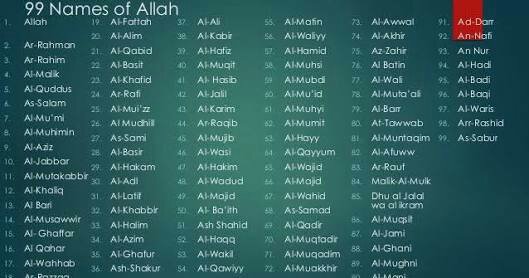
Bismillah al rahman al rahim in Arabic
Now,
“NOTED SCHOLAR and Sarva Dharma Ekta Manch secretary Abdullah Tariq claimed here on Sunday that Islam was a religion with an Indian origin. He said, “The first Prophet Hazrat Adam was born in India, according
to belief, and the last Prophet Hazrat Mohammad was born in Mecca.” He also said the study of the Vedas was the need of the hour. Tariq was expressing his views in a symposium organised by the UP Rabta Committee at Islamia College of Commerce entitled “Ved and Quran: How Near How Far”.
“The ending of the term is the word Allah, which is the Arabic name of the One. The Semitic roots of the word Allah extend back several thousand years to the Canaanite Elat, Hebrew El and Elohim, and Aramaic Alaha. These roots point toward unity, oneness, the eternal power which includes all of existence and of non-existence. In modern English this would generally be translated as God (which is old English, likely based on the Sanskrit word hu, meaning that which is worshipped, honored or adored).’
Because of the Saudi illiterate population, direct recording of Saudi Arabian history is almost non-existent. But from countries with historical contacts with Saudi Arabia, it is possible to make sense of the Saudi History. One recorded History, we can rely on is of the Hindu Vikrama Era (58 B.C. to 415 A.D.) whose Hindu Empire stretched from India to the Arabian Peninsula in the West (and also Eastwards). These Hindu Maharaja/s were greatly devoted to their Hindu Deities of Lord Siva {moon God-Allat} and his spouse, Goddess Durga {moon goddess-Allah}. The Maharajas gave thanks to their Godly Deities by building Siva temples in their honour, in all their territories {at least 7 in Saudi Arabia alone, including the Kaaba}. Even after their Empire fell, the Saudi Arabs faithfully devoted themselves to these Hindu Godly Deities/Temples as devote Hindus up to Muhammad’s time….”
I have posted articles on the existence of Hinduism, Sanatana Dharma in Mesopotamia,including the Arabian Peninsula.
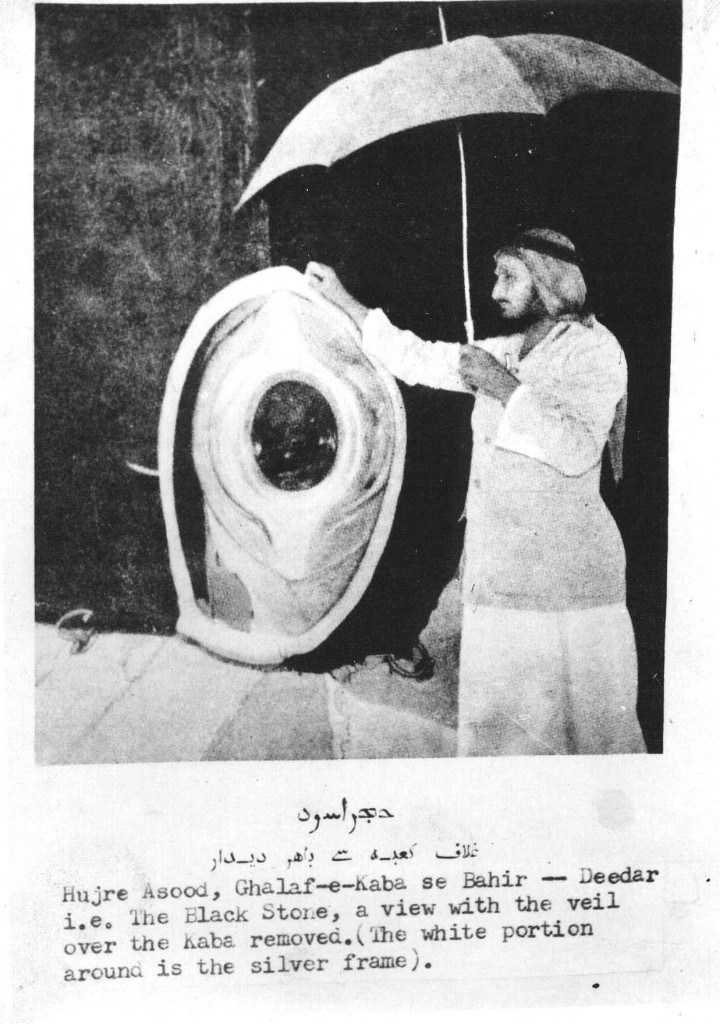
These articles were about the Kaaba, Mecca being a Hindu place of worship and there is a Shiva Linga;King Vikramadhitya’s Inscription is found there.
I shall be posting a detailed article on the History of Kaaba.
In the meanwhile, I would like to share a Poem, Stuthi on Lord Shiva by Umar-Bin-E-Hassham, an Uncle of Prophet Muhammad.
Muhammad’s uncle was one of the resident priests of the Shiv temple known as “Kaaba”.
Prophet Muhammad’s uncle (Chacha) Umar-bin-e-Hassham (also known as Abu Hakam or Abu Jahl) was a renowned poet whose famous Arabic poem in praise of Lord Shiva, included in Sair-ul-Okul and cited on a column in the (fire worship pavilion in the rear garden of the) Lakshmi Narayan Temple in New Delhi
Poem on Lord Shiva By Prophet’s Uncle.
The Shiva Sloka
Kafavomal fikra min ulumin Tab asayru
Kaluwan amataul Hawa was Tajakhru
We Tajakhayroba udan Kalalwade-E Liboawa
Walukayanay jatally, hay Yauma Tab asayru
Wa Abalolha ajabu armeeman MAHADEVA
Manojail ilamuddin minhum wa sayattaru
Wa Sahabi Kay-yam feema-Kamil MINDAY Yauman
Wa Yakulum no latabahan foeennak Tawjjaru
Massayaray akhalakan hasanan Kullahum
Najumum aja- at Summa gabul HINDU
Translation.
The man who may spend his life in sin
and irreligion or waste it in lechery and wrath
If at least he relent and return to
righteousness can he be saved?
If but once he worship Mahadeva with a pure
heart, he will attain the ultimate in spirituality.
Oh Lord Shiva exchange my entire life for but
a day’s sojourn in India where one attains salvation.
But one pilgrimage there secures for one all
merit and company of the truly great.
Caste is some thing that can not be wished away in a Human being however enlightened one pretends to be.
For my views on Caste please refer my post caste, under Hinduism.
Religions that make fun of idol worship have landed in worshiping idols.
Islam, The Kaaba,Prophet’s hair,Hazratbal
Christianity, Jesus, The Cross.
Buddhism, The Buddha, His teeth.
Jainism, Bhaubali, Mahaveera.
Hinduism understands that human mind can not function and focus in a vacuum and hence recommended Idol worship, though in higher philosophy of Hinduism, Idol worship is discouraged.
Please read my articles on this.
This is the list of castes among Muslims in India, some 308 of them!
There have been quite a few murderous attacks on People and magazines that publish the image/cartoon of Prophet Muhammad of Islam.
Is thee any injunction in Islam to this effect?
There seems tobe no mention of this subject in the Koran.
It seems that the Sunnis are responsible for this.
*Corrections welcome.
Islam, Branches Sects
“Most Sunni Muslims believe that visual depictions of all the prophets of Islam should be prohibited[3] and are particularly averse to visual representations of Muhammad.[4] The key concern is that the use of images can encourage idolatry.[5] In Shia Islam, however, images of Muhammad are quite common nowadays, even though Shia scholars historically were against such depictions.[4][6] Still, many Muslims who take a stricter view of the supplemental traditions will sometimes challenge any depiction of Muhammad, including those created and published by non-Muslims
Thre are some Hadiths to this effect.
”
Narrated ‘Aisha (the wife of the Prophet): Um Habiba and Um Salama mentioned about a church they had seen in Ethiopia in which there were pictures. They told the Prophet about it, on which he said, “If any religious man dies amongst those people they would build a place of worship at his grave and make these pictures in it. They will be the worst creature in the sight of Allah on the Day of Resurrection.”
Narrated ‘Aisha: When the Prophet became ill, some of his wives talked about a church which they had seen in Ethiopia and it was called Mariya. Um Salma and Um Habiba had been to Ethiopia, and both of them narrated its (the Church’s) beauty and the pictures it contained. The Prophet raised his head and said, “Those are the people who, whenever a pious man dies amongst them, make a place of worship at his grave and then they make those pictures in it. Those are the worst creatures in the Sight of Allah.”
Narrated ‘Aun bin Abu Juhaifa: My father bought a slave who practiced the profession of cupping. (My father broke the slave’s instruments of cupping). I asked my father why he had done so. He replied, “The Prophet forbade the acceptance of the price of a dog or blood, and also forbade the profession of tattooing, getting tattooed and receiving or giving Riba, (usury), and cursed the picture-makers.”
Sahih Bukhari 3:34:299
Narrated Aisha: (mother of the faithful believers) I bought a cushion with pictures on it. When Allah’s Apostle saw it, he kept standing at the door and did not enter the house. I noticed the sign of disgust on his face, so I said, “O Allah’s Apostle! I repent to Allah and H is Apostle . (Please let me know) what sin I have done.” Allah’s Apostle said, “What about this cushion?” I replied, “I bought it for you to sit and recline on.” Allah’s Apostle said, “The painters (i.e. owners) of these pictures will be punished on the Day of Resurrection. It will be said to them, ‘Put life in what you have created (i.e. painted).’ ” The Prophet added, “The angels do not enter a house where there are pictures.”
Sahih Bukhari 3:34:318
Narrated Said bin Abu Al-Hasan: While I was with Ibn ‘Abbas a man came and said, “O father of ‘Abbas! My sustenance is from my manual profession and I make these pictures.” Ibn ‘Abbas said, “I will tell you only what I heard from Allah’s Apostle . I heard him saying, ‘ Whoever makes a picture will be punished by Allah till he puts life in it, and he will never be able to put life in it.’ ” Hearing this, that man heaved a sigh and his face turned pale. Ibn ‘Abbas said to him, “What a pity! If you insist on making pictures I advise you to make pictures of trees and any other unanimated objects.”
Sahih Bukhari 3:34:428
Narrated Al-Qasim: Aisha said that she hung a curtain decorated with pictures (of animates) on a cupboard. The Prophet tore that curtain and she turned it into two cushions which remained in the house for the Prophet to sit on.
Sahih Bukhari 3:43:659
Narrated Aun bin Abu Juhaifa: I saw my father buying a slave whose profession was cupping, and ordered that his instruments (of cupping) be broken. I asked him the reason for doing so. He replied, “Allah’s Apostle prohibited taking money for blood, the price of a dog, and the earnings of a slave-girl by prostitution; he cursed her who tattoos and her who gets tattooed, the eater of Riba (usury), and the maker of pictures.”
Sahih Bukhari 3:34:440
Narrated Ibn Abbas: The Prophet entered the Ka’ba and found in it the pictures of (Prophet) Abraham and Mary. On that he said’ “What is the matter with them ( i.e. Quraish)? They have already heard that angels do not enter a house in which there are pictures; yet this is the picture of Abraham. And why is he depicted as practicing divination by arrows?”
Sahih Bukhari 4:55:570
Narrated Ibn Abbas: When the Prophet saw pictures in the Ka’ba, he did not enter it till he ordered them to be erased. When he saw (the pictures of Abraham and Ishmael carrying the arrows of divination, he said, “May Allah curse them (i.e. the Quraish)! By Allah, neither Abraham nor Ishmael practiced divination by arrows.”
Sahih Bukhari 4:55:571
Narrated ‘Aisha: Um Habiba and Um Salama mentioned a church they had seen in Ethiopia and in the church there were pictures. When they told the Prophet of this, he said, “Those people are such that if a pious man amongst them died, they build a place of worship over his grave and paint these pictures in it. Those people will be Allah’s worst creatures on the Day of Resurrection . ”
Sahih Bukhari 5:58:213
Narrated Ibn Abbas: Abu Talha, a companion of Allah’s Apostle and one of those who fought at Badr together with Allah’s Apostle told me that Allah’s Apostle said. “Angels do not enter a house in which there is a dog or a picture” He meant the images of creatures that have souls.
Sahih Bukhari 5:59:338
Narrated Abu Juhaifa: The Prophet cursed the lady who practices tattooing and the one who gets herself tattooed, and one who eats (takes) Riba’ (usury) and the one who gives it. And he prohibited taking the price of a dog, and the money earned by prostitution, and cursed the makers of pictures.
Sahih Bukhari 7:63:259
The Prophet said, “Angels do not enter a house in which there is a dog or there are pictures.”
Sahih Bukhari 7:72:833
Narrated ‘Aisha: I never used to leave in the Prophet house anything carrying images or crosses but he obliterated it.
Sahih Bukhari 7:72:836
We were with Masruq at the house of Yasar bin Numair. Masruq saw pictures on his terrace and said, “I heard ‘Abdullah saying that he heard the Prophet saying, “‘The people who will receive the severest punishment from Allah will be the picture makers.”
Of these eighteen Puranas, Garuda,Kalki and Bhavishya Purana deal with the Future.
Garuda Purana speaks more about where the soul travels after death and Kalki Purana about the Avatar that is yet to manifest and the conditions of the earth then.
Bhavishya Purana contains some references to Prophet Muhammad and Islam.
I am producing relevant portions here.
Islam in Bhavishya Purana.Click to enlarge.Sanskrit Milecha meaning
There is a view that the translation may be incorrect.
“
Few points come out of these verses.
Mahamad (Muhammad) has been called an Acharya (a spiritual teacher) of Mlecchas (the illiterate people).
The King Bhoj (innocent Indian people) will yearn to follow Prophet Muhammad with all humility and accept him as their teacher.
Muhammad is the destroyer of the Devil. Tripurasur in Puranic mythology stands for the Devil.
Muhammad is a dweller of the desert. It cannot refer to Lord Shiva of the Puranas because his abode is said to be the Mount Kailash in the Himlayas and not the desert.
The Prophet will be given protection against his enemies, by the fellow Mlecchas.
Raja Bhoj washed the Prophet with Ganges water and Panchgavya. Since this is a vision, it cannot be taken literally but must be taken as symbolic for honour.
He is called as the embodiment of divine qualities.”
Shri Suta Gosvami said: In the dynasty of king Shalivahana, there were ten kings who went to the heavenly planets after ruling for over 500 years. Then gradually the morality declined on the earth. At that time Bhojaraja was the tenth of the kings on the earth. When he saw that the moral law of conduct was declining he went to conquer all the directions of his country with ten-thousand soldiers commanded by Kalidasa. He crossed the river Sindhu and conquered over the gandharas, mlecchas, shakas, kasmiris, naravas and sathas. He punished them and collected a large ammount of wealth. Then the king went along with Mahamada (Muhammad), the preceptor of mleccha-dharma, and his followers to the great god, Lord Shiva, situated in the desert. He bathed Lord Shiva with Ganges water and worshipped him in his mind with pancagavya (milk, ghee, yoghurt, cow dung, and cow urine) and sandalwood paste, etc. After he offered some prayers and pleased him.
Suta Goswami said: After hearing the king’s prayers, Lord Shiva said: O king Bhojaraja, you should go to the place called Mahakakshvara, that land is called Vahika and now is being contaminated by the mlecchas. In that terrible country there no longer exists dharma. There was a mystic demon named Tripura(Tripurasura), whom I have already burnt to ashes, he has come again by the order of Bali. He has no origin but he achieved a benediction from me.His name is Mahamada(Muhammad) and his deeds are like that of a ghost. Therefore, O king, you should not go to this land of the evil ghost. By my mercy your intelligence will be purified. Hearing this the king came back to his country and Mahamada(Muhammad) came with them to the bank of the river Sindhu. He was expert in expanding illusion, so he said to the king very pleasingly: O great king, your god has become my servant. Just see, as he eats my remnants, so I will show you. The king became surprised when he saw this just before them. Then in anger Kalidasa rebuked Mahamada(Muhammad) “O rascal, you have created an illusion to bewilder the king, I will kill you, you are the lowest…”
That city is known as their site of pilgrimage, a place which was Madina or free from intoxication. Having a form of a ghost (Bhuta), the expert illusionist Mahamada(Muhammad) appeared at night in front of king Bhojaraja and said: O king, your religion is of course known as the best religion among all. Still I am going to establish a terrible and demoniac religion by the order of the Lord . The symptoms of my followers will be that they first of all will cut their genitals, have no shikha, but having beard, be wicked, make noise loudly and eat everything. They should eat animals without performing any rituals. This is my opinion. They will perform purificatory act with the musala or a pestle as you purify your things with kusha. Therefore, they will be known as musalman, the corrupters of religion. Thus the demoniac religion will be founded by me. After having heard all this the king came back to his palace and that ghost(Muhammad) went back to his place.
The intelligent king, Bhojaraj established the language of Sanskrit in three varnas – the brahmanas, kshatriyas and vaisyas – and for the shudras he established prakrita-bhasha, the ordinary language spoken by common men. After ruling his kingdom for 50 years, he went to the heavenly planet. The moral laws established by him were honored even by the demigods. The arya-varta, the pious land is situated between Vindhyacala and Himacala or the mountains known as Vindhya and Himalaya. The Aryans reside there, but varna-sankaras reside on the lower part of Vindhya. The musalman people were kept on the other side of the river Sindhu.
On the island of Barbara, Tusha and many others also the followers of Isamsiha were also situated as they were managed by a king or demigods.
~~~~~~~~~~~~~~~~~~~~~~~~~~~~~~~~~~~~~~~~~~~~~~~~~~~~~~~~~~~~Note This
Lord Shiva said: O king Bhojaraja, you should go to the place called Mahakakshvara, that land is called Vahika and now is being contaminated by the mlecchas. In that terrible country there no longer exists dharma. There was a mystic demon named Tripura(Tripurasur), whom I have already burnt to ashes, he has come again by the order of Bali. He has no origin but he achieved a benediction from me. His name is Mahamada(Muhammad)and his deeds are like that of a ghost.
According to Bhavishya Purana Muhammad was the rebirth of Tripurasura the Demon.
Tripurasura was killed by Shiva in his(Tripurasura’s) past life.
Tripurasur was the son of Sage Gritsamad. One day the sage sneezed and from this was created a young boy who the Sage brought up as his own son. The sage taught the boy the Ganana Twam, Ganesh Mantra. Equipped with this mantra the boy meditated intensely on Lord Ganesh who ultimately blessed him. He was given three pura-s of gold silver and iron. Since he was the owner of these three pura-s he was given the name Tripur. Ganesh also bestowed on Tripur to be the most powerful, who none but Lord Shiva himself could destroy and after being destroyed by Lord Shiva he would attain mukti-salvation. This boon made Tripur proud and he brought havoc in the entire world. He conquered the Nether world and then proceeded to takeover Heaven. He defeated Indra the king of heaven. His aggression made Lord Brahma hide in a lotus and Lord Vishnu in the Shirsagar. He soon also took over Lord Shiva’s Kailash Parvat and thus became the King of all the three worlds. The gods wondered on how to vanquish Tripurasur. Lord Narada told them that, since he had been granted a boon by Lord Ganesh himself it would be very difficult to vanquish him. He advised them to meditate on Lord Ganesh. Pleased Lord Ganesh decided to help the Gods. Disguised as brahmin he visited Tripurasur and told him that he was a very enlightened Brahmin and could make for him three flying planes. Riding these he woud be able to go anywhere he wished within minutes. The planes could only be destroyed by Shiva.In return Lord Ganesh asked him to get him the statue of Chintamani which was at the Kailash Mountain. Lord Shiva refused to give the statue to Tripurasur’s messenger. The angry Tripurasur himself went to get the statue. A fierce battle started between him and Lord Shiva. He destroyed everything that belonged to the Lord Shiva who too retired to the Girikandar. Lord Shiva too realized that he was unable to destroy Tripurasur because he had not paid his respects to Lord Ganesh. He recited the Shadaakshar Mantra to invoke Ganesh. On doing so from his mouth emerged Gajanan to grant Shiva a boon. Shiva continued his invocation of Ganesh who ultimately directed him on how Tripurasur could be killed. Lord Shiva was asked to recite the Sahastranam and then direct an arrow at the three pura-s of Tripurasur. Lord Shiva followed these instructions and finally vanquished Tripurasur. The place where Lord Shiva invoked Lord Ganesh he also created a temple for him. The town surrounding this temple was called Manipur. The village Ranjangaon is considered to be the place where Lord Shiva himself sought the blessings of Ganesh and ultimately destroyed Tripurasur.
This prayer (chalisa) praises the Lord Shiva (Related to Tripurasura killing)
Tripurasur sang yuddha machayi, sabahin kripa kari leen bachayi.
By fighting and killing the Demon Tripurasur, You forgave everybody and saved the Gods.
Excellent Rebuttal by Iskcon desire.
“
n this article we will take a look at some of the verses in the Vedas that some people, such as Dr. Zakir Naik, say that Mohammed is mentioned or foretold in them. This is a summary based on the research by Dr Radhasyam Brahmachari and others, and shows that these verses in fact do not speak of Prophet Mohammed, but are used in a way that is based on mistranslations to justify that idea.
First of all, the Rig-Veda is globally recognized and accepted as the oldest book created by man and hence if it could be shown that there is mentioning of Prophet Mohammed in that text, it will be immensely helpful to paint the Arabian Prophet as a divine personality. Not only that, it will be helpful to deceive the Hindus and convert them to Islam. So, it does not become difficult to understand what has inspired Dr Zakir Naik and others to discover the mentioning of Mohammed in the Rig-Veda and in other Vedic texts. But as his investigation culminated into a failure, he had no other way but to apply stupid arguments to befool the kafirs and infidels but to twist the meanings and translations into something different, all the while acting most scholarly and convincing.
First of all, we should see what the Rig-Veda actually says about Prophet Muhammad. It should also be mentioned at the outset that two Sanskrit words śaṃsata and narāśaṃsa play the central role in these arguments of such people as Zakir Naik. According to him, the word śaṃsata stands for an individual who praises. In Arabic, such an individual is calledAhammad, the other name of Prophet Muhammad. Therefore, wherever he could find the word śaṃsata, he took it as the mentioning of their Prophet.
According to him, the second word narāśaṃsa means an individual who is to be praised or who is praiseworthy. The Arabic word Muhammad means a man who is praiseworthy. So, wherever he could have found the word narāśaṃsa in any Sanskrit texts, he took it to be a mentioning of Muhammad.
In fact, both the Sanskrit words śaṃsata and narāśaṃsa stand for a deity or God, who is praiseworthy. According to Sāyana, the most reputed commentator of the Vedas, the wordnarāśaṃsa means a deity or a respectable entity (not a man) that deserves to be praised by man.
However, we should have a closer look to see what Zakir Naik has to say. According to him, the verses (1/13/3), (1/18/9), (1/106/4), (1/142/3), (2/3/2), (5/5/2), (7/2/2), (10/64/3) and (10/182/2) of the Rig-Veda contain the word narāśaṃsa, and hence mention Muhammad, and the verse (8/1/1) of the Rig-Veda contains the word śaṃsata (Ahmmad), or the other name of Muhammad. So here he begins with another blatant lie and says that the word śaṃsata stands for a man who praises, the Arabic equivalent of Ahammad and hence mentions Muhammad. The said verse (8/1/1) of the Rig-Veda reads:
Mā cidanyadvi śaṃsata sakhāyo mā riṣṇyata l Indramitstot ā vṛṣaṇaṃ sacā sute muhurukthā ca śaṃsata ll (8/1/1)
“Glorify naught besides, O friends; so shall no sorrow trouble you. Praise only mighty Indra when the juice is shed, and say your lauds repeatedly.” (Translation: R T H Griffith; The Hymns of the Ṛgveda, Motilal Banarsidass Publishers, Delhi; 1995, p-388). So the word śaṃsata (praiseworthy) in the above verse refers to deity Indra, and not a man who praises (Ahammad) as claimed by Dr Zakir Naik.
We shall now see what the verses containing the word narāśaṃsa say. In Rig-Veda, a verse is refered as (x/y/z), where x stands for Mandala, y stands for Sukta and z stands for the Verse or Ṛk. The verse (1/13/3) of Rig-Veda, as mentioned above, belongs to 13th Sukta of the 1st Mandala. It should also be noted here that every Sukta of the Rig-Veda is dedicated to a deity. The presiding deity of the 13th Sukta of the 1st Mandala is Agni (the God of Fire). The verse says:
Narāśaṃsamiha priyamasminajña upahvaye l Madhujihvat haviṣkṛtam ll (1/13/3)
“Dear Narāśaṃsa, sweet of tongue, the giver of oblations, I invoke to this our sacrifice.” (tr: ibid, p-7)
As Agni is the deity of the entire 13th Sukta, there is no doubt that the word narāśaṃsa (praiseworthy to man) in the verse refers to Agni. One should also note that the wordnarāśaṃsa does not signify a man who is praiseworthy, as some people claim.
The verse (1/18/9) of the Rig-Veda says: Narāśaṃsaṃ sudhṛṣṭamamapaśyam saprathastam l Divo na sadmakhasam ll (1/18/9)
“I have seen Narāśaṃsa, him most resolute, most widely famed, as ‘twere the Household Priest of heaven.” (tr: ibid, p-11)
The 18th Sukta, to which the verse belongs, is dedicated to Brahmaṇaspati, the Priest of heaven and hence the word narāśaṃsa (praiseworthy to man) in this verse refers toBrahmaṇaspati, the Priest of heaven.
The verse (1/106/4) of the Rig-Veda says: Narāśaṃsaṃ vajinṃ vajayinniha kṣayadvīraṃ pūṣaṇaṃ summairī mahe l Rathaṃ na durgādvasava sudānavo viśvasmānno ahaṃso niṣpipartana ll (1/106/4)
“To mighty Narāśaṃsa, strengthening his might, to Pūṣaṇa, ruler over men, we pray with hymns. Even as a chariot from a difficult ravine, bountiful Vasus, rescue us from all distress.” (tr: ibid, p-69)
The 106th Sukta of 1st Mandala, to which the verse belongs, is dedicated to the Viśvadevas, and hence the word narāśaṃsa (praiseworthy to man) in this verse refers to theViśvadevas, again not to Mohammed.
The verse (1/142/3) of the Rig-Veda says: śuci pāvako adbhuto madhvā yajñaṃ mimikṣati l narāśaṃsasthrirā divo devo deveṣu yajñiyaḥ ll (1/142/3)
“He wondrous, sanctifying, bright, sprinkles the sacrifice with mead, thrice, Narāśaṃsa from the heavens, a God amid Gods adorable.” (tr: ibid, p-98)
The 142nd Sukta, to which the verse belongs, is dedicated to the deity Āprī, and hence the word narāśaṃsa in this verse refers to Āprī. Most of the scholars agree that Āprī is the other name of Agni and hence the word narāśaṃsa in this verse refers to Agni, the god of fire.
The verse (2/3/2) of the Rig-Veda says: Narāśaṃsaḥ prati dhāmānyañjan tisro div prati mahṇā svarciḥ l Ghṛtapruṣā manasā havyamundanmūrdhanyajñasya sanamaktu devān ll (2/3/2)
“May Narāśaṃsa lighting up the chambers, bright in his majesty through threefold heaven, steeping the gift with oil diffusing purpose, bedew the Gods at chiefest time of worship.” (tr: ibid, p- 132)
Like the earlier one, 142nd Sukta of 1st Mandal, this present 3rd Sukta of 2nd Mandala, is dedicated to the deity Āprī or Agni and hence the word narāśaṃsa in this verse refers toAgni the Fire God.
The Verse (5/5/2) of Rig-Veda says: Narāśaṃsaḥ suṣūdatīmṃ yajñamadābhyaḥ l Kavirhi madhūhastāḥ ll (5/5/2)
“He, Narāśaṃsa, ne’er beguiled, inspireth this sacrifice; for sage is he, with sweets in hand.” (tr: ibid, p- 240)
This 5th Sukta of 5th Mandala is also dedicated to Āprī or Agni and hence the word narāśaṃsa in this verse refers to Agni the Fire God.
The verse (7/2/2) of Rig-Veda says: Narāśaṃsasya mahimānameṣamupa stoṣāma yajatasya yajñaiḥ l Ye sukratavaḥ śucayo dhiyandhāḥ svadanti devā ubhayāni havyā ll (7/2/2)
“With sacrifice to these we men will honor the majesty of holy Narāśaṃsa – to these the pure, most wise, the thought-inspires, Gods who enjoy both sorts of our oblations.” (tr: ibid, p- 334)
Again this 2nd Sukta of 7th Mandala is dedicated to Āprī or Agni, and hence the word narāśaṃsa in this verse refers to Agni the Fire God.
The verse (10/64/3) of the Rig-Veda says: Narā vā śaṃsaṃ pūṣṇamagohyamagni deveddhamabhyarcase girā l Sūryāmāsā candramasā yamaṃ divi tritaṃ vātamuṣasamaktumaśvinā ll (10/64/3)
“To Narāśaṃsa and Pūṣaṇ I sing forth, unconcealable Agni kindled by the Gods. To Sun and Moon, two Moons, to Yama in the heaven, to Trita, Vāta, Dawn, Night and Aśvins Twain.”(tr: ibid, p- 578)
This 64th Sukta of 10th Mandala is dedicated to the Viśvadevas, and the word narāśaṃsa in this verse refers to the Viśvadevas.
The verse (10/182/2) of Rig-Veda says: Narāśaṃso na avatu prayāje śaṃ no astvanuyajo habeṣu l Kṣipadaśtimapa durmati hannathā karadyajamānāya śam ṣoḥ ll (10/182/2).
“May Narāśaṃsa aid us at Prayāja; blest be out Anuyāja at invokings. May he repel the curse, and chase ill-feeling, and give the sacrificer peace and comfort.” (tr: ibid, p- 650)
The 182nd Sukta of 10th Mandala, to which the above verse belongs, is dedicated to Vṛhaspati, and hence the word narāśaṃsa refers to Vṛhaspati, the Priest of the Gods.
Another verse (1/53/9) of the Rig-Veda says, Tvametāñjanarājño dvirdaśābandhunā suśravasopajagmaṣaḥ l ṣaṣtiṃ sahasrā navatiṃ nava śruto ni cakreṇa rathyā duṣpadā vṛṇak ll (1/53/9)
“With all-outstripping chariot-wheel, O Indra, thou far-famed, hast overthrown the twice ten Kings of men, with sixty thousand nine-and-ninety followers, who came in arms to fight with friendless Suśravas.” (tr: ibid, p-36)
To narrate the incident, Sayana, the renowned commentator of the Rig-Veda, says that twenty kings with a force, 60,099 strong, attacked the King Suśrava (Prajapati) and Indra alone defeated them and frustrated their ambition (the Vayu-Purana also narrates the incident).
Most of the scholars agree that the Rig-Veda was composed more than 5000 years BCE, and hence the incident narrated in the verse (1/53/9) took place more than 7000 years ago. And Muhammad conquered Mecca in 630 AD. But Zakir Naik has proceeded to link the incident with Muhammad’s capturing Mecca, which any sane man, except a Muslim, would feel shy to undertake. To give his mischief a shape, he has, firstly replaced the word Suśrava with Suśrama and says that the word Suśrama stands for one who praises, and hence equivalent to Ahammad in Arabic, the other name of Muhammad. And he claims that the verse narrates Muhammad’s conquering Mecca, as the then population of the city was about 60,000 and Muhammad had invaded Mecca with 20 of his closest followers. It is not difficult for the reader to discover the absurdity of this claim and the deceit involved with making it.
The verse (8/6/10) of the Rig-Veda says, Ahamiddhi pituṣpari medhamṛtasya jagrabha l Ahaṃ sūrya ivājrani ll (8/6/10)
“I from my Father have received deep knowledge of the Holy Law: I was born like unto the Sun.” (Tr: ibid, p- 396). In this verse the word ahamiddhi stands for “I have received.” But as the word spells like Ahammad, the other name of Muhammad, Zakir Naik claims that the verse mentions Muhammad, which shows how he is prone to error on account of his Islamic bias.
Thus we have studied all the verses of the Rig-Veda which, according to Naik, mention Muhammad. It has been said above that the Sanskrit word narāśaṃsa stands for a deity or God who is praiseworthy to man, but not a man who is praiseworthy to other men, which is what Naik claims. So, according to this kind of childish logic, whenever someone uses the word “praiseworthy,” it should be taken granted that he mentions Prophet Muhammad. But that is far from the truth.
However, the intellectual level of those who try to use these techniques of mistranslations are revealed when they try to do the same thing with the word narāśaṃsa in other Vedas, likeAtharva-Veda and Yajur-Veda and is again projecting them to be mentioning Prophet Muhammad. Though it is sheer wastage of time to deal with the utterances of such insane people as this, we may discuss these matters more thoroughly in the future. In the meantime, many are those who are realizing the confusing and inaccurate conclusions such as these and are losing confidence in such people who depend on this kind of tactic, as they also become an embarrassment to the religion they represent. Iskcon Desire tree
You must be logged in to post a comment.