Tag: Indian mathematics

  • Infinity And Nothing Indian Mathematics

    Infinity And Nothing Indian Mathematics

    This is my fourth article in the series on History of Mathematics.  If the approach of Vedas to knowledge is different from the western concept of knowledge ( I have explained this in my last article), the approach for gaining such knowledge ,Apara , relating to mundane lifetime activities, which include Mathematics,in Indian system’ basic approach to basic axiom of Knowledge is totally different from the western concept.

    Western system of thought has the basic concept as ‘ Ex Nihilo Nihil Fit’ – Out of Nothing, Nothing Comes’.

    But Indian system’s axiom is

    This is full,That is Full,Having Taken Full out of Full, Full remains Full.
    ॐ पूर्णमदः पूर्णमिदं पूर्णात्पूर्णमुदच्यते ।
    पूर्णस्य पूर्णमादाय पूर्णमेवावशिष्यते ॥
    ॐ शान्तिः शान्तिः शान्तिः ॥
    Om Puurnnam-Adah Puurnnam-Idam Puurnnaat-Puurnnam-Udacyate |
    Puurnnasya Puurnnam-Aadaaya Puurnnam-Eva-Avashissyate ||
    Om Shaantih Shaantih Shaantih ||

    Meaning:
    1: Om, That (Outer World) is Purna (Full with Divine Consciousness); This (Inner World) is also Purna (Full with Divine Consciousness); From Purna is manifested Purna (From the Fullness of Divine Consciousness the World is manifested),
    2: Taking Purna from Purna, Purna indeed remains (Because Divine Consciousness is Non-Dual and Infinite),
    3: Om, Peace, Peace, Peace. Source.Green Message Isa Upanishad, Yajurveda (400 BC)

    What is applicable to Metaphysics is applicable to Physics in Indian Thought.So, we have totally varied approaches to knowledge,but the essence is the same, except that in the western axiom it is Nihilism and in Indian Thought ,it is Positivism.

    Hence difference in paths traveled by Indian mathematics and other sciences is different from the West.

    In Indian Thought, Darkness is a positive concept,absence of darkness is Light and not the other way; Acquisition of something from outside sources is Knowledge in the West and is a positive concept.

    We find two Concepts in Vedic Thought. That of Infinity and Sunya. Infinity is limitless, beyond description and comprehension for it is beyond our mind which is shackled by Space and Time.Indian thought considers Infinity as a positive concept and ‘Finite’ is a negative concept in that What is Infinite is Real and what is Finite is because of our Limitations in Perception. On Infinity and what is Finite is a topic that needs a detailed analysis and it would be out of place here.

    Now onto Nothingness.

    Nadadiya Suktha is the 129th hymn of the 10th mandala of the Rigveda (10:129). It is concerned with cosmology and the origin of the universe. Source.Nasadiya Sukta

    Nasadiya Sukta (Hymn of non-Eternity, origin of universe):

    There was neither non-existence nor existence then;
    Neither the realm of space, nor the sky which is beyond;
    What stirred? Where? In whose protection?

    There was neither death nor immortality then;
    No distinguishing sign of night nor of day;
    That One breathed, windless, by its own impulse;
    Other than that there was nothing beyond.

    Darkness there was at first, by darkness hidden;
    Without distinctive marks, this all was water;
    That which, becoming, by the void was covered;
    That One by force of heat came into being;

    Who really knows? Who will here proclaim it?
    Whence was it produced? Whence is this creation?
    Gods came afterwards, with the creation of this universe.
    Who then knows whence it has arisen?

    Whether God's will created it, or whether He was mute;
    Perhaps it formed itself, or perhaps it did not;
    Only He who is its overseer in highest heaven knows,
    Only He knows, or perhaps He does not know.

    —Rigveda 10.129 (Abridged, Tr: Kramer / Christian source.

    Nothingness – Is it a positive entity? Absence og Attributes is an Attribute.

    And Infinity has directions.

    Surya Prajnapti which is thought to be around the 4th century BC and the Jambudvipa Prajnapti from around the same period, have recently received attention through the study of later commentaries. The Bhagabati Sutra dates from around 300 BC and contains interesting information on combinations. From about the second century BC is the Sthananga Sutra which is particularly interesting in that it lists the topics which made up the mathematics studied at the time. In fact this list of topics sets the scene for the areas of study for a long time to come in the Indian subcontinent. The topics are listed in [2] as:-

    … the theory of numbers, arithmetical operations, geometry, operations with fractions, simple equations, cubic equations, quartic equations, and permutations and combinations.

    The ideas of the mathematical infinite in Jaina mathematics is very interesting indeed and they evolve largely due to the Jaina’s cosmological ideas. In Jaina cosmology time is thought of as eternal and without form. The world is infinite, it was never created and has always existed. Space pervades everything and is without form. All the objects of the universe exist in space which is divided into the space of the universe and the space of the non-universe. There is a central region of the universe in which all living beings, including men, animals, gods and devils, live. Above this central region is the upper world which is itself divided into two parts. Below the central region is the lower world which is divided into seven tiers. This led to the work described in on a mathematical topic in the Jaina work, Tiloyapannatti by Yativrsabha. A circle is divided by parallel lines into regions of prescribed widths. The lengths of the boundary chords and the areas of the regions are given, based on stated rules.

    Join 4,576 other subscribers

    The Jaina cosmology contained a time period of 2^{588}2588 years. Note that 2^{588}2588 is a very large number!

    2^{588}2588 = 1013 065324 433836 171511 818326 096474 890383 898005 918563 696288 002277 756507 034036 354527 929615 978746 851512 277392 062160 962106 733983 191180 520452 956027 069051 297354 415786 421338 721071 661056…….

    Infinity Jainism

    Jaina mathematics recognised five different types of infinity [2]:-

    … infinite in one direction, infinite in two directions, infinite in area, infinite everywhere and perpetually infinite.

    The Anuyoga Dwara Sutra contains other remarkable numerical speculations by the Jainas.

    For example several times in the work the number of human beings that ever existed is given as 2^{96}296. Source. Jaina Mathematics ‘ Accessibility Statement.’https://mathshistory.st-andrews.ac.uk/Miscellaneous/accessibility/

    These Jain texts date from 4th Century BC.

    Jainism is a part of Indian philosophical system ,though it does not recognise Vedas as a source of Knowledge,much like Buddhism. These are called Nastika systems of Indian philosophy along with Carvaka,Ajivaka,Mimamsa, Vaiseshika and Nyaya systems.

    More articles on Vedic Mathematical Concepts follow.
  • Vedic Sutras 29 On Mathematics Explained.With Translator

    Vedic Sutras 29 On Mathematics Explained.With Translator

    This is the third part of my series on History of Mathematics. In my earlier articles, I had explored the concept of mathematics and how and where it emerged from. Though mathematics had made its way in India very early ,in Vedic texts,among mathematicians who lived before Christ,in Jainism/ Buddhism and in the language I am familiar with (in which I can read ancient texts)Tamil. I shall write about them. Now I shall attempt at the references to Mathematics in Vedic texts. One may note that the oldest literature known to man, Rig Veda is dated about 5000 years. My view is that it is older at least by few thousand years. I had written articles on this topic in this blog.

    Vedas are called the Sabda Pramana. It means that Vedas are one of the tools of knowledge and it represents testimony. Vedas are Testimonies of Seekers of Truth and they had recorded their experiences in the Form of Sound. Vedas are one of the tools of knowledge recognised by Hinduism,along with Perception, Inference,Comparison ,Logic,Intuition,and Experience.

    Sanatana Dharma recognised two levels of Knowledge.One is Para Vidya which is Absolute and another is Apara .It is lower knowledge in that it deals knowledge that is applicable and useful for day to day activities. It is lower knowledge as any thing that binds one to the world in the form of Birth ,death and the cycle involved , is treated as Inferior Knowledge.The knowledge that helps one realise Self is Real Knowledge and it is Absolute.

    So references to Sciences as we know of today , as defined by Western thought, are not pursued as distinctly as the western system of Education. The information relating to these concepts are made in the passing so long they are relevant in Realising Brahman .So the scientist concepts as we know of know today are found in as much as they are found useful in the conduct of Vedic Rituals ,when King’ Prowess or skills are explained in Purana or Ithihasa. And in many an instance, the principles are inferred either from the results or understanding the Aphorisms. And this needs special skill set. As Nature is personified Attributes are ascribed and they reveal the level of scientific knowledge of the Vedic people. For instance, Sun is called Surya and Attributes of Surya include the composition of Light, movement of Sun in the Universe.One can find information about the planets, Galaxies,Stars , Blackholes, Wormhole, Concept of Time as Cyclic, which is now validated by Quantum Theory.And we have the Vaiseshika system deals extensively about Atomic Theory, Particles,sub particles. Nyaya system deals with advanced Logical systems. There are concepts which are applicable to Computer Languages. Binary principles, Binomial theorem, Pythogoras Theorem Trigonometry,Calculus…all are found in ancient Indian texts.

    You may have noticed that I have referred to some systems which are not a part of Vedas. Reason is that Vedas alone do not contribute to Hinduism. Vedas are a Source of Knowledge. Other systems like Nyaya,Vaiseshika Sankhya,Yoga,Purvamimasa and Uttaramimasa are other systems of Indian philosophy. Of these Uttara Mimamsa is Upanishads which is a part of Vedas.Having this point in our approach, let us see what Vedas mention ,in the passing, about scientific, especially Mathematical Concepts.

    Chamaka expresses Mitochondrial Pairs of DNA on the form of Mathematics.

    Whe have, Vedic Mathematics. This helps one to handle fundamental mathematics easily.

    Vedic Mathematics Basic Sixteen Sutras, Aphorisms.
    1. Ekadhikina Purvena
      (Corollary: Anurupyena)
      Meaning: By one more than the previous one
    2. Nikhilam Navatashcaramam Dashatah
      (Corollary: Sisyate Sesasamjnah)
      Meaning: All from 9 and the last from 10
    3. Urdhva-Tiryagbyham
      (Corollary: Adyamadyenantyamantyena)
      Meaning: Vertically and crosswise
    4. Paraavartya Yojayet
      (Corollary: Kevalaih Saptakam Gunyat)
      Meaning: Transpose and adjust
    5. Shunyam Saamyasamuccaye
      (Corollary: Vestanam)
      Meaning: When the sum is the same that sum is zero
    6. (Anurupye) Shunyamanyat
      (Corollary: Yavadunam Tavadunam)
      Meaning: If one is in ratio, the other is zero
    7. Sankalana-vyavakalanabhyam
      (Corollary: Yavadunam Tavadunikritya Varga Yojayet)
      Meaning: By addition and by subtraction.Puranapuranabyham
    8. Puranapuranabyham(Corollary: Antyayordashake’pi Meaning: By the completion or non-completion.
    9. Chalana-Kalanabyha(Corollary: Antyayoreva)Meaning: Differences and Similarities.
    10. Yaavadunam(Corollary: Samuccayagunitah)Meaning: Whatever the extent of its deficiency.
    11. Vyashtisamanstih(Corollary: Lopanasthapanabhyam)Meaning: Part and Whole.
    12. Shesanyankena Charamena(Corollary: Vilokanam)Meaning: The remainders by the last digit.
    13. Sopaantyadvayamantyam(Corollary: Gunitasamuccayah Samuccayagunitah)Meaning: The ultimate and twice the penultimate.
    14. Ekanyunena Purvena(Corollary: Dhvajanka)Meaning: By one less than the previous one.
    15. Gunitasamuchyah(Corollary: Dwandwa Yoga)Meaning: The product of the sum is equal to the sum of the product.
    16. Gunakasamuchyah(Corollary: Adyam Antyam Madhyam Meaning: The factors of the sum is equal to the sum of the factors. Source.Das, Subhamoy. “The 16 Sutras of Vedic Math.” Learn Religions, Aug. 26, 2020, learnreligions.com/vedic-math-formulas-177068 0. https://www.learnreligions.com/vedic-math-formulas-1770680

    Check these sites.

    Vedic Maths in Hindi
    Vedic Mathematics English

    The secularists dismiss this as Tricks!

    These statements have been since rejected in their entirety. Krishna Tirtha failed to produce the sources, and scholars unanimously note it to be a mere compendium of tricks for increasing the speed of elementary mathematical calculations with no overlap with historical mathematical developments during the Vedic period. However, there has been a proliferation of publications in this area and multiple attempts to integrate the subject into mainstream education by right-wingHindu nationalist governments. https://en.m.wikipedia.org/wiki/Vedic_Mathematics

    Does Truth Matter? I Offer A ₹5,00,000 INR ‘Vedic’ Maths Reward  … For Serious Primary Evidence And Proof The 16 Mathematics Sutras Of Bharati Krishna Tirtha Irrefutably Exist In Any Extant Written Vedas.

    Jagadguru Shankaracharya Swami Bharati Krishna Tirtha’s view was that Vedic maths is NOT to be approached from a factual standpoint. If it is accepted that the Vedas are the source of all knowledge, then the 16 Sutras of Vedic Maths should have been contained in them.

    Dr. V.S. Agrawala, friend of Bharati Krishna Tirtha and Editor of the book titled ‘Vedic Maths’.
    Are The 16 Sutras Of Vedic Maths From India’s Ancient Vedas? What Do Indian Scholars Say?
    VEDIC SCHOLAR PROF. DR. SUBHASH KAK

    “First question: What is Vedic mathematics? It is not mathematics from the Vedic period. Rather it consists of many clever mathematical sutras and algorithms that were devised by Swami Bharati Krishna Tirtha (1884–1960) who for a long time was the Shankaracharya of Govardhan Matha in Puri.

    The teaching of Vedic Mathematics cannot be justified on the grounds that it tells the students something about India’s ancient mathematical heritage. This heritage without even counting the invention of zero was brilliant and unique but Swami Bharati Krishna Tirtha’s Vedic mathematics has nothing to do with it.” Source

    MATHEMATICIAN PROF. DR. C. K. RAJU

    “Advocating ‘Vedic mathematics’ as a replacement for traditional Indian arithmetic is hardly an act of nationalism; it only shows ignorance of the history of mathematics.

    But where in the Vedas is “Vedic mathematics” to be found? Nowhere. Vedic mathematics has no relation whatsoever to the Vedas. It actually originates from a book misleadingly titled Vedic Mathematics by Bharati Krishna Tirtha. The book admits on its first page that its title is misleading and that the (elementary arithmetic) algorithms expounded in the book have nothing to do with the Vedas. This is repeated on p. xxxv: “Obviously these formulas are not to be found in the present recensions of Atharvaveda.”. https://kreately.in/is-vedic-maths-vedic/

    And more from ‘open’ site.

    As stories go, this is not a bad one, but the evidence does nothing to support it. The 16 sutras expounded by Tirathji do not appear in any known edition of the Atharva Veda. Tirathji’s defenders have claimed that Tirathji was so immersed in Vedic thought that he was able to glean what the Vedic seers had in mind even if it was not explicitly so stated anywhere in the Vedic corpus. If one were to actually concede this meeting of minds between Tirathji and the ancient Vedic seers, it would have the unfortunate consequence of implying that not just Tirathji but even these seers were limited in their mathematical understanding.

    All the sutras largely do is make the burden of addition and multiplication faster (though never nearly as fast as the cheapest pocket calculator), and even that, they do at a cost. Students studying the traditional method of multiplication should ideally understand (and bad teachers themselves fail to grasp this) what multiplication is, how it works, and how it is in essence an act of repeated addition. Tirathji’s methods are just rules that make mathematics seem like a bunch of tricks which are easy to implement but difficult to understand.

    Take, for example, the multiplication of 9 and 7. Line them along with their difference from 10. That is:

    9–10 = –1 and 7–10 = –3

    9–1

    7–3

    ——

    6   3

    You obtain the answer in the following fashion: the unit’s digit is the two differences multiplied together, –1 x –3 = 3 and the other digit 6 is just either of the diagonals added together, that is, 9–3 = 7–1 = 6. This method can be extended to much larger numbers. It is a neat trick, but it does not make multiplication easier to fathom, quite the contrary….open the magazine

    None of these scholars have disproved the fact that Vedic Mathematics sutras work.

    How ridiculous can one be? The author of the book produced Non sense? The formulas work and as I mentioned at the beginning of this article that to understand Indian science, one has to understand Hinduism ‘s Concept of Knowledge first, before jumping into right wing bashing.

    Join 4,576 other subscribers

    you may use the link to get translation in most of the Indian and world languages.

    https://translate.yandex.com/en/translator/English-Russianhttps://translate.yandex.com/en/translator/English-Russian

  • Pythagoras Theorem Geometric Series By Bodhayana 800 BC

    Pythagoras Theorem Geometric Series By Bodhayana 800 BC

    Indian History is so distorted and misinformation about Sanatana Dharma is so meticulous, it needs patient search among the Indian Texts to find out the truth.

    Well,centuries of misinformation takes time to be dispelled away.


    I have written about the presence of Krishna ,Balarama, Shiva in ancient Greece much before the arrival of Alexander in India and the worship of these deities were present in ancient Greece.

    Please read my articles on Krishna and Balarma being worshiped in Greece and Dionysus  was Shiva.

    Pillars of Hercules was dedicated to Krishna according to some researchers.

    Mind you, this is not by an Indian but by a Foreigner.

    We have a tendency to trust he sources from abroad than our own sources.

    There is a fundamental difference in western approach to Knowledge when compared to Indian way of Knowledge.

    While the western axiom is ‘ex nihilo nihi fit’- out of nothing nothing comes, while Indian Thinkers follow the dictum ‘Out of Fullness comes Full,having the Full from Full, the Full remains Full.

    ‘Om Poornamatha Poornamitham…Vasisyathi’

    I shall write on this later.

    The Renaissance as the west have it is from Greece.

    All knowledge flowed from Greece?

    If you read western Philosophy it would start from Socrates followed by Plato And Aristotle.

    History from Thucydides.

    And so on.

    Let us have a look at Pythagoras  Theorem.

    ,

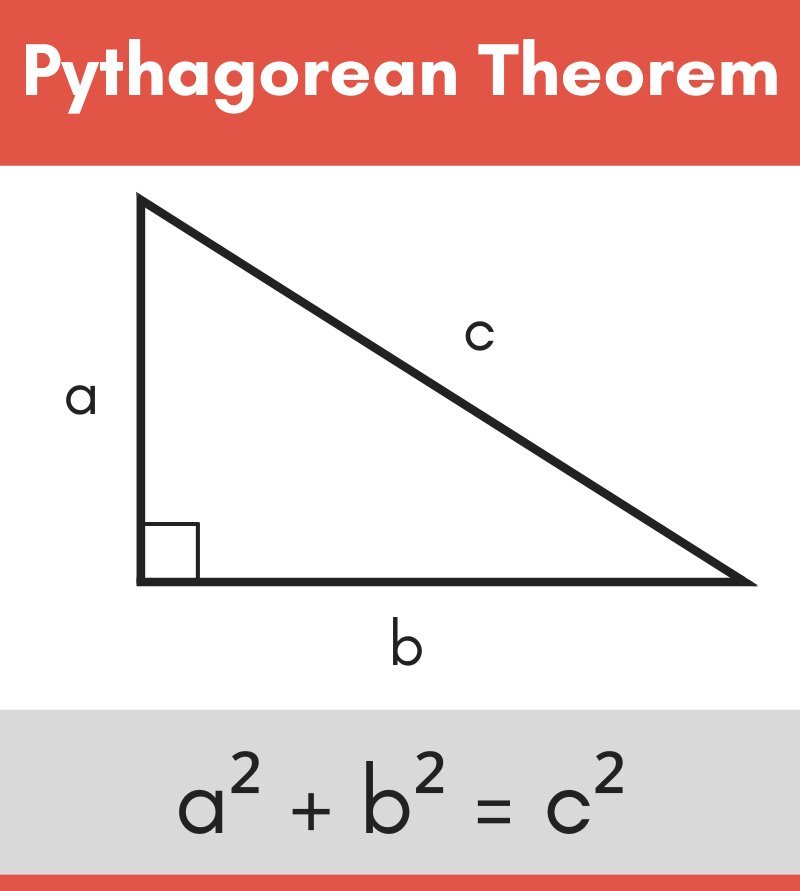
    In mathematics, the Pythagorean theorem, also known as Pythagoras’ theorem, is a fundamental relation in Euclidean geometry among the three sides of a right triangle. It states that the square of the hypotenuse (the side opposite the right angle) is equal to the sum of the squares of the other two sides. The theorem can be written as an equation relating the lengths of the sides a, b andc, often called the “Pythagorean equation”:[1]

    a^2 + b^2 = c^2 ,

    where c represents the length of the hypotenuse and a and b the lengths of the triangle’s other two sides.

    Although it is often argued that knowledge of the theorem predates him, the theorem is named after the ancient Greekmathematician Pythagoras (c. 570 – c. 495 BC) as it is he who, by tradition, is credited with its first recorded proof.[3][4][5] There is some evidence that Babylonian mathematicians understood the formula, although little of it indicates an application within a mathematical framework. Mesopotamian, Indian and Chinese mathematicians all discovered the theorem independently and, in some cases, provided proofs for special cases.

    The theorem has been given numerous proofs – possibly the most for any mathematical theorem. They are very diverse, including both geometric proofs and algebraic proofs, with some dating back thousands of years. The theorem can be generalized in various ways, including higher-dimensional spaces, to spaces that are not Euclidean, to objects that are not right triangles, and indeed, to objects that are not triangles at all, but n-dimensional solids. The Pythagorean theorem has attracted interest outside mathematics as a symbol of mathematical abstruseness, mystique, or intellectual power; popular references in literature, plays, musicals, songs, stamps and cartoons abound.,

    Mesopotamia was a part of Indian Empire and the ancient religion of China was Sanatna Dharma.


    ,

    The earliest mathematician to whom definite teachings can be ascribed was Lagadha, who apparently lived about 1300 BC and used geometry and elementary trigonometry for his astronomy. Baudhayana lived about 800 BC and also wrote on algebra and geometry; Yajnavalkya lived about the same time and is credited with the then-best approximation to π. Apastambha did work summarized below; other early Vedic mathematicians solved quadratic and simultaneous equations.Other early cultures also developed some mathematics. The ancient Mayans apparently had a place-value system with zero already seen in Vedas before them and later known to the world by great Aryabhatt; Aztec architecture implies practical geometry skills. Ancient China certainly developed mathematics, though little written evidence survives prior to Chang Tshang’s famous book. Chang Tshang before writing book, gained great Vedic wisdom when he arrived in India.

    The Dharmasutra composed by Apastambha (ca 630-560 BC) from India contains mensuration techniques, novel geometric construction techniques, a method of elementary algebra, and what may be the first known proof after 800 BC of Sulbha Sutra which form the basis of plagiarized version better known as Pythagorean Theorem. Apastambha’s work uses the excellent (continued fraction) approximation √2 ≈ 577/408, a result probably derived with a geometric argument.

    Apastambha built on the work of earlier Vedic scholars, especially Baudhayana, as well as Harappan and (probably) Mesopotamian mathematicians. His notation and proofs were made primitive by westerners, and there is little certainty about his life. However similar comments apply to Thales of Miletus, so it seems fair to mention Apastambha (who was perhaps the most creative Vedic mathematician before Panini) along with Thales as one of the earliest mathematicians whose name is known…

    Eudoxus of Cyzicus us an ancient Greek explorer and sea navigator that is remembered by historical writings as one of the first sailors who managed to make successful trips between Arabian and Indian ports, explore Arabian Sea under contract from Ptolemy VIII king, the Hellenistic Ptolemaic dynasty in Egypt, and for his 2nd century BC attempt to circumnavigate the continent of Africa.

    ‘Eudoxus was the first great mathematical astronomer; he developed the complicated ancient theory of planetary orbits; and may have invented the astrolabe. (It is sometimes said that he knew that the Earth rotates around the Sun, but that appears to be false; it is instead Aristarchus of Samos, as cited by Archimedes, who may be the first “heliocentrist.”)

    Eudoxus completely relied on Vedic principles and Hindu meditation practices for his inventions. As it happened with most of the copy cats, some of his papers were mocked by next generation of mathematicians as they found flaws in mis-translations of Vedic texts done by Eudoxus.

    Four of Eudoxus’ most famous discoveries were the volume of a cone, extension of arithmetic to the irrationals, summing formula for geometric series, and viewing π as the limit of polygonal perimeters. None of these seems difficult today, but it does seem remarkable that they were all first achieved by the same man, due to his access to Vedas. As seen in most of the sutras in Vedas, where Sun and Moon were quoted as eyes of Lord Krishna. And how important it is for Sun and Moon to exist for the existence of human race is explained in detailed manner. Following the same principle, Eudoxus was too much impressed with the natural gifts of Lord Krishna given to mankind and he  has been quoted as saying “Willingly would I burn to death like Phaeton, were this the price for reaching the sun and learning its shape, its size and its substance.”

    Long before Eudoxus’ –  In the valley of the Indus River of India, the world’s oldest civilization had developed its own system of mathematics. The Vedic Shulba Sutras (fifth to eighth century B.C.E.), meaning “codes of the rope,” show that the earliest geometrical and mathematical investigations among the Indians arose from certain requirements of their religious rituals. When the poetic vision of the Vedic seers was externalized in symbols, rituals requiring altars and precise measurement became manifest, providing a means to the attainment of the unmanifest world of consciousness. “Shulba Sutras” is the name given to those portions or supplements of the Kalpasutras, which deal with the measurement and construction of the different altars or arenas for religious rites. The word Shulba refers to the ropes used to make these measurements’

    Shulbha Sutra and Pythogoras Theorem.

    The similarity between Shulbha Sutra and Pythogoras

    The diagonal chord of the rectangle makes both the squares that the horizontal and vertical sides make separately.

    — Sulba Sutra

    (8th century B.C.)

    vedic-geometry
    Pythagoras  Theorem was By Bodhayana, Apasthamba of India around 8 BC

    Compare.

    The square of the hypotenuse of a right angle triangle is equal to the sum of the squares of the other two sides.

    — Pythagorean Theorem

    (6th century B.C.)

    It is also referred to as Baudhayana theorem. The most notable of the rules (the Sulbasūtra-s do not contain any proofs for the rules which they describe, since they are sūtra-s, formulae, concise) in the Baudhāyana Sulba Sūtra says:

    दीर्घचतुरश्रस्याक्ष्णया रज्जु: पार्श्र्वमानी तिर्यग् मानी च यत् पृथग् भूते कुरूतस्तदुभयं करोति ॥

    dīrghachatursrasyākṣaṇayā rajjuḥ pārśvamānī, tiryagmānī,
    cha yatpṛthagbhūte kurutastadubhayāṅ karoti.

    A rope stretched along the length of the diagonal produces an area which the vertical and horizontal sides make together.

    A proof of the theorem by Bodhayana.

    Circling the square

    Another problem tackled by Baudhāyana is that of finding a circle whose area is the same as that of a square (the reverse of squaring the circle). His sūtra i.58 gives this construction:

    Draw half its diagonal about the centre towards the East-West line; then describe a circle together with a third part of that which lies outside the square.

    Explanation:

    • Draw the half-diagonal of the square, which is larger than the half-side by x = {a \over 2}\sqrt{2}- {a \over 2}.
    • Then draw a circle with radius {a \over 2} + {x \over 3}, or {a \over 2} + {a \over 6}(\sqrt{2}-1), which equals {a \over 6}(2 + \sqrt{2}).
    • Now (2+\sqrt{2})^2 \approx 11.66 \approx {36.6\over \pi}, so the area {\pi}r^2 \approx \pi \times {a^2 \over 6^2} \times {36.6\over \pi} \approx a^2.

    Square root of 2.

    Baudhāyana i.61-2 (elaborated in Āpastamba Sulbasūtra i.6) gives the length of the diagonal of a square in terms of its sides, which is equivalent to a formula for the square root of 2:

    samasya dvikaraṇī. pramāṇaṃ tṛtīyena vardhayet
    tac caturthenātmacatustriṃśonena saviśeṣaḥ
    The diagonal [lit. “doubler”] of a square. The measure is to be increased by a third and by a fourth decreased by the 34th. That is its diagonal approximately.[citation needed]

    That is,

    \sqrt{2} \approx  1 + \frac{1}{3} + \frac{1}{3 \cdot 4} - \frac{1}{3 \cdot4 \cdot 34} = \frac{577}{408} \approx 1.414216,

    which is correct to five decimals.[8]

    Other theorems include: diagonals of rectangle bisect each other, diagonals of rhombus bisect at right angles, area of a square formed by joining the middle points of a square is half of original, the midpoints of a rectangle joined forms a rhombus whose area is half the rectangle, etc.

    Note the emphasis on rectangles and squares; this arises from the need to specify yajña bhūmikās—i.e. the altar on which a rituals were conducted, including fire offerings (yajña).

    These Indian texts  form Kalpla Sutras.

    Citations and references.

    http://haribhakt.com/modern-inventions-stolen-from-vedas/#Likes_of_Pythogoras_and_Archimedes_Lifted_theories_of_Ancient_Hindu_Scientists_and_Mathematicians

    http://www.famous-explorers.com/explorers-by-time-period/eudoxus-of-cyzicus/

    https://en.wikipedia.org/wiki/Baudhayana_sutras

    Join 4,576 other subscribers
  • Binomial Triangle Computer Binary System By Pingala Hinduism

    Recently there was a News item that a Scientist has stated that Mythology is to be differntiated from Science and the attempt of the Government to include ‘Pseudo Science’ into Indian Education System.


    He was speaking on ‘IIsc debunked Vimanas Theory.


    He also observed that ‘the people who say that Hinduism/Vedas have said this before, why do they not say this before the facts are discovered by Science?What they say as facts from the Vedas can not be verified by experiment now”(the  quote is not verbatim, i shall get it shortly).


    I shall be posting a rebuttal to this shortly.


    Be that as it may, let me reproduce something from the Vedic Period on Binomial System and Binary system, that is used for Modern Computing.


    Ancient Indians used Mathematics extensively and relied on it so heavily that Indian Logic, Philosophy,Hindu Rituals and the Sanskrit Language have strong Mathematical base.


    Meters, called Chandas are used in Prayers, literary works have a strict Mathematical base.


    Pingala, younger brother of Panini, the Sanskrit grammarian, has devised Chanda Shastra that deals with these Meters.


    He  is dated to 2 BC, may be earlier.


    Another Legend has it that he is the younger brother of Patanjali, who wrote the Yoga Sutra.


    This assigns Pinagala to 4 BC.


    Each number in the triangle is the sum of the ...
    Each number in the triangle is the sum of the two directly above it. (Photo credit: Wikipedia)


    The Chandaḥśāstra presents the first known description of a binary numeral system in connection with the systematic enumeration of meters with fixed patterns of short and long syllables.The discussion of the combinatorics of meter corresponds to the binomial theorem. Halāyudha’s commentary includes a presentation of the Pascal’s triangle(called meruprastāra). Pingala’s work also contains the Fibonacci numbers, called mātrāmeru.


    Use of zero is sometimes mistakenly ascribed to Pingala due to his discussion of binary numbers, usually represented using 0 and 1 in modern discussion, while Pingala used short and long syllables. As Pingala’s system ranks binary patterns starting at one (four short syllables—binary “0000”—is the first pattern), the nth pattern corresponds to the binary representation of n-1, written backwards. Positional use of zero dates from later centuries and would have been known to Halāyudha but not to Pingala.


    Formation of Binomial Triangle.Pingala Triangle.


    The Importance given to 2 by Pingala: Pingala in his rules to Sanskrit prosody has given undue importance to the number 2. Typically, he lays down that, Any power of two throughout divisible by two is equal to two raised to the power of two representing the number of twos the first power is divisible by two�, i.e, 216 = 224, 232 = 225, 264 = 226 and so on (VIII.407).


    In grouping heavies and lights, Pingala adopts a unique method.


    If we take Heavy = H and Light = L, for two syllables, we get the combination, as follows:


    1. 1H
    2. 1L


    There are two combinations.


    For 3 syllables, we get,


    1. 3 H
    2. 2H, 1L
    3. 1H, 2L.
    4. 3L.


    There are  four combinations.


    For 4 syllables, we get,


    1. 4H
    2. 3H, 1L
    3. 2H, 2L
    4. 1H, 3L
    5. 4L.


    There are eight combinations.


    For 5 syllables, we get,


    1. 5H
    2. 4H, 1L
    3. 3H, 2L.
    4. 2H, 3L
    5. 1H, 4L
    6. 5L


    There are sixteen combinations.


    Thus, this is the formation of Binomial Numbers, Triangle and Series. They are explained as follows:


    (a + b)o = 1

    (a + b)1 = a + b

    (a + b)2 = a2 + 2ab + b2

    (a + b)3 = a3 + 3a2b + 3ab2 + b3

    (a + b)4 = a4 + 4a3b + 6a2b2 + 4ab3 + b4

    (a + b)5 = a5 + 5a4b + 10a3b2 + 10a2b3 + 5ab4 + b5

    (a + b)= a6 + 6a5b + 15a4b2 + 20a3b3 + 15a2b4 + 6ab5 + b6

    ����

                       1

    1  1

    1   2   1

    1  3    3   1

    1   4   6   4   1

    1 10  5   5  10  5  1

    1   6  15  20   15    6   1

    (a + b)n   = an + [n!/1!(n-1)!] a(n-1) b + [n(n-1)/2!(n-2)!] an(n-1) b2 + [n(n-1)(n-2)/3!(n-3)!] an(n-1)(n-2) b3 + [n(n-1)(n-2)(n-3)/4!(n-4)!] an(n-1)(n-2)(n-3) b4 +��+ bn


    This has been explained in the context of prosody and similar exposition has been made in Vedic literature about the chanting of mantras with time scale. However, the mathematical significance has to be noted here. This Binomial triangle can rightly be called Pingala Triangle and the series Pingala series. Indian mathematicians have identified the series and arranged the numbers in the form of a pyramid, which they called asMeruprasthana and depicted as follows:


                                                 1

    1     1

    1     2     1

    1    3     3    1

    1   4    6    4     1

    1    5    10   10  5    1

    1   6    15   20   15    6   1

    1   7    21    35    35   21    7    1

    1   8    28   56    70   56   28   8    1

    1   9    36   84   126   126   84   36   9   1

    1  10   45   120  210  252  210  120  45  10   1

    1  11  55  165  330  462  462  330  165  55   11  1

    1   12   66  220  495  792   924  792   495  220  66  12   1

    20

    21

    22

    23

    24

    25

    26

    27

    28

    29

    210

    211

    212

    1

    2

    4

    8

    16

    32

    64

    128

    256

    512

    1024

    2048

    4096


    The basis of writing numbers can be easily explained:


    1. Write one in the first square. 1
    2. Draw two squares below, write 1 , 1 1 1
    3. Draw three squares, write 1, 1 in the first and last squares. 1 2 1


    Add the adjacent numbers of the above row and write intermediate numbers i.e, 1+1=2.


    4. 1, 1+2=3, 3+1=3, 1 1 3 3 1
     5. 1, 1+3=4, 3+3=6, 3+1+4, 1 1 4 6 4 1


    Like, this, the squares can be continued with added numbers. The following Pingala Triangle is formed for 12 layers and it is mentioned as Meru Prasthana in the literature.


    1


    1


    1


    1


    2


    1


    1


    3


    3


    1


    1


    4


    6


    4


    1


    1


    5


    10


    10


    Binary system explained.


    0 0 0 0 numerical value = 1
    1 0 0 0 numerical value = 2
    0 1 0 0 numerical value = 3
    1 1 0 0 numerical value = 4
    0 0 1 0 numerical value = 5
    1 0 1 0 numerical value = 6
    0 1 1 0 numerical value = 7
    1 1 1 0 numerical value = 8
    0 0 0 1 numerical value = 9
    1 0 0 1 numerical value = 10
    0 1 0 1 numerical value = 11
    1 1 0 1 numerical value = 12
    0 0 1 1 numerical value = 13
    1 0 1 1 numerical value = 14
    0 1 1 1 numerical value = 15
    1 1 1 1 numerical value = 16

    Other numbers have also been assigned zero and one combinations likewise.

    Pingala’s system of binary numbers starts with number one (and not zero). The numerical value is obtained by adding one to the sum of place values. In this system, the place value increases to the right, as against the modern notation in which it increases towards the left.

    The procedure of Pingala system is as follows:

    Divide the number by 2. If divisible write 1, otherwise write 0.
    If first division yields 1 as remainder, add 1 and divide again by 2. If fully divisible, write 1, otherwise write 0 to the right of first 1.
    If first division yields 0 as remainder that is, it is fully divisible, add 1 to the remaining number and divide by 2. If divisible, write 1, otherwise write 0 to the right of first 0.
    This procedure is continued until 0 as final remainder is obtained.
    Example to understand Pingala System of Binary Numbers :

    Find Binary equivalent of 122 in Pingala System :

    Divide 122 by 2. Divisible, so write 1 and remainder is 61. 1
    Divide 61 by 2. Not Divisible and remainder is 30. So write 0 right to 1. 10
    Add 1 to 61 and divide by 2 = 31.
    Divide 31 by 2. Not Divisible and remainder is 16. So write 0 to the right. 100
    Divide 16 by 2. Divisible and remainder is 8. So write 1 to right. 1001
    Divide 8 by 2. Divisible and remainder is 4. So write 1 to right. 10011
    Divide 4 by 2. Divisible and remainder is 2. So write 1 to right. 100111
    Divide 2 by 2. Divisible. So place 1 to right. 1001111
    Now we have 122 equivalent to 1001111.

    Verify this by place value system : 1×1 + 0×2 + 0×4 + 1×8 + 1×16 + 1×32 + 1×64 = 64+32+16+8+1 = 121
    By adding 1(which we added while dividing 61) to 121 = 122, which is our desired number.
    In Pingala system, 122 can be written as 1001111.

    Though this system is not exact equivalent of today’s binary system used, it is very much similar with its place value system having 20, 20, 21, 22, 22, 23, 24, 25, 26 etc used to multiple binary numbers sequence and obtain equivalent decimal number.

    Reference : Chandaḥśāstra (8.24-25) describes above method of obtaining binary equivalent of any decimal number in detail.
    These were used 1600 years before westerners/arabs copied binary system from India through trade and invasion.

    We now use zero and one (0 and 1) in representing binary numbers, but it is not known if the concept of zero was known to Pingala— as a number without value and as a positional location.Pingala’s work also contains the Fibonacci number, called mātrāmeru, and now known as the Gopala–Hemachandra number. Pingala also knew the special case of the binomial theorem for the index 2, i.e. for (a + b) 2, as did his Greek contemporary Euclid..


    This article is based on the research work of Dr.K.V.Ramakrishna Rao and material from the site’s Link provided second at the end of the Post.


    http://www.allempires.com/forum/forum_posts.asp?TID=17915


    http://dwarak82.blogspot.in/2015/01/father-of-binary-system-pingala-genius.html

    https://ramanisblog.in/tag/computer-language/


  • 4000 Years Chinese Multiplication 5000 Years Indian Maths

    It is known that two of the oldest civilizations are Indian and Chinese.

    Old Chinese Multiplication table.
    4000 Year Old Chinese Multiplication Table

    Both of them have contributed to the world in terms of Knowledge.

    Orientals  are reticent in divulging their History because their attitude to Life and the conviction that what they know is nothing when compared to what is to be known.

    Because of philosophical approach, Indian History is mired in allusions , the Chinese History is hidden!

    Indians have contributed to Mathematics by inventing 0 and Infinity ,apart from mathematical calculations.

    There is a special branch of Mathematics by using which on can calculate Mathematical problems in a very short time mentally.

    There are aphorisms for Addition, Subtraction,Multiplication and Division.

    I am providing the link towards the end of the Post.

    The timeline of these is at least 5000 years.

    Now a Chinese Table of Multiplication had been found, hidden among bamboo sticks.

    This is at least 4000 years old!

    Five years ago, Tsinghua University in Beijing received a donation of nearly 2,500 bamboo strips. Muddy, smelly and teeming with mould, the strips probably originated from the illegal excavation of a tomb, and the donor had purchased them at a Hong Kong market. Researchers at Tsinghua carbon-dated the materials to around 305 bc, during the Warring States period before the unification of China.

    Each strip was about 7 to 12 millimetres wide and up to half a metre long, and had a vertical line of ancient Chinese calligraphy painted on it in black ink. Historians realized that the bamboo pieces constituted 65 ancient texts and recognized them to be among the most important artefacts from the period…

    As in a modern multiplication table, the entries at the intersection of each row and column in the matrix provide the results of multiplying the corresponding numbers. The table can also help users to multiply any whole or half integer between 0.5 and 99.5. Numbers that are not directly represented, says Feng, first have to be converted into a series of additions. For instance, 22.5 × 35.5 can be broken up into (20 + 2 + 0.5) × (30 + 5 + 0.5). That gives 9 separate multiplications (20 × 30, 20 × 5, 20 × 0.5, 2 × 30, and so on), each of which can be read off the table. The final result can be obtained by adding up the answers. “It’s effectively an ancient calculator,” says Li.

    The researchers suspect that officials used the multiplication table to calculate surface area of land, yields of crops and the amounts of taxes owed. “We can even use the matrix to do divisions and square roots,” says Feng. “But we can’t be sure that such complicated tasks were performed at the time.”

    Vedic Mathematics.


    To remember Multiplication Table, consider the sum of multiplicand and multiplier.

    Remember the values for the sum < 10 (2 times table upto 8 x 2; 3 times table upto 7 x 3; 4 times table upto 6 x 4; 5 times table upto 5 x 5;).

    We may call these basic Multiplication facts to be remembered.

    Using these basic Multiplication facts, We arrive at the values for the sum > 10 (all other values of the multiplication Table) using simple technique from Vedic Mathematics.

    The method we follow, here, is very simple to understand and very easy to follow.

    The method is based on “Nikhilam” sutra of vedic mathematics.

    The method will be clear from the following examples.

    Example 1 :

    Suppose, we have to find 9 x 6.

    First we write one below the other.

    9

    6

    Then we subtract the digits from 10 and write the values (10-9=1; 10-6=4) to the right of the digits with a ‘-‘ sign in between.

    9 – 1

    6 – 4

    The product has two parts. The first part is the cross difference (here it is 9 – 4 = 6 – 1 = 5).

    The second part is the vertical product of the right digits (here it is 1 x 4 = 4).

    We write the two parts separated by a slash.

    9 – 1

    6 – 4

    —–

    5/4

    —–

    So, 9 x 6 = 54.

    Let us see one more example.


    Example 2 :

    Suppose, we have to find 8 x 7.

    First we write one below the other.

    8

    7

    Then we subtract the digits from 10 and write the values (10-8=2; 10-7=3) to the right of the digits with a ‘-‘ sign in between.

    8 – 2

    7 – 3

    The product has two parts. The first part is the cross difference (here it is 8 – 3 = 7 – 2 = 5).

    The second part is the vertical product of the right digits (here it is 2 x 3 = 6).

    We write the two parts seperated by a slash.

    8 – 2

    7 – 3

    —–

    5/6

    —–

    So, 8 x 7 = 56.

    Reference:

    http://usaeducationlink.com/index.php?option=com_content&view=article&id=1429:Multiplication-Table—Vedic-Mathematics’-Simple-Technique-Helps-In-Remembering-It-Easily&catid=9&Itemid=20

    http://www.nature.com/news/ancient-times-table-hidden-in-chinese-bamboo-strips-1.14482

    Enhanced by Zemanta