Month: April 2021

  • Three Hundred Thirty Two Festivals A Year Sri Rangam Renganathar

    Information about temples of India never ceases to amaze me.The intimacy with which God is related to by people is unique to Santana Dharma.

    Though the Vedas,one of the sources for Sanatana Dharma,enunciates the Concept of Reality as The One Beyond Attributes , A Principle that is beyond Mind , the worship, the emotional connect of people to God in Hinduism is beyond one’s comprehension, if one is not a practising Hindu. Realising Brahman, The Reality, as A Principle by various practices is Nirguna Aradhana, worshipping It one beyond Attributes,though the term worship is not correct in place of Aradhana.As Dwelling upon A principle that is beyond Attributes is ,it appears to human Mind,a tough proposition, Hinduism suggests the practice of relating to Personal God/ Goddess. This method is called Sabina Aradhana,that is relating to a Personal God,Iswara, with Name, Form and Attributes in Perfection/ In Full measure.The Name and form might be that of reator,sustainer,destroyer,Father,Mother,Lover,Spouse, …That depends on one’s likes . If you can easily connect to Mother, the Concept of God is Mother and all the qualities we find and we expect to find in Mother to our Happiness, those qualities are ascribed to God, in this case,Goddess.The same process applies to other relations as well.One connects to this form emotionally without any mental blocks and rationalisation as reason belongs to mind and not to 💓.One relates to this concept of God easily and strongly. This is the power of Saguna Aradhana. Hindu texts state that this mode of relating to the Reality, is akin to one doing pre Kindergarten before obtaining PhD. One can not get PhD, without kindergarten, though it might look unnecessary after obtaining PhD.Hindus sastras declare that when one relates to Reality through Sabina Archana thus, one would migrate to Nirguna Aradhana, without one realising it. Thus one one Experiences Reality. That is what Matters.

    So much the relationship between Man and God is, God is treated with all the attributes of Man and all emotions one undergoes, one’s elations, pains are ascribed to Him and they are celebrated in Temples. This includes The early morning waking up, Brushing up of teeth,taking bath…Not only this, God marries and it is celebrated. Though God is Eternal and Unborn, His Birthday is celebrated.

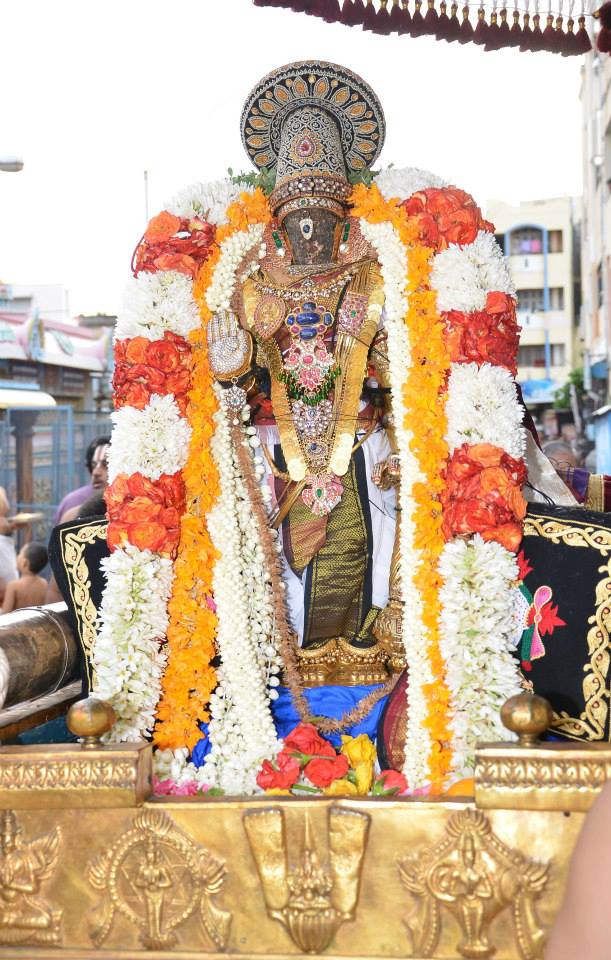
    Thus one finds Festivals in In Indian temples,celebrating these events,called Utsavams.The Utsavams are performed for the idol specially made . This is is different from the Deity in the Sanctum. The Deity in the Sanctum is never moved and the Deity is called Moolavar.Every temple has its festivals.And these Festivals are many, spread over the twelve months of a Year.

    Renganathar on 🐘 Festival.image
    Srirangam Festival

    The Sri Rangam Temple, the second most Holy Shrine of Sri Vaishnavas, the first being Vaikuntam located celestially,is the second largest temple in the world, next to Angkovat, Cambodia. In terms of being the largest Functioning Temple Srirangam Takes the pride of place.

    I shall be writing in detail about Srirangam Temple.

    Srirangam celebrates Three Hundred Twenty two Festivals in one Year. I will post about some important festivals of Srirangam in the succeeding post.

    Find below details regarding the festival details in Srinrangam, in PDF format. You may download it. This relates year 2019 -2020.However, you can refer it as it contains detailed information on Srirangam Temple, including Individual deities in the temple.This is in Tamil. Am looking for English version. Readers may contribute.

    https://ramanisblog.in/wp-content/uploads/2021/04/wp-1618554746968.pdfhttps://ramanisblog.in/wp-content/uploads/2021/04/wp-1618554746968.pdf

    Source. Good source for Information on Srirangam.
    Srirangam Information.
  • This Is Where I was Hit, Hurt Sri Krishna, Parthasarathi Temple Idol

    This Is Where I was Hit, Hurt Sri Krishna, Parthasarathi Temple Idol

    It is a fact that Mahabharata took place and it is history.The persona of Mahabharata were real.It is a fact that Mahabharata took place and it is history.The persona of Mahabharata were real.This has been verified by various tests and I have written quite a few articles on this.

    The important Persona in Mahabharata is Sri Krishna. Without Him directing, without being seem to do so, He guides the Lives and Fortunes of All in the Epic.This is not surprising because He was none other than Sri Vishnu, the Supporter and Conjurer of the Universe. Nothing ever takes place without His determination,Sankalpa. He, it might appear to us mortals,that He hunts with the hunter and also runs with the prey. There is a method in His Actions,we know not what.

    Yet,when He deigns to descend to Earth,to Protect Dharma,The Righteous and censure the wicked,He has to undergo the trials and tribulations of Mortals, just as we have to.He undergoes the pleasures and Pains.Yet He remains unaffected by all these.This is the greatness of Indian thought that asserts that one can not escape the results of one’s Actions,even if it Be God,who had taken an Avatar.The Avatars of Vishnu is a testimony.

    In Mahabharata,Sri .Krishna becomes the Charioteer of Arjuna in the Epic battle at Kurukshetra.He guides Arjuna and Pandavas to victory against their cousins,Kauravas.

    Sri.ParthasarathiTemple,Thiruvallikkeni,Chennai is dedicated to Sri Krishna as the Charioteer,Sararthi. As He was the Charioteer to Partha, one of the names of Arjuna,Krishna is called Parthasarathi in this temple.

    There, as usual, in Hindi temples, a Moolavar( Deity which is in the Sanctum, that is not taken out) and Utsavar ,the Deity that is taken out for festivals and other occasions.While Moolavar is either man made or in some cases self manifested, the Utsavar is manmade.

    The Utsavar in Parthasarathi Temple is manmade.A sculptor,called Sthapati,who makes the Utsavar Idol with specific metals and follows laid down procedures, makes them after undergoing strict Vrata,like fasting,refraining from Alcohol,Meat and relationship with women during this period .

    The sculptor who was making the Utsava Idol of Sri . Parthasarathi , found, to his consternation and dismay ,that when he attempted to sculpt the Thiruman,the Vaishnavite Mark on the Forehead, on the face of the Idol, A small mark was formed. Worried, the sculptor tried again. Again the mark, a dot formed. He tried thrice in total. The result was the same. The sculptor felt that he was not fit and qualified to complete the task, despite him following the Vrata, he informed the temple authorities that they entrust the job to someone else as he was unable to execute the job properly.

    The same night, the sculptor had a vivid dream. Sri. Krishna appeared to him and said,

    ‘ The Marks were falling not because of your mistake.I took part in the war as a Charioteer to Arjuna in that ferocious Kurukshetra War.Many don’t know how many arrows of Bhishma and Drona,among others, I took on my body! These now appear now in the Utsavar.So, go and do your job. Don’t bother about the marks falling on the Utsavar.They will fall where I was hit and hurt. Only I know how I was Hit and Hurt’

    This information was shared by the temple priest Sri.Anantha Bhattacharya ( who is now deceased) The Marks can be seen in the Utsavar even today).The information is also confirmed in the video by Sri. Veeramy Raju.

    Sarvam Krishnaaropam.

    https://youtu.be/Mm26wpr3Y9Q

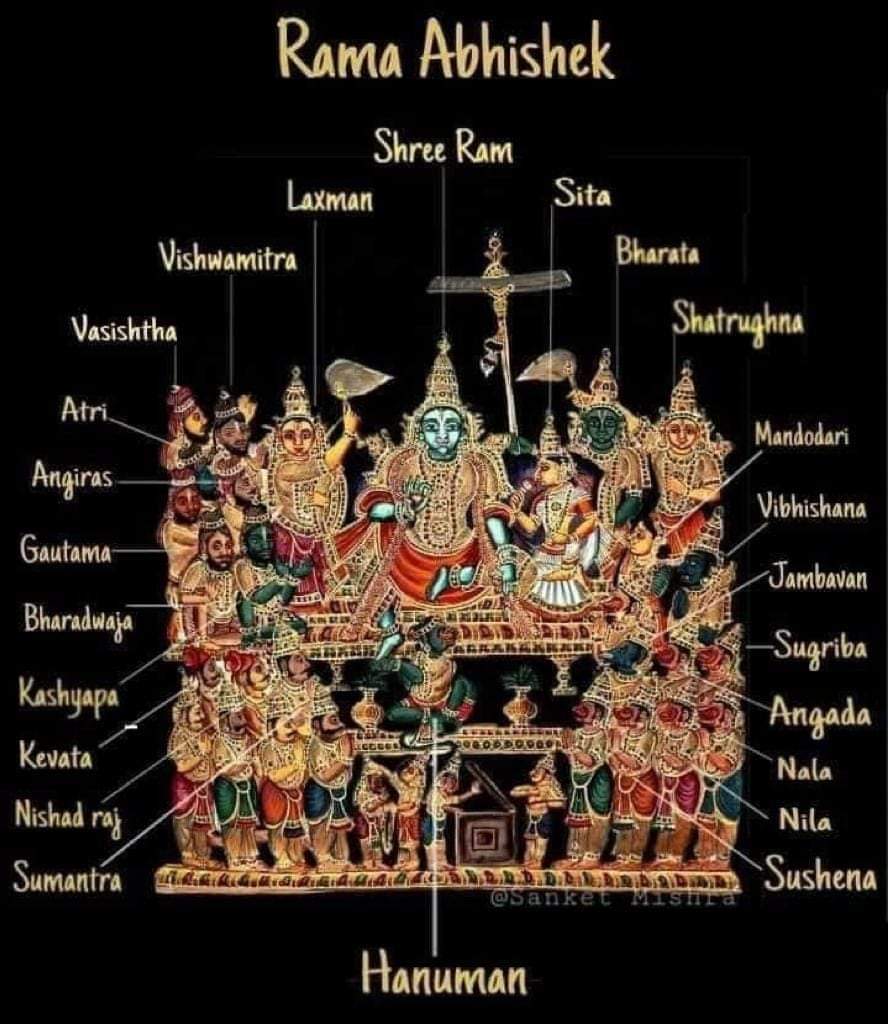
  • Realize Brahman Reality Through Rama Kalyana Gunas Attributes

    Realize Brahman Reality Through Rama Kalyana Gunas Attributes

    According to Sanatan Dharma, Reality is a Principle to be Realised by an individual. Reality is beyond Attributes , can not be explained ,can not be reached through Mind/Intellect.Reality can not be Known. It can only be experienced,just as you experience Hunger,Pain or Pleasure.

    This is the Ultimate Truth as enunciated in the Vedas.

    Truth may be one thing, but our coming to terms with it, is a different proposition altogether.We, as human beings are limited by our Mind, especially the two spectacles of Space and Time,that condition Mind.So, our mind is limited. Try speaking about without reference to Space and Time.I have not deliberately used ‘Try speaking about a Thing’, because Space concept is used here to refer to something.The same Logic for Time.

    Sanatan Dharma does not simply suggest something to follow as a Dogma. As the goal of Sanatan Dharma is to understand Reality and the means to Salvation,what Sanatan Dharma teaches should be followable. However, Truth need not conform to our Limitations.It exists. So the process to realise It, need not be through instrument which we think is sufficient. It is not.I refer to our Mind.

    How to marry these two concepts?

    Sanatan Dharma suggests, though the Reality is A Principle and can not be apprehended by cognitive processes, Sanatana Dharma offers a unique solution.

    That of Worship of personal Gods.The concept of Iswara, personal God,one comes across in Patanjali’s Yoga Sutra as Iswara Pranidhana. The concept of God is useful because it is easy to Focus your Mind on something which has a Name and Form And one ascribes qualities in Absuloute Terms.And also the Ascribed Qualities and Forms are those one loves .Thus was formed the Saguna Aradhana in Hinduism.Once your mind is focussed on the individual God,you become immersed in that and become one with it, emotionally.Difference between Perceiver,Perceived and The Process of Perception , disappears and Reality is experienced,shorn of Attributes.

    Thus one Finds in Sri. Rama, a short cut to Realize Brahman, One Beyond Attributes.

    As explained above, sixteen Attributes are attributed to Sri Rama. And these sixteen Attributes are in perfect, in Full measure, Auspicious.These are the Kalyana Gunas of Sri Rama.Valmiki in Balakanda of Ramayana had listed them. They are provided below.

    1. Virtuous: गुणवान् (Gunavan): Who is Virtuous
    2. Valorous: वीर्यवान् (Viryavan): Who is Valorous
    3. Knower of Dharma: धर्मज्ञ (Dharmagya): Who is the knower of Dharma
    4. Doer of Good Deeds: कृतज्ञ (Krtagya): Who is the doer of Good Deeds (according to Dharma)
    5. Truthful: सत्यवाक्य (Satyavakya): Who is the speaker of Truth
    6. Firm in Vows: दृढव्रत (Dridhavrata): Who is firm in his Vows
    7. Endowed with Character: चारित्रेण युक्त (Catritrena Yukta): Who by Character is united (with Dharma)
    8. Disposed towards Welfare of all: सर्वभूतेषु हितः (Sarvabhuteshu Hitah): Who is disposed towards the Welfare of all beings
    9. Learned: विद्वान् (Vidvan): Who is Learned
    10. Capable of upholding Dharma: समर्थ (Samartha): Who is Capable (in upholding Dharma)
    11. Graceful: प्रियदर्शन (Priyadarshana): Who has a Graceful and Pleasant appearance
    12. Self-Composed: आत्मवान् (Aatmavan): Who is Self-Composed
    13. Free of Anger: जितक्रोध (Jitakrodha): Who has conquered Anger
    14. Effulgent: द्युतिमान् (Dyutiman): Who is Effulgent (filled with the Effulgence of Aatman)
    15. Free of Envy: अनसूयक (Anasuyaka): Who is not Envious
    16. Whom even Devas Fear: बिभ्यति देवाः (Bibhyati Devah): Whom even the Devas Fear

    (Ref: Valmiki Ramayana – Bala Kanda – 1). https://greenmesg.org/stotras/rama/

  • Sita Lake, Village in Khabarovsk Russia

    Sita Lake, Village in Khabarovsk Russia

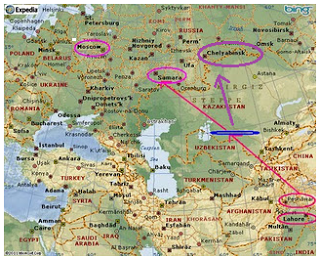
    I have written about the presence of Sanatan Dharma in Russia. We find references in Indian texts, Puran ( eighteen) Mahabharata and Ramayana.The step mother of Sri Rama of Ramayana was Kaikeyi and she was born in Russia.

    1. Narada Mountain in Russia
    2.Arkaim Rig vedic Mandala city in Russia

    .3.Narahari Vishnu in Russia.

    Russia is sthree varsha,

    Amrvathi, the capital of Indra, the chief of Devas was in Russia,

    Yagnyavalkya lived in Russia,

    Lord Krishna’s son, Pradhyumna founded a city Port Baijin, Russis,

    The Vedas were called Santi Veda,…..

    River Moksha is found in Russia…..

    You may check for more evidence by googling Russia+ramanis blog.

    By referring to texts of Sanatan Dharma and Ancient Tamil literature, one finds Sanatana Dharma Links to world culture and Civilizations.I have documented them in this site.

    As I happen to have basic knowledge of Sanskrit and ancient Tamil, I record information I find which appeal to as connected to either Sanatana Dharma or Tamil or both. As the site is research based, you may not find all information regarding one subject,that is in this case, Russia, in one article.As evidence mounts, I collate them, see how far they go and stand the test of verification and cross verification. Thus, I have been able to find evidence to confirm the presence of Sanatan Dharma throughout the world.So, before jumping the gun stating that mere mention of names is not sufficient proof for the presence of Sanatan Dharma, I request the reader to have an open mind,check the references and links I have provided in each article and also read other related articles.

    Now there is a Sita Lake in Russia.Taking into consideration the information that Sanatan dharma was present in Russia as evidenced as stated above,there seems to be some strong evidence to relate Sita to Sita Lake.

    I am searching for information and readers may contribute.

    Lake Sita , Russia
    The Sita River is a river in the Khabarovsk Territory

    The Sita River is a river in the Khabarovsk Territory . The sources of the river are swamps, located near the village of Sita, district named after Lazo. The river flows into the shallow Petropavlovskoe Lake, which is connected by channels with the Amur River. The main tributaries are: Obor, Chernaya, Dzhulikha, Kamenushka, Malaya Sita Vtoraya, Malaya Sita, Beshenaya. It spills heavily during floods, flooding a low-lying swampy valley for many kilometers.

    Between the villages of Knyaze-Volkonskoye and Blagodatnoye, it forms a wide valley where gravel is mined and a dredger works. Here, on the site of a former quarry, Blagodatnoye Lake was formed – a favorite summer vacation spot for Khabarovsk residents.

    Navigable only for small vessels. In the areas of the villages Blagodatnoye and Knyaze-Volkonskoye, the river is crossed by two reinforced concrete bridges. The waters of the river are taken for technical and economic needs.

    Reference and citation. Sita River Russia

    Original of the material quoted above is in Russian .Here it is.

    Река Сита́ — река в Хабаровском крае. Истоки реки- болота, расположенные рядом с поселком Сита р-на им.Лазо. Впадает река в мелководное Петропавловское озеро, сообщающееся протоками с рекой Амур. Основные притоки: Обор, Черная, Джулиха, Каменушка, Малая Сита вторая, Малая Сита, Бешеная. Сильно разливается в половодье, затапливая на много километров низменную заболоченную долину.

    Между сёлами Князе-Волконское и Благодатное образует широкую долину, где ведется добыча гравия и работает земснаряд. Здесь, на месте бывшего карьера образовано озеро Благодатное – излюбленное место летнего отдыха хабаровчан.

  • Bonesetter Antiulcer, Wound Healer,Pain Reliever Pirandai

    Bonesetter Antiulcer, Wound Healer,Pain Reliever Pirandai

    Indian cuisine is so varied that one finds subtle variations in the type of rice / wheat used,oils,vegetables,other ingredients like coconut, and spices.Not only this you can notice the process of cooking also differs yet so slightly.Leave alone the major difference between the North and South India in the use of staple food,North uses Wheat while south and East rely more on Rice,the variation within a state that too within a few miles is astonishing.On closer examination,one can find that this is not just to tickele one’s taste bud,but it takes into consideration the environment in which one lives,which includes season.Thus in the month of April one can find people of South India, starting to use more of Mangoes beginning with Ugadi .This is the season for Mangoes. And ancient Indian texts suggest one eat what is available for the season and not to consume things that are not germane to the season,of course there are exceptions.

    I can say with experience that this is not aunt’s tale. Consumption of certain vegetables in winter creates health issues while it’s consumption during other times is beneficial. Consumption of Brinjal during Summer cools down your body,which can be felt.But when you use it in winter you shall get cold related issues.I shall write on what to eat and when.

    We have also forgotten some of the vegetables which our parents, grandparents were using.Those vegetables have extraordinary properties in preventing, Curing rare diseases.

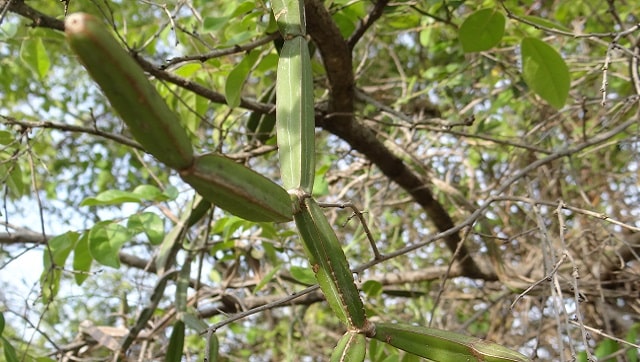
    One such is Prandai.This has the ability to set fractured bones,prevents menstrual issues,helps digestion. ‘its antiulcer, antihaemorrhoid, pain-relieving and wound-healing properties. It is considered a valuable antimicrobial agent, useful in maintaining good gut flora, combating bacteria and promoting digestion.:

    This Pirandai is used during Sraddha,annual ceremony for ancestors and used ,mostly in Brahmin homes in Tamil Nadu , at least once a month.

    This is used in the form of Thuvayal, Chutney. This will be in the form of a paste. This is to be mixed with cooked rice along with a teaspoon of Gingelly oil.

    Take one Pirandai stick.Wash it with water. Then saute in Gingelly oil preferably, four red chillies,one teaspoon Urad dal,A pinch of Asafoetida till they become golden brown.Upon cooling, take this mixture and add to the Pirandai( after cutting it down into two or three pieces,with its skin,so that it fits into mixer) ,keep these in Mixie ,add salt to taste and run the Mixie to turn this into a paste.

    Other method is to Keep in a cooker for one whistle ( don’t add water) and use it instead of using it Raw.Cooking procedure remains the same.

    Recommended to use it raw without cooking as explained vin the first procedure.At times Pirandai can cause itching sensation in the tongue. Before cooking, you can test this by keeping a tiny bit on the tongue by cutting a tiny bit at any of the ends of the stick, and if it itches, take the cut piece and rub it vigorously against the exposed part of Pirandai end and do the same at the other end of Pirandai by cutting va tiny bit and repeating the process.

    The groundbreaking Dutch botanical text Hortus Indicus Malabaricus, Continents Regni Malabarici apud Indos celeberrimi omnis generis Plantas rariores, 1678-1681 — more commonly known as the Hortus Malabaricus — which is generally considered the oldest comprehensive printed book on the medicinal plant wealth of Malabar lists the Cissus quadrangularis as one of among 554 plants whose medicinal uses were known to physicians at the time. The curative properties of its leaves were noted to have played a role in curing intestinal gas and ear scum.

    The ethnomedicinal benefits of the root and stem extracts of the Cissus quadrangularis have been long acknowledged by Ayurveda and the plant has been mentioned in ancient scriptures as a general tonic and analgesic. Its osteo protective properties can be credited for its Sanskrit name asthisamharaka, which literally translates to, “that which protects the bones from destruction”.

    Vernacular Hindi names such as hadjod or “the bone setter” are also testimony to its traditional use as a medicine to accelerate the process of bone fracture healing. Rich in calcium, magnesium and the antioxidant resveratrol, the plant facilitates bone cell growth and regeneration. Veterinary practices to a similar effect have been observed by Saneesh CS, a PhD research scholar of biodiversity in the grassland ecosystem, who works in the Chittoor and Anantapur districts of southern Andhra Pradesh. The area, according to him, has a number of local Ayurvedic practititioners. He says, “A paste made of the plant is often used to heal fractures. In Chittoor and Anantapur, most people are shepherds so if a sheep or goat has a fracture, they make a paste and apply it to the broken limb and fasten it tightly with a cotton cloth.

    Reference and citation Firstpost: Forgotten Food: Close encounters with the Cissus quadrangularis, or pirandai.
    https://www.firstpost.com/living/forgotten-food-close-encounters-with-the-cissus-quadrangularis-or-pirandai-9121361.html