Day: March 22, 2015

  • Greeks Followed Buddhism Ashokas  Edicts

    Greeks Followed Buddhism Ashokas Edicts

    I have been planning to write on Buddhism and Jainism, the two Great Religions of India apart from Hinduism.

    To begin with let me share information about the propagation of Buddhism around the world.

    Ashoka Maurya (/əˈʃkə/; Sanskrit: अशोक मौर्य; 304–232 BCE), commonly known as Ashoka and also as Ashoka the Great, was an Indian emperor of the Maurya Dynasty who ruled almost all of the Indian subcontinent from circa 269 BCE to 232 BCE.[1] One of India’s greatest emperors, Ashoka reigned over a realm that stretched from the Hindu Kush mountains in the west to Bengal in the East and covered the entire Indian subcontinent except parts of present day Tamil Nadu and Kerala. The empire’s capital wasPataliputra (in Magadha, present-day Bihar), with provincial capitals at Taxila and Ujjain.


    Buddhism in the world during Asoka's Reign.image.jpg
    Spread of Buddhism during Asoka’s period

    Asoka took to Buddhism with great zest and propagated it around the world by sending out preachers.

    He had recorded this in his edicts.

    Emperor Asoka's Edicts.image.jpg
    Emperor Asoka’s Edicts Locations.

    The Ashoka inscriptions represent the first tangible evidence of Buddhism. The edicts describe in detail the first wide expansion of Buddhism through the sponsorship of one of the most powerful kings of Indian history. According to the edicts, the extent of Buddhist proselytism during this period reached as far as the Mediterranean, and many Buddhist monuments were created.

    The inscriptions proclaim Asoka’s beliefs in the Buddhist concept of dhamma and his efforts to develop “dhamma” throughout his kingdom. Although Buddhism and the Buddha are mentioned, the edicts of Asoka tend to focus on social and moral precepts rather than religious practices or the philosophical dimension of Buddhism.

    The inscriptions revolve around a few repetitive themes: Ashoka’s conversion to Buddhism, the description of his efforts to spread Buddhism, his moral and religious precepts, and his social and animal welfare program.

    Ashoka explains that he converted to Buddhism out of remorse for his conquest of the Kalingas around 264 B.C.E. in eastern India (near the present-day state of Orissa):

    Beloved-of-the-Gods, King Piyadasi, conquered the Kalingas eight years after his coronation. One hundred and fifty thousand were deported, one hundred thousand were killed and many more died (from other causes). After the Kalingas had been conquered, Beloved-of-the-Gods came to feel a strong inclination towards the Dhamma, a love for the Dhamma and for instruction in Dhamma. Now Beloved-of-the-Gods feels deep remorse for having conquered the Kalingas (Rock Edict Nb13, S. Dhammika).

    Following his conversion, Ashoka traveled throughout India and visited sacred Buddhist locations, where he would typically erect a pillar bearing his inscriptions:

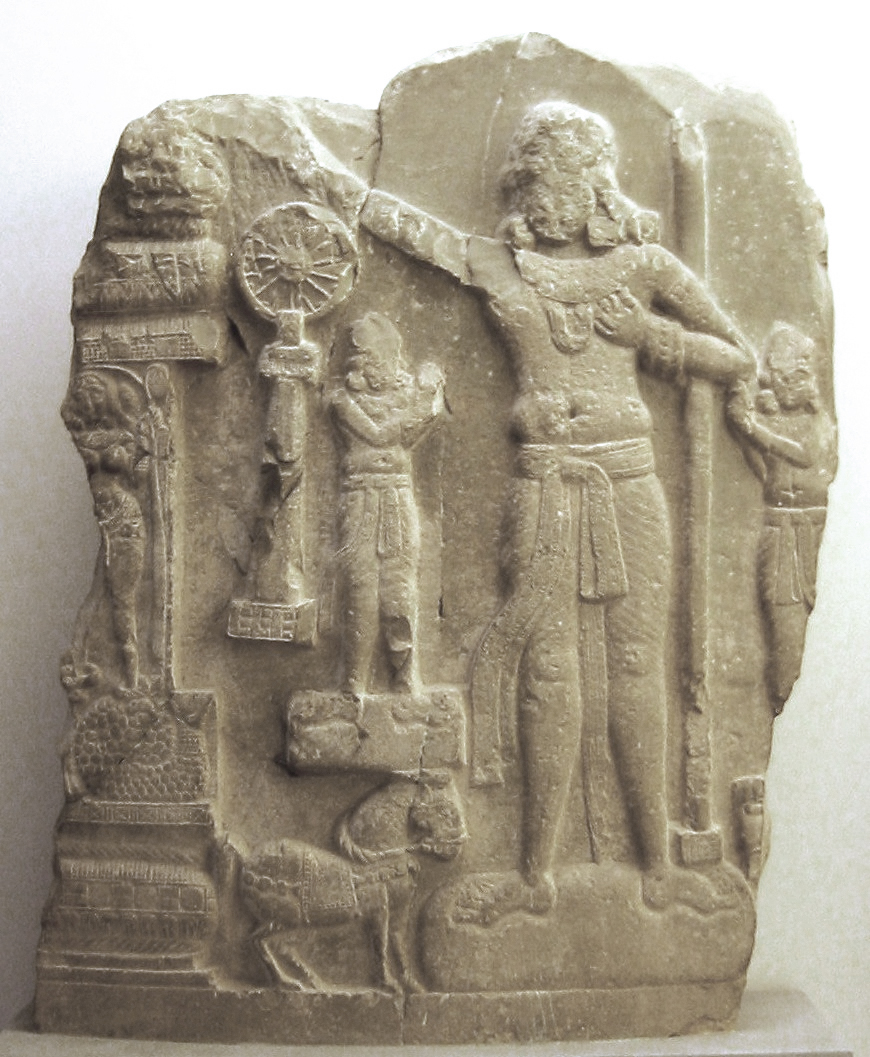
    Twenty years after his coronation, Beloved-of-the-Gods, King Piyadasi, visited this place and worshipped because here the Buddha, the sage of the Sakyans, was born. He had a stone figure and a pillar set up and because the Lord was born here, the village of Lumbini was exempted from tax and required to pay only one eighth of the produce (Minor Pillar Edict Nb1, S. Dhammika).

    Ashoka’s concept of “Dhamma” seems to be synonymous with righteousness. In order to propagate the Buddhist faith, Ashoka explains he sent emissaries to the Hellenistic kings as far as the Mediterranean, and to the peoples throughout India, claiming they were all converted to the Dharma as a result. He names the Greek rulers of the time, inheritors of the conquest of Alexander the Great, from Bactria to as far as Greece and North Africa, displaying an amazingly clear grasp of the political situation at the time.

    Buddhist proselytism at the time of kingAshoka (260-218 B.C.E.).

    Now it is conquest by Dhamma that Beloved-of-the-Gods considers to be the best conquest. And it (conquest by Dhamma) has been won here, on the borders, even six hundred yojanas away, where the Greek king Antiochos rules, beyond there where the four kings named Ptolemy, Antigonos, Magas and Alexander rule, likewise in the south among the Cholas, the Pandyas, and as far as Tamraparni (Rock Edict Nb13, S. Dhammika).

    The distance of 600 yojanas (a yojanas being about 7 miles), corresponds to the distance between the center of India and Greece (roughly 4,000 miles).

    • Antiochos refers to Antiochus II Theos of Syria (261-246 B.C.E.), who controlled the Seleucid Empire from Syria to Bactria, in the east from 305 to 250 B.C.E., and was therefore a direct neighbor of Ashoka.
    • Ptolemy refers to Ptolemy II Philadelphos of Egypt (285-247 B.C.E.), king of the dynasty founded by Ptolemy I, a former general of Alexander the Great, in Egypt.
    • Antigonos refers to Antigonus II Gonatas of Macedon (278-239 B.C.E.)
    • Magas refers to Magas of Cyrene (300-258 B.C.E.)
    • Alexander refers to Alexander II of Epirus (272-258 B.C.E.)

    Citation.

    http://www.newworldencyclopedia.org/entry/indian_inscriptions


    http://en.wikipedia.org/wiki/Ashoka

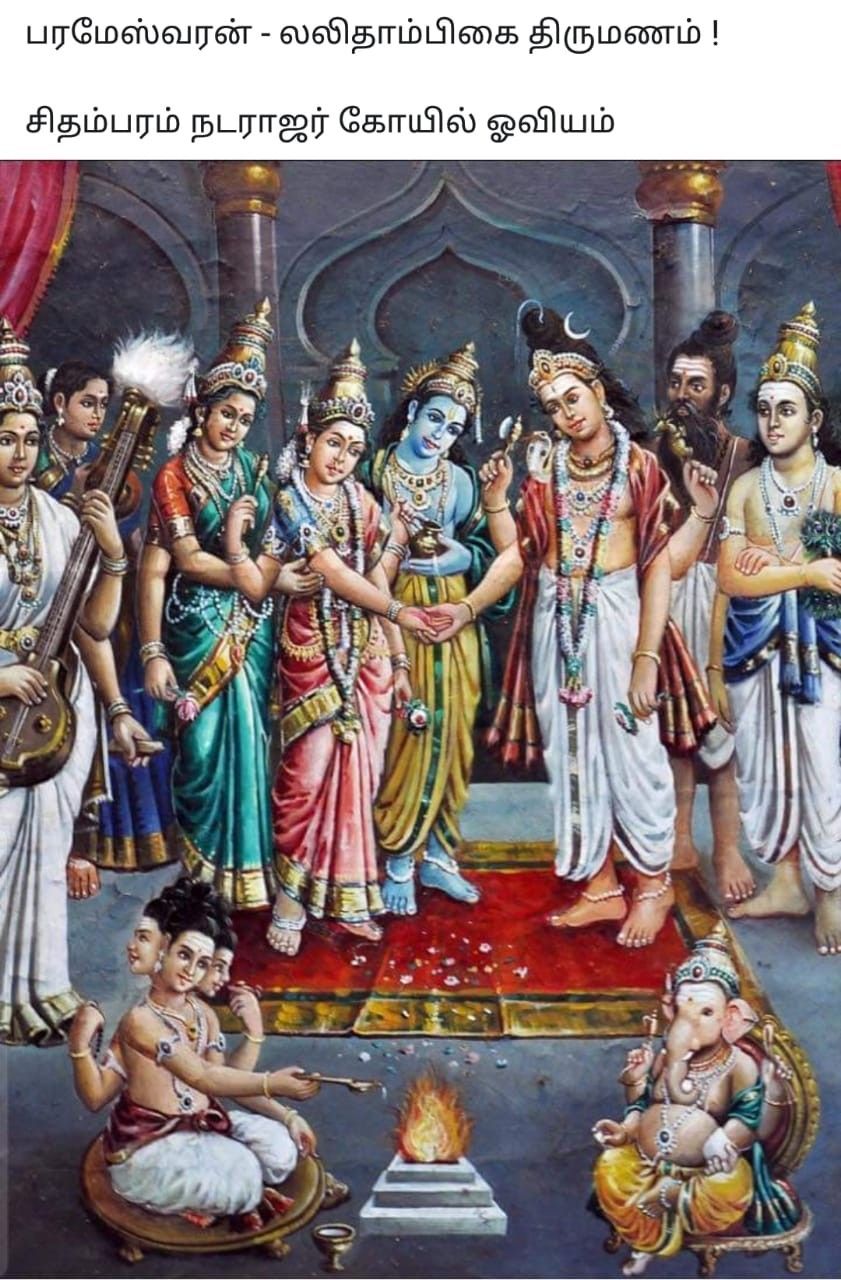
  • Shiva Uma Wedding Agastya To South 40 Million Years Ago Tectonics Proof

    Shiva Uma Wedding Agastya To South 40 Million Years Ago Tectonics Proof

    Indian Philosophy, Cosmology and Hinduism are so intricately connected with one another that it is difficult to separate them.

    The Indian texts mention, through the Puranas and  Philosophy,through Astronomical Observations about the age of the Earth.

    Here one encounters a problem of Philosophy, that of Time.

    Indian philosophy treats Time as Non-Linear, Cyclic, that is time coils around.

    For details please read my Post on Time, Non Linear.

    The Four Aeons, Yugas keep recurring as also the Astronomical events.

    The Purana state  that Agastya moved towards the South twice .

    Once when Lord Shiva ordered him to move over to South to stabilize the earth, when the North end came down, South rose because of overcrowding by people who came to witness Shiva’s wedding with Uma.

    He moved again to South to tame the Vindhya mountain.

    ( These two events have happened at different periods, not at one instance.

    Now let us look the calculation of Time .

    There are Four Yugas and they repeat themselves.

    Brahma, the Creator begins Creation at the beginning of each Yuga which will be dissolved at the end of one Chatur Yuga

    Kali Yuga                                4,32000 Years

    Dwpara Yuga  4,32,000*2= 8,64,000

    Tretha Yuga    4,32,000*3=1296000

    Satya Yuga        4,32,000*4=1728000

    Total                                         4820000 Years One Chatur Yuga

    One Manvantara is 306.72 million Years.

    Life in the universe is created and destroyed once every 4.1 to 8.2 billion years, which is one full day (day and night) for Brahma. The lifetime of a Brahma is believed to be 311 trillion and 40 billion years-Hindu Cosmology.

    ‘Eighty million years ago, India was approximately 6400 km (3968 miles) south of the Eurasian plate. Separating the two was the Tethys Sea. The Indo-Australian tectonic plate – containing the continent of Australia, the Indian subcontinent, and surrounding ocean – was pushed northward by the convection currents generated in the inner mantle. For millions of years, India made its way across the sea toward the Eurasian plate. As India approached Asia, around 40 million years ago, the Tethys Sea began to shrink and its seabed slowly pushed upwards. The Tethys Sea disappeared completely around 20 million years ago and sediments rising from its seabed formed a mountain range. When India and Tibet collided, instead of descending with the plate, the relatively light sedimentary and metamorphic rock that makes up the subcontinent of India pushed against Tibet, forcing it upwards, and created a massive mountain fold. The Himalayas.’

    Proof from the position of Agastya Star,Canopus.

    Canopus is associated with the Sage Agastya, one of the ancient rishis (the others are associated with the stars of the Big Dipper). Agastya, the star, is said to be the ‘cleanser of waters’ and its rising coincides with the calming of the waters of the Indian Ocean. It is considered the son of Pulasthya, son of Brahma.

    Canopus is 310 Light Years away from the Earth.

    ‘Agastya, is the author of 25 hymns (nos 166 to 190) of the first ‘mandala’ of the Rigveda.
    2. Canopus, the second brightest star in the night sky, is called Agastya in India.
    3. This star is close to the ecliptic south pole, having an ecliptic latitude of –76°.
    4. As the celestial poles go round the ecliptic poles due to the phenomenon of precession of the earth’s axis of rotation, this star becomes visible from different latitudes on the globe at different times. If we assume that for a star to be visible at a place its altitude at the meridian passage should be at least 5°, then calculations give the visibility curve for Agastya (Canopus) as follows.
    5. Agastya was not visible from any part of India before 10,000 BC.
    6. First it became visible at Kanyakumari around that epoch. Thereafter, as it was brought more and more northwards by precession, it became visible at various places in India.
    7. It became visible in the east coast (in the present Chennai region) in 8500 BC, and in the present day Hyderabad in 7200 BC, in the Vindhya region in 5200 BC, at Delhi in 3100 BC.
    8. At present it is visible from most parts of India for longer or shorter durations. This cycle will repeat after every 25,765 years. It is thus clear that around 5000 BC, the star Agastya was visible from the south of the Vindhyas, but not from the north of it.
    9. If sage Agastya was the first to cross the Vindhyas from the north, he would have been the first northerner to see the star. Hence the star has been named after him, just as the Magellanic clouds in the southern sky are named after the navigator Magellan, who first saw them as he sailed southwards.
    10. This fixes an epoch of 5000 BC for sage Agastya. This date is based on the assumption that for a star to be visible its meridian altitude has to be at least 5°.
    11. If we make 8° meridian altitude as the criterion for visibility, the date of Agastya would be shifted to about 4000 BC. The dates 5000 and 4000 BC should therefore bracket the probable epoch of Agastya crossing the Vindhyan mountains.

    Hindu Puranas state that the south Pole came up because of over crowding in the Himalayas because pople has rushed in to witness the wedding of Lord Shiva with Parvati and to set the earth’s balance aright Shiva ordered Agastya to go to South and he did so.

    Now the tectonic plate movement of the Himalayas confirm this by observing that

    ” The Indo-Australian tectonic plate – containing the continent of Australia, the Indian subcontinent, and surrounding ocean – was pushed northward by the convection currents generated in the inner mantle. For millions of years, India made its way across the sea toward the Eurasian plate. As India approached Asia, around 40 million years ago, the Tethys Sea began to shrink and its seabed slowly pushed upwards. The Tethys Sea disappeared completely around 20 million years ago and sediments rising from its seabed formed a mountain range. When India and Tibet collided, instead of descending with the plate, the relatively light sedimentary and metamorphic rock that makes up the subcontinent of India pushed against Tibet, forcing it upwards, and created a massive mountain fold.”

    Hence Agastya left for the South around 40 Million years ago to balance the earth.

    Please read my Post  Canopus Agastya validates Sanatana Dharma.

    Citation and Reference.

    http://www.wikiwand.com/en/Canopus

    http://www.pbs.org/wnet/nature/the-himalayas-tectonic-motion-making-the-himalayas/6342/

    http://en.wikipedia.org/wiki/Yuga#The_four_yugas_and_Brahmajnana

    http://cosmoquest.org/forum/archive/index.php/t-90134.html

  • Sita Performed Sraddha Cursed River

    The majority held belief is that women should not perform Sandhyavandana and death Rites.

    I differ from this view.

    Great Rishis have been women, like Maiteyi,Gargi,Kathyayani.

    These Rishis have composed Veda Sutras, Sukthas.

    Vedic wisdom is encapsulated in myriad hymns and 27 women-seers emerge from them.

    Ghosha, who has a definite human form. Granddaughter of Dirghatamas and daughter of Kakshivat, both composers of hymns in praise of Ashwins, Ghosha has two entire hymns of the tenth book, each containing 14 verses, assigned to her name. The first eulogizes the Ashwins, the heavenly twins who are also physicians; the second is a personal wish expressing her intimate feelings and desires for married life. Ghosha suffered from an incurable disfiguring disease, probably leprosy, and remained a spinster at her father’s house. Her implorations with the Ashwins, and the devotion of her forefathers towards them made them cure her disease and allow her to experience wedded bliss.

    The Rig Veda contains about one thousand hymns, of which about 10 are accredited to Maitreyi, the woman seer and philosopher.

    Gargi, the Vedic prophetess and daughter of sage Vachaknu, composed several hymns that questioned the origin of all existence. When King Janak of Videha organized a ‘brahmayajna’, a philosophic congress centered around the fire sacrament, Gargi was one of the eminent participants. She challenged the sage Yajnavalkya with a volley of perturbing questions on the soul or ‘atman’ that confounded the learned man who had till then silenced many an eminent scholar. Her question – “The layer that is above the sky and below the earth, which is described as being situated between the earth and the sky and which is indicated as the symbol of the past, present and future, where is that situated?” – bamboozled even the great Vedic men of letters.

    One is expected to have Upaveedha to learn the Vedas.

    These women composed Veda Sukthas.

    They could not have learnt the Vedas without Upaveedha.

    Hence they had to perform Sandhyavanda and other Karmic duties.

    I have a detailed article on this.

    Now there is Reference in the Ramayana and Garuda Purana that Sita offered Pinda to Dasaratha, her father in law at Gaya.

    There is reference to the city of Gaya and the Phalgu in the Ramayana in which it says that Sita had cursed the Phalgu River. There is an interesting story and the mythology states that on account of this curse, the Phalgu lost its water, and the river is simply a vast stretch of sand dunes.According to tradition, in the absence of Rama, his wife Sita offered pinda on its banks to Dasharatha father of Rama.

    The story goes that Rama, along with his brothers and Sita, came to Gaya to perform the sacred rites for his father, Dasaratha. When the brothers were bathing in the river, Sita was sitting on the banks, playing with the sand. Suddenly, Dasaratha appeared out of the sand, and asked for the Pindam, saying he was hungry. Sita asked him to wait till his sons returned, so that she could give him the traditional Pindam of rice and til. He refused to wait, asking her to give him pindams made of the sand in her hand.

    Having no other option, she gave him the Pindam he desired with five witnesses – the Akshaya Vatam, the Falguni River, a cow, a Tulsi plant and a Brahmin. Soon, Rama returned and started the rituals. In those days apparently, the ancestors would arrive in person to collect their share, and when Dasaratha did not appear, they wondered why. Sita then told them what had happened, but Rama could not believe that his father would accept pindams made of sand. Sita now mentioned her witnesses, and asked them to tell Rama the truth.

    Among the five, only the Akshaya Vatam took her side and told the truth, while the others lied, trying to take Rama’s side. In her anger, Sita cursed all of them thus: the Falguni river henceforth would have no water at Gaya; the Cow would no longer be worshipped from the front as all others are- only its backside would be worshipped; there would be no more Tulsi plants at Gaya and the Gaya Brahmins would never be satisfied, they would always be hungry and crave more and more. She then blessed the Akshaya Vatam saying that all who came to Gaya would perform the Pinda pradaanam at the Akshaya Vatam too.

    Sri Sita is said to have performed Sandhyavandanam including Dhyaanam and Japam (Vide page 97 of Notes on AyOdhya KhaaNDam of Srimad Vaalmiki Ramayanam by Sri C.R.Srinivasa Iyengar)

    View of Kanchi Acharya.

    I said that the twice-born must perform sandhyavandana with the well-being of women and other jatis in mind. I also explained why all samskaras are not prescribed for the fourth varna. Now we must consider the question of women, why they do not have such rituals and samskaras.

    Even though we perform the punyaha-vacana and namakarana of newborn girls and celebrate their first birthday, we do not conduct their caula and upanayana nor the other samskaras or vows laid down for brahmacarins. Of course, they have the marriage samskara. But in other rites like sacrifices the main part is that of the husband, though she (the wife) has to be by his side. In aupasana alone does a woman have a part in making oblations in the sacred fire.

    1. Why is it so?
    2. The rites performed before a child is born are intended for the birth of a male child (niseka, pumsavana, simanta). Does it mean, as present-day reformers and women’s libbers say, that Hindu women were downgraded and kept in darkness?
    3. What reason did I mention for the fourth varna not having to perform many of the samskaras?

    That these were not necessary considering their vocations and the fact that they can work for the welfare of the world without the physical and mental benefits to be derived from the samskaras. If they also spend their time in Vedic learning and in sacrifices, what will happen to their duties? So most of the samskaras are not necessary for them. They reach the desire goal without these rites by carrying out their duties.

    “Svakarmana tam abhyarcya siddhim vindati manavah“, so says the Gita. I have spoken to you about this earlier.

    Just as society is divided according to occupations and the samskaras are correspondingly different, so too there are differences between men and women in domestic life. Running a household means different types of work, cooking, keeping the house clean, bringing up the children, etc. By nature women can do these chores better than men. If they also take an active part in rituals, what will happen to such work? Each by serving her husband and by looking after her household becomes inwardly pure.

    In truth three is no disparity between men and women, nor are women discriminated

    against as present-day reformers allege.

    Work is divided for the proper maintenance not only of the home but the nation on the whole; and care has been taken not to have any duplication.

    There is no intention of lowering the status of any section in this division of labour.

    The body, in the case of certain people, is meant to preserve the mantras and there are samskaras which have the purpose of making it worthy of the same.

    Why should the same rituals be prescribed for those who do not have such tasks to carry out?

    Glassware to be sent by railway parcel is specially taken care of since it is fragile. Even greater care is taken in dispatching kerosene or petrol. If the same precautions are not taken in transporting other goods, does it mean that they are poorly thought of?

    Citation.

    http://en.wikipedia.org/wiki/Phalgu

    http://www.kamakoti.org/hindudharma/part18/chap2.htm

    Women performing Veda Samskaaras – By Kanchi Mahaswami

  • Jesus Christ Killed Had Bad Temper Apocrypha Bible

    One of the problems, which those who design a Religious text, do not realize that, whatever be the presentation and promotion , Truth will surface.

    Especially so, if the Religious text is selected from about 300 versions and only that which suited the Political expediency is accepted.

    Lost Books of The Bible.Image.jpg
    Lost Books of The Bible.

    The danger is that there are chances that the rejected material shall also come through.

    This, being of the same origin as that of the accepted Text will carry the same force as the one accepted.

    I am talking about the Bible, which was compiled by a Conclave of Cardinals and only that which suited the political necessities of Empire Constantine was accepted as the Religious text.

    There were more than 300 versions reported to have been considered by the conclave of the Cardinals.

    Now there are those versions of the Bible that have become available that speak differently of Jesus and His Character.

    These Books are called the Lost Books of the Bible, Apocrypha Bible.

    Some of the material found in these books are very uncomfortable for a Religion which says it the most Compassionate and Jesus  was a Prince of Peace.


    No question, the kid portrayed in the “The Lost Books of the Bible” isn’t exactly the Prince of Peace. After recounting three murders in two pages, one passage concludes, “Then said Joseph to St. Mary, henceforth we will not allow him to go out of the house; for everyone who displeases him is killed.”

    The “lost books” are part of the apocrypha, quasibiblical works not included in the official Bible. There are several dozen of these, dating from both Old and New Testament eras and exhibiting considerable variety in length, completeness, and credibility. A few of these were considered inspired in some corners of the early church but were ultimately excluded from the formal canon for one reason or another; the remainder, which account for the bulk of the material, have always been regarded as spurious by the mainstream church and include works condemned as heretical or fraudulent…

    In 1820 a number of the apocryphal books were compiled into a sort of alternative Bible called the Apocryphal New Testament. This was republished in 1926 as The Lost Books of the Bible and reprinted in 1979; the last version is what you saw. The 1820 book in turn was an aggregation of two English translations published in 1736 and 1737. The original works were a serious attempt to advance bible study, but the subsequent publications, arguably in 1820 and certainly from 1926 onward, were an attempt to sell books by creating scandal.

    ..

    The homicidal-Jesus stories come from something known as the Infancy Gospel of Thomas. (This is to be distinguished from the better-known but equally apocryphal Gospel According to Thomas, about which more below.) Several versions of the Infancy Gospel have come to light, dating back to about the sixth century AD; all are copies of earlier texts.

    As near as scholars can make out, the Thomas story originated in the mid-second century AD, subsequent to the four canonical gospels (that is, Matthew, Mark, Luke, and John). Some say it was based in part on Luke; the two books share the story of Jesus scourging the money lenders at the Temple. It is one of the few portrayals, spurious or not, of Jesus’s early life, which no doubt accounts for its continued circulation after eighteen hundred years…

    Gospel According to Thomas, a collection of 114 sayings attributed to Jesus discovered in Egypt in 1945. It is taken more seriously than the Infancy Gospel and while not as outrageous is equally troubling in its way. It ends, “Simon Peter said to them, ‘Let Mary leave us, for women are not worthy of life.’ Jesus said, ‘I myself shall lead her in order to make her male, so that she too may become a living spirit resembling you males. For every woman who will make herself male will enter the kingdom of heaven.’”

    Old Testament orders to Kill.


    Zephaniah 2:12-15

    “You Ethiopians will also be slaughtered by my sword,” says the LORD. And the LORD will strike the lands of the north with his fist. He will destroy Assyria and make its great capital, Nineveh, a desolate wasteland, parched like a desert. The city that once was so proud will become a pasture for sheep and cattle. All sorts of wild animals will settle there. Owls of many kinds will live among the ruins of its palaces, hooting from the gaping windows. Rubble will block all the doorways, and the cedar paneling will lie open to the wind and weather. This is the fate of that boisterous city, once so secure. “In all the world there is no city as great as I,” it boasted. But now, look how it has become an utter ruin, a place where animals live! Everyone passing that way will laugh in derision or shake a defiant fist


    Ezekiel 9:5-7

    “Then I heard the LORD say to the other men, “Follow him through the city and kill everyone whose forehead is not marked. Show no mercy; have no pity! Kill them all – old and young, girls and women and little children. But do not touch anyone with the mark. Begin your task right here at the Temple.” So they began by killing the seventy leaders. “Defile the Temple!” the LORD commanded. “Fill its courtyards with the bodies of those you kill! Go!” So they went throughout the city and did as they were told.”


    Matthew henry’s Biblical commentary writes this on Ezekial 9:5-7 :


    . A command given to the destroyers to do execution according to their commission. They stood by the brazen altar, waiting for orders; and orders are here given them to cut off and destroy all that were either guilty of, or accessory to, the abominations of Jerusalem, and that did not sigh and cry for them. Note, When God has gathered his wheat into his garner nothing remains but to burn up the chaff, Matthew3:12 http://www.studylight.org/desk/?query=mt+3:12&t=kjv.


    1. They are ordered to destroy all, (1.) Without exception. They must go through the city, and smite; they must slay utterly, slay to destruction, give them their death’s wound. They must make no distinction of age or sex, but cut off old and young; neither the beauty of the virgins, nor the innocency of the babes, shall secure them. This was fulfilled in the death of multitudes by famine and pestilence, especially by the sword of the Chaldeans, as far as the military execution went. Sometimes even such bloody work as this has been God’s work. But what an evil thing is sin, then, which provokes the God of infinite mercy to such severity! (2.) Without compassion: “Let not your eye spare, neither have you pity (Ezekiel 9:5 <http://www.studylight.org/desk/?query=eze+9:5&t=kjv&gt; ); you must not save any whom God has doomed to destruction, as Saul did Agag and the Amalekites, for that is doing the work of God deceitfully, Jeremiah 48:10 <http://www.studylight.org/desk/?query=jer+48:10&t=kjv&gt; . None need to be more merciful than God is; and he had said (Ezekiel 8:18 <http://www.studylight.org/desk/?query=eze+8:18&t=kjv&gt; ), My eye shall not spare, neither will I have pity.” Note, Those that live in sin, and hate to be reformed, will perish in sin, and deserve not to be pitied; for they might easily have prevented the ruin, and would not.


    1. They are warned not to do the least hurt to those that were marked for salvation: “Come not near any man upon whom is the mark; do not so much as threaten or frighten any of them; it is promised them that there shall no evil come nigh them, and therefore you must keep at a distance from them.” The king of Babylon gave particular orders that Jeremiah should be protected. Baruch and Ebed-melech were secured, and, it is likely, others of Jeremiah’s friends, for his sake. God had promised that it should go well with his remnant and they should be well treated (Jeremiah 15:11 <http://www.studylight.org/desk/?query=jer+15:11&t=kjv&gt; ); and we have reason to think that none of the mourning praying remnant fell by the sword of the Chaldeans, but that God found out some way or other to secure them all, as, in the last destruction of Jerusalem by the Romans, the Christians were all secured in a city called Pella, and none of them perished with the unbelieving Jews. Note, None of those shall be lost whom God has marked for life and salvation; for the foundation of God stands sure.

    Some of the Lost Books.


    • Biblical Corruption?

    • The Acts of The Apostle Thomas
    • The Apocalypse of Peter
    • The Apocalypse of Paul
    • The Book of Enoch
    • Eugnostos the Blessed
    • The Book of James – Protevangelium
    • The Book of Jubilees
    • The Dialogue of the Saviour
    • The Didache: Teachings of the 12 Apostles
    • The Epistle of Barnabas
    • The Epistle to the Laodiceans
    • The Essenes and The Dead Sea Scrolls
    • The Essene Gospel of Peace
    • The Essene Book of Revelation
    • The Forgotten Books of Eden: First and Second Book of Adam and Eve:
    • The Gospel of the Egyptians
    • The Gospel of Mary Magdalene.
    • The Gospel of the Nativity of Mary
    • The Gospel of Nicodemus
    • The Gospel of The Perfect Life / Holy (12) Twelve
    • The Gospel of Philip
    • The Gospel of Thomas
    • The Gospel of Truth
    • The Heavenly Prince Melchizedek
    • The Lost Gospel of Peter
    • The Sophia (Wisdom) of Jesus
    • The Lost Ten Tribes of Israel
    • The Lost Years of Jesus
    • The Testament of Abraham
    • The Treatise on the Resurrection


    Citation and References.

    http://thefrt.com/what-are-the-lost-books-of-the-bible-did-jesus-kill-2-boys-a-schoolmaster-because-they-displeased-him/#

    http://answering-christianity.com/sami_zaatri/another_bible_myth.htm