It requires a study of Puranas to understand the dynasties of India. While Indians can name the various Dynasties of Europe and the British Dynasty in detail, they cannot name the various Dynasties of India. Worse still, is that they end up claiming India has no History and its history is a myth.
There is no point in blaming them,for Children in India are brought up with a diet of Invaders’ History with a claimer that Indian history is a myth.
There were two Dynasties in India initially.
First human was Vaiwaswatha Manu. His son Ikshvaku founded the Suryavansh,Solar Dynasty.Manu’s Daughter Ila ,by marrying Budha,son of Chandra, founded the Chandravansh, Lunar Dynasty.
There was a king of Chandravansh, Lunar Dynasty,Yayati.
His son Yadu refused Yayati’s wish of exchanging his old age for youth, Yayati forbade Yadu from using the name of Chandravansh. So, Yadu named his progeny as belonging to Yadava Dynasty.
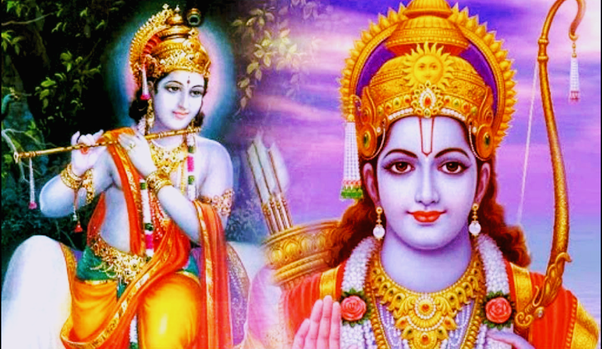
Sri Krishna belongs to the Vrishni branch of Yadava Dynasty.
More articles to follow on the Dynasties of India.
‘
Yadu is one of the five Indian tribes (panchajana, panchakrishtya or panchamanusha) mentioned in the Rig Veda. Krishna is the descendant of Yadu from Vedic tribe.[1]
The Hindu epic Mahabharata, the Harivamsha and the Puranas mention Yadu as the eldest son of king Yayati and his queen Devayani. The prince of King Yayati, Yadu was a self-respecting and a very established ruler. According to the Vishnu Purana, the Bhagavata Purana and the Garuda Purana, Yadu had four sons, while according to the rest of the Puranas he had five sons.The kings between Budha and Yayati were known as Somavanshi. According to a narrative found in the Mahabharata, and the Vishnu Purana, Yadu refused to exchange his years of youth with his father Yayati. So he was cursed by Yayati that none of Yadu’s progeny shall possess the dominion under his father’s command.Thereby, he could not have carried on the same dynasty, called Somavamshi. Notably, the only remaining dynasty of King Puru was entitled to be known as Somavamshi. Thereby King Yadu ordered that the future generations of his would be known as Yadavas and the dynasty would be known as Yaduvanshi. The generations of Yadu had unprecedented growth and got divided into two branches.
Removal of Evil eye, Protection from forces that hinder Spiritual development.
Protection from Black magic,Animals.
Increases self confidence and self assurance.
Clarity of thought..
Above all,Mukthi and Gnana are facilitated.
Date of Rig veda in Ramanisblog According to Ramanisblog, the date of the Rig Veda is subject to considerable debate, with modern scholarly estimates generally ranging between 2000 BCE to 1000 BCE[1]. However, Ramanisblog highlights that Hindu tradition considers the Vedas to be timeless and without a specific beginning[1]. Perspectives on Rig Veda Dating Ramanisblog… Read more: Rig Veda Inflenced Civilizations Outside India
Following in the Ai Generated transcript of the Navavarana Pooja Mantras . Recorded and sent to my Shishyas. This is being made public so that this secret knowledge is not lost to posterity. Those who want to be initiated may contact me through mail at ramanan50@gmail.com. Also they can contact through the comment column. If… Read more: Navavarana Pooja 1 Guru Stuthi
Nithya Devathas in Sri Vidya Nithya Devathas, often revered within the Sri Vidya tradition, embody various divine forms that are essential for spiritual growth and understanding. The concept of Nithya Devathas emphasizes the importance of worshipping these deities to achieve higher levels of consciousness and fulfillment. Importance of Nithya Devathas Nithya Devathas in Practice Conclusion… Read more: Exploring Nithya Devathas in Sri Vidya
What is the original source and authority on any subject?
I encountered this issue when a comment for a Post mine stated that the Links/sources provided by me depend on each other and as such they commit the fallacy of Circular reasoning.
Hence they are unacceptable.
Human Race From India.
The comment also observed that I must provide a reliable source like Text Books(?) or a reputed authority.
What then is a source that is dependable?
You depend and take reference to the one that is in agreement with known facts that are available.
And these facts are to be borne out by physical evidence such as Archaeology an , in my opinion, Astronomy as one can not tamper with Astronomical events while one can with Archaeology.
And in addition one may have to depend on contemporary references of the relevant period where the events have occurred and the foreign sources which were contemporary in terms of Time that refer to these events.
This the procedure I follow in validating information.
But all these have to stop at one point where the trail ends.
If you star doubting the authenticity of this, then no knowledge is possible.
Science conveniently circumvents this by saying some fundamentals are self-evident,Axioms, and are not to be questioned.
But Arts and History does not have this privilege.
The first source has o be proved as in Philosophy.
Philosophy tries to answer questions that are unanswerable by Science.
So the talk about God Reality evokes a lot of arguments an denials.
These areas need perception combined with inference,and testimony.
If one were to deny Inference as it may be faulty because non availability of all the facts then Inference can not be used.
In that case many day-to-day activities might come to a standstill.
And on Testimony if one were to doubt every testimony , I can not even say who my parents are!
Indian philosophy accepts Inference and Testimony(Sabda) as sources of Knowledge, under certain conditions.
I shall be writing on the sources of Knowledge shortly.
Now to the subject on hand, that of where did all the races originate from?
If one were to check western sources, both historical and religious,they would simply state that it was there or it is from another place.
You check on Human migration to Europe,
Waves of people came in intervals in they state.
Then they add from Asia.
Please read my post on Human Migration.
The trail ends there.
But the source they quote, namely India,comes out with references then they are dismissed at Myths.
Bu the west’s statement that human migration just happened and it is from Asia people accept it.
Why?
I leave it at that.
Now when we find human races History the same pattern is observed.
This is what is Race about.
Groups of humans have always identified themselves as distinct from neighboring groups, but such differences have not always been understood to be natural, immutable and global. These features are the distinguishing features of how the concept of race is used today. In this way the idea of race as we understand it today came about during the historical process of exploration and conquest which brought Europeans into contact with groups from different continents, and of the ideology of classification and typology found in the natural sciences.
The European concept of “race,” along with many of the ideas now associated with the term, arose at the time of the scientific revolution, which introduced and privileged the study of natural kinds, and the age of European imperialism and colonizationwhich established political relations between Europeans and peoples with distinct cultural and political traditions.[37][38] As Europeans encountered people from different parts of the world, they speculated about the physical, social, and cultural differences among various human groups. The rise of the Atlantic slave trade, which gradually displaced an earlier trade in slaves from throughout the world, created a further incentive to categorize human groups in order to justify the subordination of African slaves.[39] Drawing on Classical sources and upon their own internal interactions — for example, the hostility between the English and Irish powerfully influenced early European thinking about the differences between people[40] — Europeans began to sort themselves and others into groups based on physical appearance, and to attribute to individuals belonging to these groups behaviors and capacities which were claimed to be deeply ingrained. A set of folk beliefs took hold that linked inherited physical differences between groups to inherited intellectual, behavioral, and moral qualities.[41] Similar ideas can be found in other cultures,[42] for example in China, where a concept often translated as “race” was associated with supposed common descent from the Yellow Emperor, and used to stress the unity of ethnic groups in China. Brutal conflicts between ethnic groups have existed throughout history and across the world.[43]
The 1775 treatise “The Natural Varieties of Mankind,” by Johann Friedrich Blumenbach proposed five major divisions: the Caucasoid race,Mongoloid race, Ethiopian race (later termed the Negroid race), American Indian race, and Malayan race, but he did not propose any hierarchy among the races.[47] Blumenbach also noted the graded transition in appearances from one group to adjacent groups and suggested that “one variety of mankind does so sensibly pass into the other, that you cannot mark out the limits between them”.[48]
From the 17th through the 19th centuries, the merging of folk beliefs about group differences with scientific explanations of those differences produced what one scholar has called an “ideology of race”.[38] According to this ideology, races are primordial, natural, enduring and distinct. It was further argued that some groups may be the result of mixture between formerly distinct populations, but that careful study could distinguish the ancestral races that had combined to produce admixed groups.[43] Subsequent influential classifications by Georges Buffon, Petrus Camper and Christoph Meiners all classified “Negros” as inferior to Europeans.[47] In the United States the racial theories of Thomas Jefferson were influential. He saw Africans as inferior to Whites especially in regards to their intellect, and imbued with unnatural sexual appetites, but described Native Americansas equals to whites.[49]
Where is the evidence here on Races?
Check the source provide here or check any other source.
The same information under esoteric words with no shred of hard evidence and what is quoted in rare cases as an archaeological finds point out Indian connection and no body shall pursue it.
This blog does that ,Pursuing sources and the trail stops with the Puranas and Ithihasas.
And the facts mentioned by them are borne out by archaeology9Indain and Foreign) and Astronomy.
On the issue of races this is what the Puranas, Ramayana, Mahabharata and The Puranas have to say.
And my research shows most of them have been validated and I have published them.
I shall continue to pursue what has not yet been covered.
King Yayati a king of the Lunar Dynasty is mentioned to have 5 sons, all of whom became the founders of many royal dynasties.
The sons of Yadu are known by the name of the Yadavas: while those of Turvasu have come to be called the Yavanas. And the sons of Drahyu are the Bhojas, while those of Anu, the Mlechchhas. The progeny of Puru, however, are the Pauravas (1:85). Yadavas became strong in central India. The Pauravas (Kurus and Panchalas were branches of this race) became strong in northern India. The sons of Anu were also called Anavas, thought to be the Iranian tribes, who were all grouped as Mlechas. The Yavanas along with the Anavas established themselves in the far western regions.
It is not clear if the Bhojas mentioned here represents the Bhoja-Yadavas, a sub-sect of the Yadavas. However the epic mentions a king named Kunti-Bhoja (the king of Kunti and the foster-father of Pandava’s mother Kunti) and a city named Bhojakata in Vidarbha. There is a highly speculative possibility that the Druids of Ireland were the descendants of Drahyu.
Race from Kamadhenu.
When the sage Vasistha was attacked by king Viswamitra’s army, Vasistha’s cow, Kamadehnu, brought forth from her tail, an army of Palhavas, and from her udders, an army ofDravidas and Sakas; and from her womb, an army of Yavanas, and from her dung, an army of Savaras; and from her urine, an army of Kanchis; and from her sides, an army of Savaras. And from the froth of her mouth came out hosts of Paundras and Kiratas, Yavanas and Sinhalas, and the barbarous tribes of Khasas and Chivukas and Pulindas andChinas and Hunas with Keralas, and numerous other Mlechchhas.
This is also found in Ramayana:- the tribes like the Kambojas, Barbaras, Pahlavas, Yavanas, Sakas, Mlecchas, Haritas and Kiratas etc. had originated from the body parts of the divine cow, Kamadhenu of sage Vasistha, as hords of army men, to protect him from the attack of the king Viswamitra (Ramayana 1.55.2-3). The following passage from Mahabharata. At (12:35) is mentioned:- What duties should be performed by the Yavanas, the Kiratas, the Gandharvas, the Chinas, the Savaras, the Barbaras, the Sakas, theTusharas, the Kankas, the Pathavas, the Andhras, the Madrakas, the Paundras, the Pulindas, the Ramathas, the Kamvojas, the several castes that have sprung up fromBrahmanas and Kshatriyas, the Vaisyas, and the Sudras, that reside in the dominions of (Arya) kings?
They were later given the status of Sudras. The Mekalas, the Dravidas, the Lathas, the Paundras, the Konwasiras, the Saundikas, the Daradas, the Darvas, the Chauras, the Savaras, the Varvaras, the Kiratas, the Yavanas, and numerous other tribes of Kshatriyas, have become degraded into the status of Sudras through the wrath of Brahmanas. (13:35). It is in consequence of the absence of Brahmanas from among them that the Sakas, the Yavanas, the Kamvojas and other Kshatriya tribes have become fallen and degraded into the status of Sudras. The Dravidas, the Kalingas, the Pulandas, the Usinaras, the Kolisarpas, the Mahishakas and other Kshatriyas, have, in consequence of the absence of Brahmanas from among their midst, become degraded into Sudras (13:33).
Kamadhenu in this context has to be taken in its meaning of perennial.
It means that the Races originate from India perennially.
A passage in the Mahabharata, which is rendered as a futuristic prediction mentions thus:- The Andhra Kingdom, the Sakas, the Pulindas, the Yavanas, the Kamvojas, theBahlika Kingdom Valhikas and the Abhira Kingdom Abhiras, will then become possessed of bravery and the sovereignty of the earth (3:187).
Yavana rulers might have spread throughout ancient India, who established their city-states or small kingdoms during the period of Mahabharata. Many ancient Indian warriors like Pandu, Arjuna, Nakula, Sahadeva, Karna and Vasudeva Krishna were mentioned as encountering Yavana kings.
Mention of Yavanas who fought with Arjuna and his father Pandu:- The king of the Yavanas himself whom the powerful Pandu even had failed to bring under subjection was brought by Arjuna under control (1:141). Mention of a Yavana stronghold in Mathura:- The Yavanas, the Kamvojas, and those that dwell around Mathura are well skilled in fighting with bare arms (12:100). Nakula the son of Pandu reduced to subjection the fierce Mlechchas residing on the sea coast, as also the wild tribes of the Palhavas, the Kiratas, the Yavanas, and the Sakas. And having subjugated various monarchs, and making all of them pay tributes, Nakula that foremost of the Kurus, full of resources, retraced his way towards his own city (2:31). Sahadeva, the son of Pandu, brought under his subjection and exacted tributes from the Paundrayas and the Dravidas along with theUdrakeralas and the Andhras and the Talavanas, the Kalingas and the Ushtrakarnikas, and also the delightful city of Atavi and that of the Yavanas (2:30). The Yavana city mentioned here seems to be a south Indian port city of the Yavanas during the ancient era.
Having come to the western regions, Karna made all the Yavana and Varvara kings pay tribute. The Suta’s son brought the Sasakas and the Yavanas under his sway.(3:252).Vasudeva Krishna slew the Yavana called Kalyavana (3:12). The Sakas, and the Yavanas with followers, were all vanquished by Krishna. (7:11).
The Greeks participated in the Kurikshetra War along with Duryodhana on the advice of Karna.
India Greece Trade Route 300 BC.
The Greeks were known as Yonas and Yavanas.
The Yavanas, Greeks were a part of those people considered as Mielchas, meaning those who strayed from the Vedic Dharma.
Thee were initially following the Sanatana Dharma.
They had caste system along the lines of Hinduism.
Many of them were considered to be Kshatriyas and Vaisyas.
‘
Yavanas were described to be beyond Gandhara. There was another country mentioned in the epic as Parama Yona, in the far west of Yavana. This could be the Ionia ofGreece, somehow related to Indian Ionians or Yavanas. The name Yavana could be the Sanskritized form of the name Ionia. Yavanas, Sakas, Pahlavas and Hunas were sometimes described as Mlechhas. Sometimes along with them, the Madras, Kambojas, Kekeyas, Sindhus and Gandharas were included. This name was used to indicate their cultural differences with the Vedic culture, prevailed in the Kuru-Panchala Kingdoms.
“… in the ports of southern India, where the early Tamil poems of uncertain date speak of a settlement of the Yavanas.”(1) The same author (2) does not follow the assumption that Yavanas were Roman traders, although she points out that between the first-second cent BC up to and included the third-fourth cent AD, rightly or wrongly “the term yavana denoted an Ionian Greek”.(3) On pages 83–5 she makes mention of early Indian literature where foreigners were dubbed “yavana”, and points to an Asokan inscription where a border-people is given this appellation. In central and western India, she says, Yavana “figure prominently as donors to the Buddhist Sangha”.(4)
(1) H.P.Ray, The Winds of Change, Delhi, 1994:49, 84; (2) ibid p. 52; (3) ibid p. 54; (4) ibid p. 84..
Thus the Vedic society acknowledged their extra ordinary skills, but kept them as outcasts. An account in the epic depicts Yavanas as the descendants of Turvasu, one of the cursed sons of king Yayati. Only the fifth son Puru’s line was considered to be the successors of Yayati’s throne, as he cursed the other four sons and denied them kingship. Pauravas inherited the Yayati’s original empire and stayed in the Gangatic plain who later created the Kuru and Panchala Kingdoms. They were the followers of proper Vedic culture.
Yavana was the name of one of the sons of Maharaja Yayati who was given the part of the world known as Turkey to rule. Therefore the Turks are Yavanas due to being descendants of Maharaja Yavana. The Yavanas were therefore kshatriyas, and later on, by giving up the brahminical culture, they became mleccha-yavanas. Descriptions of the Yavanas are in the Mahabharata (Adi-parva 85.34). Another prince called Turvasu was also known as Yavana, and his country was conquered by Sahadeva, one of thePandavas. The western Yavana joined with Duryodhana in the Battle of Kurukshetra under the pressure of Karna. It is also foretold that these Yavanas also would invadeIndia in the Kaliyuga . (Srimad Bhagavatam 2.4.18 [1])
It later proved to be true in 326 BC.
Among the tribes of the north and west are the Mlecchas, and the Kruras, the Yavanas, the Chinas, the Kamvojas, the Darunas, and many Mleccha tribes; the Sukritvahas, the Kulatthas, the Hunas, and the Parasikas; the Ramanas, and the Dasamalikas. These countries are, besides, the abodes of many Kshatriya, Vaisya, and Sudra tribes. Then again there are the Sudra and Abhiras, the Dardas, the Kasmiras, and the Pattis; the Khasiras; the Atreyas, the Bharadwajas etc. (6:9)
King Yayati a king of the Lunar Dynasty is mentioned to have 5 sons, all of whom became the founders of many royal dynasties.
The sons of Yadu are known by the name of the Yadavas: while those of Turvasu have come to be called the Yavanas. ..
‘
The word “Yona” in the Pali language, and the analogues “Yavana” in Sanskrit; “Unan” in Urdu and “Jôbon” in Bengali, are words used in the ancient Indus Valley to designate Greek speakers. “Yona” and “Yavana” are transliterations of the Greek word for “Ionians” (Homeric Greek: Iaones, Ancient Greek: *Iawones), who were probably the first Greeks to be known in the East.
The Yavanas are mentioned in the Buddhist discourse of the Middle Length Sayings, in which the Buddha mentions to the BrahmanAssalayana the existence of the Kamboja and Yavana people who have only two castes, master or slave. The direct identification of the word “Yavana” with the Greeks at such an early time (6th-5th century BCE) can be doubted.[1]
Examples of direct association of these with the Greeks include:
The mention of the “Yona king Antiochus” in the Edicts of Ashoka (280 BCE)
The mention of the “Yona king Antialcidas” in the Heliodorus pillar in Vidisha (110 BCE)
King Menander and his bodyguard of “500 Yonas” in the Milinda Panha.
The description of Greek astrology and Greek terminology in the Yavanajataka (“Sayings of the Yavanas”) (150 CE).
The mention of “Alexandria, the city of the Yonas” in the Mahavamsa, Chapter 29 (4th century CE).
In Sanskrit sources, the usage of the words “Yona”, “Yauna”, “Yonaka”, “Yavana” or “Javana” etc. appears repeatedly, and particularly in relation to the Greek kingdoms which neighbored or sometimes occupied the Punjab territories over a period of several centuries from the 4th century BC to the 1st century AD, such as the Seleucid Empire, the Greco-Bactrian kingdom and the Indo-Greek kingdom.[citation needed] The Yavanas are mentioned in detail in Sangam literature epics such as Paṭṭiṉappālai, describing their brisk trade with the Cholas in Tamilakam.
The Legend of Krishna along with Balarama, Greek Ambassador worshiping Vishnu, establishing a Stupa In India being worshiped in Greece ma by found in this site under Hinduism.
You must be logged in to post a comment.