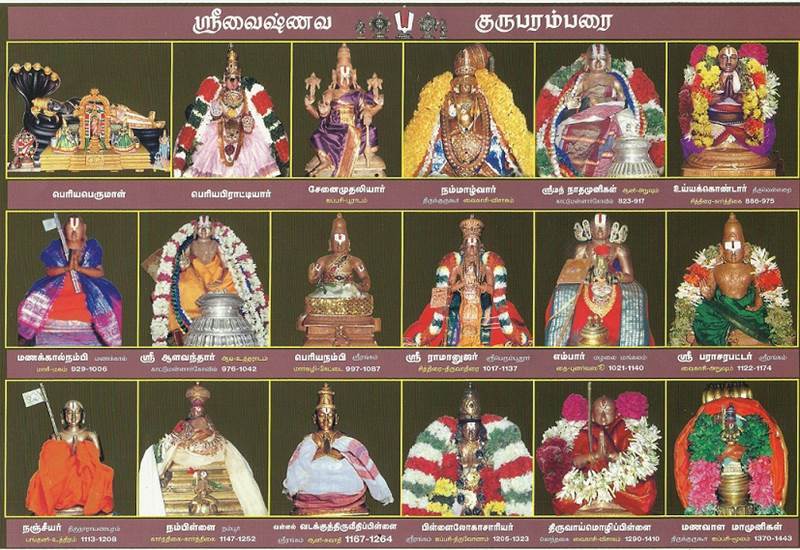
The reclining, sleeping Vishnu is Anantha, Infinite.
Vishnu does not sleep, neither Devas.
One of the definitions of Devas is that their eyelids do not bat , they do not sleep.
Other marks of Devas are,
Flowers adorned by them do not wither.
Their Feet do not touch the ground.
Anathapadmabha, Malayadipatti.
Vishnu’s sleep is called Yoga Nidra, a Posture of Yoga where the physical senses are shut off, consciousness is rooted in the Reality, yet aware of the surroundings.
In Tamil there is a beautiful word for this posture of Vishnu.
It is ‘அறிதுயில் ‘ , sleeping while knowing.
Such postures of Vishnu are relatively rare.
Famous ones are Anantha Padmanabhaswamy Temple,Thiruvananthapuram,Srirangam, Srivilliputhur.
Cave temple for Sleeping Vishnu is very rare.
One such temple is Malayadipatti Anathapadmanabhaswamy Temple.
Located 45kms from Tiruchirapalli in a remote village in the Kulattur Taluk of Pudukottai District is the largely unknown North Facing Rock Cut Anantha Padmanabhaswamy cave temple in Malayadipatti, one that dates back around 1200 years to the late 8th Century AD / early 9th Century AD.
How To Reach.
One can reach Malayadipatti by taking the Trichy- Keeranur – Killukottai route (17kms from Keeranur) or Trichy – Thuvakudi – Poyyakudi- Asur- Sengalur route.
Bus Numbers: K3 and K12 from Keeranur
No. 100 from Tiruverambur.
No. 26 from Chatram Bus Stand
The temple is 33kms from Pudukottai.
Auto/Taxi from Trichy will cost around Rs.500.
For local help, contact: Saivaraj @ 97878 18987
Moolavar: Ananthapadmanabhan in Sthala Sayana Posture
Thaayar : Kamala Valli Nachiyar
Temple time : 7am- 11am and 5pm-630pm
Priest : Srinivasa Bhattar @ 99407 49234
Legend.
Legend has it that Diwakara Rishi, who in a fit of anger tried to disrupt the yagna of King Indradyumna, was cursed to lose his powers. He is believed to have undertaken penance here invoking the blessings of Lord Vishnu, who pleased with sincerity of the prayers, provided him darshan as Anantha Padmanabhan in a Sayana Posture and handed back his yogic powers and knowledge. The temple is an Abhimana Sthalam.
The 15feet Moolavar is a beautifully carved image of Lord Anantha Padmanabhan in a Sthala Sayana Posture lying on the serpent Adisesha and is similar to the one seen in Thiruvananthapuram Divya Desam. The five heads of the serpent are spread out like a canopy over the God’s head. While his right hand is hanging down in a posture of blessing the devotees, the Lord’s feet rest on a lotus. Performing poojas with Lotus flowers is a speciality at this temple. Above Anantha Padmanabhaswamy idol are interesting paintings on the ceiling.
Citation
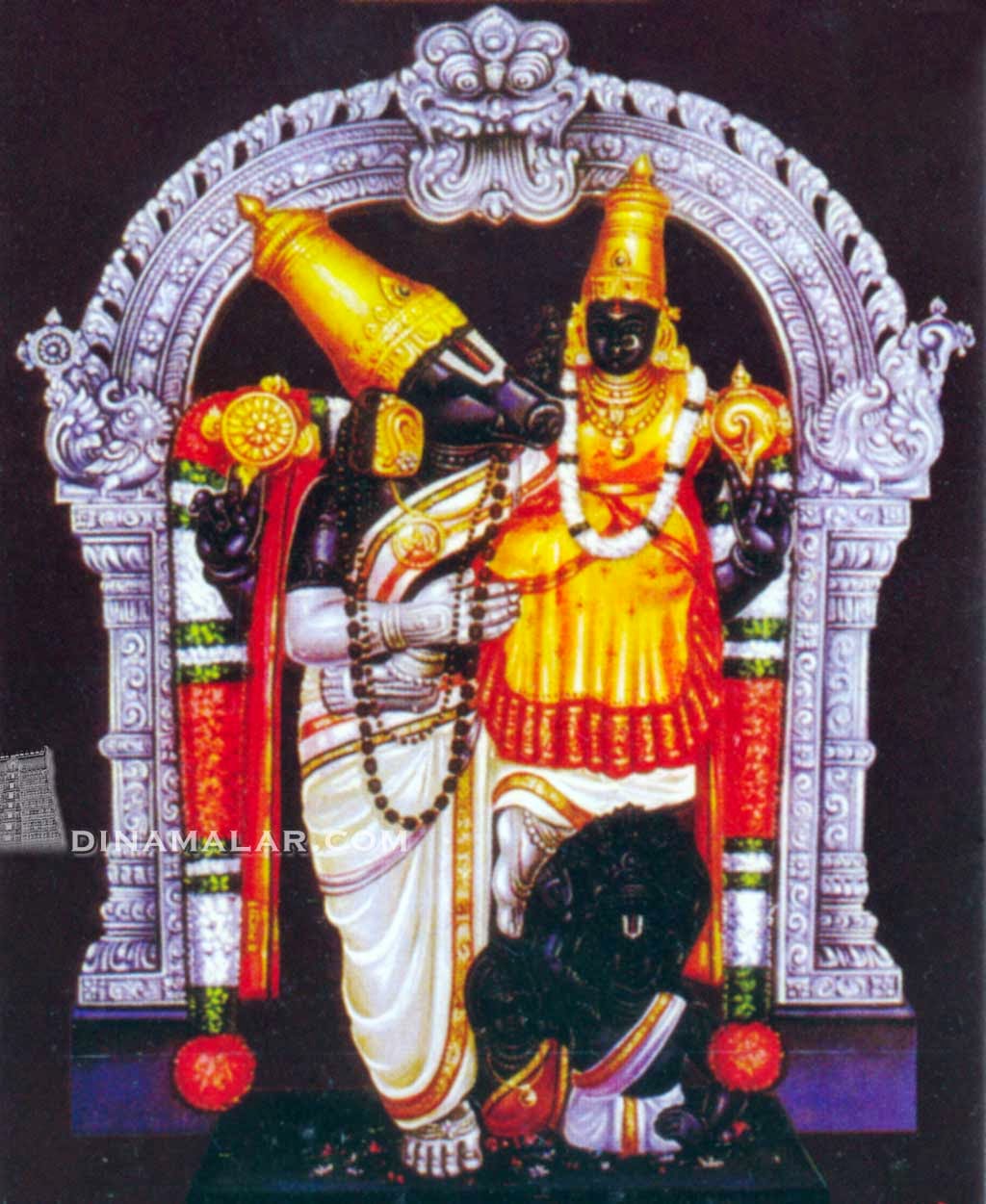
Inside the sanctum are Pundareekaksha, in a standing posture, with the Gandharvas seen performing pooja on him, Malola Narasimha in a Sitting Posture, Vaikunta Nathan, with Sri and Bhoodevi, in a posture similar to the one seen at Vaikuntam and Chaturbhuja Hayagriva in a grand sitting posture.
On the wall of the sanctum are two demons, Madhu and Kaitabha, who threatened to kill Brahmma- but were slain in the process.
The two Dwarapalakas, Jaya and Vijaya, at the entrance are not conventional sculptures and are more in the form of portrait sculptures.
The Vadakalai Thiruman has a curve at the bottom, ( the habit of calling this symbol as ‘U’ shape must stop as it is irreverent), while the Thenkalai mark is closed at the bottom and there is the extension at the bottom.
Generally, the Thiruman is applied on the forehead and it is auspicious to wear the Thiruman in Twelve places in the Body.
There are twelve Adityas and Vishnu is one of the Adityas.
Therefore the Thiruman is applied in Twelve places.
The Thiruman consists of two parts.
The outer white line is from Namakkatti, a type of stone, a form of Chalk.
A vertical line is placed in the center with either turmeric paste(this is used by the Vadakalaiyar), while the Thenkalaiyar use a type of Kumkum made of a mix of Turmeric powder and Lime.
The two white lines represent the Feet of the Lord Vishnu, while the Sri Churna represents goddess Lakshmi ,his consort.
Thenkalai Thiruman.
The latter will bring prosperity.
The extra line is made to represent the feet of Lord Vishnu more graphically or to distinguish the Thenkaliyar in the South.
I think the latter view is correct as the first type, that of a curve at the bottom is uniform in India except in Tamil Nadu and is prevalent among those who migrated from Tamilnadu,
You must be logged in to post a comment.