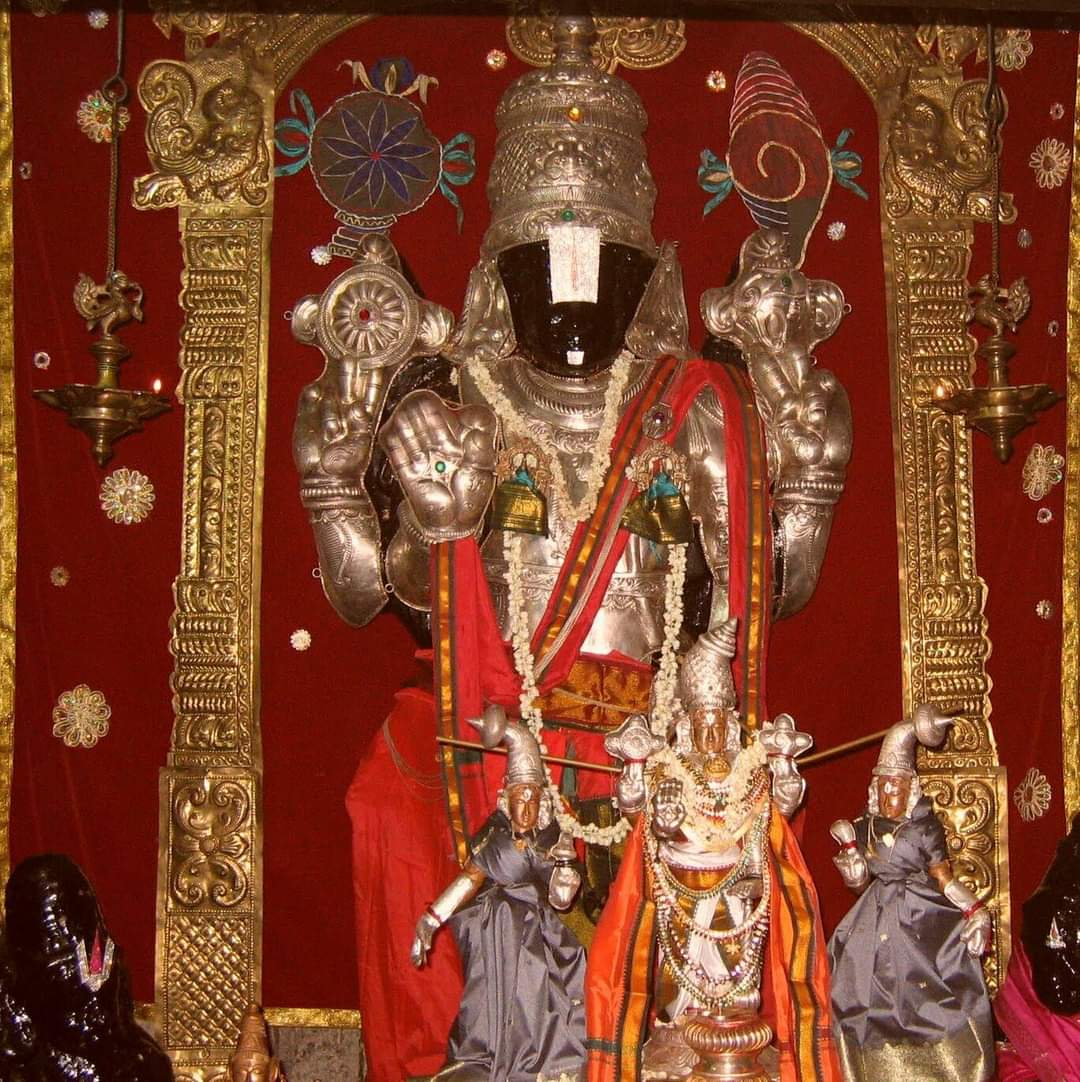
Siva is considered to be the Adhi Yogi, First Yogi. He gave the world Vaasi Yoga. Vaasi Yoga is different from The Asthtanga Yoga of Patanjali in that while Vaasi Yoga directly reaches out to Consciousness, Asthtanga Yoga reaches out to Consciousness through the Modifications of Chitta. That is the cessation of thought processes. When the senses are quiet, mind is at rest and intelligence is still, consciousness is reached and modifications of Chitta cease. In Vaasi Yoga, this stage is reached directly. In Ashtanga Yoga, this stage is reached through the Mind and this process is one step away from Realization while Vaasi yoga directly achieves Realization. As the practice of Vaasi Yoga is difficult, Patanjali was ordered by Siva to give to the world as easier method, Ashtanga Yoga. Patanjali had Bhogar with him while revealing the Ashtanga Yoga. These three are the foremost Gurus in Ashtanga Yoga.
Ganga coming down to earth.
Thirumandhiram by Thirumoolar imparts the knowledge of Yoga as revealed by Siva. Some essential details in Thirumandhiram differ from Ashtanga Yoga. Thirumandhiram is oriented more towards Vaasi Yoga and the practices mentioned differ slightly from Patanjali’s Ashtanga Yoga. I shall highlight them in another article.
Thirumandhiram is in Tamil language which is one of the ancient languages of India and it evolved from the sound of Damaru of Siva, along with Sanskrit. Thirumandhiram was composed by Thirumoolar, A Siddha. The text has 3000 verses, all dealing with Self realization. It forms the basis of Saiva Siddhandha.
Thirumoolar lists the Guru Parampara of Yoga.
Sanaka
Sanathana
Sanatana
Sanatkumara
Siva Yogi
Patanjali
Vyakrapada
Thirumoolar
First four are the Mental projections ,sons of Brahma. Siva Yogi is a Siddha.These eight learnt it from Siva. Nandi is Given a special status and He is to Bless ine to learn Yoga.
Vaasi Yoga is an esoteric Science and an experience to be felt and one has to practice it to know.It is difficult to express in words things that can not be expressed , communicated verbally.Mantras,Sukthas as found in Vedas and other ancient texts of India from Buddhism,Jainism.One also finds such verses in Tamil, one of the oldest languages of the world that has close relation with Sanskrit and Sanatana Dharma.Corresponding to Yogis, one finds Siddhas in Tamil Literature some of them dating back to 20,000 years.
Siddha is one who has Realized the Self in the Form of Siva.They are Ageless, beyond Time. Though there are innumerable Siddhas, Eighteen are considered to be the earliest of the early. This includes Siva as Adi Yogi. Please read my articles on Siddhas. Sage Agastya and Bhogar are Siva’s Direct disciples along with Patanjali.
Siva, as I had written In an earlier part is a Process and a Person. The term Siva is the process of Vaasi.Pronounce Vaa Si few times with no gap in between , you shall get Si VA.He is the first one to practice Vaasi and transferred it to Agastya and Bhogar.Though Agastya also has spoken on Vaasi, Bhogar’s exposition is equally eloquent.I am quoting Bhogar in this article As an aside, Bhogar had installed the Pazhani Dhandayudhapani Vigraha with Nine rare metals or ingredients of which Science has no clue. I have posted can article on the Atomic structure of the Idol
வெளியான வாசியைத்தான் வரவழைத்து
வீட்டுக்குள் அங்கங்கே வைத்திட்டுத்தான்
தனியாக வைத்திட்டுச் சாதித்தாக்கால்
சந்தித்து வாசியும் ஈசனும் ஒன்றாகும்
வளியாக வாசியைப்போல் சித்தொன்றில்லை
மாசித்துச் சிவனவனாம் வாசியொன்றில்
ஒளியாக வாசியது உயிரைமீட்கும்
உறுதியாம் சிவயோகத் துண்மைதானே
If you Bring in/Welcome, Vaasi from outside to Home, yet keep them separately in their Place Perform and achieve Vaasi,then No difference Exists between Vaasi and Siva.There is nothing that equals Vaasi as Universal Breath.On achievement of Vaasi as Siva Manifests as Splendorous Light In Vaasi.
Reality is Immanent in the Universe.It is within Us too.What is in the Macrocosm is in the Microcosm.The Reality appears to be different from us, away from us, is because of our ignorance, Avidya at the individual level and Maya at the Universal Level.Once this ignorance is removed, Reality ,Brahman shines forth just as our image becomes brighter in a Mirror which was dusty earlier.Bhogar says that though you may be aware that the Reality,Universal Soul, Brahman and You as Individual Souls are not different, he tells us to forget that for the time being, think that they are different and concentrate on the Process of Vaasi ,On Consciousness.When the Process of Vaasi is complete, Brahman,Reality shines forth as Splendorous Light in You and as Brahman,As One, as Siva .
This exposition is Pure Advaita as expressed in Aham Brahmasmi,Tat Tvam Asi,Soham Asmi and Pragyanam Brahma, The Mahavakyas, Great statements of Vedas. There is Pun on the Tamil word ‘Veedu .’.Veedu In Tamil means Moksha/Realisation as well.
There are two ways in terms of performing Breath control to achieve Self Realisation. One is regulating Consciousness through Breath Control.Direct Control/ Regulating,Communion with Consciousness through Breath Control is Vaasi Yoga. Regulating the Mind through Breath Control, Pranayama, and thus reaching out to Consciousness is the process of Ashtanga Yoga of Patanjali. Both have the same Objective, that of Self Realisation. In one, we deal with Consciousness direct and in the other through Mind. The Preceptor of both systems is Siva. First Yogi,Adhi Yogi is Siva. He practiced Vaasi Yoga. Please read my articles on Vassi Yoga. As practising Vassi Yoga is difficult , Siva ordered Patanjali to devise a simpler ,yet effective way of Self realisation through Yoga by controlling the Mind, through it Consciousness.
Thus was born Asthanga Yoga by Patanjali.
Though Vaasi and Asthanga Yoga address the issue of Realisation through, among others, Breath Control,there are subtle differences.In this article we shall see about the exact Time,Ratio of Breath Control , Pranayama.
Thirumoolar is Yogi,A Siddha. He is a disciple of Siva. He has written a treatise , of 3047 verses ,Thirumandhiram in Tamil.It is an authentic text on Shaivism and on Yoga system that outlines Vaasi Yoga and also refers to Ashtanga Yoga. Thirumandhiram deals with all the aspects of Yoga,Life,it’s location in Human body,number of breaths per Human and much more. I shall write on them shortly.
Thirumoolar in Thirumandhiram verse number 568 talks about the ratio of Breath Control , Pranayama.
ஏறுதல் பூரகம் ஈரெட்டு வாமத்தால் ஆறுதல் . கும்பம் அறுபத்து நாலதில் ஊறுதல் முப்பத் திரண்டதி ரேசகம் மாறுதல் ஒன்றின் கண் வஞ்சக மாமே .
The breath that we draw is Puraka. Retention of Breath by closing both nostrils is Kumbaka.Exhalation is Rechaka. The Nadi, the flow of breath on the left nostril is Ida,while on the right is Pingala.In the verse quoted above Thirumoolar says the process is Sixteen Matras for Puraka,Sixty four Matras for Kumbaka and Thirty two Matras for Rechaka. (Matra is the time for taken for one involuntary wink.Tamil language is designed on Matra. Each letter of Tamil is assigned the time, Matra. For Instance A,அ is one Matra, Kuril,குறில்.) Aa ஆ has two Matras.The pronounciation of Siva Siva is assigned Four Matras. So for Puraka one has to chant mentally Siva Siva four times: Kumbhaka Siva Siva sixteen times,and for Rechaka Siva Siva Eight times.Please note Matra is not Seconds.Correct way to do Thirumoolar Pranayama is to follow exactly what is mentioned by him. However, as it may be difficult for the beginner to do achieve this, the ratio 16:64:32 or 4:16:8 is practiced in the beginning.
வளிநிலையில் உயிர்ப்பு வளியினை அடக்கும் முறையினையும் திருமூலர் குறிப்பிடுகின்றார். வளிநிலை என்பது மூன்று நிலையினை உடையது என்கின்றார். நாம் உயிர்ப்பு வளியை உள்ளே இழுக்கின்ற செயலை ஏறுதல்(பூரகம்) என்று சொல்கின்றார். அதற்கு அளவு பதினாறு மாத்திரை. ‘சிவசிவ’ என்று ஒருமுறை கூறும் காலம் நான்கு மாத்திரை அளவு என்று கழகப் புலவர், சித்தாந்தப் பண்டிதர் ப.இராமநாதன் அவர்கள் குறிப்பிடுவார். இதனை இடது மூக்குத் துளையின் வழி இழுத்து இடப்பால் நாடி வழியாகக் கொண்டு செல்ல வேண்டும் என்கின்றார். இரண்டாவது வளிநிலையானது இடப்பால் நாடி வழியாகக் கொண்டு சென்ற உயிர்ப்பு வளியை உடலுக்கு உள்ளேயே அடக்கி நிறுத்துதலுக்கு உரிய ஆறுதல்(கும்பகம்) என்ற செயலைக் குறிப்பது என்கின்றார். குறித்த இடத்தில் நில்லாது ஓடுகின்ற உயிர்ப்பு வளியை அவ்வாறு ஓட விடாது தடுத்து நிறுத்துதலை இது குறிக்கும் என்கிறார். இதற்கு உயர்ந்த அளவு அறுபத்து நான்கு மாத்திரை என்கின்றார். இது பதினாறு முறை ‘சிவசிவ’ என்று கூறும் கால அளவை ஆகும். மூன்றாவது வளிநிலையானது உள்ளே நிறுத்திய உயிர்ப்பு வளியை வலப்பால் நாடி வழி வலமூக்கின் துளையின் வழி வெளியிடுதல்(இரேசகம்) எனும் செயல் என்கின்றார். இதற்கு உயர்ந்த அளவு முப்பதிரண்டு மாத்திரை அல்லது எட்டு முறை “சிவசிவ” என்று கூறும் கால அளவு என்கின்றார்.
The control and regulations of the mind and through it, The Consciousness is the goal of Yoga.
There is another earlier system of Yoga.
This is called Vaasi Yoga where, by breath control, Consciousness is directly controlled.
This was the first system by Lord Shiva and His disciple Patanjali developed a relatively easy system Asthtanga Yoga.
Shiva was the first to practice Vaasi Yoga and He is called the Adi Yogi, the First Yogi.
If one repeats Vaasi it becomes Siva.
The system of Patanjali was practised widely.
And we have Siddhas who transcend time and apart from Shiva, the early one was Thirumoolar, a Tamil Siddha, who had written a Sastra Thirumandhiram in Tamil. Thirumoolar is dated around 3000BC.
What do the Vedas say of Yoga?
To my knowledge, there is no reference to Yoga in the Vedas, except a description of a Yogi in the Rig Veda, which is dated around 5000 years ago.
Here is the Kesin Mantra of the Rig Veda which describes a Yogi.
‘
HYMN CXXXVI. Kesins.
1. HE with the long loose locks supports Agni, and moisture, heaven, and earth:
He is all sky to look upon: he with long hair is called this light.
2 The Munis, girdled with the wind, wear garments soiled of yellow hue.
They, following the wind’s swift course go where the Gods have gone before.
3 Transported with our Munihood we have pressed on into the winds:
You therefore, mortal men. behold our natural bodies and no more.
4 The Muni, made associate in the holy work of every God,
Looking upon all varied forms flies through the region of the air.
5 The Steed of Vāta, Vāyu’s friend, the Muni, by the Gods impelled,
In both the oceans hath his home, in eastern and in western sea.
6 Treading the path of sylvan beasts, Gandharvas, and Apsarases,
He with long locks, who knows the wish, is a sweet most delightful friend
7 Vāyu hath churned for him: for him he poundeth things most hard to bend,
When he with long loose locks hath drunk, with Rudra, water from the cup.
Translation by Rig Veda, tr. by Ralph T.H. Griffith, [1896], at sacred-texts.com
The Keśin were long-haired ascetic wanderers with mystical powers described in the Keśin Hymn (RV 10, 136) of the Rigveda (an ancient Indian sacred collection of Vedic Sanskrithymns).The Keśin (“long-haired one”) are described as homeless, traveling with the wind, clad only in dust or yellow tatters, and being equally at home in the physical and the spiritual worlds. They are on friendly terms with the natural elements, the gods, enlightened beings, wild beasts, and all people. The Keśin Hymn also relates that the Keśin drink from the same magic cup as Rudra, which is poisonous to mortals.
The Kesin hymn of the Rigveda is the earliest evidence of yogis and their spiritual tradition, states Karel Warner. The Hindu scripture Rigveda uses words of admiration for Kesins.
The treasures of Sanatan Dharma is so rich and huge one may not even touch its periphery in one’s Lifetime
If one were to give up linguistic and regional bias, one may unearth these treasures.
I have in many of my posts written on the myth of Tamil and Sanatana Dharma being inimical to each other
They complement each other
Lord Shiva.
If one were to read the Vedic texts and ancient Tamil Texts one may notice the following points
1.Shiva is not directly mentioned in the Vedas nor do we find any sukthas ascribed/devoted to Him.His name appears in Sri Rudram, Rudra being an amsa of Shiva and not Shiva in His full Glory
2.Other Gods,Narayna, Vishnu,Varuna, Indra,Agni,Vaayu,Durga, Lakshmi and a Host of others are mentioned in the Vedas
3.Ancient Tamil Spiritual texts mention the following Deities and the earliest Grammar work Tholkaapiyam assigns the territories in which they are the Chief Gods.
A).Kurinji,mountainous terrain, Chief Deity is, Cheyon(means The son) called Murugan , that is Subrahmanya . Interestingly Vedas do not mention Subrahmanya directly.
B)Mullai, Pastoral lands, the Chief Deity is Maayaon, Vishnu.Maayon means Illusionist, one who creates the Yoga maaya .This is in keeping with the. description of Vishnu in Vedas and the Puranas.
C).Marutham, Paddy fields/arable lands, Chief Deity is Indra..
D)Neydhal, Sea and adjoining areas , Chief Deity is Varuna and
E)Paalai, Desert Region, Chief Deity is Durga, called Kotravai in Tamil.
Even in Tamil, which is believed to have been founded by Lord Shiva,He is not assigned a Region in the manner described above
4.The Yoga system of the Vedic system is by Patanjali.
5.Patanjali is a disciple of Shiva along with Sage Agastya and Bhogar according to Tamil Classics
6.The Yoga developed Thirumoolar, meaning The auspicious first in his Thirumandiram is different from Patanjali’s Yoga Sutra.
7.Yoga developed by Agastya follows Thirumoolar and is different from Patanjali’s.
The meaning Shiva in Sanskrit is Auspiciousness. Mangalam.
No other meaning is assigned to this word.
In Tamil the etymology is slightly different..
Shiva is from Vaa Si.
Vaasi when repeated in quick succession becomes Siva!
‘வாசி வாசி என்று வாசித்த தமிழ் இன்று
சிவா சிவா என சிந்தை தனில் நின்று
அவாவினால் இந்த ஒளவைத் தமிழ் கொண்டு
கவிபாடினான் உன்னைக் கண் குளிரக் கண்டு!
Listen to this’ for Vaasi becoming Shiva,
Now Vaasi is a special type of Yoga.
It is different from the Yoga of Patanjali.
It is by Thirumoolar and foll0wed by Sage Agastya.
‘
Vaasi yoga (vasi yoga) is a form of yoga that concentrates on the breath naadi (nadi), the cycle of the distribution of oxygen throughout the body, that occurs as part of the breathing process. Indian philosophy describes prana (life force) as flowing in channels called naadis. Vaasi yoga attempts to heal the body and sprirt by cleansing the breath naadi, and thus prepare for balance, true consciousness of self and then enlightenment. As such it is one of the kaya kalpa, the class of ancient yogic rejuvenation therapies. As a yogic practice it is an art of living taught by siddhars for over 3000 years ago, as initiated by Lord Shiva. Like other advanced types of yoga which should be practiced only under the guidance of Guru. Vaasi yoga is practiced by very few.
Vaasi yogam is the attainment of consciousness about the silent sound in our breath. To attain this consciousness, the body should be devoid of any waste. To remove all the waste from one’s body, one should be taught with asanas by a guru who should be in a position to analyze the naadi functionality of one’s body. A guru who has the capacity to analyze the naadi functionality is called Siva Sithan.’
Vaasi is not Nadi.
It is the mental flow of Breath .
In Patanjali’s Yoga one regulates the Physical Breath.
In Vaasi One controls the Mental Breath…
There has been lot of reference of this yoga to kriya yoga or kundalini prayanama (Yogic Breathing to increase the pranic energy). But all of the above practices are being followed or taught, without empowering the body to practice it. In other words, when the physique is not devoid of waste and when one with such a physique, practices any kind of yoga or breathing techniques, it will only aggravate the body conditions due to the heat or agni produced. All other kinds of yoga do not tend to remove the waste from the body, instead only rise the body temperature and increase the appetite. But in Vaasi yoga, food intake gets controlled automatically and one can control the appetite for food casually.
Our body cells need oxygen derived from air. There are some definite paths for oxygen to reach the cells and to go out of cells. These paths have some energy centres. These centres control the organs and their functions. This pattern, this throb, which is called ‘Naadi’ in Tamil, differs from person to person. The pulse beat should be not taken for ‘Naadi’. For a healthy living the Naadi has to function properly and be fully active. The imbalance in the Naadi functionality is the root cause of all ailments and diseases. By practicing Vaasi Yoga Naadi functionality gets strengthened and healthy living is achieved. Vaasi Yoga is a technique to breath. The yogis who are expert in vaasi yoga avoids breathing through normal nostrils. But they exhale the air upward towards kapala (Brain). This strengthens the brain and give brightness to face and whole body too. Siddhar Shiva vaakiyar (Tamilnadu) has narrated the secret of Vaasi yoga and its benefit.
Vaasi Yoga has unique nature of attaining the consciousness of the Self, by the following stages.
Analysis of Nadi functionality – Guru must have the capacity to identify the imbalance between the 3 Nadis’ Idakalai, Pingalai and Sulumunai. The reason being, each individual is unique in nature and the functioning of the body will vary due to the imbalance in these 3 Nadis. The body temperature might be different for every individual based on Vatham, Pitham and Kabam. Hence, that has to be brought under control to a stable level before practicing any kind of yoga .
Asanas to empower body – Based on the above analysis, Guru must have the capacity to teach breathing techniques and asanas to bring the body and breath to a stable condition devoid of any waste. During this period 5 kinds of waste disposal happens. Motion, urine, sweat, mucous and gas. This will happen for minimum of 3 months. Only at the end of 3 months with devoid of all the waste from the body, the breath will be in control. Only when breath is under control, Vaasi can act upon us.
Realizing self – Only through Vaasi Yoga, one can attain the consciousness of the true Self. Another benefit of Vaasi yoga is being younger in appearance. Because Vaasi yoga will burn out all the waste in our body and will only look leaner and younger without any excess muscles in our body . This is the reason why Siddhars lived for years together.
Vaasi Yoga practice simulates two special hormones 1. Seratonin 2. Melatonin.
These two hormones ultimately stabilize all the working systems in our body.’
The term Shiva from a process of a Yogic system,Vaasi Yoga, that Shiva is termed as Adi Guru, the First Siddha, and Dakshinamoorthy as a Preceptor , embodying Silence and Vaasi Yoga being the regulation of the silent Nadi lends to the view that Shiva was a human being and became a Realized Soul .
The term Sat Chit and Ananda is the description of the Reality,Brahman as descried in the Vedas.
The term Sachidanda is used for Only Shiva.
And Consciousness is elevated to Realization by Vaasi Yoga.
I am providing some basic details of Vassi Yoga.
Do Not Attempt to Practice without Initiation from a Guru.
Practicing without initiation by a Guru may prove to be serious and at times Fatal.
‘
t’s incredibly difficult to do vasi yoga in day to day life for common people. It’s not so easy to get initiated from the available real guru who is doing vasi yoga for several years with concealed achievements. To find out these types of yogic people is very difficult. Most of the people stay with families and kids. They never disclose to the public view. They will identify the eligible people and give it to their hands with chain reactions and initiation. They know it’s very complicated to achieve the first stage of perception with lot of obstacles when a person starts the vasi yoga. Once after initiation of vasi yoga, yogi should be very careful on the day to day life, it makes you down until unless yogi follows the traditional rules and regulations.
I have seen number of persons who had initiated and immediately met accidents with severe injuries and wind up the vasi yoga once stuck up with numerous family problems and other life hands down. It’s a force of accumulation and higher energy level was created manually by vasi yogis in the beginning stages. If the physical body is healthy, it did not make much difference on the physical health. They may face the heart pumping problems or running of lungs operations may vary. This is due to the hunting of heart pumps when the meditation slows down the alpha emit when the kundlini raises from the lower level.
Emission starts slowly when yogic practices are gradually trending to the upper level of consciousness which comes out from the yogis when they start the real meditations. It’s spread out from the room and extends physically to the external level, how yogi meditates or the level of attaining the universal spot in the human body. Fission and fusion takes place in the internal way of flow once starts the vasi yoga. Here don’t take it as atomic theories. A yogi comes to know gradually they might have connected with an atom which spreads over the object in and around them. Here the subject is disappeared, so the image starts the process and flow along the vasi every time, mostly all the time, round the clock.
It never makes difference between the deep sleep and a person on awake with consciousness. They feel to do yoga almost every time, alone, loneliness, facing difficulties when it’s raised up from the mooladhara. Then it starts works itelf constantly along the flow line of vasi from the bottom to top. It never changes the position and flow line. Where ever yogi wants to hold the vasi line, he makes it hampered and activate the chakra to open the vision and subject became spectator. Subject may deviate here. I bring to an end here.
‘Vasi yoga is the knack of breathing that allows one to simply transcend mind and in the process burn karma and vasanas (tendencies). Once karma and vasanas are burnt the soul is not different from the eternal truth, Brahmam.
Question: Are Vasi yoga and Siddha yoga one and the same?
Answer: Siddha yoga, Gathagatham, Kriya yoga are some of the other names given to Vasi yogam by different teachers. By whatever name it is known, the system is one and the same with some frills here and there at times. The method and practice is the same ultimately. It is about the secret of inner breath.
Question: Who found this system first and taught this?
Answer: It is said, LORD KRISHNA taught VASI YOGA. All Siddhas follow this system only.
I do not find evidence of Krishna Teaching Vaasi Yoga.Question: Is it ‘pranayama’?
Answer: No! It is not the regular pranayama. In Hatayoga , Pranayama is associated with external breathing and methods of controlling it. Vasi is the ‘inner breath’ DISTINCT from the normal inhalation and exhalation of air through the nostrils. The knowledge and control of the inner breath is vasi yoga.
Question: Can you explain how I should begin practicing it?
Answer: No! It cannot be imparted online nor can it be learnt by reading a book. The aspirant should learn it in the physical presence of the teacher.
Question: Can you please explain a little more about beginning the process?
Answer: The ‘Gathi’ or the inner breath which is in a dormant state in all unenlightened human beings will be activated by the Sathguru through the teacher. The disciple is made aware of the inner breath and its path. There begins the journey of the disciple towards God. The Master will be with the aspirant until he/she reaches his/her final goal.
The verses of Bogar are given below for easy understanding on the practices of vasi yoga. Bogar has written evidently the practice of vasi yoga for the eligible person who does the karma in this birth. Verses elaborate yogi should not go beyond the mooladhara. Here mooladhara is quoted for ground reference for detailed explanation by mahayogi bogar. A verse says the kundlini lift up from the mooladhara and goes to the hole where it has closed for number of births. If unable to do, then nandhi will come in front of you and initiate you. Nandhi as described indirectly for yoga practices. Nandhi is located in front of lord shiva temples. Nandi mostly close the state of shiva and makes it’s unable to see the god from outside the temple. Here it’s indirectly described that nandhi comes and help you. When nandhi crosses and deviate the direction, Yogi can get the eight types of siddhis, supreme magical powers before attaining the god shiva. Don’t stay there for long time at this place, shift over in front of nandhi, and blow it continuously so that you can see the god in front of your eyes. The eyebrow opens the screens and shows in front of your real eyes, the appearance of Manonmaniyal, goddess. It’s a trap; yogis should not stay with this appearance of goddess.உழலாதே ஊணியடி மூலத்துள்ளே
உறுத்தியே நந்திதனில் ஊதிஏறு
நழலாதே நந்திவந்து உபதேசிப்பார்
நலமாகும் எட்டெட்டுச் சித்திஎல்லாம்
புழலாதே வாசிகொண்டு ஊதி ஊதி
புருமையத் தேநின்று புகழ்ந்துபாரு
வழலாதே வராட்டியனைத் தாண்டிநின்று
வழியோடே சென்றேறி மனோன்மணியேகாணே
Bogar
The verses of Bogar given below indicate particularly on the running of vasi in yogis. Yogis can Suck all the vasi when he raises the kunlini and maintain it on the particular way of built, then its starts to show the dances of nataraja. If the built of vasi from the stream line starts parallel travel through vertical position from top to bottom, there will be development of sounds which is used to hear in the musical stages. Suddenly it inserts into the point of traverse from the vasi and intrudes into the thousand petals of hole and broke out from the humans and spread out in the universe.
நாடுமிறந் தோடியே நமனுக்கெய்ப்பார்
நலமான வாசிநிறைந் துள்ளேவாங்கில்
ஆடுதிரு நடனமும் பலமும்காணும்
ஆட்டினது குறிப்புத்தான் மேலோகீழோ
நாடுமூலா தாராசபை தொந்தோம்என்று
நாட்டியே தலமாறும் உருகிச்சுழிஊடே
பூடுகபாலம் புகுந்து குருபதத்தின்மேவிப்
புகுந்தமண்டலத்து இதழ்தான் ஆயிரத்துஎட்டே
Bogar
The verses below describes how the yogis to perform the vasi yoga. He should not have lust of fire on women, should not follow the ethics and rituals, not to fall on controversies and arguments, stay like a dumb and watch the programs around, avoid the lies, use the vaasi to uplift the practices, its drowse you and it makes you to prepare the solution as symptoms, don’t go beyond the tricky visions.
அயிக்கியமாய் விழாதேநீ காமத்தீயில்
அனுதினமும் வேதாந்த முடிவைப்பாராய்
ஒயிக்கியமாய் ஒருவருடன் வாயாடாதே
ஊமைபோல் இருந்துஉன்னி உன்னிப்பாரு
தியக்கமாய்ப் பொய்கொலைகள் செய்திடாதே
சேர்ந்தேறு வாசிஎன்ற தேசிதன்னில்
மயக்கமாய் வத்துவைநீ பானம்பண்ணி
மதத்தாலே அழியாதே மாயைநீக்கே
Bogar
Taken from the fire ashes to drink the fluid as considered as alcohol, make it in the format of stream line of yogic practices, have the herbs, avoid the dust particles, clean the solid, it tends to glow the eyes, go to the next stage and clean the semi liquid hanging on the door, closes the five senses and use the knife to cut it, don’t forget to do vasi yoga night and day
மூட்டியே மதுஉண்ணு கற்பம்உண்ணு
மூதண்ட காயத்தைச் சித்திபண்ணு
காட்டியே கனத்த மூலிகையைஉண்ணு
கசடுஅற்று குஞ்சனத்தில் கண்ஒளிதான்மீரும்
அடுக்காறு தளத்திலுள்ள ஆமம்நீக்கு
வாட்டியே அய்ம்புலனை வாளால்வீசு
மறவாதே இரவுபகல் வாசிமாட்டே
Bogar
Agasthiyar discloses the practice of vasi yoga transparently; always bring the vasi in to resagam, pooragam. These two words indirectly indicate the flow direction of breath into left and right. Also indicates the yogi should stand with vasi in this flow direction. When the vasi begins, then there will be possibility of pseudo actions starts itself into the tricky vision and it lead to dreams. Yogi should not fall into that way of dreams, it’s a tricky path, nature doesn’t allow yogis to come into original path, it diverts. So yogi should stand with vasi along with shravana. It should not taken here as lord muruga, the subramaniyar. It’s a code word here for vasi. Yogi should bring the vasi into centre line of travel so that he can lock the door with the vasi knot after it opens.
நிற்கையிலே ரேசக பூரகமுங்கொண்டு
நிகட்சியுடன் வாசியோகந் தன்னில்நின்று
சொற்பனமாம் சாத்தியங்கள் சுழுத்தியிலேகொண்டு
தோறாமல் கலைதனையே இறுக்கிமாட்டி
அற்பமுடன் மதியமுர்தக் கலையில்நின்று
அப்பனே சிராவண பதத்தில் நின்று
துற்பரவாய் மையநிலை மதியங்கொண்டு
துரத்தியே வாசியென்ற கயிறைப்பூட்டே
Agasthiyar
Mahayogi Nandheeswar explains about vasi and compared with the control of breath. Verses say a yogi should keep it on the travel and hold the breath along with vasi. It traverses to left hand side of the yogi. Hence, yogi locates the line of direction and changes into right hand side of the vasi, and then observes from the left hand side of the breath. After some years, he can hold the sun and activated the vasi. Sun here represents as control of right hand breath. Then practice in to flow of direction from left to right hand side of the running breaths.
வையடா பூரணத்தைக் கும்பகத்தில் வைத்து
வளமான வாசியைத் தானொரு மனதாய்க் கட்டி
கையடா பிங்கலையால் கும்பகத்தில் வைத்துக்
கண்மணியே யிடைகலை வாங்கு வாங்கு
மையடா விவ்விதமாய் வருஷங்கும்பி
மகத்தான சூரியன்தான் வசியமாவான்
அய்யடா விடைகலையிற் பூரகத்தில் நாட்டி
அப்பனே பிங்கலையால் மெதுவாய் வாங்கே
Nandheesar
Matchamuni Naayanar describes the goddess Vaalai in the beginning point. Verses say that yogi should worship vaalai, the goddess throughout day and night with concentration and surrender; he can achieve everything without any disruption. Verses says after completion of vaalai worship then make self to make Om kept in the centre and worship the lord shiva, the nine mantras around the ohm represents here as lord shiva. Take the light and glow along the vasi and work out daily without any obstruction, it leads to appearance of lord shiva and yogi himself appear as lord shiva.
You must be logged in to post a comment.