Tag: Tholkaapiyam

  • Tamil Grammar Tholkappiyam Refined Improved Sanskrit Grammar?

    Tamil Grammar Tholkappiyam Refined Improved Sanskrit Grammar?

    I have written an article that Panini’s Grammar on Sanskrit  was preceded by Ten works on Sanskrit Grammar,one of them being ‘Aindhiram.’

    There is a view that the Aindhiram was a Grammar work in Tamil belonging to either the first or second Tamil Sangam.

    The work is lost and Tholkaapiyam is the earliest work on Grammar in Tamil available now.

    Tholkaapiyar in his prelude to Tholkaapiyam states that he studied under A Brahmin,who was well versed in the Vedas.

    The name he gives is Athankottu Aasan.

    The term Aasan in Tamil means Teacher.

    Athankodu might mean the place he hailed from.

    So what Tholkaapiyar means is that he studied under a teacher who lived or from Athankodu.

    Might be,it is in the present Kerala,which was earlier a part of Tamil Kingdom called Chera Naadu.

    As Sage Agastya is mentioned repeatedly in Sangam literature and Tamil Legends,he is credited with The Tamil Grammar,

    Tholkaapiyam and Tholkappiyar is a disciple of Sage Agastya as mentioned in Sddha’s works in Tamil, I postulated that Agastya could have wriiten the Aindhira work on Sanskrit Grammar,which Tholkaapiyar quotes.

    He says ,

    அறம் கரை நாவின் நான்மறை முற்றிய‌

    அதங்கோட்டு ஆசாற்கு அரில் தபத் தெரிந்து
    மயங்கா மரபின் எழுத்து முறை காட்டி
    மல்கு நீர் வரைப்பின் ஐந்திரம் நிறைந்த‌
    தொல்காப்பியன்
     எனத் தன் பெயர் தோற்றிப்
    பல் புகழ் நிறுத்த படிமையோனே..

    ‘Me,Thokappiyan,who learnt the Aindhiram Grammar,which describes the functions and rules Word’

    நிலம் தரு திருவின் பாண்டியன் அவையத்து
    அறம் கரை நாவின் நான்மறை முற்றிய‌
    அதங்கோட்டு ஆசாற்கு அரில் தபத் தெரிந்து,’

    ‘I have learnt this from the one,who is well versed in The Vedas,in the presence of a Pandyan King’

    As Agastya had written a work on Tamil Grammar Agattiyam,which is lost,there was no need to write another Grammar in Tamil.

    Agastya was well versed in Sanskrit as well.

    He had written Rig Vedic Hymns,along with his wife Lopamudra.

    So an earlier Grammark work by him could have been in Sanskrit, which is,Aindhiram.

    That Aindhiram is a Sanskrit work is arrived at by scholars.

    The Aindra (of Indra) school of Sanskrit grammar is one of the eleven schools of Sanskrit grammar mentioned in Pāṇini’s Ashtadhyayi. It is named after Indra in allusion to Lord Indra, the king of Gods in Hindu mythologyArthur Coke Burnell, a renowned orientologist, in his 1875 book, “On the Aindra school of Sanskrit grammars” details this school. Burnell believed that most non-Pāṇinian systems of Sanskrit grammar were traceable to this school of grammar, believed to be the oldest and reputed to be founded by Indra himself…

    Burnell’s search for the Aindra school took him to Southern India where he came across the Tamil grammatical work Tolkappiyam. A preface of this work, written during the twelfth century CE by Ilampuranar describes the work as aindiram nirainda Tolkappiyam (‘comprising Aindra’). This, Burnell posits is an allusion to the pre-Pāṇinian Aindra school of grammar.

    Further, Burnell proceeded to do an exhaustive comparison of the Tokappiyam with two non-Pāṇinian schools of grammar, namely, the Katantra school of Sanskrit grammar and the Kaccayana, a Pali school of Southern India. Based on the comparisons and allowing for divergences due to the structural differences between Tamil and Sanskrit/Pali, Burnell concluded that the Tolkappiyam corresponds to the Katantra school minutely and across the board.

    He also demonstrated that many of the technical terms of the Tolkappiyam and of later Tamil grammars were merely simple translations of Sanskrit terms which he attributes to the Aindra school or the other pre-Pāṇinian texts.

    While his demonstration of the influence of Sanskrit on the Tolkappiyam has met with some approval, his attribution and approximation of all non Pāṇinian schools of Sanskrit grammar with the Aindra school has met with resistance.   SOme scholars have also taken a less committal line on the question of Sanskrit influence itself.[3]

    Having demonstrated the influence of the Katantra school on the grammars of Pali and Tamil and with the help of a linkage to the Aindra school that the Tolkappiyam afforded, Burnell proceeded to show the differences in the technical terms used by the Aindra school and those used by the Pāṇinians.’

     (     https://en.m.wikipedia.org/wiki/Aindra_School_of_Grammar )

    Tholkaapiyar says that he  is well versed in Aindhiram.
    ஆயிடைத்

    தமிழ் கூறும் நல் உலகத்து
    வழக்கும் செய்யுளும் ஆயிரு முதலின்
    எழுத்தும் சொல்லும் பொருளும் நாடிச்
    செந்தமிழ் இயற்கை சிவணிய நிலத்தொடு
    முந்து நூல் கண்டு முறைப்பட எண்ணிப்
    புலம் தொகுத்தோனே ‘

    Rough translation.

    I am embarking on writing a work in Tamil ,to streamline,செந்தமிழ் இயற்கை சிவணிய நிலத்தொடு

    முந்து நூல் கண்டு முறைப்பட எண்ணி,the language of Tamil,by compiling ,புலம் தொகுத்தோனே,that which is ancient.Now that,

    Tholkappiar learnt,Andhiram Grammar in Sanskrit and was a Scholar in Aidhiram,

    ஐந்திரம் நிறைந்த‌

    தொல்காப்பியன் எனத் தன் பெயர் தோற்றிப்
    பல் புகழ் நிறுத்த படிமையோனே..’Translation. Well versed in Aindhiram,me Tholkaapiyan.


    He  was well versed in Tamil and was knowledgeable in Tamil Litertaure,

    He was a disciple of Agastya,who wrote Vedic Hymns,a scholar in Sanskrit,Agathyam ,Tamil Grammar,

    Tholkaapiyar expresses his desire to streamline Tamil,

    It is highly probable that he wrote Tholkaapiyam ,refining Aindhiram as it was becoming obsolete,disappearing.

    Tamil Grammar Thokappiyam might be a refined,improved Aindhiram of Sanskrit Grammar.
    There are other views.

    Aindhiram is a Tamil work.

    R. Mathivanan; and 8th century B.C. by A.S. Gnanasambandam and V.T. Chellam.

    Panampaaranaar, in his introductory verse to Tolkappiyam, praises Tolkappiyar as Tolkappiyan well-versed in Aindram. R. Ragavaiyangar says that the study of Aindram, a grammatical work, was very popular during the time of Tolkappiyar and its study was neglected during the time of  Ilango Adigal, the author of Silappathikaram. Aindram lost its influence after the appearance of Astadhyayi, the grammar of Panini which became very popular ever since its inception and was learnt eagerly’

    (   http://risingsunweekly.blogspot.in/2012/01/age-of-tholkappiyam.html )

    Aindhiram is an ancient book on the science of vasthu sathra and tamil grammer – connected with Tholkappiyam  .It had two volumes.Unfortunately the volume one which deals with the phenetics of tamil grammer associated with Tholkappiyam (this volume of book was called ‘ANIDRA’) is lost in the course of history ,all that is remaining with us is an scientific book on vasthu sathra.’

    In Aintiram  ,The Science related to numerical order enables one to know the principles of role of number, space order nature of inner space and significantly know the potency of micro-structure. (atoms)

    -one of the grossly underrated scientific books in Tamil ,which was totally neglected for the last 100 years..

    -it also explains about the rationale for certain practices in our day to day life ,which have clear scientific reasons behind it,that we are totally unaware of…like where should we place our head while we sleep, practical stuff like that (for all those ppl who condemned lot of tamil traditions telling that they have no scientific evidence and are nothing but superstitious beliefs, this book was especially written for you guys) …stumbled across a small passage from Aindhiram book(English translation) which I would like to share

     Mayan’s Aintiram …page 347]  

    East: Sleeping with head resting in the East enhances memory, health and spiritual inclination. It is usually advised by Vastu Shastra Consultants to plan the children’s room in such a way that their Vastu sleeping direction comes out to be east. This leads to higher concentration and retention power.  

    South: Vastu Shastra highly recommends this direction as your usual sleeping position with head towards the South. This is believed to provide sound sleep and increase the wealth and prosperity in the household.

    (  https://www.quora.com/What-is-the-mystery-that-our-ancient-literary-work-Aindhiram-ஐந்திறம்-reveals-to-us )

    Reference and citation.

    https://ramanisblog.in/2017/04/13/early-sanskrit-grammar-before-panini-by-agastya-tholkaapiyar/

    *”Full verse,Nool Sirappu Paayiram,Tholkaapiyam text.

    வட வேங்கடம் தென் குமரி

    ஆயிடைத்
    தமிழ் கூறும் நல் உலகத்து
    வழக்கும் செய்யுளும் ஆயிரு முதலின்
    எழுத்தும் சொல்லும் பொருளும் நாடிச்
    செந்தமிழ் இயற்கை சிவணிய நிலத்தொடு
    முந்து நூல் கண்டு முறைப்பட எண்ணிப்
    புலம் தொகுத்தோனே போக்கு அறு பனுவல்
    நிலம் தரு திருவின் பாண்டியன் அவையத்து
    அறம் கரை நாவின் நான்மறை முற்றிய‌
    அதங்கோட்டு ஆசாற்கு அரில் தபத் தெரிந்து
    மயங்கா மரபின் எழுத்து முறை காட்டி
    மல்கு நீர் வரைப்பின் ஐந்திரம் நிறைந்த‌
    தொல்காப்பியன்
     எனத் தன் பெயர் தோற்றிப்
    பல் புகழ் நிறுத்த படிமையோனே..


    Edit

  • Early Sanskrit Grammar Before Panini By Agastya? Tholkaapiyar

    Early Sanskrit Grammar Before Panini By Agastya? Tholkaapiyar

    The relationship between Sanskrit and Tamil is interesting.

    Both of them are quiet ancient and each quote the other,leaving one stranded in his efforts to find which preceded the other.

    While there are similarities between Sanskrit and Tamil,there are also striking differences between the two in their Grammar and Spoken Form

    Shall write in detail on this.

    Now I have come across reference in the first Grammar Book of Tamil,dated around 3000 BC,about Tamil Grammar and Sanskrit Grammar. ( I date Tamil much earlier)

    As mentioned earlier,there are vital differences between Tamil and Sanskrit Grammar.

    The Sanskrit Grammar was codified by Panini, around 400 BCE.

    It is called Ashtadyayi.

    However the earlier Grammar was a part of Vedangas(limbs of the Vedas).

    That was called Vyakarana.

    Panini and Yaska, two celebrated ancient scholars of Vyakarana, are both dated to several centuries prior to the start of the common era, likely the 5th-century BCE.However, both of them cite prior scholars and texts, which though lost to history, imply that the field of Vyakarana was an established and developed science of language before them'( wiki- vyakarana)

    Panini did not found Sanskrit Grammar,he codified it.

    There are references that there were Ten Grammar works before Panini.

    Panini refers these Grammarians.

    ‘Apisali, 

    Kasyapa, 

    Gargya, 

    Galava, 

    Cakravarmana,

     Bharadvaja, 

    Sakatayana, 

    Sakalya, 

    Senaka and 

    Sphotayana.’ (  https://en.m.wikipedia.org/wiki/Vyākaraṇa )

    Tholkappiyam,the Tamil Grammar was written by Tholkappiyar.

    He says in Tholkaapiyam ,while describing himself as the author of Tholkappiyam,that he leant Vedas from his Guru,Preceptor,who was a learned Brahmin.

    He adds that there was a Grammar Work called ‘Aindhiram’.

    And as Tholkappiyar’s Guru was a Scholar of Vedas,which is in Sanskrit, is it that Aindhiram is a Sanskrit Work?

    Agastya could not have written Aindhiram in Tamil as the First Tamil Grammar Agathiyam was by Agastya,which has been lost?

    Why write two books on the same subject?

    Or ,as Agastya is a schloar in both Tamil and Sanskrit,Aindhiram could be in Tamil?

    I am unable to answer,as Tholkappiyar is not specific about the Language of Aindhiram.

    It can be taken as a Tamil work, as Tholkaapiyar says that he is embarking on Tamil Grammar Work?

    On the other hand,the term Aindhiram/n is the Thathidaanda form of Sanskrit Grammar.

    Janaka’s daughter is Janaki,

    Dasaratha,s son is Dasarathy(Rama)

    In the same vein Aindhiram is after Indra,? Indra,Aindhira?

    This ,of course,is lost.

    Tholkappiyar says that he had studied the ‘Aindhiram’ in detail.

    As Tholkappiyar has learnt this from his Guru,A Brahmin,who was well versed in the Vedas.

    அறம் கரை நாவின் நான்மறை முற்றிய‌

    அதங்கோட்டு ஆசாற்கு அரில் தபத் தெரிந்து
    மயங்கா மரபின் எழுத்து முறை காட்டி
    மல்கு நீர் வரைப்பின் ஐந்திரம் நிறைந்த‌
    தொல்காப்பியன்
     எனத் தன் பெயர் தோற்றிப்
    பல் புகழ் நிறுத்த படிமையோனே..

    ‘Me,Thokappiyan,who learnt the Aindhiram Grammar,which describes the functions and rules Word’

    நிலம் தரு திருவின் பாண்டியன் அவையத்து
    அறம் கரை நாவின் நான்மறை முற்றிய‌
    அதங்கோட்டு ஆசாற்கு அரில் தபத் தெரிந்து,’

    ‘I have learnt this from the one,who is well versed in The Vedas,in the presence of a Pandyan King’

    Who this Guru could be?

    Who else ,but Agastya,the Sage who straddles Sanskrit and Tamil.

    Apart from other works,Agastya,

    He and his wife Lopamudra are the celebrated authors of hymns 1.165 to 1.191 in the Sanskrit text Rigveda and other Vedic literature.

    https://en.m.wikipedia.org/wiki/Agastya

    He is credited with founding Tamil language with Lord Shiva,during First Tamil Sangam.

    Agastya was a Siddha and produced innumerable treatises on Yoga,Science,Metaphysics in Tamil

    His primary disciples were,

    Bhogar,

    Therayar, and

    Tholkappiyar.

    Rishi Agastya is considered as the first and foremost Siddha (knowledge and accomplishments),

    and therefore the guru of many Siddhars. Another name for Rsi Agastya is Kurumuni (short muni). Rishi Agastya made pioneering contributions to the field of Ayurveda (alternative medicine) and Jyotish (Vedic Astrology particularly Nadi Astrology). Rishi Agastya lived for over 5000 years, and one of his medicinal preparations, Boopathi Kuligai, was so powerful that it could even bring the dead back to life. Two of his disciples were Therayar and Tholkappiar carried this knowledge forward for him.’


    (http://blessingsonthenet.com/indianculture/sections/37/maharishi-agastya)

    It is probable that the earlier Grammar,Aindhiram, was written by Agastya and Tholkappiyar learnt it from Agastya.

    And this work could be a Grammar in Sanskrit.

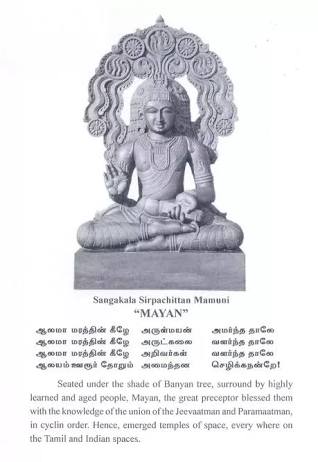
    There is a poem,which ascribes Aindhiram to Lord Shiva.

    This can be seen in the featured image of this article.

    Mamuni Maayon can also refer Lord Shiva.

    Shiva is reported to have founded Tamil Language with Agastya.

    The Tholkapiyam Poem .

    வட வேங்கடம் தென் குமரி

    ஆயிடைத்
    தமிழ் கூறும் நல் உலகத்து
    வழக்கும் செய்யுளும் ஆயிரு முதலின்
    எழுத்தும் சொல்லும் பொருளும் நாடிச்
    செந்தமிழ் இயற்கை சிவணிய நிலத்தொடு
    முந்து நூல் கண்டு முறைப்பட எண்ணிப்
    புலம் தொகுத்தோனே போக்கு அறு பனுவல்
    நிலம் தரு திருவின் பாண்டியன் அவையத்து
    அறம் கரை நாவின் நான்மறை முற்றிய‌
    அதங்கோட்டு ஆசாற்கு அரில் தபத் தெரிந்து
    மயங்கா மரபின் எழுத்து முறை காட்டி
    மல்கு நீர் வரைப்பின் ஐந்திரம் நிறைந்த‌
    தொல்காப்பியன்
     எனத் தன் பெயர் தோற்றிப்
    பல் புகழ் நிறுத்த படிமையோனே..

    *There is another view.

    ‘Aindhiram is an ancient book on the science of vasthu sathra and tamil grammer – connected with Tholkappiyam  .It had two volumes.Unfortunately the volume one which deals with the phenetics of tamil grammer associated with Tholkappiyam (this volume of book was called ‘ANIDRA’) is lost in the course of history ,all that is remaining with us is an scientific book on vasthu sathra.

    Who is Mamumi Mayan?
    Mamuni mayan was a famous sidhar ,multi talented geek ,architect , ancient scientist  and the author of Aindhiram..he appears in Ramayana and Mahabharatha also..he is the son of Diti and Kashyapa (a sabdhamaharishi)..Mayan was very close with pandiya king and helped him build the Pandiya mahasabha (which was supposed to be so grand with lot of cool interiors ,it was one of the testimony of Pandiyas excellence in architecture-and the brain behind that brilliance was Mamuni Mayan…if I am right this mahasabha was destroyed by some invader ) 
    P. S. Mayan was the father in law of Ravana, father of Mandodari…’

    Mamuni Maayon can also refer Lord Shiva.

    Shiva is reported to have founded Tamil Language with Agastya.

    https://www.quora.com/What-is-the-mystery-that-our-ancient-literary-work-Aindhiram-ஐந்திறம்-reveals-to-us )