Tag: Shiva

  • Chariots Of Gods,Temple Cars Of India

    Hinduism identifies Gods with   Human Life so much that Gods have Parents,Brothers, Sisters,Children and Family Life.


    The Vedas declare that the Reality is Nameless Formless.


    However Hinduism encourages worship Gods in Idol for, and attribution of Human properties are allowed as they are a tool to Realize God or Self.


    For details please read my post ‘Gods have name and Form, Yes and No’


    Birthdays of God , like Janmastami for Lord Krishna, Arudra Darisanam of Lord Siva, Pooram Nakshatra For Andal, Marriages Uthiram  Nakshatra for Lord Siva and Parvati are all celebrated with grandeur.


    On such special occasions the Deity is bedecked with jewellery,  Flowers,  and taken around in a Chariot around the city on a fixed Route.


    They are fixed with lighting arrangements, Music troupe leads with veda Mantras recital.


    “Temple cars are chariots used to carry representations of Hindu gods. The car is usually used on festival days called Ther Thiruvizha (தேர் திருவிழா) usually happens once in a year, where many people gathered around the temple and pull the cart.

    ThiruvarurSrivilliputhurTirunelveli in Tamil Nadu and Puri, in Odisha, host some of the largest annual temple car festivals.

    One of the very old and ancient festivals that often mentioned in the devotional hymns of saints like ( Tirugnanasambandar and Sundarar) and many Tamil literature, usually held during the summer between March and April months of every year, lasts more than 25 days. The main attraction of the festival is the procession of the great temple car of Thiruvarur (in Tamil: ஆழித் தேர்). This great chariot is said to the biggest one of its type in size and height. It is 96 feet (29 m) tall and weights more than 300 tons.[1] The size of the largest temple cars inspired the Anglo-Indian term Juggernaut (fromJagganath), signifying a tremendous, virtually unstoppable force or phenomenon.

    As of 2004, Tamil Nadu had 515 wooden carts of which 79 need repairs. Annamalaiyar TempleTiruvannamalaiChidambaram Natarajar Temple are some of the temples that possess huge wooden chariots for procession each. In particular, Natarajar temple celebrates the chariot festival twice in a year one at summer (Aani Thirumanjanam (June- July)) and another at winter (Marghazhi Thiruvaadhirai (in December – January )). Lord Krishna of Udupi has five temple cars, namely Brahma ratha (biggest), Madya ratha (medium), kinyo (small), and silver and gold rathas.(wiki)


    Some famous Temple Cars.


    Srivilliputtur Temple Car
    Srivilliputtur Temple Car
    Temple Car Festival ,Srivilliputtur
    Temple Car Festival ,Srivilliputtur
    Temple Car Festival ,Tiruvarur.
    Temple Car Festival ,Tiruvarur.
    Temple Car,Thiruvannamalai
    Temple Car,Thiruvannamalai


    Temple Car Festival,Puri
    Temple Car Festival,Puri

    Some information on Temple Cars.


    ‘Among the various types floats may be set as the god bearing or the area where it is built. Usually all consist of a very strong base, arranged on four huge wheels, between 1 and 2 m in diameter, solid wood with axes large section through them. This base has a height ranging from the smallest 2m (counting the wheel height) to the highest 5m, consists of several bands in which various figures are carved religious. Based on a large structure standing whose height will vary according to the type of the float, the largest reach 29m. The structure, also of wood to save weight, a network is usually heavily braced to prevent lateral bumps or break the piece swings. On it is placed around the casing, which is incredibly varied in color and shape, the decor is very dense: the structure is painted in many colors, it will hang cloth banners, pompoms straw, ties, etc. Also depending on the procession can be seen figures or decorations of gold and silver. The image of the god who is carried in procession included within the carriage and is adorned with flowers, and more items. In total the weight of a float often reach 300 tons.”

    http://tectonicablog.com/?p=30720


  • Shiva Worship Not A Religious Act!

    The IT Commissioner of IT, Nagpur Appellate Tribunal  averred that worship of Lord Shiva,Hanuman and Goddess Durga  is not a Religious Act and disallowed the expenses incurred in conducting Pooja on this account by Shiv Mandir Devstan Panch Committee,Nagpur!

    He refused to allow more than 5% of expenses incurred.

    Are the Hindu temples coming under HR& CE taxed and if so under what Rules?

    Is the haj Pilgrimage taxed ?

    If not it has to be disallowed on the ground that it is nothing but going around Stone!

    The knowledgeable Commissioner also states  that ‘Technically, Hinduism is neither a Religion nor a Community”

    The first part, strictly applying the Vedas is correct.

    The second part that it is not a community is incorrect.
    if the IT Commissioner’s ruling on  Hinduism is correct (It is), then India should declare it as India’s State Policy as it suits more to its ‘Secular image definition!’

    Story:

    Lord Siva.
    Lord Siva.

    Lord ShivaHanuman and goddess Durga do not represent any particular religion but are regarded as supernatural powers of theuniverse, the Nagpur income tax appellate tribunal has said.

    The observation came when the tribunal was hearing an appeal by Nagpur-based Shiv Mandir Devstan Panch Committee Sanstan against an income tax commissioner’s order denying it tax exemption on grounds that more than 5% of its expenditure was incurred on religious activities.

    The I-T act stipulates that for the purpose of tax exemption, an institution or trust must not be for the benefit of any particular religious community or caste.

    Differing with the I-T commissioner’s order, the tribunal said, “Expenses on worshipping of Lord Shiva, Hanuman, Goddess Durga and on maintenance of the temple cannot be regarded as having been incurred for religious purposes.”…..

    “Technically, Hinduism is neither a religion nor a community,” the tribunal said.

    http://timesofindia.indiatimes.com/india/Shiva-worship-not-a-religious-act-income-tax-tribunal-says/articleshow/18996617.cms

  • Maha Sivaratri Sri Rudram(Text) Sivoham Video Audio

    Sri Rudram is a Maha Mantra.

    Lord Siva.
    Lord Siva.
    Abhishekam of Linga.
    Abhishekam of Linga.

    I shall be posting a Post exclusively on this.

    On this Maha Siva Ratri  I am providing Audio of Sri Rudram and Sivahom song.

    Text of Sri Rudram,Namakam.

    Namakam – Yajur Veda chapter 16

    Om namo bhagavate rudraya

    Namaste rudramanyavautota ishhave namah
    Namaste astu dhanvane bahubhyamuta te namah

    Yata ishhuh shivatama shivam babhuva te dhanuh
    Shiva sharavya ya tava taya no rudra mridaya

    Yaa te rudra shiva tanu raghoraapapakashini
    Taya nastanuva shantamaya girishantabhichakashihi

    Yamishhum girishanta haste bibharshhyastave
    Shivam giritra tam kuru ma hisih purushham jagath

    Shivena vachasa tva girishachchha vadamasi
    Yatha nah sarvamijjagadayaxmasumana asath

    Adhyavochadadhi vakta prathamo daivyo bhishhakh
    Ahishcha sarvajnjambhayantsarvashcha yatudhanyah

    Asau yastamro aruna uta babhruh sumangalah
    Ye chemarudra abhito dixu Shritah sahasrashoavaishhaheda imahe

    Asau yoavasarpati nilagrivo vilohitah
    Utainam gopa adrishannadrishannudaharyah
    Utainam vishva bhutani sa drishhto mridayati nah

    Namo astu nilagrivaya sahasraxaya midhushhe
    Atho ye asya satvanoaham tebhyoakarannamah

    Pramuncha dhanvanastva mubhayo rartniyo rjyamh
    Yashcha te hasta ishhavah para ta bhagavo vapa

    Avatatya dhanustva sahasraxa shateshhudhe
    Nishirya shalyanam mukha shivo nah sumana bhava

    Vijyam dhanuh kapardino vishalyo banava uta
    Aneshannasyeshhava abhurasya nishhangathih

    Ya te heti rmidhushhtama haste babhuva te dhanuh
    Tayaasmanvishvatastva mayaxmaya paribbhuja

    Namaste astvayudhayanatataya dhrishhnave
    Ubhabhyamuta te namo bahubhyam tava dhanvane

    Pari te dhanvano heti rasmanvrunaktu vishvatah
    Atho ya ishhudhistavare asmannidhehi tamh

    Namaste astu bhagavanh vishveshvaraya mahadevaya tryambakaya tripurantakaya trikagni kalaya kalagnirudraya nilakanthaya mrutyunjayaya sarveshvaraya sadashivaya shrimanmahadevaya namah

    Anuvaka 2

    Namo hiranyabahave senanye dishan cha pataye namo
    namo vrikshebhyo harikeshebhyah pashunam pataye namo

    namah saspijncharaya tvishhimate pathinam pataye namo
    namo babhlushaya vivyadhineannanam pataye namo
    namo harikeshayopavitine pushhtanam pataye namo
    namo bhavasya hetyai jagatam pataye namo
    namo rudrayatatavine kshetranam pataye namo
    namah sutayahantyaya vananam pataye namo namah

    Namo rohitaya sthapataye vrikshanam pataye namo
    namo mantrine vaanijaya kakshanam pataye namo
    namo bhuvantaye varivaskritayaushhadhinam pataye namo
    nama uchchairghoshhayakrandayate pattinam pataye namo
    namah kritsnavitaya dhavate satvanam pataye namah

    3rd Anuvaka

    Namah sahamanaya nivyadhina avyadhininam pataye namo
    namah kakubhaya nishhangine stenanam pataye namo
    namo nishhangina ishhudhimate taskaraanaam pataye namo
    namo vajnchate parivajnchate stayunam pataye namo
    namo nicherave paricharayaranyanam pataye namo
    namah srikavibhyo jighasadbhyo mushhnatam pataye namo
    namo asimadbhyo naktam charadhbhyah prakrintanam pataye namo
    nama ushhnishhine giricharaya kulujnchanam pataye namo namah

    Namo ishhumadhbhyo dhanvavibhyashcha vo namo
    nama atanvanebhyah pratidadhanebhyashcha vo namo
    nama ayachchhadhbhyo visrijadbhyashcha vo namo
    namo asyadbhyo vidhdhyadbhyashcha vo namo
    nama asinebhyah shayanebhyashcha vo namo
    namah svapadbhyo jagradbhyashcha vo namo
    nam stishthadhbhyo dhavadbhyashcha vo namo
    namah sabhabhyah sabhapatibhyashcha vo namo
    namo ashvebhyoashvapatibhyashcha vo namah

    Anuvaka 4
    Nama avyadhinibhyo vividhyantibhyashcha vo namo
    nama uganabhyastrihatibhyashcha vo namo
    namo gritsebhyo grutsapatibhyashcha vo namo
    namo vratebhyo vratapatibhyashcha vo namo
    namo ganebhyo ganapatibhyashcha vo namo
    namo virupebhyo vishvarupebhyashcha vo namo
    namo mahadbhyah kshullakebhyashcha vo namo
    namo rathibhyoarathebhyashcha vo namo

    namo rathebhyah rathapatibhyashcha vo namo
    namah senabhyah senanibhyashcha vo namo
    namah kshattribhyah sangrahitribhyashcha vo namo
    nama stakshabhyo rathakarebhyashcha vo namo
    namah kulalebhyah karmarebhyashcha vo namo
    namah pujnjishhtebhyo nishhadebhyashcha vo namo
    nama ishhukridbhyo dhanvakridhbhyashcha vo namo
    namo mrugayubhyah shvanibhyashcha vo namo
    namah shvabhyah shvapatibhyashcha vo namah

    Anuvaka 5

    Namo bhavaya cha rudraya cha
    namah sharvaya cha pashupataye cha
    namo nilagrivaya cha shitikanthaya cha
    namah kapardine cha vyuptakeshaya cha
    namah sahasrakshaya cha shatadhanvane cha
    namo girishaya cha shipivishhtaya cha
    namo midhushhtamaya cheshhumate cha
    namo hrasvaya cha vamanaya cha
    namo brihate cha varshhiyase cha
    namo vriddhaya cha samvridhdhvane cha

    Namo agriyaya cha prathamaya cha
    nama ashave chajiraya cha
    namh shighriyaya cha shibhyaya cha
    nam urmyayacha vasvanyaya cha
    namah strotasyaya cha dvipyaya cha

    Anuvaka 6

    Namo jyeshhthaya cha kanishhthaya cha
    namah purvajaya chaparajaya cha
    namo madhyamaya chapagalbhaya cha
    namo jaghanyaya cha budhniyaya cha
    namah sobhyaya cha pratisaryaya cha
    namo yamyaya cha kshemyaya cha
    nama urvaryaya cha khalyaya cha
    namah shlokyaya chavasanyaya cha
    namo vanyaya cha kakshyaya cha
    namah shravaya cha pratishravaya cha

    Nama ashushhenayacha shurathaya cha
    namah shuraya chavabhindate cha
    namo varmine cha varuthine cha
    namo bilmine cha kavachine cha
    namah shrutaya cha shrutasenaya cha

    http://www.astrojyoti.com/srirudramtextnmp3.htm

    Om Sivoham

  • For Delayed Marriages, Tiruvelvikkudi,Mayuram

    For those for whom marriages get delayed.

    People who are unable to get suitable Alliance ,in Tamil Nadu , generally visit Thirumanancherry ,perform certain Rituals nd this practice is reported to be producing good results.

    I came to know of an older Temple near Mayuram (Myiladuthurai Kuttalam).

    Praying at this Temple of Lord Manavaleswarar and Parimalasugandhanayagi  ensures speedy marriages for those whose marriages are delayed.

    The Temple is near Kuttalam(near Mayuram)and on the way to Vanaathirajapuram.

    The Temple is reported to be old and the details are.

    Kumabhishekam is on March 19, 2014.

    Invitation is below.

    Manavaleswarar Temple ,Tiruvelukkudi
    Manavaleswarar Temple ,Tiruvelukkudi


    I understood the following procedure is to be followed.

    Perform Yagna at the Temple, which starts around 11 am.

    These Yagnas are to be performed on Mondays.

    It is very auspicious if it is performed on the days of Full Moon  which falls on Monday.

    The charges payable at your convenience, though they charge Rs. 285.

    You may buy two Archanai materials from the shops.

    The Boy or Girl is tied with a Gangana(band on the Wrist) at the Sannidhi of Parimalasugandhanayagi.

    Deepas(You can get them at the shops near the temple) have to be lit .

    The number of Deepas is equivalent of the Age one to be married.

    Then one has to sit in Yagna, which is likely to take three hours.

    After the   Yagna, the Temple priest calls one by one and advises them as to the number of days they have to come to the Temple.

    The Temple is reported to be yielding good results for those who worship there with faith.

    The nearest Town for stay is Mayuram(Myiladuthurai)

    Related:

    Parvati once expresses her desire to have the experience of an earthly wedding to Shiva. This story is believed to be in fulfillment of this wish expressed by her. A dispute in Mount Kailash occured over a game of chess. In accordance with the verdict of Shiva, Parvati recedes to an earthly life and amidst her wandering reaches a place called Komal, where Lord Vishnu assumes a form of a cowherd to take care of his sister. He releases her from the clutch of the curse in a place called ‘Thiruvaaduthurai’ and Parvati sheds her assumed cow’s form and takes Her normal form in ‘Kuthaalam’ in the sacrificial fire of Sage Bharata Muni. Shiva and Parvati then unite in marriage in Thirumanancheri. Shiva is also called as ‘Sonavaararivaar’ for keeping up His word.

    God Vishnu, upset over the events, wanted to reconcile the couple. He went to Shiva to justify his case. Shiva told Vishnu about Parvati’s wish to experience a wedding on earth and assured Vishnu that all events would lead to that end. He also told Vishnu to take the cow to bathe in the Cauvery so she could regain her original form. Vishnu did so and soon Parvati was herself again.

    Parvathi was then instructed to go and live as the daughter of Bharata Muni, a saint living nearby. The story goes that Bharata Muni approached Shiva for his hand in marriage to Parvati, thereby granting her wish that she be married on earth.

    Udhvaganathar looks as groom in this moolasthanam and Ambal is bride, God and Goddess exhibits their view of newly married couple status in the south prakaram. Mangala Ragu God exhibits his view of with his full body near Lord Durgadevi in the north prakaram. This scene are giving significance of this temple. In this place Rathi and Manmathan join together. By grace of lord Uthvaganathar Rathi gets Mangalya Pitchai it’s hightly belived who ever adorn with garland to the Lord Udhvaganathar and Goddess Kokilambal are relieved from their curse and sin besides gets wedding in an earlier stage.

    http://www.thiruvidaimarudur.com/thirumanancheri.php

    http://temple.dinamalar.com/en/new_en.php?id=234

    The specialty of the Temple is that it does not have Navagrahas and it has no Dwajasthamba.

    The Temple is in a dilapidated condition.

    Tiruvelvikkudi
    Tiruvelvikkudi

    Ack. Ms.Abhayam Sekaran.

    Moolavar : Kalyana Sundareswarar, Manavaleswarar
    Urchavar :
    Amman / Thayar : Parimala Sugantha Nayaki
    Thala Virutcham :
    Theertham : Mangala theertham
    Agamam / Pooja :
    Old year : 1000-2000 years old
    Historical Name : Tiru Velvikudi
    City : Velvikudi
    District : Nagapattinam
    State : Tamil Nadu
    Singers:
    The temple is praised by saints Sambandar and Sundarar in their Thevaram hymns.  This is the 23rd Shiva temple on the northern bank of Cauvery praised in Thevaram hymns.
     Festival:
    Maha Shivrathri in February-March and Panguni Uthiram in March-April are the festivals celebrated in the temple.
     Temple’s Speciality:
    Lord Shiva in the temple is a swayambumurthy facing east blessing devotees.
    Opening Time:
    The temple is open from 6.00 a.m. to 12.00 a.m. and from 4.00 p.m. to 8.00 p.m.
    Address:
    Sri Kalyana Sundareswarar Temple, Tiruvelvikudi, Kuthalam Post-609 801, Nagapattinam district. Phone: +91-4364-235 462.
    Phone:
    +91- 4364-235 462.
     General Information:
    As the place has the reputation of being the wedding venue of Lord, there is no shrine for Navagrahas the nine planets.  Instead, Lord Himself is sitting the Easanya –northeast corner.
    Prayers
    Those facing delays in marriage due to planetary adversities, pray here lighting 48 lamps for relief.
    Thanks giving:
    A yajna is conducted in the temple on full moon days from 10.00 a.m. to 4.00 p.m. especially for those facing delays in marriage. Men and women having this problem are advised to participate in the proceedings. Realizing their wish, they perform abishek and archanas and express their gratitude to Lord and Mother.
     Greatness Of Temple:
    This place is sung by Saivite saints along with the praise of Kuthalam in their hymns also known as Tiruthuruthi.  The wedding of a princess was fixed to a prince here, but her parents died before the event.  The bride side cancelled the marriage.  The prince begged the Lord to get him the princess.  Lord sent a Bhoodha (something like a ghost but used for good purpose), brought the princess and solemnized their wedding.This is also the place where saint Sundarar had a bath in the Agni theertham and got his disease cured.  It also has the reputation of Lord Shiva offering half of Himself to Shakti.
      Temple History:
    Mother Parvathi was born to Sage Bharatha in Kuthalam near Tiruvelvikudi.  She performed penance for 16 Mondays on Lord Shiva to have His hand as Her Lord. Mother made a Linga of sand for the penance.  On the 17th Monday, Lord appeared before Parvathi as Manavaleswarar and promised to marry Her. Accordingly, the rituals (Velvi in Tamil) were conducted with Brahmma being the head priest for this divine marriage. Hence, the place is named Tiru Velvikudi.No poet can describe the beauty of smiling mother in the temple.  Lord Shiva blesses all men and women granting their wedding boon.
  • Arudra Darisanam Lord Siva Facts

    Arudra Darisanam Lord Siva Facts

    The Arudra Darisanam falls on the 26th of December,2015.

    10, Maargazhi Masam, 1937 Shaka, Sri Manmatha Year, Kaliyugam 5115.

    It is the Star in which Lord Siva is assumed to have been born- Arudra or Tiruvadirai in Tamil

    Worship of Siva on this day is considered auspicious.


    Lord Siva is called ‘Ayonijan’-the One who does not reside in a Womb.

    Lord Vishnu when he descends to Earth, assumes a particular form and goes through the motions befitting that Birth.

    As in Rama, Krishna, Balarama,Vamana,Parasurama,Narasimha,Matsya,Koorma,Varaha….

    In the first three he undergoes the ordeals one is expected to go through as a Man, while in the others His behavior was in keeping with the characteristics applicable to the Genus.

    Lord Siva, on the other hand, is never born of a womb nor does He undergo the trials and tribulations specific to the Genus.

    He appears from nowhere suddenly , does His job disappears as in Pitukku Mansumanathau.Sundarar episode,etc.

    Siva Facts.

    Siva means ‘prosperity’ ,Mangalam in Sanskrit.

    Siva is not to be confused with Rudra who forms the Trinity along with Brahma and Vishnu, just as one gets confused between Narayana and Vishnu.

    Rudra is One of the 11 Rudras while Vishnu is one of the  12 Adityas.

    This is the reason in Brahmin Marriages,of Aiyars, the ‘Cheer’ is 11 or multiples , and in Aiyangars, it is 12 or multiples thereof.

    ‘Adithyaanam aham Vishnu’

    ‘Rudranaam Sankarosmi’

    Bhagavad Gita.

    Sankara is one who destroys to recreate, Vishnu is One who protects.

    (Vishnu is from the Root Jishnu meaning the Supporter or Protector)

    Siva represents Five Functions.

    Srushti-Creation

    Sthithi-Maintanence

    Samharam-Destruction

    Thirodaanam -Hiding(The Reality) and

    Anugraham(Blessings)

    He is The Laya or the Cosmic Vibration.

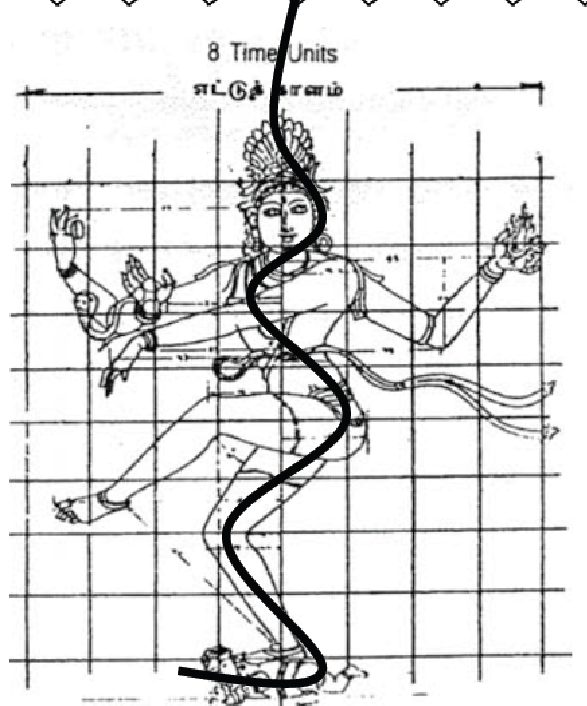
    He Dances to His Laya(Cosmic Dance of Lord Nataraja)

    His Moolaksharam or the Mantra that represents and Bonds Him is Panchaakshara-Five Letters.

    Nama Sivaya

    Some pronounce it as Namach chivaaya-this is incorrect

    Lord Nataraja
    Lord Nataraja

    These Five letters represent Five Elements, Pancha butas that make up th macrocosm

    Earth,Water,Fire, Air and Ether.

    It also represents the Panchtendriyaas-(Gnanendriyaas)

    Eyes,Ears,Nose,Skin,Mouth.

    Lord Arunachaleswara.
    Lord Arunachaleswara.

    It represents Five Karmendriyaas,

    Seeing,

    Hearing,

    Smelling,

    Tasting,

    Tactile sensation.

    It also represents the Qualities of

    Sight,

    Hearing,

    Smell,

    Taste,

    Tactile sensations( these five are called Tanmatras)

    He is the embodiment of the Dormant Energy.Animates

    Coupled with Parvati, His consort who is the representation of Dynamic energy, He is complete.

    Siva’s Quality is Hot, therefore we offer Him Vilva , which is cold in Nature.

    He is Hot because He resides in Burning Ghats, Narayana is Cold as He is in Ocean of Milk which is cold(therefore we offer Tulsi to Narayana as it is Hot in Nature.

    His Color is Red Hot Ember.

    He is The Silent Preceptor, Lord Dakshina Moorthy, who teaches through Silence.

    Lord Krishna teaches through Discourse.

    Lord Siva is to be approached as you approach a Guru, while Narayana as Your Father.

    Siva is reprsented as Linga, the Male Principle.

    Arudra Darisanam is celebrated with devotion at Tiruvannamalai, Chidambaram,Tamil Nadu on a Grand scale

    E SWARA-006-Mahaperiava-Discourse on Arudra Darisanam.Part I flv

    Enhanced by Zemanta