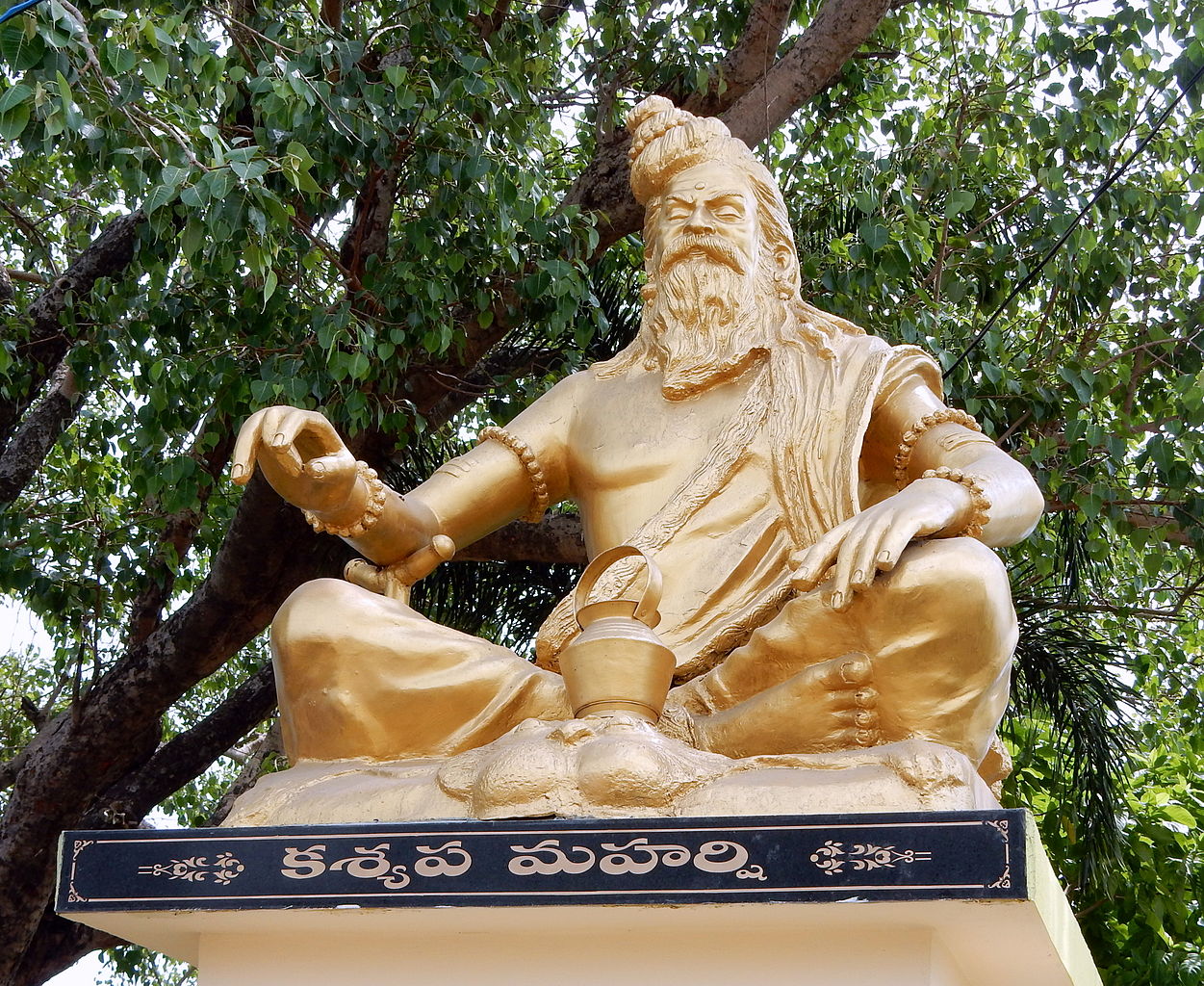
Lord Shiva, not to be confused with Rudra, who is an Amsa of Shiva, is called ,
Anaadi, without a Beginning,
Ayonija, one who does not stay in the womb.
He, as an Avatar,appears from nowhere and disappears in a flash, unlike Vishnu, who in His avatars was born of a human being.
Some of my researches show that Lord Shiva lived as a Human being before being elevated into Godhood, but this needs additional proof( I am working on it)
One also finds that Parvati, Shiva’s wife is called,
Poorvaja, beyond beginning, elder to the beginning, Poorva Plus Aja.
Despite the Polytheism of the Vedas, the core message is that the Reality is
without Attributes,
without name and Form and is a
Principle.
The Upanishads spend the whole text on this point.
However, as Hinduism is aware of the fact that it is difficult for the mind to concentrate on a Vacuum, allows the worship of personal Gods as a tool for Self Realization.(Iswara)
Patanjali speaks of this in his Yoga Sutras as Iswarapranidhaana.
However one finds one God being placed ona higher pedestal than the others in Hindu texts.
This is called Henotheism.
This is to instill a higher degree of faith to the deity one is inclined to worship.
So we find various gods being praised as being Superior to the others, while the Reality Brahman is without name and Form.
As to Shiva , when compared to other Deities he is more often described as The One who is without a Beginning.
Tamil calls Him as Piravaa Yaakaip Periyon,
The Eldest who is Never Born.
But as I said earlier each Purana Praises One God.
Many mistake the birth of Rudra to that of Shiva.
Excerpt fro Srimad Bhagavatham(SB)
SB 3.12.4: In the beginning, Brahma created four great sages named Sanaka, Sananda, Sanatana and Sanat-kumara. All of them were unwilling to adopt materialistic activities because they were highly elevated due to their semen’s flowing upwards.
SB 3.12.5: Brahma spoke to his sons after generating them. “My dear sons,” he said, “now generate progeny.” But due to their being attached to Vasudeva, the Supreme Personality of Godhead, they aimed at liberation, and therefore they expressed their unwillingness.
SB 3.12.6: On the refusal of the sons to obey the order of their father, there was much anger generated in the mind of Brahma, which he tried to control and not express.
SB 3.12.7: Although he tried to curb his anger, it came out from between his eyebrows, and a child mixed blue and red was immediately generated.
SB 3.12.8: After his birth he began to cry: O destiny maker, teacher of the universe, kindly designate my name and place.
SB 3.12.9: The all-powerful Brahma, who was born from the lotus flower, pacified the boy with gentle words, accepting his request, and said: Do not cry. I shall certainly do as you desire.
SB 3.12.10: Thereafter Brahma said: O chief of the demigods, you shall be called by the name Rudra by all people because you have so anxiously cried.
SB 3.12.11: My dear boy, I have already selected the following places for your residence: the heart, the senses, the air of life, the sky, the air, the fire, the water, the earth, the sun, the moon and austerity.
SB 3.12.12: Lord Brahma said: My dear boy Rudra, you have eleven other names: Manyu, Manu, Mahinasa, Mahan, Siva, Ritadhvaja, Ugrareta, Bhava, Kala, Vamadeva and Dhritavrata.
SB 3.12.13: O Rudra, you also have eleven wives, called the Rudranis, and they are as follows: Dhi, Dhriti, Rasala, Uma, Niyut, Sarpi, Ila, Ambika, Iravati, Svadha and Diksh.
SB 3.12.14: My dear boy, you may now accept all the names and places designated for you and your different wives, and since you are now one of the masters of the living entities, you may increase the population on a large scale.’
Now there is video that explains the birth of Shiva quoting a text which says that Shiva declared that Brahma to be His father, Vishnu ,Grandfather and he ( Shiva) is his great Grand father.(Posted at the beginning of the Post)
While this makes an interesting read, there is no authentic source for this.
The worship of Shiva precedes the Sanatana Dharma and the worship of Shiva seems to have originated from the South of the Vindhya Mountains.
And the worship of Shiva is intriguing as a God.
One can find Shiva beibg worshiped as a Human being in the form of Nataraja and in other forms as a Human being, this mode of worship of Shiva in the north of Vindhyas is very limited when compared to the South.
In the South one can find the worship of Shiva both as a Linga and as a Human being or resembling a human being.
In the north the worship of Shiva as Linga is predominant.
And the worshio of Shiva as Ardhanaresswara form, of Shiva and Devi in one form is prevalent in the south.
Another interesting point is that the Gods as described in the Vedas do not seem to have a description as a human being.
Only their attributes are provided in the Sukthas and seem to be a reoresentation of the Principles of Nature.
Purusha Suktha drscribes the Evolution of the Universe,
The Narayana, Vishnu, Sri and Durga Sukthas describe the various aspects of the Universe.
However , the Sri Suktha calls Sri, Lakshmi as the one who resides in the
House of Sikleetha Rishi- Sikleetha
Vasame gruhe.
Excepting these lines no mention is
Made to the Gods as Humans.
The core of the Vedas is that the Reality , Brahman is without and beyond Attributes .
Shiva In Thiruvannamalai.
Nirguna.
However later concept s brought in the description of Gods in rhe image of Man in the Puranas and the Ithihasas Ramayana and Mahabharata.
Even here there is a uniqueness of Shiva.
Shiva appears, as recorded in the Tamil Classics and the Thiruvilayadal purana which describes the activities of Shiva at various points of Times while not much of this nature is found in the literature of North India.
And note the spread of Hinduism towards the East where Muruga, Subrahmanya worship is prevalent from Lanka to Australia and the spread of Shiva Cult here and also to thecwest of India from Middle East to Arctic and Russia.
However there are legends that Shiva was worshiped as a Tribal Chief.
Even today the Austrakians perform the Trinetra Dance of Shiva.
And there is a Temple for Shiva asKratha Shiva’ Shiva the Hunter in Kerala.
‘
The Indian tribes worship Shiva in their natural abode – jungles, hills, mountains, agricultural fields’ etc. It is the Hindus who brought him into temples. Shiva is always worshiped among the tribals in His presence as lingam.
In the bramhanical Hindu fold Lord Shiva has several names. Prominent among them are as follows: Shankar, Ashutosh, Shiva, Neelkantha, Jatadhari, Pasupati, Bholanatha, Viswanatha, Baidyanath, Kailashpati, Tripurari, Rameshwar, Ravaneshwar, Somnatha, Mahakal, Omkar, Nagesh, Trayambakeshwar, Chidambaram, Kedranath, Shambhu, Gauripati, Girijapati, Mahadeo, Umapati, Maulishekhar, Shashank-Shekhar, Chandrashekhar, Lingraj, Devadhideva, Hara, Bambhola. His every name makes him unique, peculiar, caring for his believers and followers but careless about himself. He does not run after the worldly affairs and luxuries. He is the divine guru. He is the sun that opens the lotuses of the hearts of great Yogis. He is most compassionate. He absorbs the devotees’ afflictions. He is the manifestation of the three worlds. He abides in bliss. He is delighted with devotees. He is forever blissful. He absolves the sins of the faithful. He lights up his devotees. He is beyond thought. He is associated with right thoughts. He is boundless. He is birth-less. He is without beginning or end. He is associated with knowledge. He is supreme in bliss and knowledge. He is slave of the devotees. He responds to the devotees. He is attentive to the devotees. He is the light of the devotees. He is a killer of devotee’s grief. He is the experience of devotees. He rescues devotes. He supports devotees. He is approachable through pure thoughts. He is the embodiment of consciousness. He has eliminated bodily passions.
From the available narratives of many tribal communities (as described in the latter part of this paper) it appears that the Hindu ancestors adopted Him much later. Gods are fathers and Lord Shiva is s father like personality for the all other gods. He is the greatest god, Mahadeo. He helps his indigenous people in all walks of life and in all geographical, ecological and natural conditions. He is malevolent. He is benevolent. He is supreme Lord. He is Lord of lords. The Taittiriya Samhita therefore, in the form of Rudra, rightly describes Him:
“Hail to him of the drum, hail to him of the drum stick, hail to the courageous and to the creations, to him on the footpath, hail to him of the pond, and to rivulet, hail to him of the lake. Hail to him of the well. Hail to him of the rain, hail to him of the cloud, hail to him of the sunshine and to him of the storm. Hail to him of the dwelling and to the guardian of the dwelling (TS.4.5.7.)”.
Non-tribal and tribal interaction in ancient India started much earlier than the Vedic period. A minute survey of the Rig Vedareveals that these indigenous people were considered low, uncultured, mindless and substandard people and referred to asDasavarna (black colour or Dasa colour),Adavea (the godless community), Ayajyavah(non-sacrificiers), Anindra (non-believers in Indra), Murudeva (worshippers of dummy Gods), Sishnadeva (worshippers of phallic Gods), Mridhravaaka (those whose language was obscure and unintelligible),Maleecha (a non-Aryan) anas (flat nosed people) Akratuh,Avratuh, Ayyajnya, Vratya, Pani, and dasa. Here anas is a tribal andsisnadeva is the phallus god- Lord Shiva. Tribals with black skin were humiliated by the Vedic community as dasavarna where as other tribes were criticized on the basis of their flat nose. They were initially not permitted to mix up with the Hindu community but very soon it was realized that the existence of Vedic cult would not be possible without incorporating the existence of Shiva in the Vedas. And all of a sudden in the later part of Rig-Veda we see how Rudra has appeared with his all power and grace combining malevolent and benevolent characters.
The three Vedas – Rig, Sam and Yajur – were recognized as canonical and calledTrayi Vidya (the threefold knowledge). TheAtharvaVeda (atharvam = charm), written later, was included in the canon only after a long struggle. Influenced by the religious and ritual practices of the tribes, which they used to practice in order to appease the gods (and many of them are still doing), it included spells and incantations for the practice of magic.
Slowly and gradually the Vedas developed six major limbs – Vedanga-s:
a) Siksha (Phonetic Science which mainly deals with pronunciation)
b) Vyakarana (Grammar)
c) Nirukti (Context conclusive meaning; etymology)
d) Chandas (Meter)
e) Jyotisha (Time Science; astronomy & astrology)
f) Kalpa (Rituals)
The seers and scholars who realized these aspects of knowledge from the Vedas, composed Sutras (short but potent phrases which convey a lot of meanings) on eachVedanga. Kalpa-sutra-s are of four categories, viz., Srouta (collective sacrifices), Grhya(family rituals), Dharma (occupational duties) and Sulba (building of sacrificial fireplaces, altars etc.).
According to the different levels of conditioned consciousness there are instructions in the Vedas for worship of different controllers, with the aim of reaching different destinations and enjoying different standards of sense enjoyment. Agamas(emanated scriptures) are books which are classified into five for this purpose:
Basic nature of the
Deity
Deity who controls
Branch of Agama
Energy
Shakti
Shakta Agamas
Visible source (
Sun)
Surya
Sourya Agamas
Controller
Ganapati
Ganapatya Agamas
Destroyer
Shiva
Saiva Agamas
Ultimate source
Vishnu
Vaikhanasa Agamas
Slowly and gradually the Vedic seers and scholars made the place for the tribal people and their rituals and tantrikpractices in the Vedic fold. They said, for those who are below standard for Vedic purificatory process, Lord Shiva gave theTantra Shastra-s. These have two general classifications, right and left. While the right aspect contains regulations for purification for those who are grossly engaged in meat eating, intoxication and illicit sex, the left aspect contains low class activities like black magic etc.
We find some legends of Lord Shiva Among the tribals of Chotanagpur, now in Jharkhand. I will begin with the case study of the Santhal – the largest Tribal community of Jharkhand. The supreme God of Santhal is called Marang Buru, Thakur Buru, or Mahadeo. His character is basically very similar to that of Shiva. Interestingly, the great and historicalJyotirlinga of Baidyanath, popularly known as Ravaneshwar Mahadeo, is located in the heartland of Santhal at Deoghar. Many Santhals claim that it is the entry point to the Santhal Territory. It is a place where all gods and goddesses reside with Lord Baidyanath. The prominent characteristic of the Santhal religious practices is belief in and worship of spirits or bongas and worship in the sacred grove.’
There is a school of thought which states that cthe Shiva worship was drwan to Sanatana Dharma from the South and later incorporated in the Vedic and puranas.
In essence the vedas treat Shiva more as Principle than as Human Being.
But considering the numerous references to Shiva as a Human being , the spread of Sanatana Dharma by Shiva and His son Ganesha, the archaeological finds around the world,mostly among the tribes who worship Shiva as their ancestor, I am of the opinion that Shiva wa a human being and He was a realized soul.
Note that the Siddhas consider Shiva as the first Siddha.
Siddhas transcend time and Space.
The view that human beings are God is not incompatible with Hinduism..
Man is a part of the Reality, Brahman
Those who Realize the Self are elevated to God hood.
Thus Shiva was a human being who realized Self and was elevated to Godhood embodying the principles of the Universe and The Tantra Sasta, the means of realuzing Self.
Not much of is known about Rudra, excepting the Maha Mantra Sri Rudram, which is invogue to worship Lord Shiva.
Rudra is considered to be an Amsa, a part of Shiva in performance of His Duty of Destruction of The Universe.
The destruction is not annihilation but Concealment,Thirodhaana.
Rudra Manifestation.
There are Five Attributes of Lord Shiva.
Shiva means Auspiciousness.
Rudra’s Birth Place, Gokarna.
Adi Gokarna.
The Five Attributes are.
Srushti, Creation,
Sthithi,Stabilization and maintenance,
Samhara, Destruction as a Prelude to Concealment,
Thirodhaana, Concealment and
Anugraha,Divine Blessing-Anugraha is difficult to translate into English, it is more than Divine Blessing, Blessing by Divine with a Personal touch.
The aspect destruction is carried out by Rudra and Rudra is called as a Gana of Shiva, some other Ganas being Ganapati(Ganesha) who is the Chief of Ganas, Nandikeshwara.
The Sri Rudra begins with the Salutation,
Om Namo Bhagawate Rudaaya,
Namsthe Rudramanyave,
My obeisance to Lord Rudra,
My obeisance to Your Anger.
Rudra is the personification of Righteous Anger.
As such He is always portrayed as one with uncontrollable anger.
He is also called as a Hunter.,Kraatha.
I shall be writing in detail about the History of Shiva and Rudra from the available Historical evidence.
They are eleven of the 33 children of the sage Kashyapa and his wife Aditi, along with the 12 Adityas, 8 Vasus and 2Ashvins, constituting the Thirty-three gods-Ramayana.
Rudras are the sons of Kashyapa and Aditi-Vamana Purana.
Rudra – here identified with Shiva – was born from the anger of the creator-god Brahma. The furious Rudra was in Ardhanari form, half his body was male and other half female. He divided himself into two: the male and female. The male form then split itself into eleven, forming the eleven Rudras. Some of them were white and gentle; while others were dark and fierce. They are called Manyu, Manu, Mahmasa, Mahan, Siva, Rtudhvaja, Ugraretas, Bhava, Kama, Vamadeva and Dhrtavrata. From the woman were born the eleven Rudranis who became wives of the Rudras. They are Dhi, Vrtti, Usana, Urna, Niyuta, Sarpis, Ila, Ambika, Iravatl, Sudha and Diksa. Brahma allotted to the Rudras the eleven positions of the heart and the five sensory organs, the five organs of action and the mind.
The Birth Place of Rudra.
Adi Gokarna is mentioned as the birth place of Rudra.
When it took a long time for Brahma, who was ordered to Create the Universe, he became angry and as a result of His anger a child was born and when Brahma opened His eyes he found a Child crying and He asked the Child,
Why do you cry”
“Kim Ruda?(Sanskrit)
Brahma named the child as Rudra.
This child was considered to be aspect of Sankara and Brahma asked Him to create the Universe and He created a perfect world only with One Guna, Satvik, Pure, gentle,ascetic.
Brahma found it was not alright and produced the world with Satva ,Rajas and Tamas qualities,purity & goodness (Satvik), action and passion (Rajas), Ignorance and Inertia (Tamas).
This He produced in the Brahma Loka while Sankara created the Satvik world from the Patala Loka.
On knowing that Brahma created a world of His own, Rudra became furious and rose as a Thunder towards the sky about to annihilate the Earth.
Bhoomi (Mother Earth) was terrified by this pleaded Rudra,
“Oh my Lord, I am a woman and more so, a frightened one. I am at the risk of destruction and I will be shattered into pieces without any fault of mine. So please forgive me”.
Her fearful but innocent pleading moved Rudra.
He asked if she had any wishes. Bhoomi requested him to move out slowly from a tiny hole in her ear. She also requested him to take a tiny form (Angushta Matra).
Rudra conceded to her request and came out of Bhoomi’s ear.
After coming out, Lord Shankar showered blessings on Bhoomi.
He said Bhoomi one of your names is “Go” and as I came out of yourkarna (ear), this place where I emerged shall be known, as Gokarna. He also said, I am as good as born here and hence this place shall also be known as “Rudra Yoni”
Sages (Rishis) consecrated a ShivaLinga at the point of emergenceand It is this Shivlinga in Gokarna realm, known as “Aaadi Gokarna”
Many readers have requested for the Sanskrit Text Of Sri Mantraraja padam by Sri Rudra on Lord Narasimha.
This rare Mantra , apart from helping solve financial difficulties,speedy disposal of court cases, is effective for warding of evil forces, black magic, and for curing mental illnesses.
Narasimha.
Here is the Sanskrit Text with meaning in English.
Tamil Text and Meaning posted;link provided at the end of the Post.
ॐ उग्रं वीरं महाविष्णुं ज्वलन्तं सर्वतोमुखं I
नरसिम्हम भीषणं भद्रं मृत्योऱ मृत्युं नमाम्यहम् II १ II
** This stanza may be recited 11 times daily, in the morning and evenings for relief, that is if one does not find time to recite full stotra.
Ferocious, Brave – great Vishnu, whose face shines like fire in all directions,
Lord Narasimha who frightens and who takes care of, I salute to the God who is death to death itself…
वृत्तोत्फुल्ल विशालाक्षं विपक्षक्षय दीक्षितम् I
निनादत्रस्तविश्वाण्डं विष्णुं उग्रं नमाम्यहम् II २ II
(Vrattotphulla vishalaksham vipakshkshaya dikshitam, ninadatrasta vishwandam vishnum ugram namamyahum.)
He who is having big and round eyes, He who has taken a vow to kill the enemies, He who by His fierce roars is shaking the entire world, to such a ferocious Lord, I offer my salutations
सर्वैरवध्यतां प्राप्तं सबलौघं दीतेः स्तुतम् I
नखाग्रैः शकालीचक्रे यस्तं विरं नमाम्यहम् II ३ II
(Sarvairavadyatam praptam sabalougham ditehastutam, nakhagraihe shakalichakre yastam veeram namamyahum.)
He who with His sharp nails tore to pieces the asura, the son of Diti who could not be killed by anyone along with His large armies. To such a valorous person, I offer my salutations
पादावष्टब्धपाताळं मूर्धाविष्ट त्रिविष्टपम् I
भुजप्रविष्टाष्टदिशं महाविष्णुं नमाम्यहम् II ४ II
(Padavishtabdha patalam mordha vishtha trivishthapam, bhuja pravishthashthadisham mahavishnum namamyahum. )
I offer my salutations to Maha Vishnu, whose feet touch the nether lands, whose forehead touches the heaven and whose hands spread in all directions
ज्योतींश्यक्रेन्दु नक्षत्र ज्वलनादीन्यनुक्रमात् I
ज्वलन्ती तेजसा यस्य तं ज्वलन्तं नमाम्यहम् II ५ II
(jyotimshyakrendu nakshatra jwalanadeetyanukramat, jwalanti tejasa yasha tam jwalantam namamyahum.)
He after whose luster the luminary bodies, the Sun, the Moon, the Stars and Fire are effulgent and are shining, to that resplendent One I offer my salutations.
सर्वेन्द्रियैरपि विना सर्वं सर्वत्र सर्वदा I
यो जनाति नमाम्याद्यम् तमहं सर्वतोमुखम् II ६ II
(Sarvendriyairapi vina sarvam sarvatra sarvada, Yo janati namamyadhyam tamaham sarvatomukham. )
He who knows everything, all the time, and at all places, without the help of the senses, to such primal person who has faces in all directions, I offer my salutations
नरवत् सिंह वच्चैव यस्य रुपं महात्मनः I
महासठं महादंष्ट्रम् तं नृसिंहं नमाम्यहम् II ७ II
(Naravat simha vachaiva yasya roopam mahatmanaha, mahasatham mahadamshtram tam nrasimham namamyaham.)
To that Form of the Lord, which is half man and half lion, complete with the mane, the canine teeth, to such a divine Lord Nrsimha, I offer my salutations
यन्नामस्मरणाद् भीताः भूतवेताळराक्षसाः I
रोगाद्याश्च प्रणश्यन्ति भीषणं तं नमाम्यहम् II ८ II
(Yannamasmaranat bheetah bhuta vetala rakshasaha, rogadyashcha pranashyanti bheeshanam tam namamyahum.)
By the mere thought of whose name, devils, demons, asuras get frightened, acute diseases get cured, to such a frightening One, I offer my salutations
सर्वोपि यं समाश्रित्य सकलं भद्रमष्णुते I
श्रिया च भद्रया जुष्टो यस्तं भद्रं नमाम्यहम् II ९ II
(Sarvopi yam samashritya sakalam bhadramashnute, shriya cha bhadraya jushto yastam bhadram namamyahum)
I offer my salutations to the Lord, the repository of good things, worshipping whom all the people are able to obtain auspicious things.
साक्षात् स्वकाले संप्राप्तं मृत्युम् शत्रुगणान्वितम् I
भक्तानां नाशयेद् यस्तु मृत्यु मृत्युं नमाम्यहम् II १० II
(Sakshaat swakale sampraptam mrityum shatrugananvitam, bhaktanam nashayed yastu mrityu mrityum namamyaham)
He who is “Death to Death” and He who destroys death and hosts of enemies of the devotees by arriving at the right moment, to Him I offer my salutations
नमस्कारात्मकं यस्मै विधायात्मनिवेदनम् I
तथ्वा त्यक्तादुःखो खिलान् कामान् अश्नन्तम् नमाम्यहम् II ११ II
(Namasakaratmakam yasmai vidhayatmanivedamanam, tathva dukhokhilan kaman ashnushetam namamyahum.)
I bow down to the One by offering obeisance to whom in the form of One’s own self, people get rid of all miseries and obtain their desired objects
दासभूताः स्वतस्सर्वे ह्यात्मानः परमात्मनः I
अतोहमपिते दासः इति मत्वा नमाम्यहम् II १२ II
(Dasabhutah svatassarve hyatamanaha paramatmanah, athoh mapitedasa iti matwa namamyaham)
All the living beings are, by nature, servants of the Supreme Being, I am prostrating to You, with the awareness that I am also for the same reason, Your servant
शंकरेणादरात प्रोक्तं पदानां तत्त्वनिर्णयम् I
त्रिसन्ध्यं यः पठेत् नित्यं तस्य श्री विद्दा आयुश्च वर्धते II १३ II
(Shankarenadarat proktam padaznam tatvanirnayam, trisandhyam yaha pathet nityam tasya shree vidya aayushcha vardhate)
The meaning of the words had been explained by Lord Siva out of affection. Whosoever reads this rhymn with faith, thrice a day (at Sunrise, mid-day and evening) would have a great increase in prosperity (shree) knowledge (vidya) longevity (Ayush)
As a child Anjaneya, another name of Hanuman,son of Anjana Devi, flew near the Sun to gobble it up.
Lord Rama and Hanuman.
Indra,Chief of the Devas hit Hanuman with his Vajrayudha.
He fell back down to the earth and became unconscious. Upset, Vayu went into seclusion, taking the atmosphere with him. As living beings began to get asphyxiated, to pacify Vayu, Indra withdrew the effect of his thunderbolt, and the devas revived Hanuman and blessed him with multiple boons. However, a permanent mark was left on his chin (hanuhH in Sanskrit).
There are various versions of Hanuman’s Birth.
He is believed to be son of Vayu, the God of Wind and called as Maaruthi and Pavankumar.
He is said to be son of Kesari and Anjana Devi , hence called Anjaneya.
He is also considered as an amsa of Lord Rudra, who is an amsa of Lord Shiva.
Some texts mention that He is the son of Shiva, some others Shiva Himself.
The Vedas talk of Rudra.
Hanuman is considered to be the eleventh Rudra amsa.
Hanuman is worshiped as Shiva’s amsa in many households.
Hanuman was born to the vanaras. His mother Anjana was an apsara who was born on earth due to a curse. She was redeemed from this curse on her giving birth to a son. The Valmiki Ramayana states that his father Kesari was the son of Brihaspati and that Kesari also fought on Rama’s side in the war against Ravana. Anjana and Kesari performed intense prayers to Shiva to get a child. Pleased with their devotion, Shiva granted them the boon they sought.Hanuman, in another interpretation, is the incarnation or reflection of Shiva himself.
Hanuman is often called the son of the deity Vayu; several different traditions account for the Vayu’s role in Hanuman’s birth. One story mentioned in Eknath’s Bhavartha Ramayana (16th century CE) states that when Anjana was worshiping Shiva, the King Dasharatha ofAyodhya was also performing the ritual of Putrakama yagna in order to have children. As a result, he received some sacred pudding (payasam) to be shared by his three wives, leading to the births of Rama, Lakshmana, Bharata, and Shatrughna. By divine ordinance, a kitesnatched a fragment of that pudding and dropped it while flying over the forest where Anjana was engaged in worship. Vayu, the Hindu deity of the wind, delivered the falling pudding to the outstretched hands of Anjana, who consumed it. Hanuman was born to her as a result.Another tradition says that Anjana and her husband Kesari prayed Shiva for a child. By Shiva’s direction, Vayu transferred his male energy to Anjana’s womb. Accordingly, Hanuman is identified as the son of the Vayu.
Another story of Hanuman’s origins is derived from the Vishnu Purana and Naradeya Purana. Narada, infatuated with a princess, went to his lord Vishnu, to make him look like Vishnu, so that the princess would garland him at swayamvara (husband-choosing ceremony). He asked for hari mukh (Hari is another name of Vishnu, and mukh means face). Vishnu instead bestowed him with the face of a vanara. Unaware of this, Narada went to the princess, who burst into laughter at the sight of his ape-like face before all the king’s court. Narada, unable to bear the humiliation, cursed Vishnu, that Vishnu would one day be dependent upon a vanara. Vishnu replied that what he had done was for Narada’s own good, as he would have undermined his own powers if he were to enter matrimony. Vishnu also noted that Hari has the dual Sanskrit meaning of vanara. Upon hearing this, Narada repented for cursing his idol. But Vishnu told him not repent as the curse would act as a boon, for it would lead to the birth of Hanuman, an avatar of Shiva, without whose help Rama (Vishnu’s avatar) could not kill Ravana.
“Hanuman was born as the son of Anjana a female vanara. Anjana was actually an Apsaras (a celestial being), named Punjikasthala, who, due to a curse, was born on the earth as a female vanara. The curse was to be removed on her giving birth to an incarnation of Lord Shiva. Anjana was the wife of Kesari, a strong vanara who once killed a mighty elephant that was troubling sages and hermits. He therefore got the name ‘Kesari’, meaning lion, and is also called Kunjara Südana, the elephant killer.”
”
Hanuman is originally the son of Vayu, the air god. And he is also an expansion of Lord Siva. All the demigods were helping Lord Ramacandra in his battle. Lord Siva was thinking, “I must also help him.” So long before Lord Ramacandra incarnated, Lord Siva had a pastime.
Once Siva and Parvati were playing in Kailash, and they saw a monkey. Lord Siva, by looking at this monkey, he also took the form of a monkey. Parvati also took the form of a monkey, and they played. During that time, Lord Siva gave Parvati a conception. Then immediately she became Parvati again and said, “I’m not going to give birth to a monkey.”
So Siva said, “Well you have a conception so now you have to give birth to it.” Parvati said, “No no, when you gave the conception you were a monkey, so my son will become a monkey. Already I have an elephant, that is enough. I can’t have this.” So Siva said, “All right then, I will make some arrangement.”
Siva then called Vayu, and Vayu came there. Once before Siva had given a conception and Agni had carried it, and Agni had said that he would never do it again. So Vayu came, and Siva said, “Vayu, you have not done anything to me up till now, so please do this for me. Take this conception and look after it.” Vayu said, “But you are the most hot person, and I am going to be carrying this around when I am supposed to be cooling everything. The wind will be hot.” Siva said, “You make some arrangement.”
So Vayu was carrying this conception wondering what to do, and then he saw the sapta-rishis going somewhere. He went before them and asked, “This is a conception from Lord Siva. This has to be preserved until the Supreme Lord incarnates as Ramacandra. That is a long time away, but it has to be kept. Please make some arrangement.”
The sapta-rishis said, “Oh we will make some arrangement.” So they went to origin of the Mandakini river and they took a leaf which was made of metal, and put the conception there. In this way it was preserved, and Vayu was supposed to come and see that nothing happened to it.
And then Brhaspati, the spiritual master of the devas, he had a maidservant in his house, and she was supposed to bring flowers for worshipping Salagram. One day when she went to get flowers, she saw some gandharvas having conjugal pastimes, and she was very attracted. So instead of collecting flowers, she came back early and Brhaspati was sitting on a deerskin in his ashrama.
Suddenly this lady jumped on him and began covering him with kisses. Brhaspati had not expected this, because he was doing puja, and he said, “What is this? You are behaving like a monkey! Therefore become a monkey!”
When she became a monkey she cried, “I’m very sorry. Some ignorance came in my mind, and I have insulted you. But you have made me a monkey, so when will I again become normal?” Brhaspati said, “Why have I cursed you like this? I did not lose my temper.” Then he thought for a while, and said, “Oh, I know. There is some arrangement. So now you must go to Kishkinda, and you get married to a great monkey warrior king. His name is Ketari, and you become his wife. There is a big plan for you.”
She came down, and she met Ketari who was jumping for some fruits, and she appeared on top of the tree. Then they had some talk, and they got married. When she was in the body of a monkey she was known as Anjana. They were living for a long time, but they were having no children. Ketari went on performing austerities to please Lord Indra so that he could get a son. He wanted a very powerful son, so he was doing meditation.
While he was doing meditation, Vayu came, and somehow or other, in his invisible form, he managed to give the conception to Anjana. Anjana felt someone holding her, and she said, “Who is this person? You must come before me otherwise I will curse you.”
So then Vayu came before her and said, “Your curse will be gone only when you deliver a strong person, and I am giving you that person. So close your eyes and take this conception. Then deliver your baby and you can return to the heavenly planets. You do not want this?” And then she remembered all her previous activities. She took that conception, and what was this conception? It was originally conceived by Lord Siva, carried by Vayu for so long, and Vayu gave it to her, so it was Vayu’s son and it was Siva’s angsha, or expansion.
And then Anjaneya was born. As soon as he was born he grew into a sixteen year old boy. That was the potency of Lord Siva. So then Anjana immediately rose up to go to the heavens, and Anjaneya caught hold of her cloth and said, “Wait a minute, where are you going? You gave birth to me, and now you are leaving? What will I eat?”
You must be logged in to post a comment.