Tag: Ramayana

  • Sundara Kandam Parayana Procedure

    Sundara Kandam Parayana Procedure

    Ramayana is not only an Epic that sets forth ideals that guide Man in the Righteous path.

    Being compiled by the great Seer Valmiki, it possesses the power of granting the wishes of those who read or recite it with faith.

    Ramanama chanting, the recitation of Rama’s name absolves one of all sins and grants the beneficial results that accrue by reciting the One Thousand names of Lord Vishnu, Vishnu Sahasranaama.

    Goddess Uma asks Lord Shiva the shortest route to get Lord Vishnu’s Grace and Shiva replies that it is the name Rama that will do the trick

    Sri Rama Rama ramethi reme rame manorame,
    Sahasra nama thathulyam rama nama varanan.
    
    There is interesting legend on Ramanama.
    
    The Ramayana has 24000 slokas or verses.
    All the Devatas excluding Lord Shiva had taken each Akshara, or letter as auspicious.
    
    Lord Shiva, being late could not take anything
    .
    When Uma asked him he is reported to have replied that in their hurry the Devatas have forgooten two important letters, Ra and Ma.
    
    and that he would take them.
    
    Together they form Rama, the Bhjakshara of Lord Rama.
    
    This, the Learned say is the origin of the Sloka Sri Rama Ramethi.
    
    Though Ramayana showers benefits if recited, there are specific chapters for specific purposes or problems.
    
    Sundara Kanda,or the Chapter of Beauty ,where Lord Hanuman finds Sita is believed, and, has to grant early marriage and good children.
    There are various procedures in doing this Paarayana or daily recitation.
    
    Women can also do the Parayan.
    
    Parents of Children may also do the Parayan for the marriage of their children or for Grandchildren
    
    Procedure.
    
    !.To be done preferably in the Mornings.
    
    2.Take bath and  perform SandhyaVandan.
    
    3.Pray Lord Ganesh  and do Sankalpa, declare what exactly you Pray for.
    
    4.Read preferably soundless the Sundara Kanda which has 68 Chapters.
    
    Different ways of doing the Paarayana.
    Reading 32 times

    This consists of reading Chapter 1 to 38 on the first day and the rest the next day. This should be repeated 32 times in 64 days

    Reading 24 times

    This consists of reading Chapter 1-15 on the first day., 16-41 the next day and the rest of the chapters on the third day. This should be repeated 24 times in 72 days.

    Reading 12 times

    This consists of reading Chapter 1-15 on the first day., 16-32 on the second day., 33-51 on the third day and the rest of the chapters on the fourth day. This should be repeated 12 times in 48 days.

    Reading 7 times

    Read 7 chapters a day and complete reading on the fourteenth day and repeat it 7 times and complete the Parayana in 68 days.

    Reading 4 times

    Read ten chapters per day for the first 27 days and read the remaining 2 chapters on the 28th day,

    Reading two times .

    Read eight chapters per day and complete reading twice on the seventeenth day.

    In all these cases on the last day, the last chapter of Yudha Kandam (131st chapter) should be read. On each day before and after the parayana boiled milk with Sugar should be offered as offering (Naivedya) to the God. On the day of completion it is desirable to give a feast to the Brahmins.

    It is essential to offer Naivedya to God before and after the Parayana. It would be great if at the end of the Parayana, Lord Rama, Goddess Sita and Lord Hanuman are worshipped using Sahasra Nama (1000 names). If someone is not capable of doing it, he can worship using 108 names of the God. As Naivedya boiled milk added with Sugar is supposed to be best offering to Lord Rama and Lotus and Thulasi (Ocimum) flowers are the best to worship the Lord. If not available any flower can be used. However Karavira(Arali) should never be used. Offering to God Pomegranate would bring in immense benefits.It would be better to the devotee to Chant Rama Gayathri during the beginning, Avahana and end of the worship.

    Panaka or Jaggery water with Dry Ginger,Green chillies may be offered as Naivedya every day.

    On the Concluding day Rama Pattabhisheka sarga may be recited in addition and as naivedyam Cooked Rice, Ghee, Dhal, Vada may be offered.

    If you can afford , donate one set of Dhoti and Angavastra and a Saree and Blouse piece for the poor.

    Reference:

    http://www.hindupedia.com/en/Parayana_Vidhana_of_Sundara_Kandam

    Sundara Kandam Text.

    http://www.valmikiramayan.net/

    http://www.scribd.com/doc/2525530/sundara-kandam
     
  • Million Year Old Tamil Quotes Vedas, They Quote Tamil

    This post is in continuation of my post on which History is True Sanskrit or Tamils where thy quote the other as preceding them.

    I quoted from Literature  and now I am trying to look into some archaeological finds.

    Tamil and Vedas
    Vedic Roots of Tamil,Culture

    The archaeological finds from Attirappakkam northeast of Chennai evidences the existence of Tamils about a million years ago!

    “The prehistoric period during which Lower Paleolithic settlements existed in the Tamil Nadu region has been estimated to span the period from about 1,510,000 BCE[1] until around 3000 BCE.[2] For most part of the lower Paleolithic stage, humans lived close to river valleys with sparse forest cover or in grassland environments. The population density was very low and so far only two localities of this lower Palaeolithic culture have been found insouth India. One of these is in Attirampakkam valley in the northwest of Chennai in Tamil Nadu.[3] Archaeological research has uncovered evidence of fossil remains of animals and primitive stone implements around the northern Tamil Nadu that could be dated to belong to around 3000,000 BCE.[citation needed]Humans in South India, belonging to the species of Homo erectus, lived in this primitive ‘old stone age’ (Palaeolithic) for quite a long time, using only crude implements such as hand axes and choppers and subsisting as hunter-gatherers“(wiki)

    The Tamil History based on this, Tamil Literature,Sanskrit Literature and Arikkamedu findings,Puducherry is between   15,000 BCE to 10,000 BCE.

    Such an old civilization quotes Sanskrit and Vedic Literature .

    But we are dating the Vedas around 5000 BC.

    If the Sangam period , Muthal Sangam, at 500 BC is true, how is it that the Purana, which are earlier by at least by 4000 years, quote Tamils, Tamil Kings?

    Anachronism?

    As I pointed out in my earlier post, Sanskrit and The Vedas quote Tamil.

    So the History of India may need revision in dating taking into account the Tamil and History together and not studying them in isolation.

    The problem is compounded by the fact the references to Tamil Poets,Sanskrit Poets,Rishis,even Gods’ names do not seem to be Real.

    They are nom de plumes.

    We find the poets and Scholars, Rishis seem to have existed at various points of time.

    Viswamitra is not one man, the name means ‘friend of the World”

    he seems to have existed during Ramayana, Mahabharata periods.

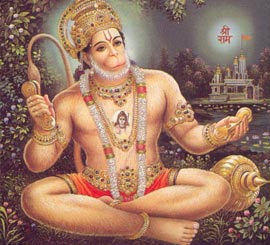
    Take for instance even God, Hanuman>

    He is reported to have existed both during Ramayana and Mahabharata periods.

    Same with Vasisha, his name meaning ‘one who is very austere and one who follows discipline’

    The list in Sanskrit is endless.

    In Tamil Sage Agasthya appears in many places ,transcending time.

    Avvaiyaar,has the same distinction.

    And take the instance of Tirukkural which is dated about 2000BC.

    Now there is no unanimity  about the persona of Thiruvalluvar.

    His name is linked with a man of a Community , called Valluvar

    And the name of the Community is Valluvar.

    The thoughts presented in the Thirukkuaral encompasses Jain and Buddhist thoughts which came later!

    If you look at the Bhagavad Gita, one would find  that it contains Buddhist and Jain Thoughts when Buddhism and Jainism were not even born!

    There is this point in Indian Philosophy which states that Time is Cyclic and that events happen and keep on happening in a Cycle ao that at any given point time, nothing seems to precede other for one who can Perceive.

    Then you  have Viswamitra banishing his offspring to Dravida Desa and their successor Apasthamba organizes Vedas for those South of Vindhyas.

    But we find Tamil literature quotes Mahabharata to the period before Vuswamitra sent his sons to South.

    But to confound you Tamils are mentioned in the Ramayana!

    And you have the concept of Siddhas in Tamil.

    The Siddhas are reported to be transcending time.

    One of the great Philosophical treatises in Ttamil, Thirumandiram  is written by Thirumoolar, a Siddha whose time is not accurately calculated( definitely before  Second Tamil Sangam) and his thoughts are Adi Shankara’s Advaita.

    Shankara dates around mid 14 Century at the latest?

    How come his thoughts, more or less the same, in Tirumandiram?

    The Archaeological reference throw more confusion in dating Tamil and Sanskrit in that each quoting the other as preceding them, but How?

    http://en.wikipedia.org/wiki/History_of_Tamil_Nadu

    http://en.wikipedia.org/wiki/Tamil_Sangams

  • Which History Is Correct Sanskrit Or Tamil

    There are references in the Vedas about the Tamil Kings, though they are very few.

    Some of the, nay most, them relate to Tamil as a Language of Dravida, meaning South,or Kings associated with Literature, things like Pearls, elephants  purchased from the Chera Kings, apart from Spices and fine cloth from Korkai.

    National Library,Kolkata
    Books, Manuscripts , National Library,Kolkata,Click to enlarge.Image from:National Library,Kolkata

    The earliest reference is in the Rig Veda where it is mentioned that Pearls were brought from the Tamils for offering in the Yagnas.

    Fine clothes, especially Saree Cloth was brought in for offering in the Yagnas.

    The reference to Tamil kings, which is most popular is the reference to a Chera King, Perunchotruudiyan Neduncheralaathan, who was reported to have fed both the armies of the Pandavas and the Kauravas in the Mahabharata war.

    There are references in the Ramayana to indicate Lord Rama visited the ancient cities of Tamil Nadu, including Vaitheeswaran Koil,Rameswaram , among other  places.

    The curious fact is that there are no references to the expeditions of Tamil Kings into the North, or the great battles of the South.

    Nor do I find any references to the valor and Philanthropy of the Tamil Kings in the Sanskrit Literature.

    The reference of King Sibi, who was reported to have offered the flesh of his thigh to a Bird in Tamil literature is often linked to Lord Rama’s ancestry of Ikshvaku Dynasty.

    This is open to debate.

    But the references to Sanskrit Literature , The Puranas and Epics are innumerable to recount in this post.

    So much so Tamil has a Ramayana and Mahabharata Edition in Tamil composed by Great Tamil Poets, like Kambar and Villputooraar.

    The earlier Tamil Books like Tholkaapiyam, Agathiyam,Thirumurugaatruppadai mention Vedas and Lord Muruga and mention Muruga as Skanda of the Vedas.

    But by dating one says that Rig Veda is the earliest literature of Mankind.

    It mentions the Tamils of Culture , so are the Ramayana and Mahabharata

    If the oldest literature of Sanskrit were to mention Tamil , Tamil must ant-date Sanskrit.

    Curiously enough, as I said earlier there is no mention of Tamil Kings or Literature in detail.

    My question is that which History is Correct?

    By Tamil’s admission and quotes of Vedic Life, Sanskrit and Vedas must have preceded the Tamils.

    Yet Sanskrit quotes Tamil/Tamils?

    Which history is correct?

    Are both of them correct?

    Will some readers contribute?

    *Inshall be posting more from Archaeology as well om this subject.

    The intention is, not to prove which is ancient Tamil or Sanskrit but to find the curious relation of these languages which  date the other ancient


  • Sanskrit is Not From Prakrit

    Prakrutham
    Prakrit, the Language of Man.

    The Argument that Sanskrit is not the first Language and definitely not the first Indian one is based on ‘Prakrit’

    Prakrit, it is argued, is the basis on which Sanskrit was built.

    Prakrit is defined as “original, natural, artless, normal, ordinary, usual”, or “vernacular“.

    It is not an independent Language as Sanskrit.

    Prakrit Grammar.

    Based On Valmiki Sutras

    The Prdhritarupdvatara, i.e. ' the descent of Prakrit forms ', 
    may be called a counterpart of the Laghukaumudi of Varadaraja. 
    The latter contains the more important of Panini's aphorisms, 
    arranged in a systematic manner so as to illustrate the 
    different chapters of Sanskrit grammar. Siriiharaja undertook 
    a similar arrangement of the rules of Prakrit grammar. 
    Like Varadaraja, he did not compose the rules themselves, 
    but drew on the same collection of Sutras which, in their 
    original sequence, are known to have been commented on by 
    Trivikrama, just as Piinini's aphorisms by the authors of the 
    Kdsihd commentary.
    
    .
    T, a very clear and careful Nagarl MS. of 92 pages, 
    written in 1904 by Pandit V. Srinivasa Sastri of Namakal, 
    who remarks on it as follows : — " The original is in the 
    possession of one Ayyasvami Sastriar, a pensioned Tahsildar 
    of Kumbakonam. I was allowed to take a copy of it in his 
    house through the influence of Diwan Bahadur R.. Raghunatha 
    Rao. During my last vacation I went to Tiruvasalore, my 
    native place, which is at a distance of 4 miles from 
    Kumbakonam. I used to go daily to Ayyasvami Sastriar's 
    house at Kumbakonam from my native place and take the 
    copy of Simharaja. Within thirty days a rough copy in 
    Grantha characters was taken, which looks very ugly; for 
    the copy was made in a hurry. After the reopening of my 
    school I came to Namakal, where I finished a good fresh 
    copy in Nagarl characters, which is sent to your address. 
    The original is written in Grantha letters 200 years ago." Curiously enough, it can be definitely proved that the 
    Grantha original of the Nagarl MS. T must either be a copy, 
    or go back to a copy, of the Malayalam MS. R. For the 
    portion of the Prakrit arupdvatdra which occupied the missing 
    leaves of R (73-5) is missing in T as well, and the colophon 
    of T contains a peculiar mistake which is due to a correction 
    made by the writer of R.- In spite of this fact, some of the 
    readings of the MS. T are decidedly preferable to the 
    corresponding ones of R, and it must be supposed that the 
    text of the Grantha original of T was corrected by an 
    intelligent Pandit either conjecturally or with the help of 
    other MSS. Though my text is chiefly based on R, I was 
    sometimes forced to adopt the readings of T, owing to their 
    greater clearness and correctness(ref: https://ia700202.us.archive.org/23/items/prakritarupavata00simhuoft/prakritarupavata00simhuoft_djvu.txt
    .
    Valmiki , who composed The Ramayana, wrote it in Sanskrit.
    
    For an Epic with the beauty of Ramayana must have had Grammar.
    A Language takes years to form and Grammar takes still more time.
    Using that in an Epic, it should have taken hundreds of Years.
    Hence Sanskrit precedes Prakrit.
    Sanskrit mentions that Sanskrit is Deva Basha, the Language of Gods, while Prakrit was calls the Language of Man, Manusha Basha.
    The inference is that while Sanskrit was used for Literary works, Prakrit was in daily usage .Panini's Grammar precedes Prakrit Grammar
    Calling Sanskrit as having been derived from Prakrit is akin to declaring cockney as the Mother of English Language.
    There is aview that most of the Jain Literature was written in Prakrit ans hence Sansrit is preceded by Prakrit.
    What people forget is jainism is of later origin when compared to Hinduism.
    Another ancient language tamil mentions Sanskrit and Prakrit and declares Sanskrit as the language of Indian Philosophy.
    The argument that Sanskrit was not the original Language  is pure idiotic wishful thinking.
    Lets us see now why the argument Sanskrit is not from India is erroneous.

    http://ramanisblog.in/2013/11/20/sanskrit-not-hindu-language-nor-rig-veda/

  • Sita was Not Abducted By Ravana Koorma Purana

    I have been reading the Eighteen Puranas in detail for the past couple of days.

    La tristesse de Sîtâ (Preah Khan, Angkor)
    La tristesse de Sîtâ (Preah Khan, Angkor) (Photo credit: dalbera)

    Though I knew there are some differences between the Puranas, I never did realize that there could be something fundamentally contradictory between their narrative details of the Ithihasa, especially the Ramayana!

    Let me highlight afew of them.

    Ravana Did Not Kidnap Sita to Lanka.

    Though many of us are aware that there are various versions of The Ramayana,we assume that would be very minor,

    For instance, some Ramayans state that Sita was not physically abducted directly by Ravana,”

    a)The ground on which she stood was lifted by Ravana and he took of.

    b)Ravana lifted Sita by her hair.

    c)Sita was lifted by Ravana holding her by her hips.

    But Valimiki states that Sita was abducted.

    “In Aaraya kandam, Sarkam 49, page 151,
    Sri C.R. Srinivasa Iyengar translates that
    Ravana lifts Sita by his right hand by touching her thighs.
    It shows Sita’s willingness
    The point is that Ravana’s head will burst and his body will be burnt
    if he touches a unwilling woman
    It was a curse on Ravana”(http://in.answers.yahoo.com/question/index?qid=20110323111752AAa7ajG)
     
    But leaving these points apart, there has been a aview that Ravana did not abuct the Real Sita at all!
     
     
    I used to brush it aside.
     
    But I found a refernce to this in The Koorma Puarana.
     
    It states that Sita knew it was Ravana who had come in the form of a Sanyasi and hence she ,with the blessings of Agni,had a Maya Sita created and it was this Sita Ravana abducted and when when the Maya Sita enetred into the Fire after the killing of Ravana by Lord Rama, the Real Sita emerged and the Maya Sita dispeeared in the fire.
     
    This is explained while extolling the Virtuous that those who are vituous will come to no harm.
     
    The same is stated in The Brahma Vaivastha Purana.
     
    Though the Puranas are old and are also authentic I still belive the Valimki version because the additional details provided in The Ramayana by Valmiki on Lord Ram‘s Birth,Death, His
     
    Date of Birth are found to be true9Please read my posts on these).
     
    Probably these are interpolations in the Puranas to insist on the Glories of Virtues.