Tag: Puranas

  • Morality For the Society First By Sanatana Dharma To World

    Sometimes I receive interesting comments.

    They are straight from the heart, they do not pretend they know things even though many may find it difficult to admit.

    In an Ocean called Hinduism., one gets doubts all the time and one is encouraged to question it.

    Atharva Veda on Effort. Atharva Veda on Effort.

    When I keep posting on researched articles, I find people are interested, intrigued and many have started reading Sanatana Dharma Texts, setting aside the prejudice of them being myths(propagated by the west) in anew Light.

    At the same time they get some  doubts and they convey it to me.

    Some through direct email or by comments to the Posts .

    One such comment is below.

    ‘Even though I am Hindu and yeah I don’t believe in idol worshipping but sometimes I doubt what was the first society or first rules made on earth whether it’s Hinduism or other Relevant religion.. Please can u light on some confusion’

    It requires a Hinduism to  allow you to say that you do not follow some of its tenets and yet say I am a Hindu!

    Sanatana dharma does not call it as heresy.

    It calls it as enquiry which it feels it ought to clarify and clear.

    As to the Moral principles rules by a society for the first time in the world, it is undoubtedly Hinduism.

    It is in the form of Vedas.

    Vedas are nothing but the exposition of Dharma, loosely translated as righteousness.

    It is much more than that.

    Dharma is the Natural state of Being, unsullied by experience.

    The effort of the Vedas lie in the direction of making the Pure Self to realize its pristine nature.

    In this effort many deities are worshiped in the abstract form, which later became Gods with forms.

    For more on this please read my posts.

    Does God have Name and Form

    Why many Gods in Hinduism

    In this endeavour, Hinduism lays down rules throughout the Vedas.

    Right from the Rig Veda, which states,

    ‘bathram karnebi srunuyaama devaa”

    Let Noble thoughts reach my ears from all directions, thereby indicating what is good and what is not Good.

    As disipline for a Man the Taittriya Explains the duties and responsibilities of an individual.

    In Shikshavalli,

    Bhriguvalli,

    Narayanavalli, and Ananadavalli.

    In this the responsibility of a celibate, householder,the semi renounced, and the renounced are explained in detail

    Not only this.

    These texts expalin the necessity of respecting nature,Plants, animals, food, air.

    Shikshavaali begins with ‘Annanna Nindhyaath Tat vratahm’

    Take a Vow,

    Never insult food( By not taking it or wasting it or eat alone

    Goes on to add,

    It is because of food one lives and one is made of food.

    If a religion can pay so much respect to such an intricate issue, by making it a part of Teaching syllabus at the beginning, can there be any doubt which Religion, Society gave the first Rules to the Mankind?

    It is Sanatana Dharma, first through the Vedas later through the Smritis, Manu Smriti being one of them.

    • I shall be writing in detail on Taittiya Mantra Kosa.
  • Ra Ma Is Bulgarian For Temple Rama In Bulgaria

    I had written about the presence of Sanatana Dharma in Russia,Baltic Region.

    Vedic Traces in Lithuania.

    “Traditionally, the Vedic peoples of Lithuania worshipped the Ašvieniai, the divine horse twins, related to the goddess Ūsinis. They are said to pull the Sun Chariot through the sky. The Lithuanian people continue to adorn their roof tops with the symbol of the divine horse twins in order to receive protection for the household…

    Asvini Kumaras Lithuania

    Now to Bulgaria.

    Bulgarian and Sanskrit etymological similarities suggest the presence of Rama in Bulgaria.

    This similarity also points out to the Pyramids and the influence of Rama in Europe.

    I had written on the Empire of Rama.

    Rama worshiping Shiva Linga, Shiva Looks on.jpg Rama worshiping Shiva Linga, Shiva Looks on.

    Google Rama Bulgaria, you shall be surprised at the Number of Resorts, Golf courses in Bulgaria.

    A Sample.

    Location: Balchick , Bulgaria
    Type: Residential/Hotel
    Size: 66,490 sqm possible built-up area
    Gross development value: €15,7 million

    Black Sea Rama Golf & Country Club is an exclusive gated seaside community featuring a world class 18-hole signature golf course which design and construction have been managed by Gary Player Design. The site is located on a cliff in North East Bulgaria and has a wonderful view of the Bulgaria’s Black Sea coast.

    Black Sea Rama is an ideally accessible area for holiday or second homes. Varna international airport is just 30 minutes away and the City itself has extensive shopping facilities, theatres, restaurants, bars and many other tourist attractions.

    The site is currently partially developed with the first phase of semi-detached villas completed and a number of completed and partially constructed individual villas. Landmark retains freehold interest in two large plot areas (named J and G). Plot J is situated on the southern edge of the site and measures 46,365 sq.m. It has the benefit of frontage to the Black Sea shoreline with the benefit of sea views. Plot G is located further inland on the south western edge of the main site and measures 15,000 sq.m.”

    “In Arabic, pyramid is said Hram. This comes from the Bulgarian word Hram meaning Temple. Hram is a Bulgarian word whose ancient origin dates back thousands of years and that means God Mother Temple (Ra + Ma).

    Ra is the absolute god of the ancient Bulgarians and Ma is the great goddess, mother of matter and energy. In the people of HRAM (Hora is Bulgarian word for people) you can feel the energy of Mother God Rama. “..

    “In the past, our wise ancestors Bulgarians used geomagnetic force to build their hram, pyramids, temples and shrines in rocky mountainsides or buried in deep wells.” Geomagnetic force is part of vril energy, commonly used long ago. “They used the force of Mother Earth Ge / Ga because they knew that the human body is made of earth, and his soul is the spirit of God Ra – spirit they called Ha. This powerful geomagnetic energy facilitated their contact with the Spirit God Mother or Ha Ra Ma. That’s why they named Harama (hram) their megalithic temples.

    The Spirit of God through Ra Ma, the goddess of matter and earth. Until today the pyramids in Egypt are called HRAM, Ahram. However, over the ages, this knowledge has been obscured and destroyed “..

    Anything directly or indirectly related with Rama was indeed mutilated, fake or destroyed. This makes it difficult for the researcher to talk about the missing remains. We must therefore examine the language – which remains and does not lie. Harama in old Bulgarian means Spirit of Ra and Ma, says the Bulgarian author. Very well. I also see an evocation of the primitive trinity of Hyperborean and/or Atlantean gods. Ha ie Holy Spirit – Ra, ie Father God – Ma ie Mother Goddess. Under different forms, this divine trinity can be found in many ancient religions until now.

    This explains many things. During the era of the Lion, the gods astronauts returned to earth. Their leader was Ra, the sun god, who is united to Ma, the Matriarch. She was the Great Mother, she managed the planet with magic and giving.

    Millennia later, during the era of Aries, a young Hyperborean druid terminates the matriarchy which has became a mess of criminal witches mistreating males with sadism.’

    *I had witten on the Hyperborean vedic Link

    ..

    Hram, Bulgarian word for “temple”,  evokes the architect of Solomon’s temple, Hiram. Same name. And further evidence that the temple of Jerusalem was not dedicated to Yahweh, but to HA RA MA, the original Atlantéo-Hyperborean trinity.

    Bulgarian temple is said Hram or Ahram, hence Ashram, Hindi word for temple. Where does this strong relationship between the ancient Bulgaria and the saga of Rama? Some Bulgarian authors are convinced that the Bulgarian is the common language of the Maya and ancient Bulgarian called Thrace.


    They highlight some obvious similarities between the old Europe and America on the religious worship of the sun or linguistics, language very close orally.

    But we should probably look further, towards the language of the Atlanteans and Celts. Oral transmission was the rule and the glyphs have evolved over the ages, we must learn to decode through the cults, myths and common traditions. It is quite true that there are commonalities to these two civilizations. They share the same stone, strong technological knowledge, great spiritual kinship and language with great similarity.

    To those who may be surprised to find the same words in two places as distant as India and Bulgaria, I would suggest to read other episodes in the life of druid Ramos of Hyperborea. They will discover that ancient Rama road to distant Asia is dotted with places, people or events that still celebrate his precious name, even if his memory is forgotten. The Druid Ramos became Ram for the Celts, he crossed all Europe and Asia to bring peace, prosperity and spiritual elevation. He brought a new way of thinking, behaving and talking, hence many Rama traditions still remain in Western and Eastern Europe, around Mediterranean Sea, in the Balkans and Middle East, as well as in India, Tibet and China, as we have seen. ”

    ** Please read my Post Brahmins , ancestors of Celts; Danube River of Dhanu,Por Baijn, Russia, Pradhyumna’s City.

    http://eden-saga.com/en/thrace-rama-hram-bulgaria-harama.html

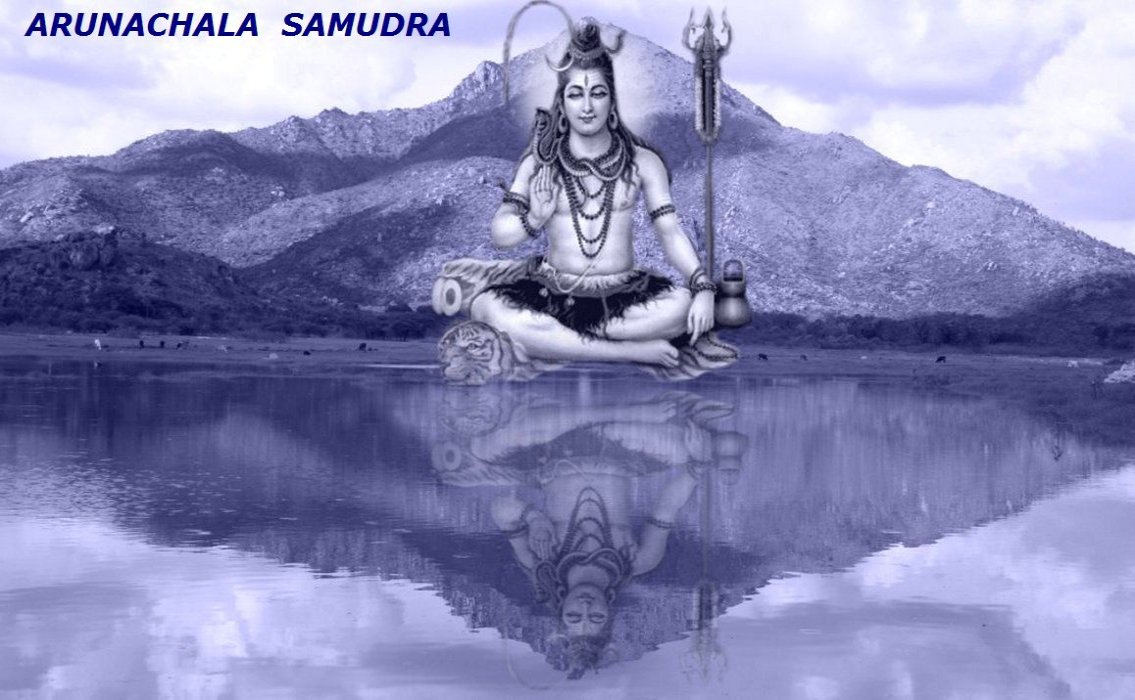
  • Shiva Thiruvannamalai At The Instant Of Earth’s Creation By Brahma

    Shiva Thiruvannamalai At The Instant Of Earth’s Creation By Brahma

    The Puranas speak of Time on a Huge scale.

    There are four Yugas and they are created, destroyed and recreated.

    According to Hinduism, destruction is a misnomer.

    It is hidden.

    Curious enough modern Quantum Physics calls it in a different way as projection of Multi Verses.

    Aarati to Tirupati Balaji Moolavar.jpg
    Aarati to Tirupati Balaji Moolavar.

    I have written a couple of articles on Multi verses in Hinduism.

    The Time scale of Sanatana Dharma has the following points.

    1. The Universe is created, hidden and re projected.
    2. This happens at three-time frames called  Manvantara, Kalpa and Yuga.
    3. Three kinds of cataclysms take place.One is water, Another by Fire and another is total darkness each of these correspond to the dissolution at the end of Manvantara, Kalpa and yuga.
    4. The Universe is eternal.
    5. Time is eternal.
    6. Time is non linear.
    7. Time is Cyclic.
    Arunachala Mountaion, Pre historic.jpg
    Arunachala Mountaion, Pre historic.

    Brahma’s day is divided in one thousand cycles (Maha Yuga, or the Great Year). Maha Yuga, during which life, including the human race appears and then disappears, has 71 divisions, each made of 14 Manvantara (1000) years. Each Maha Yuga lasts for 4,320,000 years.

    Manvantara is Manu’s cycle, the one who gives birth and governs the human race. before & after each manvantara there’s a sandhikal as long as krutyuga & in that time there is all water on earth.

    Each Maha Yuga consists of a series of four shorter yugas, or ages.

    The yugas get progressively worse from a moral point of view as one proceeds from one yuga to another. As a result, each yuga is of shorter duration than the age that preceded it.

    The current Kali Yuga (Iron Age) began at midnight 17 February / 18 February in 3102 BC in the proleptic Julian calendar (Year 6898 of the Holocene Era.) kalpa=ahoratra of brahma. Space and time are considered to be maya (illusion). What looks like 100 years in the cosmos of Brahma could be thousands of years in other worlds, millions of years in some other worlds and 311 trillion and 40 billion years for our solar system and earth. The life span of Lord Brahma, the creator, is 100 ‘Brahma-Years’.

    One day in the life of Brahma is called a Kalpa or 4.32 billion years.Every Kalpa creates 14 Manus one after the other, who in turn manifest and regulate this world. Thus, there are fourteen generations of Manu in each Kalpa. Each Manu’s life (Manvantara) consists of 71 Chaturyugas (quartets of Yugas or eras). Each Chaturyugais composed of four eras or Yugas: Satya, Treta, Dwapara and Kali. if we add all manvantaras(4320000x71x14)as long as 4 chaturyuga will be missing its because sandhikaal.after & before each manvantara so 15 sandhikaal The span of the Satya Yuga is 1,728,000 human years, Treta Yuga is 1,296,000 human years long, the Dwapara Yuga 864,000 human years and the Kali Yuga432,000 human years.[8] When Manu perishes at the end of his life, Brahma creates the next Manu and the cycle continues until all fourteen Manus and the Universe perish by the end of Bramha’s day. When ‘night’ falls, Brahma goes to sleep for a period of 4.32 billion years, which is a period of time equal one day (of Brahma) and the lives of fourteen Manus. The next ‘morning’, Brahma creates fourteen additional Manus in sequence just as he has done on the previous ‘day’. The cycle goes on for 100 ‘divine years’ at the end of which Brahma perishes and is regenerated. Bramha’s entire life equals 311 trillion, 40 billion years. Thus a second of Brahmā is 98,630 years. Once Brahma dies there is an equal period of unmanifestation for 311 trillion, 40 billion years, until the next Bramha is created. During one life of Brahma there are 504 000 Manus (Vedic “Adams”) are changing, there are 5040 Manus are changing during one year of Brahma, and 420 Manus manifest during one month of Brahmā. (See: List of numbers in Hindu scriptures for more such numeric details).

    During the course of my research into Sanatana Dharma I stumbled across these facts which are authenticated by Modern Science.

    1. Thiruvannamali in Tamil Nadu, India is over 3.5 Billion Years old.
    2. Shiva Uma Marraige took place 40 Millionyeas ago.
    3. Tirupati is over 2100 million years old.
    4. An ancient site is Chennai, Tamil Nadu is dated around a Million years
    5. Jwalapuram ,Kurnool, Andhra Pradesh, India is dated around 74,000 years

    I wanted to look into this taking into account these points,The Age of Earth as stated by the Hindu Puranas and by Modern science.

    Now according to Hindu Cosmology, the earth is .4.32 Billion years old.

    The puranic view asserts that the universe is created, destroyed, and re-created in an eternally repetitive series of cycles. In Hindu cosmology, a universe endures for about 4,320,000,000 years (one day of Brahma, the creator or kalpa) and is then destroyed by fire or water elements. At this point, Brahma rests for one night, just as long as the day. This process, named pralaya (literallyespecial dissolution in Sanskrit, commonly translated as Cataclysm), repeats for 100 Brahma years (311 Trillion, 40 Billion Human Years) that represents Brahma’s lifespan. Brahma is regarded as a manifestation of Brahman as the creator.

    Modern scientific view is that the earth is…4.54 Billion years + or – 5 Billion years!

    The age of the Earth is 4.54 ± 0.05 billion years (4.54 × 10⁹ years ± 1%). This age is based on evidence from radiometric age dating of meteorite material and is consistent with the radiometric ages of the oldest-known terrestrial and lunar samples.

    Following the scientific revolution and the development of radiometric age dating, measurements of lead in uranium-rich mineralsshowed that some were in excess of a billion years old.The oldest such minerals analyzed to date—small crystals of zircon from the Jack Hills of Western Australia—are at least 4.404 billion years old. Comparing the mass and luminosity of the Sun to those of other stars, it appears that the Solar System cannot be much older than those rocks. Calcium-aluminium-rich inclusions  – the oldest known solid constituents within meteorites that are formed within the Solar System – are 4.567 billion years old, giving an age for the solar system and an upper limit for the age of Earth.

    It is hypothesised that the accretion of Earth began soon after the formation of the calcium-aluminium-rich inclusions and themeteorites. Because the exact amount of time this accretion process took is not yet known, and the predictions from different accretion models range from a few millions up to about 100 million years, the exact age of Earth is difficult to determine. It is also difficult to determine the exact age of the oldest rocks on Earth, exposed at the surface, as they are aggregates of minerals of possibly different ages..

    Now Thiruvannamalai,Tamil Nadu, India is 3.5 Billion years old!

    In Puranic version of Brahma’s creation, the first creation for this kalpa was around 4.32 Billion Years.

    In such great stretches of Time 5 to 10 billion years is allowed in calculation.

    Hence it is probable Shiva was at Thiruvannamalai when Brahma created the world around 4.32 Billion Years ago!

    I shall be exploring this data from other angles as well.

    Citations.

    https://en.wikipedia.org/wiki/Age_of_the_Earth

    https://en.wikipedia.org/wiki/Hindu_cosmology

    https://ramanisblog.in/2015/07/08/arunachala-shiva-thiruvannamalai-three-billion-years-old-gsi/

    https://ramanisblog.in/2014/07/09/hindus-lived-74000-years-ago-survey-finds/

    https://ramanisblog.in/2015/07/11/tirupati-tirumala-2100-million-years-old-geology/

  • Why Vasishta Not Found In South , Shiva Left Dravida?

    It has come to my to notice that Vasishta Gotra is not found much in the South of Vindhyas as much as it is in the North through a shrewd observation by a reader while commenting on mu Post Which Gotra is Superior?

    Yes, it is a fact that Vaishista Gotra is very limited in the South.

    Sage Vasishta.jpg Sage Vasishta.

    One may also notice that Vasishta comes into prominence only after Ramayana despite the fact that Vasishta is one of the Saptha Rishis, who are eternal

    And he was the Sage who is also one of the Nava Prajapathis, Nine Prajapathis amomg Daksha, whose Yaaga was destroyed by Veerabhadra on the orders of Lord Shiva.

    Vasishta composed (rather grasped and expressed will be the correct term)  Mandala 7 of the Rigveda. as the Chief.

    The Sag Viswamitra yearned for The Title of Brahma Rishi from Vasishta even though he was called such by even Brahma.

    Why is it that such a great personality does not find a prominent place before Ramayana?

    The Bhagavatha Purana states that the ancestor of Lord Rama Satyavrata Manu  left Dravida(South)  for Ayodhya and his son Ikshvaku founded the Ikshvaku Dynasty.

    This was necessitated by the great Tsunami in the south as recorded in Tamil classical literature.

    Lord Shiva left , at the same time,along with his son Ganesha moved out through the western coast of Bharatavarsha, traveled through the middle east, Europe, Africa, Americas,and finally reached Arctic.

    And it was in the Arctic the Rig veda was compiled.

    I have detailed post on this, as for all the observations I have made here and exhaustive research was done by Bal Gangadhar Tilak in his Book Arctic Home of the Vedas.

    after the rig Veda was composed Shiva and Ganesha set out for India through Russia and Khyber Pass .

    This has been misinterpreted as Aryan Invasion.

    The archeological evidence linking Ganesha and Shiva throughout the world would strengthen this point.

    Now Vasishta, being a Manu and a Parajapati obviously left along with Shiva and while Maheswara sukthas are by Shiva, Rig veda important portions were done by vasishta and others.

    It may be of interest to note that there is a Temple For Daksha in Kerala( I have a Post on this)

    Thus ,as Vasishta left along with Shiva at the time of Tsunami there are minimal references to Vasishta in the South.

    By the time they returned to india, and Vasishta had become the Kula Guru of Ikshvaku Dynasty, years had gone by.

    In the south the other progeny of Shiva, Subrahmanya, called as Murugan in Tamil spread Santana Dharma in South East Asia and developed the Santana dharma further in the south.

    That is the reason one finds the Murugan is identified with Tamil and Shiva being treated as the Adhi Siddha and as ‘Ancient of the Ancients’

    Munnaip Pazhamporutku Munnaip ParamPorule – Tamil.

    Hnece Vasishta lineage was limited in the south and as he became the Kula Guru after settling down in the North his clan expanded there.

    Hence ther are less Vasishta Gotra in South.

    Vashishtha (Sanskrit: वशिष्ठ, वसिष्ठ, IAST: Vaśiṣṭha, Vasiṣṭha, Thai: Vasit, Tamil: வசிட்டர்) is one of the Saptarishis (seven great Rishis) in the seventh, i.e. the presentManvantara, or age of Manu.[1] Vashista is a manasputra of God Brahma. He had in his possession the divine cow Kamadhenu, and Nandini her child, who could grant anything to their owners. Arundhati is the name of the wife of Vashista. RigVeda 7:33 mentions Vashishtha rishi as son of MitraVaruṇa and Urvasi.[2][3]

    Vashistha, as one of 9 Prajapatis, is credited as the chief author of Mandala 7 of the Rigveda. Vashistha and his family are glorified in RV 7.33, extolling their role in the Battle of the Ten Kings, making him the only mortal besides Bhava to have a Rigvedic hymn dedicated to him. Another treatise attributed to him is “Vashistha Samhita” – a book on the Vedic system of electional astrology

    More on VasishtaPrajapati to follow.

    Citation.

    https://en.wikipedia.org/wiki/Vashistha

  • Manu Dravida Ancestor Precedes Daksha Dravida Sanatana Dharma

    Manu Dravida Ancestor Precedes Daksha Dravida Sanatana Dharma

    I was intrigued by the fact that the Shiva worship starts with Daksha, who is the first Human being by Brahma for each Yuga.

    And Daksha Kingdom was in the North of the Vindhyas.

    Daksha’s daughter married Shiva.Daksha with Veerabhadra.jpg “Painting on paper depicting ‘Virabhadra The red-hued deity is coiffed exactly like Śiva. This is an unusual rendering of Virabhadra. The face of the Ganga peeps out of the dreadlocks, while loose jatas fly around his head. On his forehead is a prominent tripundra. Side fangs protrude from his mouth and a bushy moustache grows on his upper lip. In his upper right hand is a damaru, in his upper left hand a flame, the lower right hand carries a sword and the lower left a buckler. The attributes in his upper hands are unusual, as they generally bear the bow and the arrow. He is dressed in a dhoti adorned by sashes on the sides and an angavastra is draped on his elbows. Among his ornaments is a long white garland. On his feet are toe-knob sandals. At his left stands the ram-headed Daksha, sporting tripundra marks on his forehead and arms dressed in dhoti and with the angavastra tied around his hips.” Image credit.”Virabhadra Daksha” by Unknown – http://www.britishmuseum.org/research/search_the_collection_database/search_object_details.aspx?objectid=3058344&partid=1&output=Places%2f!!%2fOR%2f!!%2f41361%2f!%2f41361-2-20%2f!%2fPainted+in+Thanjavur%2f!%2f%2f!!%2f%2f!!!%2f&orig=%2fresearch%2fsearch_the_collection_database%2fadvanced_search.aspx&currentPage=1&numpages=10. Licensed under Public Domain via Wikimedia Commons – https://commons.wikimedia.org/wiki/File:Virabhadra_Daksha.jpg#/media/File:Virabhadra_Daksha.jpg’

    Vishnu worship seems to have been later than that of Shiva in the South, Dravida worship.

    Rama’s ancestor Satyavrata Manu migrated from the South to Ayodhya, where his son Ikshvaku founded the Ikshvaku Dynasty..

    If Daksha were to be the first Human being created then how do we account for Manu?

    Manu seems to pre date Daksha as,

    1.Daksha came later, in the beginning of the Yuga, whereas Manu is for Manvantara.

    A Manu’s lifespan is 71 Mahayugas (306,720,000 years).

    ‘Yuga  is the name of an epoch or era within a four age cycle. According to Hindu cosmology, life in the universe is created and destroyed once every 4.1 to 8.2 billion years,] which is one full day and night for Brahma. The lifetime of Brahma himself believed to be 311 trillion and 40 billion years as per Hindu cosmology.’

    Manus and Saptha Rishis are for every Manvantara..

    One of the Saptha Rishis is Agastya.

    ‘The earliest list of the Seven Rishis is given by Jaiminiya Brahmana 2.218-221: Vashista, Bharadvaja, Jamadagni, Gautama, Atri,Visvamitra, and Agastya, followed by Brihadaranyaka Upanisad 2.2.6 with a slightly different list: Gautama and Bharadvāja, Viśvāmitra and Jamadagni, Vashiṣṭha and Kaśyapa, and Atri, Brighu. The late Gopatha Brāhmana 1.2.8 has Vashiṣṭa, Viśvāmitra, Jamadagni, Gautama, Bharadvāja, Gungu, Agastya, Bhrighu and Kaśyapa..’

    We find Agastya in the South advising Rama in the battle field not to lose heart and chant Adhitya Hrudayam on Lord Surya to win the war against Ravana.

    Then we have Lord Shiva as the Father of Tamil Language.

    Of course Sanskrit is also from Shiva’s Damaru, Maheswara Sutras.(Please read m Post on this)

    We find the legends of Shiva in the north from the marriage of Sati ,daughter of Daksha with Shiva.

    Nothing more of Shiva is mentioned in these North Indian Legends.
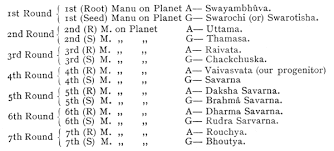
    Manus, Hinduism.Jpg Manus

    ‘In The Immortals of Meluha, Manu is said to be a prince from south India. His family, the Pandyas having ruled the mythical land of Sangamatamil for many generations. The decadence of the Kings incurred the wrath of the gods. A great deluge submerged the entire civilization. Manu having foreseen this escaped with his followers to the higher northern lands. Manu turned into an ascetic. Eventually Manu’s prayers pacified the gods and the water abated.

    In the South Shiva worship has been in vogue much earlier as Adi Shiva, The Silent Teacher,Dakshina Murthy,First Yogi who initiated Agastya, who initiated Bhogar and Kriya Babaji.

    The we have Lord Subrahmanya called as Murugan and His worship is quite old.

    Though the Tamil Grammar, earliest of Tamil works assigns Varuna, Indra, Vishnu, Murugan(Subrahmanya), and Devi to each of the landmass , Kurinji,Marutham, Mullai, Neydhal and Palai, Shiva always remains in the background as the Chief.

    He is called as the Ancient of the Ancients.

    ‘Munnai Pazhamprutkum Munnaip Pazham Porule’

    He is also called Pirva Yaakaip Periyon’

    That is Eldest though Unborn.

    Sanskrit also calls Him as Ayonija, one who does not stay in the womb.

    We have a lot of references to the South in the Puranas and Ithihasas about Tamils.

    ‘Srimad
    Bhagavatam 11.5.38-40
    kritadishu praja rajan
    kalav icchanti sambhavam
    kalau khalu bhavishyanti
    narayana-parayanah
    kvacit kvacin maha-raja
    dravideshu ca bhurisah
    tamraparni nadi yatra
    kritamala payasvini
    kaveri ca maha-punya
    pratici ca maha-nadi
    ye pibanti jalam tasam
    manuja manujesvara
    prayo bhakta bhagavati
    vasudeve ‘malasayah
    SYNONYMS
    krita- adishu — of Satya and the
    other earlier ages; prajah — the
    inhabitants; rajan — O King; kalau —
    in Kali-yuga; icchanti — they want;
    sambhavam — birth; kalau — in Kali;
    khalu — certainly; bhavishyanti —
    there will be; narayana- parayanah —
    devotees who dedicate their lives to
    the service of Lord Narayana; kvacit
    kvacit — here and there; maha-raja —
    O great monarch; dravideshu — in
    the provinces of South India; ca —
    but; bhurisah — especially
    plentifully; tamraparni — named
    Tamraparni; nadi — the river; yatra —
    where; kritamala — Kritamala;
    payasvini — Payasvini; kaveri —
    Kaveri; ca — and; maha- punya —
    extremely pious; pratici — named
    Pratici; ca — and; maha-nadi — the
    Mahanadi; ye — those who; pibanti —
    drink; jalam — the water; tasam — of
    these; manujah — humans; manuja-
    isvara — O lord of men (Nimi);
    prayah — for the most part; bhaktah
    — devotees; bhagavati — of the
    Personality of Godhead; vasudeve —
    Lord Vasudeva; amala- asayah —
    having spotless hearts.
    TRANSLATION
    My dear King, the inhabitants of
    Satya-yuga and other ages eagerly
    desire to take birth in this age of
    Kali, since in this age there will be
    many devotees of the Supreme Lord,
    Narayana. These devotees will
    appear in various places but will be
    especially numerous in South India.
    O master of men, in the age of Kali
    those persons who drink the waters
    of the holy rivers of Dravida-desa,
    such as the Tamraparni, Krtamala,
    Payasvini, the extremely pious Kaveri
    and the Pratici Mahanadi, will
    almost all be purehearted devotees(
    of the Supreme Personality of
    Godhead, Vasudeva.(http://en.m.wikipedia.org/wiki/Alvars)

    ..

    ाः तस्याम्
    दिशि सुदुर्गमाः |
    कपीइशः कपि मुख्यानाम् स तेषाम्
    समुदाहरत् || ४-४१-७
    7. tasyaam dishi = in that, direction
    of compass; su dur gamaaH = verily,
    impossible, to pass – highly
    impassable; ye ke cana = which of
    those few; sam ut deshaaH = well,
    intended, countries – some countries
    that need be explained; about them;
    saH kapi iishaH = he that, monkeys,
    king of – Sugreeva; teSaam kapi
    mukhyaanaam = to them, monkey,
    prominent ones; sam udaaharat =
    well, illustrated – gave a picture of.
    The king of monkeys Sugreeva gave a
    picture about some of the highly
    impassable countries available in
    southern quarter that need an
    introduction to those prominent
    monkeys bound south. [4-41-7]

    सहस्र शिरसम् विंध्यम् नाना द्रुम
    लता आयुतम् |
    नर्मदाम् च नदीम् रम्याम् महोरग
    निषेविताम् || ४-४१-८
    ततो गोदावरीम् रम्याम् कृष्णावेणीम्
    महानदीम् |
    वरदाम् च महाभागाम् महोरग
    निषेविताम् |
    मेखलान् उत्कलाम् चैव दशार्ण
    नगराणि अपि || ४-४१-९
    अब्रवंतीम् अवंतीम् च सर्वम् एव अनुपश्यत
    |
    विदर्भान् ऋष्टिकान् चैव रम्यान्
    माहिषकान् अपि || ४-४१-१०
    8. sahasra shirasam = thousands, of
    heads [crests]; naanaa druma lataa
    aayutam = numerous, trees,
    climbers, abounding in; vindhyam =
    Vindhya Range; mahaa uraga ni
    Sevitaam = great, snakes, adored by;
    ramyaam narmadaam nadiim ca =
    delightful one, Narmada, river, also;
    tataH = then; ramyaam godaavariim
    = wonderful one, River Godavari;
    mahaanadiim = River Mahaanadi;
    kR^iSNaaveNiim = River Krishnaveni,
    or Krishna; mahaa bhaagaam =
    highly, auspicious one; mahaa uraga
    niSevitaam = by great, snakes,
    adored by; varadaam ca = River
    Varada, also; mekhalaan utkalaam
    caiva = Mekhala, Utkala [in
    territories,] also thus; dashaarNa
    nagaraaNi api = Dashaarna, in cities,
    also; abravantiim avantiim ca =
    Abravanti, Avanti, also; vidarbhaan
    R^iSTikaan caiva = Vidarbha,
    Rishtika, also, thus; ramyaan
    maahiSakaan api = charming
    [kingdom,] in Maheeshaka, even;
    sarvam eva anu pashyata = all
    [everywhere,] thus, closely, see –
    search thoroughly.
    “Search the thousand crested
    Vindhya mountains abounding with
    numerous tress and climbers, then
    the delightful Narmada river
    coursing a little southerly to that
    range, which is adored by great
    snakes, along with wonderful River
    Godavari, as well as River
    Krishnaveni and Maha Nadi, and
    then the greatly auspicious River
    Varada which is an adoration to
    great snakes. And the territories of
    Mekhala, Utkala, the cities of
    Dashaarna, kingdoms of Abravanti,
    Avanti, and Vidarbha, also thus the
    charming kingdom of Maheehaka, are
    to be searched thoroughly. [4-41-10] Valmiki Ramayana Valmiki Ramayana – Kishkindha Kanda – Sarga 41

    We have references to a Tamil King Perunchotru Udiyan Cheralaathan performing Tharpana for the dead in the Mahabharata War in Chera Kingdom.

    He also provided food for both Kaurva and Pandava Armies during the Mahabharata war.

    Vedas mention the spices , Peacocks, Special sandalwood.elephants being imported from the South.

    During Draupadi Swayamvara Tamil Kings were present.

    Tamil Kingas attended Rama and Sita Marriage at Mithila.

    The vanaras were in Kishkinta pre dating Rama and were Shiva worshipers.

    Hanuman is one and is considered to be an Amsa of Shiva, some say He is an Avatar of Shiva.

    Considering all these facts and admitting these facts provided by the Vedas,Puranas,Ramayana and Mahabharata, it is quite probable that he Sanatana Dharma was in place much before what is found in the North.

    Please refer my posts on Shiva’s Marriage date. Agastya Date, Ramayana Mahabharata Dates,Ram’s ancestor Satavrata Manu being a Dravida,Thiruvannamalai Billion Year Old and many more.

    Inputs welcome.

    Citation.

    http://historum.com/asian-history/63682-rama-king-cholar-solar-dynasty-9.html

    https://en.wikipedia.org/wiki/Manu_(Hinduism)#Lifespan

    https://en.wikipedia.org/wiki/Daksha

    The references in Sanskrit on Tamil are numerous.

    I have quoted only a few.

    Tamil references on Sanana Dharma, Vedas, Ramayana and Mahabharata are much more.