Tag: Panchanga

  • Saptha Rishi Calendar India Oldest Sets Preset Era 6676 BC

    Saptha Rishi Calendar India Oldest Sets Preset Era 6676 BC

    The measurement of Time in India is unique.

    While other calendars take Time to be Linear,that is Time flows in a straight line, yesterday,today and tomorrow,Indian cosmology takes Time as Cyclic.

    It is for our convenience that we follow the Julian calendar,where midnight is reckoned as the end of one day and the beginning of another.

    For Hindus,new day begins at 3.45 am approximately.

    And in Hinduism Time is not Linear,but Cyclic.

    That is Time is Eternal and keeps on recurring,in our Perception.

    In fact Time is reckoned as synonymous with Reality.

    Time is a spectacle,along with Space.

    Both are the tools embedded in our thought processes and as such make us Perceive things only through them.

    Try forming a sentence,or even a Thought, without reference to Time and Space.

    It is impossible.

    Please read my article Time Cyclic,not Linear.

    I also recommend the documentary Time available in Amazon Prime Videos.

    So the calculation of Time in India is different.

    The Indian Calendars are of two kinds.

    One is designed based on the movement of the Sun,Suryamanasa,and another Chaandramanasa,based on Moon’s movement.

    In general there are five calendars being followed in India.

    Vikrama,in North,

    Shalivahana in Deccan,

    Tamil in Tamil Nadu,

    Malayalam calendar in Kerala and

    Bengali calendar in Eastern India.

    There are more regional versions of Calendars.

    These vary.

    Now ,in general,we follow the Julian Calendar in our daily life.
    Here we have a confusion confounded with BC and AD.

    You have two systems of dating one before Christ (BC) and another after Christ,AD.

    This Calendar is linear,that is year 2000,2001,2002…….

    But Indian calendar has sixty years of the same name,running again and again.

    That is one year starts with Prabhava,Vibhava….,runs for sixty years and it again starts with Prabhava.

    So to find the exact date one needs other references,because if you say an event took place in Prabhava, you do not know which Prabhava as Prabhava keeps on occuring once in sixty years.

    But in Jukian calendar you mention 1960,1868 etc and you can locate the year.

    This is because Julian Calendar takes Time as Linear.

    But Calendar of Hindus differ and the names of years get repeated.

    So to pinpoint a specific day or date following parameters are added in Hundu calendar.

    Ayana, movement of the Sun to Cancer or to Capricorn,

    Ritu,Season,

    Samvatsara,

    Month,

    Paksha,waxing or waning of the Moon,Sukla or Krishna Paksha,

    Thithi,the day from the New or Full Moon,

    Nakshatra,the Star of the day.

    This gives you a comprehensive view to arrive at a particular date.

    (Even this elaborate system is not foolproof in fixing exact date. I wilk be writing on this.)

    But to get this date or day,you need a starting point.

    Vikarma,named after King Vikramaditya begins with his time,Shakivahana with his Time ,Tamil ,Malayalam and Bengali begin with Kali,that is Kaliyuga.

    But there is a fundamental base year for Hindu Calendar.

    It is the Saptha Rishi calendar.

    Not many are aware of this.

    There are, according to Hindu cosmology,Seven Seers,Rishis,who do not die at the time of the dissolution.

    The post is Ex officio.

    The Rishis,seven in numbet change for each yuga/Manvantara,a time scale.

    Please refer my article on Manvantara.

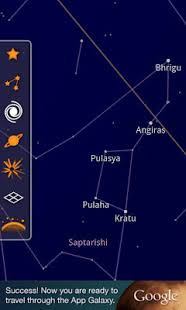
    The seven or Saptha Rishis , for Kakiyuga are,

    Atri,

    Bhrugu,

    Kutsa,

    Vaisishta,

    Gautama,

    Kasyapa and

    Angirasa.

    The Rishis differ in some puranas.

    Saotha Rishi Era, Calendar begins in 6676 BC,that is 8600 years ago.

    This has been mentioned by Kalhana, Indian King and Historian..Greek Historians Pliny and others recird this.

    This would predate events in Indian History.

    The Saptarshi cycle

    A lesser-known Hindu system of time-reckoning is the Saptarshi cycle of 3600 years (possibly based on the 60-year cycle, see ch. 2.4.5. below). At any rate, by the Christian age we find writers who take this concept of a 3600-year cycle literally, and it is hard to either prove or refute that this may have been a much older tradition.

    The medieval Kashmiri historian Kalhana claimed that the previous cycle had started in 3076 BC, and the present one in AD 525. J.E. Mitchiner has suggested that the beginning of the Saptarshi reckoning was one more cycle earlier, in 6676 BC: “We may conclude that the older and original version of the Era of the Seven Rsis commenced with the Seven Rsis in Krttika in 6676 BC, used a total of 28 Naksatras, and placed the start of the Kali Yuga in 3102 BC. This version was in use in northern India from at least the 4th century BC, as witnessed by the statements of Greek and Roman writers; it was also the version used by Vrddha Garga, at around the start of the Christian era.”22 This would roughly coincide with the start of the Puranic dynastic list reported by Greco-Roman authors as starting in 6776 BC.

    Source.

    http://www.indicethos.org/Astronomy/The%20SaptaRishi%20Cycle

  • Panchanga Predicts Meenakshi Temple Fire, Astrology Reliable?

    Panchanga Predicts Meenakshi Temple Fire, Astrology Reliable?

    I do not consult Astrologers or have faith in personal horoscope and predictions.

    I have been and am criticised for this on the ground that it is absurd on my part not to trust horoscopes while I write merrily on Hinduism, Slokas, Vedic Sciences and the spread of Sanatana Dharma throughout the world as the first civilization.

    My answer is that what I write on Sanatana Dharma has been verified and I write only of things which are authentic and supported by evidence.

    Exceptions are those which are related to Spiritual Experiences and even if these are conclusive only, I write.

    In the case of Astrology and horoscopes, I find the predictions relating to individuals to be incorrect and horoscopes are not recorded properly.

    However, the predictions of Hindu Astrology relating to Universal Events of Nature.,Hindu Astrology is unbeatable for it can calculate and predict Eclipses, movements of Planets, Stars, yes, Stars Solstices accurately as well as NASA .

    The reason is that Hindu Astrology is so advanced that it divides even seconds further and a minute/miniscule diffetence shall vary the results.

    In the case of Celestial phenomena, which is an observable data without interruption or mistake, individual data like the horoscope time of birth is not accurate.

    To my knowledge, no one has recorded the exact time of birth of an individual.

    This involves the recording of the exact time of birth.

    When a delivery takes place people who attend childbirth concentrate on delivering the Baby and they have no time to look at the clock to record the exact time.

    This includes the doctors.

    And there is discussion among Astrologers as to what exactly is the time birth that has to be taken into account for casting horoscopes.

    Is it the time the child’s head emerging from the womb?

    Is it the time the child’s feet touching the ground?

    Or is it the time when the foetus breathes?

    Or the time it is fully formed in the womb?

    Astrologers are divided on this issue and it is conclusive.

    And we have Astrologers who treat the subject as a means of livelihood and predict anticipating the individual’s mood and the Astrologer’necessity.

    Again the scholarship of the Astrologer comes in.

    So I do not trust Astrology as far as it relates to individuals but have the highest regards for it as a Science.

    Per se Indian Astrology is unmatched while it studies University phenomenon.

    Period.

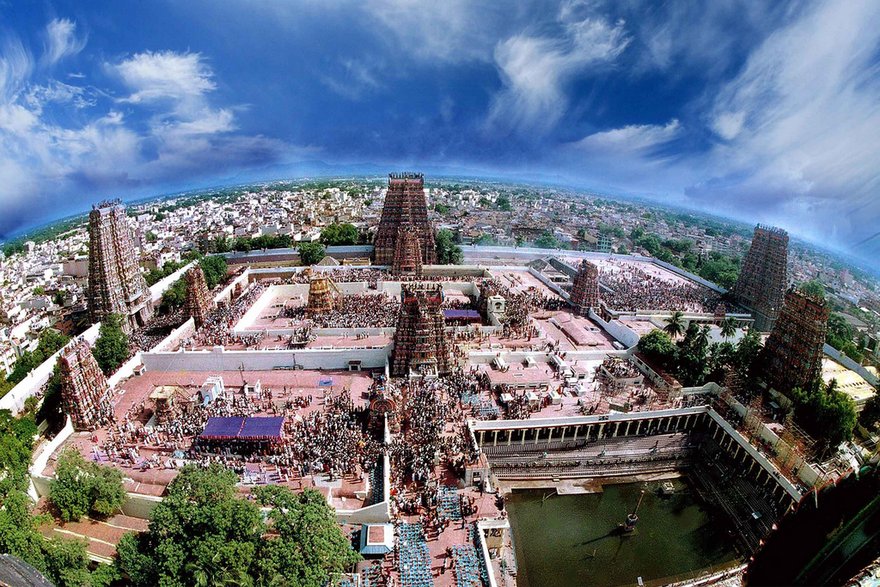
    My stand is vindicated by the prediction by An Indian Almanac that there would be a fire accident at Meenakshi Temple Madurai.

    To the date accurate!

    The Almanac called Siddha Vaakya Panchanga.

    There are many Panchangas or Almanacs based on different schools of Thoughts.

    ( for details on Panchangas read my articles on the subject.)

    CHENNAI: At least 10 shops were damaged when a fire broke out in the complex of the famed Meenakshi Amman Temple in Tamil Nadu’s Madurai complex but there was no damage to the temple itself, said a fire service official.

    “We got information about the fire in shops near the 1,000 pillar mandapam in the temple. We rushed five fire tenders and controlled the fire from spreading,” the senior fire service official told IANS over phone from Madurai, around 500 km from here.

    He said around 10 shops were damaged in the fire.

    “There is no damage for the temple. The old wooden door was saved by preventive action. The fire is now under control,” he said

    News on accident and fire image credit.

    http://www.newindianexpress.com/states/tamil-nadu/2018/feb/03/shops-gutted-in-fire-near-madurai-meenakshiamman-temple-1767410.html

  • When Did Kali Yuga Begin

    Indian texts texts speak of Time as one continuous flow, that it is Cyclic and Non Linear.

    That is Time flows in a Circle and Time recoils on itself.

    There are four Aeons, Yugas.

    Krutha or Satya Yuga,

    Tretha Yuga, when Rama lived,

    Dwapara Yuga, when Krishna lived and  the present one in which we are living

    Kaliyuga.

    Time in Hinduism is Cyclic
    Time in Hinduism. Yugas


    Image credit.

    By Ingo Kappler –Inka 23:32, 8 May 2005 (UTC) – Own work, CC BY-SA 2.0 de, https://commons.wikimedia.org/w/index.php?curid=134870

    The Mahabharata  War took place towards the closing years of the Dwapara yuga.

    Kali yuga is reported to have begun after the departure of Lord Krishna and after Yuga Sandhi.

    Yuga Sandhi is the Interregnum  is the period between two yugas.

    When did Kali Yuga begin?

    Indians follow an almanac system based on the movement of the Sun and Moon.

    Time is divided into finest parts and large numbers are also discussed..

    This Almanac is called Panchanga s it takes into account five factors,Pancha means Five.

    The Five are,

    Thithi, waxing and waning of the Moon,

    Vaara, Day,

    Nakshatra, Stars and their Movements,

    Yoga,  a specific time of the day which indicates auspiciousness or otherwise and

    Karana, yet another parameter of time to calculate auspiciousness.

    The Panchanga is used by the Hindus daily to find out the auspicious dates.,movement of the Moon.

    The Panchanga is read at the beginning of a year.

    Panchanga predicts, among other things like natural calamities, general world status, weather.

    And it predicts the Eclipses so accurately which tallies with modern scientific  calculations.

    Based on the Panchanga , the date when Kali Yuga began is arrived at.

    This is how it has been done.

    .

    The description is detailed to year-month-days of each and every king who ruled. By adding the total number of years of the four dynasties from Yudhishthir to Vikramaditya, it comes to 3,178 years which is 3141 Kali era or 39 AD, which represents the date when Vikramaditya left this earth planet.

    According to the Bhavishya Puran and Rajtarangini, Vikramaditya lived between 102 BC and 15 AD; and according to the above details his period ends by 39 AD. There is only a difference of 24 years in the date-wise record of 70 kings who ruled Hastinapur for 3,085 years. A discrepancy of 24 years in 3,000 years of record could be a copying or printing mistake, and is thus negligible when we are dealing with a longer span of years. In this way the predicted period of the dynasties of Magadh and the historic records of the dynasties of Hastinapur correspond with each other and justify their correctness, and vice versa.

    Ancient Kings India
    Magazine Text detailing the Early King list of India


    This is only a section of the magazine. It gives full date-wise detail of each and every king who ruled Hastinapur from Yudhishthir up to Vikramaditya. This is one of the rarest records that survived through this magazine.

    The beginning of kaliyug, 3102 BC.

    We have taken the beginning of kaliyug as the fixed point to determine the chronological dates of the events, kings, Divine dignitaries and the important personalities of our history. It is a common understanding that kaliyug started about 5,000 years ago (in round figures) and we never had any problems in the past in accepting this fact. But only after the arrival of the English people in India, all sorts of baseless criticisms started regarding our history and religion that were promoted and fostered by them. We had hundreds of such evidences regarding the date of Mahabharat war and the beginning of kaliyug in our history books that were destroyed by the British, still we have more than enough material to fully establish this fact.

    (1) Astrological.

    (a) We still follow the ancient astrological tradition. There is a most prestigious, 48 page detailed date-wise journal (panchang) with all the astrological facts and figures called “Vishva Panchangam,” established in 1925 and published by Kashi Hindu Vishvavidyalaya (Benares Hindu University), Varanasi. It gives all the three eras: Kali era, Vikram era and (Shalivahan) Shak era.

    It is as thus:

    It says on page 3 that 5,100 years have already elapsed before 2056 Vikram year which is 1999 AD. It means that the existing Kali era is 5101 in 1999 AD, which comes to (5101 – 1999) 3102 BC.

    (b) Another panchang of India called “Shree Saraswati Panchangam” published from Navalgarh, Rajasthan, also gives all the calculations and says that 5,100 years of kaliyug had already elapsed before 1999.

    (c) The “Vishva Vijay Panchangam” of Solan, Himachal Pradesh, says,


    It means that 5,100 years of kaliyug had already elapsed before 1999 and 426,900 years of kaliyugare still left. Kaliyug is of 432,000 years (so, kaliyug started in 3102 BC).

    Thus, the best team of the scholars of astrology all over India give the same figures of 3102 BC and publish it in the panchang (journal) every year.

    These astrological journals are run by a group of the most learned astrologers of India, and thus it is mindlessness if any astrologer or scholar unnecessarily tries to argue about their accuracy.

    (2) Others.

    Alberuni. “Alberuni’s India,” first Indian print 1964 (S. Chand & Co., New Delhi) Volume I. In the second part of this book on page 4 Alberuni writes, “…the time which has elapsed since the beginning of kaliyug before our gauge-year, 4132 years, and between the wars of Bharat and our gauge-year there have elapsed 3479 years.” In the Annotations (p. 358) of the same book Alberuni tells about his gauge-year, which is: “A.D. 1031, 25th February, a Thursday.”

    There is a difference of 968 years between 1031 AD and 1999 AD. Thus, adding 968 years to 4,132 years comes to 5,100 years, the period that has already elapsed since the beginning of kaliyugand up till today (1999), and this is exactly what is mentioned in the astrological journals of India.

    Alberuni also mentions about Vikram era (57 BC) and also the Shalivahan Shak era which starts 135 years after the Vikram era.

    Aryabhatt. The greatest astronomer and mathematician, Aryabhatt, was born in 476 AD. His work in astronomy is an asset to the scholars. He gave an accurate figure for pi ( ) 3.1416. He finished his book “Aryabhattiya” in 499 AD in which he gives the exact year of the beginning ofkaliyug. He writes,

    “When the three yugas (satyug, tretayug and dwaparyug) have elapsed and 60 x 60 (3,600) years ofkaliyug have already passed, I am now 23 years old.” It means that in the 3,601st year of Kali era he was 23 years old. Aryabhatt was born in 476 AD. Thus, the beginning of kaliyug comes to 3,601 – (476 + 23) = 3102 BC.

    ‘According to KD Abhyankar, the starting point of Kaliyuga is an extremely rare planetary alignment, which is depicted in the Mohenjo-Daro seals. Going by this alignment the year 3102 B.C is slightly off. The actual date for this alignment is February 7 of 3104 B.C.'(wiki Kali yuga)

    Kali yuga, therfore began on 7 February 3104 BC

    Citation in block quote and References .

    http://www.encyclopediaofauthentichinduism.org/articles/51_the_bhartiya_chronology.htm

  • What is Karana In Panchanga ?

    What is Karana In Panchanga ?

    You may notice we recite in Apara Karma,


    ‘Yogascha karananchaiva Sarvam Vishnu Mayam Jagat’


    Everything ,including the Yoga and Karana is filled with Vishnu /is Vishnu.


    Karanas of the Day.(Thithi)
    Karanas of the Day.
    Half of Thithi.


    Karanas are a part of Hindu Almanac, and is half the Thithi,like Prathamai,Astami…


    They are: 1) BALA, 2) BAALAVA, 3) KAULAVA, 4) TAITIL, 5) GARA, 6) VANIJA, 7) VISHTI, 8) SHAKUNI, 9) CHATUSHPADA, 10) NAAGA, 11) KINSTUGHNA.

    The first 7 of these Karanas are movable (Chara) i.e. it cannot be predetermined as to on which dates, these are going to occur, but the last 4 Karanas are fixed (Sthira), and hence can be predetermined.


    VISHTIKARANA is also called ‘Bhadra’ and commencing any work during this time is prohibited. Bhadra is marked very clearly in every panchanga..


    . A karana is the time required for the angular distance between the sun and the moon to increase in steps of 6° starting from 0°. There are eleven karanas in total. Of the eleven karanas, four are fixed and occurs only once in a cycle. The remaining 7 karanas repeat eight times to cover the remaining 56 steps.

    Click the following Link to calculate the Karana for any day.

    Citation.

    http://www.astroica.com/vedic-astrology/karana-calculator.php


    * I shall be posting on how the five components of the day influence one’s life

  • How To Find Siddha Amirtha Marana Yoga

    Hindus, in determining auspicious time, take into account, apart from Day,Stars,Thithis(waxing and waning of the Moon),Yoga Karana.


    These five, Day, Star, Thithi,Yoga( not the Yoga of Patanjali, here Yoga indicates auspicious/conducive period) and Karana form the basis of Hindu Almanac, called Panchanga(Five limbs).


    Kolam/Rangoli .jpg
    Kolam/Rangoli indicate auspiciousness


    Apart from the inauspicious time of each day,Rahu Kalam and Yama Kanda(some do not take Yama Kanda  as inauspicious as this time being inauspicious for Yama the God of death, and by reverse Logic is auspicious for the Living)


    Not much is known about Yogas, Siddha ,Amirth and Marana.


    It would help one to read about Time calculation of the Hindus,


    Please check my posts on How to find an auspicious day and Time, Hindus Calculation.


    One can cross check the Yoga daily by understanding what it is about.


    EIGHT DAYTIME PERIODS—THE KALAS

    The period between sunrise and sunset each day is divided into eight pe- riods. Each period, or kala, lasts approximately one and one-half hours, depending on the total duration of sunlight. Three of the eight kalas are considered most im- portant—Rahu Kala, Yama Kala and Gulika Kala—known collectively as the trini samayam. Rahu Kala is considered malefic for commencing new undertakings. Yama is also an interfering current, but is less influential than Rahu. Yama Kala is considered an auspicious time for antyesti (funeral) rites. Gulika is the most auspi- cious time of the day for commencing new activities.

    Each kala occurs at approximately the same time on each particular day of the week. Thus, Gulika Kala occurs at approximately 7AM every Friday. If you’ve ever wondered why Monday mornings are so infamous, note that Rahu Kala is generally between 7:30 and 9AM every Monday. The trini samayam are listed at the top of column three for each day.


    Yogas are Twenty Seven.


    ROUTINE OR CREATIVE WORK DAYS—AMRITADI YOGAS

    The resultant of the waves propagated by the planets and the stars on the human psyche are indicated in four degrees. In the Vedic Calendar, this esoteric yoga is listed in bold type in the left column of each day’s designations.


    AMRITA YOGA—CREATIVE WORK: Very good for creative types of work and auspicious undertakings.

    SIDDHA YOGA—CREATIVE WORK: Good for creative types of work and auspicious undertakings.

    MARANA YOGA—ROUTINE WORK: Should be avoided for new under- takings and beginning travel. Routine work only.

    PRABALARSHTA YOGA—ROUTINE WORK: Should be absolutely avoided for new undertakings and beginning travel. Routine work only.


    How to find the Yogas.

    ” Siddha Yoga:

    This is formed due to the combination of the Tithi and vara

    There are 5 categories of Tithis:

    Nanda  : Pratipad,  Shasthi, Ekadasi
    Bhadra : Dvitiya,   Saptami, Dvadasi
    Jaya   : Tritiya,   Astami,  Trayodasi
    Rikta  : Chaturthi, Navami,  Chaturdasi
    Purna  : Panchami,  Dasami,  Purnima, Amavasya

    The 5 categories of Tithis are governed by 5 elements of nature which are given below. When a tithi falls on a weekday (Vara) governed by the same element as that of the tithi a very auspicious time is formed which goes by the name of Siddha Yoga.

    Following combination of Tithis and the Varas constitute the siddha yoga:

    Nanda  : Friday    :Venus   : Jala    Tattva
    Bhadra : Wednesday :Mercury : Prithvi Tattva
    Jaya   : Tuesday   :Mars    : Agni    Tattva
    Rikta  : Saturday  :Saturn  : Vayu    Tattva
    Purna  : Thursday  :Jupiter : Akash   Tattva

    * * * * * * * *
    II Sarvartha Siddha Yoga

    Certain combination of Nakshatras and Weekdays go by the name of Sarvartha Siddhi yoga. Activities done during this yoga usually concludes with Positive results.

    Monday    : Sravana, Rohini      , Mrigashiras, Pushya    , Anuradha
    Tuesday   : Aswini , U.Bhadrapada, Krittika   , Ashlesha
    Wednesday : Rohini , Anurada     , Hasta      , Krttika   , Mrgashiras
    Thursday  : Revati , Anuradha    , Aswini     , Punarvasu , Pusya
    Friday    : Revati , Anuradha    , Aswini     , Punarvasu , Sravana
    Saturday  : Sravana, Rohini      , Swati
    Sunday    : Hasta  , Mula        , U.Ashadha  , U.Phalguni, U.Bhadra, Aswini, Pushya

    * * * * * * * *
    Amrita Siddhi Yoga:
    This yoga is formed due to combination of Vara and Nakshatra

    Sunday  : Hasta
    Monday  : Mrgashiras
    Tuesday : Aswini
    Mercury : Anuradha
    Thursday: Pusya
    Friday  : Revati
    Saturday: Rohini

    Though this is a auspicious combination, following events should be avoided:

    Thursday- Pushya: Marriage
    Tuesday - Aswini: Grha Pravesha
    Saturday- Rohini: Travel

    * * * * * * * *
    Dvipushkar Yoga:

    Following combination of Tithi, Vara and Nakshatra is called Dvipushkar Yoga:

    Dvitiya  , Saptami, Dvadasi
    Sunday   , Tuesday, Saturday
    Dhanistha, Chitra , Mrgashiras

    The events repeat again at least once if they happen in this yoga. Hence good events should happen in this yoga such as purchase of property etc. and unfortunate events such as diseases and death should not happen.

    * * * * * * * *
    Tripushkar Yoga:

    Following combination of Tithi, Vara and Nakshatra is called Tripushkar Yoga:

    Sunday,   Tuesday,   Saturday
    Dvitiya,  Saptami,   Dvadasi
    Krittika, Punarvasu, Uttaraphagulni, Vishaka, Uttarashadha, Uttarabhadrapada

    The events repeat again at least twice if they happen in this yoga. Hence good events should happen in this yoga such as purchase of property etc. and unfortunate events such as diseases and death should not happen.

    * * * * * * * *
    ASHUBHA YOGA:
    (Inauspicious combinations)
    * * * * * * * *
    Mrtyu Yoga:
    This yoga is formed due to combination of Vara and Tithi

    Tuesday   , Sunday :: Pratipad , Shasthi, Ekadasi
    Monday    , Friday :: Saptami  , Dvadasi
    Wednesday          :: Tritiya  , Ashtami, Trayodasi
    Thursday           :: Chaturthi, Navami , Chaturdasi
    Saturday           :: Panchami , Dasami , Purnima

    Adham Yoga:
    This yoga is also formed due to combination of Vara and Tithi

    Sunday   : Saptami, Dvadasi
    Monday   : Ekadasi
    Tuesday  : Dasami
    Wednesday: Pratipad, Navami
    Thursday : Ashtami
    Friday   : Saptami
    Saturday : Shasti

    Dagdha Yoga:
    This yoga is formed due to combination of Vara and Nakshatra

    Sunday   : Bharani
    Monday   : Chitra
    Tuesday  : Uttarashadha
    Wednesday: Dhanishtha
    Thursday : Uttaraphalguni
    Friday   : Jyestha
    Saturday : Revati

    Yamaghata Yoga:
    This yoga is also formed due to combination of Vara and Nakshatra

    Sunday   : Magha
    Monday   : Vishakha
    Tuesday  : Ardra
    Wednesday: Moola
    Thursday : Krittika
    Friday   : Rohini
    Saturday : Hasta
    
    Citation.
    
    
    http://www.panchanga.net/about-panchanga/panchangam-intro-other-indicators-in-hindu-panchangam/
    
    
    http://varahamihira.blogspot.in/2005/11/yogas-in-muhurtha.html
    
    * Corrections welcome.