There is an excellent group in Facebook called Shiva Shambho,where excellent information is shared. The information is Subtle and one has to understand the essence of Yoga and authentic texts. I shall be sharing information from the group.
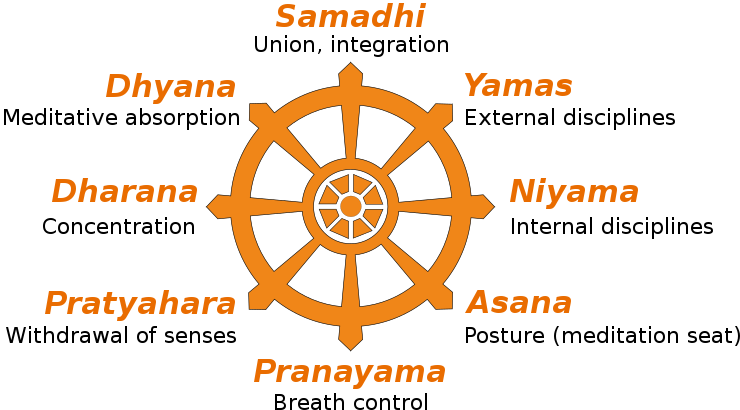
Today ,we have so many people and institutions are conducting Yoga classes and Meditation courses. Most of them do not seem to follow the Patanjali Yoga Sutra to the letter. What they teach is what they think will sell. Practices that do not have rigorous procedures are taught. Fir instance, in Patanjali ‘s Ashtanga Yoga, Niyama and Yama, that is Dos and Don’ts are the first two steps before proceeding to, in the order,Asana,Pranayama, Pratyahara,Dhyana and Dharana.Then comes Samadhi, Savikalpa and Nirvikalpa
Yoga is not a physical exercise per se. The physical benefits that accrue are the spinoffs of the Spiritual Endeavour Yoga,which, many have taken tens of years to perfect.Sastras say some Carry forward Sadhana from their previous birth to this birth and take off where they left off in their earlier births.
The Yama are according to Patanjali,
Ahimsa (अहिंसा): Nonviolence, non-harming other living beings.
Satya (सत्य): truthfulness, non-falsehood
Asteya (अस्तेय): non-stealing
Brahmacharya (ब्रह्मचर्य): chastity,marital fidelity or sexual restraint
And there is Niyama, things that are to be done or followed are,
The second component of Patanjali’s Yoga path is niyama, which includes virtuous habits and observances (the “dos”).Sadhana Pada Verse 32 lists the niyamas as:
. (शौच): purity, clearness of mind, speech and body
Santosha (संतोष): contentment, acceptance of others, acceptance of one’s circumstances as they are in order to get past or change them, optimism for self
Svadhyaya (स्वाध्याय): study of Vedas, study of self, self-reflection, introspection of self’s thoughts, speech and actions.
Ishvarapranidhana (ईश्वरप्रणिधान): contemplation of the Ishvara (God/Supreme Being, Brahman, True Self, Unchanging Reality).
Then comes Pranayama.Prana is the Life, verily it is the energy,that is vital that is present in every part of one’s body till it leaves the Body,when it the body becomes Inert or Sava.
For the body to be Siva, Yoga is one of the best methods.
However caution is to be exercised in following Yogic practices.
I have listed a total ten do’s and don’ts here before one attempts to go ahead in Yoga. Yama and Niyama are the first steps, preparing ground , equivalent to ,say,pre KG classes.
In the forth coming articles, I shall share information on other aspects like Prana, where to concentrate, difference between Pratyahara, Dhyana and Dharana. # I had published Explanation of Patanjali ‘s Yoga Sutras upto 32. Shall write more . Published articles are under Yoga Category.
I posted an article,Photo Essay on the nine sleeping poses of Vishnu. Lord Vishnu does not sleep. His sleep is called Yoga Nidra (Sleeping posture i Yoga) or Ari Thuyil(Tamil–sleeping while aware of everything) The Snake Adisehsa is the coiled Cosmic energy in the Solar Plexus(Mooladhaara). The Ksheera Saagara is a representation of the Milky way Galaxy. Please read my Post Vishnu’s’ Conch and Discus in galaxies, filed under Hinduism/Astrophysics. This Yoga Nidra of Lord Vishnu is of Nine types. 1.Vadabadra Sayanam, Srivilliputtur.Moolavar Image…
Such a Manuscript was found in Lhasa, Tibet by the Chinese. ‘the Chinese discovered some sanskrit documents in Lhasa, Tibet and sent them to the University of Chandrigarh to be translated. Dr. Ruth Reyna of the University said recently that the documents contain directions for building interstellar spaceships!
The third category of Mantra is from the angle of Jnana Yoga, where th meaning of the meaning of the Mantra is contemplated upon more than anything else.
Though wrong pronunciation does not produce adverse effects, it is better, in all the cases, to know the right intonation in all the cases as we do not know where we have erred in the other aspects.
That is why we say, at the end of evry pooja, or chanting,
Mantra heenam, kriya heenam’ mantra to seek pardon.
To cap it all we declare,
‘Budhyaatmana Prakruthe swabhavaath’- it is my nature i have been driven to perform, implying that my mistakes are unintentional.
How to chant the Mantra.
The duration of each tone is fixed and one should chant the mantra according to the swara with each syllable stressed to the required extent, and each tone (for the corresponding syllable) chanted for that duration.
Chanting should not be done like singing, or like reading. It should not be muttered fast, each syllable should be properly uttered with the required stress and pronounced with clarity.
While chanting one should sit with his back upright, and not shake or move while chanting. Chanting should be done with a fixed posture to allow the complete effect of the sound energy. While this rule in general applies to singing also (say for instance classical music), it applies even more rigidly in case of chanting a mantra.
Whether the mantra is chanted aloud or internally, it should be done along with the swara.
Chanting mantra like a song, chanting like reading a text quickly, muttering, chanting louder than required, making unnecessary movements of hands or head, are incorrect ways of chanting.
Taittiriya Upanishad specifies six elements of chanting (Siksha Valli, chapter 2):
Saama or the balance of chanting (the tune of entire mantra)
Santana or the spacing of words.
Mnatra Anushtana, The Rules.
Mantra-Anusthana is the encapsulation of mantra japa into the astanga yoga. The steps like yama, niyama, pratyahara are general rules. A few of them are: Each devata is said to have specific timings in the day when the devata wakes/sleeps. Japa is prescribed in the time the mantra adhidevata (deity of the mantra) wakes. One should do japa facing different directions when seeking different results. Asana is the posture in which japa is done. Pranayama is the breath regulation done before japa. Dharana is done through karanyasa and anganyasa, this is invoking devata in the body. Dhyana sloka is chanted after that, this is concentrating on the form of the devata. And then japa is started. Japa is the means to get one to the Samadhi state.
Man Upasna and Purascharana.
Mantra upasana is the systematic worship through Mantra. It is done for a specific duration of time or for life, in two modes – deeksha (specified) and nitya (regular). There are stipulations for deekha, such as timings, food and clothes (of the devotee), offerings (made to the devata) and so on. There is a purascarana for every Mantra. There is a specific minimal count for every Mantra for the sadhaka to “see” its effect, which is called purascarana sankhya. The count varies from Mantra to Mantra. There are five parts in purascarana.
Japa – the mantra should be chanted for the count specified in purascarana for that mantra.
Homa – oblations to be offered to the devata through fire, along with the mantra. This is a tenth of japa count. If japa is done 100,000 times then 10,000 oblations are offered in fire with the mantra.
Tarpana – satisfying the devata by offering water, milk or any other specified substance. It is generally a sweet fluid. The offering is made by chanting the mantra. This is done with a hundredth of japa count. If japa is done 100,000 times then tarpana is done 1000 times.
Abhisheka – the idol of devata is bathed with water, milk or any other specified substance, while chanting the mantra. This is a 1000th of japa count. If japa is done 100,000 times then abhisheka is done 100 times.
Samaradhana – this is the conclusion of purascarana where Dvijas are invited and fed every 10,000th count of japa. If japa is done 100,000 times then ten dvijas are to be invited for samaradhana. There are alternatives for all these, and if nothing is possible japa itself multiplied five times should be done. If one has to do just the japa, and the purascarana is 100,000, then the mantra should be done 500,000 times to substitute for the entire process. However, homa is the most effective way to get Devata’s grace.
Some axioms.
Beejas represent natural phenomena. The beejas used in a mantra define the nature of Devata.
Sound and meaning are inseparable. Meaning is known through sound and sound is realized through meditation on the meaning.
Mantra is sound-specific or dhvani pradhana. Therefore its effect is specific to the language in which it is composed. Mantra cannot be translated, and it remains merely text and no more a mantra once translated to another language.
Mantra and Devata are inseparable. Mantra is the sound-form or subtle body of Devata. Chanting mantra is the same as worshiping Devata, it is not merely a means but the yoga itself.
Mantra yoga is about using the upadhi of external sound to realizing the one beyond upadhi. Mantra yoga at the four different levels of vak is basically the path of realization.
In case of kamya, mantra serves istapurti. Mantra Japa is Karma, Yajna. Its fruit is two-fold. One is the immediate result of karma. Another is its impression on the doer. Thus along with istapurti, mantra upasana results in the elevation of the upasaka. Karma is called isti in the pravritti marga, because it results in ista purti. However when performed according toDharma, it will also ensure the doer’s elevation, develop antarmukhatva – from gross to subtle to causal. The seeker’s attention slowly shifts from the result of action to the one who grants the results, namely the Devata. And the object of worship too, gradually becomes more Devata centric and less desire centric. Thus the sadhana phases into nivritti from pravritti, and karma becomes more of nishkama karma and causes karma nivritti because of non-attachment to the immediate result. The sole objective of karma/mantra yoga will be the fulfilment of Devata’s wish, and the being starts realizing himself as an instrument of divine.
avirati = sensuality, want of non-attachment, non-abstention, craving
bhranti-darshana = false views or perception, confusion of philosophies (bhranti = false; darshana = views, perception)
alabdha-bhumikatva = failing to attain stages of practice (alabdha = not obtaining; bhumikatva = stage, state, firm ground)
anavasthitatva = instability, slipping down, inability to maintain
chitta-vikshepa = distractions of the mind (chitta = mind field; vikshepa = distractions, diversions)
1.30 Nine kinds of distractions come that are obstacles naturally encountered on the path, and are physical illness, tendency of the mind to not work efficiently, doubt or indecision, lack of attention to pursuing the means of samadhi, laziness in mind and body, failure to regulate the desire for worldly objects, incorrect assumptions or thinking, failing to attain stages of the practice, and instability in maintaining a level of practice once attained.
(vyadhi styana samshaya pramada alasya avirati bhranti-darshana alabdha-bhumikatva anavasthitatva chitta vikshepa te antarayah)
One may notice that these are the afflictions of the mind ,primarily
Even Vyadhi, Disease(loose translation) is the result of mental attitudes and mental state.
While the first five,disease, mental laziness,Indecision,carelessness and Sloth are acquired qualities of the mind over a period of time, the others are the natural attributes of the Mind.
In the case of the former one can be vigilant and resist acquiring them by following Achara and Anushtana.
Doing things that facilitate mental hygiene and following a strict code of conduct.
They day one feels that one should have a Drink at any cost, irrespective of the time and place, it is a sign he/she becomes an alcohol addict which requires treatment.
The way to handle such issues is to be among people who have clean habits which do not hurt one physically and mentally.
And the setting of goals in Life should be realistic and one has to understand is limitations,
This is not possible by the individual concerned.
This can be evaluated by a Guru,who can dispassionately analyse and offer solutions.
The identification of one’s ability is essential for contentment in life.
Not every one is endowed with everything in Life.
Everything in the world has its place, be it a blade of grass or an elephant.
One should be where he is and be content and happy in doing what he is comfortable with.
Patanjali explains in the next few sutras the other ailments associated with these attitudes and offers solutios.
While it is true that , being a Part of Brahman, The Reality,our individual Self , is not affected by our actions,we are responsible for our action at the Empirical level when and if we do not perform an Action as a Non Action,if we are driven by only our senses.
Such actions beget results , the remnants of the Impressions or the Vaasanas linger and they condition our development.
As Krishna declares in the 14th Chapter of The Bhagavad Gita, Sathva Guna is the result of previous Vaasanas or Impressions, though,
‘There may be innumerable Forms and beings , living and non living;yet Prakriti, Nature is The Mother and I am The Father , The Seed”
(Bhagavad Gita Chapter 14.4)
Ramana Maharishi and Paramahamsa Yogananda
This Sathva drives a Man for Yoga Sadhana.
As I have been mentioning on various occasions, Yoga is not an exercise that can be mastered in 30 days or following some lectures;it is life long spiritual practice.
It takes in most cases, more than a Life time.
If one were to die before attaining Yoga in that birth, he is born , in the next birth, in a Family of Devotional disposition which helps him to continue his attempts at Yoga, thus rendering the attainment of Yoga faster in the present Birth.
( for who question the theory of Rebirth, I shall be posting an Article on this)
Their fore,the dispositions must be there, , the continuous practice must be undertaken.
Then Yoga is achieved faster.
The next is a step less than this.
In some cases, every thing mentioned above might have been followed, yet the Siddhi does not materialize.
The reason is that the Yoga has not been practiced correctly and remnants of Impressions linger.
In such cases , the practitioner attains partial success as the Siddhas.
They have no doubt attained Yoga Siddhi, though of a Lower Order.
The time necessary for success further depends on whether the practice is mild, medium or intense.
They again differ according as the means are mild, medium or supreme.
Yet, again, it is possible to see a distinction between mild, middling and intense zeal, energy and effort, although yoga (which is spontaneous realization of oneness) and effort (which implies duality) are contradiction in terms.
You must be logged in to post a comment.