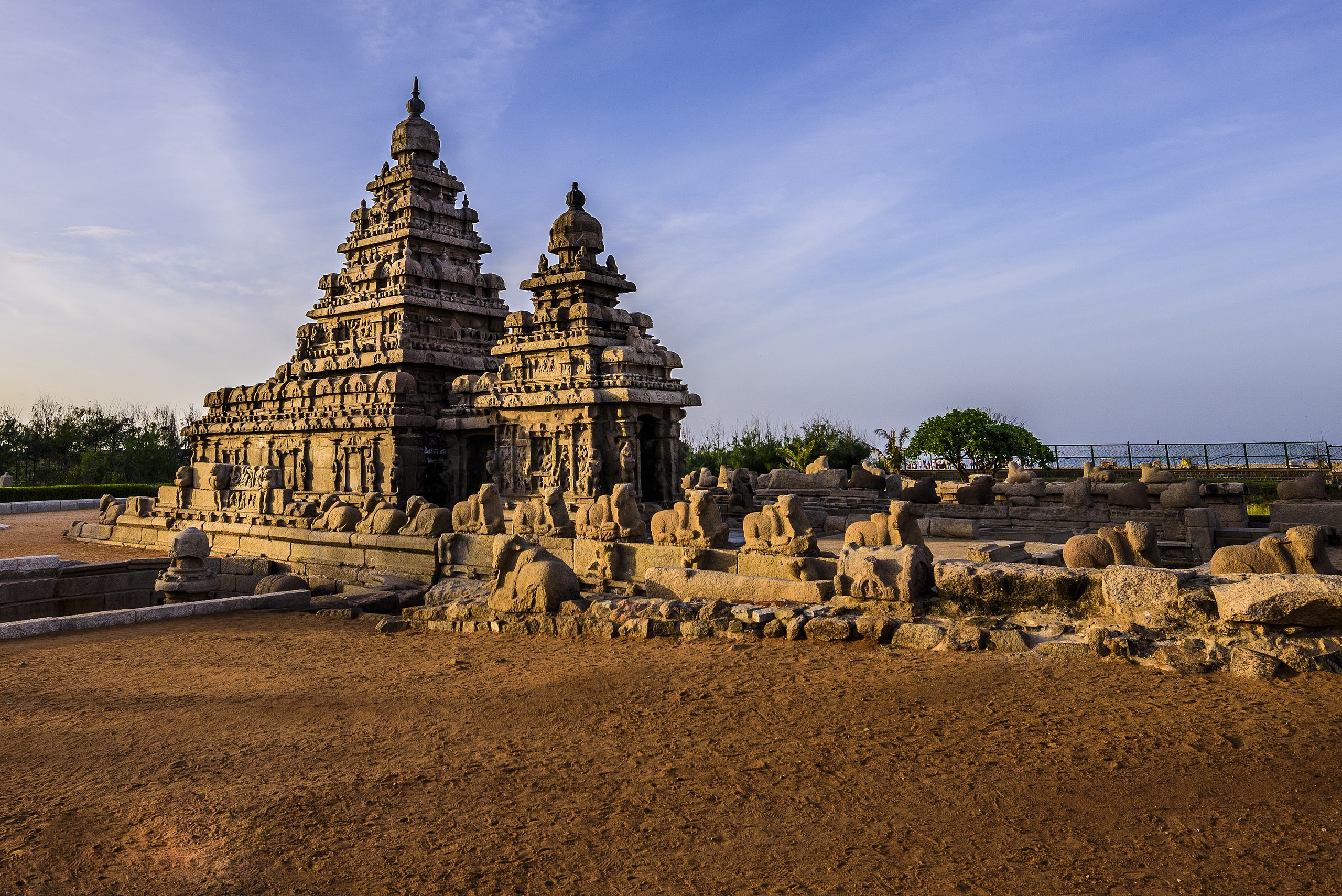
Tag: mahabalipuram

  • Pallavas From Turvasu Dushyant Puru Dynasty, Cholas Cousins

    Pallavas From Turvasu Dushyant Puru Dynasty, Cholas Cousins

    When I search for the lineage of Kings from South of Vindhyas, i come across information that is startling in terms of its historic value and also how the records in the South in the form of Epigraphs agree with records found in Puran, Ramayana and Mahabharata: and Harivamsa of Kalidasa and Rajatharangini of Kalhana.

    I had traced the genealogy of Cholas to Ikshvaku. In the process I was able to identify the Chola Kings of Treta Yug , Dwapara and Kaliyug. I shall be tracing the genealogy y Pandyas and Cheras shortly.

    We have more dynasties in South which are ancient. One of them is the Pallava Dynasty to which Mahendra and Mamalla/ Narasimha Pallava belong.These are the kings who have built the wonder that is Mahabalipuram Cave temples.

    It is believed that Simha Vishnu founded this dynasty.

    Fact is that the Pallava Dynasty was founded by Marutta.( Turvasu Dynasty) ‘Marutta adopted Duṣyanta as his son because Maruttaa had no sons. ( Dushyant a was a King of the Pūru dynasty, .(Bhāgavata, 9th Skandha,) Dushyant’s son was Bharath’ after whom India is named as Bharat.

    1. Marutta(2) gave his daughter to Dushyanta Paurava and She begot Sarutta who succeeded his maternal Grandfather.
    2. Daughter of Marutta raised her son Sarutta who became the king of Sindhu Kingdom.
    3. Sarutta
    4. Andhra (founder of Andhra Kingdom) and Mleccha (Raised Mlechha dynasties)
    5. Kulya (Prince of Andhra and whose descendants were Pallavas and Tondai Kings),SaruttaAndhra (founder of Andhra Kingdom) and Mleccha (Raised Mlechha dynasties)
    6. Kulya (Prince of Andhra and whose descendants were Pallavas and Tondai Kings), Chola (Founder of Chola Kingdom and Dynasty), Pandya (Founder of Pandya Kingdom and Dynasty), Kerala (Whose descendants were Cheras) – Because of these kings Dravida Country (Tamil and Sanskrit are the two eyes of this country) was developed.
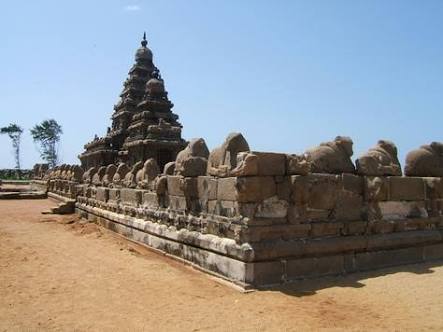
    https://www.wisdomlib.org/hinduism/compilation/puranic-encyclopaedia/d/doc241758.html

    In his family was born Dushyanta; his son was Bharata and his son was Chola after whose name the Solar race on this earth became known as Chola’ Thiruvalankadu Copperplates

    Turvasu’s (the second son of King Yayati) descendants were called Mlecchas (who ruled in Balochisthan) as per Srimad Bagavatha Mahapurana and Dravidas (who ruled in South India). The following kings were the disciples of Sage Agastya (Developed Tamil language and created Kaveri River with the help of Lord Ganesha). He ruled Southern side of Bharatkhand.

    1. Turvasu (Contemporary to Suryavanshi King Dundhumara)
    2. Marutta(1) was defeated by Ravana in a duel. (Contemporary to Suryavanshi King Mandhatri, Demon Ravana and Lord Parashurama)
    3. Vahini
    4. Garbha
    5. Gobhanu
    6. Bharga
    7. Bhanumaan
    8. Trishanu
    9. Tribhanu
    10. Karandhama
    11. Marutta(2) gave his daughter to Dushyanta Paurava and She begot Sarutta who succeeded his maternal Grandfather

    Check this and related articles.History Of India 1 Ikshvaku To Chandragupta Maurya.

  • Mahabalipuram Five Thousand Years Old Archeology Finds

    Mahabalipuram Five Thousand Years Old Archeology Finds

    Anything found by archeology and experts that is older than 5000 years ago is not encouraged in India.

    The reason is the assumption that Indian history beyond this date is fictitious and the blind acceptance of the date of the Rig Veda at 5000 BC Rig Veda being the oldest literature.

    Poompuhar, Tamil Nadu is dated twenty thousand years ago. A million year old advanced Tamil civilization site is near Chennai.

    Jwalapuram, In Andhra is 74,000 years old.

    I have written on these and many more.

    These findings have surfaced due to the efforts of private researchers.

    Mahabalipuram is assigned Around seventh century AD because of Pallava Dynasty.

    However Mahabalipuram is much older.

    Mahabalipuram’s early history is completely shrouded in mystery. Ancient mariners considered this place the land of the Seven Pagodas. There are others who think that Mahabalipuram suffered from a great flood between 10,000 and 13,000 BCE. Controversial historian Graham Hancock was one of the core members of a team of divers from Indian National Institute of Oceanography and the Scientific Exploration Society based in Dorset, UK who surveyed the ocean bed near Mahabalipuram in 2002 CE. He is more inclined to believe the flood theory. His exploration also afforded him a fair glimpse of the vast extent of submerged ruins of the city. After his underwater exploration, he reportedly commented, “I have argued for many years that the world’s flood myths deserve to be taken seriously, a view that most Western academics reject … But here in Mahabalipuram, we have proved the myths right and the academics wrong.”

    Source. Ancient History Encyclopedia

    The SES announced: “A joint expedition of 25 divers from the Scientific Exploration Society and India’s National Institute of Oceanography led by Monty Halls and accompanied by Graham Hancock, have discovered an extensive area with a series of structuresap that clearly show man made attributes, at a depth of
    5-7 meters offshore of Mahabalipuram in Tamil Nadu.
    “The scale of the submerged ruins, covering several square miles and at distances of up to a mile from shore, ranks this as a major marine-archaeological discovery as spectacular as the ruined cities submerged off Alexandria in Egypt.”
    India’s NIO said in a statement: “A team of underwater archaeologists from National Institute of Oceanography NIO have successfully `unearthed’ evidence of submerged structures off Mahabalipuram and established first-ever proof of the popular belief that the Shore temple of Mahabalipuram is the remnant of series of total seven of such temples built that have been submerged in succession. The discovery was made during a joint underwater exploration with the Scientific Exploration Society, U.K.”
    NIO said:
    Underwater investigations were carried out at 5 locations in the 5 – 8 m water depths, 500 to 700 m off Shore temple.
    Investigations at each location have shown presence of the construction of stone masonry, remains of walls, a big square rock cut remains, scattered square and rectangular stone blocks, big platform leading the steps to it amidst of the geological formations of the rocks that occur locally.
    Most of the structures are badly damaged and scattered in a vast area, having biological growth of barnacles, mussels and other organisms.
    The construction pattern and area, about 100m X 50m, appears to be same at each location. The actual area covered by ruins may extend well beyond the explored locations.
    The possible date of the ruins may be 1500-1200 years BP. Pallava dynasty, ruling the area during the period, has constructed many such rock cut and structural temples in Mahabalipuram and Kanchipuram.
    The last claim is questioned by Hancock, who says a scientist has told him it could be 6,000 years old.
    Durham University geologist Glenn Milne told him in an e-mail: “I had a chat with some of my colleagues here in the dept. of geological sciences and it is probably reasonable to assume that there has been very little vertical tectonic motion in this region [i.e. the coastal region around Mahabalipuram] during the past five thousand years or so. Therefore, the dominant process driving sea-level change will have been due to the melting of the
    Late Pleistocene ice sheets. Looking at predictions from a computer model of this process suggests that the area where the structures exist would have been submerged around six thousand years ago. Of course, there is some uncertainty in the model predictions and so there is a flexibility of roughly plus or minus one thousand years is this date.”
    If that were true, it would be a spectacular development. Previous archaeological opinion recognizes no culture in India 6,000 years ago capable of building anything much.Hancock says this discovery proves scientists should be more open-minded. “I have argued for many years that the world’s flood myths deserve to be taken seriously, a view that most Western academics reject. “But here in Mahabalipuram, we have proved the myths right and the academics wrong.”
    Hancock believes far more research needs to be done on underwater relics.“Between 17,000 years ago and 7000 years ago, at the end of the last Ice Age, terrible things happened to the world our ancestors lived in,” he says. “Great ice caps over northern Europe and north America melted down, huge floods ripped across the earth,
    sea-level rose by more than 100 meters, and about 25 million square kilometers of formerly habitable lands were swallowed up by the waves.
    “Marine archaeology has been possible as a scholarly disciplinefor about 50 years — since the introduction of scuba. In that time, according to Nick Flemming, the doyen of British marine archaeology, only 500 submerged sites have been found worldwide containing the remains of any form of man-made structure or of lithic artifacts. Of these sites only 100 — that’s 100 in the whole world! — are more than 3000 years old.”
    Hancock, who was understandably resentful about the NIO’s silence in his pivotal role in making the diving expedition happen — SES gave him full recognition — was himself quite generous about who deserved the greatest credit:
    “Of course the real discoverers of this amazing and very extensive submerged site are the local fishermen of Mahabalipuram. My role was simply to take what they had to say seriously and to take the town’s powerful and distinctive flood myths seriously. Since no diving had ever been done to
    investigate these neglected myths and sightings I decided that a proper expedition had to be mounted. To this end, about a year ago, I brought together my friends at the Scientific Exploration Society in Britain and the National Institute of Oceanography in India and we embarked on the long process that has finally culminated in the discovery of a major and hitherto completely unknown submerged archaeological site.”
    Interested readers can visit the following Web sites for more information. The Scientific Exploration Society’s Web site at http://www.india-atlantis.org . And Graham Hancock’s Web site at http://www.grahamhancock.com

    Reference and Citation.

    http://www.orientalthane.com/archaeology/news_may_24.htm

  • Pallava Dynasty Descended From Aswathama?

    The origin of the Tamil dynasties is quiet old and Tamil /Tamils are referred to in the Ramayana, Mahabharatha, Vishnu Purana, Sanskrit literature, for example in Kalidasa’s Raghuvamsa.

    The Pandyas trace their ancestry to Lord Shiva whom they considered to be their Family Elder.

    Cholas trace themselves to Suryavamsa, Solar Dynasty to which Rama belonged and some records indicate they trace themselves to Sage Kasyapa.

    Chera dynasty seems to lie with Ila,the term Elam seems to be from this word(daughter of Vaiwastha Manu, the ancestor of Lord Rama, the First Human, who migrated to Ayodhya due to a Tsunami in South India.

    Manus son Ikshvaku founded the Suryavamsa , the Solar dynasty from Ayodhya.

    The Cheras seem to belong the female lineage of Manu.

    Now, there is another dynasty which was powerful.

    IT was the Pallava Dynasty which ruled from Kanchipuram,Tamil Nadu.

    The Mahabalipuram shore temples are the handiwork of Mahendra and his son Narasimhavarma Pallava.

    Simha vishnu was the father of Mahendra Varma Pallava.

    The inscription in Amaravathi Andhra refers that Simhavishnu was from the lineage of Aswathama.

    But interestingly, the Pallava kings of Kanchi, had this legend about their genealogy, described in an inscription found near Amaravathi, Andhra, from the reign of Simhavarma Pallava,

    According to which, a child was born to Aswattama and an celestial dame (apsara?) in the woods and was abandoned in a bed of creepers. And that child eventually started the dynasty.

    The words for “creepers” is Pallavam, Pouthram in Sanskrit and in Tamizh, “thulir, thondai”. Hence the Pallavas aka Botharasas aka Thondaimaans.

    Reference. https://www.quora.com/Did-Ashwathama-from-the-Mahabharatha-marry

    There is another reference to the Pallava Dynasty in the old Tamil Epic Manimekalai , which is one of the Five Epics of Tamil, which states that the Thondamans were the descendants of Aswathama.

    Cholas are also traced this way.

    The earliest documentation on the Pallavas is the three copper-plate grants, now referred to as the Mayidavolu, Hirahadagalli and the British Museum plates (Durga Prasad, 1988) belonging to Skandavarman I and written in Prakrit. Skandavarman appears to have been the first great ruler of the early Pallavas, though there are references to other early Pallavas who were probably predecessors of Skandavarman.Skandavarman extended his dominions from the Krishna in the north to the Pennar in the south and to the Bellary district in the West. He performed the Aswamedhaand other Vedic sacrifices and bore the title of “Supreme King of Kings devoted to dharma”

    In the reign of Simhavarman IV, who ascended the throne in 436, the territories lost to the Vishnukundins in the north up to the mouth of the Krishna were recovered.The early Pallava history from this period onwards is furnished by a dozen or so copper-plate grants in Sanskrit. They are all dated in the regnal years of the kings.

    ..

    attributes the origin of the first Pallava King from a liaison between the daughter of a Naga king of Manipallava named Pilli Valai (Pilivalai) with a Chola king, Killivalavan, out of which union was born a prince, who was lost in ship wreck and found with a twig (pallava) of Cephalandra Indica (Tondai) around his ankle and hence named Tondai-man. Another version states that “Pallava” was born from the union of the Brahmin Ashvatthama with a Naga Princess also supposedly supported in the sixth verse of the Bahur plates which states “From Ashvatthama was born the king named Pallava”. The Pallavas themselves claimed to descend from Brahma and Ashwathama.

    Though Manimekalai posits Ilam Tiriyan as a Chola, not a Pallava, the Velurpalaiyam plates dated to 852, do not mention the Cholas. Instead, they credit the Naga liaison episode, and creation of the Pallava line, to a different Pallava king named Virakurcha, while preserving its legitimising significance:

    …from him (Aśvatthāman) in order (came) Pallava, the lord of the whole earth, whose fame was bewildering. Thence, came into existence the race of Pallavas… [including the son of Chūtapallava] Vīrakūrcha, of celebrated name, who simultaneously with (the hand of) the daughter of the chief of serpents grasped also the complete insignia of royalty and became famous.

    Historically, early relations between Nagas and Pallavas became well-established before the myth of Pallava’s birth to Ashvatthama took root

  • Micro-drilling Technology Ancient India Mahabalipuram

    A careful examination of the sculptures in Indian Temples and the Monuments built by Indian Kings reveal more about Indian way of Life and their scientific advancements.

    One may also learn about the instruments they had used in executing these marvels of Architecture.

    The 180 tons of single Granite Kalasam atop the Thanjavur Brahadeeswra Temple,

    How did the people find such a single piece in a terrain devoid of Mountains?

    How did they transport it, considering the fact that they had only carts and Horses?

    And how did they move that single piece to the top of the Temple Tower?

    Please read my post on Thanjavur Temple, how it was built?

    Minute drilling on Granite, Mahabalipuram.
    Minute drilling on Granite, Mahabalipuram. Image credit.http://www.bcmtouring.com/forums/threads/tamilnadu-a-trip-to-mahabalipuram-from-bhubaneswar.62593/

    We also find that there are astronomically aligned temples, structures where Sun/Moon light falls on a specific place at a specific time on a specific day.

    Read my post on Vedic instruments.

    Now in many a temple we find minute holes in the Idols and structures.

    In Suchindram,Tamil Nadu, one would find that if one were to insert a long piece of thin iron rod in one year of the Idol of Hanuman, it comes out from the other side!

    In Many Shiva temples one would find a small hole drilled behind the Idol in the sanctum, through which sir blows.

    One can see this, among many  temples, in Kalahasthi, Earth Element temple of Lord Shiva.

    Now in Mahbalipuram, Tamil Nadu,one can see the Micro drilling technology at work.

    Perfect circle has been made.

    Minute holes are found in hard Granite.

    This is not possible without advanced drilling technology which came to the world, according to the west very recently.

    Watch this video.

    Text.

    With a diameter of 8 feet, you can see how perfect it looks. The circumference is a perfect circle. And the hole is 5 feet deep. Academics think that this was carved with chisels and hammers. Think about this, this drill was done at least 1300 years ago, when the value of PI was not even invented. According to conventional history, People did not use any complex tools. But how can a perfect circle that is 8 feet wide be carved on a rock. If they had to use chisels and hammers, where would you even start the carving?

    If it was true, at one point, there must have been a dozen people sitting inside this chiseling away to make it a perfect circle. This would have taken years. Let me show you the walls, and you can see that there are no imperfections at all. It looks so smooth and looks like it is made with a modern machine.

    Now, here is a bigger question. Why would they need to create a perfect cylinder out of a rock? If you wanted a well for water, you can dig one with much less manual labor. If you wanted to create a water tank, you can just use pots or metal vessels. Why would you need to create something like this out of a granite rock?

    And what is the reason behind making it a perfect circle? I mean even water wells or tanks don’t need this much of effort. Was it used to fit something that was a perfect cylinder? I have asked several people here and nobody knows the reason behind this giant hole drilled out of this rock. I would really appreciate if you can tell me why such a thing would be needed.

  • Alien Evidence Mahabalipuram India

    The rock carvings on Mahabalipuram in Tamil Nadu is reported to have been made by Mahendra Varma Pallava of the Pallava Dynasty and this was continued by

    his son Narasimha Pallava.( 7 and 8th Century AD)


    There are some interesting features that need explanation as they bear a striking resemblance to our conceptions of Space Travel,UFO and Aliens.


    A rocket space craft at the center of the tower.Mahabalipuram India.jpg
    A Rocket spacecraft, with a wide base and an a sharp aerodynamic top stands erect on the temple tower. Notice the similarity of the design to our modern day rockets sent into space. Remember that these carvings were done 1200 years ago, although we know that the first rocket spacecraft was launched only in 1957.


    A closeup of a fire breathing lion's face - Do you see two astronauts facing each other?jpg
    A closeup of a fire breathing lion’s face – Do you see two astronauts facing each other? Let us ignore the fire and look closely at the face of the lion. Is it a face of the lion, or do you see two people facing each other? These two humanoids are wearing helmets and are enclosed tightly in a pod. Their facial features are not visible, because they would be wearing glass visers, similar to a modern day astronaut. They also wear a complete body suit which has 2 small projections resembling pincers.

    A modern day astronaut - The visor would conceal his face, just as seen in the carvings.jpg
    A modern day astronaut – The visor would conceal his face, just as seen in the carvings Take a look at the modern day astronaut’s visor. If a modern day sculptor were to carve this, how would he show the facial features?


    Overworking imagination or are we missing something?


    Check out for more.

    Citation.

    http://www.phenomenalplace.com/2013/12/unmistakable-evidence-of-ancient.html