Tag: Kashyapa

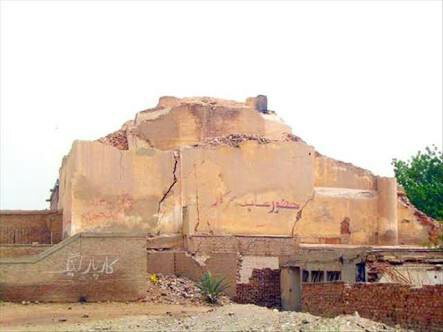
  • Surya Temple Multan,Pakistan Kasyapapura  Built by Samba Krishna Son

    Surya Temple Multan,Pakistan Kasyapapura Built by Samba Krishna Son

    When one delves deep into Indian History,which is narrated in books called Purana,(Purana means ‘very old),one is amazed at the sweep of Sanatana Dharma.

    There are eighteen major Puranas.

    In addition one may find information in Ramayana,Mahabharatha,the two Epics of India.

    Apart from these one can find information in Scientific texts of ancient India like Varahamihiram,Surya Siddhantha.

    They have to be studied deeply to spot and understand the references.

    And we have over twenty regional languages,many of which are at least five thousand years old.

    One finds,on reading certain facts recorded leaves one slightly bewildered.

    Though many facts are checked and found true,geographical anomalies seem to be present.

    For instance the distance covered by Hanuman to reach Lanka.

    Valmiki records the distance to be around hundred yojanas,approximately eight hundred miles from the southern tip of India.

    But the shortest distance from South India to Lanka is about twenty four kilometers.

    But this and seemingly incorrect description gets cleared,when one understands that the landmass of present India was not the same in ancient times,that is five to million years ago.

    We have Gondwana,Sundaland,Hyperborea,Lemuria,MU to consider.

    One will get a clearer picture.

    I am providing links some of my articles towards the close of this article.

    One such anomaly is the presence of Tamil kings,Tamil Language around Afghanistan and NWFP of Pakistan.

    King Sibi, A Tamil Emperor and ancestor of Rama had one of his capitals there and he had built a Temple for Lord Vishnu in Thiruvellarai,near SriRangam.

    The temple stands even today.

    Tamils were supposed to be in the southern part of India.

    Similarly,Ahobila mountain in Andhra is considered to be the place where the Narasimha Avatar of Vishnu took place.

    Yet we find evidence that Prahlada,who was responsible for Narasimha Avatar was born in Multan,Pakistan!

    And there is a reference in the Puranas that Lord Krishna’s son Samba,who was responsible for the annihilation of Krishna’s Dynasty,built a Temple for the Sun God in Multan,Pakistan.

    This event is found in Samba Purana,a subsidiary Purana.

    The Samba Purana consists the narrative of Samba’s getting infected by leprosy, after being cursed by sage Durvasa for mocking him. Later, he got cured by worshipping Surya in the temple constructed by him in Mitravana on the banks of the Chandrabhaga, which was once Multan Sun Temple.Samba underwent penance for 12 years in Mitravana near the shores of Chandrabhaga.Both the original Konark Sun Temple and the Multan Sun Temple at Multan, earlier known as Kashyapapura, have been attributed to Samba. He was cured by the Sun God Surya after 12 years of penance near Konark. As a tradition in the state of Odisha, India this day is celebrated as Samba Dashamion the 10th day of the Shukla Paksha of Pausha Masa. On this day, mothers pray to Surya for the health of their children.

    ….

    The city of Multan may get its name from the Sanskrit name for the Sun idol and Sun temple, Mulasthana.

    The original Sun Temple at Multan is said to have been built by Samba, son of Krishna, to gain relief from the symptoms of his leprosy.

    Hsuen Tsang is said to have visited the temple in 641 AD, by which time the Multan Sun Temple was the most important sun temple in ancient India.Hsuen Tsang described an idol of the Sun God made of pure gold with eyes made from large red rubies. Gold, silver and gems were abundantly used in its doors, pillars and shikhara. Thousands of Hindus regularly went to Multan to worship the Sun God. Hsuen Tsang is also said to have seen several devadasis (“dancing girls”) in the temple. Travelers like Hsuen Tsang, Istakhari and others, mentioned other idols in their travelogue, saying that the idols of Shiva and Buddha were also installed in the temple.Al-Biruni visited Multan in the 11th Century and left a glowing description of the temple,though it had been destroyed by the time he visited the city.

    Reference and citations.

    https://en.m.wikipedia.org/wiki/Samba_(Krishna%27s_son)

    https://en.m.wikipedia.org/wiki/Multan_Sun_Temple

    Related posts about Ramayana and Geographical Anamolies.

    https://ramanisblog.in/2014/02/15/hanuman-to-lanka-place-distance-controversy/

    https://ramanisblog.in/2015/01/07/answer-to-geographical-anamalies-purana-ramayana/

    https://ramanisblog.in/2017/08/01/seven-pehistoric-root-raceslemuriaatlantis-sanatana-dharma-details/

    https://ramanisblog.in/2015/01/19/saptha-dweepa-puranas-gondwana-geology-validates/

  • Kashyapa Father of Vishnu Rudra Paediatrics Kashmir An Overview

    Kashyapa Father of Vishnu Rudra Paediatrics Kashmir An Overview

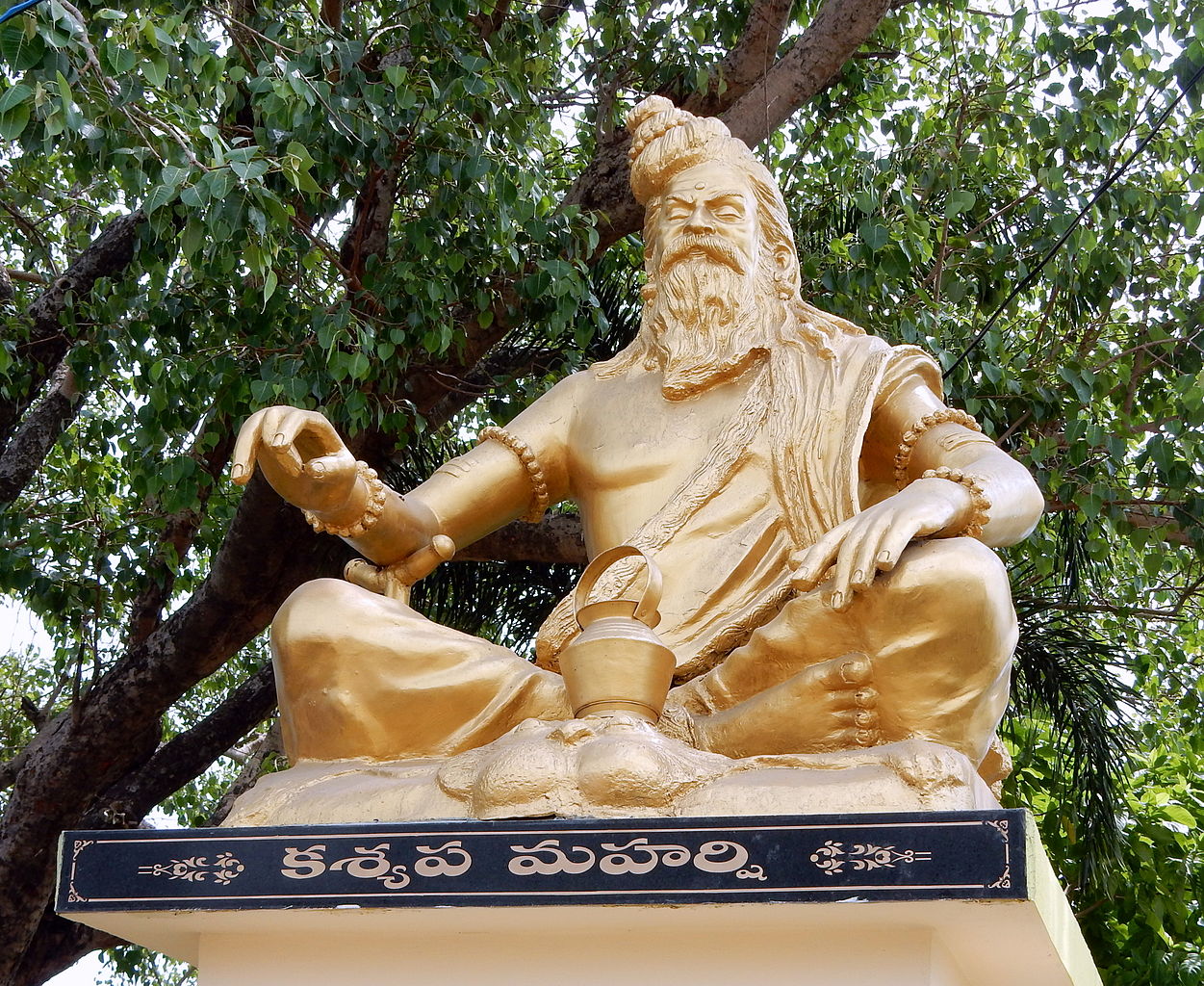
    Kashyapa,one of the Eternal Seven Seers, a Saptha Rishi,may in a sense be considered as the Grandsire of Humanity.

    The term Kashyapa means ‘tortoise’

    Undisturbed am I, undisturbed is my soul,
    undisturbed mine eye, undisturbed mine ear,
    undisturbed is mine in-breathing, undisturbed mine out-breathing,
    undisturbed my diffusive breath, undisturbed the whole of me.

    Thereafter rose Desire in the beginning, Desire the primal seed and germ of Spirit,
    O Kama dwelling with the lofty Kama, give growth of riches to the sacrificer, (…)
    Prolific, thousand eyed, and undecaying, a horse with seven reins Time bears us onward,
    Sages inspired with holy knowledge mount him, his chariot wheels are all the worlds of creatures.

    Kala [Time] created yonder heaven, and Kala made these realms of earth,
    By Kala, stirred to motion, both what is and what shall be, expand, (…)
    Kala created living things and first of all Prajapati,
    From Kala self-made Kasyapa, from Kala Holy Fire was born.

    — Atharvaveda, Book XIX, Hymns L51-5′

    One may recall the Koorma Avatar of Vishnu and the legend of Turtle/Tortoise is present in the formation of Earth in ancient legends.

    Seems there is a message here.

    Am looking into references in world religious texts and legends.

    Kasyapa is the most ancient Rishi listed in the most ancient Upanishad,Brihadaayanka Upanishad.

    Kasyapa is listed as a Saptha Rishi in the Rig Veda.

    Saptha Rishis are eternal and they remain,Along with Narayana in is Yogic Slumber,while the world is being withdrawn.(Pralaya).

    In Hinduism,there is no destruction of the Universe.

    The term Dissolution is used to convey the meaning of the Sanskrit word,Pralaya.

    Withdrawal may be nearer to the meaning of Pralaya.

    These Saptha Rishis preserve the Vedas and lay down the rules for Mankind in Ech Manvantara.

    Kashyapa is one among these.

    His progenies included Devas,the Heavenly Beings and the Asuras,the Beings of the Netherworld,Patala.

    Of his children, 12 Adityas,Lord Vishnu is One.

    Adityaanam Aham Vishnu’ -Bhagavad Gita.Vibhuthi Yoga.

    Rudra is also recorded as a son of Kashyapa and his wife Aditi.

    The Eleven Rudras.

    1. Nirriti
    2. Shambhu
    3. Aparajita
    4. Mrigavyadha
    5. Kapardi
    6. Dahana
    7. Khara
    8. Ahirabradhya
    9. Kapali
    10. Pingala
    11. Senani

    And Kasyapa  had the Eight Vasus among his 33 children.

    ‘Kashyapa was wedded to the famed mothers of Lokas viz. Aditi, Diti, Danu, Kaashtha, Arishta, Anayuvu, Khasa, Surabhi, Vinata, Taamra, Muni, Krodhavasa, and Kadru. His sons were the Dwadashadityaas viz. Dhata, Aryama, Mitra, Varuna , Amsha, Bhaga, Indra, Vivaswanta, Pusha, Parjanya, Twashta, and Vishnu.

    From Surabhi, Kashyapa was blessed with Ekadasha Rudraas viz.Angaraka, Sarpa, Niruti, Sadasaspati, Ajaikapaada, Ahirbhudnya, Jwara, Buvana , Ishwara, Mrityu and Kapali. From Surabhi, there were two daughters, viz. Rohini and Gandharvi; Rohini begot four daughters named Surupa, Hamsakali, Bhadra and Kamadu: Kamadu gave birth to Cows, Hamsakali begot Mahishaas; and Gandharvi begot Ashvas or horses; Surabhi also begot a Vrishabha/ Bull which was secured as ‘ Shiva Vahana’.

    From Aditi, Kashyapa Muni begot Indra and Devatas. Diti gave birth to Hiranya kashipu  as Kashyapa concluded the ‘Ati Raatra’ of the just finished Ashvamewdha Yagna; the new born was the younger brother of Hiranyaaksha. Their younger sister was Simhika the wife of Viprachit and their son was Rahu.

    His wives were the daughters of Daksha.

    His marriage and his offsprings may be interpreted by Cosmology and as an allegory of Astronomy as well.

    Available evidence points out to Kashmir as Kashyapa’s birth place and Kashmir is named after him.

    ‘Rishi. According to the ancient legends, he reclaimed that land from a vast lake, his school was based there, and the land was named after him.The name Kashmir, states Christopher Snedden, may be a shortened form of “Kashyapa Mir” or the “lake of the sage Kashyapa”, or alternatively derived from “Kashyapa Meru” or the sacred mountains of Kashyapa’

    Kasyapa in Russia.

    Caspian Sea.

    The word Caspian is derived from the name of the Caspi (Persian کاسی), an ancient people that lived to the west of the sea in Transcaucasia. Strabo wrote that “to the country of the Albanians belongs also the territory called Caspiane, which was named after the Caspian tribe(Kaswan, Kashyap Jat clans), as was also the sea; but the tribe has now disappeared”. Moreover, the Caspian Gate, which is the name of a region in Tehran province of Iran, is another possible piece of evidence that they migrated to the south of the sea.

    The root of the word Caspian can also be traced to Sanskrit.’

    Works of Kasyapa.

    • Kashyapa Samhita, also called Vriddajivakiya Tantra or Jivakiya Tantra, is a classical reference book on Ayurvedic pediatrics, gynecology and obstetrics. It was revised by Vatsya.
    • Kashyapa Jnanakandah, or Kashyapa’s book of wisdom, is a 9th century text of the Vaishnavism tradition. ( I do not agree with this date. Kasyapa can be dated much earlier).
    • Kasyapa dharmasutra, likely an ancient text, but now believed to be lost. The text’s existence is inferred from quotes and citations by medieval Indian scholars.
    • Kasyapa sangita, likely another ancient text, but now believed to be lost.
    • Kasyapasilpa, also called Amsumad agama, Kasypiya or Silpasastra of Kasyapa, is a Sanskrit treatise on architecture, iconography and the decorative arts, probably completed in the 11th century

    https://ramanisblog.in/2015/02/21/caspian-sea-kashyapa-sagar-of-hinduism/

    References and Citations.

    http://www.kamakoti.org/kamakoti/brahmandapurana/bookview.php?chapnum=12

    https://en.m.wikipedia.org/wiki/Kashyapa

    //ws-na.amazon-adsystem.com/widgets/q?ServiceVersion=20070822&OneJS=1&Operation=GetAdHtml&MarketPlace=US&source=ss&ref=as_ss_li_til&ad_type=product_link&tracking_id=ramasblog-20&marketplace=amazon&region=US&placement=8170305330&asins=8170305330&linkId=094ea6a59f84ff4dfd6819b5be30cae5&show_border=true&link_opens_in_new_window=true

    //ws-na.amazon-adsystem.com/widgets/q?ServiceVersion=20070822&OneJS=1&Operation=GetAdHtml&MarketPlace=US&source=ss&ref=as_ss_li_til&ad_type=product_link&tracking_id=ramasblog-20&marketplace=amazon&region=US&placement=B00P293PO2&asins=B00P293PO2&linkId=ea18983e9c484150128e37beb1a26b4a&show_border=true&link_opens_in_new_window=true

  • Thumb Sized Rishis Protect From Radiation Valakilyas

    ‘ वालखिल्या
    Valakhilyas are a group of divine sages, who are small of body, but great in their ascetic powers. Indeed, according to the Mahabharata, they are only as large as a thumb. Unlike the SaptaRishis, their names are not individually spelt out.

    When Kashyapa performed a sacrifice, all deities and sages were asked to contribute.

    Indra brought a whole mountain of trees for firewood, but the Valakhilyas were able to bring only a single twig amongst themselves.

    Lord Vishnu in Indonesia
    Vishnu in Garuda Vahana

    Indra made fun of them, and they cursed that his slayer would be born as the son of Kashyapa.

    The sages were the size of the thumb but were very powerful due to their piety, Brahmacharya and intense penance. Once, Indra and the Valakilyas were on their way to the ashram of Sage Kashyapa to attend a yajna.

    Indra, the king of celestial beings, was haughty and arrogant and this behavior often caused problems to the celestial world. On the way to the ashram, Valakilyas had fallen into water collected in a hoof mark left by a passing animal. Indra, who soon reached the spot, mocked at the tiny sages who were in a puddle and sped away.

    Sage Kashyapa received Indra but was a worried man because Valakilyas had not yet reached. Indra then jokingly narrated what had happened and asked Sage Kashyapa to not to wait for the tiny sages.

    Sage Kashyapa narrated how powerful the Valakilyas were and he also warned Indra that they might be performing a yajna to replace Indra as the king of Devas.

    Soon Indra and Sage Kashyapa reached the spot of the yajna and asked the Valakilyas to desist from it.

    The sages relented and said that the one to come from the yajna would Pakshindra, king of all birds, and that bird was Garuda.

    With the blessing of Valakilyas, Sage Kashyapa became the father of Garuda.

    As Indra made fun of them, they cursed that his slayer would be born as the son of Kashyapa.

    However, when Indra apologized and Brahma intervened on his behalf, they modified the curse that the son shall be initially an enemy of Indra, but later will become his friend.

    Valakhilya hymns, eleven in number, are the appendix of the eighth Mandala of the Rig Veda. But famous commentators like Sayana rejected them as interpolations. The Ramayana and the Mahabharata have a lot of references to the Valakhilya Rishis.

    Valakilyas in Tamil Literature.


    Ancient Sangam Tamil literature refers to Valakhilyas in Puranaanuru (verse 43), Tirumurugatrup patai (lines 16-109), post Sangam book Silappadikaram (Vettuvavari 15) and in the poems of middle age poet Arunagirinathar.

    The Rig Veda says that they sprang from the hairs of Prajapati Brahma. They are the guards of the Chariot of the Sun. They are also called the Kharwas. The Vishnu Purana describes them as pious, chaste and resplendent as the rays of the sun.

    Tamil literature is very clear in saying that the main task of the short and smart ascetics is to prevent human beings from being scorched. So they absorb the excess heat from the sun by travelling in front of him. Tamil books also add they were in turn given energy by Lord Skanda and Goddess Durga.

    Even the hunters in the forest pray to Durga for this. Another Tamil poet compares the sacrifice of the Valakhilyas to the sacrifice of the Emperor Sibi who gave his flesh to an eagle to save a pigeon. The famous story of Sibi was referred to in four Sangam Tamil books. Sibi was praised as the forefather of the famous and powerful Tamil Chola dynasty. The food of Valakhilyas is only wind.

    Citation and reference.

    http://swamiindology.blogspot.in/2011/12/valakhilyas-60000-thumb-sized-ascetics.html?m=1

  • Which Gotra Is Superior?

    My article Difference ‘Between Viswamitra Kaushika Gotras Why No Bharata’ is being read widely and there have been comments on it, most of them thanking me for clarifying the issue.

    There are some comments which differ from the others.

    I am replying for some relevant ,in my opinion important comments.

    One of them states that I should refrain from writing articles on this subject as the definition and explanation of Brahma Rishis is not clear.

    I quote,

    I belong to KAUSHIKA GOTHRA. I still doubt about the concept of BRAHMARISI. Even Sage Vashista as per Mahabharatha is different from BRAHMARISHI VASHISTA.. It is better not to write articles on this for the following reasons. It is a well known fact the PROGENITOR OF BOTH VISWAMITHRA AND KAUSHIKA GOTHRAS is SAGE KUSHIKA –A MANASA PUTHRA OF BRAHMA. hen how can be descendents of KUSHIKA NOT BE CALLED AS BRAHMARISHIS. Further sage Kaushika is one of the five rishis eligible to givE DEEKSHA IN SIVAGAMAS and ne of the FIVE GOTHRAS NOMINATED FOR ACHARYASTHANA. There are different versions about GADHI–THE BRAHMA RAJAN OF KUSHIKA GOTHRAS. As per DEVI MAHATMAYAM he is son of SAGE KATHA OF KUSHIKA LINEAGE and he is mentioned as KADI BROTHER OF KAUSHIKI WHO BECAME A RIVER. Further GODDESS PARVATHI WAS BORN AS A DAUGHTER TO SGE KATHA AS KATHYAYINI. And there is also anoter sage KATHYAYANA son of KATHA RISHI the famous author of KATHYAYANA SUTRA. It is only from RAMAYANA the story of VISWAMITHRA BEGINS. Here the son of KATHA SAGE is mentioned as GADHI AND NOT KATHI. Further the descendents of SAGE KUSHIKA did not want o become purohits and performed RAJAYA DUTIES. They are not born KSHATRIYAS since they did not belong to five clans of KSHATRIYAS–BRAHMA/NAGA/SURYA/SOMA/AGNI VAMSAS. Hence to consider all descendents of KAUSHIKA is incorrect bu they were only Brahmins performing Rjanya duties. Let us restrict ourselves about VIWAMITHRA’S CONTRIBUTION and need not go about whether he is a KSHATRIYA OR NOT’

    1.I shall continue writing about what I find in the Sruthi and Smriti.

    Saptha Rishis.jpg Saptha Rishis.

    I present facts.

    If some one has a different view they are welcome to post their comments with authentic source/Links.

    If they are authentic, I shall write on the subject with my views, with corrections over my earlier view.

    I am of the opinion that Knowledge , especially in Hinduism , is an open source.

    So long as the information does not run contradictory to Sruthi, It has to be taken as final .

    And this is my view.

    I shall be writing on Brahma Rishis in detail.

    There seems to be some apprehension in some quarters that the origin of the rishis might reflect on the descendants present social standing.

    This is not warranted if one understands that lineage is determined by disposition and Character and not birth as a matter of right.

    This is probably the reason for the proverb in Tamil that states that one should not look deeply into the origin of Rishis and rivers for in both the cases the origins may not be worth to begin with.

    A Sage like Viswamitra was not recognised among the Rishis when he was a powerful King as Kaushika.

    But once he became a Brahma Rishi he was venerated to the extent that his Gayatri Mantra has been the most elevated Status in Hinduism, notwithstanding his origin.

    There was another comment which is connected to this comment, though it may not appear so, is

    ‘Which Gotra is superior?’

    If we take the Puranas as the authority all the Puranas name Kashyapa.

    We can not really say Kasyapa gotra is superior to all the other  Gotras, because,

    Sage Bharatwaja, Atri and Sikleetha were described as the father of Mahalakshmi at different times.

    Then there are the Saptha Rishis.

    They are eternal and their composition changes Manvantara to Manvantara.

    So  they have to be given the utmost respect.

    The message is not to look for the origins of the Rishis and engage oneself in debates as to which Gotra is superior, but to follow the Path given by the Rishi assigned to each Family and adhere to the appropriate Sutras.


  • Caspian Sea Kashyapa Sagar Of Hinduism

    Sage Kashyapa is the Grand Old Sire of Hinduism.

    He is one of the Saptha Rishis, Seven Sages of Hinduism

    The Rishis determine the Sruthi to be followed.

    They change for each Manvantara.

    The Rishi are seers who know, and by their knowledge are the makers of shastra and “see” all mantras. The word comes from the root rish Rishati-prapnoti sarvvang mantrang jnanena pashyati sangsaraparangva, etc. The seven great Rishi or saptarshi of the first manvantara are Marichi, Atri, Angiras, Pulaha, Kratu, Pulastya, and Vashishtha. In other manvantara there are other sapta-rshi. In the present manvantara the seven are Kashyapa Atri, Vashishtha, Vishvamitra, Gautama, Jamadagni, Bharadvaja. To the Rishi the Vedas were revealed. Vyasa taught the Rigveda so revealed to Paila, the Yajurveda to Vaishampayana, the Samaveda to Jaimini, Atharvaveda to Samantu, and Itihasa and Purana to Suta. The three chief classes of Rishi are the Brah-marshi, born of the mind of Brahma, theDevarshi of lower rank, and Rajarshi or Kings who became Rishis through their knowledge and austerities, such as Janaka, Ritaparna, etc. Thc Shrutarshi are makers of Shastras, as Sushruta. The Kandarshiare of the Karmakanda, such as Jaimini.

    For the present Manvantara,Vaivasvatha Manvatara,Kashyapa is one of the Saptha Rishis.

    He s the son-in-law of Daksha Prajapati, the progenitor of Mankind.

    Kashyapa is mentioned in all the Hindu Puranas,Sikhism.

    He was married to Danu, daughter of Daksha, who was the mother of the Danavas.

    On Rishis please read my Post.

    The Celts worship Dandu and call themselves as the People/Tribes of Danu.

    Caspian Se, NASA Satelittle Image.jpg
    This is a view from orbit of the Caspian Sea as imaged by the MODIS sensor on the Terra satellite. Caption: The original caption from NASA: ::”The northern part of the Caspian Sea is plagued by a process called eutrophication, in which agricultural run-off rich in fertilizers stimulates rampant growth of algae in the water. The death and decay of these algae robs the water of oxygen, with obvious negative consequences for aquatic life. This image of the Caspian Sea shows swirls of green and blue near the mouth of the Volga River (top center), which indicate the presence of algae. The bright blue color of the northeastern part of the sea may be due to a mixture of plant life and sediment, for this is where the sea is most shallow. This image is from the Moderate Resolution Imaging Spectroradiometer (MODIS) on the Terra satellite on June 11, 2003. “Caspian Sea from orbit” by Jeff Schmaltz, MODIS Rapid Response Team, NASA/GSFC – http://visibleearth.nasa.gov/view_rec.php?id=5514Transferred from English Wikipedia, original upload 2 November 2004 by Kbh3rd. Licensed under Public Domain via Wikimedia Commons – http://commons.wikimedia.org/wiki/File:Caspian_Sea_from_orbit.jpg#mediaviewer/File:Caspian_Sea_from_orbit.jpg

    Please read my post on this.

    Kashyapa is mentioned predominantly in the north and northwest of India.

    Kashmir, India is named after Kashmir,

    Kashmir has a huge lake Satisara.

    Sara means lake or a mountain.

    I take the view that this refers to Mountain range as Shiva’s wife Sat was born here.

    Some legends in Kashmir state that the large lake  was called Kasyapa Sira.

    Kashyapa Sira came to be known as Kashmir.

    Mira in Sanskrit means lake,

    Note the word Mariner.

    It is from the word Mira, to denote Navigator.


    Caspian Sea.

    The word Caspian is derived from the name of the Caspi (Persian کاسی), an ancient people that lived to the west of the sea in Transcaucasia.[6] Strabo wrote that “to the country of the Albanians belongs also the territory called Caspiane, which was named after the Caspian tribe(Kaswan, Kashyap Jat clans), as was also the sea; but the tribe has now disappeared”.[7] Moreover, the Caspian Gate, which is the name of a region in Tehran province of Iran, is another possible piece of evidence that they migrated to the south of the sea.

    The root of the word Caspian can also be traced to Sanskrit.


    In Hinduism, Caspian Sea was called the Kashyapa Sagar.


    The Caspian Sea is named after a tribe from the province of Gilan (or Guilan) in Iran. Caspi and Amardi (who lived in the Sepid Rud valley) were the main two tribes during the Achaemenid dynasty era. The Achaemenids ruled around the 5th Century BC.

    The sage Kashyap was regarded as the founder of Kashmir. At the time he lived in the area, it is believed that most of the land was submerged under water, and the water body was called Kashyap Sar.

    ‘According to the Nilmat Purana, the land of Kashmir was occupied by a vast lake called “Satisara”. On the basis of this fact, the word “Kashmir” is derived from Sanskrit “Kashyapa + Mira” which means the sea lake or the mountain of sage Kashyapa. Kashyapa was the originator of Kashmir.'(Yahoo Answers)

    Valley of kashmir was occupied by two tribes Pisachas and Nagas.


    The Kashmir valley was a vast lake called Satisaras, named after Sati or Parvati the consort of Shiva.

    The lake was inhabited by the demon Jalodbhav.

    ‘Kashmir Region was inhabited by two tribes — the Nagas and thePisachas.

    The lake was drained off by leader of the Nagas called Ananta (Anantnag region of Kashmir is named after him) to capture and kill the demon. Ananta later names the valley as Kashapa-mira after his father Kashapa.-Nilamat Purana

    Prajapati Kashapa killed Jalodbhava with the help of Brahma, Vishnu and Shiva.

    The lake was then drained and comes to be known as Kash-mira after the Rishi Kashayapa’-Rajatharangini by Kalhana.

    It may be note that the Iran’s tribes descended from the Hindus and some of them mover to the Caspian .

    Hindu Puranas say it was drained.

    The Caspian Sea.png
    Map of the Caspian Sea, yellow shading indicates Caspian drainage basin. (Since this map was drawn, the adjacent Aral Sea has greatly decreased in size) “Caspianseamap”. Licensed under CC BY-SA 2.5 via Wikimedia Commons – http://commons.wikimedia.org/wiki/File:Caspianseamap.png#mediaviewer/File:Caspianseamap.png

    Maps show it was Drainage Basin.


    References and Citation.

    Kashyapa

    Chekc the following Link for the Book by Arthur Avalon on Saptha Rishis and some interesting information on Hinduism

    arthur Avalon