Tag: Kanchi Mutt

  • Avani Avittam Upakarma Dates Why Change of Dates Details.

    Avani Avittam Upakarma Dates Why Change of Dates Details.

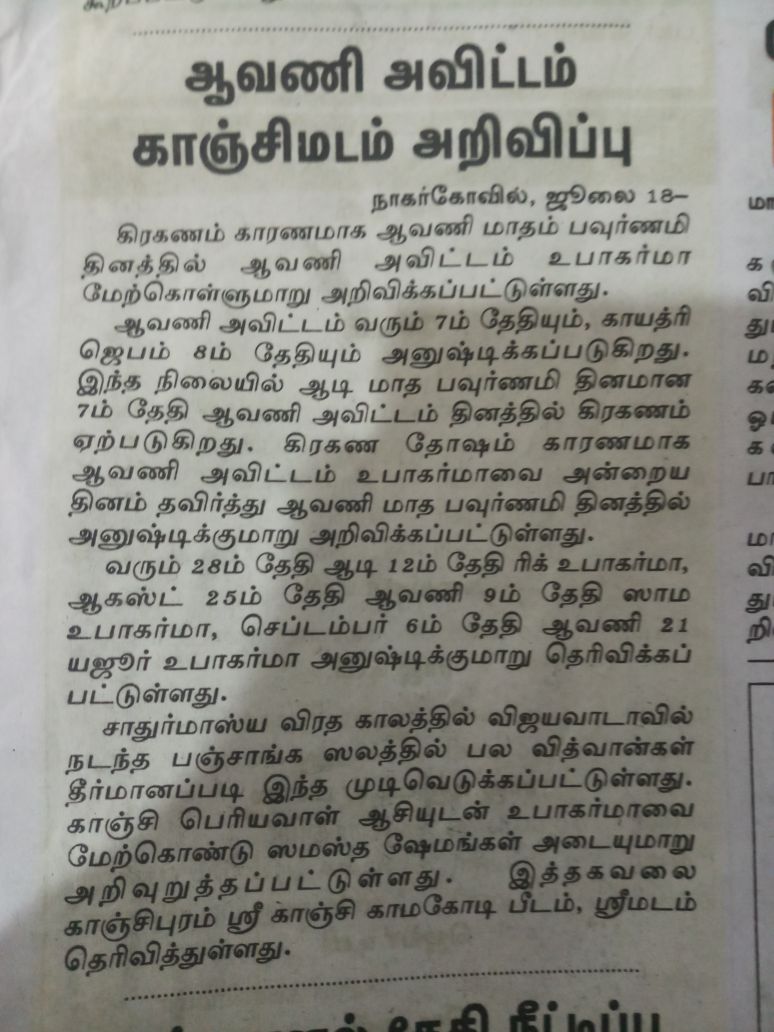
    There is confusion regarding the date/date for performing Upakarma,called Avani Avittam .

    It is one of the major festivals for Brahmins,though all the three varnas,Brahmana,Kshatriya and Vaisyas must perform.

    It is natural for us to get confused about Hindu Festivals,as ,I might add,to my regret,we are familiar with only English Calendar and not our calendar/s.

    Hindu calendar follows both Surya Maanasa and Chandra Maanasa,that is Time calculated on the basis of Sun and Moon.

    The Gregorian Calendar Calendar underwent a lot of changes,including changing the calendar on the whims of a Ruler(Julius Caesar).

    It would be of interest to note that Britain was following Our Hindu Calender!

    Now to Upakarma,Avani Avittam dates.

    The Yajur Upakarma is to be celebrated on 6th September 2017,as the earlier day happens to be day when Grahana,Eclipse takes place.

    Rig Upakarma August 28th,(Aadi12th),

    Sama Upakarma,August 25th( Avani 9th),
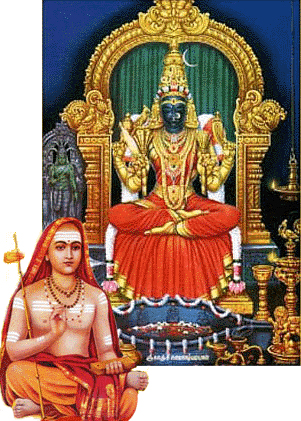
    This decision has been announced by Kanchi Kamakoti Mutt.
    Generally,the Rig Vedis,Yajur and Samavedis perform on different days.

    Details are given towards the close of this article.

    Rigvedis generally follow Suryamaanasa and hence give importance to Nakshatra,in this case,Sravana Nakshatra.

    Yajurvedis generally follow Chandra Maanasa,therefore they give importance to Thithi,the waxing and waning of the Moon.

    So they perform Upakarma,Avavi Avittam on the Full Moon Day,Pournami.

    However,one must remeber that by tradition,Upakarma is not performed if Grahana occurs on the Upakarma Day.

    Next Nakshatra or next same Thithi is declared to be auspicious for performing Upakarma.

    One may observe that Upakarma is basically equivalent to the beginning of Academic Year,that’s all.

    That it should not be performed on Grahana day is something I do not find any Smriti mentioning it.

    Readers may send information.

    Smritis declare that any new endeavor or Auspicious activity undertaken on Grahana day would be successful and Mantras chanted during Grahana(Eclipse) would yield thousand fold result.

    So this practice of changing days on account of Grahana seems not sound,barring the tradition.

    For details on Vedic Syllabus and Upakarma.

    Normally the child is sent for learning at the age of Five after Yagnayopaveeda ceremony to the teacher where the child stays and learns.

    The period of study:

    Nine years, called Adhama, not very auspicious,

    Twelve Years,Madhyaman, Acceptable,

    Eighteen Years,Uthamam, The best.

    There were also people who were doing the Adyayana, or the learning of the Vedas, for thirty-six years or through out their Life.

    One can remain a Brahmachari, without marrying through out Life learning the Vedas.

    There were Two Terms in a year.

    The First Term is called ‘Upakarma‘ Months.

    The Second Term is for Seven moths called ‘Uthsarjanam or ‘Uthsargam’

    One is reminded of Upakarma.

    This is when the Upakarma term begins.

    For Rig Vedis,Upakarma falls on the Sravana Nakshatra during th Sravan Month.

    This period is between the Amavasya of Adi and Avani.

    For Yajur Vedis. the Upakarma falls on the Full Moon , Poornima of Sravana month.

    During the Mahabharata battle Lord Krishna artificially created an Eclipse to ensure the ‘Ritual Killing of  a Prince(Arjuna’s son, Aravan)

    The Rig Vedis and the Yajur Vedis were performing the Upakarma on the Poornima Day..

    This resulted in the change of days  in Thithis, the waxing and waning of the moon.

    The next Nakshatra is Avitta.

    So, the Upakarma was performed  in Avitta  with Poornima by the Yajur Vedis.

    But Rig Vedis  stick to Sravana nakshtra.

    Sama Vedis perform this Upakarma in the Pathrapad(Purattasi) in Hastha Nakshatra.

    Mostly this falls on Ganesh Chaturthi day.

    The Veda  teaching begins on the Upakarma Day.

    Students will be taught Samhitas, Brahmanas, Aranyakas and Upanishads,

    This shall continue till Pushya Monh, ‘Thai’ in Tamil.

    The Term will end here by performing ‘Uthsarjan karma’

    This will be performed on the Poornma or the Rohini Nakshatra that occurs before this Poornima.

    Rig Vedis and Yajur Vedis follow this.

    Sama Vedis end the term in Maaka Month Ppornima.

    Uthsarjanam means’ leaving out’

    The term ends here.

    Next term begins from the Upakarma Day.

    Here the Vedangas,the other Sciences will be taught, Astrology,Astronomy,Linguistics, etc,

    Veda will not be taught in this period.’

    https://ramanisblog.in/2013/08/06/yajur-upakarma-avani-avittam-vedic-course-details/

    What is Shukla Yajur Veda Shukla Yajur Upakarma Mantras

    Why this difference?

    Sage Yajnyavalkya was studying under a Guru ,Vaisampayana.

    The Gurus, including Vaisampayana used meet regularly.

    On one such occasion, Vaisampayan was indisposed and could not attend the meet.

    Therefore, he nominated one of his Sishyas,(pupil )to attend the meeting.

    Miffed at not being chosen to represent the Guru at the meet, Yajnyavalkya…

  • Shankar Mutts By Shankaracharya Four Vedas

    Shankar Mutts By Shankaracharya Four Vedas

    Those who know a little of Sanskrit and Hinduism would know what an Intellectual Giant Adi Shankaracharya was.

    But not many know the logic that has gone behind his establishing the four Mutts.

    He chose four directions to found the Mutts.

    Shishya
    (lineage)
    Direction Maṭha Mahāvākya Veda Sampradaya
    Padmapāda East Govardhana Pīṭhaṃ Prajñānam brahma (Consciousness is Brahman) Rig Veda Bhogavala
    Sureśvara South Sringeri Śārada Pīṭhaṃ Aham brahmāsmi (I am Brahman) Yajur Veda Bhūrivala
    Hastāmalakācārya West Dvāraka Pīṭhaṃ Tattvamasi (That thou art) Sama Veda Kitavala
    Toṭakācārya North Jyotirmaṭha Pīṭhaṃ Ayamātmā brahma (This Atman is Brahman) Atharva Veda Nandavala

    All the Four Vedas are represented

    Padmapadacharya (fl. 8th century CE) was an Indian philosopher, a follower of Adi Shankara.

    Padmapāda’s dates are unknown, but modern scholarship places his life around the middle of the 8th century; similarly information about him comes mainly from hagiographies. What is known for certain is that he was a direct disciple of Shankara, of whom he was a younger contemporary. Padmapada was the first head of Puri Govardhana matha. He is believed to have founded a math by name Thekke Matham in Thrissur, Kerala. Keralites believe that he was a Nambuthiri belonging to Vemannillom, though according to textual sources he was from the Chola region in South India.

    Sureśvara (also known as Sureśvarācārya, c. 750 CE) was an Indian philosopher, who studied under Śankara. Śankara is said to have entrusted to Sureśvara his first monastic institution, the Sringeri Sharada Peetham. Suresvara is believed to have founded the famous Naduvil Matham in Thrissur…

    Little is known for sure about Sureśvara’s life. According to a strong tradition within Advaita Vedānta, before he became a disciple of Śankara, Sureśvara was known as Maņdana Miśra, a Mīmāmsāka. After being defeated in debate by Śankara, Miśra renounced his life as a householder, and became a sannyāsin. Whether this Maņdana Miśra was the same as the author of Brahmasiddhi is questioned by modern scholars, on the basis of textual analysis.

    Hastamalakacharya (IAST Hastāmalakācārya) (c. 8th century CE) was a disciple of Adi Shankara, the Advaita philosopher. He was made the first Jagadguru (head) of the Dvāraka Pīṭhaṃ, the monastery founded by Adi Shankara in Dwaraka. Hastamalaka founded a matha by name Idayil Matham in Thrissur, Kerala.

    The Mādhavīya Śaṃkaravijayam states that when Adi Shankara was at Kollur, he accepted invitations by brāhmaņas to have Bhikşa (alms or food) at their houses. On such an occasion he visited a village called Śrī Bali (present day Shivalli), where every house was said to emit the holy smell of the smoke of Agnihotra sacrifice, to accept Bhikşa. That place was inhabited by about two thousand brāhmaņas who were learned in the Vedas and performed the Yajnas prescribed in the Vedas. There was also a temple dedicated to Shiva and Parvati.

    In that village there lived a brāhmaņa, Prabhākara, who was noted for his learning. He had a son who though appearing quite handsome, behaved rather like an idiot. Though upanayanam was performed for him, he did not take to studying the Vedas, instead preferred to sit around doing nothing. Hearing about Adi Shankara’s visit, Prabhākara approached the Acharya (teacher) with a load of fruit and prostrated before him. He also made his son prostrate before him. Prabhākara explained to Adi Shankara that his son behaved rather like an idiot and sat idly throughout the day.

    Then, Adi Shankara addressed that young boy and asked him who he was. The boy replied in 12 verses containing the gist of theAdvaita philosophy.Thus Adi Shankara was immensely impressed with him and accepted him as his disciple. He was named Hastāmalaka (one with the amalaka fruit in his hand) since the knowledge of the Self was natural to him like an Amalaka fruit in one’s hand. Adi Shankara took the boy into his party and started towards his next destination..

    Totakacharya (IAST Toṭakācārya) (c. 8th century CE) was a disciple of Ādi Śaṅkara, the Advaita philosopher. He was made the first Jagadguru (head) of the Jyotirmaṭha Pīthaṃ, the northern maṭha founded by Ādi Śaṅkara near Badrinath. He founded a maṭha by name Vadakke Matham in Thrissur, Kerala…

    he Mādhavīya Śaṅkaravijayam states that when Ādi Śaṅkara was at Śṛṅgeri, he met a boy named Giri. Ādi Śaṅkara accepted the boy as his disciple. Giri was a hard-working and loyal servant of his Guru, Ādi Śaṅkara, though he did not appear bright to the other disciples. One day, Giri was washing his Guru’s clothes, when Ādi Śaṅkara sat down to begin a lesson on Advaita Vedānta. He however did not start the lesson saying he was waiting for Giri to come back from his chores and singing lessons. At this, Padmapada pointed to a wall and said that it would be the same if Ādi Śaṅkara taught to this dumb object as he taught to Giri. Now, Ādi Śaṅkara wanted to reward Giri for his loyalty and devotion. Thus he mentally granted Giri the complete knowledge of all the śāstras (sciences). The enlightened Giri composed extempore the Toṭākāṣṭakam, a Sanskrit poem in the toṭaka metre, in praise of the Guru Ādi Śaṅkara. Thus the dumb disciple Giri became Toṭākācārya.

    Look at the way Shankaracharya appointed Pontiffs, from deep south to west and from North to South.

    And three of these Mutts  fall into a pattern of being in the same latitude.

    Geographically speaking the char Dham make a perfect square with Badrinath and Rameswaram falling on the same longitude and Dwarka (old) and Puri on the same latitude, representing the farthest north, east, west, and south points of India (at that time, before coastlines changed)

    Badrinath, coordinates. Longitude.

    79.49481879999996

    Rameshwaram Longitiude.

    79.31292910000002

    Dwaraka latitude.

    22.2441975

    Puri Latitude.

    19.8133822

    * Present alignment.

    Citations.

    https://en.wikipedia.org/wiki/Char_Dham

    http://www.distancesfrom.in/odisha/puri-latitude-longitude/46.html

  • Voice Of God ,Deivathin Kural Periyava On Dowry Video

    Kanchi Periyava, Maha Periyava  discoursed on various subjects ranging from Vinayagar, Vedas,Vedangas, Advaita Linguistics,Literature,Guru to current and controversial topics like Dowry.


    These have been complied by Ra.Ganapathy in his Book ‘தெய்வத்தின் குரல் ‘


    I have posted this.(text)


    Now audio version with rare photos and Videos of Kanchi Periyavar have come out.


    Kanchi Periyavar
    Kanchi Periyavar


    In this post I am  reproducing some videos where Periyava speaks on .Dowry’ the evil practice of accepting money from the Bride’s parents.


    According to Sastras, in the earlier days, the  bridegrooms paid money .


    ‘Vara Dakshinai’ in Sanskrit, which originally meant ‘that which is paid by the Vara(bride groom’ was later misinterpreted as ‘ the one paid by the  Girl’!


    Periyava explains this concept and condemns this practice with authority in his inimitable earthy style devoid of jargons.


    Watch.


    On the Deivathin Kural CD Launch.

    Periyava kural – Jan 8th 2013


    Excerpts from Deivathin Kural by Kanchi Periyavar( compiled  by Ra.Ganapathy is being published here with the permission of The Kanchi Mutt.

    ‘விநாயக மூர்த்தியிலுள்ள ஒவ்வொரு சின்ன சமாசாரத்தைக் கவனித்தாலும் அதில் நிறையத் தத்துவங்கள் இருக்கின்றன. பிள்ளையாருக்குத் தேங்காய் உடைப்பது எதற்காக? விக்நேசுவரர், தம் அப்பாவான ஈசுவரனைப் பார்த்து “உன் சிரசையே எனக்குப் பலி கொடு” என்று கேட்டு விட்டாராம். எல்லாவற்றையும் காட்டிலும் உயர்ந்தது எதுவோ அதைத் தியாகம் பண்ணினால்தான் மகா கணபதிக்குப் ப்ரியம் ஏற்படுகிறது. அவ்வளவு பெரிய தியாகம் பண்ணுவதற்குத் தயார் என்ற அறிகுறியாகத்தான், ஈசுவரனைப்போலவே மூன்று கண்கள் உடைய தேங்காயைச் சிருஷ்டித்து அந்தக் காயை அவருக்கு நாம் அர்ப்பணம் பண்ணும்படியாக ஈசுவரன் அநுக்கிரகித்திருக்கிறார்.

    http://ramanisblog.in/tag/%E0%AE%A4%E0%AF%86%E0%AE%AF%E0%AF%8D%E0%AE%B5%E0%AE%A4%E0%AF%8D%E0%AE%A4%E0%AE%BF%E0%AE%A9%E0%AF%8D-%E0%AE%95%E0%AF%81%E0%AE%B0%E0%AE%B2%E0%AF%8D/


  • Time To Disown Jayendra Saraswati?

    It is a shock to the followers of the Kanchi Mutt that Jayendra Saraswati had met with Nithyananda of Ranijtha, Rape fame at  Kumbh Mela ,Allahabad.

    I received a cal today from a friend of mine who is an ardent follower of the Kanchi Mutt(who knows me and my views on Jayendrar and Kanchi Mutt )when he expressed his anguish at the News and he has been flooded with emails of Sankara Mutt Devotees being deeply wounded.

    He wanted my views.

    The reply I gave him is posted here..

    Look at this Video by The Nithyananda Ashram and Jayendrars’ encomiums on the Nithyananda Peetham(?) and  Nithyananda’s speech.

    Nithyananda Swamy Murthy(!?)
    Nithyananda Swamy Murthy(!?)
    Jayendra Saraswathi with Nithyananda
    Jayendra Saraswathi with Nithyananda

    YouTube Description.

    ‘Published on Feb 8, 2013

    Jan 7 2013 – Event in Mahakumbhapuri Prayag :
    One of the famous Tamil nadu math Kaanchi kaamakodi Peetathipathi Sri Sri Sri Jayendra saraswathi swamigal Visited Nithyananda Dhyanapeetam at Mahakumbhamela. He met Paramahamsa Nithyananda Swamigal. And he spoke about the greatness of Dhyanapeetam and Swamiji.’

    My comments.

    Though I am critical of Jayendra Saraswati,I have the highest regard for Maha Periyava, as my readers know.

    Jayendra Saraswati, according to a news Report met with Nithyananda at Allahabad and had a discussion(!) with him.

    Jayendra Sarswati is yet to extricate himself from the Shankara Raman Murder, Cell Phones threatening the Judge who is trying the Sankar Raman Case,Misappropriation of Kamakshi Amman Gold cases.

    Not to forget his running away to Talacauvery episode.

    There were also reports of a controversy in Coastal Andhra which was suppressed .

    As I said earlier, if not being a Guru, let him stop becoming a sore thumb of Hinduism and sully the name of his Guru, Maha Periyava.

    He may not be affected by criticism, surrounded by chamchas and yes-men who seek a living by being near to him.

    It is the Brahmin Community, for  the sin of having been born a Brahmin  has to become the butt of ridicule in the Society, which as it is,  is being targeted in Tamil Nadu in particular.

    The Reverence one has for Maha Periyava and Gurus(as described by the Vedas-of course Jayendrar does not belong to this category) can only take this much.

    Time he is disowned publicly as the Madurai Adheenam was, when he consorted with Nithyananda.

    Related.

    http://ramanisblog.in/2012/07/01/nithyananda-ranjithatwo-more-girls-54-videos-recovered/

    http://www.nithyananda.org/photo-gallery/maha-kumba-puri-kumbha-mela-paramahamsa-nithyananda-along-prominent-hindu-saints-kanch