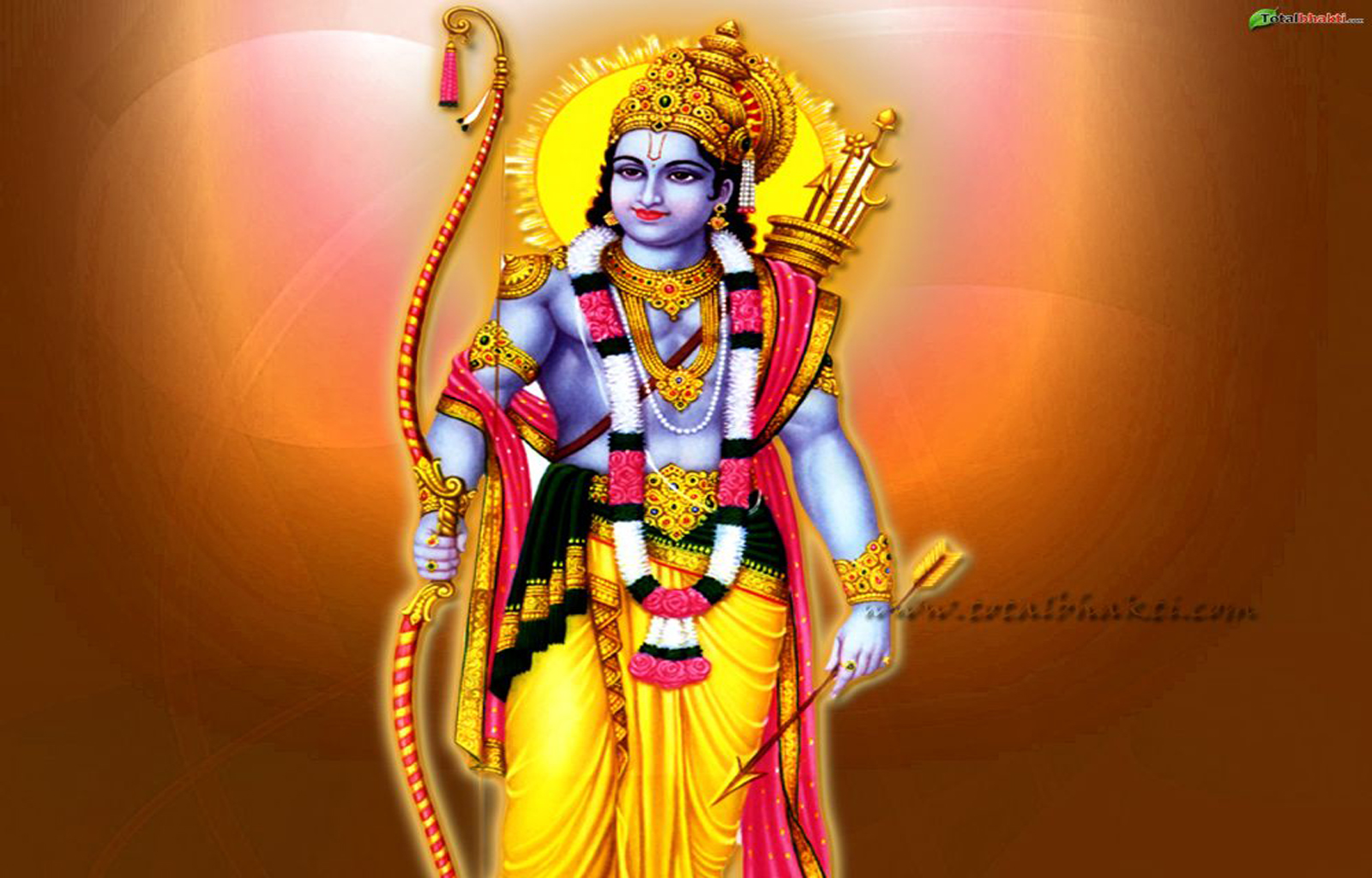
Sri Dharma Sastha is venerated as Aiyappa in Kerala at Sabarimalai.
The term Aiyappa is of Tamil origin.
It is the combination of words Aiayan and Appan.
Aiyan means venerable while Appan means Father.
The term may mean Venerable Father.
The term Aiyan is used to denote Shiva and Appan Vishnu in Tamil Bhakthi Literature.
Aiyappa Image 1. Shasta, Chola Dynasty, Government Museum, Chennai, Tamil Nadu ,India. “MADRAS11” by Benjamín Preciado Centro de Estudios de Asia y África de El Colegio de México – Own work. Licensed under GFDL via Wikimedia Commons – http://commons.wikimedia.org/wiki/File:MADRAS11.JPG#/media/File:MADRAS11.JPG
The Saivite revivalist Appar sang about Shasta as the progeny of Shiva and tirumaal(Vishnu) in one of his Tevarams in the 7th century. The child saint tirugnanasambandar in one of his songs praises ayyanar as celibate god, invincible and terrible in warfare, taking his abode alongside bhootaganas of Lord Siva. The place sanctity and history document or sthalapuranam of tiruvanaikkaval, a saivite temple near trichy, which was first documented by sage kasyapa informs us that sasta once served lord sivan at that site and after being blessed with a vision was instructed by lord to take abode in the outer sanctorum. It says that sasta continues to worship lord during the day of tiruvadirai. Adi sankara also has referred to ayyanar in sivanandalahari in one verse . Some ancient hagiographies have accounted that sri sankara was adeivamsam(divine soul portion) of sree sasta(sevugan), the same way as tirugnana sambandar was a divine portion of skanda and sundarar a divine portion of alalasundarar.
We find refernces in the Silappadikaram of the tamil Sangam period where he is worshiped as Chathan.
Puaranaanuru and Akanaanuru also speak of Chathan.
The earliest reference to Aiynar-Shasta is from the Arcot districtin Tamil Nadu. The stones are dated to the 3rd century C.E. They read “Ayanappa; a shrine to Cattan.” This is followed by another inscription in Uraiyur near Tiruchirapalli which is dated to the 4th century C.E
The sangam Poet Cheeththalai Chathanaar was named after Sastha.
This tradition was followed as Aiyanar in Tamil Villages, where even today Ayyanar is the guarding Deity of many a Villages.
The earliest inscription to Shasta was made in 855 C.E. by an Ay King at the Padmanabhapuram Sivan temple. Independent temples to Shasta are known from the 11th century C.E. Prior to that, Shasta veneration took place in the temples of Shiva and Vishnu, the premier gods of the Hindu pantheon. Since late medieval times, the warrior deity Ayyappa’s following has become very popular in the 20th century.
Among the Chandas(Meters), ‘I am Gayatri’-Lord Krishna in Bhagavad Gita.
Gayatri is the mother of all Mantras.
No Japa shall yield results for one who does no recite Gayatri just as one would not attain Happiness if one were to neglect his/her parents (Dharma Sastras)
Of the three amsas of Gayatri, Gayatri is at the Higher Mental level, as a potential Concept,Savitri at the formed thought level and Sarasvati he expressive part of Gayatri.
For details read my posts on Gayatri,Savitri and Sarasvati.
I am providing a list of ancient Gayatri Temples in India.
Most popular is the Gayarit temple is at Jagatsukh,Manali.Himalayas.
Gayatri Temple at Jagatsukh near Manali in Himachal Pradesh: Ancient temple with intricate woodwork with modern marble image of Gayatri.
Gayatri At Jagatsukh.
JAGATSUKH : The one time capital of Kullu.
This temple of Goddess Sri Gayathri is built by Sri Chidambara Dixith with the support of many Devotees. The inspiration to build a temple came from his divine blessing from the goddess Sri Gayathri Devi. This temple was built in 1962 by the divine grace of Godess Sri Gayathri Devi. In 1977 the idol of Lord Anjaneya was installed inside the temple complex, in 1986 Idols of Lord Ganesha along with Siddhi Buddhi and Lord Shanmukha were also installed, in 1990 the idols of Lord Shiva and Parvathi along with the Navagraha Deities were installed. Of lately the Idol of Lord Vishnu is also installed inside the temple complex..
Gayatri at Shantikunj.
Gayatri Temples.
Chidambaram.
Pushkar.
Yeshwantpur ,Bangalore.
Sri Gayathri Devi Temple,
Sri Gayathri Nagar,
Ajjanur Road,
Kurumbapalayam, (Vedapatti), Coimbatore — 641 007
.Readers may send in their list.
An explanation of the Gayatri Mantra.
I shall be posting another interpretation.
The Gayatri Mantra consists of twenty-four syllables – three lines of eight syllables each. The first line (Aum Bhur Bhuvah Swah) is considered an invocation, and is not technically a part of the original Gayatri Mantra as it appears in the Upanishads. Gayatri is also referred to as a Vedic poetic meter of 24 syllables or any hymn composed in this meter. Hence, there exists a whole familt of Gayatri Mantras, which serve as meditative aids to pray for the blessings of a particular personal God.
Aum Bhur Bhuvah Swah,
Tat Savitur Varenyam,
Bhargo devasva Dhimahi,
Dhiyo Yo Nah Prachodayatur.
ॐ भूर्भुव: स्व: तत्सवितुर्वरेण्यं ।
भर्गो देवस्य धीमहि, धीयो यो न: प्रचोदयात् ।।
A basic translation can be given as…
Oh God, the Protector, the basis of all life, Who is self-existent, Who is free from all pains and Whose contact frees the soul from all troubles, Who pervades the Universe and sustains all, the Creator and Energiser of the whole Universe, the Giver of happiness, Who is worthy of acceptance, the most excellent, Who is Pure and the Purifier of all, let us embrace that very God, so that He may direct our mental faculties in the right direction.
The Four Parts of the Gayatri Mantra
Aum Bhur Bhuvah Swah (ॐभूर्भुव: स्व🙂
AUM (ॐ), the Supreme name of God.
BHUR BHUVAH SWAH. These three words collectively are known as the “Mahavyahriti”. They express the nature of God, and demonstrate his inherent qualities.
BHUR (भूर्)
Firstly, the word Bhur implies existence. God is self-existent and independent of all. He is eternal and unchanging. Without beginning and without end, God exists as a continuous, permanent, constant entity. Secondly, the word Bhur can also mean the Earth, on which we are born and sustained. God is the provider of all, and it is through His divine will that we our blessed with all that we require to maintain us through our lives. Finally, Bhur signifies Prana, or life (literally, breath). God is That which gives life to all. Whilst He is independent of all, all are dependent on Him. It is God who has given us life, God who maintains us throughout our lives, and God alone who has the ability to take away our life, when He so chooses. The only permanent entity, all others are subject to His own will
BHUVAH (भुव:)
Bhuvah describes the absolute Consciousness of God. God is self-Conscious as well as being Conscious of all else, and thus is able to control and govern the Universe. Also, the word Bhuvah relates to God’s relationship with the celestial world. It denotes God’s greatness – greater than the sky and space, He is boundless and unlimited. Finally, Bhuvah is also indicative of God’s role as the remover of all pain and sufferings (Apaana). We see pain and sorrow all around us. However, through supplication to God, we can be freed from that pain and hardship. God Himself is devoid of any pain. Though He is Conscious of all, and is thus aware of pain, it does not affect Him. It is our own ignorance that makes us susceptible to the effects of Maya, or illusion, which causes us to feel pain. Through true devotion to God, we can be freed from the clutches of Maya, and thus be rid of pain and sorrow.
SWAH (स्व:)
Swah indicates the all-pervading nature of God. He is omnipresent and pervades the entire multi-formed Universe. Without Form Himself, He is able to manifest Himself through the medium of the physical world, and is thus present in each and every physical entity. In this way, God is able to interact with the Universe created by Him, and thus sustain and control it, ensuring its smooth and proer running and function.
Also, Swah symbolises God’s bliss. All but God experience pain, suffering and sorrow. Devoid of all such things, God alone is able to experience supreme bliss. Happiness as experienced by humans is temporary, a transient state of mental satisfaction, which soon dissolves back into the mire of worldy troubles. Perfect, and without any form of deficiency, God alone experiences true bliss, permanent and unaffected by worldly pains and woes. One who realises God is able to join in this bliss, and thus God is able to impart true happiness to those who establish oneness with that Supreme Divinity.
The Mahavyahriti can be summed up by comparison to the word AUM itself, and through this comparison to the tripartite structure, can be compared to the essential nature of God, which differentiates Him from the other two entities recognised in that structure (namely, matter and soul), in the same way as the comparison between the three parts of the word Satchidananda, another name also used to describe God…
BHUR Prana Earth Sat Existence
BHUVAH Apana Sky Chit Consciousness
SWAH Vyana Heaven Ananda Bliss
TAT SAVITUR VARENYAM (तत्सवितुर्वरेण्यं)
TAT (तत् s.1)
Literally, this word means “that”, being used in Sanskrit to denote the third person. It is also mentioned in the Bhagavad Gita by Sri Krishna Himself, where He implies the selfless nature of the word. Being used in the third person, the word has implicit in it an idea of selflessness. Sri Krishna uses it to imply the selfless nature of charity (charity, or a gift, being used as an analogy for worship, in the form of action, implying that action should be preformed without regard to its fruits, but simply out of devotion and sense of duty, or Dharma). Tat then is used here in the Gayatri Mantra to indicate that the worshipper is referring to [that] God, and that the praise being offered to God in the prayer is purely directed towards Him, without thought of gaining any personal benefit from that praise.
SA-VI-TUR (सवितुर् s.2-4)
Savita, from which Savitur is derived, is another name of God, this being the reason that the Gayatri Mantra is often known as the Savitri Mantra. The implication of Savita is of God’s status as the fountain, the source of all things. It is through His Divine Grace that the Universe exists, and so this word sums up the Mahavyahriti, by describing God’s ability to create the Universe and sustain it, as well as, at the right time, bring about its dissolution.
Savita is also indicative of God’s gift to mankind. Humans also have, in limited amount, the power, or shakti, of Savita. This shakti acts as an impetus in humans, and brings about the requirement for them to do something. They cannot sit idle, and are constantly searching for something to do. This is what is commonly known as the “creative urge”. It is through this shakti that mankind has created art, and it is through this shakti also that scientific advances are made. The gift of Savita also gives creatures the ability of procreation. Hence, Savita can be thought of as meaning Father (or Mother) also.
Finally, it is the power of Savita that enables mankind to distinguish right from wrong, and vice from virtue. Through this ability, we are able to in some part direct our own selves, and thus, Savita imparts to us a certain self-guiding ability. Thus, by using this word in the mantra, we demonstrate that we are making efforts ourselves also, since God will not help us unless we are willing to help ourselves.
VA-RE-NY-AM (वरेण्यं s.5-8)
Varenyam signifies our acceptance of God, and can be translated as meaning “Who is worthy”. Ever ready to obtain all the material riches of the world, more often than not, they are a disappointment once they have been achieved. God however is the one who, once realised and achieved, has the ability to truly satisfy. We therefore accept Him as the Highest reality, and it is to Him that we dedicate our efforts.
Varenyam can also be interpreted as signifying one who is eligible. We have chosen Him to be our Leader and our Guide. We place our all into His hands, and accept Him regardless of anything else. We place no conditions on this acceptance, as it is all out of sheer devotion.
BHARGO DEVASYA DHIMAHI (भर्गोदेवस्यधीमहि)
This triplet is a further description of the attributes and qualities of God – His functional and instrumental qualities, rather than intrinsic qualities – and through those qualities, His relationship to us.
BHAR-GO (भर्गो s.1,2)
Bhargo is taken to signify the Glorious Light that is God’s love and power. It indicates His complete purity – being absolutely pure Himself, God also has the ability to purify those that come into contact with Him. Thus, Bhargo is indicative of God’s power to purify, and to destroy all sins and afflictions. In the same way as a metal ore placed into a fire will yield the pure metal, by merging with God, by realising His Divine Form and establishing unity and oneness with Him, we can cleanse ourselves and be made pure by His Grace.
Though the soul, being itself Divine in nature, possesses that Light, it lacks lustre, having been made impure by the sins and vices, which are a result of the darkness of Maya. By removing the veil of Maya, and cleansing our soul, God can enable the soul to realise its true, Divine self, and thus purify it.
DE-VAS-YA (देवस्य s.3-5)
The word Deva, from which this word is derived, has been translated by different people in many different ways. It is generally thought of as meaning simply “God”. However, its meaning is more complex than that.
Deva, which forms the root of the words “Devata” and “Devi”, means “quality” or “attribute”, and can be thought of as another word for “Guna”. Thus, the various forms of God are given this name, as each of those forms is related to a specific quality and function (for example, Brahma has the quality of Creation, Kamadeva has the quality of love, etc.). Also, Deva is thus used to describe anyone who is considered to possess a special quality.
Since Deva is symbolic of the individual qualities of God, the word demonstrates the inherent oneness of those different Forms, and thus the use of this word can be taken as describing the fundamental unity of God. Thus we see that here, we reaffirm that central belief in the Hindu Dharma that “Ekam sat viprah bahudah vadanti” (Truth, or God, is one, but wise men call Him/It by diffeerent names).
Thus, Deva is indicative of the various multifaceted entity that is the absolute Personality of God. It describes in one word all the functions, roles and different attributes of God, and symbolises therefore his absolutely essential nature – without God, nothing can exist.
DHI-MA-HI (धीमहि s.6-8)
Meaning to meditate and focus our mind on God. Meditation on God implies that we remove all other thoughts from our mind, since thoughts of the world render our mind impure, and thus we are unable to conceptualise the absolute purity of God. We must be able to concentrate, and direct our mental energies towards the task in hand – which is communion with God.
DHIYO YO NAH PRACHODAYAT (धीयोयोन: प्रचोदयात्)
Prayer is carried out for four main reasons:
to praise and glorify God;
to thank God;
to ask forgiveness from God;
or to make a request from God.
Having carried out the other three parts (praise of His greatness, thanks for His generosity in Creation and maintaining us through our lives, and forgiveness by demonstrating our awareness of our own impurity, which we have realised is present and must be cleansed through contact with God), this part is now our request from God. Since our soul is the Light of Life within us, and that acts on our body via the medium of the brain, we ask God to make this contact pure and righteous. The soul is of course inherently pure, being itself Divine in nature. The body is under the complete control of the mind. The link is the mind, which is affected not only by the soul, but also the outside world. We ask in these four words that God help us to improve our intellect, and guide it towards what is right.
DHI-YO (धीयो s.1,2)
Sanskrit for “intellect”, this is the essence of this part of the Gayatri Mantra. Having firmly set God in our hearts, we now must try to emphasise His presence and influence on our mind and intellect.
Material prosperity holds no true meaning for the person who is truly devoted to God. Pain and suffering are of no consequence to him as, touched by God, he is imbued with God’s own Divine Bliss, and all worldy sorrows pale to nothingness in comparison. However, still the individual must live in the world. Thus, it is important that the person’s intellect remains focussed on serving God, and that it is able, through the medium of the body, to serve God to the best of its ability.
Physical objects can be obtained very easily, if one is intelligent enough to know how to go about it. Intellect however cannot be obtained, but must be there from the very first. It is by use of this intellect, in fact, that one is able to cultivate all other qualities (building of wealth, “success” in life (in material terms), physical fitness, etc.) Thus, intellect is the key to all else in life, and as such, it is the most important possession. We ask God in the Gayatri Mantra to gift us with the highest intellect, and to help us by showing us the way to use that intellect.
YO (यो s.3)
Meaning “Who” or “That”, Yo signifies yet again that it is not to anyone else that we direct these prayers, but to God alone. Only God is worthy of the highest adoration, only God is perfect and free from all defects. It is That God to Whom we offer these prayers.
NAH (न: s.4)
Nah means “Ours”, and signifies the selflessness of the request we make of God in this part of the Gayatri Mantra. We offer this prayer, and make the request of God, not simply for ourselves, but for the whole of humanity. We seek the uplift of the whole of society. Hindu philosophy has since the beginning recognised the concept of “Vasudhaiva Kutumbakam” – “The whole world is one big family”. Thus, we pray not only for ourselves, but for each and every member of that great family, that we may all benefit from the greatness and generosity of the All-loving God.
PRA-CHO-DA-YAT (प्रचोदयात् s.5-8)
Prachodayat, the final word of the Gayatri Mantra, rounds off the whole mantra, and completes the request we make of God in this final part. This word is a request from God, in which we ask Him for Guidance, and Inspiration. We ask that, by showing us His Divine and Glorious Light (cf. BHARGO), He remove the darkness of Maya from our paths, that we are able to see the way, and in this manner, we ask Him to direct our energies in the right way, guiding us through the chaos of this world, to find sanctuary in the tranquility and peace of God Himself, the root of all Happiness, and the source of true Bliss.
I posted an article,Photo Essay on the nine sleeping poses of Vishnu.
Lord Vishnu does not sleep.
His sleep is called Yoga Nidra (Sleeping posture i Yoga) or Ari Thuyil(Tamil–sleeping while aware of everything)
The Snake Adisehsa is the coiled Cosmic energy in the Solar Plexus(Mooladhaara).
The Ksheera Saagara is a representation of the Milky way Galaxy.
Please read my Post Vishnu’s’ Conch and Discus in galaxies, filed under Hinduism/Astrophysics.
This Yoga Nidra of Lord Vishnu is of Nine types.
1.Vadabadra Sayanam, Srivilliputtur.Moolavar Image not available.
I had written on the sleeping, floating Visnu in Budhanikantha Nepal.
I have been under the impression that the Anathasyana form of Vishnu found in Srivilliputhur, Sri Rangam and Thiruvanathapuram are the largest, in that order
I am wrong.
There is a Rock Cut Anantha Sayana Vishnu in the Village Sarangi in Odisha.
Anantashayi Vishnu, also known as Anantashayana Vishnu (both literally “sleeping on the serpent Shesha”), is a large open air rock-cut image of the Hindu god Vishnu, carved during the early 9th Century in the Saranga village, under the Parjang police station, in Dhenkanal district of Orissa, India. It is located on the left bank of the Brahmani River. It is the largest such exposed rock cut structure in the horizontal position measuring 15.4 metres (51 ft) in length, in the whole of India, while the largest standing image is of Gomateshwara in Southern India. It is a protected monument maintained by the Archaeological Survey of India, BhubaneswarCircle. Worship is still offered to the four armed reclining Vishnu.
The Vishnu image, under the open sky, occupies an area measuring 15.4 metres (51 ft) in length and 7 metres (23 ft) in width with a thickness of 0.7 metres (2 ft 4 in). The image is of the Hindu god Vishnu in a reclining position (Anantashayana in Sanskrit, literally sleeping on the serpent Ananta). The image is carved out of natural rock of sandstone formation. He has four arms, holding a Chakra in the upper right hand, a Shankha in his upper left hand, a Gada and a symbolic lotus on its lower left hand. The hoods of the serpent Shesha (Ananta) covering the head of Vishnu.The Vishnu image has a sharp chin, distinctive nose and wears a crown on its head, called kiritamukuta (a tall conical crown, typically worn by Vishnu). A lotus design shown sprouting from his navel has the creator god Brahma, sitting in meditation. Another image in the same district also carved in sandstone in a reclining posture is in Khamkanaga Subdivision, in Angul district of 41.5 feet (12.6 m) length (as against the length of 15.4 metres (51 ft) image in Saranga village.The sculptor has imagined the river bank conceptually to represent the Kshirasagara (cosmic ocean) from which Brahma created the world. The shrine is regularly worshipped by local people. The Archaeological Survey of India is renovating this sculpture regularly and has kept it in a good condition. Floods in Brahmani River are the only threat to the image as this is built by sandstone in the river bed, which could erode.
Location.
The Vishnu image, located on the left bank of the river bed of the Brahmani River, is at an elevation of 200 feet (61 m). It is accessible by road over a distance of 1.5 kilometres (0.93 mi) from Saranga Village in Parajanga Tehsil of Dhenkanal district, 67 kilometres (42 mi) from Dhenkanal, 23 km from Angul and 3 kilometres (1.9 mi) from Talcher.[1][4] It is also approached from theNational Highway 42 from Cuttack to Sambalpur, on branch road over distance of 3 km. The second natural rock-cut image in parent rock is at Bhimakand in Talcher subdivision of the Dhankal district.
The Southern Cross and Canopus tally with Trishanku Swarga and Agasthya Star respectively.
Hence I did not want to dismiss the point that Chidambaram being the Centre of earth’s /universe’s Magnetic field.
US/UK world Magnetic Chart Epoch 2010
A magnetic field is the magnetic effect of electric currents and magnetic materials. The magnetic field at any given point is specified by both a direction and a magnitude (or strength); as such it is a vector field.[nb 1] The term is used for two distinct but closely related fields denoted by the symbols B and H, where H is measured in units of amperes per meter (symbol: A·m−1 or A/m) in the SI. B is measured in teslas (symbol:T) and newtons per meter per ampere (symbol: N·m−1·A−1 or N/(m·A)) in the SI. B is most commonly defined in terms of the Lorentz force it exerts on moving electric charges.
Magnetic fields can be produced by moving electric charges and the intrinsic magnetic moments of elementary particles associated with a fundamental quantum property, their spin.[1][2] In special relativity, electric and magnetic fields are two interrelated aspects of a single object, called the electromagnetic tensor; the split of this tensor into electric and magnetic fields depends on the relative velocity of the observer and charge. In quantum physics, the electromagnetic field is quantized and electromagnetic interactions result from the exchange of photons…(http://en.wikipedia.org/wiki/Magnetic_field)
Magnetic Equator.
Magnetic dip results from the tendency of a magnet to align itself with lines of force. As the Earth’s magnetic lines of force are not parallel to the surface, the north end of a compass needle will point downward in the northern hemisphere (positive dip) or upward in the southern hemisphere (negative dip). The range of dip is from −90 degrees (at the South Magnetic Pole) to +90 degrees (at the North Magnetic Pole). Contour lines along which the dip measured at the Earth’s surface is equal are referred to as isoclinic lines. The locus of the points having zero dip is called the magnetic equator or aclinic line.’
And Shiva personifies Motion and Rhythm as expressed in His Cosmic Dance.
Can there be any link?
I found that Equatorial Geophysical Research Laboratory (EGRL), the regional centre of IIG, is at Thirunelveli because,
‘ Situated close to the magnetic equator (the dip angle being 1.75oN) (8.7oN, 77.8oE geographic) over an area of more than 35 acres near the village, Krishnapuram, the Centre was intended to house multi-disciplinary experiments for the measurements of electric and magnetic fields originating in the near-Earth environment.’
Now the coordinates of Thirunelveli is 8.73°N 77.7°E, 2 * dfference from Chidambaram at 79* 41 East Longitude.
I surmise that there is some truth in the statement that Chidambaram being the Centre of Magnetic Field.
This needs verification.
To who assert Magnetic Fields do not have Equator..
I am reproducing a study on this subject.
Note that there is an an Anamoly in SE Asia .
One might remeber that the present location of the South and for that matter the Indian Sub Continent was further down south about 255 Millin years ago.
And the present Chidambaram might have been located there.
I am investigating.
‘Southeastern Asia region. This means the magnetic field is unexpectedly strong there compared to the magnetic fields measured over the rest of the earth’s surface. The following diagram shows these anomalies. Blue indicates weaker magnetic field strength; the darkest blue regions identify the SAA. Orange indicates stronger magnetic field strength; the maximum field strength along the magnetic equator lies in the greenish area over SE Asia—this is the area of the SE Asian anomaly.
The Nataraja temple, Chidambaram,Tamil Nadu,India is a representation of the Microcosm and Macrocosm and the temple architecture is designed to resemble Human activities including the number of Breaths taken in a day and the number of Nerve endings in Human Body.
Detailed post follows.
There is a Temple near Kottayam in Kerala, India.
Dedicated to Lord Shiva as Mahadeva, there is a secret room which is believed to be a powerhouse, is kept locked most of the times, while a lamp is lit.
A serpent is reported to be guarding it.
The temple houses a Rahasya Ara (secret cabin) where the divine power is located. This is considered a reservoir for the power of the idol. The cabin is well protected with granite stones. A lamp is lighted every day in front of it, before the other main lamps are lighted. A serpent is believed to be sitting in front of this to safeguard the place.
There is also a water well, with a perennial spring of cool water. This believed to have a connection with the Ganges, originating from the divine head of Lord Shiva. Although the well is in the uppermost part of the village, its water has never gone below a certain level, even when most of the wells in the village have dried up.
How to reach.
Ayamkudy is only slightly off from the road linking Kottayam and Ernakulam. Public buses are the best way to access Ayamkudy. There are few dozen buses plying between Kottayam and Vaikom, many of which have stops in Ayamkudy. Alternatively, one can hire a taxi/auto rickshaw from the nearby town of Kaduthuruthy, which is well connected to other cities and towns in the state.
Kottayam and Ernakulam are the nearest major railroad stations; Cochin International Airport (IATA: COK) is the nearest airport. The major place near Ayamkudy is Jeriyappan Kavala.
Legend.
The history of the temple or its origin could be dated back as early as 1000 AD. The main idol is a Shivalingam, supposed to have appeared on its own in the homagni (sacred fire) in a Brahmin’s house at Ayamkudy. This Brahmin, Namboothiri, was an ardent devotee of Vaikathappan, a temple 15 kilometres (9.3 mi) away. According to legend, he was unable to get to the temple for worship due to his old age, so the deity of that temple (Vaikathappan) appeared in his Upasana Homagni. The temple was constructed later and it stands presently as the top center of the village. There seem to have been seven Ooranma families (owners) of the temple; however, only five still have living members. The present Ooranma Families include Pattamana Illam, Ettikkada Mana, Irishi Illam, Marangatta Mana and Neithasseri Mana.
You must be logged in to post a comment.