Tag: Hinduism Russia

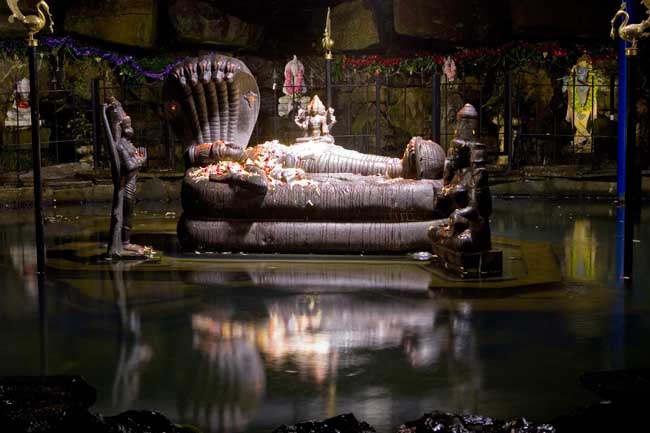
  • Vaikunta Ekadasi,Vizhnyir Ekoratsya Vikhunh in Russia

    Vaikunta Ekadasi,Vizhnyir Ekoratsya Vikhunh in Russia

    The present area comprising of Russia and the parts of the erstwhile USSR,from Afghanistan border to Arctic and from the black sea to border of China were Vedic.

    I had written on,

    Rig Veda composed in the Arctic,

    Yagnyavalkya had his Ashram in Russia,

    Krishna’s son Pradhyumna built the city of Port Barzhyn,

    Russia was called Sthree Varsha,Kingdom of women and it was a Republic,

    Caspian Sea was Kashyap Sagar,named after Sage Kasyapa,

    Lake Baikal was Indra’s Vaikanasa Theeretha,

    Narodnaya in Urals was Narada Mountain,

    Om Ganeshya Namaha inscription,praising Lord Ganesha is found in Baku,Azharbaijn,

    Vishnu idol found in Russia,

    One can find River Moksha in USSR,

    Seven Rivers,Saptha Sarovar are found in Russia,

    The similarities between Sanskrit and Russian language,

    ….and more.

    (You can find the articles mentioned above by searching Google with the search term +ramanan50)

    Now one more to establish the presence of Sanatana Dharma in Russia.

    That is the observance of Vaikunta Ekadasi,the vrat,the practice of fasting in Russia.

    It was called ‘Vizhnyir Ekoratsya Vikunh’

    In Russian orthodox Christianity, worship is conducted very much like in Vishnu temples. The Russians refer to the feast of Vizhnyir Ekoratsya Vikhunh, directly corresponding with Vaikhunda Ekhadasi. The Russian language also owes a lot to Sanskrit, whose origins 50,000 years ago roughly correspond with the language of the people of the Smritzyi archaeological site, along the banks of the now-dried up Vernstokhlin (Varnasatyakhalini) river system.”

    Reference and citation. http://autarmota.blogspot.in/2015/12/sanskrit-and-ancient-vedic-culture-in.html

    Vaikuntaekadasi

  • Somabana, Vedic Drink made From Mushrooms Russian Academy Of Sciences

    Somabana, Vedic Drink made From Mushrooms Russian Academy Of Sciences

    Soma Bana,a drink used by ancient Indians during Rituals is an intoxicating drink.

    Attempts have been made to differentiate between SomaBana and Sura Bana,by saying while Soma Bana is not intoxicating,while the Sura Bana is intoxicating.

    This,to me ,seems an attempt to portray that ancient Indians did not use intoxicants .

    This is not correct.

    In the Vedas, the same word (soma) is used for the drink, the plant, and its deity. Drinking soma produces immortality (Amrita, Rigveda 8.48.3). Indra and Agni are portrayed as consuming soma in copious quantities. The consumption of soma by human beings is well attested in Vedic ritual.

    The Rigveda (8.48.3) says:

    ápāma sómam amŕtā abhūmâganma jyótir ávidāma devân
    kíṃ nūnám asmân kṛṇavad árātiḥ kím u dhūrtír amṛta mártyasya

    Ralph T.H. Griffith translates this as:

    We have drunk soma and become immortal; we have attained the light, the Gods discovered.
    Now what may foeman’s malice do to harm us? What, O Immortal, mortal man’s deception?

    Swami Dayanand Saraswati translates it as:

    Som (good fruit containing food not any intoxicating drink) apama (we drink you)
    amŕtā abhūmâ (you are elixir of life) jyótir âganma (achieve physical strength or light of god)
    ávidāma devân (achieve control over senses);
    kíṃ nūnám asmân kṛṇavad árātiḥ (in this situation, what our internal enemy can do to me)
    kím u dhūrtír amṛta mártyasya (god, what even violent people can do to me)’
    Be that as it may,evidence has been forthcoming there was such a drink and it was used by Zorastrians and Hindus in Rituals.

    Soma (Sanskrit: soma) or haoma (Avestan), which is a corruption of the sanskrit word soma, was a Vedic ritual drink[1] of importance among the early Indians. It is mentioned in the Rigveda, particularly in the Soma Mandala. In the Avestan literature, haoma has the entire Yasht 20 and Yasna 9-11 dedicated to it.’

    Scientists from the Russian Academy of Sciences have found archeological evidence that Soma Bana was used indeed by both ancient Indians and Persians.
    And they have deduced that the Som  Drink was prepared from Mushrooms.

    One of the most mysterious drinks in the history of tipple is Soma – a drink of ritual importance to the ancient Indians. Drinking Soma was supposed to confer immortality, with the two leading gods Indra and Agni portrayed as consuming it in copious quantities.

    The consumption of Soma by ordinary humans is attested in Vedic ritual. The Rig Veda, which was composed more than 5000 year ago, says: “We drank soma, we became immortal, we came to the light, we found gods.” The Iranians call it Hoama in the sacred Avesta…

    Although the descendants of the ancient Hindus and Zoroastrians continue to perform their age-old rituals, the identity of the plant from which Soma was extracted or fermented was lost.

    Non-psychoactive substitutes came to be used in place of the elusive Soma. Over the past 200 years, a number of candidates have been put forward, including cannabis, rhubarb, ginseng, opium and wild chicory….

    Russian archaeologists may have solved the puzzle. In 2009, while digging at a deep burial chamber in the forests of Mongolia, a Russian-Mongolian expedition from the Institute of Archaeology and Ethnography, Siberian Branch of the Russian Academy of Sciences (SB RAS) discovered embroidered woollen textiles dating back two millennia.

    Russia and India.u

    Although the archaeologists’ work is not yet complete, the first fragments restored have revealed some stunning facts. The fragments of the textile found were parts of a carpet composed of several cloths of dark-red woollen fabric.

     It had made quite a journey – the cloth was spun in Syria or Palestine, embroidered in north-western India and ended up in Mongolia. The discovery is nothing less than miraculous because of its improbability.

    Natalia V. Polosmak, Chief Researcher, SB RAS, writes: “Finding it 2000 years later is a pure chance; its amazingly good condition is almost a miracle. How it made its way to the grave of a person it was not meant for will long, if not forever, remain a mystery.”

    The embroidery depicts an ancient Zoroastrian ceremony centred around a mushroom. In the middle of the composition, to the left of the altar is the king or priest, who is dressed in a smart, long embroidered kaftan gaping open at the bottom. He is focused on the mushroom in his hands.

    Polosmak says the “divine mushroom” resembles the well-known psychoactive species psilocybe cubensis. “The weight of evidence suggests that soma, the ancient ritual drink, has been prepared from the mushrooms of family strophariaceae which contains the unique nervous system stimulator psilocybin.”

    All researchers agree that ancient Indians and Iranians used for cult purposes a drink containing a psychoactive substance. The debate is about the identity of the drink and how it affected the consciousness of those who consumed it.’

    Though there are other plants from which the Soma Drink is believed to have been extracted,the Mushroom seems to be the best candidate.

    References and citations.

    https://en.m.wikipedia.org/wiki/Soma_(drink)

    https://in.rbth.com/blogs/stranger_than_fiction/2017/01/09/how-russian-scientists-cracked-the-secret-of-a-riga-veda-era-drink_676758
    Featured image credir.aumstar.com

  • ‘  I have never seen anything of the kind.” Vladimir Putin. ON Krishna’s Sons City Por-Bazhyn, Siberia

    ‘  I have never seen anything of the kind.” Vladimir Putin. ON Krishna’s Sons City Por-Bazhyn, Siberia

    Russian president Vladimir Putin visited the mysterious island with Prince Albert of Monaco and said that:

     “I have been to many places, I have seen many things, but I have never seen anything of the kind.”

    Russia had been the Home of Sanatana Dharma.

    The Rig Veda was composed in the Arctic.

    Russia has a Veda ,’Santees,’

    It was also called ,

    The Book of Veles considered to be the Russian Vedas’

    Russia was called Sthree Varsha.( Kingdom of Women).

    It was run by women and it was a Republic.

    Indra’s ( chief of devas) City Amravathi is Baikal

    Baikal the Vaikanasa Thertha,Sacred Pond.

    Zhetysu (Kazakh: Жетісу, pronounced [ʒi̯ɘtɘsʊw] meaning “seven rivers”; also transcribed ZhetisuJetisuwJetysuJeti-suJity-su,ЖетысуДжетысу, etc.) is a historical name of a part of Central Asia, corresponding to the South-Eastern part of modern Kazakhstan. It owes its name, meaning “seven rivers” (literally “seven waters”) in Kazakh, to the rivers which flow from the south-east into Lake Balkhash.’

    Seven Sacred Rivers of India.

    Ganga,

    Yamuna,

    Godavari,

    Sarasvathi,

    Narmada,

    Sindhu and

    Kaveri.

    Gange ca Yamuneschaiva Godavari Sarasvati,

    Narmadhe Sindhu Kaveri Jalesmin Sannidhim Kuru.

    (Kalash Mantra)

    Narada’s Mountain Narodnaya is Narada’s Mountain in the Urals.

      was Rig Vedic Mandala City.

    Siberians worship Ayur Devathas of Hinduism.

    Yama,the God of Death,Time built a Temple in Arkaim Russia.

    ‘Arkaim Yama temple.

    In Russia’s more mystical quarters there is intense interest in the ancient town, seeing it as the city temple built by the legendary King Yama, ruler of the Aryans in the Golden Age, which will once again become the centre of the world.6

    However, the discovery of the settlement has opened a historical aperture onto far more than the battles and conquests of an aggressive Indo-European people waged across Eurasia and south into the Mediterranean lands, where their war chariots shattered the peace of Old Europe. What the Land of Cities has revealed in its very structure and history is above all the still earlier past of the Ural-Altaic peoples – a past of such enormous antiquity that it presents more mysteries than it solves.

    Built in the unique architectural mould of nordic Asgard, the most sacred shrine of the Aesir of which the Prose Edda relates that “men call it Troy,” Arkaim may have been a shrine dedicated to the Aryan Sun religion, yet the roots of its dedication would have lain ultimately in the far older cult of the Pole star. Essentially, this was the religion of the shaman, the wizard, the medicine-man and other wonder-workers in touch with the spirits of nature.

    Thus the swastika, thought to be the exclusively Aryan symbol of sun-worship misappropriated by the Nazis,7 and found depicted on many of the clay pots unearthed in Arkaim, is an older religious and metaphysical symbol than that attached to the Aryan Sun God, its roots lying in totemic shamanism. René Guénon, the eminent French esotericist, points out that the swastika, symbolising eternal motion around a motionless centre, is a polar rather than a solar symbol, and as such was a symbol central to the Pole star cult, originally dedicated to a planetary deity connected to Ursa Major, the Great Bear. This centre, Guénon stresses, “constitutes the fixed point known symbolically to all traditions as the ‘pole’ or axis around which the world rotates…” The swastika is therefore known world-wide as the ‘sign of the pole.’8′

    Port Baijn or Bazhyn was built by Pradhyumna,son of Lord Krishna.

    As per various ancient Indian sources, Sri Krishna’s son Pradyamna is known to have extended the Yadhu Empire north of what is present day India. He had attacked the city of Vajrapura and defeated King Vajranabha. Later a truce was called and Pradyamna married the king’s daughter Prabhavati. The poetic versions of this war say that Pradyumna is transported by geese to a land far far away.’

    ‘Some historians identify this kingdom as Kyrgistan, a Central Asian Republic. This identification is based on the Mahabharata epic which describes a Kuru warrior Bhishmaabducting three brides from the Kasi kingdom for making them wives of his half-brother Vichitravirya. This same custom of abduction of brides by bridgegroom or his allies for marrying them, still prevails in Kyrgistan. At some point during the reign of Pururavas-Aila (the first king mentioned in the line of lunar dynasty of Indian kings) Uttara Kuru and the Kurus of India could have belonged to the same Kuru Empire. Arjuna collected tribute from Uttara Kuru during his northern military campaign for Yudhisthira’s Rajasuya sacrifice. The epics also mention that they followed a republican constitution with no monarchy.’

    • There is the fact that Lord Krishna fled Dwaraka because of the repeated attacks by Jarasandha and built a fortress amid the sea to escape him.
    • I do not subscribe to the view that there were seven Dwarakas and what is found off Gujarat coast was the latest of Krishna because if you want to escape from an enemy you do not settle very near to where you had been attacked.
    • And the construction of the Por-Bazhyn is of of an Indian fortress and temple.
    • And it is surrounded by water.

    Loot at this video of Dwaraka fortress that reminds of Por-Bazhyan.Check this video with Por-Bazhyn videos of Port Baizhyn and Krishna’s Dwaraka,excavated off the coast of Gujarat India.

    Watch the Sudashan Chakra of Krishna,carved in Stone ,lying amidst ruins.

    Following video from History Channel.


    Dwaraka and Port Baijn were Islands.

    Krishna built Dwaraka amidst an Island with heavy fortifications to save the city from Jarasandha.

    Even though Por-Bajin is believed to date back at least 1,300 years, many of the walls are intact and extremely well-preserved. The main structure on the island—positioned in the inner courtyard—is separated into two parts and is covered by a tiled roof walkway which is held by 36 massive wooden columns placed on stone bases.

    The Island, its design, its purpose, and practically everything about it is a mystery.

    Experts have no idea why it was built, but an even greater mystery is why it was abandoned.

    Scientists have noticed that there is a lack of heating on the island, even though it is located in Siberia and endures periods of extremely harsh weather. The Island is located over 7,000 above sea level.

    As noted by the Siberian Times, “…what puzzles the experts, however, is the lack of rudimentary heating systems, particularly given that Por-Bajin sits at 2,300 meters above sea level and endures harsh Siberian weather.”’ ( source of this quote, http://www.ancient-code.com/a-1300-year-old-island-in-siberia-shocked-vladimir-putin-i-have-never-seen-anything-like-it/

    Dwaraka is now being dated around 30,000 years back!

  • Brahmi Script Khakassia Petrogyph Siberia Nazca Lines Peru 5000 Years?

    Brahmi Script Khakassia Petrogyph Siberia Nazca Lines Peru 5000 Years?

    World  cultures speak of Cosmic Axis,called Axis Mundi.

    The axis mundi (also cosmic axisworld axisworld pillarcenter of the worldworld tree), in certain beliefs and philosophies, is the world center, or the connection between  Heaven and Earth.’

    The World Tree is another concept that connects the celestial world and the terrestrial (our world).

    It is called by different names in different Cultures of the world.

    In Hinduism,it is expressed,as one of the Symbolism in Samudra Manthan,the churning of the Ocean of Milk.

    Samudra Manthan is also a symbol denoting the evolution of the world.

    More details on this in future in a detailed article.

    I have written on the presence and pervasion of Sanatana Dharma/Hinduism throughout the world.

    In Russia,Siberia,Mexico,Honduras,Peru.

    I have referred to these Four ,because it is relevant to this article.

    For the presence of Sanatana Dharma/Hinduism,please Google country/region +ramanan50 to get more articles.

    What is intriguing is the presence of this Tree of Life ,is that it is present as Hieroglyphs throughout the world.

    One such is the  Khakassia petroglyph, found in Siberia.

    Some date it to 10,000 years,the most recent date being assigned is 5000 years.

     It is in Siberia.
    https://youtu.be/hbWuNvCHg1I

    Khakassia.

    ‘The republic is located in the southwestern part of Eastern Siberia  and borders Krasnoyarsk Krai in the north and east, the Tuva Republic in the southeast and south, the Altai Republic inn the south and southwest, and Kemerovo Oblast in the west and northwest. It stretches for 460 kilometers (290 mi) from north to south and for 200 kilometers (120 mi) from east to west. Mountains (eastern slopes of Kuznetsk Alatau and the Abakan range) cover two thirds of the republic’s territory and serve as the natural boundaries of the republic.’  (  https://en.m.wikipedia.org/wiki/Khakassia ).

    Khakassia Petroglyphs. Image.
    Khakassia Petroglyphs in Siberia,5000 or 10,000 years old?

    Now what are the lines in the Image?

    It looks like Brahmi Script.

    I have provided the Brahmi script of ancient India as the Featured Image at the top of this article.

    Some of these have been identified, as shown in the image below.

    Brahmi Script ,marked with interpretation of the Khakassia Petroglyphs image.
    Brahmi Script ,marked with interpretation of the Khakassia Petroglyphs found in Siberia. Image credit.https://cogniarchae.wordpress.com/2016/11/06/the-great-riddle-of-a-seven-headed-figure/

    Gha,Jha,Ya,Sa are clearly visible.

    I am trying to get the image enhanced and shall try to read the other letters.

    The fact that,

    Russia was called Sthree Varsha,Kingdom of women,

    Sage Yagnyavalkya lived in Russia,

    Arkaim was built based on Rig Vedic Mandala Design,

    Lake Baikal was Vaikanasa Theertha of Indra, Chief of Devas,

    Krishna’s son Pradhyumna built a city in Russia,Port Baizhyn,

    There is a River called Moksha( means Liberation in Sanskrit),

    Siberians worship Ayur Devathas ( Gods of Logevity in Hinduism),

    Makes one the present Present Petrogyph Evidence as one more evidence of Sanatana Dharma being present in the distant past in Russia.

    Peru. Nazca Lines.

    Nazca lines.image.
    Nazca Lines in Peru.Shiva’s Trishul,Trident? Image credit. http://www.unmuseum.org/nazca.htm

    One finds the Nazca Lines of Peru being described as the mark of the Trident of Shiva,(Trishul) by Sugreeva in the Sundara Kanda of Ramayana,when he adivises his army to searck for Sita in the land where Shiva’s Trishul is found.

    The Tree of Life is considered as a Female Principle and the Mayan Religion has the Manasa Devi,Goddess of Snake and poison of Hinduism and the Yoga Chakras as the basis of their Religion.

    Please read my articles on Nazca Lines and Mayan Religion based on Yoga Chakras of Hinduism.

    And it may be noted that Sage Yagnyavalkya who lived in Russia was Protagonist of Women and Russia was called ‘Kingdom of Women’