When one delves deep into Indian History,which is narrated in books called Purana,(Purana means ‘very old),one is amazed at the sweep of Sanatana Dharma.
There are eighteen major Puranas.
In addition one may find information in Ramayana,Mahabharatha,the two Epics of India.
Apart from these one can find information in Scientific texts of ancient India like Varahamihiram,Surya Siddhantha.
They have to be studied deeply to spot and understand the references.
And we have over twenty regional languages,many of which are at least five thousand years old.
One finds,on reading certain facts recorded leaves one slightly bewildered.
Though many facts are checked and found true,geographical anomalies seem to be present.
For instance the distance covered by Hanuman to reach Lanka.
Valmiki records the distance to be around hundred yojanas,approximately eight hundred miles from the southern tip of India.
But the shortest distance from South India to Lanka is about twenty four kilometers.
But this and seemingly incorrect description gets cleared,when one understands that the landmass of present India was not the same in ancient times,that is five to million years ago.
We have Gondwana,Sundaland,Hyperborea,Lemuria,MU to consider.
One will get a clearer picture.
I am providing links some of my articles towards the close of this article.
One such anomaly is the presence of Tamil kings,Tamil Language around Afghanistan and NWFP of Pakistan.
King Sibi, A Tamil Emperor and ancestor of Rama had one of his capitals there and he had built a Temple for Lord Vishnu in Thiruvellarai,near SriRangam.
The temple stands even today.
Tamils were supposed to be in the southern part of India.
Similarly,Ahobila mountain in Andhra is considered to be the place where the Narasimha Avatar of Vishnu took place.
Yet we find evidence that Prahlada,who was responsible for Narasimha Avatar was born in Multan,Pakistan!
And there is a reference in the Puranas that Lord Krishna’s son Samba,who was responsible for the annihilation of Krishna’s Dynasty,built a Temple for the Sun God in Multan,Pakistan.
This event is found in Samba Purana,a subsidiary Purana.
‘The Samba Purana consists the narrative of Samba’s getting infected by leprosy, after being cursed by sage Durvasa for mocking him. Later, he got cured by worshipping Surya in the temple constructed by him in Mitravana on the banks of the Chandrabhaga, which was once Multan Sun Temple.Samba underwent penance for 12 years in Mitravana near the shores of Chandrabhaga.Both the original Konark Sun Temple and the Multan Sun Temple at Multan, earlier known as Kashyapapura, have been attributed to Samba. He was cured by the Sun God Surya after 12 years of penance near Konark. As a tradition in the state of Odisha, India this day is celebrated as Samba Dashamion the 10th day of the Shukla Paksha of Pausha Masa. On this day, mothers pray to Surya for the health of their children.
….
The city of Multan may get its name from the Sanskrit name for the Sun idol and Sun temple, Mulasthana.
The original Sun Temple at Multan is said to have been built by Samba, son of Krishna, to gain relief from the symptoms of his leprosy.
Hsuen Tsang is said to have visited the temple in 641 AD, by which time the Multan Sun Temple was the most important sun temple in ancient India.Hsuen Tsang described an idol of the Sun God made of pure gold with eyes made from large red rubies. Gold, silver and gems were abundantly used in its doors, pillars and shikhara. Thousands of Hindus regularly went to Multan to worship the Sun God. Hsuen Tsang is also said to have seen several devadasis (“dancing girls”) in the temple. Travelers like Hsuen Tsang, Istakhari and others, mentioned other idols in their travelogue, saying that the idols of Shiva and Buddha were also installed in the temple.Al-Biruni visited Multan in the 11th Century and left a glowing description of the temple,though it had been destroyed by the time he visited the city.
Adi Shankaracharya’s,Sarvagnya Peetha,where he ascended the Sarvagnya Peetha,Throne of Wisdom.
Sharada Devi,
Shiva temples,Vishnu Temples,
Hingaraj Temple.
Devi Temples.
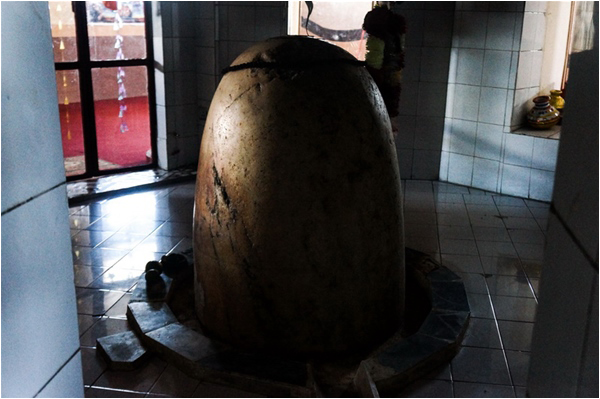
There is a Shiva Temple about 10 km from Mansehera Pakistan.
The Shiva Linga in the temple is 2000 years old.
It was renovated by Rajama Singh in 1830.
It was again renovated recently by the Hindu Community.
‘Shiva Temple Mansehra Largest Shiv ling in Pakistan
Doomed’ Abbottabad (5th Gurkhas) temple, the much older Shiv Mandir (Temple) at Chitti Gatti, near Mansehra town up here has been at last reclaimed and now partially restored by the small Hindu community in this region.
The Mansehra Shiv Temple is one of the oldest still in existence and use, in Pakistan, dating back at least 2000 years. In 1947-48, it was forcibly seized by some local ‘land mafia’ group i.e. people who were influential and well-connected and who illegally occupied local property of weaker folk (and the Hindu community that was still left here at Partition/Independence was especially weak and vulnerable) and and they also seald up the temple on this site, covering about an acre or more of land close to Chitti Gatti (lit. ‘White Stone’) village and quite close to Mansehra town. Thus, from c. 1948 to 2008 the Shiv temple here was sealed up and abandond and out of bounds to local or any other Hindus –needless to say, to soon fell into a very bad state of disrepair
This temple had seevral very significant and unusual features, including (a) the famous ‘Durga cave’ up on a hill beyond it, where there was a small cave with a lovely fresh water spring bubbling out of the ground, where ‘Yatris’ (religious pilgrims to the temple) would bathe and purify themselves and offer respects to the goddess Durga, before going down to the main Shiv temple; and (b) one of the oldest and biggest ‘Shiva Lingam’ idols anywhere in this region, inside a special little sanctum — that in fact precedes this old temple by at least 800 years.
This fine, old and historical temple was at last repossessed by our local Hindu community though the efforts of Mr Darshan LaL, son of Mr Sham Lal, who chairs the Hazara Shiv Temple Society (STS), and whose family have been custodians of various surviving Hindu shrines and properties here; and (at long last, after much furore) via the assistance of the Auqaf department of NWFP (now KP) and some Hindu members of the central/federal legislature, who were awakened to a realisation of the sheer antiquity and value of this unique temple. Over the last few years, now, the temple has been partially restored and is in use again,, happily– some 1.2 million Pakistani rupees have gone so far into this restoration process, largely on a ‘self-help basis’: the Hindu community from various parts of Pakistan donating about 70% of funds and labour, Hindu parliamentarians donating about 15% of funds from official federal sources and the balance being met by some 5-6 local (Muslim) ‘Khans’ or landowners, who remain sympathetic to our small Hindu community here and who, historically, have been hosts and supporters of the annual ‘Maha Shivaratri Puja’ festival here since the 19th century at least–I am happy to say that some of my own elders were also among these, and that we were also able to make a small contribution towards the restoration of this lovely temple.
The ‘Maha Shivaratri Puja’ festival here, devoted to the celebration of the nuptials of Lord Shiva (‘Mahadeva’) to the goddess Parvati (who is also the primordial Shakti/force) and in earlier times, this used to be a very very special festival here at this temple. Pilgrims used to come from all over (then) British India, especially large contingents from former Kashmir state and the Maharaja there used to make sizeable fiancial contributions for the temple’s upkeep and the hosting of pilgrims/annual visitors; and people from other places, as far away as Rajputana (Rajhistan), Dharamshala and Kangra, UP and Delhi, the Punjab, Sindh and other parts of the NWFP, all used to converge here for these festivities.
This annual festival is, once again taking place at this temple; with a proper ‘Pujari’ assisted by Mr Darshan Lal and the STS organisation here; and pilgrims and visitors are coming here again, albeit in modest numbers still, except for the local Hindus. This year, the Shiva festival was the biggest yet, celebrated between 19th and 20th February 2012, and with some (approx) 1500 Yatris. Unfortunately, because of lack of space — much of the temple’s adjoining land is still occupied by the ‘land mafia’ and litigation instituted by the Auqaf department to reclaim it still underway– housing and feeding them is not easy and once again, our local STS members have risen to the occasion, with some help from a few local Muslim landowners, including my own family, and this year, the ‘Maha Shivaratri Puja’ was the best one yet. An occasion of great solemnity and yet of great joy, hope and merriment (Pl see some of the photos below) and it was good to be able to help, by making arrangements for about 200 pilgrims (my contribution in terms of food, firewood, tents etc) ; and it has been very, very good indeed, seeing this ancient place once again resounding with the age-old chants and happy and worshipful voices.
For some of us, in these parts, raised with ideals of communal love and tolerance and in line with the dream of the Quaid i Azam (MA Jinnah)’s true Pakistan at heart, the revival of the Maha Shivaratri Puja in this old temple, is indeed a happy event. Yet, this dream, this vision is still truly far from any large-scale achievement and is also simultaneously under threat from the rise of an extremist, narrow-minded ‘Taliban’ style manifestation of Islam in this country. But we must acknowledge with admiration, the efforts and dedication of the Shiv Temple Society (STS) here, their bravery and hardwork–in particular we thank Mr Sham Lal and his sons, Mr Darshan Lal, Sajaan Lal and Ashok Lal, who have been the moving spirits behind this venture and who still put in so much effort to make everything a sucess and who are also the ones to very kindly share these photos with me. Long may they prosper, insha’Allah, and may e in our little corner of Pakistan achieve fulfilment of our aim of communal harmony and freedom.
Finally, and MOST IMPORTANTLY, please, all of you who read this blog– or share it with friends and well-wishers– do remember that the work on the Mansehra Shiv Temple is still going on; and they need funds, financial assistance and donations, and any help that anyone is willing to give or volunteer. The most important things that are required at this time are (a) funds to complete the temple complex and fully restore it and (b) provide some housing and shelter for pilgrims, who brave our harsh mountain winters to come here. A total (approx) amount of Pak Rs 1.0 million is direly needed for these works– about 11,000 US dollars or 7200 UK pounds sterling, not a very great amount. The STS and local Hindu community will be able to raise some of this money and some of us, with whatever limited resources we have, shall help them out as much as we can; and e will also try to convince the provincial and federal governments to make some donations; but we apprehend that substantial funds will still be needed. In addition to these please also seriously think about helping out with the annual Maha Shiva festivities, with your generous donations or whatever help in cash or kind you can make.
For further information, you can either make a post/query here and I shall try to respond asap; or write/email directly to the Shiv Temple Society (STS) which is a registered charity here, c/o Mr Saajan Lal at saajan_lal@yahoo.com . I would also like to take this opprtunity to thank some people abroad, who, on learning of the work being done by the STS out here, have come forth with material help recently– it is not possible to name all of these people, but special thanks accrue to Dr HP Gupta in the USA and Mr Sagar in the UK; and thanks, again, to all others who have been thoughtful enough to help and continue to help…. Post by Shahid Shabbir
‘In my city, Abbottabad, there are two functioning Christian churches, while not a single temple. Therefore, I was extremely surprised when I came to know about the Shiv Temple in Chitti Gatti – at a distance of about 15 kilometres from Mansehra – which is not only an emblem of Hindus’ survival in the area but also has immense historical importance.
The village of Chitti Gatti is nestled between swathes of fields and a river. The temple is elevated just besides the main Karakoram Highway. At first glance the building is a simple structure, and you can easily mistake it for a mosque (an attempt to avoid unwanted attention). However, it’s the interior of the temple that highlights its maintenance and houses the 3,000-year-old Shiva Lingam – the oldest in Pakistan and arguably one of the oldest Hindu structures in the whole region. It is a site held holy by many Hindus, which witnesses an annual festival at Shivraatri, around February, where a number of Hindus from Pakistan, as well as abroad, pay a pilgrimage.’
Pakistan inherited about 300 Temples at the time of partition and only about a dozen remain today.
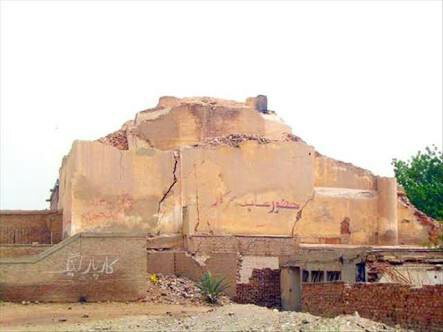
Further archaeological work and exploration was begun at the Salt-Range site of Amb, in association with the Department of Archaeology and Museums, Government of the Punjab.Martand Sun Temple was dedicated to Surya (Sun) god and is now in ruins. The ruins of the temple are located near Anantnag in Indian state of Jammu and Kashmir.[1] Martand is another Sanskrit name for Hindu Sun-god. The Martand temple is one of the important archaeological sites of the country. It was built around 500 AD. The Martand temple (coordinates 33°44′44″N 75°13′13″E) or 33.7456817°N and 75.2203792°E is situated at Kehribal, 9 km east-north-east of Anantnag and south of Mattan. The Martand Sun Temple was built by King of Karkota Dynasty – Lalitaditya Muktapida in 8th century AD.[2][3]It is said to have been built during 725-756 AD.[4]The foundation of the temple is said to have been around 370-500 AD., and also some attributed the construction of the temple began with Ranaditya.[5][6] The temple was completely destroyed by Sikandar Butshikan in early 15th century. It took one year for Sikander Butshikan to fully damage and destroy this Martand temple Image Credit.: http://en.wikipedia.org/wiki/Martand_Sun_Temple
Of the 300 Hindu temples that Pakistan inherited in 1947 atthe time of partition, hardly three dozen have managed to survive,many of whom are in ruins and set to disappear with the passage of time if due attention is not paid to their maintenance.
Following the demolition of the historic Babri Mosque in India in 1992by Hindu extremists, over 200 Hindu temples were destroyed across Pakistan by angry Muslims. Many of the Hindus living in Sindh andNorth West Frontier Province lost their homes as the largest outward migration of the Hindu community since Partition took place during these years. But despite all that, Hindus still exist in Pakistan,numbering more than 2 million. The Hindu population is largest in the Sindh province followed by the North West Frontier Province of the country, but there are Hindu communities dotted all over Pakistan who continue to suffer constant threats against their security, property and lives by extremist Muslims.
Together with the apathy of the public, the Hindus of Pakistan remain a forgotten and voiceless people who have to live a low profile existence and have to put up with many insults to their honour and dignity, without any safeguards. The Pakistani authorities rarelyintervene to help their Hindu nationals, despite the fact that there are frequent reports of the kidnapping of Hindu women and children and looting of Hindu property, besides other forms of discrimination and persecution.
As things stand, most Hindu temples in Pakistan are non-existent while idols in many ancient temples of historical importance are missing.The famous Temples at Katas, near Kalar Kahar, are in a dilapidated condition and require renovation.
You must be logged in to post a comment.