Tag: Faith

  • Converse With Reality God

    Converse With Reality God

    This article is based on real experiences of Life and those who seek rationale or Logic are well advised to skip the article.

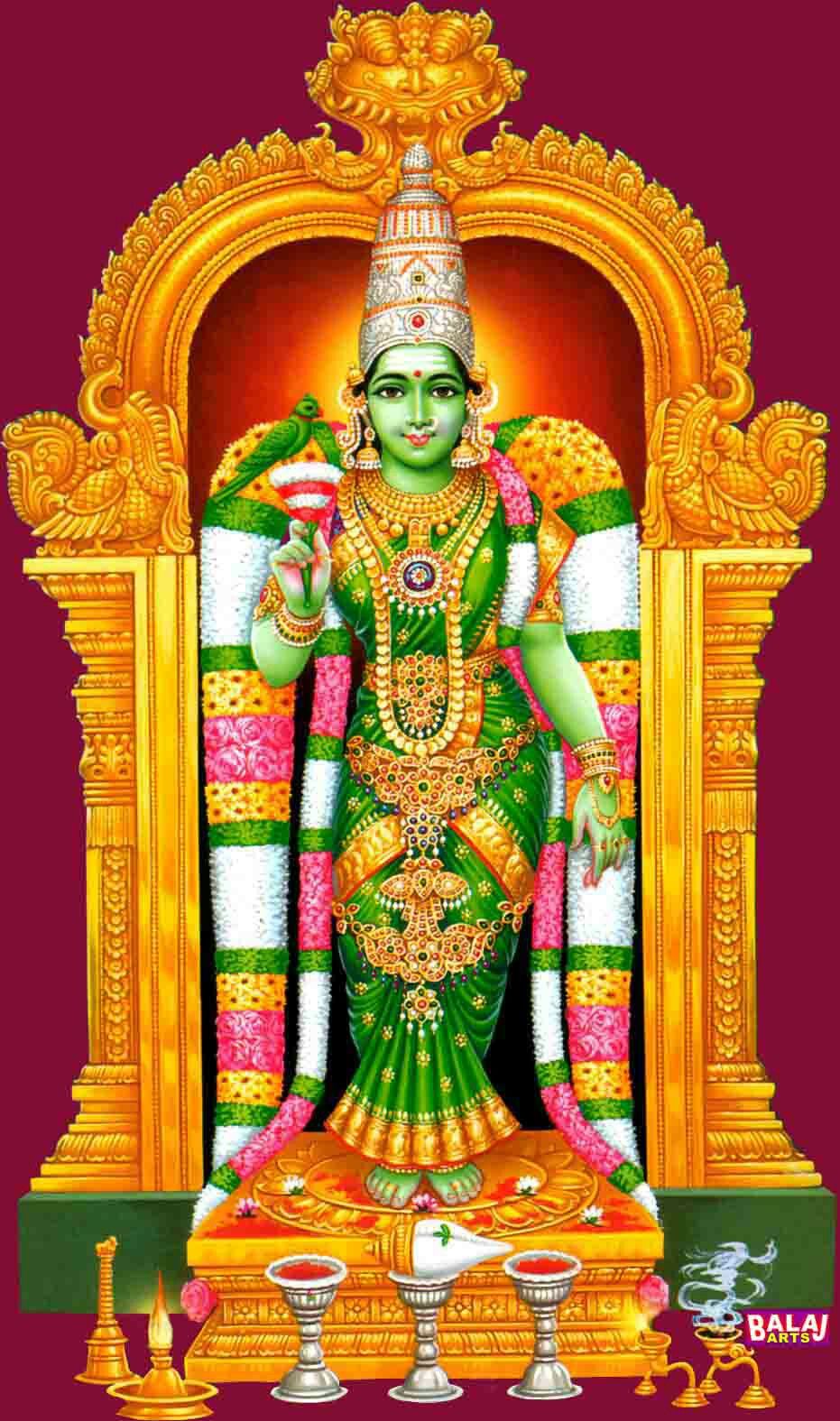
    Devi Kamakshi.

    Life,as I see it in the twilight of my years, is not logical,nor does it obey,follow or satisfy my ego,my qualifications,my wealth or my pedigree.Ot meanders through,though it may appear that we are leading, controlling it.It makes you react,though you may be deluded into thinking that you are Proactive.

    When you have circumstances not working in your favour, you do not know against whom you should react or how to.Many real life situations belong to this category.Nothing is black and white, nothing hundred percent correct,Right. Nor one is. Everything is grey.Everything, everyone in life is Correct,Right from one’s Perspective.

    Hence alluding motives,reacting ,instead of solving the issue aggravates.I tell people,Life usually and definitely messes up ( actually the term I Use is a Four letter word),and so you don’t mess it up further.

    I have seen in such circumstances,it is better, advisable to keep quiet. But this needs practice. I am yet to get this.

    Next is you are under extreme mental pressure, strain.As human beings, we need to let off.We need to communicate .

    Whom do we communicate with?

    Definitely not with Relatives,as more than likely,would complicate the issue. With Friends,Yes. Even with friends, you may not be able to unburden fully.

    With whom can You?

    Unburden,in private to Him or Her.

    It doesn’t matter who He or She is.

    Those who can,will understand this post.

  • Muruga Worship Origin and Space Time Cosmology


    While there are two views on Skanda being the same as Murugan, what is indisputable is the fact that the worship of Skanda/Muruga was very much in

    vogue during the Sanatana Dharma, Vedic Times.


    Subrahmanya, Murugan.Image.jpg
    Subrahmanya, Murugan. Image credit:http://www.teluguone.com/


    Murugan Yantra Basic.Imge.jpg.
    Murugan Yantra Basic.


    Components of Muruga Yantra.Image.Jpg.
    Components of Muruga Yantra.


    Ancient slokas like the Vishnu Sahasranama refers to Lord Skanda.


    ‘Skandas Skandataro Guhano Vaayuvaahana:’


    The mantra of Lord Gannesha refers to Ganesha as he elder brother of Muruga.


    ‘Skanda Poorvaja:


    The worship of Skanda was considered as important and Adi Shankaracharya, while classifying the Vedic Gods and Worship into the Systems, Shanmathas,calls the worship of Muruga as Kaumaram.


    The etymology is very interesting.


    Kaumara means of Youth, from Kumara.


    Here Kumara indicates the son, the son of the One who is eternal and Unborn, that is Shiva,


    The word indicates that Kumara is young and never ages.


    Beauty is associated with Youth.


    Therefore the name Murugan in Tamil .


    Murugan means ‘exquisite Beauty’.


    It is possible that while denoting the Skanda The Tamils took into consideration of the word Kumara and had it traslated as Beauty, ‘Murugan’


    Another fact is that, after Viswamitras sons were banished by Viswamitra to Dravida,which the earlier Santana Dharma considered, wrongly as


    undeveloped,they found the Tamil Culture to be more developed if not on par with Sanatana Dharma in terms of Culture.


    The Tamils had, designated Gods for each land mass, Muruga being assigned the land mass of Hilly Terrain(Kurinji).


    This finds a reference in the early Tamil work Tholkappiyam and Agathiyam, about 5000 years old.


    The word to designate Muruga was ‘Seyon;, The Son, a clear allusion to being the son of Shiva.


    The word Muruga was a later attribute to this Seyon.


    Hence the worship of Skanda, Muruga is as old as the Sanatana Dharma and Tamil Literature.


    Tamils language is represented as the personification of Muruga.


    The Moola mantra of Muruga , Sarvabhava’ is Shadakshra, six letters , half of Visnhu’s Dwadasa nama, Om Namo Bhagavathe Vasudevaya’ and one letter


    more than the Panchakshara od Shiva, Namasivaya.


    Hence the Mantra is a combination of protection and Knowledge.


    At the Cosmic level, the Mantra and Yantra represent the  Cyclic theory of time, enunciated in Hinduism.


    This is proved by the Indus Scripts and Signs.


    The six pointed hexagram stands for the six faced God Murukan and it expresses the structure of the ritual space in geometrical terms and regulates the yearly chronometry inherent in temple festivals.

    The hexagram with the mantram “om saravanabava” inscribed in it serves as a yantram of the deity Murukan and when the mantram is recited, the yantram as a finite hologram of the infinite embodies the primordial sacrifice of prajapati who re-enacts the cosmic order to bring harmony into the world.

    The God Murukan of six faces with twelve eyes, twelve arms regulates the sacred architecture with spiritual art and mythic imagery.  The cock, which decorates the ceremonial flag of the deity Murukan also refers to the sun. The cock signals the sunrise with its “Kozhi Koovuthal” which refers to an auspicious beginning in the daily religious life of the Tamils of southern India.

    The Six Pointed Hexagram: The Symbol of God Muruga.Image.jpg
    The Six Pointed Hexagram: The Symbol of God Muruga.

    This contains the ‘Va’, Vashatkaara of Viishnu, ‘Viswam Visnur vashat Kaaaro’ Vishnu Sahasranama.

    ‘Sa’ the Universal Brahman Attribute, Hamsa Soham.

    ‘Ba’ of Bhairava.

    The symbolization of the six-pointed hexagram is a zodiacal representation with the astronomical intent (K.V.Ramakrishna Rao, 2002). The concept of the hexagon is linked to a circle and the circle is a polygon with infinite sides. Geometrically the six faces of Murukan parallels the hexagon and the geometry is related to arithmetic and numbers. All these concepts are related to the theory of squaring a circle and circling the square and may compose many mathematical functions and operations. The number six expresses the fullness of the cosmos. The six directions; North, South, East, West, up, and down are considered to be surrounded by the God’s six faces. 4.1

    All the festivals that are celebrated for the God Murukan fall on full moon or new moon coinciding with the respective stars. This way the common people are made aware to keep in mind the importance of nakshatras, weekdays, fortnight, month, six months, year etc. in a systematic way by observing the festivities for Murukan from ancient times. The astronomical interpretation of this deity has a powerful association with Indian Tantras, Yantras, Mantras and the five elements (Ether, Wind, Fire, Water, Earth) and God Murukan permeates the sixth, the whole thus the six faces of the deity are represented. 4.2

    The mantram “om saravanabava” is geometrically expressed in the hexagonal structure and is very important in the sacred temple rituals prepared for Murukan. The hexagram symbolizes the six pilgrimage centers of Murukan and the purpose of the pilgrimages to these temples work at several levels (Fred W. Clothey, 1983). 4.3

    1. The Egoscape (The inward pilgrimage of an individual)
    2. The Socioscape (The communal association & transformation of an individual)
    3. The Ecoscape (The hills, the terrains, the rivers, the routes and the geographical association of the pilgrimage)
    4. The Metascape (The metaphysical realization of an individual)

    Sign No: 342, The Sky, read as 'VAN'.Image.jpg.
    Sign No: 342, The Sky, read as ‘VAN’.

    . Sign No: 8, The Lord of space and time, read as
    . Sign No: 8, The Lord of space and time, read as “MU”.


    Citation :

    http://www.murugan.org/research/valluvan2.htm


    Enhanced by Zemanta
  • Mantra Retrieval Of Things Persons Araikkaasu Amman

    Many a Times we misplace things, Car keys,Jewelry,Credit cards and the like.

    We try searching everywhere but are unable to locate them.

    Sometimes it is recovered later.

    To reduce this tension The Tamils havea tradition of praying the Araikkaasu Amman Pudukkottai.

    You take One Rupee coin, knot it in a white cloth sprinkled with Turmeric powder.Pay Araikkaasu Amman that the lost article be recovered.

    Once you recover the article send in Money you can afford to the temple or visit the Temple.

    Might sound superstitious and irrational,but I have seen this delivering results.

    If the problem is solved, it does not matter what you believe in, especially if it concerns and affects you directly.

    For retrieving Lost Things,Araikkaasu Amman
    Araikkaasu Amman

    Details of Araikkaasu Amman Temple.

    Moolavar:Koganeswarar, Mahilavaneswarar
    Urchavar:
    Amman / Thayar:Pragadambal, Mangalambikai
    Thala Virutcham:Magizha maram
    Theertham:Mangala theertham
    Agamam / Pooja:
    Old year:500-1000 years old
    Historical Name:Pudukkottai
    City:Tirukokarnam
    District:Pudukkottai
    State:Tamil Nadu

    Temple Timings 6-11 AM and 4-8PM

    Address.Sri Pragadambal Temple, Tirukokarnam, Pudukkottai district.

    Phone.+91-4322-221084, 9486185259.

    If some valuables go missing,if some your kith and kin go missing, the following Mantra shall ensure that the lost things are recovered and the lost person either returns or you get information about them

    This has to be chanted, after bath, in the morning 18 times.

    | कार्तवीर्यार्जुनोनाम राजा बाहू सहस्त्रवान् |

    तस्य नामस्मरणमात्रेण गतं नष्टं च लभ्यते ||

    || Kaartaveeryarjunonaam Raajaa Baahu Sahastravan |

    Tasya NaamasmaraNamatreNa Gatam Nashtam Cha Labhyate ||

    Join 4,576 other subscribers
  • Breaking Coconuts On Head Vow.

    I read an article in Der Spiegel about the The centuries old Jarramplas Festival takes place annually every Jan. 19-20 on Saint Sebastian Day,in Piornal, Spain.

    People throw Turnips to drive the Demon.

    Jarramplas Festival
    People throw turnips at the Jarramplas as he makes his way through the streets beating his drum during the Jarramplas Festival on Jan. 19 in Piornal, Spain.

    ” This year locals expect to use more than 20,000 kilograms (44,092 pounds) of turnips to drive the demon away. Even though the exact origins of the festival are not known, various theories exist including the mythological punishment of Caco by Hercules. It is generally believed to symbolize the expulsion of everything bad.”

    I was reminded of the practice of some communities,‘kurumbas’ and certain sections of the ‘24 Manai Telugu Chettiars’ in Tamil Nadu.

    They break Coconuts on head!

    Breaing k Coconuts on Head
    Break Coconuts On The head

    This practice is prevalent in Karur, Coimbatore and pats of Madurai Districts in Tamil Nadu.

    Those who take the vow undergo certain procedures prescribed by the temple or as followed in their families.

    There seems to be some cases of injury because the Coconuts are broken forcefully on the Head.

    The percentage of injury is relatively low and people continue this practice even to day.

    “The annual Adi festival of Sri Mahalakshmi Temple at Mettumahadanapuram in the district was celebrated  with the chief priest breaking coconuts on heads of devotees as part of their fulfilment of vow.

    More than a thousand devotees had coconut broken on their head while some sustained bleeding injuries in the process.

    The event had attracted adverse comments from agencies such as the State Human Rights Commission in the past but the local administration did not intervene because of religious sensitivities involved.

    The ritual is part of a two-day annual festival that is the highlight of the temple annals. A majority of the temple’s ‘kudipaadu’ belongs to the ‘kurumbas’ and certain sections of the ‘24 Manai Telugu Chettiars.’

    The day began with the ‘Amman’ returning from the ceremonial procession to the temple and the chief priest, A. Periasamy, performed abishekam with the sanctified waters brought from River Cauvery. A traditional lamp was lit on top of the temple flag mast.

    As if in a trance,  Periasamy stood on a shoe of nails and then started breaking coconuts first on the head of seven elders each from the two main communities.

    He went along the main enclosure breaking coconuts on the head of  nearly a thousand  devotees who undertook the ritual as part of fulfilment of vows. A large number of women participated in the ritual without any fear of injury.

    Source.

    http://www.indiatvnews.com/news/india/bizarre-priest-breaks-coconuts-on-heads-of-karur-temple-devotees-9678.html


    http://www.spiegel.de/international/a-944565.html


    Enhanced by Zemanta