Tag: Baikal

  • Vedas Nine? Perun Santees Russia Gave Four To India?

    Vedas Nine? Perun Santees Russia Gave Four To India?

    The Russian connection to Sanatana Dharma is complex,intriguing,interesting and merits detailed study.

    This is because there is evidence, I have written in detail abiut each of them,

    Vedas ,specifically the Rig Veda was composed in the Arctic,

    Indra’s City Amravathi is near Baikal,Russia,

    Indra’s Vaikanasa Theertha is Lake Baikal,

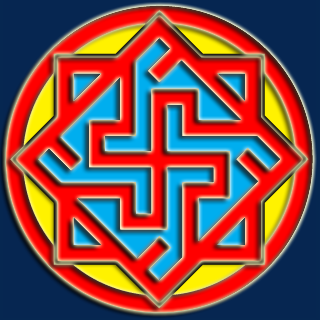
    Rig Vedic  Swasthik Mandala city is fiund in Russia,

    Archaim,Russia contains Havan/Homa Kund,

    Sage Yagnyavalkya lived in Russia,

    Russia was called Sthree Varsha,Kingdom of Women,

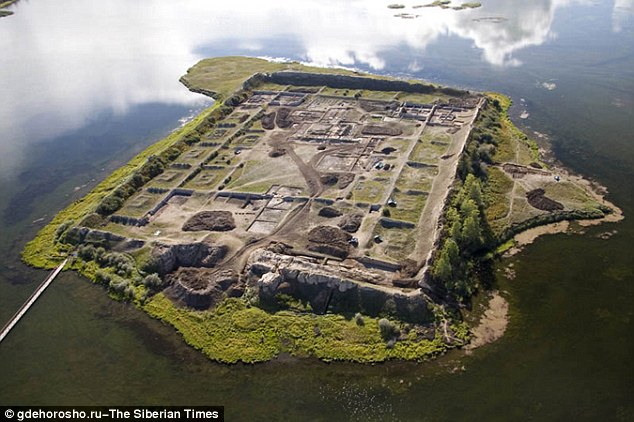
    Lord Krishna’s son Pradhyumna built the Russian port city of Port Baijn/Barzhyn’

    Siberians worship Ayur Devatas,

    Russian language is very much closer and many terms in Russians are pure Sanskrit,

    Rivers mentioned in the Vedas are found in Russia,

    Rama’s stepmother,Kaikeyi was birn in Russia,

    There is Narada mountain in Russia.

    Arjuna went on a Pilgrimage to Russia..

    Russians have their Vedas,Perun Santees.

    They are nine in number.

    They seem to have been written in Gold( while Indian Vedas were transferred orally).

    Russians beileve that a portion of it was given to Dravidas,people of South India,whise method of worship was different.

    These Perun Santees date back to 600,000 years.

    The portion given to India dates back to 40,000 years.

    The similarities.

    Perun Santees believe in one Reality.

    There are expressed Gods out of this Reality.

    The sign of Reality is Swasthika.
    Their God of Thunder and Lightening ,Perun resembles Indra with his weapons.

    In the classification scheme of Georges Dumézil, Perun was the god of the second function (physical and military power), a god of war, and as such, he was armed with several fantastic weapons. Perun’s lightning bolts were believed to be stones and stone arrows. According to folk beliefs, fulgurites, belemnites, and sometimes even the remains of prehistoric stone tools found in the ground are remains of these weapons. Various Slavic countries also call these deposits “Perun’s stones”, “thunderbolt stones”, “thunderbolt wedges” and “Perun’s arrow”; other unrelated names for these include “devil’s finger”, “God’s finger”, and “Mother of God finger”, and in Lithuania, “Perkun’s finger”  These thunderbolt stones were sometimes said to be transferred back to the sky by the wind after being under earth for a period of seven years. The weapons of Perun protected against bad luck, evil ,magic,disease,and – naturally enough – lightning itself.

    Perun also had another type of weapon in his arsenal, as destructive as his firestone arrows, but even more unusual: mythical golden apples. While this may not seem to be much of a weapon, in many'( wiki Perun)

    (   https://en.m.wikipedia.org/wiki/Perun )

    Perun Temple seems to have an Altar resembling Navagraha.

    Remains of an ancient shrine to Perun discovered in Peryn consisted of a wide circular platform centred around a statue, encircled by a trench with eight apses, which contained sacrificial altars and possibly additional statues. The overall plan of the shrine shows clear symbolism of the number nine. This is sometimes interpreted that Perun, in fact, had nine sons (or eight sons, with himself, the father, being the ninth Perun). It should also be noted that in some Slavic folk songs, nine unnamed brothers are mentioned.( wiki Perun)

    According to Perun Santees Fire God is to be worshiped as one finds in Vedas, Agni worship.

    And there are ample references to Mitra Varuna,Mithraism.

    There is a sect,Ynglism,which is based on Perun Santees and Book of Veles.

    Ynglists teach that “Yngly” (Инглия) is the primordial fiery force from which the universe is arisen. They consider the Ynglings as the noble patriarchs of the Slavs and all other Indo-European (Aryan) peoples and civilisations, the first ones to get awareness of the Yngly. They also worship Rod similarly to other Rodnovers, but consider it the archetypal god of embodied men and the god of the begotten (manifested) world.

    Their sacred texts are the Slavic-Aryan Vedas (Славяно-Арийская-Веды) and the Book of Veles. Although centered in the Omsk region, in recent years the church has extended its influence throughout Russia with local communities and a massive selling of books and other media.

    Ynglists teach that “Yngly” (Инглия) is the primordial fiery force from which the universe is arisen. They consider the Ynglings as the noble patriarchs of the Slavs and all other Indo-European (Aryan) peoples and civilisations, the first ones to get awareness of the Yngly. They also worship Rod similarly to other Rodnovers, but consider it the archetypal god of embodied men and the god of the begotten (manifested) world.

    https://en.m.wikipedia.org/wiki/Ynglism )

    Book of Veles is found to be a forgery.

    Perun Santees seems to be authentic.

    Slav Vedas. , http://vesna.atlantidaforum.com/?p=844

    There is a view that there is a Fifth Veda, Pranava,Veda and Lord Subrahmanya taught this to Shiva at Swamimalai and hence called Swaminathan,the Perceptor to God.

    For statements made about Hinduism and Sanatana Dharma,please Google key word plus ramanan50.

  • ‘  I have never seen anything of the kind.” Vladimir Putin. ON Krishna’s Sons City Por-Bazhyn, Siberia

    ‘  I have never seen anything of the kind.” Vladimir Putin. ON Krishna’s Sons City Por-Bazhyn, Siberia

    Russian president Vladimir Putin visited the mysterious island with Prince Albert of Monaco and said that:

     “I have been to many places, I have seen many things, but I have never seen anything of the kind.”

    Russia had been the Home of Sanatana Dharma.

    The Rig Veda was composed in the Arctic.

    Russia has a Veda ,’Santees,’

    It was also called ,

    The Book of Veles considered to be the Russian Vedas’

    Russia was called Sthree Varsha.( Kingdom of Women).

    It was run by women and it was a Republic.

    Indra’s ( chief of devas) City Amravathi is Baikal

    Baikal the Vaikanasa Thertha,Sacred Pond.

    Zhetysu (Kazakh: Жетісу, pronounced [ʒi̯ɘtɘsʊw] meaning “seven rivers”; also transcribed ZhetisuJetisuwJetysuJeti-suJity-su,ЖетысуДжетысу, etc.) is a historical name of a part of Central Asia, corresponding to the South-Eastern part of modern Kazakhstan. It owes its name, meaning “seven rivers” (literally “seven waters”) in Kazakh, to the rivers which flow from the south-east into Lake Balkhash.’

    Seven Sacred Rivers of India.

    Ganga,

    Yamuna,

    Godavari,

    Sarasvathi,

    Narmada,

    Sindhu and

    Kaveri.

    Gange ca Yamuneschaiva Godavari Sarasvati,

    Narmadhe Sindhu Kaveri Jalesmin Sannidhim Kuru.

    (Kalash Mantra)

    Narada’s Mountain Narodnaya is Narada’s Mountain in the Urals.

      was Rig Vedic Mandala City.

    Siberians worship Ayur Devathas of Hinduism.

    Yama,the God of Death,Time built a Temple in Arkaim Russia.

    ‘Arkaim Yama temple.

    In Russia’s more mystical quarters there is intense interest in the ancient town, seeing it as the city temple built by the legendary King Yama, ruler of the Aryans in the Golden Age, which will once again become the centre of the world.6

    However, the discovery of the settlement has opened a historical aperture onto far more than the battles and conquests of an aggressive Indo-European people waged across Eurasia and south into the Mediterranean lands, where their war chariots shattered the peace of Old Europe. What the Land of Cities has revealed in its very structure and history is above all the still earlier past of the Ural-Altaic peoples – a past of such enormous antiquity that it presents more mysteries than it solves.

    Built in the unique architectural mould of nordic Asgard, the most sacred shrine of the Aesir of which the Prose Edda relates that “men call it Troy,” Arkaim may have been a shrine dedicated to the Aryan Sun religion, yet the roots of its dedication would have lain ultimately in the far older cult of the Pole star. Essentially, this was the religion of the shaman, the wizard, the medicine-man and other wonder-workers in touch with the spirits of nature.

    Thus the swastika, thought to be the exclusively Aryan symbol of sun-worship misappropriated by the Nazis,7 and found depicted on many of the clay pots unearthed in Arkaim, is an older religious and metaphysical symbol than that attached to the Aryan Sun God, its roots lying in totemic shamanism. René Guénon, the eminent French esotericist, points out that the swastika, symbolising eternal motion around a motionless centre, is a polar rather than a solar symbol, and as such was a symbol central to the Pole star cult, originally dedicated to a planetary deity connected to Ursa Major, the Great Bear. This centre, Guénon stresses, “constitutes the fixed point known symbolically to all traditions as the ‘pole’ or axis around which the world rotates…” The swastika is therefore known world-wide as the ‘sign of the pole.’8′

    Port Baijn or Bazhyn was built by Pradhyumna,son of Lord Krishna.

    As per various ancient Indian sources, Sri Krishna’s son Pradyamna is known to have extended the Yadhu Empire north of what is present day India. He had attacked the city of Vajrapura and defeated King Vajranabha. Later a truce was called and Pradyamna married the king’s daughter Prabhavati. The poetic versions of this war say that Pradyumna is transported by geese to a land far far away.’

    ‘Some historians identify this kingdom as Kyrgistan, a Central Asian Republic. This identification is based on the Mahabharata epic which describes a Kuru warrior Bhishmaabducting three brides from the Kasi kingdom for making them wives of his half-brother Vichitravirya. This same custom of abduction of brides by bridgegroom or his allies for marrying them, still prevails in Kyrgistan. At some point during the reign of Pururavas-Aila (the first king mentioned in the line of lunar dynasty of Indian kings) Uttara Kuru and the Kurus of India could have belonged to the same Kuru Empire. Arjuna collected tribute from Uttara Kuru during his northern military campaign for Yudhisthira’s Rajasuya sacrifice. The epics also mention that they followed a republican constitution with no monarchy.’

    • There is the fact that Lord Krishna fled Dwaraka because of the repeated attacks by Jarasandha and built a fortress amid the sea to escape him.
    • I do not subscribe to the view that there were seven Dwarakas and what is found off Gujarat coast was the latest of Krishna because if you want to escape from an enemy you do not settle very near to where you had been attacked.
    • And the construction of the Por-Bazhyn is of of an Indian fortress and temple.
    • And it is surrounded by water.

    Loot at this video of Dwaraka fortress that reminds of Por-Bazhyan.Check this video with Por-Bazhyn videos of Port Baizhyn and Krishna’s Dwaraka,excavated off the coast of Gujarat India.

    Watch the Sudashan Chakra of Krishna,carved in Stone ,lying amidst ruins.

    Following video from History Channel.


    Dwaraka and Port Baijn were Islands.

    Krishna built Dwaraka amidst an Island with heavy fortifications to save the city from Jarasandha.

    Even though Por-Bajin is believed to date back at least 1,300 years, many of the walls are intact and extremely well-preserved. The main structure on the island—positioned in the inner courtyard—is separated into two parts and is covered by a tiled roof walkway which is held by 36 massive wooden columns placed on stone bases.

    The Island, its design, its purpose, and practically everything about it is a mystery.

    Experts have no idea why it was built, but an even greater mystery is why it was abandoned.

    Scientists have noticed that there is a lack of heating on the island, even though it is located in Siberia and endures periods of extremely harsh weather. The Island is located over 7,000 above sea level.

    As noted by the Siberian Times, “…what puzzles the experts, however, is the lack of rudimentary heating systems, particularly given that Por-Bajin sits at 2,300 meters above sea level and endures harsh Siberian weather.”’ ( source of this quote, http://www.ancient-code.com/a-1300-year-old-island-in-siberia-shocked-vladimir-putin-i-have-never-seen-anything-like-it/

    Dwaraka is now being dated around 30,000 years back!

  • Sanskrit Inscription Olkhon Island Baikal Lake Russia.

    Sanskrit Inscription Olkhon Island Baikal Lake Russia.

    The image above is Shaman rock and cape Burhan on Olkhon Island, Baikal Lake, Russia.

    I had written in my earlier article that there is a Sanskrit Inscription in Baikal area.

    As the article was about Krishna’s palace in Por-Byzhyn,I did not detail on the inscription.

    There is a Sanskrit inscription in Rock Shaman.

    Cape Burkhan is one of the most interesting place of Olkhon. It ends by a sacred Rock Shaman. At the foot of the Rock Shaman. At the foot of the rock there is a mysterious picture and an inscription in Sanskrit.

    Rock Shaman is one of 9 shrines of Asia (earlier it was called “Stone – Temple”) It,s located not far from Khuzhir settlement, and it,s a symbol of Baikal, one of the most famous sight of the lake – almost each film or photo – album about Baikal contains it,s picture! Rock Shaman is a two – summits rock covered with thick red lichen. In the nearest to the shore rock there is a through cave, especially worshipped by Buryats. In the ancient times it was a plase for special shaman,s rituals, and later it was Buddha,s altor.

    The name of the Rock was changed, when Buddhism came to Buryatia. It was renamed “Burkhan” –God, Buddha. Native people say, that in the beginning of xx century hundreds of Buddhish Lamas came from datsans (temples) of Zabaikalie to pray. Lamas used to say that a Mongolian God, who had moved from Mongolia many years ago looking for a shelter; lived there in the cave of the Rock; and Lamas from all 34 Buryat datsans come to the Rock to pray.’ (http://www.olhon-tur.com/en/sham.php)

    Christianity wiped out nearly all earlier practices in the area.

    However the remains of  Shamanism and Buddhism are present now.

    As communism also had a major role in destroying Religion,the evidence is is difficult to come by.

    Yet there is enough material to suggest that Shamanism is a primitive aspect of Hinduism.

    Mongolian flag.image
    Mongolian flag

    Shamana might have its origin in the Sanskrit word ‘Shramana’

    Śramaṇa (Sanskrit: श्रमण, Samaṇa in Pali) means “seeker, one who performs acts of austerity, ascetic”. The term refers to several Indian religious movements parallel to but separate from the historical Vedic religion.

    ‘Shramana’ and ‘Brahmin’ to illustrate bitter opponents whose differences came from varying religious models. Part of the Shramana tradition remained outside the Hindu fold by rejecting the authority of the Vedas; with the Jains, Buddhists, Ajivikas, and other religious groups developing as a result of this rejection. Part of the Shramana tradition was absorbed into Hindu dharma literature with a place for a renunciate sanyasi in it, in the four stages (ashramas) of life.’

    ( source.  http://www.chinabuddhismencyclopedia.com/en/index.php/Shramana)

    So the presence of Sanskrit is not surprising.

    I will be writing on Hinduism and Shamanism in detail.

    And there is mention of sky Gods,including Adhiti being worshiped alongn with 23 more deities.

    ‘Then transfer to the MRS village (an old name which stands as Russian abbreviation for Malomorskii Fishing Farm) 45 km) and crossing Olkhon Vorota (Olkhon Gates) strait to the Olkhon island while heading for  Nikita Bebcharov’s guest– house  managed  by a private family in Huzhir village.  Then you’ll have an excursion to the Burhan cape where you will visit the well – known Shamanka rock  – one of the 9 Asian sacred places called “ Rock Temple” in the past. The Burkhan Cape Shaman Rock Temple was once visited by the Dalai-Lama who had carried on special service near the Altar-of-Rock in a small cave inside the Craig that has some inscriptions in Sanskrit. By the shamanist believers the Cape is regarded to be home of the major of 13 sky deities – Khan Hate– Baabai who came to our Land as a fortune ruler. ‘
    ( source.  http://www.baikal-discovery.ru/en/index.php?option=com_content&task=view&id=23&Itemid=42 )

    Adhiti.

    The ancient Indian Hindu Mother Goddess, Aditi, is the daughter of Daksha and Veerni. She is the unbounded Sky Goddess, honored as the mother creator of life because she gave birth to the planets and the stars.

    She had twelve children that are called the twelve sovereign principles: Mitra (solidarity), Varuna (fate), Aryaman (chivalry), Daksa (ritual skill), Bhaga (the inherited share), Amsa (the gods’ given share), Tvastr (craftsmanship), Savitr (the magic power of words), Pusan (prosperity), Sakra (courage), Vivasvat (social laws), and Vishnu (cosmic law. Aditi’s children help protect humankind.

    Aditi’s name means “unbound, unlimited, and unfettered.” Aditi is revered as the unbounded love found in motherhood.

    Aditi is the guardian of all life and the supporter of all creatures. She is also the keeper of light that illuminates all life and ensures consciousness.

    Aditi is an ancient goddess, the mother of all the Indian gods. She is the Hindu mother goddess that can help you free yourself of real and perceived bounds on your happiness and joy. She can help you find a path that will bring you the happiness that you are searching for and the care that you need from a mother.

    Asvini kumaras.

    Asvini Devas,twins, are the sons of Sangya, Goddess of Clouds, daughter of Viswakarma,The Divine Architect and Surya, the Sun God, in His Avatar as Vivasvat.

    Another version says it is Chaya,Shadow, is their mother,father is Surya.

    They are Healers and given the world Narana Mantra to cure all diseases.

    Narayana Mantra

    The Shaman head is the head healer primarily.

    Genghis Khan was a Hindu and had a Vedic Flag

    In Chuan Chou, there was a Sivan Temple. In that temple, an image of Siva was consecrated under the ‘Firman’ – royal orders of ‘Sekasai Khan’.
                    This was done for the health of ‘Sekasai Khan’.
                    ‘Sekasai Khan’ in this inscription is the name of Kublai Khan himself.
                    His full name was Kublai Sekcen Khan.
                    Sekcen Khan became Sekasai Khan in Tamil.
                    The Sivan Temple was known as ThiruKathaleesvaram and the Lord of the temple was known as ThiruKathaleesvaram udaiya Naayanaar.
                    The person who executed the order was Thava ChakkaravarththikaL Sampandha PerumaL.
                    It was done on the Chithra Paurnami day of Saka Era 1203 – 1281 AD.

    Source. https://ramanisblog.in/2015/08/06/kublai-khan-consecrated-shiva-chuan-chou-hinduism-in-china/

    The Thirteen Buddhas.

    The Thirteen Buddhas (十三仏 Jūsanbutsu?) is a Japanese grouping of Buddhist deities, particularly in the Shingon sect of Buddhism. The deities are, in fact, not only Buddhas, but include bodhisattvas and Wisdom Kings.[1] In Shingon services, lay followers recite a devotional mantra to each figure, though in Shingon practice, disciples will typically devote themselves to only one, depending on what the teacher assigns. Thus the chanting of the mantras of the Thirteen Buddhas are merely the basic practice of laypeople.

    The Thirteen Buddhas are also an important part of a traditional Japanese Buddhist funeral service, with each deity having a corresponding memorial service for the deceased.[2] The thirteen in Japanese and Sanskrit and the corresponding date of their service after the death are:

    1. Fudo (Acala), 7th day
    2. Shaka (Sakyamuni), 14th day
    3. Monju (Manjushri), 21st day
    4. Fugen (Samantabhadra), 28th day
    5. Jizo (Ksitigarbha), 35th day
    6. Miroku (Maitreya), 42nd day
    7. Yakushi (Bhaisajyaguru), 49th day
    8. Kannon (Avalokitesvara), 100th day
    9. Seishi (Mahasthamaprapta), 1st anniversary
    10. Amida (Amitabha), 2nd anniversary
    11. Ashuku (Akshobhya), 6th anniversary
    12. Dainichi (Vairocana), 12th anniversary
    13. Kokuzo (Akasagarbha), 32nd anniversary

    Source. https://en.m.wikipedia.org/wiki/Thirteen_Buddhas

    Buddhism came later to Sanatana Dharma and many Buddhist practices,especially Esoteric Buddhism follows,though with modifications Tantra.

    So it comes as no surprise to me that there is Sanskrit inscription in Lake Baikal area.


  • China Urals Mongolia Arctic Aurora Borealis Sugreeva Geography

    China Urals Mongolia Arctic Aurora Borealis Sugreeva Geography

    Accurate geographical reference was provided by Sugreeva to his Vanara Army for the Search of Sita.

    Here  I present from the Valmiki Ramayana, the places described by Sugreeva as lying in the North of Kailash and modern Names of these place

    I shall post on details of the search for Sita in other directions.

    tatra mlecChaan pulindaan ca shuurasenaan tathaiva ca |
    prasthaalaan bharataan caiva kuruum ca saha madrakaiH || || 4-43-11
    kaa.mboja yavanaan caiva shakaan pattanaani ca |
    anviikshya daradaan caiva himavantam vicinvatha || 4-43-12

    11, 12. tatra= there – in north; mlecChaan pulindaan ca= Mleccha-s, Pulinda-s – provinces of; tathaiva= like that; shuurasenaan ca= Shurashena, also; prasthaalaan bharataan caiva= Prasthala, Bharata, also, thus; madrakaiH saha = Madraka, along with; kuruum ca= Kuru, also; kaamboja yavanaan caiva= Kaambhoja, Yavana [countries,] also, thus; shakaan pattanaani ca= of Shaka, cities, also; daradaan caiva= Darada, also, thus; anviikshya= on scrutinizing; himavantam vicinvatha= at Himavanta [Himalayas,] search out.

    “There in the north, the provinces of Mleccha-s, Pulinda-s, that way Shurashena – Prasthala – Bharata – Kuru – Madraka – Kaambhoja – Yavana shall be scrutinized along with the cities of Shaka and Darada, and then search in Himalayas. [4-43-11,12]

    NWFP of Pakistan Now.

    tataH soma aashramam gatvaa deva gandharva sevitam |
    kaalam naama mahaasaanum parvatam tam gamiSyatha || 4-43-14

    14. tataH= then; deva gandharva sevitam= gods, gandharva-s, adored by; soma aashramam gatvaa= to Soma, hermitage, on going; mahaa saanum= great, peaked; kaalam naama= Kala, named; tam parvatam gamiSyatha= to that, mountain, you go.

    “You to Soma hermitage, which is adored by the gods and gandharva-s, and then you go to that great-peaked mountain named Mt. Kala. [4-43-14]

    ishaalaa nalinii yatra prabhuuta kamalotpalaa |
    ha.msa kaaraNDava aakiirNaa apsaro gaNa sevitaa || 4-43-22

    22. yatra= where; prabhuuta kamala utpalaa= replete with, lotuses, costuses; hamsa kaaraNDava aakiirNaa= swans, partridges, overrun by; apsaraH gaNa sevitaa= apsara, throngs, adored by; vishaalaa nalinii= expansive, lotus-lake; is there that is the place of Kubera.

    “Where an expansive lake is there, which is replete with lotuses and costuses, overrun by swans and partridges, and adored by throngs of apsara-s, that is the place of Kubera, Deity for Wealth-Management. [4-43-22]

    From 6498 till 5122 years ago to the Earth has landed Varyag by name Kubera (Cubera) from sort of Cub. Varyags or space navigators were children of the Supreme God – Father, Russian people considering. On Russian like surname of Kubera sounds as Kubarev. It was the first Russian navigator on open spaces of the third planet of the Solar system populated in those days with wild animals and humanoids. Savages had no soul and any civilization, not able to speak, write, build dwelling and to process the ground. As against local population the forefather was high growth – 190 cm, the European appearance, with a white leather and eyes of it were surprising green, emerald color.

    Kubera has examined the Earth and has chosen for the beginning the expansion some tribes of humanoids in Mediterranean, including Africa, Europe and Asia, having studied their habits and bents. Among savage it has selected seven most sexual female which could though somehow to draw his man’s attention. Then it has transferred seven foremothers on open spaces of the Volga region where there were the idealist in representation Kubera of a condition for creation of a human tribe. Central Russian upland and the Volga region represent territory which could not undergo to destructive influences of natural cataclysms and possible consequences of thawing of polar ice and flooding during the huge period of time.

    krauncam tu girim aasaadya bilam tasya sudurgamam |
    apramattaiH praveSTavyam duSpravesham hi tat smR^itam || 4-43-25

    25. krauncam tu girim aasaadya= Kraunca, but, mountain, on reaching [thereafter]; su dur gamam= highly, not, passable one; tasya bilam = its, tunnel; a + pramattaiH= without, incautiously [cautiously]; praveSTavyam= is to be entered; tat= that – tunnel; duS pravesham = un, enterable; smR^itam hi= known to be, indeed – they say.

    “Thereafter on reaching Mt. Kraunca you shall cautiously enter into a highly impassable tunnel of that mountain to search Seetha. That tunnel, they say, is an un-enterable one. [4-43-25]

    Kumara or Skanda, the son of Shiva-Parvati-Ganga made this bore by using His shakti prayoga ‘Divine power.’ This is his birthplace, and the legend of His birth and growth are detailed in Bala Kanda.

    Krauncha Parvatah in China..jpg
    Krauncha Parvatah in China.
    Like Shiva is said  to have brought down the Ganges on to earth (plains of India) from the  heavens (Himalayas), his son or his ‘junior’ Skanda is credited with having chiseled a tunnel through Mt. Krauncha.

    One of the best known ancient tunnels in China is the Guolinag Tunnel in the Taihang Mountains. Up until 1972 only an ancient path chiseled through the rocks of this mountain linked the villages in the area to the outside world.


    Here are a couple of images of the ancient path of Guolinag, which was improved in 1972, not by the government, but once again by the locals. It took them five years to complete the task.

    avR^ikSam kaama shailam ca maanasam vihaga aalayam |
    na gatiH tatra bhuutaanaam devaanaam na ca rakSasaam || 4-43-28

    28. a +vR^ikSam= without, trees; vihaga aalayam= birds, abode; maanasam= Mt. Maanasa; kaama shailam ca= Kaama, mountain, also; are to be searched; tatra= there; bhuutaanaam gatiH na = for beings, inlet, no; devaanaam ca rakSasaam= for gods, even, for demons; [gatiH= inlet]; na = no.

    “The treeless Mt. Kaama and the abode of birds Mt. Maanasa are also to be searched, and there is no inlet for any being, let alone gods or demons. [4-43-28]

    These mountains Maanasa and Kaama are said differently in other translations, like ‘the wish-endower Kaama and the bird-less Maanasa Mountains.’ That is to say, ‘even birds cannot enter there then where is the question of entry to other beings…’ If that place is un-enterable even for birds or gods how these few monkeys can enter, is the question that ensues. Sugreeva gives the answer to Rama at the start of this exodus of monkeys, saying that these monkeys can do any undoable task, which is peculiar to these genera.

    China Krauncha Mountain.gif
    China Krauncha Mountain.Map
    The Krauncha of Ramayana could be one of the peaks in the Taihang Range which indicates that the ancient tunnel in there may be the one mentioned in Ramayana. 

    The path that Valmiki chalks out is clear. From Kailash (in the Himalayas) to Krauncha (in the Taihang Range), he says there are many other mountain peaks – namely the ‘treeless’ Mt. Kaama and the ‘abode of birds’,Mt. Maanasa, – that the ‘vanaras’ will see. Sugreev instructs them to scour these mountains thoroughly for Sita. These are  the mountains of the Qinling Range which falls between the Himalayas and the Taihang Mountains as the ‘vanaras’ move in the north-east direction from Kailash. (See Map below). The two highest peaks, and therefore most visible, in this chain are the Tuanjie and the Taibai. It is possible that the Ramayana was referring to these two (Kaama and Maanasa)

    sa ca sarvaiH vicetavyaH sa saanu prastha bhuudharaH |
    krauncam girim atikramya mainaako naama parvataH || 4-43-29

    29. sa saanu prastha bhuu dharaH= with, mountainsides, grades, fringe, mountains; saH= that Kraunca mountain; sarvaiH vicetavyaH= by you all, is to be searched; krauncam girim atikramya= from Kraunca, mountain, moving away; mainaakaH naama parvataH= Mainaaka, named, mountain – is there.

    “You all have to search Mt. Kraunca inclusive of its mountainsides, grades, and its fringe mountains, and on moving away from that Mt. Kraunca, a mountain named Mainaaka is there. [4-43-29]

    This Mainaaka is different from the one that wanted to give hospitality to Hanuma during his flight across ocean in Sundara Kanda.

    Then Sugreev mentions another peak called Mt. Mainaaka, which is identified by ‘a massive mansion built by demon architect by the name Maya’. Just as the ‘Ram-Setu’ of Ramayana (also called Adam’s Bridge) lies exactly in the spot mentioned in the Ramayana, and the Gympie Pyramid of Queensland (Australia) referred in Ramayana as ‘a peak like structure built by the celestial architect Vishwakarma’, the ‘Mansion of Maya’ may also be another pre-historical megalithic structure built by unknown ‘celestials’, this time in China.

    tat saaraH samatikramya naSTa candra divaakaram |
    anakSatra gaNam vyoma niSpayodam anaaaditam || 4-43-35

    35b, c. tat saaraH samatikramya= that, lake, on passing over; naSTa candra divaakaram= devoid of, moon, sun; a+ nakSatra gaNam= without, star, clusters; niS payodam= without, clouds; a+ naaaditam= less of, noise [noiseless]; vyoma= sky – is there.

    “Passing that lake there will be just sky which will be devoid of moon, or sun, or the clusters of stars, and it will be cloudless and noiseless. [4-43-35b, c]

    Valmiki equates the light of ‘Northern Lights or Aurora Borealis‘ to the ‘light that emits from sages who have attained ‘siddhi‘.

    In northern latitudes, the effect is known as the aurora borealis (or the northern lights), named after the Roman goddess of dawn, Aurora, and the Greek name for the north wind, Boreas, by Galileo in 1619.

    Auroras are associated with the solar wind, a flow of ions continuously flowing outward from the Sun. The Earth’s magnetic field traps these particles, many of which travel toward the poles where they are accelerated toward Earth. Collisions between these ions and atmospheric atoms and molecules cause energy releases in the form of auroras appearing in large circles around the poles. Auroras are more frequent and brighter during the intense phase of the solar cycle when coronal mass ejections increase the intensity of the solar wind.Auroras result from emissions of photons in the Earth’s upper atmosphere, above 80 km (50 mi), from ionized nitrogen molecules regaining an electron, and oxygen atoms and nitrogen molecules returning from an excited state to ground state.

    The last landmark mentioned in Uttara-Kuru is Mt. Soma, which has to be one of the peaks of the Urals.The highest peak in the Urals is the ‘Narodnaya‘ – which in the local language means ‘Mountain of the People‘. In Sanskrit too the word has the same meaning ‘nara‘ means ‘people‘ and ‘udaya‘ means ‘elevation‘..

    Narodnaya is the Mountain of Narada.

    Please read my post on this.

    Citation.

    Valmiki Ramayana Kishkindha Kanda

    Vedic Cafe

    Kubarev