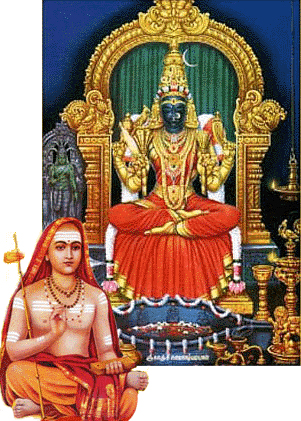
Tag: Adi Shankaracharya

  • Adi Shankaracharya Horoscope


    There is controversy over the Birth date of Adi Shankaracharya.


    While some date it BC other date it AD, corresponding to middle ages.


    Sharada Peeth (Sarvajnapeetha) temple, now in Pakistan-administered Kashmir.Image.jpg
    Sharada Peeth (Sarvajnapeetha) temple, now in Pakistan-administered Kashmir.


    I shall be posting a detailed article on this.


    Meanwhile based on Madhvacharya‘s Sankara Vijayas Anandagiri’s Chidvilasa, Punyasloka Manjari and  the Guru Parampara (succession of different

    persons who acted as the head preceptors of Sankara Mutts) list preserved in the Sringeri Kanchi Kamakoti Sankara Mutt, the date of birth of Adi

    Shankaracharya was fixed by the venerable astrologer Sri B.V.Raman.


    This is the Horoscope of Adi Shankaracharya.


    Adi Sankara was born on Vaisakha Suddha Panchami, at noon:


    Sukla paksheshu, panchamyaam, thithayaam, Bhaskara vasave; Madhyahnecho abhijinnama muhurhta, subha-veekshithae.


    Sankara Vijayam .


    Date of birth : March – 25 – 044 before Christ; Time : Mid-noon. Place : Kaladi (Kerala);Longitude = 76*–59” East and Latitude = 8*–29’ North.Ayanamsa = 6*–09’ .

    Lagna Sun Moon Mars Mercury Jupiter Venus Saturn Rahu Ketu
    99*22’ 8*12’ 69*12’ 332*36’ 24*06’ 303*36’ 03*-0


    Planetary Positions.


    Mars

    -9-

    Sun

    Mercury

    Venus

    Rahu

    -11-

    Moon

    -12-

    Jupiter Raasi Lagna
    -7- Leo
    Saturn Ketu Libra -3-
    Pisces Venus

    Rahu

    Taurus Sun
    Nava Amsa Mars
    Leo
    Moon Saturn

    Mercury

    Jupiter

    Ketu

    Libra

    Lagna

    Virgo

    Citation.


    http://jyothishi-pandit.blogspot.in/2010/05/horoscope-analysis-of-bhagavan-adi.html


  • Shankaracharya Intellectual Giant Complete Works

    Whether  Adi Shankaracharya is the incarnation of Lord Shiva is point, better left alone.

    There are some who dispute it.

    However what one can not dare to deny, is the fact that He was an intellectual Giant ..

    Shankaracharya was engaged in an argument with Buddhists on Reality  and the nature of the world.

    The main pivot of Shankaracharya’s  Philosophy rests on His assertion that Permanence is Real and Change is Illusory.

    For the Buddhists, Change alone is permanent and there is no Permanence.

    Totally diametrically opposite  point of views.

    Buddhists argue with Shankaracharya thus.

    Take a Candle.

    It lights up the area surrounding it.

    It releases Energy, and loses Energy every micro second.

    So when you look at the candle for the second time ,it is not the same as it was as it has expended energy, has changed its size.

    In the case of Man, Man changes.

    Man goes through the various Ages-Childhood,Youth, Old Age.

    So Man does not remain the same.

    Every thing changes and nothing is Permanent.

    Shankaracharya replies,

    True,

    But , if , as you declare, every thing changes and does not remain the same, how is it that you identify the Object as such?

    Yes, The candle has changed, Changes, Man changes.

    If only Changes are there, how is that we recognize them as such?

    Because there is Something by referring to which you recognize Objects despite the Changes.

    The permanent Reality is Brahman and the Changes are Illusory.

    What an argument?

    Look at list of works of Shakaracharya whci he completed  in 32 years of His Life.

    Shankaracharya with His Disciples.Imge.jpg.
    Shankaracharya with His Disciples.

    Prasthanatraye.

    • Brahmasutra Bhashya
      HTML
    • Brhadaranyakopanishad Bhashya
    • Chandogyopanishad Bhashya
    • Ishopanishad Bhashya
    • Kathopanishad Bhashya
    • Kenopanishad Bhashya
    • Prashnopanishad Bhashua
    • Mandukyopanishad Karika Bhashya
    • Mundakopanishad Bhashya
    • Taittiriyopanishad Bhashya
    Other Commentaries
    • Adhyatma Patala Bhashya
    • Hastamalakiya Bhashya
    • Lalita Trishati Bhashya
    • Nrsimha Purvatapanyupanishad Bhashya
    • Sanatsujatiya Bhashya
    • Vishnu Sahasranama Stotra Bhashya
    Longer Philosophical Works
    • Prapancha Sara
    • Sarva VedAnta SiddhAnta Sara Sangraha
    • Upadesha Sahasri
    • Viveka Chudamani
    Shorter Philosophical Works
    • Advaita Anubhuti [84]
    • Advaita Panchakam [5]
    • Anatma Shrivigarhana [18]
    • Aparokshanubhuti [144]
    • Atmabodha [68]
    • Brahma Anuchintanam [28]
    • Brahmajnanavallimala [20]
    • Dhanyashtakam [8]
    • Ekashloki [1]Jivanmukta Anandalahari [17]
    • Kaupina Panchakam [5]
    • Laghu Vakyavrtti [18]
    • Manisha Panchakam [5]
    • Maya Panchakam [5]
    • Nirvana Manjari [12]
    • Nirvana Shatakam [6]
    • Panchikaranam [prose]
    • Prabodha Sudhakara [257]
    • Prashnottara Ratnamalika [67]
    • Praudha Anubhuti [17]
    • Sadachara Anusandhanam [55]
    • Sadhana Panchakam or Upadesha Panchakam [5]
    • Shatashloki [100]
    • PDF from Sanskrit Document Site
    • Svatma Nirupanam [153]
    • Svatmaprakashika [68]
    • Tatvopadesha [87]
    • Vakyavrtti [53]
    • Yati Panchakam [5]
    • Yoga Taravali [29]
    In Praise of Ganesha
    • Ganesha Pancharatnam [5]
      PDF from Sanskrit Document Site
    • Ganesha Bhujangam [9]
    In Praise of Shiva
    • Dakshinamurti Ashtakam [10]
    • Dakshinamurti Stotram
    • Dakshinamurti Varnamala Stotram
    • Dasashloki Stuti
    • Dwadasha Jyotirlinga Stotram
    • Kalabhairava Ashtakam
    • Mrityunjaya Manasika Puja
    • Shiva Anandalahari [100]
    • Shiva Aparadhakshamapana Stotram [17
    • Shiva Bhujangam [4]
    • Shiva Keshadipadantavarnana Stotram [29]
    • Shiva Manasa Puja [5]
    • Shiva Namavali Ashtakam [9]
    • Shiva Padadikeshantavarnana Stotram [41]
    • Shiva Panchakshara Nakshatramala Stotram [28]
    • Shiva Panchakshara Stotram [6]
    • Suvarnamala Stuti [50]
    • Vedasara Shiva Stotram [11]
    In Praise of Shakti
    • Ananda Lahari
    • AnnapUrna Ashtakam [8]
    • Bhavani Bhujangam [17]
    • Bhramaramba Ashtakam [9]
    • Devi Bhujangam [28]
    • Devi Chathuhshasti Upachara Puja Stotram [72]
    • GaurI Dashakam [11]
    • Kalyana Vrshti Stava [16]
    • Kanakadhara Stotram [18]
    • Lalita Pancharatnam [6]
    • Mantramatrka Pushpamala Stava [17]
    • Minakshi Pancharatnam [5]
    • Minakshi Stotram [8]
    • Navaratna Malika [10]
    • Saundaryalahari [100]
    • Sharada Bhujanga Prayata Stotram [8]
    • Tripurasundari Ashtakam [8]
    • Tripurasundari Manasa Puja [127]
    • Tripurasundari Veda Pada Stotram [10]
    In Praise of Vishnu and His Avatars
    • Achyutashtakam [9]
    • Bhagavan Manasa Puja [10]
    • Govindashtakam [9]
    • Jagannathashtakam [8]
    • Krishnashtakam [8]
    • Lakshminrsimha Karavalamba (Karunarasa) Stotram [17]
    • Lakshminrsimha Pancharatnam [5]
    • Mohamudgara (Bhaja Govindam) [31]
    • Pandurangashtakam [9]
    • Rama Bhujanga Prayata Stotram [29]
    • Shatpadi Stotram [7]
    • vishnu Bhujanga Prayata Stotram [14]
    • vishnu Padadikeshanta Stotram [52]
    In Praise of Other Deities and Tirths
    • Ardhanarishwara Stotram [9]
    • Gangashtakam [9]
    • Guru Ashtakam [10]
    • Hanumat Pancharatnam [5]
    • Kashi Panchakam [5]
    • Manikarnika Ashtakam [9]
    • Narmadashtakam [9]
    • Nirguna Manasa Puja [33]
    • Subrahmanya Bhujangam [33]
    • Uma Maheshwara Stotram [13]
    • Yamunashtakam [8]
    • Yamunashtakam(2) [9]

    Complete Works of Shankaracharya for Download at the following Link.

    Shankara Works

    Works of Shankaracharya

    Enhanced by Zemanta
  • For Success In Any Endeavor Mantra Shankaracharya

    I have posted Five Mantras which will grant immediate relief for problems faced by us.


    One would have noticed that all these mantras are not directed to One God or Goddess.


    Nor are they culled from one source.


    Reason?


    By faith I am an Advaitin, Nirguna Upasana.


    Yet my Istha Devata is Tirukkadavur Abhirami.


    While I trust Her implicitly, for She has taken care of me at the most difficult time of my Life,I have used many Mantras on various occasions, either for

    me or for others .


    Image of Bala Tripura Sunari.jpg.
    Bala Tripura Sundari


    I have found, without exception, that all the Mantras delivered the result.


    Hence the different Mantras are being posted based on my personal experience.


    People may use, if they come across some other Mantras, if they come from a reliable source.


    In all the Mantras I have posted, I have included the Bheeja Mantras as well.


    Please use the Bheeja Mantras only after getting initiated from a Guru.


    You shall get a Guru if you are ardent enough.


    If this is not forth coming, one may pray Lord Subramanya at Swamimalai and start the Mantra.


    Or Hayagriva at Thiruvahhendrapuram


    One faces challenges in Life and one gets over them too.


    At times, one gets disheartened and loses initiative.


    Nothing seems to work, despite your sincere effort.


    Reason is that for any action to bear fruit, there are others factors,which are beyond our control, which have to contribute.


    This is possible only if He Desires we should have the result, His Kadaaksha must be behind us.


    Be it  getting a job, getting married, good education, removal of poverty,good spouse,,good children Health without disease,getting children

    married,for Grand children, economic prosperity, ageing without problems .


    Adi Shankaracharya  in his Soundarya Lahari has hidden the Bheeja mantras of the Devi in the 51 slokas composed by him (out of 57, the rest being

    given to him by Lord Ganesha).


    The following Mantra shall ensure that you shall succeed in any endeavor you undertake.


    Please follow the general rules for reciting the mantras as detailed in my other posts.


    I have provided additional information on this sloka, for the benefit of Sri Vidya Upasakas.


    Smaram yonim lakshmeem tritaya-mida-maadau tava mano
    Nidhaayaike nitye niravadhi-mahabhoga-rasikaah
    Bhajanti twaam cintaamani-gunanibaddhaaksha-valayaah
    Sivaagnau juhvantah surabhigrita-dhaaraahuti-sataih


    स्मरं योनिं लक्ष्मीं त्रितयमिद मादौ तवमनोः 
    निधायैके नित्ये निरवधि महाभोगरसिकाः 
    भजन्ति त्वां चिन्तामणिगुण निबद्धाक्षवलयाः 
    शिवाग्नौ जुह्वन्तः सुरभिघृत धाराहुति शतैः 


    Smaram – “Kleem” the Kaama beeja mantra
    yonim – “Hreem the Buvaneswari beeja mantra”
    lakshmeem – “Sreem” the Lakshmi beeja mantra
    idam tritayam – these three
    aadau – in the beginning
    tava – your
    mano – of the panchadasaaksaree mantra [ the divine mind ]
    Nidhaaya – combining
    yeke – few persons
    nitye – Oh! eternal! Goddess Supreme!
    niravadhi-mahabhoga-rasikaah – knowing the aananda from the continuous unbroken japa
    Bhajanti – do the aaraadhana or pooja
    twaam – you
    cintaamani-gunanibaddha aksha-valayaah – making the continuous stream of thoughts as the japamaala
    Sivaagnau – in the agni in the sakti triangle in the Sri Cakra
    juhvantah – doing [ offer ]
    surabhigrita-dhaaraahuti-sataih – hundreds of aahutis by the aatmaananda obtained by the ghee given by kaamadhenu


    Oh! eternal Goddess Supreme! few persons knowing the aananda obtained from the continuous unbroken japa, do the aaraadhana or pooja for you, making the continuous stream of thoughts as the japamaala, in the beginning of Your divine Panca Dasa Aksharee mantra, combining the three “Kleem” [ the Kaama beeja mantra ], “Hreem [ the Buvaneswari beeja mantra ], “Sreem” [the Lakshmi beeja mantra], offer hundreds of aahutis by the ghee given by Kaamadhenu in the Agni in the Sakti triangle in the Sri Cakra.

     Similarity between the Panca-Dasa-Aksharee mantra and Saavitree mantra.

    In the Panca-Dasa-Aksharee mantra there are three kootaas whereas in the Savitree mantra, there are three paadaas.


    If we add with the Savitree mantra, the three vyaahritees Bhoo, Bhuvah, Suvah, then the mantra gets converted to Gayatri mantra.
    In the Panca-Dasa-Aksharee mantra, if you add three of the five vimarsa pranava mantras called aim, hreem, sreem kleem, sowh, then the mantra gets converted to sowbhagya pancadasaaksharee.


    In this sloka it is directed to add Sreem-Hreem-Kleem;
    there is also another alternative mantra called sowbhagya mantra which is formed by adding aim-kleem-sow in the beginning of each koota.


    Sivaagnih :-
    In the triangular shaped kunda if you form the agni, it is called sivaagnih. Great devotees, offer pure ghee obtained from cow on this agni with the bhaavanaa “sivoham” and apply all their actions [manasaa, vaacaa, karmanaa] to the god.


    Bhavanopanishad says :-
    Aham twam asti naasti kartavyam akartavyam
    upaasitavyamiti vikalpaanaa-maatmani vilaapanam homah.
    Juhwantah – offer to agni the goddess – this is called antar yaaga.
    Chintaamani guna nibaddhaakshavalayaa – the japamaalaa has fifty one akshara shape. In that the place for the letter “Khsa” is called “meru”.


    It is the sacred stone in the centre of the japamaalaa. Once you do the japa with the maalaa- counting, you should not cross over the meru, but go in the reverse direction then on reaching the meru.
    The devotees can do this offering in one of the three ways depending on their mental condition; if he is a beginner [not a spiritual one], then he can do the offering with the materials in the agni physically formed one.

    Second case is, he can offer the mentally prepared aahuti in the mentally prepared agni.
    The third case is [for a spiritual seeker] , he can offer the aahuti in the agni in his own heart of hearts.

    Bhagavaan Ramana Maharishi thus in his “Upadesa Saaram” thus :-
    Kaaya vaag mana kaaryamuttamam
    poojanm japa cintanam kramaat

    Smaram yonim lakshmeem :-
    Smaram represent “ha“kaara
    Yonim represent “sa”kaara
    Lakshmeem represent “ka”kaara

    In the sloka referred in sloka 32, in the mantra,
    “ka ye ee la hreem ha sa ka ha la hreem sa ka la hreem”

    Replace the first three letters by “ha sa ka”, “haadi vidyaa” or “lopaamudraa vidyaa” is formed.
    Aksha maalaa – is a prateeka of the sabda brahma which is imperishable which is also appearing as the destructive prapanca.

    Antar nirantara nirindhanamedhamaane
    Mohaandhakaara paripanthini samvidagnau
    Kasmimcidadbhoota mareeci vikaasa bhoomau
    Viswam juhomi vasudhaadi sivaavasaanam

    In the inner heart of hearts, unbroken, but without indhana, lighting and destroying the mohaandhakaara and for the strange mareecis serve as vikaasa bhoomi – such a samvit shaped agni –
    in this agni, I offer everything and anything in the world including Earth and Siva. [this is aatma samarpanam]


    Citation.

    http://soundaryalaharisloka.blogspot.in/2006/04/soundarya-lahari-sloka-33.html

    Enhanced by Zemanta
  • Where Shankaracharya Composed Ganesa Pancharatna

    Adi Shankaracharya  systematize the Hindu worship by establishing Six Systems of Worship.

    Please read my post Six Systems by Shankaracharya.

    He gave the primary importance to Ganapathya, tne Worship of Lord Ganesh.

    The Composition Ganesha Pancharatnam is very potent and is well-known.

    Where did Shankaracharya compose this?

    Aaiyrathu Enn Vinayakar,Arumugamangalam
    Aaiyrathu Enn Vinayakar

    Legend has it that he composed it in Aaiyirathu Enn Vinayaka Temple, Thoothukudi/Tuticorin District before proceeding to Trichendur for composing the Subramanya Bhujangam.

    Moolavar : Aayirathu Enn Vinayaka
    Urchavar :
    Amman / Thayar :
    Thala Virutcham :
    Theertham :
    Agamam / Pooja :
    Old year : 2000-3000 years old
    Historical Name :
    City : Arumugamangalam
    District : Thoothukudi
    State : Tamil Nadu


    The temple is open from 6.00 a.m. to 11.00 a.m. and from 5.00 p.m. to 8.00 p.m.

    +91- 461 232 1486 Check the Phone Number.

    As a rule, all begin their routines, domestic or otherwise offering the first prayer to Lord Vinayaka.  People pray for removal of obstacles in wedding efforts, progress in education, for early settlements in litigation pending in courts, frequent repairs in vehicles leading to accidents.  People pray to Aayirathu Enn Vinayaka before starting any enterprise for auspicious results.

    During the fourth century, a king Somara Vallaban brought 1008 Brahmins from the Narmada River region to conduct a Yajna.  Yet their number was short by one.  Lord Vinayaka appeared there in the guise of a Brahmin and helped completing the Yajna in order.  Hence, the Vinayaka is named Aayirathu Enn Vinayaka – 1008th Vinayaka.  It is said that Vinayaka stayed in the Arumugamangalam village itself offered to him as Dakshina.

    How to Reach Arumugamangalam.

    Eral is 50 km Tirunelveli new bus stand. The devotee has to catch another bus from Eral to Arumugamangalam. Auto and mini bus facilities are available.

    Nearest Railway Station
    Tuticorin

    Nearest Airport
    Madurai

    Accommodation at Sri Aayirathu Enn Vinayaka Temple, Arumugamangalam

    Tuticorin:

    Hotel Geetha International: +91-461-234 6174, 874, 974
    Hotel Alwyn: +91-461-232 8780/ 81/ 82/ 83 – mobile-98437 29210
    Hotel Sukham: +91-0461-232 8172/272/372/472/572
    Hotel Joni International: +91-461-232 8350/51/52/53, 232 8960
    Hotel Palson: +91-461-232 0839, 232 5179, 232 7052, 232 7053
    Chitra Lodge: +91-461-232 8877, 232 8977, 232 9077
    Hotel Visaka: +91-461-232 9601, 02, 03
    Hotel Palsornam: +91-461-232 4616.

    Source:

    http://temple.dinamalar.com/en/new_en.php?id=132

    Enhanced by Zemanta