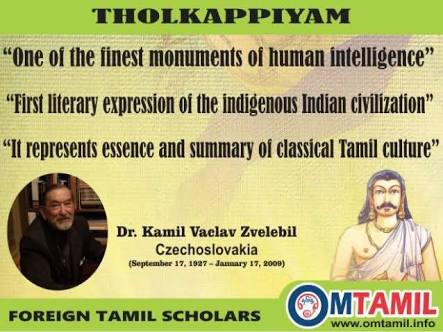
Tag: தொல்காப்பியம்

  • I Am a Brahmin Sanskrit Scholar Tolkappiar Tamil

    The oft repeated canard that the Brahmins were invaders , entered through Khyber Pass, imposed Aryan Supremacy over the Dravida Tamil and that Tamil is against Sanskrit and the Vedas gets nailed when one reads the ancient Tamil works in the original.

    Tolkaapiyar Tamil Grammarian.jpg
    Tolkaapiyar Tamil Grammarian 8 BC.

    .

    It is a different matter that these people do not where the Khyber Pass is, is another matter.

    The Aran Invasion theory perpetrated by the British has been nailed.

    Please read my Post on this.

    The First literary work n Tamil was by Sage Agastya, called Agathiyam, which was consumed by a Tsunami.

    Agastya was a Brahmin.

    The next work in Tamil dealing with Tamil Grammar, was written by Tolkappiyar.

    It is called Tolkaapiyam, meaning Ancient literature.

    This Book deals with the rules of Tamil Grammar.

    A joker politician in Tamil Nadu changed his Father’s Name(?) from , if I recall correctly, to Tolpaapiyan, thinking that it is a Non Brahmin Name.

    The politician is a Dalit,

    These people destroy the fabric of the society for they know nothing of the rich culture of Tamil and its traditions.

    Let us see who Tolkaapiyar is from….?

    Tolkappiyar himself.

    In his preface to Tolkaapiyam he writes,


    வட வேங்கடம் தென் குமரி
    ஆயிடைத்
    தமிழ் கூறும் நல் உலகத்து
    வழக்கும் செய்யுளும் ஆயிரு முதலின்
    எழுத்தும் சொல்லும் பொருளும் நாடிச்
    செந்தமிழ் இயற்கை சிவணிய நிலத்தொடு
    முந்து நூல் கண்டு முறைப்பட எண்ணிப்
    புலம் தொகுத்தோனே போக்கு அறு பனுவல்
    நிலம் தரு திருவின் பாண்டியன் அவையத்து
    அறம் கரை நாவின் நான்மறை முற்றிய‌
    அதங்கோட்டு ஆசாற்கு அரில் தபத் தெரிந்து
    மயங்கா மரபின் எழுத்து முறை காட்டி
    மல்கு நீர் வரைப்பின் ஐந்திரம் நிறைந்த‌
    தொல்காப்பியன்
    எனத் தன் பெயர் தோற்றிப்
    பல் புகழ் நிறுத்த படிமையோனே


    அறம் கரை நாவின் நான்மறை முற்றிய‌
    அதங்கோட்டு ஆசாற்கு- I am a disciple of Athankottu Aasan, a Brahmin well versd in the Vedas.


    ஐந்திரம் நிறைந்த‌
    தொல்காப்பியன்
    எனத் தன் பெயர் தோற்றி. I have studied the Einthiram( a Grammar book in Tamil , lost to us  mentioned in Panini’s  Grammar ”

    Aindraim.


    ‘The Aindra (of Indra) school of Sanskrit grammar is one of the eleven schools of Sanskrit grammar mentioned in Pāṇini’s Ashtadhyayi. It is named after Indra in allusion toLord Indra, the king of Gods in Hindu mythology. Arthur Coke Burnell, a renowned orientologist, in his 1875 book, “On the Aindra school of Sanskrit grammars” details this school. Burnell believed that most non-Pāṇinian systems of Sanskrit grammar were traceable to this school of grammar, believed to be the oldest and reputed to be founded by Indra.’

    Tolkaapiyar is not his real name.

    Tolkaapiyar of the Lineage of Bhrigu and Jamadagni.

    His real name was ‘ThruNadhUmAgn’

    He was one of the twelve disciples of  Agastya.

    Tolkaapiyam was made Public in Adankodu, a part of Kerala.

    But Tolkaapiyar says this was done in the presence of a Pandyan King.

    Af=dhankodu was in Chera Kigdom.

    Possible that at that time , the Kingdom was won by Pndyas.

    There is a view that Tolkaapiyar was born in an agrarian Family.

    But there is no sufficient evidence to support this.

    Citation.

    Tolkaapiyar Name

    Sage Agastya


    http://en.wikipedia.org/wiki/Agastya


  • Valmiki  A Siddha Fore Runner In Tamil Sangam

    Valmiki A Siddha Fore Runner In Tamil Sangam

    I have been researching into the affinity between two great Languages of India, Sanskrit and Tamil.


    Tamil ,recent researches indicate is about 17,000 years old and it quotes Sanskrit in its earliest works.


    Sanskrit in its turn quotes Tamil!

    Valmiki .jjpg
    Valmiki Maharishi


    Please read my post million Year old Tamil Quotes Vedas and They quote Tamil.


    References to  Tamil, Tamil Culture, Tamil Kings are found in the Vedas,Puranas,Ramayana and Mahabharata.


    Curiously no other language is referred to in these Sanskrit Texts.


    There are references to Valmiki in Tamil.


    Valmiki is referred to as Vanmiki,in Tamil the letter L and N are interchangeable under certain Grammar rules.


    There is a work by Valmiki called Vanmikatpathinaaru, sixteen verses of Valmiki.


    Valmiki is classified among the Siddhas along with Bogar, who installed the Idol of Lord Subrahmanya in Palani in Tamil Nadu .


    One of the  major differences between Valmiki as a Siddha and others Valmiki advocates the study of the Vedas, the Siddhas to Ignore and go beyond the Vedas.


    The theme in the 16 verses of the Valmiki Sixteen is different from the themes of all other works of other Siddhas. All others praise lord Shiva as the Ultimate God who blesses one with Moksha. But Valmiki differs from them. In the very first verse of Valmiki Sixteen, he says that Shiv Shakti emerged from Vishnu, the Consort of Sri / Lakshmi.

    சிவசக்தி திருமாலின் ரூபமாகும்.

    வருமுருவே சிவசக்தி வடிவமாகும்

    This concept is radically different from the concept of other Siddhas. This is conceded by the poet Valmiki himself in subsequent verses. He mentions in the 11th verse that seeing his concept to be different, other Siddhas complained to Lord Shiva. Poet Valmiki says further, that Shiva was angry with those Siddhas only. His theme (of Vishnu being the Primary force from which Shiva- Shakthi emerged) conveyed in these poems were regarded as the key (to understand all poems of all other Siddhas.


    சிவசிவா பதினெண்பேர் பாடற் கெல்லாம்
    திறவுகோல் வால்மீகன் பதினாறாகும்:
    சிவம்பெத்த சித்தரேல்லா மென்னூல் பார்த்துச்
    சிவனோடே கோள் சொன்னார் சினந்தான் நாதன்:
    அவமாகிப் போகாமல் சிவனுத் தார
    அருளினால் திறந்து சொன்னேன் உலகுக்காக:
    நவமான நவக்கிரகம் தன்னுளேயே
    நாக்கு வாய் செவி மூக்கு மத்திக்கப்பால். (11)


    நாக்கு வாய் செவி மூக்கு மத்திக் கப்பால்
    நடுவீதி குய்ய முதல் உச்சி தொட்டுத்
    தாக்குவாய் அங்கென்ற அதிலே முட்டுத்
    தாயாரைப் பூசித்து வேதம் ஓது: (12)


    While the other Siddhas preached to forsake Vedas, this poet Valmiki preached that people must to chant Vedas. In addition  he says that Vedas should be pursued after worshiping Divine Mother.”


    Valmiki, according to Tamil, wrote three works,

    Ramayana in Sanskrit,

    Vanmikiipathinaaru, Sixteen verses of Valmiki,  and

    a Poem in Puranaanooru in Tamil.


    He also participated in the Tamil Sangam.


    He commanded so much respect for his scholarship in Tamil , that the earliest Tamil Grammar work in Tamil, Tholkaapiyam, quotes his works, along with that of Lord Shiva as Primary Tamil Education.

    Tamil was classified into Primary,Intermediary and Secondary.


    This is the poem.


    தமிழ்ச் செய்யுட் கண்ணும் இறையனாரும்,  

    அகத்தியனாரும்,  

    மார்க்கண்டேயனாரும்,

    வான்மீகனாரும்,  

    கவுதமனாரும் போலார் செய்தன தலை”


    Meaning.

    The primary education in Tamil must be from the works of,


    Lord Shiva,

    Agasthya,

    Markandeya,

    Valmiki and

    Gautama.

    Lord Shiva is presumed to have founded the Tamil language and he presided over the First Tamil Sangam, the Conclave of Tamil Scholars.


    Valmiki participated in it.


    There are two temples associated with Valmiki in Tamil Nadu.


    Marundheeswarar Temple, Thiruvanmiyur, Chennai, where Valmiki is worshiped.


    The other temple is Ettukkudi, a Murugan Sthala where Valmiki is reported to have died and his samadhi is found there.


    Siddhas speak of Valmiki in their works quite frequently and indicate he was also well versed in Medicine.


    Dates of Ramayana and Sangam.

    adding up the years of the 3 sangam periods to this last year of the last sangam at 2000 years BP, we arrive at the following years.


    3rd sangam started around 1850 BC.

    2nd sangam started around 5550 BC

    1st sangam started around 9990 BC.”


    This is in agreement with the premise that Valmiki indeed wrote in Tamil and participated in he Tail Sangam.


    Citation.

    http://jayasreesaranathan.blogspot.in/2013/03/valmiki-of-ramayana-knew-tamil-spoken.html