Category: Hindusim

  • Abraham Brahmin Priest Voltaire. Migrated From India

    The similarities in terms of the Etymology of the words in Judaism, Hiitie,the ancestors of the Jewish People, the legends about the characters in their mythology are striking.

    I have posted an article that Manu is believed to Be Noah and Yehuda is derived from Yadava, Yayati.

    Some interesting points have come to my notice.

    “Abraham descended from some of the numerous Brahman priests who left India to spread their teachings throughout the world”

    -Voltaire.

    Isaac sacrifice Rembrandt Painting.jpg
    Abraham Sacrificing Isaac,Rembrandt Painting. This work is in the public domain in the United States, and those countries with a copyright term of life of the author plus 100 years or less.

    He based his assertions on the similarity of names and the fact that the city of Ur, land of the patriarchs, was near the border of Persia, the road to India, where that Brahman had been born.

    The name of Brahma was highly respected in India, and his influence spread throughout Persia as far as the lands bathed by the rivers Euphrates and Tigris. The Persians adopted Brahma and made him their own. Later they would say that the God arrived from Bactria, a mountainous region situated midway on the road to India. (pp. 46-47.)

    Bactria (a region of ancient Afghanistan) was the locality of a prototypical Jewish nation called Juhuda or Jaguda, also called Ur-Jaguda. Ur meant “place or town.” Therefore, the bible was correct in stating that Abraham came from “Ur of the Chaldeans.” “Chaldean,” more correctly Kaul-Deva (Holy Kauls), was not the name of a specific ethnicity but the title of an ancient Hindu Brahmanical priestly caste who lived in what are now Afghanistan, Pakistan, and the Indian state of Kashmir.

    “The tribe of Ioud or the Brahmin Abraham, was expelled from or left the Maturea of the kingdom of Oude in India and, settling in Goshen, or the house of the Sun or Heliopolis in Egypt, gave it the name of the place which they had left in India, Maturea.” (Anacalypsis; Vol. I, p. 405.)

    “He was of the religion or sect of Persia, and of Melchizedek.”(Vol. I, p. 364.)

    “The Persians also claim Ibrahim, i.e. Abraham, for their founder, as well as the Jews. Thus we see that according to all ancient history the Persians, the Jews, and the Arabians are descendants of Abraham.(p.85) …We are told that Terah, the father of Abraham, originally came from an Eastern country called Ur, of the Chaldees or Culdees, to dwell in a district called Mesopotamia. Some time after he had dwelt there, Abraham, or Abram, or Brahma, and his wife Sara or Sarai, or Sara-iswati, left their father’s family and came into Canaan. The identity of Abraham and Sara with Brahma and Saraiswati was first pointed out by the Jesuit missionaries.”(Vol. I; p. 387.)”

    Moisés y los Extraterrestres by Tomás Doreste .

    Another View.

    Abraham is Brahma.

    In Hindu mythology, Sarai-Svati is Brahm’s sister. The bible gives two stories of Abraham. In this first version, Abraham told Pharaoh that he was lying when he introduced Sarai as his sister. In the second version, he also told the king of Gerar that Sarai was really his sister. However, when the king scolded him for lying, Abraham said that Sarai was in reality both his wife and his sister!“…and yet indeed she is my sister; she is the daughter of my father, but not the daughter of my mother; and she became my wife.” (Genesis 20:12.)..

    The bible also states that Ishmael, son of Hagar, and his descendants lived in India. “…Ishmael breathed his last and died, and was gathered to his kin… They dwelt from Havilah (India), by Shur, which is close to Egypt, all the way to Asshur.” (Genesis 25:17-18.) It is an interesting fact that the names of Isaac and Ishmael are derive from Sanskrit: (Hebrew) Ishaak = (Sanskrit) Ishakhu = “Friend of Shiva.” (Hebrew) Ishmael = (Sanskrit) Ish-Mahal = “Great Shiva.”

    A third mini-version of the Abraham story turns him into another “Noah.” We know that a flood drove Abraham out of India. “…Thus saith the Lord God of Israel, your fathers dwelt on the other side of the flood in old time, Even Terah, the father of Abraham, and the father of Nachor; and they served other gods. And I took your father Abraham from the other side of the flood, and led him throughout all the land of Canaan.” (Joshua 24:2-3.)..

    About 1900 BC, the cult of Brahm was carried to the Middle and Near East by several different Indian groups after a severe rainfall and earthquake tore Northern India apart, even changing the courses of the Indus and Saraisvati rivers. The classical geographer Strabo tells us just how nearly complete the abandonment of Northwestern India was. “Aristobolus says that when he was sent upon a certain mission in India, he saw a country of more than a thousand cities, together with villages, that had been deserted because the Indus had abandoned its proper bed.” (Strabo’s Geography, XV.I.19.)

    “The drying up of the Sarasvati around 1900 BCE, which led to a major relocation of the population centered around in the Sindhu and the Sarasvati valleys, could have been the event that caused a migration westward from India. It is soon after this time that the Indic element begins to appear all over West Asia, Egypt, and Greece.” (Indic Ideas in the Graeco-Roman World, by Subhash Kak, taken from IndiaStar online literary magazine; p.14)

    Indian historian Kuttikhat Purushothama Chon believes that Abraham was driven out of India. He states that the Aryans, unable to defeat the Asuras (The mercantile caste that once ruled in the Indus Valley or Harappans) spent so many years fighting covertly against the Asuras, such as destroying their huge system of irrigation lakes, causing destructive flooding, that Abraham and his kindred just gave up and marched to West Asia. (See Remedy the Frauds in Hinduism.) Therefore, besides being driven out of Northern India by floods, the Aryans also forced Indian merchants, artisans, and educated classes to flee to West Asia.’

    On the basis of available evidence I am inclined to take the position that Abraham could have descended from Brahmins and coud have migrated either from South India when Shiva and Ganesha left for the Arctic through Middle east and Satyavarta Manu left for Ayodhya or from the Uttarakuru Kingdom.

    Citation.

    Who was Abraham?

  • World Language Tree Sanskrit At The Top

    I am providing the world Langauge Tree below.

    Note that Sanskrit heads the list on the Right.

    It may be noted that the other language groups headed by Anatolian ,followed by Hitti and others do have Tamil and Sanskrit Roots.

    I shall be posting on this in detail.

    My researches show that Tamil and Sanskrit head the world language groups at the top.

    In other words world languages have their origins in Tamil, Sanskrit and a combination of both.

    I have posted that Tamil influenced Hitti language.

    Sanskrit.png
    Sanskrit.

    ‘The Sanskrit language, whatever be its antiquity, is of a wonderful structure; more perfect than the Greek, more copious than the Latin, and more exquisitely refined than either, yet bearing to both of them a stronger affinity, both in the roots of verbs and the forms of grammar, than could possibly have been produced by accident; so strong indeed, that no philologer could examine them all three, without believing them to have sprung from some common source, which, perhaps, no longer exists; there is a similar reason, though not quite so forcible, for supposing that both the Gothic and the Celtic, though blended with a very different idiom, had the same origin with the Sanskrit; and the old Persian might be added to the same family, if this were the place for discussing any question concerning the antiquity of Persia. (Fortson, p. 9)

    Sanskrit (/ˈsænskrɪt/; संस्कृतम् saṃskṛtam [səmskr̩t̪əm], originally संस्कृता वाक् saṃskṛtā vāk, “refined speech”) is the primary liturgical language of Hinduism, a philosophical language in Hinduism, Buddhism, and Jainism, and a literary language that was in use as alingua franca in the Indian cultural zone. It is a standardised dialect of Old Indo-Aryan language, originating as Vedic Sanskrit and tracing its linguistic ancestry back to Proto-Indo-Iranian and Proto-Indo-European.

    world Language Tree.png
    Languages of the World, relations.

    Click on the image to enlarge.

    Branches are in order of first attestation; those to the left are Centum, those to the right are Satem.

    Languages in red are extinct.

    White labels indicate categories / un-attested proto-languages.

    * I have deliberately left informing that Tamil ahs not been mentioned in this tree, hoping that some one will point it.

    Within ten minutes, a FacebBook reader has noticed it.

    Am happy that my posts ae being read carefully.

    I shall be posting on the antiquiy of Tamil and its status,on par with Sanskrit.

    And on Telugu and Kannada which are also ancient, with more affinity to Sanskrit.

    Citation.

    http://www.ancient.eu/Indo-European_Languages/

  • Krishna In Iraq Iran Israel Kishon River

    The Yadava Clan,  twenty-two in number,after the Mahabharata War, migrated towards Iran and spread to Iraq and move on to Israel before proceeding further.

    In the Iranian city of Susa of Parthian period(247 BC -224 AD) was found a statue of Lord Krishna.

     Krishna Bust excavated from the ancient city of Susa,Iran.Image.jpg
    Krishna Bust excavated from the ancient city of Susa, Iran Hair style with Feathers and Angavstra s seen.

    As to the word Parthian, one of the name of Arjuna is Partha and Krishna is also known as Parthasarathy.

    Krishna as Balakrishna.jpg
    Krishna as Balakrishna.


    The above one is from Iraq, where a stamp was issued to celebrate the Mosul spring Festival.


    In Israel there is a River Kishon.

    ‘The Kishon River (Hebrew: נחל הקישון‎, Nachal HaKishon; Arabic: نهر المقطع‎, Nahr el-Mokatta,[1][2] or Mukutta’,[3]the river of slaughteror dismemberment; Alternative Arabic, الكيشون al-Qisun) is a river in Israel that flows into the Mediterranean Sea near the city of Haifa.-wiki

    And there is a Town called as Bal Gad.

    A place in ancient Israel, Baal-Gad was a Canaanite town in the valley of Lebanon at the foot of Hermon, near the source of Jordan River. (Josh. 13:5; 11:17; 12:7) It was the most northern point to which Joshua’s conquests extended. It probably derived its name from the worship of Baal. Its exact location is uncertain, but it is generally considered to be Hasbaya in Wadi et-Teim or a site nearby.-wiki

    Easton’s suggests that its modern representative is Banias. Some have supposed it to be the same as Baalbek. Others have suggested that it is the same location as Baal-hamon

    The Canaanite God Thunder is Baal.

    Krishna as a Child is worshiped as Balakrishna.

    See the Image.

    Is this Krishna with calf?

    And Krishna is called fondly as Kanhaiya in the North.

    Is this Canaan”

    Prof. P. N. Oak has argued that Baal is none other than Baleshwara or Sri Krishna and that the Canans were the people of Kanha or Sri Krishna.

    Krishna with Calf. image.jpg
    Krishna with Calf.


    The Canan-ite God Baal with his Calf.jpg
    The Canan-ite God Baal with his Calf.


  • Shri Ganeshaye Namah Inscription Baku Ateshgah Azerbaijan

    Hinduism was in existence in the Caucasus Region, Iran and Urals.

    The Ancient Kingdom was known as UttaraKuru.

    Before Zoroastrianism came to hold its sway in Persia Hinduism was practiced.

    I shall be posting on Zend-Avesta, the Scripture of Zoroastrians and The Vedas.

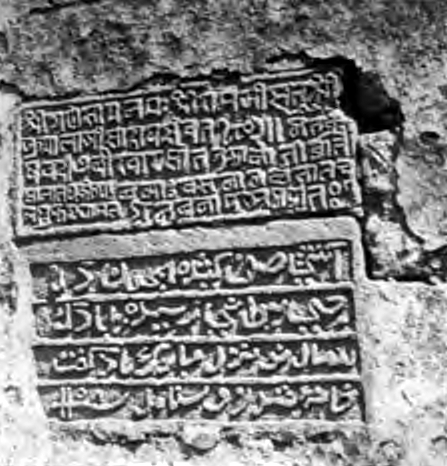
    The Temple at Baku Ateshgah Azerbaijan contains inscription stating with Shri Ganeshaya Namah, the traditional Hindu way of praying.

    An inscription from the Baku Atashgah. The first line begins: I salute Lord Ganesha (श्री गणेसाय नम), the second venerates the holy fire (जवालाजी, Jwala Ji).Image.jpg
    An inscription from the Baku Atashgah. The first line begins: I salute Lord Ganesha (श्री गणेसाय नम), the second venerates the holy fire (जवालाजी, Jwala Ji) and dates the inscription to Samvat 1802 (संवत १८०२, or 1745-46 CE). The Persian quatrain below is the sole Persian inscription on the temple[7] and, though ungrammatical,[7] also refers to the fire (آتش) and dates it to 1158 (١١٥٨) Hijri, which is also 1745 CE. “Atashgah-inscription-jackson1911” by A. V. Williams Jackson (1862 – 1937) – From A. V. Williams Jackson’s book “From Constantinople to the Home of Omar Khayyam”. Licensed under Public Domain via Wikimedia Commons – http://commons.wikimedia.org/wiki/File:Atashgah-inscription-jackson1911.jpg#mediaviewer/File:Atashgah-inscription-jackson1911.jpg


    Sanskrit (above) and Persian (below) inscriptions from the Ateshgah (fire temple) of Baku, Azerbaijan. The Sanskrit inscription is a religious Hindu invocation in old Devanagari script while the Persian inscription is a couplet. The Sanskrit invocation begins with: I salute Lord Ganesh (श्री गणेशाय नमः), a standard beginning of most Hindu prayers. The second line venerates the holy fire Jwala Ji (जवालाजी). The inscription is dated to Vikram Samvat 1802 (संवत १८०२, i.e. 1745 CE). Unlike the several Sanskrit (written in Devanagari) and Punjabi (written in Gurmukhi) inscriptions in the temple, the Persian quatrain below is the sole Persian one and, though ungrammatical, also refers to the fire (آتش) and dates it to Hijri 1158 (١١٥٨, i.e. again 1745 CE). (From the source, “a quatrain in not very good Persian, the mistakes of which might have been made by a Hindu imperfectly acquainted with the language …”.)

    The Baku Ateshgah (from Persian: آتشگاه Atashgāh, Azerbaijani: Atəşgah or “Fire Temple” is an ancient Hindu castle-like religious temple dedicated to Jwala Ji in Surakhani,[2] a suburb of greater Baku, Azerbaijan, which was initially recognized as a Zoroastrian fire worship place. “Atash” (آتش) is the Persian word for fire. The pentagonal complex, which has a courtyard surrounded by cells for monks and a tetrapillar-altar in the middle, was built during the 17th and 18th centuries. It was abandoned after 1883[citation needed] when oil and gas plants were established in the vicinity, ending the flow of natural gas to the temple and extinguishing the holy fire.

    The Baku Ateshgah was a pilgrimage and philosophical centers of fire worshipers from Multan (now in Pakistan), who were involved in trade with the Caspian area via the famous “Grand Trunk Road”. The four holy elements of their belief were: ateshi (fire), badi (air), abi (water), and heki (earth). The temple ceased to be worshiped after 1883 with the installation of petroleum plants (industry) at Surakhany. The complex was turned into a museum in 1975. The annual number of visitors to the museum is 15,000.

    The Temple of Fire “Ateshgah” was nominated for List of World Heritage Sites, UNESCO in 1998 by Gulnara Mehmandarova — president of Azerbaijan Committee of ICOMOS—International Council on Monuments and Sites . It was also featured on an episode of Globe Trekker.’


    Azar’, meaning ‘fire’ in Old Persian, is derived from Avestan ‘atar’ which means ‘fire’.

    Avestan is  closely linked to Sanskrit. In Sanskrit, ‘agira’ (अगिर), ‘ashira’ (अशिर ), ‘agni’ ( अग्नि ), and ‘ushij’ (उशिज् ) all mean fire.

    The Avestan ‘atar’ derives from Sanskrit ‘agira’, just as the Latin ‘igneus’ derives from Sanskrit ‘agni’.

    The Avestan ‘Payegan’ which means ‘Protector’ derives from Sanskrit ‘palaka’ (पालक) which also means ‘protector’.

    The suffix ‘gana’ (गण) in Sanskrit means ‘a group’ or ‘troop’. ‘Palak-gaan’ in Sanskrit would therefore mean ‘protectors’ or ‘guardians’.

    In Rigveda ‘groups of gods’ were referred to as ‘devagana’ ( देवगण)

    The first syllable of ‘Zarath-ustra’ may well be a distortion of ‘harit’ meaning ‘golden’. In Persian ‘zarat’ also  means ‘golden’ and is derived from Sanskrit ‘harit’ via Avestan.

    The Sanskrit ‘ash’ (अष्) means ‘to shine’. ‘Zarathustra’ then means ‘one who shines like gold’.


    Citation.

    Baku Atashgah

  • Dwadasa Jyotir Lingas Twevle Lingas of Fire

    Fire is the Chief Deity in the Vedas.

    Fire is regarded as very sacred in Hinduism.

    12 Jyotir Lingas.image.jpg
    Dwadas Lingas, 12 Jyotir Lingas.

    What Air can not purify Water can, what Water and Air can not, Fire shall.

    It is the Ultimate purifier.

    The warmth in mother’s womb sustains the child and the same Fire destroys the Human body.

    Fire is both the Sutainer and Destroyer.

    So is Lord Shiva.

    He is the cause of All and the withdrawer of the Universe.

    The Distinction between Shiva and Rudra is to be understood.

    The meaning of the word Shiva is ‘Auspiciousness’

    He is the Chief among the Trinity.

    His Amsa,one of His manifestaions, is Rudra.

    He is one of the Ganas of Shiva.

    He destroys the Universe only to be hidden by Shiva to enable them to manifest them later.

    While Shiva has three attributes or functions, Srushti(Creation,) Sthithi( Sustanance),Samhaara(Dissolution), Thirodhaana(Hiding) and Anugraham( Blessings)

    Rudra represents one aspect of Shiva, Destruction and this is eveident from the first sentence from the Sri Rudram.

    Om Namao Bhagavathe Rudraaya,

    Namsthe Rudramanyave’

    My prostrations to Rudra,

    My prostraions to His anger”

    Implied is the fact that anger leads to desruction.

    Now to Shiva.

    Being the Ultimate Reality Shiva is with out Attributes.

    However attribute is rewuired for Human Beings to connect and worship as concentraing ona vacuum is impossible .

    So Fire has been associated with Shiva, both for its sustaning qualities and for destrution.


    Twelve Jyotir Lingas , Puranas.


    Brahma (the God of creation) and Vishnu (the God of Preservation) had an argument over supremacy of creation. To test them, Shiva pierced the three worlds as a huge endless pillar of light, the jyotirlinga. Vishnu and Brahma split their ways to downwards and upwards respectively to find the end of the light in either directions. Brahma lied that he found out the end, while Vishnu conceded his defeat. Shiva appeared as a second pillar of light and cursed Brahma that he would have no place in ceremonies while Vishnu would be worshipped till the end of eternity. The jyotirlinga is the supreme partless reality, out of which Shiva partly appears. The jyothirlinga shrines thus are places where Shiva appeared as a fiery column of light.[2][3] Originally there were believed to be 64 jyothirlingas while 12 of them are considered to be very auspicious and holy.[1] Each of the twelve jyothirlinga sites take the name of the presiding deity, each considered a different manifestation of Shiva. At all these sites, the primary image is lingam representing the beginningless and endless Stambha pillar, symbolizing the infinite nature of Shiva. The twelve jyothirlinga are Somnath in Gujarat, Mallikarjuna atSrisailam in Andra Pradesh, Mahakaleswar at Ujjain in Madhya Pradesh, Omkareshwar in Madhya Pradesh, Kedarnath inHimalayas, Bhimashankar in Maharashtra, Viswanath at Varanasi in Uttar Pradesh, Triambakeshwar in Maharashtra, Vaidyanath Jyotirlinga at Deogarh in Jharkhand , Aundha Nagnath at Aundha Nagnath in Maharashtra, Rameshwar at Rameswaram in Tamil Nadu and Grishneshwar at Ellora near Aurangabad, Maharashtra. Kedarnath and Pashupatinath (Nepal) are considered half jyotirlingas counted together as one.  -Shiva Purana


    Saurashtra Somnatham Cha Shrishaile Mallikarjunam ||
    Ujjainyam Mahakalomkare Mammaleshwaram ||
    Parlyam Vaijnatham Cha Dakinyam Bheem Shankaram ||
    Setu Bandhe Tu Ramesham Nagesham Daruka Vane ||
    Varanasya Tu Vishwesham Tribakam Gautamitate ||
    Himalaye Tu Kedaram Ghurmesham Cha Shivalaye ||
    Aetani Jyotirlingani Sayam Prataha Pathennaraha ||
    Sapta Janma Kritam Papam Smaranen Vinashyati ||

    One who recites these 12 names regularly in the morning and evening he washes all the sins committed in the previous 7 births and attains all the powers and Siddhis.


    Location of the Jyotir Lingas.


    # Jyotirlinga Image State Location
    1 Somnath Somnath.JPG Gujarat Prabhas Patan,Saurashtra
    2 Mallikārjuna Swāmi Srisailam-temple-entrance.jpg Andhra Pradesh Srisailam
    3 Mahakaleshwar Mahakal Temple Ujjain.JPG Madhya Pradesh Ujjain .
    4 Omkareshwar Omkareshwar Temple 01.jpg Madhya Pradesh Island in theNarmada River,Omkareshwar
    5 Kedarnath Kedarnath Temple.jpg Uttarakhand Kedarnath
    6 Bhimashankar Bhimashankar.jpg Maharashtra Bhimashankar
    7 Kashi Vishwanath Temple Kashi Vishwanath temple.jpg Uttar Pradesh Varanasi
    8 Trimbakeshwar Shiva Temple Trimbakeshwar Shiva Temple, Trimbak, Nashik district.jpg Maharashtra Trimbakeshwar, near Nashik
    9 Vaidyanath Temple Baba dham.jpg Jharkhand Deoghar
    10 Nageshvara Jyotirlinga Nageshwar.JPG Gujarat Dwaraka
    11 Rameshwar Ramanathar-temple.jpg Tamil Nadu Rameswaram
    12 Grishneshwar Ghushmeshwar mahadev.jpg Maharashtra Aurangabad


    Citation.

    Jyotir Linga