Tag: King Sibi

  • Chola King Sibi Ancestor Of Rama Great Grand Son Of Yayati

    Chola King Sibi Ancestor Of Rama Great Grand Son Of Yayati

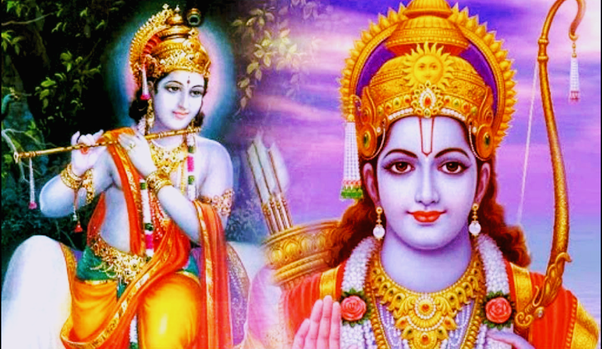
    I had written about the List of Kings of India from Ikshvaku Dynasty to Chandragupta Maurya. I have also listed out the List of Kings from the Lunar Dynasty,Chandra Vamsa. I had observed all the dynasties of India had sprung from the Ikshvaku Dynasty to which Sri.Ram belongs.The Ikshvaku dynasty is also referred to as Solar Dynasty and Suryavamsa..The Chandravamsa has its origin from Ila, sister of Ikshvaku. She married Budha and had Purururavas as as Her son and Pururravas was the first of the Chandravamsa or Lunar Dynasty.Other dynasties of India sprang from Eitther Ikshvaku or Chandra Vamsa.this includes the Yadu Vamsa of Sri.Krishna..( So, Krishna is related to Rama)

    There were two parallel landmasses in ancient India, The Arya Vartha and Dakshina pada,The south of Vindhyas..Those in the Dakshina Pada were called Dasyus and they had a distinct cultural identity, though it is linked to AAryavartha.In fact ,Dakshina Pada culture was so good that Sage Viswamitra’s sons, who were banished to Dakshina Pada by Viswamitra , that their descendant Apasthamba incorporated the Dakshinapada concept of wearing Mangal Sutra,Thaali in Vedic Marriage.(Source..History of Tamils by Sri.PT.Srinivasa Iyengar)Apasthamba sutra is practiced even today in the South of Vindhyas.Vedic practices were also followed in the Dakshina pada by the Three Tamil Kings,Chera,Chozha and Pandya.Tamil way of Life incorporated many thoughts of Vedas.

    The three dynasties of South, Chera,Chozha and Pandyas trace their ancestryto either Ikshvaku Dynasty or Chandra Vamsa, Lunar Dynasty.Chozhas call themselves as the descendants of Ikshvaku Dynasty, as evidenced from the Copperplates from Thirukkoilyur and also from the epigraphs of Kanyakumari.The copperplates extoll the virtues, called Meykkeerti in Tamizh, mention that the Chozhas were from Kasyapa Gotra!Again, the twist is that Sri.Rama belongs to Chozha Dynasty and not the other way round! Reason, Chozhas’Ancestor Sibi was the Twenty fifth King of Ikshvaku Dynasty, while Rama was the Eighty first,’25. Purukutsha (married with Narmada), Ambarisha (adopted by Yuvanashva), Muchukunda (helped Deva in Deva-Asur War andlatter he killed Kaal Yavan by fire from his eyes at the time of Sri Krishna Avatara in end of Dwaparayuga) (Contemporary to Chandravanshi King Sibi who was founder of Keikaya and Madra Kingdom)…81. Rama ruled 11,000 years as mentioned in Valmiki Ramayana, Vishnu Purana, Harivansha Puran, Agni Puran, Srimad Bhagavat Maha Puran (Lakshmana, Bharata andShatrughna are his siblings and they are also avatar of lord Vishnu)
    In the Ramayana, we find that, Lava and Kusha were the sons of Rama.” reference.https://indianmeena.wordpress.com/2019/12/27/family-tree-from-ancient-to-present/

    There is a Temple near SriRangam in Tamil Nadu, Thiruvellarai and it was built by Sibi, ancestor of Rama.I ahd written a detailed article on the wonders of this temple in a separate article.Sibi is reported to have ruled from somewhere near Pakistan SWAT Valley, or Afghansitan Pakistan Border.That city was used by Sibi as his second capital. It is probably Sialkot.Shall write on this later.

    Finding and palcing Sibi in the genealogy chart of Surya vamsa had been tough.
    i cross checked with many puranas and came up with the fact fact that Sibi was the son of Usinara of Chandravamsa..Usinara was the son of Anu and Anu was the son of Yayati of Chandravamsa.

    1. Anu
    2. Sabhanara
    3. Kaksheyu
    4. Kalanara
    5. Srnjaya
    6. Puranjaya
    7. Janamejaya (Contemporary to Suryavanshi King Anaranya)
    8. Mahashala
    9. Mahamana was the great devotee of Lord Vishnu
    10. Ushinara and Titikshu

    Ushinara was given north-western side of India. Shibi was the son of King Ushinara and his descendants were MadrasKekayas and Sauviras. He is the one who gave flesh for a hawk and an eagle.

    1. Shibi, Vara, Krmi, Dakshas were the sons of king Ushinara.
    2. So That makes Sibi as the Great Grand son of Yayati.Yayati and Devayani , Daughter of Sukracharya were the ancestors of of Sibi .Yayai and Devayani were the parent’s of Sibi’s Grandfather,Anu.

    To sum up,Sibi belonged to Chandravamsa,He was the Graet grand son of Anu, son of Yayati and Devayani( Devayani’s Father was Sukracharya, Asura Guru).

    Sibi ruled from northwest of what is now Pakistan area and he founded Madra, Kekaya and Sauvira Kingdoms.I shall explore this poit as this directly points out the information that Rajputs Meena Kingdom is related to Sibi and Chozhas.

    References and citations.https://en.wikipedia.org/wiki/Turvasu_Druhyu_and_Anu_Dynasties https://ramanisblog.in/2020/10/17/sibi-chozha-suryachandra-yadu-vamsa-research/

  • Become Invisible In Pond Thiruvellarai Oldest Vishnu Temple

    There are a few places in India which are reported to be quiet ancient, some of them to Billion years!
    And these have been dated scientifically.
    For example Thiruvannamalai 3.94 billion years, Thirupati 2100 million years.
    Please read my posts on these places and more places similar to them.
    And now there is an addition to this list.

    image

    The Temple for Vishnu at Srirangam ,is reported to be built by Rama,though many state that it was built earlier.
    This period belongs to Treta Yuga, some 4,32,000 ago according to Indian Texts.
    Historical dating of Lord Rama is around 5114 BC.
    We may safely state that Srirangam belongs to 5114 BC, if not earlier.
    References are found in Indian Texts that there is another temple which was built earlier by Lord Rama’s ancestor, King Sibi.
    The same Sibi is mentioned as the one who parted with his Flesh to feed a Dove.
    This has been mentioned in Tamil Sangam Literature, which is dated around 3000 BC.
    But  the date of Sangam literature is pushed back by at least by 20,000 subsequent finding of the ruins of Poompuhar,Tamil Nadu.
    Poompuhar’s period was much later than Sangam period!
    The Tamil Cholas are referred to as the descendants of Ikshvaku Clan,to which Lord Rama belonged.
    So the refernce to a temple earlier to that of Srirangam gains credibility.
    The Temple of Pundarikaksha(Vishnu) is mentioned in Sangam Classics and also referred to in King Rajaraja’s inscriptions.

    image

    Rajaraja built the Thanjavur Big Temple.
    He belongs to 1039 AD.
    The place where the temple is was called Thiruvellarai. Even now it is called so.
    Thiruvellarai is about 19 km from Srirangam and bus facilities are available.
    Nearest Airport.  Thiruchirapalli.
    Railway Station. Thiruchirapalli/Srirangam.
    It is recorded in Srimad Bhagavadham that Rakshsas of the South,Rakshasa being a powerful race mostly settled in now sunk Lemuria, were inciting rebellion in the south of King Sibi’s Kingdom.
    Sibi proceeded with his army to annihilate the Rakshasas but was thwarted by a wild Boar(Swetha Varaha, an Avatar of Lord Vishnu).
    Sage Markandeya who was in meditation there advised Sibi that Sibi’s descendent (Rama)would take care of the Rakshasas and Sibi should build  temple for Vishnu and have His darshan.
    This Sibi did and this is the Thiruvellarai temple.
    Temple timings. 6 to 12 noon. 4 pm to 8 pm.
    Contact. SRI Kannan +91 8760732566
    As the Bhattars in charge of pooja perform duties by turn I have provided the permanent staff  number at the temple

    The Main Deity is Pundaikakshan( Lotus eyed Vishnu).
    ‘ Goddess: Shenbagavalli, also called as Periya Piraattiyaar Lakshmi Devi. Seperate sannadhi for Thaayar. Utsavar thaayar is named as Pangajavalli.
    Mangalasasanam: Periyalwar – 11, Thirumangai Alwar – 13, a total of 14 Paasurams. Perialwar – 71, 192 – 201, Thirumangaialwar – 1368-77, 1851, 2673, 2674
    Prathyaksham for Periya Thiruvadi Garudan, Sibi chakravarthy, Bhoodevi (Bhoomi Piratti), Maarkandeya Maharishi, Lord Brahma, Rudhran (Lord Shiva).
    Sri Pundarikakshan, Bhoomi Piratti, Periya piratti, Suriya and Chandiran and Aadisheshan are in human forms in the Moolavar Place.
    Other shrines: Krishna, Vishwaksenar, Nammazhwar, Chakarathazhwar, Nadhamunigal, Kulasekara Azhwar, Thondarippodi Azhwar, Andal, Ramanuja and Manavala Mamunigal.
    At the very entrance are the 18 steps reminding one of the 18 chapters of Bhagvat Gita given to us byPundareekakshan.
    After this, one comes across 4 steps that are considered equal to the 4 Vedas to reach the Bali Peetam.
    From here, one enters the Perumal sannidhi by ascending 5 steps representing the PanchaBhoothams (Fire, Water, Space, Air and Earth) and crossing theNaazhi Kettaan Vasal.
    Here there are 2 gates Dakshinaayana Gate and Utharaayana Gate which are alternately used during the Dakshinayana/ Utharayana 6 month periods.
    One climbs further 8 steps remind one of Ashtaaksharam
    Thereafter one comes to the 24 steps reminding one of Gayathri Mantram to arrive at the sanctum sanctorum,where Senthaamarai Kannan (Pundareekaakshan) stands with His consort Pankayacchelvi Naacchiyaar.
    Legend has it that all the Vaishnavas who perform daily poojas in temples in south are originally from Thiruvellarai.
    The sanctum sanctorum has two entrances namely Utharayana Gate and the Dakshinayana Gate as in the Sarangapani temple at Kumbakonam. Utharayana Gate is open from the Tamil month of Thai (Capricorn) until the month of Aadi (Cancer), i.e., from Jan 15 to June 15 approximately and from then on, the Dakshinayana Gate is open.
    In the human life, there are two separate entrances, one for entering into the life and the other for exiting out of it. We would be able to feel the presence of Paramaathma in both – while entering into the life and while exiting out of it. The two gates represnt this. The Utharayana Gate is the entrance through which all the Jeevathmas enter into the world as a human-being or as a non human-being and is the place of “Lord Guberan”, the God of wealth. The Dhakshinayana Gate is the entrance to the death and it is the place of Lord Yama, the king of Naragam. The Lord is ‘Suriya Narayanan’ during Utharayanam and is ‘Govindan’ during Dakshinayanam.
    Apart from Utharayana and Dakshinayana Gates, the sanctum sanctorum has one more entrance called ‘Naazhi Kettaan Vaayil’ where it is believed that the Lord was intercepted and questioned by his consort, upon his returning home later, after his sojourn. Even today, during the festivals, after completing the trip outside, Perumal has to account for his time to his consort by informing the time he started, the places he visited etc., at this gate in order to gain entry into the temple.
    A Temple tank Swastik Kulam (pond) or Maamiyaar -Maattu Penn (Mother in law – Daughter in law) 3, maintained by Archeological Survey of India (ASI) is outside the temple on the south-eastern side. The Swasthik shape of the tank makes it possible that people bathing at one ghat cannot view any other ghat. There are beautiful sculptures in the pillars above the steps.


    In front of big pillar in this temple, when we make any sound, it replicates and echo around the temple in the inner prakaram. Because of this, some of the paasurams in Divyapprabhandhams are recited for 2-3 times.
    There are two cave temples in the rocks, one of them belongs to the period of `Pallava Malla’ Nandivarman II and another belongs to the period of Rajaraja 1. There is another cave temple carved out of a rock known as Swedhagiri where Lord Siva, known as `Vada Jambunathar’ and Pundarikaksha are enshrined.

    I have noticed that as one enters the Artha Mandapa,one can feel a cool breeze blowing ,though the temperature outside makes one sweat and there is no source for the cool air inside.

    Thiruvellarai Brief detailshttps://youtu.be/_Jpwu1m2An8

    Citation and reference.
    https://shanthiraju.wordpress.com/2007/10/24/thiruvellarai/

    Thiruvellarai Pundarikaksha temple.
  • Tamil Chola Sibi Ruled From Pakistan?

    The affinity of Sanskrit, Tamil Culture with Sanatana Dharma is very close.

    The Tamil kings are referred to in the Vedas, Puranas, Ramayana and Mahabharata.

    They predate even Lord Rama.

    Tamil ings were present during the Swayamvar of Sita,

    They were present during the Swayamvar of Nala and Damayanthi.

    Nala was the ancestor of Lord Rama and legends have it that Nala visited Thirunaru, Pondicherry, to be relived of Shani(Saturn’s) effect.

    Though there are many  anecdotes of Tamil Kings, who trace their lineage to Solar Dynasty, two stand out.

    One is Manu Needhi Chola,means, one who effectively enforced the rules elaborated by Manu.

    He ran his son over by his chariot,(he was riding it) because a Cow complained to him by ringing the Bell he installed to hear people’s grievances and informed him that his son ran over its calf.

    Manuneedhi Chola atoned it by running his chariot over his son!

    The episode is found in the Hitti Civilization-they were the forerunners of the Anatolian Civilization.

    Another is Emperor Sibi.

    Chakravarthy Sibi is mentioned in the Rig Veda, Ramayana and Mahabharata , apart from references in the eighteen Puranas.

    Thereafter, the king when recovered from loss of consciousness and again returned to his breath, called that charioteer for the purpose of getting the report on Rama. Then, Sumantra, who joined his palms in reverence, approached the monarch who was repenting about Rama alone, filled with pain and sorrow, advanced in age, greatly anguished, sighing like a newly caught elephant and reflecting on something as a sick elephant.

     The king, having great distress, spoke to Sumantra, whose body was covered with dust, his face filled with tears, who was miserable and who approached near him (as follows):” Oh, Sumantra! Where can Rama the virtuous man abide, taking refuge at the root of a tree? What that Rama, who enjoyed very many pleasantries, can eat now? Oh, Sumantra! How can Rama the prince, who was habituated to good beds, sleep with such discomfort on a floor like an orphan? Footsoldiers, Chariots and elephants used to follow whenever Rama was marching ahead. How such a man can take shelter and stay in a forest devoid of people? How Seetha Rama and Lakshmana entered forest filled with wild animals and black snakes? How those princes with Seetha the delicate and the poor lady went on foot, after descending from the chariot? You have seen my sons entering the forest, as though divinities of Aswini had entered the Mountain-range of Mandara. You are indeed lucky. After reaching the forest, what words did Rama speak? What did Lakshmana speak? What did Seetha speak?  Tell me where Rama sat, slept and took food. By hearing these things, I shall survive, as Yayati survived in the company of saints.”

    Comment: King Yayati, when doomed to fall from heaven requested Indra to cast his lot with saints. He was accordingly sent down to a spot on the earth, where four ascetics- Astaka Pratardana, Vasuman and parva King Sibi had been practicing austerities, and had discourse with them- Mahabharata, Adi Parva.

    Ayodhya Kanda, Ramayana, Sarga 58

    Sibi was son of King Usinara and queen Madhavi. He was a righteous king. Indra and Agni wanted to test his integrity and so they took the form of birds hawk and dove. The hawk chased the dove and it sought protection from Sibi. Sibi was ready to give the hawk anything except the dove. But the hawk (Indra) was so adamant demanded either the dove or equal measure of meat from the king. When the king cut his flesh and placed it on one pan and the dove on the other pan, it was never equal. The king himself mounted the balance to give himself for the sake of the dove. But Indra and Agni revealed themselves and blessed him. There is another story of Sibi’s eye donation in the Buddhist Jataka.

    This story is sung by several poets and they are in Purananuru verses 37, 39, 43 46 and 228. Sibi’s wards were called Saibya in Sanskrit. Sangam Tamil poets Tamilized this word and called the Chozas Sembian. This word is in other Sangam books Aka Nanuru (36) and Natrinai (14)…

    King Sibi weighing his Thigh Flesh.Sculpture, Borobudur King Sibi weighing his Thigh Flesh.

    The story of Sibi Chakravarthy is so famous that it was sculpted in the Barhut, Nagarjunakonda ,Amaravati bas-reliefs and  Borobudur in Java,Indonesia (see Boropudur sculpture above).

    Tamil epics Silappadikaram and Manimekalai gave more details about this link. Since the oldest part of Sangam Tamil literature mentions it no one can reject it. The link is confirmed with other stories as well.

    Sibi ruled from the north west of India. There was a Sibi puram on the banks of river Chenab in Punjab. Sibi clan is mentioned in Rig Veda and Brahmanas. Panini referred one Sivapuram may be the same Sibipuram’

    Sibi is in Nort west of India, currently in Pakistan.

    There are views that Sibi ruled from there and that the Tamils were from North India.

    Considering the differences between the Tamil Culture and Sanatana Dharma, thought Tamils were a part of Sanatana Dharma and the archeological evidence,Literature, the structural difference between Sanskrit , I am of the opinion that it is not so.

    In the case of Sibi. it is probable that Sibi had the city of Sibi as a second capital.

    Sibi (Balochi: بلوچ ) (Urdu: سِبی‎) is a city of Balochistan province of Pakistan. The city is located at 29°33’0N 67°52’60E at an altitude of 130 metres (429 feet)[1] and is headquarters of the district and tehsil of the same name.[2] According to the 2001 census of Pakistan, the population of Sibi is 52,100..

    Citation.

    http://tamilandvedas.com/2013/07/15/sibi-story-in-old-tamil-literature/