Consciousness is some thing of which we know precious little.
It is something which we know exists ,yet we do not know how and where.
The understanding becomes even more difficult when we are confronted with Coma.
In medicine, a coma (from the Greek κῶμα koma, meaning deep sleep) is a state of unconsciousness lasting more than six hours,[1] in which a person: cannot be awakened; fails to respond normally to painful stimuli, light, or sound; lacks a normal sleep-wake cycle; and, does not initiate voluntary actions.[1] A person in a state of coma is described as being comatose.(wiki)
Consciousness is the quality or state of being aware of an external object or something within oneself.[1][2] It has been defined as: subjectivity,awareness, the ability to experience or to feel, wakefulness, having a sense of selfhood, and the executive control system of the mind.[3] Despite the difficulty in definition, many philosophers believe that there is a broadly shared underlying intuition about what consciousness is.[4] As Max Velmansand Susan Schneider wrote in The Blackwell Companion to Consciousness: “Anything that we are aware of at a given moment forms part of our consciousness, making conscious experience at once the most familiar and most mysterious aspect of our lives.”[5]
As may be seen it is only a description.
So Coma is the ‘perceived’ disappearance of Consiuosness while we know not what Consciousness is!
Still more intriguing is the confusion whether it is Magnetic or Electrical.
So we are faced with the dilemma in diagnosing whether one is in Coma and in a vegetative State.
The issue becomes important in case we decide on Euthanasia.
Scientists have now found a way of determining whether one is in Coma.
‘Scientists can now distinguish between people in vegetative and minimally conscious states by measuring brain waves, a Belgian research team announced at the Society for Neuroscienceconference last week, which could lead to a more clear-cut, objective way to make the diagnosis.
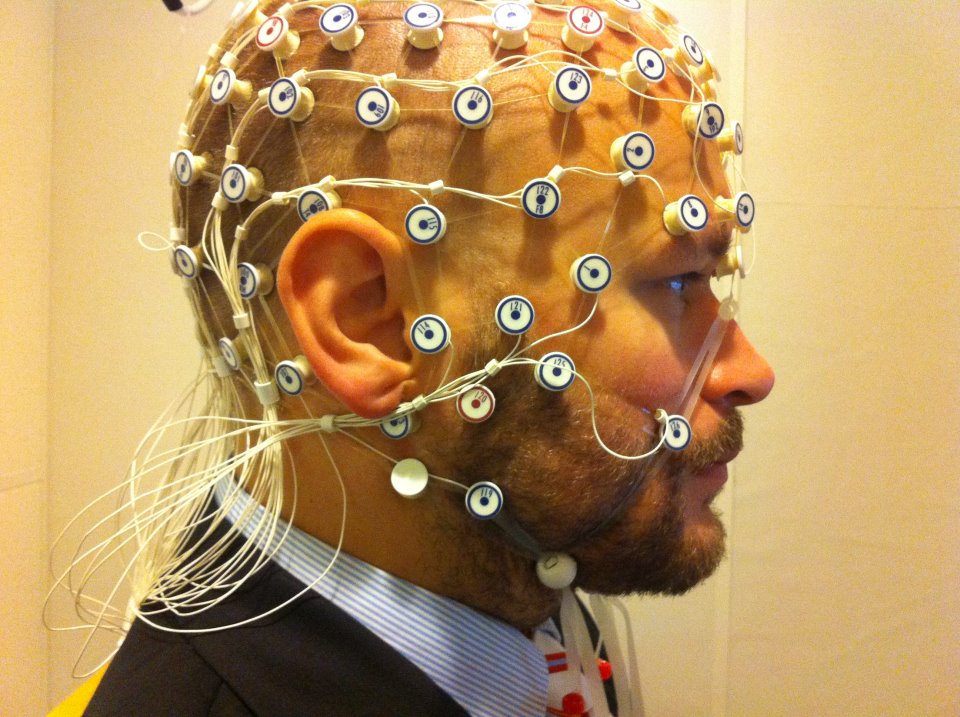
The researchers used EEGs, readouts of the brain’s electrical activity, to study how the brains of healthy and brain-damaged people responded to a mild electrical jolt. They then quantified how complex and widespread the brain activity of different patients was, using this complexity measure as, essentially, a gauge of consciousness. In 32 wide-awake, healthy patients, the jolt elicited a widespread flurry of brain activity; two patients with locked-in syndrome, where patients are fully conscious but unable to move or respond, showed a similarly complex response. The jolt produced less complex brain responses in twelve minimally conscious patients. Six vegetative patients showed even less complex brain activation still, on par with what the researchers saw in sleeping subjects and in those under anesthesia.’
Lesser the reaction and complexity, more is the conclusion that it is Coma.
Therefore one point is clear, Consciousness is something that makes one more aware.
This would help in determining Coma,apart from dispelling the notion that Consciousnesses is not a figment of imagination.
Is Consciousness an Illusion?
‘
So I’m going to speak about a problem that I have and that’s that I’m a philosopher.
When I go to a party and people ask me what do I do and I say, “I’m a professor,” their eyes glaze over. When I go to an academic cocktail party and there are all the professors around, they ask me what field I’m in and I say, “philosophy” — their eyes glaze over.
When I go to a philosopher’s party
and they ask me what I work on and I say, “consciousness,” their eyes don’t glaze over — their lips curl into a snarl.
http://www.ted.com/talks/dan_dennett_on_our_consciousness.html