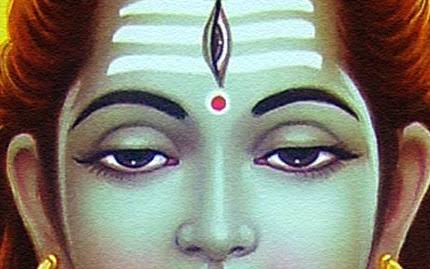
Tag: Upanishad

  • How To Wear Vibuthi Holy Ash Meaning Details Jabali Upanishad

    How To Wear Vibuthi Holy Ash Meaning Details Jabali Upanishad

    I have written on how to wear the Sri Vaishnava Marks as explained by Vasudeva Upanishad.

    I have also written another article on Vibhuthi,the Sacred Ash and Thiruman,the Sri Vaishnava Mark.

    There is a minor Upnishad which describes how one shouls wear the Vibhuthi,Sacred Ash,the Saivite Mark in the body.

    ThexJabali Upanishad is a part of Sama Veda.

    The sacred Ash is worn to remind one of his mortality and how we are nothing but Ashes in the end.

    While the Ash,Vibhuthi is an expression of Gnana Yoga,the Path of Knowledge, by making one aware that we are Mortal and the body is subject to destruction,only the Soul is Permanent,the Thirumann,the Sri Vaishnava Mark expresses the Bhakthi Yoga,which espouses the Bhakthi Yoga,the Path of Surrender to God.

    The Jabali Upanishad describes the impermanence of Human Life,talks about both Advaitha and Dwaita,the Reality as One and as Dual.

    What is interesting is that it reflects the Saivite Philosophy of Siddhas and Tamils,which is considered as Alien to Vedic Thought.

    It talks about Pasu ( Individual Soul),Pathi ( the RealityIswara,Shiva ) and the relationship between the two ( Paasam,Bond between the two).

    Shall be writing on this.

    The Jabali Upanishad is a conversation between Sage Jabaali and Pippalada.


    How should the three lines be applied, Jabali is asked. The text states in verse 22, the three lines should occupy all of the forehead. The three lines signify the trimurti of Brahma, Vishnu and Shiva.The top line represents “Garhapathya” agni or home fire, syllable “Aa” of AUM, one’s own body (self), Rajas guna, the power to act, the Rigveda, ushakala (twilight hour) or early morning hour, and is the personification of Brahma.The second streak or the middle line denotes “Dakshinagni”, syllable “Uu” of AUM, Sattva Guṇa (virtue), atman (soul, innermost self), the power to will, Yajurveda, midday, and is the personification of Vishnu.The third streak of bhasma or ash line represents the “Ahavaniya agni”, the syllable “Ma” of AUM, the Supreme Self (Brahman), the power to know, the heavens, Tamas guna, Samaveda, evening time, and is personified by Shiva.

    Smearing of the holy Bhasma or ash by a person, whether he is a brahmacharya, grihastha, vanaprastha or sannyasa frees him from sins, makes him aware of the essence of the Vedas, gets him the benefit of bathing in holy rivers, and frees him from samsara.

    Jabali Upanishad,Translation by Sri. P.R.Ramchander.

    Om! Let my limbs and speech, Prana, eyes, ears, vitality

    And all the senses grow in strength.
    All existence is the Brahman of the Upanishads.
    May I never deny Brahman, nor Brahman deny me.
    Let there be no denial at all:
    Let there be no denial at least from me.
    May the virtues that are proclaimed in the Upanishads be in me,
    Who am devoted to the Atman; may they reside in me.
    Om! Let there be Peace in me!
    Let there be Peace in my environment!
    Let there be Peace in the forces that act on me!

    The Sage Pippalada approached Sage Jabali and asked him, “Oh God like sage, please teach me the secret of the absolute philosophy. What is Thathwa (principle)? Who is Jeeva (being)? What is Pasu? Who is Ishwara? And what is the method for salvation?” Thus asked sage Jabali explained to him everything as follows:

    Jeeva (being) is nothing but God (the Lord of all beings – Pasupathi) himself who is acting the role of egoism. That Jeeva (being) is the Pasu. Pasupathi is he who knows everything, who does the five jobs like creation, and who is the Lord of all beings. Pasu (in common parlance) are those animals which eat grass, which do not have viveka (knowledge to differentiate), which are driven by others, which are made to work in jobs like agriculture and which undergo lot of sufferings. Similar to the owner of such animals is the God Pasupathi who rules over all beings.

    To the question, “What trick is there to acquire such knowledge?”. Jabali replied, “By wearing of the holy ash”. He further told, “After taking the holy ash in hand by reciting the five Brahma mantras starting with ‘Sathyojatham’, and chanting “Agnirithi Basma (Hoy ash is fire)”, mix it with water by chanting, “Manasthoke” and then wear the holy ash in head, forehead and shoulders in sets of three lines chanting the three mantras “trayayusham”. Further wear these by chanting the three mantras starting with “Trayayusham” and the mantra “Tryambakam” is called Sambhava penance. Those with knowledge of Veda say that this has been told in all Vedas. For avoiding rebirth, the people with eternal wisdom, should adopt this.

    Among the three lines, the first one is Garhapathya (the domestic fire), the letter Aa, the quality of Rajas, earth, Jeevathma (soul of beings), the power of creation, Rigveda, time of dawn and its God is Lord Brahma. The second line is Dakshinagni (Fire of the south), the letter Uu, the quality of Sathva, atmosphere, the soul inside the body, the power of desire, Yajurveda, the time of noon, and its God is Lord Vishnu. The third line is the Ahavaneeya agni (the fire of the Sun), the letter Ma, the quality of Thamas, the place of Gods, the Paramatma, the power of knowledge, Samaveda, the time of dusk and its God is Shiva. That individual, who wears holy ash, whether he is a Brahmachari or Sanyasi, gets rid of great as well as minor sins. He becomes fit to worship all gods; he becomes one who has taken bath in all holy waters and the one who has chanted all the Rudra mantras. He does not have rebirth. This Upanishad tells that, it is sworn that he will not have rebirth.

    Om! Let my limbs and speech, Prana, eyes, ears, vitality
    And all the senses grow in strength.
    All existence is the Brahman of the Upanishads.
    May I never deny Brahman, nor Brahman deny me.
    Let there be no denial at all:
    Let there be no denial at least from me.
    May the virtues that are proclaimed in the Upanishads be in me,
    Who am devoted to the Atman; may they reside in me.
    Om! Let there be Peace in me!
    Let there be Peace in my environment!
    Let there be Peace in the forces that act on me!

    Here ends the Jabali Upanishad, included in the Sama-Veda.

    Reference and citation.

    https://en.m.wikipedia.org/wiki/Jabali_Upanishad

  • OM Gayatri Yoga In One Maitri Upanishad

    The Maitri Upanishad,also called The Maitraniya Upanishad is from the Krishna Yajur Veda,Maitraniya Shaka.

    This Upanishad is uniqe in that it deals with not only Brahman, it deals with

    Sun worship,

    Gayatri Mantra,

    Yoga,

    Maya Concept to sch an extent that it is some times called the Buddhist view of Philosophy,

    Saguna Brahman,that is Brahman with and without Form.

    Sanskrit Text at http://sanskritdocuments.org/all_pdf/maitri.pdf

    12
    small, and shining, as the Highest Self, then having seen his Se
    lf as the Self, he becomes Self less, and because he is Self-less, he is without limit, without cause, absorbed in thought. This is the highest
    mystery, viz. final liberation.

    And thus it is said:
    ‘Through the serenity of the thought he kills all actions,
    good or bad; his Self serene, abiding in the Self,
    obtains imperishable bliss.’
    21. And thus it has been said elsewhere: The artery, called Sushumna, going upwards (from the heart to
    the Brahmarandhra), serving as the passage of the Prana, is divided wit
    hin the palate. Through that artery, when it has been joined by the breath (held in subjection), by the sacred syllable Om,

    and by the mind (absorbed in the contemplation of Brahman), let him proceed upwards, and after turning the tip of
    the tongue to the palate, without using any of the organs of sense, let greatness perceive greatness.
    From thence he goes to selflessness, and through selflessness he ceases to be an enjoyer of pleasure
    and pain, he obtains aloneness (kevalatva, final deliverance).

    And thus it is said:
    ‘Having successively fixed the breath, after it had been restrained, in the palate, thence having crossed
    the limit (the life), let him join himself afterwards to the limitless (Brahman) in the crown of the head.’
    22. And thus it has been said elsewhere: Two Brahmans have to be meditated on, the word and the
    non-word. By the word alone is the non word revealed.

    Now there is the word Om.

    Moving upward by it (where all words and all what is meant by them ceases), he arrives at absorption in the non

    word (Brahman).

    This is the way, this is the immortal, this is union, and this is bliss.

    And as the spider, moving
    upward by the thread, gains free space, thus also he who meditates, moving upward by the syllable
    OM gains independence.
    Other teachers of the word (as Brahman) think otherwise.

    They listen to the sound of the ether within the
    heart while they stop the ears with the thumbs. They compare it to seven noises, like rivers, like a bell,
    like a brazen vessel, like the wheels of a carriage, li
    ke the croaking of frogs, like rain, and as if a man
    speaks in a cavern. Having passed beyond this variously apprehended sound, and having settled in the
    supreme, soundless (non-word), unmanifested Brahman, they become undistinguished and
    undistinguishable, as various flavours of the flowers are lost in the taste of honey.

    And thus it is said:
    ‘Two Brahmans are to be known, the wordBrahman and the highest Brahman; he who is perfect in the
    word Brahman attains the highest Brahman.’
    23. And thus it has been said elsewhere: The syllable Om is what is called the word. And its end is the
    silent, the soundless, fearless, sorrowless, joyful, satisfied, firm, unwavering, immortal, immovable,
    certain (Brahman), called Vishnu. Let him worship these two, that he may
    obtain what is higher than
    everything (final deliverance). For thus it is said:
    ‘He who is the high and the highest god, by name Omkara, he is soundless and free from all
    distinctions: therefore let a man dwell on him in the crown of his head.’
    24. And thus it has been said elsewhere: The body is the bow, the syllable Om is the arrow,
    and its point is the mind. Having

    cut through the darkness, which consists of ignorance, it approaches that which is
    not covered by darkness.

    Then having cut through thatwhich was covered (the personal soul), he saw
    Brahman, flashing like a wheel on fire, bright like the sun, vigorous, beyond all darkness, that which
    shines forth in yonder sun, in the moon, in the fire, in the lightning. And having seen him, he obtains
    immortality.

    And thus it has been said:
    ‘Meditation is directed to the highest Being (Brahman) within, and (before) to the objects (body, Om,
    mind); thence the indistinct understanding becomes distinct.
    And when the works of the mind are dissolved, then that bliss which requires no other witness, that is
    Brahman (Atman), the immortal, the brilliant, that is the way, that is the (true) world.’
    25. And thus it has been said elsewhere: He who has his senses hidden as in sleep, and who, while in
    the cavern of his senses (his body), but no longer ruled by them, sees, as in a dream, with the purest
    intellect, Him who is called Pranava (Om), the leader, the bright, the sleepless, free from old age, from
    death, and sorrow, he is himself also called Pranava, and becomes a leader, bright, sleepless, free from
    old age, from death, and sorrow.

    And thus it is said:
    ‘Because in this manner he joins the Prana (breath), the Om, and this Universe in
    its’s manifold forms or because they join themselves (to him), therefore this (process of meditation) is called Yoga (joining).
    The oneness of breath, mind, and senses, and then the surrendering of all
    conceptions that is called Yoga.’

    26. And thus it has also been said elsewhere: As a sportsman, after drawing out the denizens
    of the waters with a net, offers them (as a sacrifice) in the fire of his stomach, thus are these Pranas (vital
    airs), after they have been drawn out with the syllable Om, offered in the faultless fire (Brahman).
    Hence he is like a heated vessel (full of clarified butter); for as the clarified butter in the heated vessel
    lights up, when touched with grass and sticks, thus does this being which is called

    Not -breath (Atman) light up, when touched by the Pranas (the vital airs).

    And that which flares up, that is the manifest form
    of Brahman thatis the highest place of Vishnu that
    is the essence of Rudra. And this, dividing his Self in
    endless ways, fills all these worlds. And thus it is said:
    ‘As the sparks from the fire, and as the rays from the sun, thus do his Pranas and the rest in proper
    order again and again proceed from him here on earth.’
    27. And thus it has also been said elsewhere: This is the heat of the highest, the immortal, the
    incorporeal Brahman, viz. the warmth of the body. And this body is
    the clarified butter (poured on it, by
    which the heat of Brahman, otherwise invisible, is lighted up). Then, being manifest, it is placed in the
    ether (of the heart). Then by concentration they thus remove that ether which is within the heart, so that
    its light appears, as it were. Therefore the worshipper becomes identified with that light without much
    delay. As a ball of iron, if placed in the earth, becomes earth without much delay, and as, when it has
    once become a clod of earth, fire and smiths have no
    thing more to do with that ball of iron, thus does
    thought (without delay) disappear, together with its support. And thus it is said:
    ‘The shrine which consists of the ether in the heart, the blissful, the highest retreat, that is our own, that
    is our goal, and that is the heat and brightness of the fire and the sun.’
    28. And thus it has been said elsewhere: After having left behind the body, the organs of sense, and the
    objects of sense (as no longer belonging to us), and having seized the bow whose stick is fortitude and
    whose string is asceticism, having struck down also with the arrow, which consists in freedom from
    egotism, the first guardian of the door of Brahman(for if man looks at the world egotistically, then, taking
    the diadem of passion, the earrings of greed and envy, and the staff of, sloth
    , sleep, and sin, and having seized the bow whose string is anger, and whose stick is lust’ he destroys

    with the arrow which consists of wishes, all beings)

    having therefore killed that guardian, he crosses by means of the boat Om to the
    other side of the ether within the heart, and when the ether becomes revealed (as Brahman), he enters
    slowly, as a miner seeking minerals in a mine, into the Hall of Brahman. After that let him, by means of
    the doctrine of his teacher, break through the shrine of Brahman’which consists of the four nets (of food,
    breath, mind, knowledge, till he reaches the last shrine, that of blessedness and identity with Brahman).
    Thenceforth pure, clean, undeveloped, tranquil, breathless
    , bodiless, endless, imperishable, firm,
    everlasting, unborn and independent, he stands on his own greatness, and having seen (the Self),
    standing in his own greatness, he looks on the wheel of the world as one (who has alighted from a
    chariot) looks on it
    s revolving wheel. And thus it is said:
    ‘If a man practises Yoga for six months and is thoroughly free (from the outer world), then the perfect
    Yoga (union), which is endless, high, and hidden, is accomplished.
    But if a man, though well enlightened (by i
    nstruction), is still pierced by (the gunas of) passion and
    darkness, and attached to his children, wife, and house, then perfect Yoga is never accomplished.’
    29. After he had thus spoken (to Brihadratha), Sakayanya, absorbed in thought, bowed before him,
    and
    said: ‘O King, by means of this Brahma

    knowledge have the sons of Pragapati (the Valakhilyas) gone to
    the road of Brahman. Through the practice of Yoga a man obtains contentment, power to endure good
    and evil, and tranquillity. Let no man preach this
    most secret doctrine to any one who is not his son or
    his pupil, and who is not of a serene mind. To him alone who is devoted to his teacher only, and
    endowed with all necessary qualities, may he communicate it.
    30. Om! Having settled down in a pure place
    let him, being pure himself, and firm in goodness, study the
    truth, speak the truth, think the truth, and offer sacrifice to the truth. Henceforth he has become another;
    by obtaining the reward of Brahman his fetters are cut asunder, he knows no hope, no
    fear from others
    as little as from himself, he knows no desires; and having attained imperishable, infinite happiness, he
    stands blessed in the true Brahman, who longs for a true man. Freedom from desires is, as it were, the
    highest prize to be taken from
    the best treasure (Brahman). For a man full of all desires, being
    possessed of will, imagination, and belief, is a slave; but he who is the opposite, is free.
    Here some say, it is the Guna (i. e. the so

    called Mahat, the principle of intellect which, acc
    ording to the
    Sankhyas, is the result of the Gunas or qualities), which, through the differences of nature (acquired in
    the former states of existence), goes into bondage to the will, and that deliverance takes place (for the
    14
    Guna) when the fault of the wi
    ll has been removed. (But this is not our view), because (call it guna,
    intellect, buddhi, manas, mind, ahankara, egotism, it is not the mind that acts, but) he sees by the mind
    (as his instrument), he hears by the mind; and all that we call desire, imagin
    ation, doubt, belief, unbelief,
    certainty, uncertainty, shame, thought, fear, all that is but mind (manas). Carried along by the waves of
    the qualities, darkened in his imaginations, unstable, fickle, crippled, full of desires, vacillating, he enters
    into belief, believing I am he, this is mine, and he binds his Self by his Self, as a bird with a net.
    Therefore a man, being possessed of will, imagination, and belief, is a slave, but he who is the opposite
    is free. For this reason let a man stand free from will, imagination, and belief

    this is the sign of liberty,
    this is the path that leads to Brahman, this is the opening of the door, and through it he will go to the
    other shore of darkness. All desires are there fulfilled. And for this they quote a verse:
    “When the five instruments of knowledge stand still together with the mind, and when the intellect does
    not move, that is called the highest state.”‘
    Having thus said, sakayanya became absorbed in thought. Then Marut (i. e. the King Brihadratha),
    having b
    owed before him and duly worshipped him, went full of contentment to the Northern Path, for
    there is no way thither by any side

    road. This is the path to Brahman. Having burst open the solar door,
    he rose on high and went away. And here they quote:
    ‘There
    are endless rays (arteries) for the Self who, like a lamp, dwells in the heart: white and black,
    brown and blue, tawny and reddish.
    One of them (the Sushumna) leads upwards, piercing the solar orb: by it, having stepped beyond the
    world of Brahman, they
    go to the highest path.
    The other hundred rays rise upwards also, and on them the worshipper reaches the mansions belonging
    to the different bodies of gods.
    But the manifest rays of dim colour which lead downwards, by them a man travels on and on helples
    sly,
    to enjoy the fruits of his actions here.’
    Therefore it is said that the holy Aditya (sun) is the cause of new births (to those who do not worship
    him), of heaven (to those who worship him as a god), of liberty (to those who worship him as Brahman).
    31. Some one asks: ‘Of what nature are those organs of sense that go forth (towards their objects)?
    Who sends them out here, or who holds them back?’
    Another answers: ‘Their nature is the Self; the Self sends them out, or holds them back; also the
    Apsaras
    (enticing objects of sense), and the solar rays (and other deities presiding over the senses).’
    Now the Self devours the objects by the five rays (the organs of sense); then who is the Self?
    He who has been defined by the terms pure, clean, undeveloped
    , tranquil, &c., who is to be
    apprehended independently by his own peculiar signs. That sign of him who has no signs, is like what
    the pervading heat is of fire, the purest taste of water; thus say some. It is speech, hearing, sight, mind,
    breath; thus say
    others. It is intellect, retention, remembering, knowledge; thus say others. Now all these
    are signs of the Self in the same sense in which here on earth shoots are the signs of seed, or smoke,
    light, and sparks of fire. And for this they quote:
    ‘As the sparks from the fire, and as the rays from the sun, thus do his Pranas and the rest in proper
    order again and again proceed from him here on earth.’
    32. From this very Self, abiding within his Self, come forth all Pranas (speech, &c.), all worlds, all Vedas,
    all gods and all beings; its Upanishad (revelation) is that it is ‘the true of the true.’ Now as from a fire of
    greenwood, when kindled, clouds of smoke come forth by themselves (though belonging to the fire),
    thus from that great Being has been breath
    ed forth all this which is the Rigveda, the Yagur veda, the
    Samaveda, the Atharvangirasas (Atharvaveda), the Itihasa (legendary stories), the Purana (accounts
    of the creation, &c.), Vidya (ceremonial doctrines), the Upanishads, the Slokas (verses inters persed in
    the Upanishads, &c.), the Sutras (compendious statements), the Anuvyakhyanas (explanatory notes),
    the Vyakhyanas (elucidations) all these things are his.
    33. This fire (the Garhapatya fire) with five bricks is the year.

    And its five bricks are spring, summer,rainy season, autumn, winter; and by them the fire has a head, two sides, a centre, and a tail.

    This earth (the Garhapatya,Fire) here is the first sacrificial pile for Pragapati, who knows the Purusha (the Virag). It
    presented the sacrificer to Vayu (the wind) by lifting him with the hands to the sky. That Vayu is Prana
    (Hiranyagarbha).
    15
    Prana is Agni (the Dakshinagni

    fire), and its bricks are the five vital breaths, Prana, Vyana, Apana,
    Samana, Udana; and by them the fire has a head, two s
    ides, a centre, and a tail. This sky (the
    Dakshinagni fire) here is the second sacrificial pile for Pragapati, who knows the Purusha. It presented
    the sacrificer to Indra, by lifting him with the hands to heaven. That Indra is Aditya, the sun.
    That (Indra) is the Agni (the Ahavaniya

    fire) and its bricks are the Rik, the Yagush, the Saman, the
    Atharvangirasas, the Itihasa, and the Purana; and by them the fire has a head, two sides, a tail, and a
    centre. This heaven (Ahavaniya fire) is the third sacrificialpile for Pragapati, who knows the Purusha.
    With the hands it makes a present of the sacrificer to the Knower of the Self (Pragapati); then the
    Knower of the Self, lifting him up, presented him to Brahman. In him he becomes full of happiness and
    joy.
    34.
    The earth is the Garhapatya fire, the sky the Dakshina

    fire, the heaven the Ahavaniya fire; and
    therefore they are also the Pavamana (pure), the Pavaka (purifying), and the Suki (bright). By this (by
    the three deities, Pavamana, Pavaka, and Suki) the sacri
    fice (of the three fires, the Garhapatya,
    Dakshina, and Ahavaniya) is manifested. And because the digestive fire also is a compound of the
    Pavamana, Pavaka, and Suki, therefore that fire is to receive oblations, is to be laid with bricks, is to be
    praised, and to be meditated on. The sacrificer, when he has seized the oblation, wishes to perform his
    meditation of the deity:
    ‘The gold coloured bird abides in the heart, and in the sun

    a diver bird, a swan, strong in splendour; him
    we worship in the fire.’
    Having recited the verse, he discovers its meaning, viz. the adorable splendour of Savitri (sun) is to be
    meditated on by him who, abiding within his mind, meditates thereon. Here he attains the place of rest
    for the mind;
    he holds it within his own Self. On this there are the following verses
    :
    (1) As a fire without fuel becomes quiet in its place, thus do the thoughts, when all activity ceases,
    become quiet in their place.
    (2) Even in a mind which loves the truth and has gone to rest in itself there arise, when it is deluded by
    the objects of sense, wrongs resulting from former acts.
    (3) For thoughts alone cause the round of births; let a man strive to purify his thoughts. What a man
    thinks, that he is: this is the old secret.
    (4) By the serenity of his thoughts a man blots out all actions, whether good or bad. Dwelling within his
    Self with serene thoughts, he obtains imperishable happiness.
    (5) If the thoughts of a man were so fixed on Brahman as they are on the things of this world, who would
    not then be freed from bondage?
    (6) The mind, it is said, is of two kinds, pure or impure; impure from the contact with lust, pure when free
    from lust.
    (7) When a man, having freed his mind from sloth, distraction, and vacillation, becomes as it were
    delivered from his mind, that is the highest point.
    (8) The mind must be restrained in the heart till it comes to an end;

    that is knowledge, that is liberty: all
    the rest are extensions of the ties (which bind us to this life).
    (9) That happiness which belongs to
    a mind which by deep meditation has been washed clean from all
    impurity and has entered within the Self, cannot be described here by words; it can be felt by the inward
    power only.
    (10) Water in water, fire in fire, ether in ether, no one can distinguish
    them; likewise a man whose mind
    has entered (till it cannot be distinguished from the Self), attains liberty.
    (11 Mind alone is the cause of bondage and liberty for men; if attached to the world, it becomes bound;
    if free from the world that is liberty.
    Therefore those who do not offer the Agnihotra (as described above), who do not lay the fires (with the
    bricks, as described above), who are ignorant (of the mind being the cause of the round of births), who
    do not meditate (on the Self in the solar orb) are debarred from remembering the ethereal place of
    Brahman. Therefore that fire is to receive oblations, is to be laid with bricks,
    and is to be praised, to be meditated on.
    16
    35. Adoration to Agni, the dweller on earth, who remembers his world. Grant that
    world to this thy worshipper!
    Adoration to Vayu, the dweller in the sky, who remembers his world.

    Grant that world to this thy worshipper!
    Adoration to Aditya, the dweller in heaven, who remembers his world.

    Grant that world to this thy worshipper!
    Adoration to Brahman, who dwells everywhere, who remembers all. Grant all to this thy worshipper!
    The mouth of the true (Brahman) is covered with a golden lid; open that, O Pushan (sun), that we may
    go to the true one, who pervades all (Vishnu).
    He who is the person in the sun, I am he.
    And what is meant by the true one is the essence of the sun, that which is bright, personal,
    and sexless; a portion (only) of the light which pervades the ether; which is, as it were, in the midst of the sun, and in
    the eye,and in the fire. That is Brahman, that is immortal, that is splendour.
    That is the true one, a portion (only) of the light which pervades the ether, which is in the midst of the
    sun, the immortal, of which Soma (the moon) and the vital breaths also are offshoots:

    that is Brahman, that is immortal, that is splendour.
    That is the true one, a portion (only) of the light which pervades the ether, which in the midst of the sun
    shines as Yagus, viz. as Om, as water, light, essence, immortal, Brahman, Bhuh, Bhuv
    ah, Svar, Om.
    ‘The eight footed, the bright, the swan, bound with three threads, the infinitely small, the imperishable,
    blind for good and evil, kindled with light

    he who sees him, sees everything.’
    A portion (only) of the light which pervades the ether, are the two rays rising in the midst of the sun.

    That is the knower (the Sun), the true one. That is the Yagus, that is the heat, that is Agni (fire),

    that is Vayu (wind), that is breath, that is water, that is the moon, that is bright, that is immortal
    , that is the place ofBrahman, that is the ocean of light. In that ocean the sacrificers are dissolved like salt,

    and that is oneness with Brahman, for all desires are there fulfilled.

    And here they quote:
    ‘Like a lamp, moved by a gentle wind, he who dwe
    lls within the gods shines forth. He who knows this,
    he is the knower, he knows the difference (between the high and the highest Brahman); having obtained
    unity, he becomes identified with it.
    They who rise up in endless number, like spray drops (from the
    sea), like lightnings from the light within
    the clouds in the highest heaven, they, when they have entered into the light of glory (Brahman), appear
    like so many flame

    crests in the track of fire.’
    36. There are two manifestations of the Brahma

    light: one is tranquil, the other lively. Of that which is
    tranquil, the ether is the support; of that which is lively, food. Therefore (to the former) sacrifice must be
    offered on the house altar with hymns, herbs, ghee, meat, cakes, sthalipaka, and other things;
    to the latter, with meat and drinks (belonging to the great sacrifices) thrown into the mouth,

    for the mouth is the Ahavaniya fire;

    and this is done to increase our bodily vigour, to gain the world of purity, and for the
    sake of immortality.

    And here they
    quote:
    ‘Let him who longs for heaven, offer an Agnihotra. By an Agnishtoma he wins the kingdom of Yama; by
    Uktha, the kingdom of Soma; by a Shodasin

    sacrifice, the kingdom of Surya; by an Atiratra

    sacrifice, the kingdom of Indra; by the sacrifices beginning with the twelve

    night sacrifice and ending with the
    thousand years’ sacrifice, the world of Pragapati.
    As a lamp burns so long as the vessel that holds the wick is filled with oil, these two, the Self and the
    bright Sun, remain so long as the egg (of the world) and he who dwells within it hold together.’
    37. Therefore let a man perform
    all these ceremonies with the syllable Om (at the beginning).

    Its splendour is endless, and it is declared to be threefold, in the fire (of the altar), in the sun (the
    deity), in the breath (the sacrificer).

    Now this is the channel to increase the food, which makes what is offered in
    the fire ascend to the sun. The sap which flows from
    thence rains down as with the sound of a hymn. By
    it there are vital breaths, from the
    m there is offspring. And here they quote:
    ‘The offering which is offered in the fire, goes to the sun; the sun rains it down by his rays; thus food
    comes, and from food the birth of living beings.’
    17
    And thus he said:
    ‘The oblation which is properly thrown on the fire, goes toward the sun; from the sun comes rain, from
    rain food, from food living beings.’
    38. He who offers the Agnihotra breaks through the net of desire. Then, cutting through bewilderment,
    never approving of anger, meditating on one desire (that of liberty), he breaks through the shrine of
    Brahman with its four nets, and proceeds thence to the ether. For having there broken through the (four)
    spheres of the Sun, the Moon, the Fire, and Goodness, he then, being purified himself, beholds dwelling
    in goodness, immovable, immortal, indestructible, firm, bearing the name of Vishnu, the highest abode,
    endowed with love of truth and omniscience, the self dependent Intelligence (Brahman), standing in its
    own greatness.

    And here they quote:
    ‘In themidst of the sun stands the moon, in the midst of the moon the fire, in the midst of fire goodness,
    in the midst of goodness the Eternal.’
    Having meditated on him who has the breadth of a thumb within the span (of the heart) in the body, who
    is smaller than small, he obtains the nature of the Highest; there all desires are fulfilled. And on this they
    quote:
    ‘Having the breadth of a thumb within the span (of the heart) in the body, like the flame of a lamp,
    burning twofold or threefold, that glorified Bra
    hman, the great God, has entered into all the worlds. Om!
    Adoration to Brahman! Adoration!’
    Seventh Prapathaka
    1. Agni, the Gayatra (metre), the Trivrit (hymn), the Rathantara (song), the spring, the upward breath
    (prana), the Nakshatras, the Vasus (dei
    ties)

    these rise in the East; they warm, they rain, they praise (the
    sun), they enter again into him (the sun), they look out from him (the sun). He (the sun) is inconceivable,
    without form, deep, covered, blameless, solid, unfathomable, without qualities,
    pure, brilliant, enjoying
    the play of the three qualities, awful, not caused, a master

    magician, the omniscient, the mighty,
    immeasurable, without beginning or end, blissful, unborn, wise, indescribable, the creator of all things,
    the self of all things,
    the enjoyer of all things, the ruler of all things, the centre of the centre of all things.
    2. Indra, the Trishtubh (metre), the Pankadasa (hymn), the Brihat (song), the summer, the through

    going breath (Vyana), Soma, the Rudras

    these rise in the South;
    they warm, they rain, they praise, they enter
    again into him, they look out from him. He (the sun) is without end or beginning, unmeasured, unlimited,
    not to be moved by another, self

    dependent, without sign, without form, of endless power, the creator,
    t
    he maker of light.
    3. The Maruts, the Gagati (metre), the Saptadasa (hymn), the Vairupa (song), the rainy season, the
    downward breath (apana), Sukra, the Adityas

    these rise in the West; they warm, they rain, they praise,
    they enter again into him, they
    look out from him. That is the tranquil, the soundless, fearless,
    sorrowless, joyful, satisfied, firm, immovable, immortal, eternal, true, the highest abode, bearing the
    name of Vishnu.
    4. The Visve Devas, the Anushtubh (metre), the Ekavimsa (hymn), the V
    airaga (song), the autumn, the
    equal breath (samana), Varuna, the Sadhyas

    these rise in the North; they warm, they rain, they praise,
    they enter again into him, they look out from him. He is pure within, purifying, undeveloped, tranquil,
    breathless, selfless, endless.
    5. Mitra Varunau, the Pankti (metre), the Trinavatrayastrimsa (hymns), the Sakvara raivata (songs), the
    snowy and dewy seasons, the outgoing breath (udana), the Angiras, the Moon

    these rise above; they warm, they rain, they praise, they
    enter again into him, they look out from him

    who is called Pranava
    (Om), the leader, consisting of light, without sleep, old age, death, and sorrow.
    6. Sani (Saturn), Rahu and Ketu (the ascending and descending nodes), the serpents, Rakshas,
    Yakshas, men,
    birds, sarabhas, elephants, &c.

    these rise below; they warm, they rain, they praise, they
    enter again into him, they look out from him

    he who is wise, who keeps things in their right place, the
    centre of all, the imperishable, the pure, the purifier, the bright, the patient, the tranquil.
    7. And he is indeed the Self, smaller (than small) within the heart, kindled like fire, endowed with all
    forms. Of him is all this food, within him all creatures are woven. That Self is free from sin, free from old
    age
    , from death and grief, from hunger and thirst, imagining nothing but what it ought to imagine, and
    desiring nothing but what it ought to desire. He is the highest
    lord;
    he is the supreme master of all
    18
    beings, the guardian of all beings, a boundary keeping
    all things apart in their right places. He the Self,
    the lord, is indeed Sambhu, Bhava, Rudra, Pragapati, the creator of all, Hiranyagarbha, the true, breath,
    the swan, the ruler, the eternal, Vishnu, Narayana. And he who abides in the fire, and he who abides in
    the heart, and he who abides in the sun, they are one and the same. To thee who art this, endowed with
    all forms, settled in the true ether, be adoration!
    8. Now follow the impediments in the way of knowledge, O King! This is indeed the origin of
    the net of
    bewilderment, that one who is worthy of heaven lives with those who are not worthy of heaven. That is
    it. Though they have been told that there is a grove before them, they cling to a small shrub. And others
    also who are always merry, always abroad, always begging, always making a living by handiwork; and
    others who are begging in towns, performing sacrifices for those who are not allowed to offer sacrifices,
    who make themselves the pupils of Sudras, and Sudras who know the sacred books; and others

    who are malignant, who use bad language, dancers, prize
    fighters, travelling mendicants, actors, those who
    have been degraded in the king’s service; and others who for money pretend that they can lay (the evil
    influences) of Yakshas, Rakshasas, ghosts,
    goblins, devils, serpents, imps, &c.; and others who falsely
    wear red dresses, earrings, and skulls; and others who wish to entice by the jugglery of false arguments,
    mere comparisons and paralogisms, the believers in the Veda

    with all these he should not live
    together. They are clearly thieves, and unworthy of heaven. And thus it is said:
    ‘The world unsettled by the paralogisms of the denial of Self, by false comparisons and arguments, does
    not know what is the difference between Veda and philosophy.’
    9. Brihaspati, having become Sukra, brought forth that false knowledge for the safety of Indra and for
    the destruction of the Asuras. By it they show that good is evil, and that evil is good. They say that we
    ought to ponder on the (new) law, which upsets
    the Veda and the other sacred books. Therefore let no
    one ponder on that false knowledge: it is wrong, it is, as it were, barren. Its reward lasts only as long as
    the pleasure lasts, as with one who has fallen from his caste. Let that false science not be
    attempted, for
    thus it is said:
    (1) Widely opposed and divergent are these two, the one known as false knowledge, the other as
    knowledge. I (Yama) believe Nakiketas to be possessed by a desire of knowledge; even many
    pleasures do not move thee.
    (2) He who
    knows at the same time both the imperfect (sacrifice, &c.) and the perfect knowledge (of the
    Self), he crosses death by means of the imperfect, and obtains immortality by means of the perfect
    knowledge.
    (3) Those who are wrapped up in the midst of imper
    fect knowledge, fancying themselves alone wise and
    learned, they wander about floundering and deceived, like the blind led by the blind.
    10. The gods and the demons, wishing to know the Self, went into the presence of Brahman (their
    father, Pragapati). Ha
    ving bowed before him, they said: ‘O blessed one, we wish to know the Self, do
    thou tell us.’ Then, after having pondered a long while, he thought, these demons are not yet self

    subdued; therefore a very different Self was told to them (from what was told
    to the gods). On that Self
    these deluded demons take their stand, clinging to it, destroying the true means of salvation (the Veda),
    preaching untruth. What is untrue they see as true, as in jugglery. Therefore, what is taught in the
    Vedas, that is true. W
    hat is said in the Vedas, on that the wise keep their stand. Therefore let a
    Brahman not read what is not of the Veda, or this will be the result.
    11. This is indeed the nature of it (the Veda), the supreme light of the ether which is within the heart.
    This is taught as threefold, in the fire, in the sun, in the breath. This is indeed the nature of it, the syllable
    Om, of the ether which is within the heart. By it (by the Om) that (light) starts, rises, breathes forth,
    becomes for ever the means of the wor
    ship and knowledge of Brahman. That (light, in the shape of
    Om), when there is breathing, takes the place of the internal heat, free from all brightness. This is like
    the action of smoke; for when there is a breath of air, the smoke, first rising to the sk
    y in one column,
    follows afterwards every bough, envelopes it and takes its shape. It is like throwing salt (into water), like
    heating ghee. The Veda comes and goes like the dissolving view of a master

    magician. And here they
    quote:
    ‘Why then is it called
    “like lightning?” Because as soon as it comes forth (as Om) it lights up the whole
    body. Therefore let a man worship that boundless light by the syllable Om.’
    (1) The man in the eye who abides in the right eye, he is Indra, and his wife abides in the lef
    t eye.
    (2) The union of these two takes place in the cavity within the heart, and the ball of blood which is there,
    that is indeed the vigour and life of these two.

    Citation.

    http://geocities.ws/metteyyaproject/TheOfficeofTheFourArms/MAITRAYANA.pdf

  • Hinduism On Children Illegitimate Children

    Hinduism accords importance to Familial relationships.


    Duties of each member of the Family is set,Man,Wife,children,Brother,Sister and elders.


    However the emphasis  is more on the duties of the son.


    Hindu Symbol OM.jpg
    Hindu Symbol OM


    Hinduism considers the begetting of a male child to be auspicious as they believe that the son prevents the parents entering the Hell called ‘Puth’


    The name for son is Puthra, one who prevents parents from entering Puth.


    The Smritis state that a son is to be treated as,


    a King till he is Five years old.


    as Slave from 5 to Fifteen and


    a friend after Fifteen years.


    A son is not to be praised in his face.


    His mistakes are to be pointed out.


    a son has to be educated within one’s  means.


    As children can not understand the difficulties of running a family(till they are fifteen No Family affairs are to be discussed with them nor their opinion sought even for their education)


    Once they are married all decisions are to be taken after discussing with them, not necessarily following them.


    They have to be taught etiquette  and discipline as set forth in the Taittriya Upanishad in Siksha Valli.


    The son , when he comes of age is expected to run the family and the parents have to maintain themselves , either by staying in the family or withdrawing to the forest as a vanaprastha.


    If the wife is not willing to accompany the husband,she has to be left in the care of the son.


    The son  is the Guardian of the Mother.


    The son is the next authority in running the Family and he has to take  care of his sisters  and younger brothers as a father.


    His wife occupies the next place in the Family after the Mother and Father.

    She is Mother in another form.


    The son is to perform the Funeral rites of the Parents.


    He shall perform all the duties of  the Father, including  the performance of all Poojas and Rituals prescribed for the Family, after the Seemantha for his wife is performed.


    If a Man does not have a child, he has to adopt his daughter’s child as his son.


    Following ceremonies are performed for the Son.


    1.Punyahavachana.

    2.Namakarana, naming the child.

    3.Ayush Homa till he attains Five Years.

    4.Ear-piercing,Karnabhushana.

    5.Head tonsuring.

    6.Upanayana.

    7.Marriage.

    8.Seemantha for His wife.


    Illegitimate children.


    Children of an Unmarried woman,


    Child of son’s pregnant Bride,


    Son of twice married woman,


    Son of an adopted daughter,


    Adopted son,


    All belong to the family.


    In the absence of legitimate  children, the illegitimate children  receive one-fourth of the Estate.


    Gautama Sutra 28.18.


    Manu on Illegitimate Children

    By the sacred tradition the woman is declared to be the soil (or the field), the man is declared to be the seed; the production of all corporeal beings takes place through the union of the soil with the seed.” (Manu. IX.33)

    “Those who, having no property in a field, but possessing seed-corn, sow it in another’s soil, do not receive the grain of the crop which may spring forth.” (Manu.IX.49)

    “If (one man’s) bull were to beget a hundred calves on another man’s cows, they (i.e., the calves) would belong to the owner of the cows; in vain would the bull have spent its strength.” (Manu.IX.50)

    “Thus men who have no marital property in women, but sow their seed in the soil of others, benefit the owner of the woman; but the giver of the seed reaps no benefit.” (Manu.IX.51)


    Citation.


    https://groups.yahoo.com/neo/groups/advaitin/conversations/messages/55496


    http://www.hinduwebsite.com/hinduism/h_children.asp


  • Mantrika Upanishad Essence of Vedas Advaita

    The Mantrika Upanishad appears in the Atharva Veda.


    Full of symbolism ans an integrated approach to all the Three Vedas ,a clear exposition of Advaita and Maya can be found in this Upanishad.


    I shall be posting an article explaining the concept.


    Lord Subrahmanya.jpg
    Lord Subrahmanya.


    Translation.


    Om ! That (Brahman) is infinite, and this (universe) is infinite.

    The infinite proceeds from the infinite.

    (Then) taking the infinitude of the infinite (universe),

    It remains as the infinite (Brahman) alone.

    Om ! Let there be Peace in me !

    Let there be Peace in my environment !

    Let there be Peace in the forces that act on me !

    1. The eight-footed immaculate Swan, bound with three cords, subtle and imperishable, to whom three ways lead, I see not though I see it everywhere.

    2. At the time all living beings are confounded (in the darkness of nescience) when (however) the pileless darkness is shattered (by the sun of saving knowledge). The sages established in Sattva behold the Absolute beyond Gunaa (right) in the sphere of gunas.

    3 (a). Contemplated by sages like Kumara, etc.; the Absolute is not otherwise capable of being perceived (at all).

    3(b)-4. The agent of superimposition the Unborn (Maya), the nescient eight-fold inveterate mother of modifications; thus it is extended and again prodded. The world under such power and guidance gives rise to the values of man.

    5. The Lord’s mighty Maya, having both a beginning and end, the creatrix, brings beings into existence; white, black and red (She) fulfils all desires.

    6. (The ignorant) experiences this non-objective Maya (whose real nature is) unknown (even) to sages like Kumara. The Lord alone freely following (Her) enjoys Maya (as Her Lord and Companion).

    7. He enjoys (Her) through both contemplation and action. He, the omnipresent one, sustains (Her) who is common to one and all, the yielder (of desired objects) and is enjoyed by the sacrificers.

    8. The magnanimous (sages) behold in (the sphere of) Maya the bird eating the fruits (of Karmas). The priests who have completed their Vedic training have declared the Other to be detached.

    9. The masters of the Rig-Veda, well-versed in the Shastras repeat what the Yajur-Vedins have declared. The adepts in Sama-Veda singing Brhatsama and Rathantara also (reaffirm this truth).

    10. (Vedic) sages like Bhrigu and the Bhargavas – these followers of the Atharva-Veda, practising the Veda, the mantras and the secret doctrines, in the sequence on Words, (all set forth the same doctrine).

    11-13. The faithful co-disciple, firm and accomplished, the red Bull, the sacrificial Remainder – as all these, in regard to Its immensity; and as Time, Life, the divine wrath, the Destroyer, the great Lord, the Becoming, Rudra, the Protector of Jivas, the Rewarder of the virtuous, the Lord of living beings, the Virat, the sustainer and the Waters (of life), is the all-Pervader lauded by beings magnified in the mantras and well-known to the Atharva-Veda.

    14. Some aver Him (the great Lord) as the twenty sixth (Principle); others as the twenty seventh; the masters of the Atharva-Veda and the Atharva Upanishads know the Spirits beyond qualities, as set forth in the Sankhya.

    15. The manifest and the unmanifest have been counted (together) as twenty four. (Some) declare Him non-dual; as dual; as three-fold; and similarly as five-fold.

    16. Those who see with the eye of wisdom, the twice-born, perceive Him as comprising everything from Brahma to sticks, as one only, pure through and through, all pervading.

    17. That in which this might manifold, moving and unmoving, is woven – in that very thing it also merges as the rivers do in the sea.

    18. In That in which the objects are dissolved, and, having been dissolved, become unmanifest, once more they attain manifestation; they are again born like bubbles.

    19. They come into being by virtue of causes supervised by individual selves that know ‘the field’. Such is the blessed Lord, so others repeatedly, declare.

    20. Those Brahmanas who (just) know Brahman – here only they are dissolved; and being dissolved they exist in the Avyakta. Having been dissolved they exist in the Avyakta – this is the secret doctrine.

    Om ! That (Brahman) is infinite, and this (universe) is infinite.

    The infinite proceeds from the infinite.

    (Then) taking the infinitude of the infinite (universe),

    It remains as the infinite (Brahman) alone.

    Om ! Let there be Peace in me !

    Let there be Peace in my environment !

    Let there be Peace in the forces that act on me !

    Om Shanti ! Shanti ! Shanti !
    Here ends the Mantrika Upanishad, as contained in the Shukla Paksha Yajur-Veda.


    Translated by A.G.Krishna Warrier, Published by The Theosophical Society of India.

    Citation.

    http://www.vedarahasya.net/mantrika.htm


  • Pancha Brahma Upanishad Shiva with Five Faces

    The Pancha Brahama Upanishad belongs to the Krishna Yajur Veda.


    Pancha Brahma Upanishad deals with the Five Aspects of Lord Shiva.


    The Five Faces of Shiva.


    1. Sadyojāta
    2. Vāmadeva
    3. Aghora
    4. Tatpurusha
    5. Īshāna


    Sadyojāta is associated with the western direction and represents Icchā Shaktī–will power.     Sadyojāta is associated with Manomaya Kosha—the sheath covering the soul that consists of mind.     Additionally, this face is associated with the fire element representing the fire of the mind and the fire of the body.     This face is Shiva’s function as the creative force and is associated with Manipura chakra.

    Vāmadeva is associated with the northern direction.     This face of Shiva is associated with the shakti of strength and beauty as well as the goddess Maya.       Vāmadeva is associated with the Vijῆānamaya Kosha.     This face is the Citta rūpa, the form of the universal consciousness limited to the individual mind. Several traditions believe that mantra to Vāmadeva has considerable healing benefit. This is the preserving energy of Shiva, and is connected with the air element as well as the Ānahata Chakra.

    Aghora is associated with the southern direction and jῆāna Shaktī–the power of knowledge; as well as the Buddhi rūpa meaning the form of the intellect. This face is associated with the Pranamaya Kosha, and represents the rejuvenating and dissolving qualities of Shiva as well as being connected with the water element and Svadishthana chakra.

    Tatpurusha is the eastern face.     This face represents the parātman or supreme soul behind the physical being. This form is Ānānda Shaktī, the power of bliss.     Connected with the Annamaya kosha, tatpurusha in its higher manifestation is bliss; in the lower manifestation it is the concealing power of Shiva.     This face is associated with the earth element, muladhara chakra and is considered beneficial for increasing focus.

    Īshāna is the upper or skyward face. It is the Citta Shaktī or power of the individual consciousness to realize the universal consciousness.     This form is associated with Akasha or ether, and the Vishuddha chakra. This is the total energy of Shiva encompassing all attributes of Shiva.     This is the face of Shiva that is the revealing power and is associated with the Anandamaya kosha. F


    Om. Next Paippalada addressed (Mahadeva) ‘What is That which came to exist at first’?

    2. (He replied). Sadyojata. ‘What is that O Lord’, ? ‘Aghora’. What is that, O Lord? ‘Vamadeva’. What are those, O Lord? ‘Tatpurusha.’ What are these, O Lord? ‘Isana, the instructor of all the Vidyas.’

    3. He is the Isana (ruler) of the past and the future and of all the gods.

    4. All the Secrets, whatever they have with colors, divisions and energies, the Lord Mahesa gave out to him (Paippalada).

    5. Adoration to Mahadeva, Maharudra.

    6. O Sakala, hear from me, whatever are the secrets of secrets in the world (a teacher says to his pupil).

    7. Sadyojata, which bestows all the desired objects, represents Earth, Pusha (the sun), Lakshmi, Brahma, Trivritsvara (sound), Rig Veda, Garhapatya fire, the mantras which have seven notes, yellow color, and Kriyasakti.

    8. Aghora, which destroys all the multitude of sins, which pacifies evils, and which bestows all prosperities, represents water, the moon, Gauri, Yajurveda, cloud color, Sandrasvara, Dakshinagni, the mantras with fifty syllables, protection and Ichchasakti.

    9. Vamadeva, which gives the great wisdom, represents Agni, Vidyakala, Samaveda, Svara with eight notes, Dhirasvara (majestic sound), Ahavantya fire, knowledge and dissolution energies, and white color mixed with darkness. He, whose brightness is equal to that of crores of suns, possesses full consciousness and is the leader of the three states (of consciousness). He distributes the fruits of all actions to men, who are in the three states of consciousness, and also bestows on them all the prosperities. He, whose mantra is Eight syllabled one, resides in the center of eight-petalled lotus (of the heart).

    10. Tatpurusha is he, who possessed the air, the five fires, who is the leader of the mantra energies, and who has the fifty letters and their notes, and Atharvaveda. He is the head of crores of the Ganas (Elements) and whose body is the whole universe. His color is Red-which gives the desired objects. He is the panacea for all kinds of diseases, the cause of the creation, preservation and destruction &c., and the possessor of all the Saktis. He is above the three states of consciousness, the fourth (Turiya), and existence, consciousness and bliss himself, He is worshipped by Brahma, Vishnu and others, and the Supreme Father of all.

    11. Isana should be known as the Supreme Ruler and the witness of the intelligence. He is the Ether unmanifested, and to be worshipped by the ‘Omkarasvara’. He is all the Devas, calm, and above the calmness, and beyond the ‘Svara’ (notes). He is the presiding deity of the letters ‘A’ and other Svaras, and whose body is the Ether itself. He is the cause of the five functions (creation &c.) in the great form of the five Brahmans (Sadyojata &c.). He remains (at the time of dissolution) involving the five Brahmans in himself, and also remains after absorbing all the manifestations of his own maya in himself. He shines by his own glory transcending the five Brahmans. He shines in himself in the past, present and future depending on none else.

    12. All the Devas, do not realize him, bewildered by the maya of Sambhu, the Mahadeva, the Guru of the universe and the Cause of all the causes.

    13. His form will not stand before any. He is the highest of the highest, the support of the universe, the person, by whom the universe is manifested and in whom it is involved. He is the Supreme Brahman, calm, he is the Supreme abode and I am that Brahman itself.

    14. One should understand the five Supreme Brahmans, Sadyojata and others; whatever we see and hear all are the five Brahmans. These five are, as it were, the division of one Brahman. Thus understanding the one as five he reaches Isana (the fifth). The learned should absorb all, which are in the form of the five Brahmans, in his self and realize that ‘I am they’, and he reaches Brahman, becoming immortal. He who knows thus, becomes freed from the bondage; there is no doubt in this.

    15. Sambhu is in the form of the five-syllabled mantra (Panchakshara). He is the Supreme Brahman. Knowing the Panchakshara as consisting from the letter ‘Na’ to ‘Ya’, one should repeat the mantra.

    16. One should realize the universe as Panchakshara in the nature of the five Brahmans.

    17. He, who studies this vidya of the five Brahmans with devotion, attaining the state of the five Brahmans, shines himself in five forms.

    18. Thus Mahadeva, addressing Galava, the great Soul, blessing him and disappeared there.

    19. By hearing which alone, the unheard things become heard, the unthought, O Sakala, and the unknown is known. Just as by knowing one lump of earth alone, O Gautama, all the Earth is known as the effect (pot &c.) is not separate from the cause (Mother Earth); just as by knowing one jewel alone, all other metals one known; and just as by knowing one nail parer only, all other iron made things are known, as they are not in nature different from their cause, so is the effect (the universe) not separate from its cause (Isvara). The effect becomes always eternal in the form of its cause. The saying as different is indeed false. The cause is only one, and he is not separate (from the effects) nor with both forms (separateness and non-separateness). The idea of separateness is false, as it is impossible to find out the cause of difference. Therefore the cause is only one, the eternal and second less. This second less cause is, surely the Pure Consciousness itself.

    20. In this city of Brahman (Body) there is, O Sage, a small lotus like house. In the center of it, there is a subtle ether. He is Siva, Sat, Chit, and Ananda. He should be sought after by those desirous of Salvation. As He is residing in the heart as the witness of all, without differences, Siva is called ‘Hridaya’ (resider in the heart), the liberator from the Samsara.

    Thus ends the upanishatTranslation by R.A Sastri.Citation.http://www.shaivam.org/english/sen-sd-panchabrahma-upanishad.htm