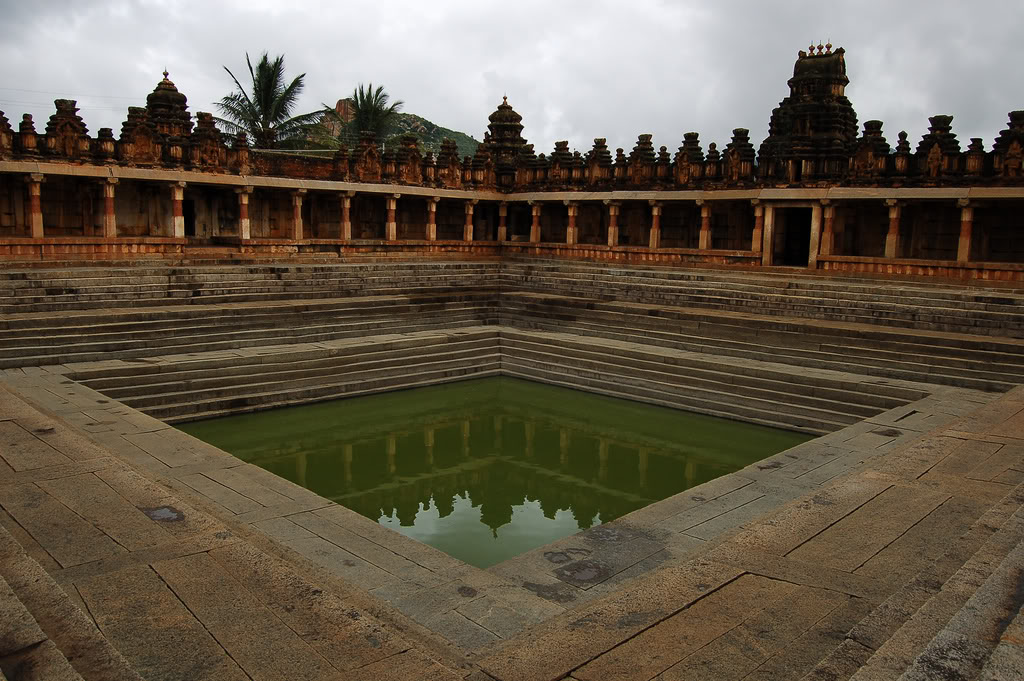
Tag: Temples of Andha Pradesh

  • Eight Hundred Thousand Temples India

    Eight Hundred Thousand Temples India

    India is land of temples.

    The temples are so numerous that it is difficult to arrive at the total number of Temples in India.

    Thiruvarur Thiagaaja temple by Night.jpg Thiruvarur Thiagaraja temple by Night,Tamil Nadu.

    (The government list of temples) is as follows:

    Tamil Nadu—34,000 temples

    Andhra Pradesh—43,000 temples

    Karnataka—34, 000 temples

    Kerala—28,000 Bagavathy temples (Travancore and Cochin Devaswam Board –TCDB-alone has 1800 temple)

    (Four South Indian States alone total over 108,000 temples!!!)

    Maharashtra—45,000 temples

    Mathura Brindhavan area—5000 temples

    Himachal Pradesh—over 2000 temples and sacred places

    India has 29 States and seven Union Territories. all unified by One culture..

    Along the banks of 1500 mile long Holy Ganges, thousands of sacred places! And along the 1500 mile long Himalayas every foot is considered sacred place. No need to mention about Badrinath, Kedarnath and Kailash.

    Kanchipuram near Chennai alone has 108 temples. Madurai in Tamil Nadu has 50 temples.

    On the banks of Cauvery we have innumerable temples built by the Tamil Kings,.

    We have down south other temples by Hoysalas, Kakatiyas,

    These do not include rock temples and village deity Temples.Chalukyas ,Nayakas….

    Parashurama built 108 Shiva Temples.

    In Kerala you find Bhagavathi Temple in every Village.

    And we have modern temples, like Hare Krishna movement and in Tamil Nadu and Karnataka one can see virtually every street has a Temple in some form or the other.

    In Tamil Nadu, every Peepal tree has a Vinayaga/Ganesha Idol.

    I would venture to guess that there might be between 7 and 8 Lakh temples in India.

    Reference.

    http://www.speakingtree.in/spiritual-blogs/seekers/pilgrimage/108-000-temples-in-india

    Visit the Link for a List, thought complete.

    https://en.wikipedia.org/wiki/List_of_Hindu_temples_in_India

  • What Is Brahmotsava,Tirupati Brahmotsva

    One would have across the term Brahmotsava being performed n Lord Vishnu Temples.

    Brahmotsvams are quite popular in Thirupathi Sri Balaji Temple and Sri Rangam Ranganatha Temple , though the Brahmotsavams are conducted in all the Sri Vaishnava Templs in the South.

    What is Brahmotsavam?

    Brahmotsavam means a Festival, an offering  By Lord Brahma to Lord Vishnu.

    There are legends that Lord Brahma performs the Brahmotsava ans a special Pooja for Lord Visnhu daily at Suchidram Sthaumalaya Temple, where Brahma , Vishnu and Shiva are found in on Idol.

    Brahmotsavam,Tirupati.Image.jpg
    Brahmotsavam,Tirupati.

    While Brahma is believed to perform this every day in the early morning around 4.30 am, Indra, Chief of the Devas, performs in the dead of the night at 12 Midnight.

    The performance of the Pooja by Brahma to Lord Vishnu is known as Brahmotsavam.

    There is another interpretation.

    Brahma in Sanskrit means ,Very big, original cause.

    A Big Festival , Pooja in a Temple is called Brahmotsavam.

    The dates of Brahmotsavams vary from temple to temple.

    ‘One of the major Kaalotsavams in Srivaishnava Temples is Brahmotsavam (tiruk-kODi-tirunAL).   Brahmotsavam is conducted at different times in different Temples:
    Period of the year in which the Brahmotsavam is conducted varies from temple to
    temple. Some examples of when it is performed are: 1. Pratishtapana (Kumbhabhishekam) day of the Temple, 2. Pratishtapana day of Sri Shataari, 3. Thirunakshatram- Birthstar/Birthday of the Temple Deity, 4. Conducted as Shraddotsavam or Kaamyotsavam as desired  (sponsored) by devotees.

    Thus, there can be more than one Brahmotsavam in a given year. In the Thirumala
    Temple, it is conducted once in the Tamil month ofPurattasi (Sep. 18- Oct.18). It starts on first day of Navaratri (Oct. 10, for 1999) and concludes on Vijayadashami (Oct.19, for 1999), which also happens to be the Thirunakshatram (Shravanam star) of Sri Venkateshwara, the Deity of the Temple. This is the most prominent Brahmotsavam (also called Manava Brahmotsavam). Brahmotsavams in Tirumala are also conducted at three other times of the year, namely: Kaisika Ekadashi (also known as, Raakshasa Brahmotsavam), Mukkoti Dwadashi (also known as, Daiva Brahmotsavam) and Rathasaptami (also known as, Aarsha Brahmotsavam). Besides, these 4 Brahmotsavams in a year, it is also conducted as a shraddotsavam as desired by devotees. It is stated that in the
    year 1551 AD, as many as 11 Brahmotsavamas took place.

    Origins: Brahmotsavam means “Grand celebration” or a “celebration performed by Brahma”. We will shortly see how both the meanings are appropriate for this event.  Lord Indra once killed a Brahma-raakshasa (a Brahmin with demonic characters). In doing so, he incurred a great sin of killing a Brahmana- “Brahma hatya dosham(BHD)”. To relieve Indra of this burden, Lord Brahma conducted a ceremony. In this ceremony, officiated by Brahma himself, Indra held Sriman Narayana ( Lord Vishnu) on his head during the special ritual bath “Avabritha Snaanam”. This verily was the first Brahmotsavam.

    Because of the immense cleansing power of Brahmotsavam, this utsavam is periodically performed in Temples to wash away all wrong doings that may have been
    incurred. It is said that the Lord Brahma himself rendered the first Brahmotsavam seva
    (service) to Lord Venkateshwara (Vishnu) of the Thirumalai shrine. Indeed, it is a
    common belief that every Brahmotsavam is witnessed by Lord Brahma. In recognition
    of this, a well decorated empty chariot is pulled in front of the chariot carrying the
    deities at the processions held during the Brahmotsavam Brahma is believed to be
    seated in that chariot  overseeing  the celebration. Thus, Brahmotsavam is also
    referred to as “Brahmapratyakshotsavam” (celebration conducted right in front of
    Brahma). References to Brahmotsavam can be found in Varaaha Puraanam (ch.18) and
    Bhavishyotthara Puraanam (ch. 24).

    Events of Brahmotsava.

    Brahmotsavam celebration lasts for 9 days. Brahmotsavam is not just a Temple ritual, but is a grand festival for the whole town. It begins with Ankurarpanam and concludes with AvabhrithaSnanam (Ritual bath or Theerthavaari). On each day, the UtsavaMurthis (Mobile Deities) will be  decorated and taken in procession, once in the morning and once in the evening on different Vahanams (vehicles). In the night, there will also be Unjalseva (Deities seated on the swing). The intricate step by step details vary from Temple to Temple. Here is a brief summary of main events in the Brahmotsavam celebration at the Balaji temple in Thirumalai.

    Day 1
    Ankurarpanam (planting 9 grains in soil placed in earthen dishes). Kankanadharanam (wrist band) to Utsava Muthi and priests.Procession of Vishvaksenar (Commander-in-chief of Vishnu’s army).
    Mritsangrahanam- Collecting the soil for Brahmotsava Yagna(Hawan, Fire ceremony) Peetam. Vishvaksenar returns from procession and enters the Yaga Shaala (Place where Yagnam is conducted), where he is received with Poorna Kumbham honor(special Pot filled with water). He is believed to be the Pradhana Yajaman (Chief conductor) of this Yagnam. This is followed by Procession of Deity on Pedda Sesha (Big serpent) Vahanam.

    Day 2
    Morning Utsavam (procession) of Deity on Smaller Shesha (smaller serpent) Vahanam.
    Dwajaarohanam in the evening. Garuda Dwajam- a flag bearing the emblem of Garuda
    (The Eagle- Vehicle of Vishnu) is hoisted with Veda Mantrams from Taittiriya samhita
    dedicated to Garuda. This signals start of Brahmotsavam to the whole town. Once the
    flag is hoisted, it is expected that no householder leaves town or plans any auspicious
    ceremony in the house until the conclusion of Brahmotsavam. Thus the whole town is
    able to fully take part in the celebration and not be preoccupied with other personal
    activities. Even if someone has to leave town on emergency, they are expected to
    return prior to un-hoisting the flag (Dwaja-awarohanam) on day 9.

    Day 3
    Morning procession on Lion (Simha Vahanam)

    Day 4
    Morning procession on the “every desire fulfilling giving tree” (Kalpavriksha
    vahanam)

    Day 5
    Deity is dressed as Mohini (temptress, a form of Vishnu) and taken procession in
    ivory pallaki (carrier).
    Night procession is taken on Eagle (Garuda vahanotsavam – Garuda Sevai).

    Day 6
    Morning: Procession on Hanuman (Monkey, devotee of Rama/Vishnu) vahanam.
    Night procession on Gaja (Elephant) vahanam.

    Day 7
    Morning procession on Surya Prabha (Sun) vahanam.
    Evening procession on Chandra Prabha(Moon) vahanam.

    Day 8

    Morning: Rathotsavam -Ratha (chariot) Yatra (procession) for the Deities.
    Night: Procession on Ashva (horse) vahanam.

    Day 9
    Morning: Deities carried in pallaki (carrier) to the Pushkarani (sacred pond) in front of
    the Varaha Swami (the Boar incarnation of Vishnu) Temple for the special bath
    -Abhishekam and Avabritha Snanam (Theerthavaari thirumanjanam). All devotees
    also take bath in the pushkarani. The Deities are taken back to the Kalyana Mantapam
    of the Temple. The flag is un-hoisted, marking the conclusion of Brahmotsavam. Even
    watching the video of this majestic celebration in itself deeply touches our heart, mind, eyes and ears.

    References::

    1. S.K. Ramachandra Rao, The Hill-Shrine of Vengadam: Art, Architecture and Agama
    of Tirumala Temple, First Edition, (Ed., Daivajna K.N. Somayaji), Pub., Kalpatharu
    Research Academy, Bangalore, 1993.

    2. S.K. Ramachandra Rao, Thirupathi Thimmappa (in Kannada), IBH publihers,
    Bangalore, 1980.


  • 79* 41 Longitude Chidambaram Kanchi Kalahasti Three Elements Temple

    One thing is for sure.

    Hinduism/ Indian philosophy not for the weakhearted!

    As I was researching for information on Chidambrama Nataraja Temple, I found some information that was astounding.

    Chidambaram Nataraja.Image.jpg
    Chidambaram Nataraja.

    These three Pancha Bhuta(Five elements, Earth, Water, Fire, Air and Ether) fall in a straight Line at 79 degree 41 minutes East longitude.

    I do not take things for granted and I checked with Google Maps.

    I called for a search with the search term ’79 degrees 41 minutes Longitude’ in Google(India) Maps India.

    The result is reproduced below.

    Kanchipuram Ekambareswara Temple and Kalahasti Shiva temple fall in the same Longitude in a Straight Line.

    Sri Kalahasti,Kanchipuram and Chdambaram .Image.map
    Sri Kalahasti,Kanchipuram and Chdambaram Fall in a Straight Line

    The temple for water is in Thiruvanaikaval, fire is in Thiruvannamalai , air is in Kalahasti ,  earth is  in  Kanchipuram  and The temple for space/sky is in Chidambaram.

    Earth is nestled between Sky/Ether/Space, Aakasa( Chidambaram) and Air,Vayu(Kalahasti).

    Earth is surrounded by Space and Air.

    Ekambareswara, Kanchipuram.image.jpg
    Ekambareswara, Kanchipuram
    Sri Kalahastheeswara.Image.jpg
    Sri Kalahastheeswara.

    Aakasaath Vayuhu ,Vayor Agni, Agniyor Aapaha, Aapaprithivi.

    From Space, Air, Fire from Air, Water from Fire,Earth from water.

    I shall be writing on the scientific progression involved in this.

    Tiruvanaikkaval is located at around 3  degrees to the south and exactly 1 degree to the west of the northern  tip of this divine axis, while Tiruvannamalai is around midway (1.5  degree to the south and 0.5 degree to the west).

    Fire and Water are not kept together to facilitate  Evolution.

    I shall be writing in detail about each of these Mystic and scientific Temples.


  • Front Vishnu Back Mohini Ryali Mohini Avatar Temple

    Some count the Mohini Avatar of Lord Vishnu among the popular Avatars of  Lord Vishnu.

    There are no temples for the Mohini Avatar, excepting the ones at Mhalasa in Ponda,Goa and at Ryali East Godavari District,Andhra Pradesh.

    Jagan Mohini Keshavaswamy Temple Gopura,Ryali
    Jagan Mohini Keshavaswamy Temple

    The Mhalasa Temple is also reported to be temple of an Amsa of Kaali , with Uma and Lakshmi combined.

    So the Mohini Avatar Temple ,Ryali seems to be the only temple for Mohini Avatar of Lord Vishnu.

    Lord Vishnu took this Avatar to distribute the Amrutha,Nectar to the Devas at the cost of the Asuras who had also contributed in the churning of the Ksheera Sagara, Milky Ocean, Samudramanathan.

    Lord Shiva fell in love Mohini,  married Her and Ayyappa,Sastha was born.

    How To reach Ryali.

    Ryali is 24 Km from Rajamundry.

    Jaganmohini Keshava Temple Ryali.jpg
    Jaganmohini Keshava Temple Ryali,Mohini Avatar temple.

    Airport.Rajamundry.

    Railway Station.Rajamundry.

    Bus Station.Rajamundry.

    The Temple has a single stone Idol of Lord Vishnu(5 feet).

    The Idol looks s Vishnu from the front and as Mohini from the rear view.

    The flow of Akasha Ganga at the feet of Sri Maha Vishnu can be seen here. The image of the Lord is an exquisite piece of sculpture, which is considered to be the only one of its kind in India. The figure in front is ‘Kesava’ or ‘Keshava’, and on the reverse is the female attire with a hair-do representing ‘Jaganmohini’.

    Carved in black stone, the image of the deity excites admiration.

    The image stands at a height of 5ft and the front portion, besides the face of Kesava, contains sculptural representations of ‘Dasavatara’ (ten incarnations of Lord Vishnu).

    At the feet of the image is the figure of Goddess Ganga, from which drops of water trickle down throughout the day. This is considered a rare phenomenon. Though small, the shrine presents a grand appearance artistically.

    The priests at the temple show the idol in the light of burning camphor and explain the idol of the god in detail.

    There is a temple of Lord Shiva in front of Lord Jagan Mohini Kesava Swamy temple.

    Lord Shiva is known as Sri Uma Kamandalesara Swamy here.

    The Legend of these two temples relates to Samudra Mathanam.

    The Idol is Swayambhu it means, it has formed on its own where visitors can see the Ganga i.e. water coming out between the two legs of the deity.

    The shrine of Sri Jagan Mohini Keshava Swamy is made up of single stone (Salagrama Ekashila – 5 feet height and 3ft width).

    This place was  a wild forest during 11th century and was ruled by Cholas.

    Raja Vikrama Deva originally constructed a small temple during 11th century and later renovated.

    Shiva Marries Mohini.

    while Devathas (divine angels) and Rakshasas (devils) were quarrelling over sharing of holy divine NECTAR (Amrutham) Lord Vishnu came to the rescue of Devathas in the guise of Mohini and convinced both rival groups promising to distribute holy divine nectar in equal share. But in the interest of universal peace and welfare of sages, holy and divine nectar was distributed among the Devathas alone and then Mohini disappeared. Lord Eshwara (Shiva) sees Mohini and falls in love with her. He chased her for getting for a while the presence of his consort Parvathi Devi. It is general belief that this a holy incident was the result of birth of Lord Ayyappa Swamy. One flower from the plait of Mohini fell down and it was smelt by Lord Siva then he surprisingly found Sri Maha Vishnu in the form of Mohini and felt shy for his behavior. The place where the flower from the plait of Mohini fell is named as RYALI (the Telugu meaning of Fall)

    This place known as Ryali for the above reason became abode of Lord Siva and Sri Mahavishnu with the form of Mohini on backside. Lord Brahma consecrated the Sivalingam with his Kamandalam and hence Lord Siva at Ryali is worshipped as Uma Kamandaleswra Swamy. Sri Maha Vishnu in the form of Mohini in the back side is worshipped as Sri Jagan Mohini Kesava Swamy. Both Siva and Vishnu temples are located facing each other. This is very rare feature at Ryali where Lord Vishnu and Lord Siva facing each other in East and West Direction.
    There is also general belief that water will not flow out of Siva temple after the deity will absorb performing pooja to the deity and all the water.

    Festivals and Travel information.

    Festivals :
    Sri Jaganmohini kesava Swamy kalyanam will be conducted from Chaitra sudha Navami to Pournami (March/April).
    Sri Rama Satyanarayana Swamy kalyanam will be conducted from Visakha Sudha Ekadasi to Pournami.
    Sri Venugopala Swamy kalyanam will be conducted from Jyesta Sudha Ekadasi to pournami (June).
    Sravana Bahula Astami Sri Krishnastami (August).
    Karthiaka sudha Dwadasi (Ksheerabdi Dwadasi) (November).
    Devi Navaratrams (October).
    Mukkoti Ekadasi.
    Bheeshma Ekadasi.

    Accommodation
    Guest Houses available are :
    One choultry building with 8 rooms. Contact: 08855-250231
    Guest House-2 suits without furniture. Contact: 08855-250231

    Temple Authorities
    Executive Officer,
    SSri Jaganmohini Kesava & Gopala Swamy Temple,
    Ryali,
    East Godavari District,
    pin-533236.