Tag: Temple Lands

  • Tamil Nadu Govt Advertises To Acquire Temple Land .Raise Objection

    Tamil Nadu Govt Advertises To Acquire Temple Land .Raise Objection

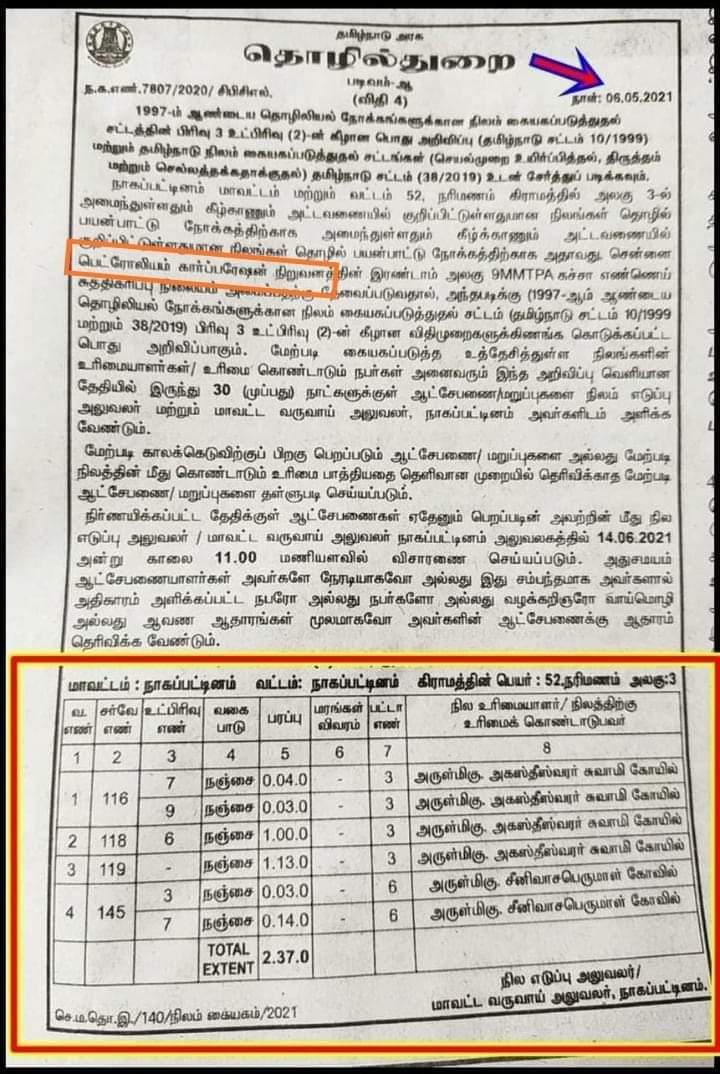
    The Government of Tamil Nadu through its Industrial department,has released an advertisement in Tamil News Paper on 6/05/2021, announcing that it proposes to take over Agastheeswaram temple.This acquisition is for businesses associated with or subsidiaries of Petroleum
    Industry.

    Following is court’s observation on an earlier occasion on this subject.

    Observing that temples in Tamil Nadu are not only a source of identification of the ancient culture but also a testimony of pride and knowledge of the talent in the fields of arts, science and sculpture, the Madras High Court on Wednesday said the state government cannot use temple lands for any purpose other than for holding religious functions.

    The court also directed the Hindu Religious and Charitable Endowments Department to identify and safeguard all temple lands from encroachers with an officer in charge filing periodical reports.

    The issue pertains to the encroachment of lands of the Sakthi Muthamman temple near Neelankarai and the Kottai Mariamman temple in Salem. The court pronounced its orders in the batch of pleas filed by several petitioners over the encroachment of temple land.

    Justice R Mahadevan in his order observed that the properties of religious institutions, particularly temples, have to be maintained properly.

    https://www.newindianexpress.com/states/tamil-nadu/2020/nov/04/madras-hc-says-temple-lands-cant-be-diverted-for-other-purposes-orders-removal-of-encroachments-2219327.html

    Notification asks people to express their objection to acquisition to The District Revenue Officer, Nagappatinam Tamil Nadu within 30 days from the date of the advertisement ( 6/5/2021).That is lodge objection before 5 June 2021.

    Or appear in person on 14 June 2021 in person at Nagappatinam Revenue office at 11 am.

    As petroleum comes under essential services and comes under Central Government, is the State Government action legally tenable?

    The relevant advertisement in Tamil was found in Facebook. Please forward the English version.The advertisement image is posted as Featured image.

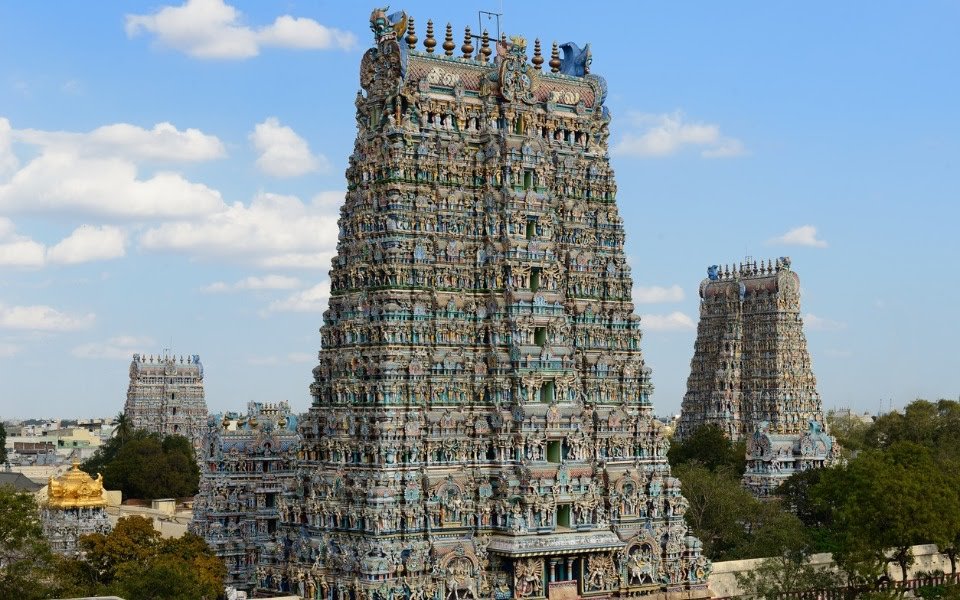
    Agastheeswaram Siva Temple, Nagappatinam.

    The recorded history of Agasthiyanpalli and the regions around it is found from the inscriptions in Agastheeswarar Temple and the Vedaranyeswarar Temple. The inscriptions date from the reign of Rajaraja Chola I (985–1014 CE), Rajendra Chola I (1012–1044 CE) and Kulothunga Chola I (1070–1120 CE) indicating various grants to the temple.[1][4]

    Agasthiyanpalli continued to be a part of the Chola Empire and the Chola region emerged as a centre of Saivism during the reign of Kulothunga Chola I (1070–1120 CE). After the fall of Cholas during the reign of Rajendra Chola II in the 13th century CE, the erstwhile Chola region was caught under a power struggle between Pandyas and Hoysalas.[6] The royal patronage continued to the temple during the rule of the Nayaks. The inscriptions from the Pandya king Kulacekarn (1268 – 1309) indicates that he was cured off his ailments after praying at the temple. He constituted a festival at Vedaranyeswarar temple to commemorate the event https://en.m.wikipedia.org/wiki/Agastheeswar_Temple

  • Temple Lands Tamil Nadu Five Lakh Acres , No Money For Pooja

    Temple Lands Tamil Nadu Five Lakh Acres , No Money For Pooja

    The call to have the temples freed from Government control is overdue because of.

    • The Atheistic Attitude of The Government.
    • Secular attitude towards only Hindu temples.
    • Appointment of Atheists and people belonging to other Faiths as Thakkars,Trustees and they are political appointees.
    • Mismanagement of Temple funds
    • Misappropriation of Temple Funds.
    • Neglect of temple traditions.
    • Diversion of temple funds to other departments like social welfare.
    • Leasing temple lands to partymen in a fixed tender practices.
    • Non recovery of lease amounts due to temples.
    • No Independent Audit.

    While under the guise of secularism and respect for Religions, Religions like Christianity and Islam are treated better than Hinduism in the land where it is born
    Hindu temples come under under the HR& CE department, Government of Tamil Nadu, and under some other name in other States of India. Mosques and Churches do not come under the control of the government. While the Wakf boards and Church adminstration look after their properties, manage and look after them ,Hindu temples can not do so. Even for buying Pooja materials, the priests have to depend on the temple adminstration,which may or may not accede .Temple lands can be disposed of by the department.Temple lands are being occupied by squatters and Madras High court had come heavily on the attempt by the government to legalize squatting.

    Check the information below.

    ‘ temples under the control of the Hindu Religious and Charitable Endowments (HR&CE) Department, only 331 have an annual income of more than ₹10 lakh. There are 34,099 temples with an annual income of less than ₹10,000. There are thousands of temples where just one puja is performed. This, despite owning vast tracts of land and other properties, registered in their name. ..

    …..According to the data available with The Federal, the department has nearly 5 lakh acres of both dry, wetlands and rainfed lands, 22,600 buildings and 33,665 sites in its possession.

    Reference and citation.https://www.thehindu.com/news/national/tamil-nadu/beyond-faith-the-contentious-issue-of-temple-lands-in-tamil-nadu/article30064891.ece

    “We have more than 44,000 temples across the state. Each and every one of them needs to be consecrated once in 12 years. But only 600 of them are affluent. The remaining are located in villages and in an ailing condition. Poojas are conducted at least once a day in these ailing temples for which they need funds. Keeping their condition in view, the state government has deposited ₹1 lakh in the account of around 1,500 Aadi Dravida temples (for scheduled castes) to enable their maintenance through the interest money. The government also diverts surplus funds from affluent temples to the poor ones,” Bharathi adds.

    Source. https://www.google.com/amp/s/thefederal.com/analysis/the-unholy-management-of-temples-in-tamil-nadu/amp/

  • Why Temples Should be Freed From Government Control 1,Land Rents Court Washes Off Hands

    Why Temples Should be Freed From Government Control 1,Land Rents Court Washes Off Hands

    A clarion call was issued by Sri. Jaggi Vasudev to free the temples from the clutches of the Government.

    @SadhguruJVI have requested the TN CM & Opposition Leader to declare their intent with regard to freeing Temples in state control. We cannot preside over decades of neglect & apathy. Amounts to spiritual suicide for Community. –Sg #FreeTNTemples@CMOTamilNadu@EPSTamilNadu@mkstalin. Scroll down for Video.

    This has been the desire of Hindus since long. Unfortunately, calling oneself a Hindu is considered to be a blasphemy in the eyes of the Secularists. Self styled Liberals,Rationalists,Secularists .They are the only sane people ,in their view.Rest are Fundamentalists,who do not have a broad vision .And the topic of temple property is enough to raise their hackles and cry Hindutva.

    I shall, in a series of articles,explain,how Hinduism is being systematically wiped out, in the garb of Administration and social justice.

    1.While Hindu temples are under the control of the Government,Churches and Wakf Boards do not come under Government control.While the temples have to await orders and for funds to exceute a simple task of buying Pooja items,payment of salary to temple workers including Archakas, Churches, Mosques can perform their rituals with no difficulty.The Temple adminstration in Tamil Nadu is run by the HR&CE department. It appoints Executive officers for each temple and in most cases, they are political appointees,though on paper,it is departmental posting.In addition , a local ruling party bigwig is appointed as Thakkar,a Trustee in Major temples in Tamil Nadu, like Meenakshi temple, Madurai,Pazhani Dhandayuthapani temple.In most cases, these people are Atheists.In some cases,the Executive officers,Thakkars belong to Other religions.Exception is Late.PTR.Pazhanivel Rajan, Madurai,Trustee of Madurai Meenakshi temple.Hecwas a devotee of Madurai Meenakshi and he had done yeoman service to the temple,though he was a senior man of DMK,an avowed Anti Hindu party.But these are exceptions.

    The government leases temple space for public in a sham of action and in most cases, spaces are allotted to ruling patty members,sympathisers,who, invariably are atheists.They grant leases of spaces, temple lands to party functionaries, sympathizers and people belonging to other religions. Please find out the names of those who have been granted lease in Madurai Meenakshi Amman temple. You will find that majority of them belong to Islam.The same is the position of every temple.

    The celebration of Utsavams / temple festivals are to be approved by the Executive Officer,EO.There are instances when the EOs refused to conduct temple festivals, citing some spurious reasons.

    Temples are expected to pay revenue to the government on the lands held by them,even if the revenue due to them by those who had taken the lease from the temple,is not paid.

    So much so The Adheenams went to court on this issue in 1999 and a judgement was issued in 2007, that the Adheenams should seek redressal from the Government first,before approaching the court.Hiw the Adheenams are expected to run the temples without income is left unsaid.

    I am furnishing a judgement relating to this herebelow. I do not have information on the latest position.

    IN THE HIGH COURT OF JUDICATURE AT MADRAS

    DATED : 15/11/2007

    CORAM

    THE HON'BLE MR.JUSTICE M.JAICHANDREN

    Writ Petition No.8408 of 1999


    Sri-la-Sri Sivaprakasa Pandara Sannadhi Avargal Adheenakarthar
    Thiruvaduthurai Adheenam
    Thiruvaduthurai
    and Hereditary Trustee of:

    1. Thiruvaduthurai Adheenam
    Thiruvaduthurai

    2. Sri Gomuktheeswaraswamy Temple
    Thiruvaduthurai

    3. Sri Vadavaranyaeswaraswamy Temple
    Thiruvalangadu.

    4. Sri Suyambunathaswamy Temple
    Narasinganpettai.

    5. Sri Akshayanathaswamy Temple
    Narasinganpettai.

    6. Viswanatha Swamy Temple
    Karaikantam

    7. Veezhinathaswamy Temple
    Thiruveezhimazhalai

    8. Sri Mahalingaswamy Temple
    Thiruvuvidaimarudur.

    9. Sri Mayuranathaswamy Temple
    Mayiladuthurai.

    10. Prananathaswamy Temple
    Thirumangalakudi.

    11. Athmanathaswamy Temple
    Thirupperundurai.

    12. Akshyanathaswamy Temple
    Thirumandurai.

    13. Kalyanasundareswaraswamy Temple
    Nallur.

    14. Neelakanteswaraswamy Temple
    Illuppapattu.

    15. Banapureeswaraswamy Temple
    Vanapuram.

    16. Subramaniaswamy Temple
    Karukkuthurai.

    17. Somanathaswamy Temple
    Arumuganeri.

    18. Vilappojai Kattalai attached to Manenthiappar Temple
    Kallidaikurichi.

    19. Pitchai Kattalai attached to Papanaswamy Temple
    Papanasam.

    20. Udhayamarthandam Kattalai
    attached to Subramaniaswamy Temple
    Valliyur.

    21. Senthil Thiruppani Kattalai
    attached to Subramaniaswamy Temple
    Thiruchendur.

    22. Senthil Annathana kattalai
    attached to Subramaniaswamy Temple
    Tiruchendur.

    23. Senthil Visaka Kattalai
    attached to Subramaniaswamy temple
    thiruchendur.

    24. Senthil Arutpani Kattalai
    attached to Subramaniaswamy Temple
    Thiruchendur.

    25. Senthil Pradosha Kattalai
    attached to Subramaniaswamy Temple
    Tiruchendur.

    26. Avudayappa Pillai Kattalai
    attached to Meenakshisundareswarar Temple
    Madurai. ..Petitioners.


    Versus


    1. State of Tamilnadu
    Rep. by Secretary to Govt.
    Dept. of Revenue
    Fort St.George
    Chennai 9.

    2. The District Collector
    Nagapattinam.

    3. The District Collector
    Tiruvarur.

    4. The District Collector
    Thanjavur

    5. The District Collector
    Tiruchirapalli

    6. The District Collector
    Madurai.

    7. The District Collector
    Karur.

    8. The District Collector
    Erode.

    9. The District Collector
    Tirunelveli.

    10. The District Collector
    Pudukkottai

    11. The District Collector
    Kanyakumari at Nagercoil.

    12. The District Collector
    Ramanathapuram.

    13. The District Collector
    Virudhunagar. ..Respondents.


    Prayer: Petition filed under Article 226 of the Constitution
    of India praying for the issuance of a Writ of Mandamus,
    forbearing the respondents from in any manner collecting the
    arrears land revenue upto fasli 1406 for the lands owned by.....For petitioner : Mr.T.Sudhan Raj for Mr.K.Chandrasekaran
    For respondents : Mr.M.R.Jothimanian, Government Advocate


    O R D E R
    Heard Mr.T.Sudhan Raj, the learned counsel appearing for the petitioner and Mr.M.R.Jothimanian, the learned Government Advocate appearing for the respondents.

    2. It is submitted that the petitioner/Adheenam is holding vast extent of lands and the income derived from the lands is utilised for the purpose of perpetuation and preservation of its saintly order, maintenance of agamas in temples, chanting of scriptures, daily poojas and conducting festivals etc., and for philanthropic purposes. Though no ceiling had been fixed with regard to the extent of agricultural lands that could be owned by the petitioner/Adheenam, several enactments have been made imposing certain restrictions on the use of such lands. Thus, it was mandated that agricultural lands in excess of 20 standard acres were to be leased out to tenants on yearly basis. The laws had also been enacted providing for the protection of the tenants of such lands and for the constitution of revenue Courts to deal with the disputes arising from such tenancy. However, in course of time, the tenants in the petitioner/Adheenam lands had stopped paying the rent and therefore, the activities of the petitioner/Adheenam were adversely affected. In such circumstances, the petitioner/Adheenam has not been in a position to pay the land revenue as claimed by the authorities of the State of Tamil Nadu. Therefore, the petitioner/Adheenam filed the present writ petition to forbear the respondents from in any manner collecting the arrears of the land revenue upto fasli 1406 for the lands owned by the petitioner/Adheenam.

    4. In the counter affidavit filed on behalf of the respondents, it has been stated that the petitioner/Adheenam has not pursued the remedy of approaching the State Government for the reliefs sought for by the Adheenam, as provided by this Court in W.P.No.1271 of 1985. However, the petitioner/Adheenam had preferred a suit in O.S.No.39 of 1998 on the file of the District Munsif Court, Valangaiman at Kumbakonam, for a direction to restrain the revenue authorities from collecting land revenue from their tenants.

    5. A direction had been issued in the said suit by the District Munsif, directing the revenue authorities not to collect the land revenue from their tenants and to collect the land revenue only as per the existing rules. It has also been stated that the petitioner/Adheenam had not allowed the tenants to pay the kist directly to the revenue authorities, even though the tenants were ready to pay the kist amount to the revenue authorities and to adjust it with the rent payable to the petitioner/Adheenam. However, many of the petitioner/Adheenam's tenants have been paying the rents due from them regularly. Therefore, the relief sought for by the petitioner/Adheenam in the present writ petition cannot be countenanced.

    6. On considering the submissions made by the learned counsels appearing for the petitioner/Adheenam, as well as for the respondents, this Court is of the considered view that the relief sought for by the petitioner/Adheenam cannot be granted as the petitioner/Adheenam has not shown sufficient cause or reason to prevent the revenue authorities from initiating the proceedings as provided under law to recover the land revenue due from the petitioner/Adheenam. The allegation of the petitioner/Adheenam that the tenants, who are in occupation of the lands belonging to the petitioner/Adheenam, are not paying the rents has not been substantiated by sufficient proof. Even otherwise, non payment of the rent by the tenant cannot be a sustainable reason for the petitioner/Adheenam to avoid payment of land revenue due from them to the State Government.

    7. At this stage, the learned counsel appearing on behalf of the writ petitioner had relied on a decision of this Court made in Dharmapuram Adheenam, Dharmapuram, by its Adheenakarthar Sri la Sri Shanmuga Desika Gnanasambanda Paramacharya Swamigal Avargal, Dharmapuram, reported in 1973 Writ L.R 875 (W.P.Nos.7330 and 7336 of 1984), to pray that the petitioner may be permitted to make a representation to the State Government for necessary exemption or abatement from payment of the land revenue.

    8. In such circumstances, this Court is of the view that it is open to the petitioner/Adheenam to submit a representation to the Tamil Nadu State Government, seeking for exemption or abatement relating to levy of land revenue on the petitioner/Adheenam. On such representation being made by the petitioner/Adheenam, it is expected that the authorities concerned would consider and dispose of the same, on merits and in accordance with law, expeditiously.

    Accordingly, the writ petition is disposed of with the above observations. No costs.

    Source. https://indiankanoon.org/doc/417704/g

    https://youtu.be/lua5F0T3m70