Tag: Tamil

  • Buy Cattle,Convert Forcibly Christians New Tactics

    I have posted an article on how Christians pose as Brahmins to covert Hindus into Christianity.


    That was quite novel and weird I thought.

    Christian Missionaries Target Hindus.Image.jpg.
    Christian Missionaries Target Hindus.


    Still more to com, I never imagined.


    It seems that these Christian groups have joined forces with Multinational Companies in an effort to destroy local cattle first b offering Money to bu the Cattle and simultaneously cajoling and threatening farmers that it was only Jesus who was born in a Cattle shed and only he could  save the Cattle,Hindu temple priests being Frauds.


    The Brainwashing, terrorizing team arrives in threes and twos.


    The aim seems to be twofold.


    1.By offering money, entice people to convert.

    2.By offering to buy the local cattle,inject them with artificial insemination  drugs, ensue that the local cattle population is wiped out.


    What has injecting Cattle to do with Religious Conversion?


    In Villages,Tamil Nadu, there is the custom of dedicating cattle to Temples.


    Cattle are worshiped.


    The condition is that these cattle must be Local Cattle, not artificially inseminated.


    The thinking of the Christian groups seems to be that b ensuring that there are less number of local cattle, the can reduce the number of people using Cattle to worship and prevent them from going to Temples.


    By reducing the number of local cattle, the can prevent Youngsters from following local custom of  engaging the Cattle in a Race-this normally is done during Temple festivals


    And the money offered si Rs. Three Lakhs per Cattle-head.


    In the process the companies marketing  these products ,get business and like Monsanto, the villagers once the use these, will have to depend only on these companies.


    The horror is that the cattle thus bought is sent to other States to be killed and sold as beef, the major Business going the Kerala way.


    Let me list he essential features of this Operation Cattle.


    1.Approach a villager , as a group,,in backward village  who has only health Cattle as a means of Livelihood.


    2.Offer him money for the Cattle.


    3. Simultaneously cajole, threaten him into Converting to Christianity.


    This is happening in Nallampatty, Perunthurai Taluk, Erode District  Tamil Nadu.


    Following is the News  Story in Tamil.


    As usual, no media Coverage!


    ஈரோடு அருகில் சேலம்-கோவை மெயின் ரோட்டில் உள்ளது பெருந்துறை. பெருந்துறை சரித்திர பழமை வாய்ந்த ஊர். மதமாற்றம் என்பதை அங்கீகரிக்காத ஊர். மேட்டுபாங்கான பகுதியாதலால் இங்கு ஐம்பது வருடங்களுக்கு முன்பு வரை மானாவரி விவசாயமே. காய்ந்த காலங்களில் நாட்டு மாடு மேய்த்து, மழை காலங்களில் சோளம், வரகு, எள், போன்றவைகளை பயிர் பண்ணி, வருவோர்க்கு நாட்டு மாட்டு மோரும், சோள சோறும் இட்டு விரும்தோம்பலுக்கு பெயர் பெற்றவர்கள் இப்பகுதி மக்கள். இத்தாலூகாவின் சில பகுதிகளில் கீழ்பவானி வாய்க்கால் பாசனம் இடையில் வந்தது. கரும்பு, நெல், வாழை, மஞ்சள் என மக்கள் பயிர்களை மாற்றினர். மாட்டையும் மாற்றினர். நாட்டு மாடுகளுக்கு பதில் சீமை மாடுகளுக்குச் சென்றனர். பால் கறந்து ஊற்றி லாபமில்லாமல் பொருளாதார வீழ்ச்சி அடைந்து உடல் நலம் கெட்டு, மனநலம் கெட்டு போயினர்…


    பின்வாசல் வழியே ஆப்ரகாமிய பாதிரிகள் 
    லோன் கேட்ட சில வாரங்களில் இரண்டு இளம்வயது பாதிரிகள் (நன்கு டக்-இன் செய்துகொண்டு) மார்ச் மாத கடைசியில் இந்த நாட்டு மாட்டு விவசாயியை சந்தித்து கோவையிலிருந்து வந்துள்ளதாக கூறியுள்ளார்கள். TN 74 ரெஜிஸ்திரேசன் கொண்ட யூனிகாரன் பைக்கில் வந்துள்ளனர். இந்த நாட்டு மாட்டு காளைகள் மூன்றையும் மூன்று லட்சம் ரூபாய்க்கு எங்களிடம் கொடுத்து விடுங்கள்.
    உங்களுக்கு கிர், தார்ப்பார்க்கர் போன்ற வடநாட்டு மாட்டு ஊசிகளை இலவசமா தருகிறோம்; உங்கள் நாட்டு மாடுகளுக்கு இதனை இட்டு கலப்பின மாடுகளை உருவாக்குங்கள். இப்படி உருவாகும் கலப்பின மாடுகள் நன்கு பால் கறக்கும். இந்த கொங்க மாடுகள் எல்லாம் வேஸ்ட் என்று பிரச்சாரம் செய்திருக்கிறார்கள். இப்படி கூறியவுடன் அந்த விவசாயி உறுதியுடன் நாட்டு மாடுகளை வளர்ப்பதே என் லட்சியம் இவையெல்லாம் தேவையில்லாத ஒன்று என்று கூறி அவர்களை திருப்பியனுப்பியுள்ளார்.


    இரண்டுமணி நேர மூளை சலவை
    பின் இருபது நாட்கள் கழித்து ஏப்ரல் 17 ஆம் தேதி அந்த இரண்டு நபர்களும் மேலும் ஆறு பேருடன் வந்துள்ளார்கள். அன்று ஊரில் மாரியம்மன் பண்டிகையாதலால் வீட்டில் விவசாயியின் மனைவி மற்றும் பெரியோர்கள் யாருமில்லை. அந்த சமயத்தில் ரெஜிஸ்திரேசன் செய்யப்படாத மஹிந்திரா சைலோ காரில் ஐம்பது வயது மதிக்கத்தக்க பாதிரி ஒருவரும், முப்பது வயதில் இருவர், இருபது வயதில் மூன்று பேர் என ஒரு கும்பலாக வந்துள்ளனர். அனைவரும் நாகர்கோயில், மதுரை மற்றும் சென்னை பாஷைகளில் பேசியுள்ளனர். சுமார் இரண்டுமணி நேரம் மூளை சலவை செய்துள்ளனர். அவர்கள் கூறியவைகளாவது,

    • இந்த நாட்டு மாட்டை வைத்து நீங்கள் முன்னேற முடியாது,
    • உங்கள் காளை மாடுகளை எங்களிடம் விற்றுவிடுங்கள் மூன்று லட்சம் ரூபாய்க்கு வாங்கிக்கொள்கிறோம்.
    • கிர், தார்ப்பார்க்கர் போன்ற வடநாட்டு மாட்டு ஊசிகளை இலவசமா தருகிறோம்; உங்கள் நாட்டு மாடுகளுக்கு இதனை இட்டு கலப்பின மாடுகளை உருவாக்குங்கள்
    • அய்யர் (குலகுரு) போலி. யாகங்கள் செய்யறது ஒண்ணுக்கும் பயனில்லை. அவரை வைத்து கோ பூஜை பண்றது தப்பு,
    • ஏசுதான் மாட்டுக்கொட்டாயில் பிறந்தார். அவர்தான் நம்மை காக்க முடியும்,
    • இலவசமா போர்வெல் (ஆழ்துளை கிணறு) போட்டுத்தருகிறோம்.
    • இலவசமா உங்க வீட்டுக்கு ஜன்னல் அமைத்துத்தருகிறோம்,
    • வாரம் ஒருமுறை எங்கள் பாதர் வந்து ஜபம் செய்வார். அவர் வரும் நேரங்களில் கிடைக்கிற வருமானம் அனைத்தும் உங்களுக்குத்தான்,
    • உங்களது இடத்தில் இருபது சென்டில் எங்களுக்கு இடம் ரெஜிஸ்டர் செய்து வைக்க வேண்டும்,
    • உங்களது மாட்டு அர்க்கம், சோப்பு, ஷாம்பு போன்றவற்றை உலகம் பூரா மார்கெட்டிங் பண்ணித்தருகிறோம்,
    • உங்களுக்கு எவ்வளவு காசு வேண்டுமானாலும் தருகிறோம்.


    இப்படியெல்லாம், ரெண்டுமணி நேரம் அந்த விவசாயியை வீட்டு மாட்டு கொட்டகையில் வைத்து பேசியுள்ளார்கள். விவசாயி போன் பேச அனுமதிக்கவில்லை. எட்டு பேரும் சுற்றி நின்று மிரட்டல் தொனியிலேயே பேசியுள்ளார்கள். விவசாயி செய்வதறியாது அவர்கள் கூறுவதை கேட்டுகொண்டு இருந்துள்ளார். இவ்வளவு நேரம் பேசிக்கொண்டுள்ளோம் ஒரு இளநி போட்டு தாங்க என்று கேட்டுள்ளனர். உடனே, விவசாயி என்னிடம் இளநி போட தென்னை மரமில்லை என்று பதிலளித்துள்ளார். உடனே, அவர்கள் உங்களிடம் இத்தனை ஏக்கர் இருக்கிறது. இத்தனை தென்னை மரங்கள் இருக்கிறது என்று சரியாக கணக்கு வைத்துக் கூறியுள்ளனர். விவசாயி தன்னைப்பற்றி இவர்கள் இவ்வளவு தெரிந்து வைத்துள்ளனரே என்று நினைத்து அதிர்ச்சியடைந்துள்ளார். பின்னர் நாங்கள் மீண்டும் வருவோம் என்று கூறி விட்டு சென்றுள்ளனர்.


    பத்து நாட்கள் கழித்து பெருந்துறையிலிருந்து போன் செய்து நாங்கள் வீட்டிற்கு வருகிறோம் என்று கூறியுள்ளார்கள். விவசாயி அவர்களை வரச்சொல்லிவிட்டு முதல்முறை பேச்சுவார்த்தையின் போதே மிரட்டும் தொனியில் பேசிய அவர்களின் நடவடிக்கையை மனத்தில் கொண்டு அவர்களுடன் தனியாக பேச்சுவார்த்தையில் ஈடுபட வேண்டாம் என்ற எண்ணத்தில் ஊர்மக்களை அழைத்து வைத்திருந்தார். இதற்கிடையில் மீண்டும் அவர்கள் போன் செய்து ““ஊர்மக்களை திரட்டி வைத்துள்ளாய். நீ திருந்த மாட்டாய். நீ எங்களிடம் திரும்பி வருவாய். எங்கள் உதவி உனக்கு தேவைப்படும்” என்று கூறி போனை கட் செய்துவிட்டனர்.


    பாரம்பரியத்தையும், காளைகளையும் ஒழிக்க திட்டம் 
    மதமாற்றம் செய்வது கிறிஸ்தவர்களின் நோக்கமாக இருந்தாலும், கொங்க காளைகளை வாங்க மூன்று லட்சம் ரூபாய் பாதிரிகளுக்கு எங்கிருந்து வருகிறது? காளைகளை ஏன் வாங்க நினைக்கிறார்கள்? வாங்கிய மாடுகள் எங்கே போகிறது? ஏன் வடநாட்டு மாடுகளை கலப்பினமாக்க நினைக்கிறார்கள்? போன்றவை யோசிக்கவேண்டியவை. குலகுரு செய்யும் கோ பூஜையை தடுக்க நினைக்கின்றனர்.


    குலகுரு, பசு, காளைகள் போன்றவைகள் நாட்டில் பெருகுவதை அவர்கள் விரும்பவில்லை. மேன்மேலும், கலப்பினங்களை வலியுறுத்துவதிலேயே வந்தவர்கள் குறியாக இருந்துள்ளார்கள். நாட்டு காளைகளை ஒழித்து கிராமத்தில் நாட்டு மாடுகள் இனவிருத்தி ஆகக்கூடாது என்பது அவர்களது எண்ணம். நாட்டு மாடுகளை வளரவிடகூடாது என்று கிறிஸ்தவர்கள் குறியாக இருக்கிறார்கள். சமீபத்தில் வெளியான ஜல்லிக்கட்டு தடை கூட இதனுடன் சம்பந்தப்பட்டிருக்கலாம். ஜல்லிக்கட்டு இருப்பதாலேயே நாட்டு காளைகளை இனவிருத்தி செய்து நல்ல முரட்டு காளைகளை உருவாக்க இளைஞர்கள் முயற்சிக்கின்றனர். இதனால், பொலிக்காளைகள் நாட்டில் இருப்பதால், நாட்டு காளைகள் இனவிருத்தி ஆகிக்கொண்டே இருக்கிறது. இதனை தடுக்க வேண்டுமெனில், நாட்டு காளைகளை பூண்டோடு அழிக்க வேண்டும். இருக்கவே இருக்கிறது புளூ கிராஸ் மற்றும் விலங்கு பாதுகாப்பு அமைப்புகள். அவைகளை வைத்து சுப்ரீம் கோர்ட்டில் கேஸ் போடுகிறார்கள். அதற்கு நிதியுதவி கூட பெறப்பட்டிருக்கலாம். ஜல்லிக்கட்டு தடை செய்யப்படும். காளைகள் அடிமாட்டிற்கு விற்கப்படும். நாட்டு காளைகள் பூண்டோடு அழியும். இதுதான் இந்த பின்வாசல் மாபியாக்களின் திட்டம். பசுக்களும், காளைகளும் தெய்வமாக ஜல்லிக்கட்டிலும், கோயிலிலும் கும்பிடப்படும் செயல் குறைந்தால்தான் மக்கள் தங்கள் கலாச்சாரத்தை விட்டு சந்தைகலாச்சாரத்திற்கு மாறுவார்கள் என்ற நோக்கமும் உள்ளே இருக்கலாம். நமது கலாச்சாரத்தை முற்றிலும் அழிக்கவேண்டும் என்று மிக நீண்டகாலமாக கிறிஸ்தவர்கள் சதி அதை பல வழிகளிலும் நிறைவேற்றி வருகிறார்கள்.


    Citation.


    http://vsrc.in/%E0%AE%9A%E0%AE%AE%E0%AF%82%E0%AE%95%E0%AE%AE%E0%AF%8D/item/266-%E0%AE%A8%E0%AE%BE%E0%AE%9F%E0%AF%8D%E0%AE%9F%E0%AF%81-%E0%AE%95%E0%AE%BE%E0%AE%B3%E0%AF%88%E0%AE%95%E0%AE%B3%E0%AF%88-%E0%AE%95%E0%AF%81%E0%AE%B1%E0%AE%BF-%E0%AE%B5%E0%AF%88%E0%AE%95%E0%AF%8D%E0%AE%95%E0%AF%81%E0%AE%AE%E0%AF%8D-%E0%AE%AE%E0%AE%A4%E0%AE%AE%E0%AE%BE%E0%AE%B1%E0%AF%8D%E0%AE%B1-%E0%AE%95%E0%AF%81%E0%AE%AE%E0%AF%8D%E0%AE%AA%E0%AE%B2%E0%AF%8D/itemid-140


    Image source and More on similar issues.

    http://worldhindunews.com/2014010716241/indian-christian-missionaries-plan-to-convert-hindus-opposed-by-sanatan-sanstha-members/


    http://ramanisblog.in/2013/06/12/christians-as-brahmins-new-method-of-religious-conversion/

  • Indus Valley Inscriptions Written In Tamil

    Thee have been several approaches to understand the Indus Valley script.


    Understanding Indus Valley Script.Imge.jpg.
    Understanding Indus Valley Script.


    After trying out a multilingual approach, it is now evident that the best approach to decipher the Indus Valley scripts is through Tamil, a language of Great antiquity which it shares with Sanskrit.


    Please read m post Million eras old Tamil quotes Vedas, the quote Tamil.


    Despite repeated concerted attempts to divide Indians and Hinduism b bringing in , now disproved , Aryan Invasion Theory, facts come to light.


    Even in the paper , from which I am posting excerpts,the author tries gamely to trace the Tamil language to Sahara, then from there to Iran.


    What he missed out is Iran was  apart of Bharatavarsha and kandhara, present Kandahar, was the birth place of Gandhari, wifre of Dhritharashtra, mother  of the Kauravas of  Mahabharata.


    So compelling is the evidence that he is forced to conclude,albeit grudgingly,


    ” The Indus Valley inscriptions were
    written in Tamil. It was a syllabic writing
    system related to linear Elamite writing
    and Proto-Sumerian seals21,22. The Indus
    Valley writing was probably not used to
    write the Indo-Aryan language because
    the Aryan speakers did not arrive in
    India until after 1600 BC (refs 40 and 41).’


    The findings of tamil seals in Indusvalle and the Indus valley seals in Adhichanallur in Tamil Nadu has forced him to do so.


    Even then, the tenor of the paper is to show that the Tamils and the Vedic people were living independent of each other and the presence of the Tamil seals is by the Tamils settled from Sahara, who were the ancestors of Tamils!


    That the archaeological  facts are found in both the places , south and north need not mean that the have been used at different points of Time alone.


    The could have been used simultaneously when people lived together, much like the North Indians living in South and the South Indians in the North.


    It does mean to convey to the future generations that we have lived separately as distinct group, being mutually exclusive,s but together, though with our own customs and customs adopted from the locals, as we do now.


    Excerpts.


    From


    Dravidian is the language of the Indus writing .

    Clyde Winters

    The Indus Valley writing is not a multilingual system of writing. The writing indicates that this population
    was literate and spoke a Dravidian language. The study also indicates that the Indus Valley writing was not
    used to write an Indo-Aryan language, because the Aryans did not arrive in India until after 1600 BC.


    1220Indus Valley Inscription In Tamil


    Citation.


    http://www.currentscience.ac.in/Volumes/103/10/1220.pdf


    Image.


    http://ramanisblog.in/wp-content/uploads/2014/06/dcb7d-image1611.jpg


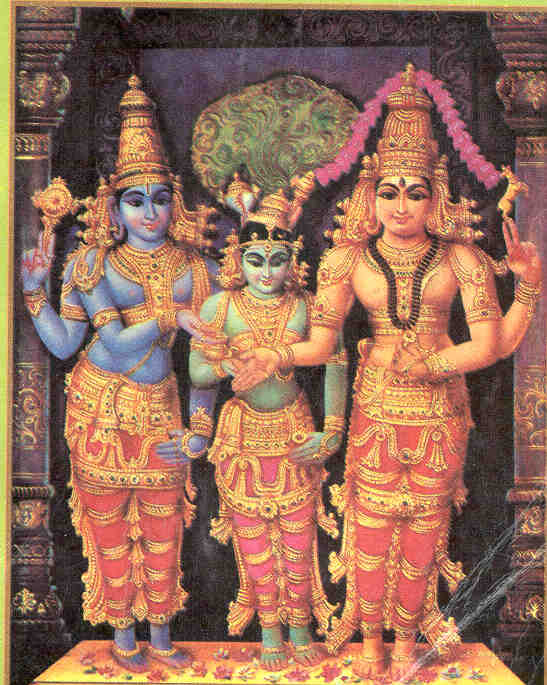
  • No Avatar of Vishnu Shiva In South Why

    I am quite intrigued by the antiquity and the relation ship between two great languages , Tamil and Sanskrit.


    It is not about simply which is rich or which is more ancient for each language has its own specialty.


    Avatars of Vishnu.Image.jpg.
    Avatars of Vishnu.


    Shiva Avatars.Image.jpg.
    Avatars of Shiiva.


    So curious that I have been studying and looking for articles on this ,but the more I read I get more interested and more confused.


    I have posted four to five articles on allied subjects, touching on this.


    The point is this.


    1.There is no direct reference to Tamils in the Vedas.


    Bur reference is made of Pearls from Tamils.


    Other than this, I am unable to find anything more.


    2.However one can find numerous references to Tamils, Tamil  Kingdoms, wealth of Tamils int the Ramayana and Mahabharata.


    I have posts on this issue.


    I provide one quote from Valmiki Ramayana.

    Kavatapuram was the second capital of early Pandyas whose first capital South Madurai was devoured by sea. ‘Kavatapuram’ means the doorway (of South India). Valmiki Ramayana has a few references to South India. One of them goes like this:–

    ‘’tato hemamayam divyam muktamani vibhushitam
    Yuktam Kavatanam Pandyanam gata drakshyata vanarah

    “Behold on the shore of the ocean the Pandya’s golden gates decked with gold and pearl”.


    3.Tamil quotes Vedas, Rama, Krishna(Mayon),Varuna, Durga,(Korkai0 Skanda( Murugan, Cheyon),Indra.


    The Tolkappiyam also formulates the captivating division of the Tamil land into five regions (tinai�), each associated with one particular aspect of love, one poetical expression, and also one deity�: thus the hills (kuri�ji�) with union and with Cheyon (Murugan)�; the desert (palai�) with separation and Korravai (Durga)�; the forests (mullai�) with awaiting and Mayon (Vishnu-Krishna)�; the seashore (neytal�) with wailing and Varuna�; and the cultivated lands (marutam) with quarrel and Ventan (Indra). Thus from the beginning we have a fusion of non-Vedic deities (Murugan or Korravai), Vedic gods (Indra, Varuna) and later Puranic deities such as Vishnu (Mal or Tirumal). Such a synthesis is quite typical of the Hindu temperament and cannot be the result of an overnight or superficial influence�; it is also as remote as possible from the separateness we are told is at the root of so-called �Dravidian culture.�

    Expectedly, this fusion grows by leaps and bounds in classical Sangam poetry whose composers were Brahmins, princes, merchants, farmers, including a number of women. The �Eight Anthologies� of poetry (orettuttokai�) abound in references to many gods�: Shiva, Uma, Murugan, Vishnu, Lakshmi (named Tiru, which corresponds to Sri) and several other Saktis.[37] The Paripadal, one of those anthologies, consists almost entirely of devotional poetry to Vishnu. One poem[38] begins with a homage to him and Lakshmi, and goes on to praise Garuda, Shiva on his �majestic bull,� the four-faced Brahma, the twelve Adityas, the Ashwins, the Rudras, the Saptarishis, Indra with his �dreaded thunderbolt,� the devas and asuras, etc., and makes glowing references to the Vedas and Vedic scholars.[39] So does the Purananuru,[40] another of the eight anthologies, which in addition sees Lord Shiva as the source of the four Vedas (166) and describes Lord Vishnu as �blue-hued� (174) and �Garuda-bannered� (56).[41] Similarly, a poem (360) of a third anthology, the Akananuru, declares that Shiva and Vishnu are the greatest of gods[42]

    Not only deities or scriptures, landmarks sacred in the North, such as the Himalayas or Ganga, also become objects of great veneration in Tamil poetry. North Indian cities are referred to, such as Ujjain, or Mathura after which Madurai was named. Court poets proudly claim that the Chera kings conquered North Indian kingdoms and carved their emblem onto the Himalayas. They clearly saw the subcontinent as one entity�; thus the Purananuru says they ruled over �the whole land / With regions of hills, mountains, / Forests and inhabited lands / Having the Southern Kumari / And the great Northern Mount / And the Eastern and Western seas / As their borders….�[43]”


    All this from Sangam Literature.


    Later works , including Thirukkural has references to Vedas in abundance.


    3.The Gods mentioned in Tamil are in the Vedic Period.


    My doubt is why is it that no Avatar of Vishnu, Shiva have not manifested in the South?


    By South, I mean the landmass below the Vindhyas.


    Another curious fact is that Shiva is called Ayonija, one who does not stay in the womb,


    His 64 Avatars are recorded in Tamil Literature.


    Shiva is reported to have founded the Tamil Language through Sage Agasthya.


    And Shiva in His Avatar as Soma Sundarar married Meenakshi, Goddess Uma at Madurai.


    Excepting this there seems to be no Avatar like ram, Krishna.


    4.Similarly why there is no record of the 64 Avatars of Shiva in Sanskrit and in the areas above the Vindhyas.


    My surmise is that there was no division as below and above Vindhyas and as such there was one Bharat Varsha.


    All this confusion emanates from the now disproved Aryan Invasion Theory and systematic misinterpretation of Vedas and Tamil by vested interests.


    Comments with Data welcome.


    This is a Post for academic interest, not one where demands  “reservation policy” of Avatars of God in specific areas.


    For discussion I have taken into account only the Avatras mentioned in the Puranas.


    So under this category, Thiruvilayadal Puranam of Shiva.s 64 Avatars are not covered.


    Citation.

    http://micheldanino.voiceofdharma.com/tamilculture.html


    Image credits.


    http://solelyhinduism.blogspot.in/p/lord-vishnu.html


    http://ramanisblog.in/wp-content/uploads/2014/06/437e0-dasamahavidya1.jpg


  • Rig Veda a Tamil Panchang, Almanac Another Misinformation


    I posted how a group has consistently been twisting facts and are misinterpreting Tamil literature,Vedas and the link between them.


    Ancient Map of India, Vedic roots.Image.jpg.
    Ancient Map of India, Vedic roots.


    Considering the Nature of the sources, the best one can say about Tamil and Vedic Link is that while Tamil, which is now found to be at least 20,000


    years old(the time frame ranges from 17000 to 50000 years!) , they quote the Vedas Purans and Purans , in turn quote Tamils and Tamil Kings, is that


    both Tamil and Sanskrit are influenced by each other but which influenced what and when and how much is not clear.


    Such being the case, some who call them Scholars,(political appointees,)  mislead people into thinking that there is no link  between Tamil and Vedas.


    Once the internal evidence from Tamil Sangam Literature surfaced, they have started saying that Tholkappiyar was influenced by Sanskrit and Vedas!


    In the same breath they say that Rig Veda is  a Tamil Panchangam.


    If that were so why hate The Vedas and deny its link to Tamil?


    There was an article that Rig Veda is Tamil.


    If the view that Rig Veda is a Tamil Almanac, why refuse to accept the Veda,s deny that there is a Link between the Vedas and Tamil and in that case


    what happens to the Aryan Invasion Theory?( which of course is a Fraud)


    This sort of misinformation does not stop here.


    They go the extent of saying that no other earlier work in Tamil  (apart form Thokaapiyam) mentions the Vedas.


    This by Prof. A.Ramasamy Former Vice-Chancellor  in an article in DMK Mouthpiece  Risingsun weekly!


    Can there be anything more nonsensical?


    Keep off Politics from Tamil.


    You know neither Tamil nor, Politics, but lust for power and propensity for Corruption.


    An academician must not stoop to the level of one who sells……?!


    Read this.


    “That essentially, and more or less completely, the Rig Vedic cultural elements are of Dravidian provenance (more correctly Tamilian, the Indus


    valley civilisation being apparently a proto-Tamilian one), and that it may not be too far-fetched to describe the Rig Veda as a sort of Tamil


    Panchangam.”


    Thus the convincing arguments of M. Sundarraj lead to the inference that Tolkappiyam precedes Rig Veda…


    K. Nedunchezhiyan elaborately discusses the age of Tolkappiyam in his well-researched Tamil work titled Tolkappiyam – Tirukkural: Kaalamum Karuthum. He endorses the views of M. Sundarraj and proceeds to point out further influences of Tolkappiyam on Rig Veda. Tolkappiyam divides a year into six seasons, each having two months. Rig Veda also divides a year into six seasons which, according to
    K. Nedunchezhiyan, was due to the influence of Tolkappiyam. Tolkappiyar mentions Varunan as the sea-god. Rig Vedic Aryans were not sea-farers; yet, Varunan is mentioned as a sea-god in Rig Veda. K. Nedunchezhiyan opines that this was also due to the influence of Tolkappiyam. He further states two reasons for the influence of Tolkappiyam on Rig Veda. One is that Rig Veda was compiled in Tamil Nadu; and the other is that Rig Veda followed the Tamil letter tradition. So, he concludes that the age of Tolkappiyam is prior to Rig Veda.
    Kodinilai, Kandhazhi, and Valli, referred in the Verse 88 – Porul of Tolkappiyam, according to S. Ilakkuvanar, “are interpreted by some scholars as to denote Sun, Fire and Moon, the worship of which appears to be prevalent in ancient Tamil Nadu”. ..

    Therefore, almost all Tamil scholars agree that Tolkappiyam belonged to the last phase of the Second Tamil Sangam held at Kapatapuram, which was engulfed by the sea around 1500 B.C. Therefore, we may safely conclude that Tolkappiyam might have been written in 1500 B.C.”


    Real Research.


    The second Sangam (iṭaicaṅkam)idaichangam was convened in Kapatapuram.


    This Sangam lasted for 3700 years and had 59 members, with 3700 poets participating.


    There were 59 Pandiya kings starting from Vendercceliyan to Mudattirumaran were decedents and rulers of that period.[1] 


    This city was also submerged in sea. Ramayana and Arthasastra of Kautalya corroborates the existence of a city named kavatapuram.


    There is a reference to a south Indian place called kavata by sugriva in a verse which runs something like ‘having reached Kavata suitable for

    Pandiya’.


    The place kavata is also mentioned by Kautalya in Arthasastra.


    The grammar followed was budapuranam,agattiyam,tholkaapiyam,mapuranam and isainunukkam.


    The poems attributed to second academy are Kali,Kurugu,vendali and viyalamalai ahaval.


    The third Sangam (kaṭaicaṅkam)kadaichangam was purportedly located in the current city of Madurai and lasted for 1850 years.


    There were 49 Pandiya kings starting from Mudattirumaran (who came away from Kabadapuram to present Madurai) to Ukkirapperu valudi were


    decedents and rulers of that period.[2] 


    The academy had 49 members, and 449 poets are described as having participated in the Sangam.[3] 


    The grammars followed were agattiyam and tholkappiyam.


    The poems composed were Kurunthogai,Netunthogai, kurunthogai nanooru, narrinai nanooru, purananooru, aingurunooru,padirrupaatu,


    kali,paripaadal,kuttu,vari,sirrisai and perisai.(wiki)


    Citation,

    Age of Tholkappiyam.

    Links.

    1.  P.T. Srinivasa-iyengar, 1929, p.231
    2. Jump up^ P.T. Srinivasa-iyengar, 1929, p.231-232
    3. Jump up^ Zvelebil 1973b, p. 47


    Enhanced by Zemanta
  • Tamil Group Hid Tamil History Veda References


    There is a Saying in Tamizh, one of the oldest languages of the world ,along with Sanskrit,


    ‘Doesn’t matter if I lose one of my eyes, the other should lose both their eyes’


    Map of some settlements of archelogical importance in Tamil Nadu.Image.jpg.
    Map of some settlements of archaeological importance in Tamil Nadu.


    This is what I felt when I searched for information about the antiquity of Tamizh.


    One does not get enough information on the Web.


    Or in the Public domain in the form of Books , Articles.


    As compared the touted , fraudulent love for Tamizh to make a living and vicious hatred for the Brahmins and the North, driven by the lust for power, a

    Group in Tamil Nadu has been systematically suppressing a portion of History of the Tamizh which speak about the Vedas and The Purans.


    This group,boot-lickers of the British Raj,fueled by the false and dis-proven Theory of Aryan Invasion , mainly promoted by the Justice party,


    purported to look after the welfare of the Tamils(interestingly


    the Leaders of the Party were not Tamils, but Telugu Theagaraya Chettiar and a Malayali!)


    suppressed the truth.


    The self-styled rationalist Periyar, EVR, Leader of the Tamils(again self-proclaimed)Karunanidhi and his minions were abetting this fraud.


    Their intention was to hide the fact that the Tamils had strong roots with The Sanatana Dharma.


    What they forgot(Really?)  is that in the process the Richness and the cultural Heritage, even the Date of the Tamil Sangam Literature was made to look recent!


    Let me quote.

    It is a fact that archaeology in the South has so far unearthed little that can compare to findings in the North in terms of ancientness, massiveness or sophistication�: the emergence of urban civilization in Tamil Nadu is now fixed at the second or third century BC, about two and a half millennia after the appearance of Indus cities. Moreover, we do not have any fully or largely excavated city or even medium-sized town�: Madurai, the ancient capital of the Pandya kingdom, has hardly been explored at all�; Uraiyur, that of the early Cholas, saw a dozen trenches�;[5] Kanchipuram, the Pallavas� capital, had seventeen, and Karur, that of the Cheras, hardly more�; Kaveripattinam,[6] part of the famous ancient city of Puhar (the first setting of the Shilappadikaram epic), saw more widespread excavations, yet limited with regard to the potential the site offers. The same may be said of Arikamedu (just south of Pondicherry), despite excavations by Jouveau-Dubreuil, Wheeler, and several other teams right up to the 1990s.[7]


    We have a peculiar situation too as regards Southern India, and particularly Tamil Nadu. Take any classic account of Indian history and you will see how little space the South gets in comparison with the North. While rightly complaining that �Hitherto most historians of ancient India have written as if the south did not exist,�[ 1]Vincent Smith in his Oxford History of India hardly devotes a few pages to civilization in the South, that too with the usual stereotypes to which I will return shortly. R.�C. Majumdar�s Advanced History of India,[2] or A.�L. Basham�s The Wonder That Was India[3] are hardly better in that respect. The first serious History of South India,[4] that of K.�A. Nilakanta Sastri, appeared only in 1947. Even recent surveys of Indian archaeology generally give the South a rather cursory treatment….


    But there is a second reason for this poor awareness�: scholars and politicians drawing inspiration from the Dravidian movement launched by E.�V. Ramaswamy Naicker (�Periyar�) have very rigid ideas about the ancient history of Tamil Nadu. First, despite all evidence to the contrary, they still insist on the Aryan invasion theory in its most violent version, turning most North Indians and upper-caste Indians into descendants of the invading Aryans who overran the indigenous Dravidians, and Sanskrit into a deadly rival of Tamil. Consequently, they assert that Tamil is more ancient than Sanskrit, and civilization in the South older than in the North. Thus recently, Tamil Nadu�s Education minister decried in the State Assembly those who go �to the extent of saying that Dravidian civilization is part of Hinduism� and declared, �The Dravidian civilization is older than the Aryan.�[8] It is not uncommon to hear even good Tamil scholars utter such claims..


    1. Tolkappiyam is placed at two extremities – 1000 BCE and 7th to 9th centuries CE.
    2. The existence of “Tamil Sangams” based on the internal evidences of the literature and “Iraiyanar Agapporul” is accepted by one group of scholars and denied by the other.
    3. Megalithic culture related to Tamil culture – According to Asko Parpola the Dravidian languages came to India from the west through Iran about 700 BCE with the carriers of the Megalithic culture. He repeats that “one of the most widely supported hypotheses” was the one that was proposed in 1953 by Christoph von Furer-Haimendrof3
    4. Such Megalithic culture distributed all over South India including Tamilnadu and which persisted well into the first centuries of the Christian era.
    5. The last phase of the Megalithic culture (c.300-100 BCE) does overlap the period of Old Tamil Culture (c.100 BCE – 600 CE), which in its militaristic idealization of warfare (including such elements as the horse and iron weapons) closely resembles the martial character of the Megalithic culture (in which weapons were regular grave goods).
    6. Megalithic invasion of Tamizhagam – Asko Parpola4 also talks about a “Megalithic invasion” of Tamizhagam. To bring the “invading Dravidians” from Iran like “Aryans”, he proposes another hypothesis that the Dravidians could not have arrived in India as late as the Megalithic culture is clear from the fact that there is evidence in the Vedic texts for the presence of Dravidian languages in the Punjab already in the second millennium BCE.
    7. Thus, the Tamil language could have developed only after 500-300 BCE, and could have been written down after 300 BCE, so that the literature evolved had been upto 1st century to 7tth cent.CE.

    Therefore, the dating of Sangam literature should be decisive one in connecting it with Mahabharat incidences. The extensive usage of Mahabharat incidences as simile, metaphor and comparison in the literature clearly proves that it has reached South India definitely before or during 500-300 BCE. Otherwise, the Sangam Poets could not have adopted to use in such a manner…

    The references about and of Mahabharat in the Sangam literature have been of the following nature:

    1. Connecting the Tamil Kings of Tamizhagam with Mahabharata.
    2. Direct references to Mahabharata.
    3. Indirect references to Mahabharata.
    4. Other references of simile types.

    The usage of Mahabharata, characters, episodes etc., prove that the Sangam Poets had been well aware of the work during the material period. Though, the Great War was fought in the North separated by thousands of kilometres, its percolation to South down and its recording in the Tamil literature has been unique. Unless, there had been some relation between the Tamils and Mahabharata, the Poets could not have registered its presence positively in their poems.

    The Contemproneity of Cheraman Peruncheraladhan

    Muranjiyur Naganar, while singing the praise of Cheraman Peruncheraladhan, records that he offered food without any limit to the fighting armies of The Five and The Hundred (this is the usual expression used) implying Pandavas and the Kauravas, till the latter fell down dying (Puram.2.13-16). The following questions arise in the context10:

    1. Whether the reference is historical or mere poetic exaggeration to eulogize the King to get Gifts.
    2. Whether, the food was offered at the Site or he made any arrangements, if so in what way?
    3. Why no cross-reference is found in the Mahabharata itself, had a Chera King did such a service?

    In any case, the Poet knew the following facts:

    1. The Pandavas were refused their land, which was due to them.
    2. They got angry because of this and decided to fight.
    3. They fought with Kauravas.
    4. The Kauravas fell dying in the battlefield.
    5. As the Chera, Cholas and Pandyas have been mentioned in the text of Mahabharata giving their details of participation in Rajasuya, the Great war etc.
    6. Thus, in historical perspective, a Chera King might have participated in the War and he might have been given the charge of feeding the army, which the poet describes in his own way.

    The Relation of Velir with “Tuvarai” and Krishna

    Kapilar records certain details about Irngovel (Puram.201:8-12), which are to be scrutinized critically:

    1. Irungovel was born from a Yagna Pit (Tadavu) of a Rishi living in the North.
    2. He ruled a city named “Tuvarai”, which had walls made of Copper like material.
    3. He used to give alms without any discrimination.
    4. He descended from the “Velir dynasty”, which had in existence for 49 generations before him.

    The following points are noted after critical observation:

    1. If we take 15/20/25 years as the reign of each generation, then the Velir must have been ruling since 500 +735 / 500+980 / 500+1225 or since 1235 / 1480 / 1725 BCE. Incidentally, which tallies with the “Tramiradesa Sanngatham” that threatened the territories of Kharavela as recorded in the Kharavela / Hathigumpa inscription.
    2. Surprisingly, the Kharavela’s inscription records that he defeated a confederacy of Dravidian Kings, which was threatening his territorial integrity. And that confederacy was 1300 years old during his reign.
    3. Interestingly, scholars have hitherto been mentioning that it was 103, 113, 130 or 300 years old, but, actually, the inscription reads that it was 1300 old.
    4. If we consider that “Tuvarai”11 was a famous town in Mysore as revealed through inscriptions existing in 12th century CE, then, the reign of first generation comes to 1st cent.BCE / 3rd cent.CE /4th cent.CE, which contradicts the Sangam chronology.
    5. If we place the first dynasty at par with Mahabharata period, then, each dynasty must have ruled for nearly 40 years (3102-1000=2102/49=42 years), which may not be accepted by the modern scholars.

    Thus, the 1700-1400 BCE period appears to be reasonable. Then, the Chera King might not be offering food to the soldiers of the Great War as claimed by the Poet, if c.3100 BCE is taken as the date of Mahabharat War and he might have done so.


    Citation.

    Michel Danino, Voice of Dharma


    Maha Sangam Hindu Website


    Enhanced by Zemanta