Tag: Samayapuram

  • Mariamman Renuka Devi Or Draupadi,Betrayed Wife Cult?

    There are various legends on Mariamman, a form of Devi in South India.

    Mariamman is believed to cure among other diseases, Smallpox.

    Samayapuram Mariamman.jpg
    Samayapuram Mariamman.

    And also sores, ghouls, pustules and diseases.

    Worship of Mariamman is prevalent in the Villages in Tamil Nadu, Karnataka and Andhra, though the worship is more prevalent in Tamil Nadu

    Famous Samayapuram Mariamman Temple is near Tiruchi/Srirangam.

    “Miracle Based : Mother Mariamman undergoes a fast for the welfare of mankind for 28 days from the last Sunday of Masi month-February-March. During these days no cooked preparation is offered as nivedhana but only some flour, orange, grapes and green coconut. For completing this fasting, abishek is offered to Amman only with flowers – Poo in Tamil and this event is known as Poo Choridal.”

    The State of Tamil Nadu has several divine abodes of Goddess Shakthi. Shakthi cults prevalent in different ages are manifested in the temples. One of such divine abodes is Arulmighu Mariamman, Samayapuram in Trichy District. This Temple is known to occupy a prominent position among the temples dedicated to Goddess Shakthi. This temple is situated in beautiful land scape enriched by the Holy River Cauvery. The Temple is Situated in the Chennai – Trichy National Highway 15 K.M. from Trichy.

    Trichy can be reached by train from Chennai, Madurai, and places, and also by airways from Chennai. The Goddess Mariamman is very powerful, devotees. wishes are fulfilled by the Goddess. Persons affected by Chickenpox and Smallpox come to this place, stay here and pray the Goddess for speedy recovery. Abisheka Theertham (Divine Water) is sprinkled on them after Pooja and they get recovered very quickly. There is a separate rest hall for their stay in the temple.

    In ancient time This region was ruled by Chola Kings. Samayapuram is also known by the names Kannanur, Kannanpuram, Vikramapuram and Mahalipuram in ancient times. Flower sprinkling (Poochoridal) festival is conducted during the month of March and Chithirai Car festival is conducted during the month of April. Devotees offer prayer by rolling themselves around the temple prakaram (corridor) known as Angapradatchinam.

    Samayapuram Mariamman Temple is one of the renowned Shakthi shrines of Tamilnadu. In recent times, the temple has gained a vast popularity. Devotees throng here from various parts of the country. The saying goes, “Samayapurthal will protect her devotees in times of need” (Samayapuram Mariamman Samayathil Kaappal – in Tamil). It is the faith of the people that Mariamman will protect them though they are far away from her in other places of the world.

    This is one of the largest temples of the state earning high revenues for the Hindu Religious and Charitable Endowment with huge inflow of devotees. Thali the Mangal Sutra offered by women are the majority of the offerings in the Hundi of the temple. Diseases are cured without surgery in many cases. Many devotees visit this temple from Karnataka, as Mariamman resembles the Chamundeeswari of Mysore. There is also a story that Emperor Dasaratha visited Samayapuram to worship Mariamman.

    She is reported to have given Darshan to a British Collector during the British Rule.Please read my article on this.

    She is considered to be an Avatar of Durga.

    Another version states that she was the wife of Jamadagni and mother of Parashurama and Parashurama accidentally cut of a cleaning woman while trying to fulfill his father’s orders to kill Jamadagni’s Wife(Renuka) because she sawa Gandharva in the reflection of River water while trying to get water for Pooja and thought for a fleeting moment how a Human being could be so beautiful!

    Mariamman is worshiped as Sitala Devi in North India widely by many faiths in North India, West Bengal, Nepal, Bangladesh and Pakistan as the pox-goddess. She is the Goddess of sores, ghouls, pustules and diseases.

    Goddess Durga has incarnated as little Katyayani, the daughter of sage Katyayan to destroy all arrogant evil demonic forces of the world, in her real form as Durga, she killed many demons that were sent by Kaalkeya.

    A demon named Jwarasur, the demon of fever, started spreading incurable diseases to Katyayani’s childhood friends, such as cholera, dysentery, measles, smallpox etc. Katyayani cured the diseases of some of her friends. To relieve the world from all fevers and diseases, Katyayani assumed the form of Shitala Devi. Each of her four hands held a short broom, winnowing fan, jar of cooling water and a drinking cup. With her power, she cured all the children’s diseases. Katyayani then requests her friend, Batuk to go out and confront the demon Jwarasur. A battle ensued between the young Batuk and demon Jwarasur. Jwarasur succeeds in defeating Batuk. Then, Batuk, lying dead, magically faded into dust. Jwarasur was shocked that Batuk disappeared and wondered where he went. Then, what he doesn’t know that Batuk has assumed the form of an awful male figure. This person was three-eyed and had four arms. He held a battle-axe, sword, trident and demon head. He was pitch-black in color. His hair was flowing. Eyes blazed with fury. This figure wore a tiger-skin and a garland of skulls. Batuk assumed the form of Lord Shiva’s ferocious form, the terrible Bhairav. Bhairav reprimands Jwarasur and tells him that he is the servant of Goddess Durga (Katyayani). A long discussion ensued but then converted into battle. Jwarasur created many demons from his powers but Bhairav managed to destroy all of them. Finally, Bhairav wrestled with Jwarasur and killed him with his trident.

    Shitala literally means “one who cools” in Sanskrit. Shitala is worshipped under different names in various parts of the subcontinent. Shitala is more often called Ma (‘mother’) and is worshipped by Hindus, Buddhists and tribal communities. She is mentioned in Tantric and Puranic literature and her later appearance in vernacular texts (such as the Bengali 17th century Shitala-mangal-kabyas, ‘auspicious poetry’) has contributed to strengthen her status.
    Shitala is primarily popular among the people of North India. In some traditions she is identified with an aspect of Parvati, the consort of Shiva. Shitala is addressed as Mother, as a seasonal goddess (Vasant, i.e. Spring) and with honorific titles such as Thakurani, Jagrani (Queen of the World), Karunamayi (She who is full of mercy), Mangala (The Auspicious One), Bhagavati (The Goddess), Dayamayi (She who is Full of Grace and Kindness). The role of Shitala in South India is taken by the Goddess Mariamman, who is worshipped by the Dravidian-speaking people .

    There is also a view that she is Draupadi of Mahabharata.

    Yet another version states that she represents the betrayed women thus.

    ‘The popular mythology is her being Durgamma, daughter of a priest. She is allured into marriage by her dishonest husband. One day he expressed desire to consume the tongue of a cow. Durgamma realises that husband was a Brahmin in disguise. In her fury, she transformed into a Goddess, picked up a sickle and cut off the head of the imposter. That started off a betrayed wife cult. ”

    I do not seem to find any Vedic or Ithihasa refernce to any of this, that Mariaamman being any of these mentioned in any of these legends.

    Readers may contribute with sources.

    Citation  and Reference.

    https://en.wikipedia.org/wiki/Shitala

    http://vedicgoddess.weebly.com/joy-ma-blog/marianmman-a-south-indian-devi-for-betrayed-wives-by-yogi-ananda-saraswati

    http://www.samayapurammariammantemple.tnhrce.in/history.html

  • Saint Who Spoke From Tomb Gazetted

    Saint Who Spoke From Tomb Gazetted

    There is no dearth of Miracles around the world.

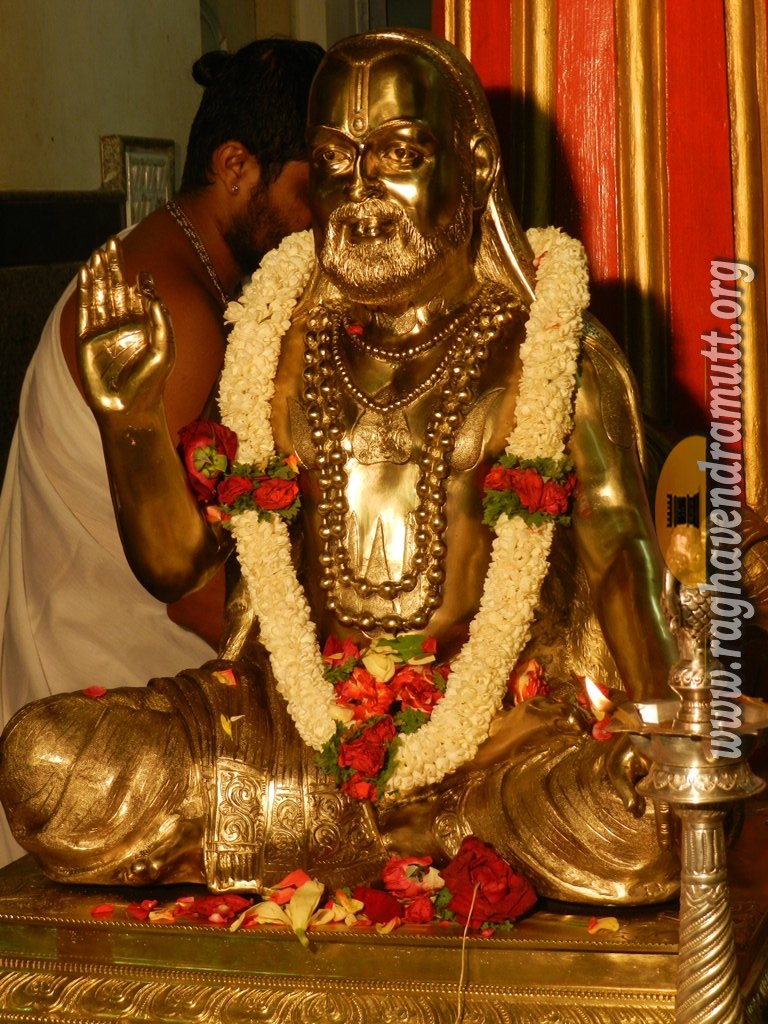
    Raghavenra Temple,Mantralayam
    Saint Raghavendra,Mantralayam

    India abounds in them.

    Munro spoke to Raghavendrar who was in the Grave.
    Sir Thomas Munro

    What is startling is that most of these so-called Miracles were authenticated and official references are available.

    We ,in India, have this peculiar characteristic of Believing the White, at times only the White, if an information is sought.

    The same information, even if given in detail by a learned Indian with proof, it will be spoofed at.

    There is this reported incidence of Saint Raghavendra having spoken to Sir.Thomas Munro, the then District Collector of Bellary, in the year 1800, when Munro went to confiscate the land where Saint Raghavendra had attained Jeeva Samadhi.

    This was gazetted in the then Madras Presidency.

    The Notification.

    Gazette Notification of the talk between Munro and Raghavendra.
    The Saint who spoke from the Grave.When Sir Thomas Munroe was the Collector of Bellary in 1800, the Madras Government ordered him to procure the entire income from the Math and Manthralaya village. When the Revenue officials were unable to comply with this order, Sir Thomas Munroe visited the Math for investigation. He removed his hat and shoes and entered the sacred precincts. Sri Rayaru emerged from the Brindavan and conversed with him for sometime, about the resumption of endowment. The Saint was visible and audible only to Munroe who received Manthraksha. The Collector went back and wrote an order in favour of the Math and the village. This notification was published in the Madras Government Gazette in Chapter XI and page 213, with the caption “Manchali Adoni Taluka”. This order is still preserved in Fort St. George and Manthralayam.

    There is a similar incidence involving another White was reported in Samayapuram, where the Presiding Deity ,Samayapuram Mariamman is repoted to have appeared before the White man.

    I have heard of this and was informed that his has been notified in the Madras Gazette.

    I am unable to locate it.

    Does anyone have any idea?

    Enhanced by Zemanta