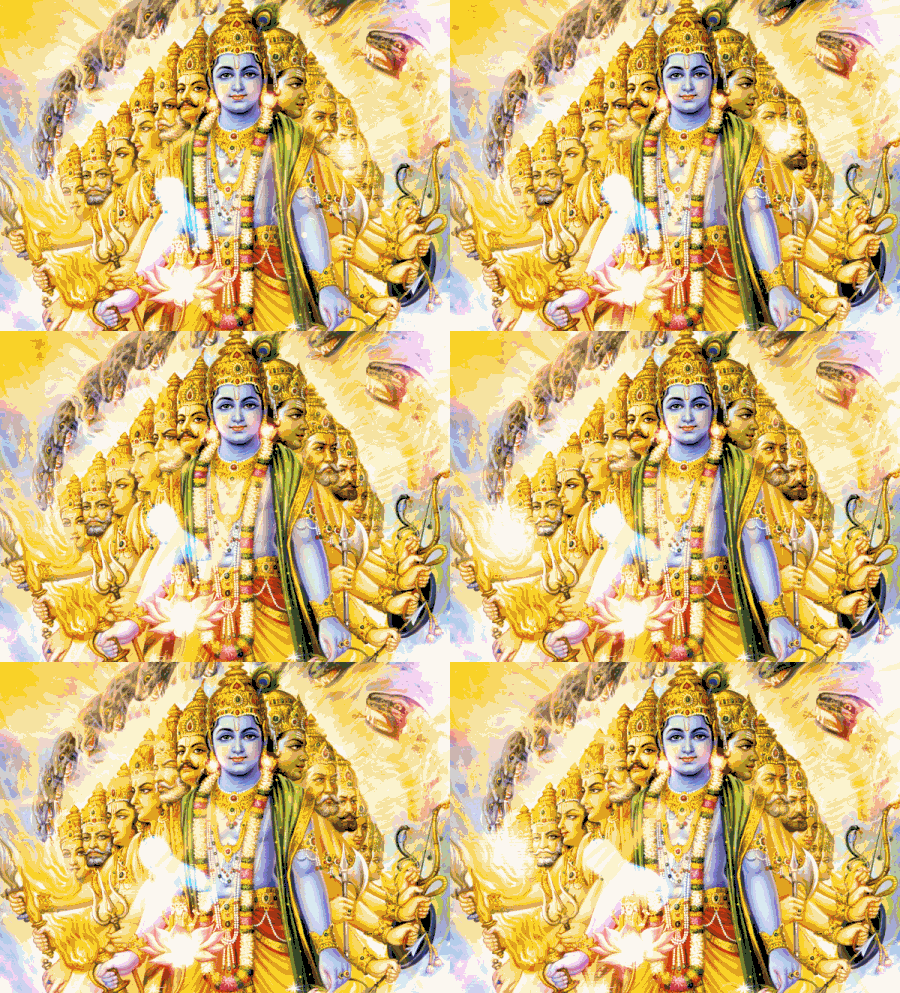
Tag: Rudram

  • I Perform Sata Rudreeyam Daily Lord Krishna in Mahabharata

    I Perform Sata Rudreeyam Daily Lord Krishna in Mahabharata

    Let me narrate a legend involving Adi Shankaracharya and Devi before proceeding to the topic.

    After Adi Shankaracharya was accepted as his disciple  by Gaudapada(who is considered to be an Avatar of Vyasa,who in turn is an Avtar of Vishnu),Shankaracharya wanted to write a commentary,Bhashyam.

    (*Adi Shankara’s Guru was Govinda Bhagavadpada and both Govinda Bhagavadpada and Shankara studied under Gaudapada.
    Hence Shankara calls him Parama Guru.)

    He wanted his first work to be on Devi.

    So he fixed Devi in his mind ,meditated and asked his disciple to get the manuscript from the repository.

    When It was  brought,it was found to be the manuscript of Vishnu Sahasranama.

    Shankaracharya was annoyed and asked the disciple to bring the manuscript on Devi.

    What was brought to him,not only for the second time but the third time as well was,

    Vishnusahasranama.

    Shankaracharya meditated on Devi and She told him,

    ‘Before beginning  your work on Me,complete thee work on my  elder Brother Vishnu first’

    Thus was born the Shankara Bhashya of Vishnu.

    It can be identified as Shankara Bhashya when the phrase ‘Om Namo Bhagavathe

    Vasudevaayav’Vishnu’s Mahamantra,The Dwadasa Nama, in the Dhyana sloka before

    ‘ Santhakaaram Bhujaka Sayanam,’and this can not be found in any other  work.

    Such is the unity of Hindu thought and we have Krishna Sthuthi by

    Shiva,Mantrarajapadam by Shiva on Narasimha and Siva Stuthi by Krishna.

    Now there is something more.

    e1386-clipboard01

    Lord Krishna says He performs Satha Rudreeya daily.

    Satha Rudreeyam is on Rudra,an aspect of Shiva as Destroyer.

    Lord Krishna on Satha Rudreeyam.

    ‘Krishna confesses that he recites the Sata-Rudriya every morning, and explains how it is the  best way to please Shiva (Anushasana Parva).
    “Vasudeva said, ‘I shall recite to thee the good that I have acquired and the fame that I
    have won through the Grace of That High-Souled One. Verily, I shall discourse to thee
    on the topic, after having bowed unto Kapardin.

    Oh king, listen to me as I recite to thee
    that Sata-Rudriya which I repeat; with restrained senses, every morning after rising
    from bed…O sire, It is Sankara who Created All the creatures in the Universe, mobile
    and immobile.
    There is no being that is higher, O monarch, than Mahadeva. Verily, He is
    the Highest of All beings in the three worlds…Formerly, when Sankara became angry, the
    deities trembled with fear and bent their heads to Him. Without being appeased, Rudra
    placed on His bow-string a sharp and blazing arrow. Beholding His Prowess, the deities
    and the Rishis became all alarmed. Those foremost of gods began to pacify Him! Joining
    their hands in reverence, they began to recite the Sata-Rudriya Mantras. At last,
    Maheswara, thus praised by the deities, became gratified.’”
    vAsudeva uvAcha||
    hanta te kathayiShyAmi namaskRRitvA kapardine |
    yadavAptaM mahArAja shreyo yachchArjitaM yashaH ||
    prayataH prAtarutthAya yadadhIye vishAM pate |
    prA~njaliH shatarudrIyaM tanme nigadataH shRRiNu ||

    sha~NkarastvasRRijattAta prajAH sthAvaraja~NgamAH ||
    nAsti ki~nchitparaM bhUtaM mahAdevAdvishAM pate |
    iha triShvapi lokeShu bhUtAnAM prabhavo hi saH ||

    tataH praNemurdevAste vepamAnAH sma sha~Nkaram |
    punashcha sa.ndadhe rudro dIptaM sunishitaM sharam ||
    rudrasya vikramaM dRRiShTvA bhItA devAH saharShibhiH |
    tataH prasAdayAmAsuH sharvaM te vibudhottamAH ||
    jepushcha shatarudrIyaM devAH kRRitvA~njaliM tataH |
    sa.nstUyamAnastridashaiH prasasAda maheshvaraH ||’

    Five Methods of Chanting Rudra

    There are five methods of chanting Rudra viz.,

    1. Ordinary method where first Rudram is read and then Chamakam.
    2. Rudra ekadasini where after chanting Rudram, the first anuvaka of Chamakam is chanted, again after chanting Rudram the second anuvaka of Chamakam is chanted and so on till the eleventh chanting of Rudram followed by eleventh anuvaka of Chamakam.
    3. Eleven such Rudra ekadasinis makes one Laghu Rudram
    4. Eleven such Laghu Rudrams makes one Maha Rudram and
    5. Eleven such Maha Rudrams make one Athi rudram.

    Source. P.R.Ramchander


  • Ten Thousand Names of Shiva,Shiva Dasa Sahasranama

    Ten Thousand Names of Shiva,Shiva Dasa Sahasranama

    Shiva means auspiciousness,

    The Sanskrit word “Śiva” (Devanagari: शिव, transliterated as Shiva or Siva) means, states Monier Williams, “auspicious, propitious, gracious, benign, kind, benevolent, friendly”.The roots of Śiva in folk etymology is “śī” which means “in whom all things lie, pervasiveness” and vawhich means “embodiment of grace”.

    The word Shiva is used as an adjective in the Rig Veda, as an epithet for several Rigvedic deities, including Rudra. The term Shiva also connotes “liberation, final emancipation” and “the auspicious one”, this adjective sense of usage is addressed to many deities in Vedic layers of literature. The term evolved from the Vedic Rudra-Shiva to the noun Shiva in the Epics and the Puranas, as an auspicious deity who is the “creator, reproducer and dissolver”.

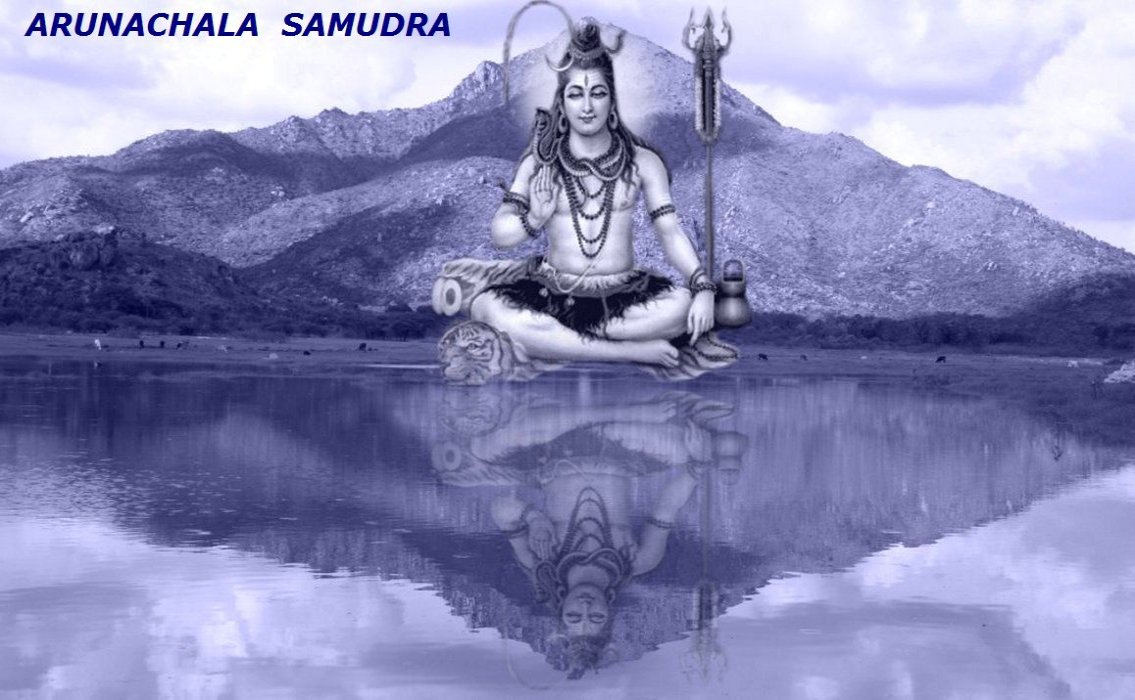
    Shiva In Thiruvannamalai.

    Sharma presents another etymology with the Sanskrit root śarv, which means “to injure” or “to kill”, interprets the name to connote “one who can kill the forces of darkness”.

    The Sanskrit word śaiva means “relating to the god Shiva”, and this term is the Sanskrit name both for one of the principal sects of Hinduism and for a member of that sect. It is used as an adjective to characterize certain beliefs and practices, such as Shaivism.

    Some authors associate the name with the Tamil word śivappu meaning “red”, noting that Shiva is linked to the Sun (śivan, “the Red one”, in Tamil) and that Rudra is also called Babhru (brown, or red) in the Rigveda. The Vishnu sahasranama interprets Shiva to have multiple meanings: “The Pure One”, and “the One who is not affected by three Guṇas of Prakṛti (Sattva, Rajas, and Tamas)”.

    Shiva is not directly mentioned in the Vedas ,nor are there any hymns addressed directly to Him.

    Shiva is mentioned in Sri Rudram   and is kept as a secret in the Rudram.

    Please my article on this and more posts on Shiva  .

    Though the Upanishads define the Reality Brahman as Nirguna,. without attributes/beyond attributes, the Vedas also sanction the worship of reality with forms, called Saguna Upasna.

    Many Devatas are worshiped by,

    Ashtotra,108 names,

    Trisati,300 names and

    Sahasranama,1000 names.

    Rudra,like other Gods,has Trisati too.

    What is surprising is that Shiva has Eight different sahasranamas(mentioned in the Anusashan parva of the Mahabharata)

    And Shiva has a Dasa Sahasranama  as well! ( Dasa ,hundred:Sahasra,1000;dasa sahasra is 10,000)

    It is very rare to come by.

    Sahasranama are medieval Indian texts that list a thousand names derived from aspects and epithets of a deity. There are at least eight different versions of the Shiva Sahasranama, devotional hymns (stotras) listing many names of Shiva. The version appearing in Book 13 (Anuśāsanaparvan) of the Mahabharata provides one such list.Shiva also has Dasha-Sahasranamas (10,000 names) that are found in the Mahanyasa. The Shri Rudram Chamakam, also known as the Śatarudriya, is a devotional hymn to Shiva hailing him by many names.

    Here is the Shiva dasa sahasra Nama.

     adhivaktA -Speaks in favour of devotees
          agriyaH -Foremost, Earliest
          ailabRidah -Feeder
          Akrandayat -One Who makes cry
          AlAdyaH -Giver of effect of the deeds
          aMbikaanaatha -the Lord of the (mother) Goddess
          AmIvatkebhyaH -Moving everywhere
          andhakaasurasUdana -Destroyer of andhakAsura
          andhasaspadiH -Food provider to devotees
          AnirhatebhyaH -Destroyer of sins
          aniishvara -the One having no superior
          anagha -the Flawless
          ashhTamuurti -the Eight formed
          anekaatman -the Soul of many, the Multiply present
          ahirbudhnya digaMbara -the Sky cladded
          ajaaya -the Unconquerable
          aparAjah -Defeatless
          apavargaprada -the Giver of fulfilment
          ApadsahAy -Helper in distress
          ananta -the Endless
          annapati -Lord of food materials
          aruNamUrti -the One in rising sun like form
          ahantya -Untorturable
          AtatAvin -With the string tied (ready) bow
          AtAryaH -Introducer to life
          auShdhIpati -the Lord of medicines/herbs
          avAryaH -Prayed by bonded people (in worldly life)
          avyaya -the Unmeasurable
          avyakta -the Non-manifest, Imperceptible
          avyagra -the Undistracted
          AvyAdinI pati -the Lord of removers of enemies
          auShadesh
          aghora
          aMbikApati
          avinAshi
          akshaya
          amala
          arkanayana
          Amravaneshvar
          AraNya sundar
          AdimUrti
          agniishvar
          AtmanAth
          amRitakalAnAth
          ApatsahAyam
          akshayalingesh
          avinAshi
          amRutagaTesh
          ardhanAriishvar
          aruNAchaleshwar
          abhiShekasundaram
          Adiratnesh
          airAvatesh
          amRitagaTesh
          akileshvar
          airAvathanAth
          agniishvar
          aghastiishvar
          B
    
          bhavaH -the Source
          bhiimaH -the Strong
          bhaktavatsala -the Compassionate One towards the devotee
          bhasmoddhuulita vigraha -the One appearing smeared in Ash
          bhujaN^gabhuushhaNa -the Snake ornated
          bharga giridhanva -the Mount bow-ed
          bhuutapati -the Head of elements
          bhagava -the God
          bhaganetrabhide -the Remover of the eye of bhaga
          bhiShak -the Doctor
          bhagavaH -God
          babhlushaH -Seated over the bull
          babhrurUpaH -the Golden one
          bhuvantiH -Philanthrophic
          bhava -the Source
          bhIma -Strong
          bhUteshvaraH -the God of elements(matter)
          bhUtanathaH -the Lord of elements
          balaH -the Strength
          bhavodbhava -the Source of the source
          bhuvanAAviveshaH -Penetrated in the world
          balavikaraNa
          balapramatana
          bhImasha.nkar
          bhUtanAth
          brahmapuriish
          bhagavAn
          bilvavaneshvar
          bhRihatiishvar
          bilvavanesh
    
    
          C
    
          chaaruvikrama -the Esteemed (beloved) Hero
          chandramauLi -the Moon crowned
          chandrashekara -the Refuge of moon
          chitrasabhApati
          chitsabhesh -the Chief of the hall of heart
          (Name of Lord at chidambam)
          chitambarnAth -(Name of Lord at chidambam)
          chitambaresh -(Name of Lord at chidambam)
          chAyavanesh
    
    
          D
    
          durdharshha -the Inviolable
          deva -deva, Divine, the Basic element (of world)
          daridra -(Appearing in the form of) poor
          devaH -Divine
          daxaadhvarahara -the Remover of daxa's sacrificial rite
          dishAmpati -Lord of directions
          devesh -the God of divines
          devadeva
          devagurunAth
          darbhAraNyesh
          dhayApar
    
    
          G
    
          gaNgaadhara -the Wearer of gaNga
          gaNanaatha -the Lord of organised group
          giriisha -the Lord of mounts
          girisha -the Lord on the mount
          gaNapati -the Lord of well organised groups (troops)
          giripriya -the Liker of mounts
          girisha.ntaH -Taken abode in the Mount (kailash)
          giritraH -Residing on the Mount
          gartasadaH -Resident of the lotus of the heart
          giricharaH -Walks over the mounts
          gaurIsh
          ganesh
          gR^idhapurIshwar
          gaNAdipa
          gaura
          gusumesh
          gaNakarta
          guNAkar
          gambhIraghosha
          guhAvAsi
          gabhasti
          gajAri
          gajasamhAri
          gajAntaka
          gajAnanAugraha
          gajAnanapriya
          gaNapatiishvar
          guNAGYa
          girijApati
          girijAnAth
          girijesh
          girIndra
          guhapriya
          gaNasevya
          girisamshraya
          gajacharmAmbara
          ghRishNeshvar
          gokarNeshwar
          gaurIvallabh
    
    
          H
    
          hiraNyaretas -the Golden viriled
          haraye -the Reddish-brown One
          hara -the Remover
          hiraNyabAhu -Golden shouldered
          harikesha -the Brown haired, the Green (leaves) haired
          hantr -Destroyer
          hiraNayavarNa
          hiraNyarUpa
          hiraNyapati
    
    
          I
    
          iishaanaH -the Master, Owner, Supreme
          iShudhimati -With the quiver
          iShumati -With arrows
    
          J
    
          jaTaadhara -the Matted haired
          jagadvyaapin -the Omnipresent in the world
          jagad.hguru -the Guide of the world
          jagatpati -the Lord of the world
          jambukeshvar
          jagatiishvar
    
    
          K
    
          kapardin -the Long (matted) haired
          khaTvaangi -the One with axe
          kapaali -the one adorned with skull
          kaamaari -the Enemy of (devA of) lust
          kaalakaala -the Death to death (the Time to deva of time)
          kRipaanidhi -the Grace wealth
          kailaashavaasi -the Resident of kailaash
          kavachin -the Armoured
          kaThora -the Firm, Hard
          kRittivaasa -the Tiger skin cladded
          khaNDaparashu -the sharp Axed
          kapardinaH -With long (matted) hair
          kAlAgnirudra -the rudra Who after the specified period
          terminates things with an agni
          kirikebhyaH -In the forms that showers wealth to devotees
          kRittimvasAnaH -Cladded in tiger skin
          kAmAri -the Enemy of lust
          kapAli -Adorned with skull
          kuNYchitapAdam -Raised Foot
          kanaka sabhapati -the Head of the golden hallx
          kalyANa sundar -Beautiful Groom/ Auspicious & Charmful
          kalavikaraNa
          kedhAreshvar
          kundaLnAth
          kAlasamhAri
          karkkaTesh
          koThiishvar
          kumbesh
          kokilesh
          kAlasamhAramUrti
          kALakaNThesh
          kAyArohaNesh
          koNeshvar
          kAshyAraNya
          kalpakanAth
          koNeshvar
          ketiishvar
          kaTambavanasundram
          kanakasabhApati
    
    
          L
    
          lalaaTaaksha -the Forehead eyed
          lalATanayana
    
    
          M
    
          mahaadeva -the Great deva, the Highly divine,
          the Great Basic element
          mahat -the Great
          maheshvara -the Great God
          mayobhavaH -the Source of (liberated) bliss
          mayaskara -the Liberator
          mRigapaaNi -the Animal (Deer) handed
          mRityu.njaya -the One who conquered the death
          mahaasenajanaka -the One gave birth to the great commandor
          (mahaa sena - subraHmanya)
          mRiDa -the One who makes joyful
          mRiDaH -Kindler of happiness
          mIDhuShaH -Philanthrophic giver of requested boons
          mIDhuShTamaH -Kindles the love (desire) for Him
          mahAdeva -the Great divine
          mRityu~njaya -Won the death (Immortal)
          manmatAri -the Enemy of cupid(lust)
          mRigapAni -One holding the animal(deer)
          maheshvaraH -the Great God
          ma~njunAth -the Lovely Lord
          mahAlakshmiish -Name of Lord at thiruninRiyUr
          manonmana
          mallikArjuna
          mahAkAleshvar
          mAtRibhUtesh
          mANikya varada
          maragatAchaleshvar
          mahAlingam
          mAyUranAth
          ma~NgaLnAth
          maNDaleshvar
          mantrapuriish
          miinAkshisundram
          mANikyavarada
          mahAbaleshwar
          mallikArjun
    
          N
    
          niilalohita -the Blue-Red One
          nIlagrIvaH -the Black throated
          nIlakaNTha -Black throated
          nivyAdin -Remover of enemies
          niSha~NgiNaH -With sword
          naTarAja -the King of dance
          naTesh -the Lord of dance
          nAgeshvar
          nandi
          nayanatraya
          nirmal
          nIlakNTha
          niilakaNTh
          nIlakaNTheshvar
          nityasundar
          navaniitanAth
          nandIshvar
          niilAchalesh
    
    
          O
    
          oMkAreshvar
    
          P
    
          parameshvara -the Supreme God
          pashupatiH -the Lord of creatures
          pinaaki -the One with pinaaka bow
          parashuhasta -the Axe handed
          paramaatman -the Supreme soul
          panchavaktra -the Five faced
          prajaapati -the President of the people(citizens)
          puraaraataye -the Enemy of puras (tripura)
          pramathaadhipa -the Lord of pramatha gaNas
          (attendants/ soldiers of Lord shiva)
          paashavimochaka -the Liberator of bonds
          pashupati -the Lord of creatures (souls)
          puushhadantabhide -the Breaker of sun's tooth
          prathamodevaH -the Prime divine
          pashupati -Lord of creatures/lives/ souls
          pathInAmpati -the Lord of the ways
          prathama -Prime
          pAryaH -Praised by liberated people
          prataraNaH -the Uplifter
          pulasthiH -Forthcoming to protect devotees
          puShTivardhanaH -Grower of nourishment
          prabhuH -the Lord
          puraripuH -the Enemy of city(daemon)
          pinAki -(Holding the) pinAka (bow)
          parashupAni -One holding the axe
          pashupati
          paNYchakRitya
          pArvatIvallabh
          parApara
          paramAnand
          pataNYchaliish
          pashupati nAth
          purANesh
          pa~nchavarNeshvar
          pashupatinaath
          pArvatiish
          pata~nchalimanohar
          palAshavanesh
          pAtALanAth
    
    
          R
    
          rudraH -the remover of suffering, formidable
          rohitaH -the Red one
          RiShabhadvaja -With the flag of bull (justice)
          rAmalingaM
          rAmeshvar
          ravinayana
          ratnagiriishvar
          rAmanAth
          ratnagiriishvar
          rAmeshvar
          rajatasabhApati
          ratnasabhApati
    
    
          S
    
          shiva -the Auspicious, the Perfect
          sharvaH -the Remover of sins
          shaMbhu -the source of auspiciousnous
          shashishekhara -Adorned with Moon
          shankara -the Doer of good
          shuulapaaNi -the One with trident
          shipivishhTa -the One encircled in luminance
          shriikaNTha -the Splendid throated
          shitikaNTha -the White throated
          shivaapriya -the Lover of shivai (shakti)
          saamapriya -Pleased with saama (veda)
          svaramaya -Musicful (Full of sound)
          sarvaGYa -Omniscient
          somasuuryaagnilocha na -moon, sun and fire eyed
          soma -the One with uma (Also refers to moon)
          sadaashiva -the Eternal Shiva (auspicious)
          suuxmatanu -the Cryptic formed
          sthaaNu -the Stable, Firm
          saatvika -the Virtuous
          shuddavigraha -the Pure Formed, the Clear appearing
          shaashvata -the Permanent
          sahasraaksha -the Thousands of eyed
          sahasrapade -the Thousands worded (named)/staged/ footed
          sahasrAxaH -thousands of eyed
          shateShudhaH -With hundreds of quiver
          sarveshvara -Lord of everything
          sadAshiva -Always perfect/auspicious
          saspi~njaraH -Wheatish like a tender straw
          sthapati -Staying well (in all things) and protecting
          stenAnAmpati -the Chief of thieves
          sabhApati -the Chief of the court
          sharva -the Destoryer (of sin)
          shitikaNTha -the White throated
          shipiviShTa -the Radiant
          soma -Accompanied by uma
          sha~NgaH -Activator of goodness
          shambhavaH -the Source of goodness
          shivaH -the Auspicious, the Perfect
          shivatara -Transforms (people/things) to
          Perfection/Auspicio usness
          sRikAvantaH -With sharp weapons
          sugandhin -Nice odoured
          stiraH -the Stable
          shivatama -One in Auspicious/perfect form
          smarAri -the Enemy of cupid(lust)
          shreShTa -the Good/Ideal
          smarAntakaH -the Terminator of cupid(lust)
          sarvabhUtadamana -Pervading all matter
          somanAth -the Lord of moon
          sabhApati -the Chief of the learnt
          (Name of Lord at chidambam)
          shivayoga tyAgesh
          sundaresh
          svetAraNyesh
          sadyojAta
          somanayana
          swarNapuriish
          swayambhunAth
          saptagiriish
          sAkshinAth
          shabdapuriish
          shivaloka nAth
          satya vAkiishvar
          saundaesh
          someshwar
          shanpakAraNyesh
          sakalabhuvaneshvar
          shivAnand
          siddanAth
          satguNanAth
          saundaranAth
          sAkshinAth
          sarpapuriish
          sundareshvar
          somasundram
          sangameshwar
          shiShTagurunAth
    
    
          T
    
          tAra -In the form of praNavam
          tavas -Austerous
          taaraka -the Protector
          tripurAri -the Enemy of tripurAsuras( three city
          daemons)
          tripuraharaH -the Remover of three cities(daemons)
          tyAgarAja -the King of sacrifices
          tyAgesh -the Lord of sacrifices
          trinetra -Three eyed
          tIrtha -In holy waters
          tryambaka -the Three eyed
          tripurAntaka -the Terminator of three cities
          trikAgnikAla -the Time (destiny) for three fires
          tAmramUrti -the One in copperlike form
          taskarANAmpati -Chief of robbers
          tviShImAn -Shining
          trayiimuurti -the Trinity
          trilokesha -the God of three worlds
          tAmrasabhApati
          trinayana
    
    
          U
    
          umAmaheshvaraH -the Great God with umA
          ugraH -the Fierce
          ugra -Fierce
          upaviitin -the Thread wearing
          uttaraNaH -the Rescuer
          upahatnumugraH -Fierce in destruction
          umAmahesh
          umApati
          Urdva tANDava
          uttaravediishvar
          umAvallabh
    
          V
    
          vaamadeva -the Charming Divine
          viruupaaksha -the Strange formed and eyed
          vishvAAviveshaH -Penetrated in the universe
          vishvabheShajaH -the Medicine for the universe / all
          sufferings
          viShNu -Omnipresent
          vRishadvaja -With the flag of bull (justice)
          vRiShArUDha -Riding the bull
          virUpa -In strange (special/unique) form
          vikirida -Showerer of wealth, Strange deedful
          vishvanathaH -the Lord of the world
          vixINakaH -Indiminishing
          vichinvatkaH -Bestower of wanted boons
          vArivaskRitaH -the Grace showering
          vishveshvara -Lord of the universe
          vilohitaH -the Admirable (Strange) red in color
          vishveshvara -the God of the world
          viirabhadra -Rich in valour
          vyomakesha -the Widespread (in space) haired
          vishhNuvallabha -Beloved by viShNu
          vR^ishhaa.nkaa -the One on the bull
          vR^ishhabhaaruuDha -the Bull mounting
          varavRidda
          vaTamUlaka
          vanmIkanAth
          vardhamAneshvar
          vedAraNyesh
          vedagiriish
          vedanAyak
          vENuvananAth
          vikirteshvar
          vedapuriish
          vaidyanAth
          vijayanAth
          vyAghrapuriish
          vajrasthambesh
          vedagIta
          visheshvar
          vibhuH
    
    
          X
    
          xayadvIraH -Victorious over enemies
          xetrapati -Lord of the body
    
    
          Y
    
          yaGYamaya -Complete in spiritual rites
          yuvAnaH -Youthful
          yaGYAri
          yogAnanda
    
          Om Sai Ram

    Kindly check and inputs,corrections welcome.

    An excellent site for rare information is provided in the Link below.

    Source of the Dasa sahasranama  quoted here in Public interest with no commercial interest .

    https://www.mail-archive.com/saimsg@googlegroups.com/msg03228.html

    Reference and citation.

    https://en.wikipedia.org/wiki/Shiva#Etymology_and_other_nameshttps://en.wikipedia.org/wiki/Shiva#Etymology_and_other_names

  • Brahman Upasna in Sri Rudram

    Vedic texts speak of Reality, the underlying and immanent Principle as with out Name and Form.
    This aspect of Reality is called Nirguna Brahman, Devoid of Attributes.
    However as Reality is something to be realised, the Vedic people understood the difficulty of realising an Attribute- less Reality.

    image

    A Reality that can not be realised is a mere academic exercise.
    As Hinduism addresses the issue of Life and Death in a practical way, it does not stop with mere abstractions, though it may appear so.
    If Reality has to be known it can be through two sources.
    One is by Knowing  ( mind) and another is by
    Experiencing.
    Knowing belongs to mind while experiencing is of the realm of the Heart (heart)
    Realising Brahman through Experience is through the Bhakti Yoga, Path of Devotion.
    This calls for total surrender to God.
    But human mind being what it is , is never satisfied with following something without knowing it to be true.
    This, knowing well that knowledge is relative and not entirely dependable.
    So human mind seeks confirmation by the Mind.
    Mind, to understand some concepts needs some thing to concentrate upon for mind can not concentrate and operate in a vacuum.
    So two aspects of Reality  are explained in the Vedas.
    One, the Nirguna Brahman without Attributes and another Saguna Brahman with Attributes.
    This Saguna Aaradhana or worship ls worship of Gods be personifying them with Human Attributes in Perfection.
    Therefore Nirguna and Saguna Brahman worship are recimmended to suit individual dispoilsitions.
    One would find, in Hindu prayers, complete exposition of attributes to one God in Saguna Form of Worship.
    In some prayers the Nirguna Brahman is worshiped that is ‘without Attributes’
    But there are some Mahamantras which contain both Saguna and Nirguna worship.
    For example, the Lalitha Sahasranama has both Saguna and Nirguna worship.
    In the Vedic texts one finds this format in Sri Rudram addressed to Rudra, an aspect of Siva.
    Contrary to what many think the SriRudram also addresses the Nirguna Brahman.
    This is the reason why it is called as a Mahamantra.
    In Sri Rudram the Universal Reality is invoked.
    In later parts the Saguna asoect is worshiped.
    As Sri Rudram contains both forms of worship, it is chanted while performing Abhisheka, bathing the Deity,irrespective of the Deity.
    It may be Ganesa  , Subrahmanya  or  Devi.
    Strictly speaking Vishnu Abhishaka is to be done with Sri Rudra aling with Purusha suktha, Narayana, Vishnu, Sri and Durga Suktha.
    Some Vishnu temples avoid SriRudram.
    All Abhisheka must be performed with the Five Sukthas and Sri Rudram.
    Here below is an excerpt from Sri Rudran that addresses the Universal Reality.
    ‘ Original text (TS iv.5.5) 5th Anuvaka

    namo bhavāya cha rudrāya cha
    namaḥ śarvāya cha paśupataye cha
    namo nīlagrīvāya cha śitikaṇṭhāya cha
    namaḥ kapardine cha vyuptakeshāya cha
    namaḥ sahasrākṣāya cha śatadhanvane cha
    namo girīśāya cha śipiviṣṭāya cha

    English Translation:

    Prostration to the one who is the most dear (pleasant), to the one who is the most dreaded terroriser (frightening).
    Prostration to the one who kills living beings with arrows, to the Lord (benefactor) of all living beings.
    Prostration to the blue-necked one (disfigured (discoloured) naturally), to the one with whitened throat (throat smeared with Bhasma (ash); disfigured (discoloured) artificially).
    Prostration to the wearer of matted tangled locks of hair, to him of shaven beard.
    Prostration to him of a thousand eyes (view from one point to everywhere), to him who has the capability of hundred bowmen (view from everywhere to one point – concentration of the view from all directions.

    * I began this article with the intention of writing on the benefits of Rudram and why Rudram is a Maha Mantra, on the request of a Reader but ended up with this article.
    Shall write on Benefits of Rudram shortly.

  • Shiva A Person God or Reality

    The worship of Shiva precedes the Sanatana Dharma and the worship of Shiva seems to have originated from the South of the Vindhya Mountains.

    And the worship of Shiva is intriguing as a God.

    One can find Shiva beibg worshiped as a Human being in the form of Nataraja and in other forms as a Human being, this mode of worship of Shiva in the north of Vindhyas is very limited when compared to the South.

    In the South one can find the worship of  Shiva both as a Linga and as a Human being or resembling a human being.

    In the north the worship of Shiva as Linga is predominant.

    And the worshio of Shiva as Ardhanaresswara form, of Shiva and Devi in one form is prevalent in the south.

    Another interesting point is that the Gods as described in the Vedas do not seem to have a description as a human being.

    Only their attributes are provided in the Sukthas and seem to be a reoresentation of the Principles of Nature.

    Purusha Suktha drscribes the Evolution of the Universe,

    The Narayana, Vishnu, Sri and Durga Sukthas describe the various aspects of the Universe.

    However , the Sri Suktha calls Sri, Lakshmi as the one who resides in the

    House of Sikleetha Rishi- Sikleetha

    Vasame gruhe.

    Excepting these lines no mention is

    Made to the Gods as Humans.

    The core of the Vedas is that the Reality , Brahman is without and beyond Attributes .

    Arunachala Shiva.jpg
    Shiva In Thiruvannamalai.

    Nirguna.

    However later concept s brought in the description of Gods in rhe image of Man in the Puranas and the Ithihasas Ramayana and Mahabharata.

    Even here there is a uniqueness of Shiva.

    Shiva appears, as recorded in the Tamil Classics and the Thiruvilayadal purana which describes the activities of Shiva at various points  of Times while not much of this nature is found in the literature of North India.

    And note the spread of Hinduism towards the East where Muruga, Subrahmanya worship  is prevalent from Lanka to Australia and the spread of Shiva Cult here and also to thecwest of India from Middle East to  Arctic and Russia.

    However there are legends that Shiva was worshiped as a Tribal Chief.

    Even today the Austrakians perform the Trinetra Dance of Shiva.

    And there is a Temple for Shiva asKratha Shiva’ Shiva the Hunter in Kerala.

    The Indian tribes worship Shiva in their natural abode – jungles, hills, mountains, agricultural fields’ etc. It is the Hindus who brought him into temples. Shiva is always worshiped among the tribals in His presence as lingam.

    In the bramhanical Hindu fold Lord Shiva has several names. Prominent among them are as follows: Shankar, Ashutosh, Shiva, Neelkantha, Jatadhari, Pasupati, Bholanatha, Viswanatha, Baidyanath, Kailashpati, Tripurari, Rameshwar, Ravaneshwar, Somnatha, Mahakal, Omkar, Nagesh, Trayambakeshwar, Chidambaram, Kedranath, Shambhu, Gauripati, Girijapati, Mahadeo, Umapati, Maulishekhar, Shashank-Shekhar, Chandrashekhar, Lingraj, Devadhideva, Hara, Bambhola. His every name makes him unique, peculiar, caring for his believers and followers but careless about himself. He does not run after the worldly affairs and luxuries. He is the divine guru. He is the sun that opens the lotuses of the hearts of great Yogis. He is most compassionate. He absorbs the devotees’ afflictions. He is the manifestation of the three worlds. He abides in bliss. He is delighted with devotees. He is forever blissful. He absolves the sins of the faithful. He lights up his devotees. He is beyond thought. He is associated with right thoughts. He is boundless. He is birth-less. He is without beginning or end. He is associated with knowledge. He is supreme in bliss and knowledge. He is slave of the devotees. He responds to the devotees. He is attentive to the devotees. He is the light of the devotees. He is a killer of devotee’s grief. He is the experience of devotees. He rescues devotes. He supports devotees. He is approachable through pure thoughts. He is the embodiment of consciousness. He has eliminated bodily passions.

    From the available narratives of many tribal communities (as described in the latter part of this paper) it appears that the Hindu ancestors adopted Him much later. Gods are fathers and Lord Shiva is s father like personality for the all other gods. He is the greatest god, Mahadeo. He helps his indigenous people in all walks of life and in all geographical, ecological and natural conditions. He is malevolent. He is benevolent. He is supreme Lord. He is Lord of lords. The Taittiriya Samhita therefore, in the form of Rudra, rightly describes Him:

    “Hail to him of the drum, hail to him of the drum stick, hail to the courageous and to the creations, to him on the footpath, hail to him of the pond, and to rivulet, hail to him of the lake. Hail to him of the well. Hail to him of the rain, hail to him of the cloud, hail to him of the sunshine and to him of the storm. Hail to him of the dwelling and to the guardian of the dwelling (TS.4.5.7.)”.

    Non-tribal and tribal interaction in ancient India started much earlier than the Vedic period. A minute survey of the Rig Vedareveals that these indigenous people were considered low, uncultured, mindless and substandard people and referred to asDasavarna (black colour or Dasa colour),Adavea (the godless community), Ayajyavah(non-sacrificiers), Anindra (non-believers in Indra), Murudeva (worshippers of dummy Gods), Sishnadeva (worshippers of phallic Gods), Mridhravaaka (those whose language was obscure and unintelligible),Maleecha (a non-Aryan) anas (flat nosed people) Akratuh, Avratuh, Ayyajnya, Vratya, Pani, and dasa. Here anas is a tribal andsisnadeva is the phallus god- Lord Shiva. Tribals with black skin were humiliated by the Vedic community as dasavarna where as other tribes were criticized on the basis of their flat nose. They were initially not permitted to mix up with the Hindu community but very soon it was realized that the existence of Vedic cult would not be possible without incorporating the existence of Shiva in the Vedas. And all of a sudden in the later part of Rig-Veda we see how Rudra has appeared with his all power and grace combining malevolent and benevolent characters.

    The three Vedas – Rig, Sam and Yajur – were recognized as canonical and calledTrayi Vidya (the threefold knowledge). TheAtharva Veda (atharvam = charm), written later, was included in the canon only after a long struggle. Influenced by the religious and ritual practices of the tribes, which they used to practice in order to appease the gods (and many of them are still doing), it included spells and incantations for the practice of magic.

    Slowly and gradually the Vedas developed six major limbs – Vedanga-s:

    1. a) Siksha (Phonetic Science which mainly deals with pronunciation)
    2. b) Vyakarana (Grammar)
    3. c) Nirukti (Context conclusive meaning; etymology)
    4. d) Chandas (Meter)
    5. e) Jyotisha (Time Science; astronomy & astrology)
    6. f) Kalpa (Rituals)

    The seers and scholars who realized these aspects of knowledge from the Vedas, composed Sutras (short but potent phrases which convey a lot of meanings) on eachVedanga. Kalpa-sutra-s are of four categories, viz., Srouta (collective sacrifices), Grhya(family rituals), Dharma (occupational duties) and Sulba (building of sacrificial fireplaces, altars etc.).

    According to the different levels of conditioned consciousness there are instructions in the Vedas for worship of different controllers, with the aim of reaching different destinations and enjoying different standards of sense enjoyment. Agamas(emanated scriptures) are books which are classified into five for this purpose:


    Basic nature of the

     Deity

    Deity who controls
    Branch of Agama


    Energy


    Shakti

    Shakta Agamas
    Visible source (

    Sun)

    Surya Sourya Agamas
    Controller Ganapati Ganapatya Agamas
    Destroyer Shiva Saiva Agamas
    Ultimate source Vishnu Vaikhanasa Agamas

    Slowly and gradually the Vedic seers and scholars made the place for the tribal people and their rituals and tantrikpractices in the Vedic fold. They said, for those who are below standard for Vedic purificatory process, Lord Shiva gave theTantra Shastra-s. These have two general classifications, right and left. While the right aspect contains regulations for purification for those who are grossly engaged in meat eating, intoxication and illicit sex, the left aspect contains low class activities like black magic etc.

    We find some legends of Lord Shiva Among the tribals of Chotanagpur, now in Jharkhand. I will begin with the case study of the Santhal – the largest Tribal community of Jharkhand. The supreme God of Santhal is called Marang Buru, Thakur Buru, or Mahadeo. His character is basically very similar to that of Shiva. Interestingly, the great and historicalJyotirlinga of Baidyanath, popularly known as Ravaneshwar Mahadeo, is located in the heartland of Santhal at Deoghar. Many Santhals claim that it is the entry point to the Santhal Territory. It is a place where all gods and goddesses reside with Lord Baidyanath. The prominent characteristic of the Santhal religious practices is belief in and worship of spirits or bongas and worship in the sacred grove.’

    There is a school of thought  which states that cthe Shiva worship was drwan to Sanatana Dharma from the South and later incorporated in the Vedic  and puranas.

    In essence the vedas treat Shiva more as Principle than as Human Being.

    But considering the numerous references to Shiva as a Human being , the spread of Sanatana Dharma by Shiva and His son Ganesha, the archaeological finds around the world,mostly among the tribes who worship Shiva as their ancestor, I am of the opinion that Shiva wa a human being and He was a realized soul.

    Note that the Siddhas consider Shiva as the first Siddha.

    Siddhas transcend time and Space.

    The view that human beings are God is not incompatible with Hinduism..

    Man is a part of the Reality, Brahman

    Those who Realize the Self are elevated to God hood.

    Thus Shiva was a human being who realized Self and was elevated to Godhood embodying the principles of the Universe and The Tantra Sasta, the means of realuzing Self.

    Citation and references.


    http://ignca.nic.in/kmsh0003.htm


  • Shivas Secret Name Shambhu Ashta Eight Temples

    Shiva is a Pre Sanatana Dharma/vedic Deity, though He finds a rare mention in the Vedas.

    Records indicate He was worshiped in the South, the Dravida Desa much before the worship of Vishnu.

    The spread of Shiva, Ganesha and Murugan(Subrahmanya cult in the south Asian Countries and towards the west culminating in the US has been documented in this blog.

    Shiva has been attributed many names,

    Sankara,Neelakanta,Visweswara,Mahadeva,Triyambaka,Tripurantaka,Mahakala,Kala,

    Mrutyanjaya,Sarveswara.

    Viswesvaraya Mahdevaaya Triyambakaaya Tripurantakaaya Trikaagni Kaalaya Kaalagni Rudraaya Neelakantaaya Mruntnjayaya Sarveswara Sadasivaaya -Sri Rudram

    Even this Maha Mantra does not disclose the secret Name of Shiva, mentioning the name of Shiva  in secret  in the Rudram in the Yajur Veda, in the middle of the eleven anuvaakas, in the fifth anuvaka,again in in the 5th stanza as the fifth word!

    ‘Nama Sivaya cha Sivadharaaya Cha’


    The hidden name is Shambhu, indicating Shivas’ Bliss.

    astasambhu_siva_temple-i
    Ashta( Eight)Shiva Temples.Bhubaneshwar.

    ‘This name of Lord Shankar indicates his blissful personality. He assumes the form of gross elements during playful moments, while he becomes the object of concentration during spiritual moments. Therefore He is called as Shambhu. Shiva, Maheshwar and Shambhu; these names indicate creation, maintenance and annihilation respectively. Thus these three titles can be accepted as the neutral symptoms of Brahman, the Absolute. Material cause (Upadan उपादान) from the first title, efficient cause ( Nimitta निमित्त) from the second title and the oneness of cause and effect has to be understood from the third title. A great Shaiva शैव and crown jewel of Tantra तंत्र Shri Bhaskar Roy reveals the secret of this name as under—
    शं भवयसि च भवसे शं च भवसि चेति वा देव्।
    त्वं देवदारुविपिने लिङ्गे प्रथितोस्यतः शम्भुः॥
    O Lord!! You generate all bliss and you enjoy all bliss, you are embodiment of all bliss and eternity. Your lingam which resides in pinewood forest, is called Shambhu-lingam शंभु लिंगम्. So you are known as Shambhu.
    The sense of delight which we feel in ourselves, that also depends on the delightfulness of Lord Shambhu. He remains uncovered just to allow us to get pleasures ceaselessly. His perpetually uncovered form is eternally joyful to Him. Therefore Lord Shiva is called Chidananda चिदानंद. Even the happiness felt by us in gross sense objects, that happiness also comes from Shiva because there is no other origin of happiness except Lord Umesha. Attainment of the happy and blissful nature of the self is the secret of holy name ‘ Shambhu’.

    “शं सुखं भक्तानां भावयतीति शंभु:”, meaning, one who produces happiness to his devotees

    -Shankaracharya in His commentary on the Vishnu Sahasranama.

    There are eight (Ashta) Shiva Temples in Bhubaneshwar,Odisha, India.

    ‘In the Uttaresvara Siva Temple precinct there are eight temples of identical size and dimension locally known as Astasambhu. Ashtameans eight and Sambhu refers to another name of Lord Shiva. Five of them are arranged in one alignment are also known as Panchu Pandava. The temple is under the private ownership and is maintained by the Ratnakara Gargabatu and family. According to architectural features like bada division and pabhaga mouldings, this temple was built around 10th Century A.D. This is a building made up of stones and its typology is Rekha Deul. The temple is surrounded by Godavari tank in the east, Uttaresvara Siva Templecompound wall in west, and Bindusagar tank in south beyond the compound wall. The temple has an east facing shrine.

    The temple has a square vimanam(shrine) measuring 2.45 metres with a frontal porch of 0.53 metres. Its pancharatha(five chariots) as distinguished by a central raha and a pair of ‘anuratha and kanika pagas on either sides of the raha. On elevation, he vimana is of rekha order that measures 5.72 metres in height from pabhaga to kalasa. From bottom to the top the temple has a bada, gandi andmastaka. With three fold divisions of the bada the temple has a trianga bada measuring 1.72 metres. At the bottom the pabhaga has four base mouldings of khura, kumha, pata, basanta that measures 0.47 metres. Jangha measures 0.90 metres and barandameasuring 0.35 metres thick has three mouldings. The gandi measuring 3.00 metres in height is devoid of any decoration and mastaka measures 1.00 metres with components like beki, amlaka, khapuri and kalasa.

    The parsvadevata niches are located on the raha paga of the jangha on the three sides of north, west and south measuring 0.50 metres x 0.32 metres and with a depth of 0.20 metres. Except the southern niche the rest two are empty. The niches are decorated with talagarbhika and urdhagarbhika of khakhara order. The southern niche houses a four armed Ganesha holding a parasu in his lower left, a rosary with varadamudra pose in lower right hand. His upper hands are broken. The deity is flanked on the top by two flying vidyadharas holding garlands in their hands. This temple is made up of coarse grey sand stone, construction technique is dry masonry type and construction type is Kalingan.

    Uttareswara Shiva Temple.

    Uttaresvara Siva temple is located within a precinct in the northern embankment of Bindusagar tank in the Nalamuhana Sahi, Kedara-Gouri Chowk, Old Town, Bhubaneswar. The enshrining deity in this temple is a Siva lingam within a circular yoni pitha at the centre of sanctum. The original temple has collapsed, as evident from the renovation work above the pabhaga and presence of cult images of earlier phase in different parts of the temple walls without conforming to the canonical prescriptions. It is the main temple within the precinct along with nine lesser shrines..

    Citation and References.

    https://en.wikipedia.org/wiki/Uttaresvara_Siva_Temple

    https://www.quora.com/What-is-the-meaning-of-Shambhu-which-is-one-of-the-names-given-to-Lord-Shiva

    https://en.wikipedia.org/wiki/Astasambhu_Siva_Temples