Tag: Rome

  • Augustus Temple In Musiri Roman Colony Madurai

    Augustus Temple In Musiri Roman Colony Madurai

    .The contact between the Romans and the people of Sanatana Dharma is quite ancient.

    People from the region from where the Romans ruled later, were transacting business with India right from Sanatana Dharma Vedic times.

    The civilizations  which preceded the Romans, Minoans, Sumerians had contacts with the Vedic people.

    Augustus Caesa
    Augustus Caesar,Roman Emperor.


    Image credit.

    By Till Niermann – Own work, CC BY-SA 3.0, https://commons.wikimedia.org/w/index.php?curid=388210

    Vedic texts refer to there areas as Yavana, though it is normally taken s denoting the Greeks.

    Yavanas are referred to in The Vedas,Mahabharata and Tami Literature speaks  in detail about Yavanas.

    The Great Tmail epic Silappdikarm, which is set in the background of Madurai and Poompuhar, called as Kaverippompattinam mentions that Yavanas hd a flourishing Trade with all the Tamil Kings, Chera, Chola and Pandyas.

    The items exported to Rome /the area under which Romans ruled were,

    Tigers of Four varieties,

    Elephants,

    Animal products,

    Pearls,

    Diamonds,

    Pliny states that Nero paid one million sesterces for one cup of Emerakds from India!

    Iron and Steel.

    Spices.

    Imported in India from Rome.

    Gold,

    Cotton,

    Gold Coins,

    Ornamental pieces like vases,

    Horses.

    The trade reached its peak during the period of Augustus and the Roman currency depreciated alarmingly.

    During Augustus’s period ratio of Gold to 1:9.3 aureus, aureus being 25 Silver Dinari.

    Because of the heavy import from India, the ratio became 1:96 during the period of Nero and this economic decline was one of the reasons for Rome’s .disintegration as an Empire.


    ‘The recorded history of the city goes back to the 3rd century BCE, being mentioned by Megasthenes, the Greek ambassador to India, and Kautilya, a minister of the Mauryan emperor Chandragupta Maurya. Signs of human settlements and Roman trade links dating back to 300BC are evident from excavations by Archeological Survey of India in Manalur’

    Romans, because of the high volume of Trade settled in India in great numbers.

    They had a colony for them Roman Colony. In Madurai.

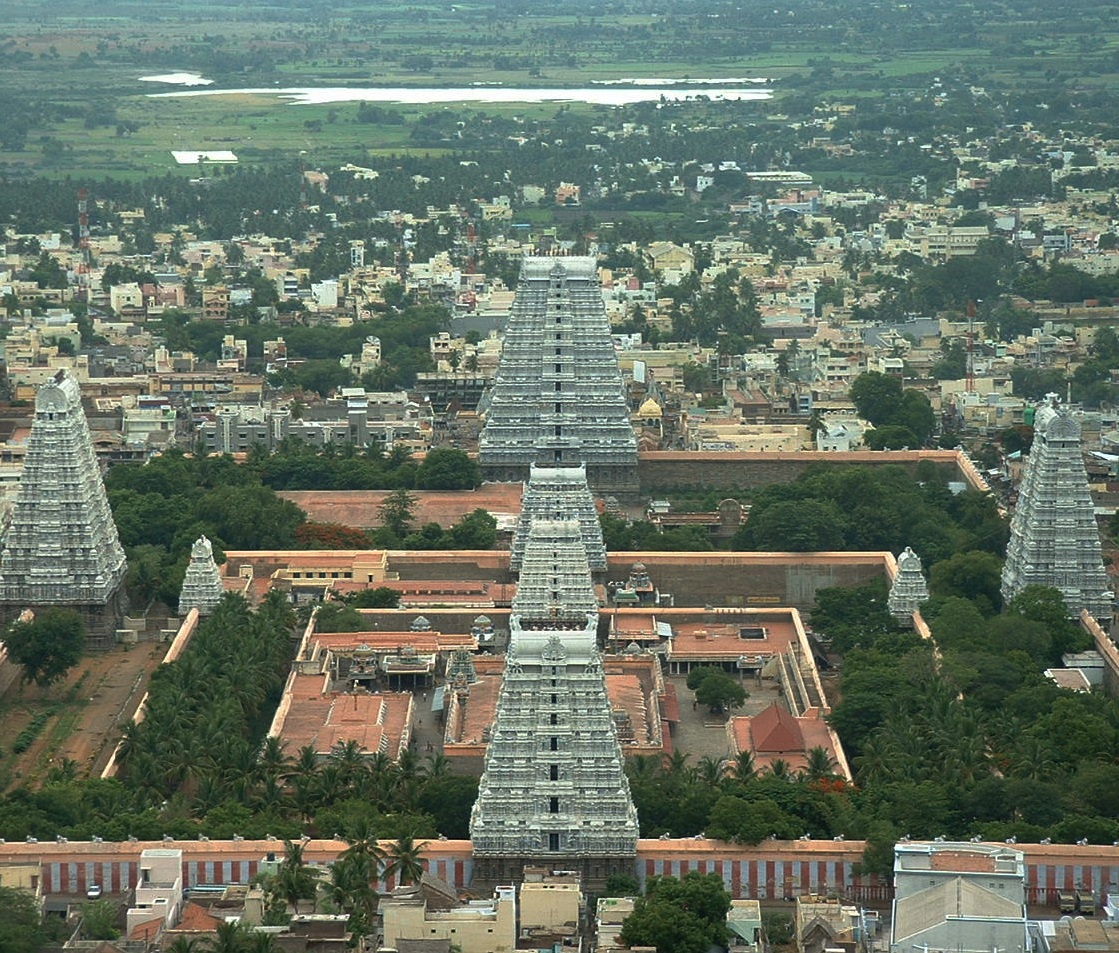
    As is the wont they even built a Temple for Augustus in Musiri.

    Periplus mentions this.

    Towns mentioned by Grrek Roman Historians.

    Madurai,

    Musiri,

    Korkai,

    Kanyakumari,

    Uraiyur,

    Poompuhar,

    Kanchipuram,

    Tondi,

    Karur,

    Point Calimere( kodiyakkarai)

    Mahabalipuram.

    I may add that Poompuhar is dated 20,000 years ago!

    Reference and citation.

    https://en.wikipedia.org/wiki/Madurai

    https://en.wikipedia.org/wiki/Augustus

    Periplus

    Warmington

    History Of Tamils by P.T Srinivasa Iyengar Page 301 to 321.

  • Rome Founded April 21, 753 B.C Rama Navami Little Rama

    Rome Founded April 21, 753 B.C Rama Navami Little Rama

    History of the world,studied in conjunction with the History of Sanatana Dharma is interesting.

    Horoscope of Lord Rama
    Rama’s Horoscope

    It shows a wealth of evidence that Sanatana Dharma was present throughout the world and is the forerunner of world civilizations, be it Europe,Asia,Americas,Australia…


    Rama Lakshmana and Sita. Image from Museo Civico Archeologico in Bologna, Italy.
    Rama Lakshmana and Sita. Image from Museo Civico Archeologico in Bologna, Italy.

    I have posted articles on the Vedic links to

    Iran,

    Iraq,

    Sumeria,

    Mayan,

    Egyptian,

    Polynesian,

    Roman,

    Christian, and

    European civilizations.

    And the aerial  view of Vatican resembles Shiv Linga(please check my article on this)

    Vatican a Shiva templejpg
    Vatican a Shiva temple

    I am looking into the links between Sanatana Dharma and Minoan Civilisation.

    I have some information Linking the pre roman, pre christian to Vedic civilization.

    Etruscan civilisation existed around 8 century 2 BC in Italy and is believed to have ruled the whole of Italy.

    But very little information is available about them.

    One of the reasons, like what christianity has done to African Religion, is the systematic obliteration of the Etruscan civilisation and its history by the Romans.

    “Etruscan civilization is the modern English name given to a civilization of ancient Italy. Its homeland was in the area of central Italy, just north of Rome, which is today called Tuscany.

    Hanuman Rama Sita in Pre Roman Etruscan civilization

    The Sanatana link to the present civilizations is not visible directly as except Sanatan Dharma all other civilizations that existed  between Santana Dharma and the present civilizations have disappeared.

    If one digs patiently  and traces history of these lost civilizations, one would find that the root of world civilizations is Sanatana Dharma.

    My articles deal with these facts.

    Now information on Rome and Italy.

    ‘assussanni a form of the Sanskrit asva-sani meaning ‘horse trainer’,
    aika wartanna meaning one turn (cf. Vedic Sanskrit ek vartanam),
    tera wartanna meaning three turns (cf. Vedic Sanskrit tri vartanam),
    panza wartanna meaning five turns (cf. Vedic Sanskrit panca vartanam),
    satta wartanna meaning seven turns (cf. Vedic Sanskrit sapta vartanam), and
    navartanna meaning nine turns (cf. Vedic Sanskrit nava vartanam).
    [Regrettably, writers do not mention the Old Iranian equivalents.]

    Hindu Kings of Iraq Turkey Syria Lebanon Egypt Italy

    Sharada Devi in Sardinia

    I have come across information  that Rome was founded on Rama Navami Day, the Birth Day of Lord Rama.

    ‘According to tradition, on April 21, 753 B.C., Romulus and his twin brother, Remus, found Rome on the site where they were suckled by a she-wolf as orphaned infants. Actually, the Romulus and Remus myth originated sometime in the fourth century B.C., and the exact date of Rome’s founding was set by the Roman scholar Marcus Terentius Varro in the first century B.C.

    “On this day the Romans keep a festival which they call the birthday of the city. At this feast, originally, we are told, they sacrificed nothing that has life, but thought it right to keep the anniversary of the birth of the city pure and unpolluted by blood.” (page 38, Chapter XII)( Plutarch’s Lives, Volume 1 )

    Plutarch cites Lucius Taroutius Firmanus, a Roman astrologer, in reference to the founding date of April 21st:

    “Rome was founded by him on the ninth day of the month Pharmouthi, between the second and third hour; for it is supposed that the fortunes of cities, as well as those of men, have their certain periods which can be discovered by the position of the stars at their nativities.” (pg. 39, Plutarch’s Lives, Volume 1, Chapter XII)
    Much like the astrological/astronomical fixing of holy dates in the Hindu lunar calendar, ancient Europeans and Middle Eastern cultures (i.e. Egypt) used similar principles when describing and setting specific historical dates. They meticulously noted down the exact position of stars and other astronomical bodies in the sky, at least during special circumstances. One such time was the founding day of Roma, the eternal city whose fortunes were prefixed by the astrological arrangement on Rama’s birthday. Pharmuthi in the Egyptian calendar corresponds to March-April in the Julian calendar and more importantly, Chaitra in the Vedic lunar calendar.
    Hindus celebrate the birth of Rama on the ninth day of Chaitra, the first month in their lunar calendar. Since scholars recognize that the oldest Egyptian calendar must have been lunar as well, one can clearly see these congruent dates in Pharmuthi and Chaitra are no mere coincidence.
    Indians worship the Sun God at the beginning of this day, as King Rama appeared in the Solar Dynasty (Surya-vansha), meaning he claims direct descent within the Sun God’s lineage. Hindu devotees customarily fast on this day, much like the Romans abstained from eating flesh. Legend has it that Lord Rama took birth at midday, and Hindus perform special prayers and make offerings into a ceremonial fire (homa) in the evening. Whether the Romans conducted more elaborate rituals similar to this, remains to be uncovered but is unknown. Given that Italy is about 3-4 hours behind India in the time zones, if Rome was founded in the morning, then it must have been around noon time (12 p.m.) in India, thereby coinciding with Rama’s time of birth. The Sanskrit word Para-Murthi, meaning Supreme Idol, may be the origin of the Egyptian Pharmuthi.
    Plutarch himself essentially confirms this truth:
    Romulus “consecrated his city, having fetched men from Etruria, who taught him how to perform it according to sacred rites and ceremonies, as though they were celebrating holy mysteries.” (pg. 38, Plutarch’s Lives, Volume 1, Chapter XI)
    Little Rama.

    We know that Rome was founded by Romulus and Remus – twins suckled by an Etruscan she-wolf. If you don’t know, just ask. These curious twins a dual origin – as dual like they were. First an Etruscan origin, but there is another. Which one? The investigation begins.

    ….Seek what their names mean, these wild children. First Remus – says good oldGaffiot?

    Let’s have a look at his brother Romulus : the suffix -ulus is recognized, a diminutive which means little.Romulus, Little Rom. Or Little Ram? Really good old Rama left living traces of his passage everywhere – traces still visible today in our lexicons. Romulus is son of the god Rama, his name is quite simply Little Rama. Later, when Romulus has founded Rome, the Etruscan tribe Ramnes or Ramnensès became his army. Ram Nes, those of Ram. Note also that Rome – or rather Roma – is the city of Rama.

    Similarly Rom people, or Roms, are descendants of Rama and his clan. Throughout his progress towards far east, Ram founded cities where he left his faithful people – heirs of his blood and manners. They founded ramaïques lines, most of which are still recognizable today.
    Whether Romulus was the son of Ram in the flesh or in the spirit, is hard to decide. Certainly many millennia have passed since the birth of Ram when Roma was founded.

    References and citations.
  • Lombardy Lambadi Indian Origin Of ItalianTribes Genetic Proof

    One of the curious features of World History written by the West is the observation, whenever  there is a reference to Human Races, Immigration, Cultural  practices, inscriptions, a simple statement is made to the effect  if the issue related to is Race,Immigration or Cultural practices, that they are from Asia, or to be specific(for the West of course), is central Asia.

    Migration Of Gypsies from India.Image.jpg Migration Of Gypsies from India.

    They normally use this term to denote Iran,Kazakhstan  or the Central Asian Region.

    But they do not probe further.

    Where did these people or customs, languages come from?

    Though there is enough evidence is available in terms of archaeological findings, references in the local legends they are not verified.

    In such cases, the trail is picked up, it normally ends up with Etruscan,Mayan,Sumerian Civilizations.

    If only they could pursue the issue further ,they would find the roots in Bharatavarsha,as India was called then.

    I am not sure whether this is a genuine apathy or a deliberate ploy to undermine Hinduism.

    Considering the services of people like max Mueller, I tend to believe it is the latter.

    I was struck by the terms Roma, Lombardy regions in Italy.

    References in Vedic and Tamil Literature abound about Italy and Greece.

    Sometimes the term Yavana is used to denote Greeks as well as Romans.

    Trade and communications were quite strong even during the period of Julius Caesar.

    In India we have the term Lambadi for the nomads, who go about throughout the country, a sort of Gypsies

    The language they speak , sometimes, sounds Italian.

    They are found in Andhra Pradesh in large numbers, which they use as their base.

    They are also found in Vidarba and Madhya Pradesh.

    Lambadis of India.

    Banjaras are traditionally known as suppliers and pack bullock carriers and Banjara word is derived from Sanskrit word vana chara(wanderers in jungle). The word Lambani or Lamani is derived from Sanskrit word lavana (salt) which was the principal goods they transported across the country.’

    I may be noted that the eary tamil Sangam Literature mentions that the Romans imported Salt from India in exchange for Horses.

    Banjara people follow Hinduism, and worship Hindu gods like Krishna, Balaji, Jagadamba Devi and Hanuman. They also pray tl Sati Aayi, Seva Bhayya or Sevalal, Mithu Bhukhiya which are gods of their community. They also worship peer and Banjara Devi by praying in the forest, represented by a heap of stones. Of these, Mithu Bhukhiya was an “expert decoit” of the tribe and is worshipped in a hut built in front of Tanda or village with a white flag on top. This practice is gradually losing its importance, mainly because the people are more engaged in agriculture, government employment and other labour.[15] No member of the community is allowed to sleep in the special hut built for Mithu Bhukhiya (also spelled Mitthu Bhukhiya). Seva Bhaya or Seva Lal was a saint and is highly respected by the Banjara people. He protected the women of his community and his story is quoted by British administrators who tagged his period around 1857 A.D. with his original name as Siva Rathode.

    The most numerous Banjara or Lambadi community is in Andhra Pradesh and Telangana states at 2.2 million where they speak their own dialect along with Telugu. In Karnataka, they are spread in northern parts of the state[ and Karnataka has second largest population (1.1 million, as of 2012) in India.

    The word Lombardy comes from Lombard, which in turn is derived from Late Latin Longobardus, Langobardus (“a Lombard”), derived from the Proto-Germanic elements *langaz + *bardaz; equivalent to long beard. Some sources derive the second element instead from Proto-Germanic *bardǭ, *barduz (“axe”), related to German Barte (“axe”).

    Lombardy originally referred to the entire territory of Italy (known as Longobardia Major and Langobardia Minor) ruled by theLombards, a Germanic tribe who conquered much of the Italian peninsula beginning in the 6th century.

    1.The Rishis are known t have long beards.

    2.The German tribes, especially the Huns were settlers from India.

    They moved from South India, at the of a Tsunami when Rama’s ancestor Satyavrata Manu mover to Ayodhya.

    The area of current Lombardy was settled at least since the 2nd millennium BC, as shown by the archaeological findings of ceramics, arrows, axes and carved stones. Well-preserved rock drawings left by ancient Camuni in the Valcamonica depicting animals, people and symbols were made over a time period of eight thousand years preceding the Iron Age.[8] and 300,000.[9]

    The many artifacts (pottery, personal items and weapons) found in necropolis near the Lake Maggiore, and Lake Ticino demonstrate the presence of the Golasecca Bronze Age culture that prospered in Western Lombardy between the 9th and the 4th century BC.

    In the following centuries it was inhabited by different peoples among whom the Etruscans, who founded the city of Mantua and spread the use of writing; later, starting from the 5th century BC, the area was invaded by Celtic – Gallic tribes. These people settled in several cities (includingMilan) and extended their rule to the Adriatic Sea.

    Their development was halted by the Roman expansion in the Po Valley from the 3rd century BC onwards. After centuries of struggle, in 194 BC the entire area of what is now Lombardy became a Roman province with the name of Gallia Cisalpina (“Gaul on the inner side (with respect to Rome) of the Alps”).

    The Etruscan may be traced to India.

    Please read my Post.

    Legend states that at the beginning of the Etruscan Age, the city of Rome was founded by the twin sons of the war God Mars. Their names were Romulus and Remus. The boys had been abandoned by their divine father and Etruscan mother and were reared in the forest by a she-wolf. This is a slightly different version of the story of the Hindu epic Ramayana where the divine king Sri Rama abandons Sita and his twin sons, Luva and Kusha. The two boy were reared by their mother and Rishi Valmiki in his forestashram.

    In the Etruscan legend, the twins are raised by a she-wolf in the forest, but that probably emerges from a confusion between the Sanskrit terms ‘rishi’ (ऋषि) which means a ‘sage’ and the Sanskrit ‘vriki’ (वृकी) which means a ‘she-wolf’ – considering that the fame of Sri Rama had traversed west from India by the time of the Etruscans. And a treasure trove of Etrsucan paintings bears out this argument…

    Details Here .

    And.

    The early upbringing of Rishyasringa is linked to the highland location in the central mid hill of Nepal now popular as Resunga in the Gulmi District of the Lumbini Zone. Stories about the unique setting of the special mountain that has attracted and made it the home to many famous mystic Yogis. The Saha Kings of Nepal have dedicated special respect and attention to its maintenance and arrangement and the religious circuit of Ridi-Rudrabeni-Resunga in the Gulmi district is a huge attraction for national and international tourists. The all-weather road that connects the Indian border of Sunauli (Uttar Pradesh) and passes through the Nepal’s Sidharthanagar-Butwal-Palpa cities leading to the Ridi Sangam with Kali Gandaki and upward towards the district headquarters Tamghas.

    The return of these people who left South India is being mistakenly quoted as the Invasion of Aryans .

    It is only the return of a group of the Vedic people , who left because of a Tsunami from South India,

    This group was led by Shiva and His son Ganesha who proceeded to Arctic before coming back to India to settle in Sarasvati Valley.

    Please read my posts on this,

    The Genetic Proof.


    “Our genetic lineage study demolishes this theory and proves that gypsies known as Romanis actually are descendants of Domas who have inhabited the Gangetic plain for centuries now,” said Dr Gyaneshwer Chaubey of Tartu University, Estonia, and a member of the research team that included scientists from Hyderabad-based Centre for Cellular and Molecular Biology(CCMB) and University of Bern, Switzerland.

    The Y chromosome is inherited from father to son, son to grandson, and so on. This means that all males of a family or a population evolved from a single founder male possess the same Y chromosome.

    Based on genetic signatures that exist on Y chromosome, every male could be assigned to a specific group. This helps in tracing paternal lineage.

    Researchers screened about 10,000 males from around the world including 7,000 belonging to 205 ethnic populations of India, to discern a more precise ancestral source of Gypsies.

    “The result of this genetic analysis showed that aboriginal scheduled tribes and scheduled caste populations of northwestern India, traditionally called Doma, are the most likely ancestral populations of modern European Roma,” Dr Kumarasamy Thangaraj of CCMB said.

    (http://indiatoday.intoday.in/story/twin-researches-indian-dalits-european-gypsies-common-ancestory-india-today/1/237137.html)

    Citations.

    http://en.wikipedia.org/wiki/Lombardy

    http://en.wikipedia.org/wiki/Rishyasringa

    http://en.wikipedia.org/wiki/Banjara

    http://www.britannica.com/EBchecked/topic/285248/India


  • AncientTamil Script in Egypt Oman Found

    I have been posting articles on two issues.


    1.Tamil and Sanatna Dharama  are inseparable and Vedic culture emanated from the South


    2.Sanatana Dharma was spread throughout the world.


    I have posted quite a few articles on these two issues.


    Now it is found that  in Egypt and Oman, Tamil Brahmi scripts have been discovered , dating 1 BC.


    As I have pointed out in my earlier posts, History has been distorted to the extent that people think of Africa, Middle east as having peopled with Nomadic tribes with no religion worth the name.


    Islam is being projected as the Religion in Middle easy , while in Africa, their early religion has been erased from memory by Christianity.


    The words Nanthai ,Keeran are found. ணந்தை- கீரன்


    Refers to Nakkeran of the First Tamil Sangam?


    In that case it has to be at least 5000 years old.


    ” A broken storage jar with inscriptions in Tamil Brahmi script has been excavated at Quseir-al-Qadim, an ancient port with a Roman settlement on the Red Sea coast of Egypt. This Tamil Brahmi script has been dated to first century B.C. One expert described this as an “exciting discovery.”

    The same inscription is incised twice on the opposite sides of the jar. The inscription reads paanai oRi, that is, pot (suspended) in a rope net.

    An archaeological team belonging to the University of Southampton in the U.K., comprising Prof. D. Peacock and Dr. L. Blue, who recently re-opened excavations at Quseir-al-Qadim in Egypt, discovered a fragmentary pottery vessel with inscriptions.

    Dr. Roberta Tomber, a pottery specialist at the British Museum, London, identified the fragmentary vessel as a storage jar made in India.

    Iravatham Mahadevan, a specialist in Tamil epigraphy, has confirmed that the inscription on the jar is in Tamil written in the Tamil Brahmi script of about first century B.C.

    In deciphering the inscription, he has had the benefit of expert advice from Prof. Y. Subbarayalu of the French Institute of Pondicherry, Prof. K. Rajan of Central University, Puducherry and Prof. V. Selvakumar, Tamil University, Thanjavur.

    According to Mr. Mahadevan, the inscription is quite legible and reads: paanai oRi, that is, ‘pot (suspended in) a rope net.’ The Tamil word uRi, which means rope network to suspend pots has the cognate oRi in Parji, a central Dravidian language, Mr. Mahadevan said. Still nearer, Kannada has oTTi, probably from an earlier oRRi with the same meaning.

    The word occurring in the pottery inscription found at Quseir-al-Qadim can also be read as o(R)Ri as Tamil Brahmi inscriptions generally avoid doubling of consonants.

    Earlier excavations at this site about 30 years ago yielded two pottery inscriptions in Tamil Brahmi belonging to the first century A.D.

    Another Tamil Brahmi pottery inscription of the same period was found in 1995 at Berenike, also a Roman settlement, on the Red Sea coast of Egypt, Mr. Mahadevan said.

    These discoveries provided material evidence to corroborate the literary accounts by classical Western authors and the Tamil Sangam poets about the flourishing trade between the Tamil country and Rome (via the Red Sea ports) in the early centuries A.D.


    http://freerepublic.com/focus/f-news/1933979/posts


  • Jesus Married Mary Papyrus Authenticated

    I was intrigued when I read the Book The Da Vinci Code by Dan Brown where he mentions that Jesus Christ was married to Mary Magdalene , they had a

    child and the heir to Jesus , a girl, was living in France.


    Papyrus sys Jesus was married and it is auhentic
    An ancient papyrus, pictured, suggesting Jesus married Mary Magdalene, is genuine


    And that Jesus appointed Mary to carry on with his Ministry.


    I cheeked the facts and Dan Brown was correct.


    I have posted articles on this.


    Before proceeding further in this story we need to remember that The Bible was compiled some 300 years after the death of  Jesus Christ by Constantine in a conclave of cardinals in an effort to retain his Roman Empire.


    Over 300 legends about Jesus were collected and the conclave chose those that met with the approval of Constantine.


    This is the Bible.


    Recent emergence of a text indicated that Jesus was married to Mary Magdalene.


    The document was called a modern Forgery.


    Now by carbon dating the document indicating that Jesus was married to marry Magdalene is  not a forgery and is genuine.


    Story:


    The studies, published Thursday in the Harvard Theological Review, represent the latest chapter in the years-long saga surrounding what Harvard theologian Karen King has dubbed the Gospel of Jesus’ Wife. King brought the text into the global spotlight in September 2012, at a symposium in Rome, but the publication of her analysis was held up for more than a year when questions were raised about the text’s authenticity.


    …The fragmentary text, written in an Egyptian Coptic language, is controversial not only because Jesus appears to refer to his wife, but also because it discusses the worthiness of a woman named Mary for what might have been a leadership role. Here are a couple of other intriguing phrases: “she will be able to be my disciple” … “I am with her,” as in “I dwell with her.”…..


    The papyrus fragment was purportedly acquired by an East German collector in the 1960s, sold to its current owner in 1999, and made available to King for study in 2011. The owner has remained anonymous, adding to the mystery surrounding the scrap’s origins.

    Skeptics, including Vatican officials, insisted that the text was a modern-day forgery because the phrases were ungrammatical and appeared to be inexpertly cribbed from other apocryphal scriptures in circulation.

    To settle the argument, researchers subjected the business-card-sized scrap of papyrus to radiocarbon tests and micro-Raman spectroscopy. One of the carbon-dating tests indicated that the papyrus went back somewhere between the year 659 and 869, with the most likely date around 741. Other tests showed that the chemical makeup of the ink was consistent with inks that were used between the first and the eighth century.

    Citation. NBC News.

    Jesus was Married.


    Enhanced by Zemanta