Tag: Persia

  • Persia Origin Achaemenid Assyrian Akkadian To Tamils Vedic Tribes

    Persia Origin Achaemenid Assyrian Akkadian To Tamils Vedic Tribes

    The search for Kingdoms and cultures of the ancient people is interesting.

    To make it more interesting one must have patience and tenacity to follow the leads.

    One must not stop at a single point and follow the leads.

    Any civilization ,to begin with is likely to have many components of people from various places.

    If one were to follow each one of them,one is sure to find the one origin.

    This is what makes the search stimulating.

    Persia.

    A great empire with rich cultural and religious tradition intrigued me.

    Their religious text Zend Avestha has striking similarities to Rig Veda.

    The Persians had an almost identical Upanayana ceremony of the Hindus.

    This is the Navjote ceremony.


    Upanayana, Navjote For Zoroastrians Zend Avesta Veda Connection

    Zorastrianism Vedic Offshoot Zoraster Vedic Rebel

    Vedas Rama Vayu In Zend Avesta Iran


    I have written an article on this.

    ‘The Persian nation contains a number of tribes as listed here. … : the Pasargadae, Maraphii, and Maspii, upon which all the other tribes are dependent. Of these, the Pasargadae are the most distinguished; they contain the clan of the Achaemenids from which spring the Perseid kings. Other tribes are the Panthialaei, Derusiaei, Germanii, all of which are attached to the soil, the remainder -the Dai, Mardi, Dropici, Sagarti, being nomadic.’ — Herodotus, Histories 1.101 & 125

    The Persians have their immediate predecessor in  Sinthasta people from one angle and Sinthasta have their origins in the Vedic people!

    ‘Anthony examined a burial site just east of the Ural Mountains, southeast of the town of Magnitogorsk, where for the past 15 years Russian archeologist Genady Zdanovich and his colleagues have been excavating the remains of an ancient grassland culture they call Sintashta-Petrovka. As part of an elaborate mortuary ritual, the Sintashta people buried their dead with weapons, ornaments, horses, and other livestock–and sometimes whole chariots whose wheels were fitted into holes in the grave floor. Though the chariots themselves have decayed, the Russian archeologists have found the imprint of spoked wheels stained in the ground (as well as the remains of drivers). Spokes are the chariot’s defining characteristic; they’re what distinguish it from earlier, heavier wagons.

    Based on the style of the artifacts, the Russian researchers dated the Sintashta chariots to 1600 B.C.–200 years after the first evidence of chariots in the Middle East. But recently they permitted Anthony to take samples from horse skulls found in one grave back to the United States, where he could determine their age by the more accurate radiocarbon method. He concluded that the skulls and thus the chariots date from around 2000 B.C.–200 years before the appearance of Middle Eastern chariots. My dating suggests that chariotry may have been invented in the steppes of Eurasia by people who were, comparatively speaking, barbarians, says Anthony.

    The Sintashta chariots weren’t just Middle Eastern imports. Like the more plodding wagons that have been found to the west, near the Black Sea, the Sintashta chariots were wide enough for just one person, whereas Middle Eastern chariots could hold two or three. Moreover, the Sintashta wheels had between 8 and 12 spokes, whereas Middle Eastern chariot wheels had only 4. It doesn’t look like something that’s being copied from the Middle East, Anthony says. It looks indigenous…

    The answer may lie, says Anthony, in a 3,000-year-old religious text called the Rig Veda, a book of hymns compiled by the Aryans–the horsemen who invaded the Indian subcontinent from the north. The hymns give detailed accounts of Aryan rituals. In mortuary rituals, warriors were buried with their chariots and horses. A plank roof was laid across the burial chamber, and horses and a goat were sacrificed on the roof and again around an earthen mound built on top. A thousand years before the Rig Veda, the Sintashta people were burying their dead in the same way–down to the last eerie detail.

    In one recurring myth in the Rig Veda, for instance, the divine Ashvin twins seek a magical drink made by another god. A human fire priest knows the secret of the drink but has been sworn not to tell. The Ashvin twins cut off his head and replace it with the head of a horse. The priest then speaks through the horse’s head and is able to divulge the secret of the drink. At one of the Sintashta sites, says Anthony, a grave was found with a human sacrifice on top. Now, this is unusual in itself, he says. But this guy had his head cut off and replaced with the head of a horse.

    In the Rig Veda, chariots are the vehicles of gods and heroes, and chariot races are described in loving detail. Anthony thinks the Sintashta people were the ancestors of the Aryans and that their chariots were developed for ritual racing rather than warfare. A lot hung on chariot racing, he explains. You could win enormous prizes, disputes were decided, you had trials by chariot race. Winners and losers were real winners and real losers. I think chariots were used for racing from the beginning, and I think Sintashta represents the origins of a tradition later reflected in the Rig Veda.

    That would support Anthony’s views on a much broader question– that of the origin and spread of Indo-European languages. According to a theory that has become popular in the past two decades, the proto-Indo- Europeans were farmers who began to spread out of Anatolia around 6000 B.C., taking their language and their agriculture with them. But Anthony holds to an older theory, which says the original Indo-Europeans were horsemen from north of the Black Sea–the people whose wagons appear to be ancestral to the Sintashta chariots. *The Sintashta people, he thinks, were the original speakers of Indo-Iranian, which later gave rise to ancient Iranian and to the Indic of the Rig Veda. Theirs was an early step in the spread of Indo-European language and culture.

    * I hold the view that the Vedic  people of Rig Veda had come through after thecRig Veda was compiled in the Arctic.

    Source.http://discovermagazine.com/1995/apr/chariotracersoft500


    Persia, From another angle.

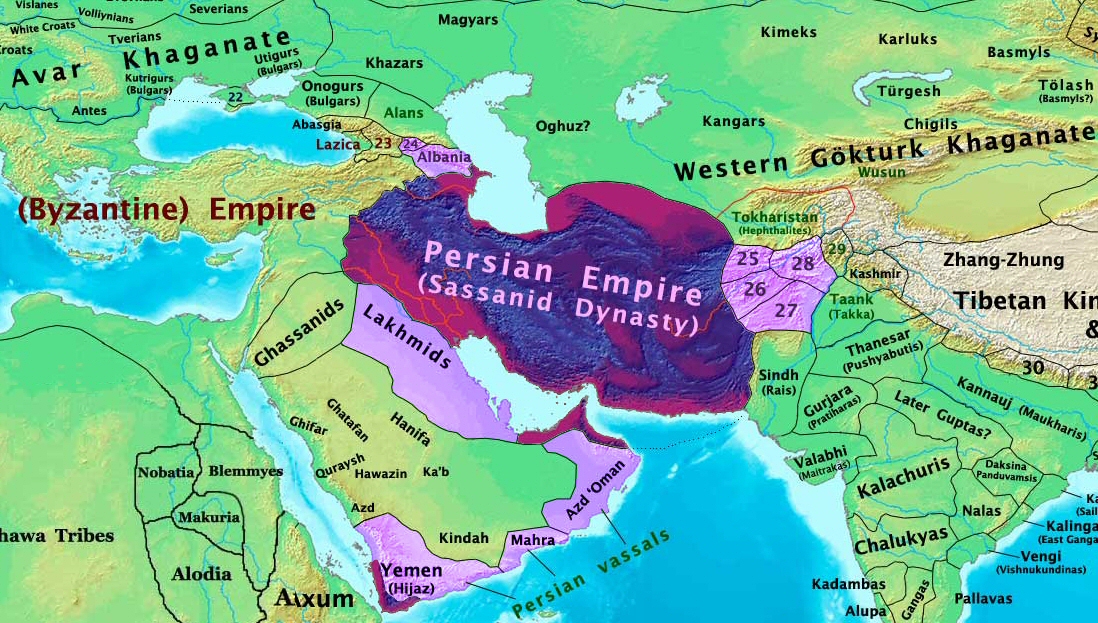
    The Achaemenid Empire was created by nomadic Persians and this empire was spread to Mesopotamia.

    This empire was preceded by Assyrians.

    The Assyrians were preceded by Akkadians.

    Akkadians were influenced and they trace their ancestry to Tamils!

    ‘A Tamil-Brahmi script inscribed on a potsherd, which was found at the Khor Rori area in Oman, has come to light now. The script reads “nantai kiran” and it can be dated to first century CE, that is, 1900 years before the present. The discovery in the ancient city of Sumhuram has opened a new chapter in understanding the maritime trade of the Indian Ocean countries, according to specialists in history…


    1.Lord Rama’s Chapel was found in UR, Iraq.*

    2.A burial ground called as Nagar is fond in Syria. It is called Tel Brak now.

    3.Idols of Rama,Sita and Lakshmana are found.

    4.Ancestors of the Syrians were the Halaf and Ubaid.

    They date back to 6100 BC.

    They had connection with the Tamils and this is reflected in the ruins of  Nagar.*

    These people traded with the Tamils.

    ”Naram-Sin traded with Meluhha (almost certainly corresponding to the Indus Valley civilization), and controlled a large portion of land along the Persian Gulf. He expanded his empire by defeating the King of Magan at the southern end of the Persian Gulf, and conquering the hill tribes to the north in the Taurus Mountains.

    Tamil city 2200 BC Sumeria.

    A Tamil King ,Sibi,ruled from the NWFP where he had his second capital.

    And Lord Rama was engaged in a battle with the Atlantis people in Seven River Valley,currently in Pakistan.

    The Uighur people must beyond what Persia was ,were in close contact with thecRama Empire.

    Sumerian civilization had Rama connection and Sumerian Kings List has Rama,Dasaratha and Bharatha.

    The Yazdi people of Turkey were called the Peacock Tribe of Lord Murugan.

    I shall be writing on Sassanian,Parthian and Scythian connection to Persia and Bharathavarsha, cross referencing with Gandhara Kingdom,Vedic tribes dispersal.

    References and Citations.

    https://en.m.wikipedia.org/wiki/Achaemenid_Empire

    https://en.m.wikipedia.org/wiki/Assyria


  • Upanayana, Navjote For Zoroastrians Zend Avesta Veda Connection

    Iran was  apart of Hindu Empire during the Vedic Period.

    This continued to be so till Vikramaditya’s period.

    The Faravahar, believed to be a depiction of a fravashi. image.png
    The Faravahar, believed to be a depiction of a fravashi

    The customs and cultural behaviour of the Zoroastrians  indicate the Vedic roots of Zoroastrianism.

    A treaty signed by the Hittites and Mitannis dating to the fourteenth century BC calls upon Indara/Indra, Mitras(il)/Mitra, Nasatianna/Nasatya and Uruvanass(il)/Varuna, all known to Rig-Veda and Avesta.

    Hittites and Mitannis were from North Syria.

    I had posted articles about the Vedic /Tamil origin of these people.

    Though there are similarities  the roles of the Devas seem to have been reversed.

    (haoma (soma), daha(dasa), hepta (sapta), hindu (sindhu), and Ahura (Asura) in Avesta)

    Indra and the devas  are demonic in Avesta,and Ahura/asura is considered the highest deity.

    “At the time of composition of the Vedas, Varuna was losing his importance to Indra. In Avesta, Ahura Mazda  is the main divinity and some people think that he is thesame as Varuna. Varuna sat with his spies who flew all around the world and bought back reports on the conduct of mortals. He abhorred sin and loathed evil deeds prompted by anger, drink and gambling.”

    Probably a sect left on this issue and had a role in this difference.

    Rig Veda is dated around 5000 BC while Avesta is dated around 1000 BC.

    The Chief God worshiped in the Vedas is Agni,Fire.

    Zoroastrians are Fire worshipers.

    Another important connection is Upanayana ceremony which is the primary duty of a Hindu.

    Zoroastrians have a similar Ceremony  ‘Navjote’

    ‘The Navjote[pronunciation?] (Persian: سدره‌پوشی, Sedreh pushi‎) ceremony is the ritual through which an individual is inducted into theZoroastrian religion and begins to wear the Sedreh and Kushti. The term navjote is used primarily by the Zoroastrians of India (theParsis), while sedreh pushi is used primarily by the Zoroastrians of Iran. Zoroastrians from Pakistan consisting of both Parsis andIranis use both terms…

    Although there is no upper limit to the age of the individual for which the ceremony takes place, in common practice it occurs before a girl or boy reaches maturity. Under no circumstances is it permitted to be done for a child less than seven years of age since the child at that age range cannot comprehend the significance of the event.

    In Vendidad 18.54, individuals above the age of 15 (once considered the age at which one attained adulthood) who are not yet been invested are said to be likely to fall into evil ways. In the 9th-12th century texts of Zoroastrian tradition, the same group are said to bekushad davarashni, literally “running about improperly clothed”. So for instance Menog-i Khrad 2.35 and the Book of Arda Viraf(25.6.10). The latter considers such a thing to be a service to demons (the daevas). Other texts of tradition that define adulthood as the boundary include the Sad-dar 10.1 and Shayast na-Shayast 10.13. ,.

    The ceremony is traditionally the first time a Zoroastrian wears the sedreh undershirt and kushti belt, which they then continue to wear for the rest of their life. The sacred clothing signifies parental responsibility as well as responsibility for the one who is undergoing this ceremony. When the child wears the sacred clothes, it means the parents are now obligated to morally and religiously educate the child. If the child commits a wrongful act, it is their responsibility, as they may also take some pride in themselves when their child commits a righteous act. The sacred thread and shirt also teach the child responsibility, as they are to be untied before certain practices, such as prayer, bathing, and before meals, and re-tied shortly after the task is completed.

    The shirt has a construction extremely specific to this culture.

    Upanayana of Hinduism.

    Upanayana is an important Samskara, duty of a Hindu.

    The three Varnas, Brahmana, Kshatriya and Vaisya must have this performed.

    Read my posts on Samskaras.

    The wearing of the sacred thread opens the inner eye.

    One becomes a Dwija, born for the second time.

    The Upaveeda must remain clean.

    It has to be changed periodically.

    It is also changed for special occasions like Marriages,Homas,Poojas,Apara Kriyas.(https://ramanisblog.in/2014/10/17/yagnopaveeda-dharana-mantra-poonal/)

    Zoroastrianism.

    Zoroastrianism was founded by the Prophet Zoroaster (or Zarathustra) in ancient Iran. The precise date of the founding of Zoroastrianism is uncertain. An approximate date of 1500–1200 BCE has been established through archaeological evidence and linguistic comparisons with the Hindu text Rig Veda. However there is no way of knowing exactly when Zoroaster lived, as he lived in what, to his people, were prehistoric times. Depending on different approaches, it is thought that he lived some time between 1700 BCE to 500 BCE .Zoroaster was born in either Northeast Iran or Southwest Afghanistan. He was born into a Bronze Age culture with a polytheistic religion, which included animal sacrifice and the ritual use of intoxicants. This religion was quite similar to the early forms of Hinduism in India. The name Zoroaster is a Greek rendering of the nameZarathustra. He is known as Zartosht and Zardosht in Persian and Zaratosht in Gujarati. Zoroaster’s birth and early life are little documented. What is known is recorded in theGathas—the core of the Avesta, which contains hymns thought to be composed by Zoroaster himself. Born into the Spitama clan, he worked as a priest. He had a wife, three sons, and three daughters. Zoroaster rejected the religion of the Bronze Age Iranians, with their many gods and oppressive class structure, in which the Karvis and Karapans(princes and priests) controlled the ordinary people. He also opposed animal sacrifices and the use of the hallucinogenic Haoma plant (possibly a species of ephedra) in rituals, but held the rooster as a “symbol of light”and associated the cock with “good against evil” because of his heraldic actions..

    * Cock is associted with Sunbrahmanya.

    According to Zoroastrian belief, when Zoroaster was 30 years old, he went into the Daiti river to draw water for a Haoma ceremony; when he emerged, he received a vision ofVohu Manah. After this, Vohu Manah took him to the other six Amesha Spentas, where he received the completion of his vision.[51] This vision radically transformed his view of the world, and he tried to teach this view to others. Zoroaster believed in one creator God, teaching that only one God was worthy of worship. Furthermore, some of the deities of the old religion, the Daevas (Devas in Sanskrit), appeared to delight in war and strife. Zoroaster said that these were evil spirits and were workers of Angra Mainyu, God’s adversary.

    Zoroaster’s ideas did not take off quickly, and, at first, he only had one convert: his cousin Maidhyoimanha.The local religious authorities opposed his ideas. They felt their own faiths, power, and particularly their rituals, were threatened because Zoroaster taught against over-ritualising religious ceremonies. Many ordinary people did not like Zoroaster’s downgrading of the Daevas to evil spirits. After 12 years, Zoroaster left his home to find somewhere more open to new ideas. He found such a place in the country of King Vishtaspa (in Bactria). The King and his queen, Hutosa, heard Zoroaster debating with the religious leaders of his land, and decided to accept Zoroaster’s ideas and make them the official religion of their kingdom. Zoroaster died in his late 70s. Very little is known of the time between Zoroaster and the Achaemenian period, except that, during this period, Zoroastrianism spread to Western Iran. By the time of the founding of the Achaemenid Empire, Zoroastrianism was already a well-established religion.

    Humata, Hukhta, Huvarshta (Good Thoughts, Good Words, Good Deeds) are the basic tenets of the religion.

    Faravahar (or Ferohar), one of the primary symbols of Zoroastrianism, believed to be the depiction of aFravashi (guardian spirit)

    In Zoroastrianism, Ahura Mazda is the beginning and the end, the creator of everything that can and cannot be seen, the Eternal, the Pure and the only Truth. In the Gathas, the most sacred texts of Zoroastrianism thought to have been composed by Zoroaster himself, the prophet acknowledged devotion to no other divinity besides Ahura Mazda.

    Daena (din in modern Persian) is the eternal Law, whose order was revealed to humanity through the Mathra-Spenta (“Holy Words”).Daena has been used to mean religion, faith, law, and even as a translation for the Hindu and Buddhist term Dharma. The latter is often interpreted as “duty” but can also mean social order, right conduct, or virtue. The metaphor of the “path” of Daena is represented in Zoroastrianism by the muslin undershirt Sudra, the “Good/Holy Path”, and the 72-thread Kushti girdle, the “Pathfinder”.

    Daena should not be confused with the fundamental principle asha (Vedic rta), the equitable law of the universe, which governed the life of the ancient Indo-Iranians. For these, asha was the course of everything observable—the motion of the planets and astral bodies; the progression of the seasons; and the pattern of daily nomadic herdsman life, governed by regular metronomic events such as sunrise and sunset. All physical creation (geti) was thus determined to run according to a master plan—inherent to Ahura Mazda—and violations of the order (druj) were violations against creation, and thus violations against Ahura Mazda. This concept of asha versus the druj should not be confused with the good-versus-evil battle evident in western religions, for although both forms of opposition express moral conflict, the asha versus druj concept is more systemic and less personal, representing, for instance, chaos (that opposes order); or “uncreation”, evident as natural decay (that opposes creation); or more simply “the lie” (that opposes truth and righteousness). Moreover, in his role as the one uncreated creator of all, Ahura Mazda is not the creator of druj, which is “nothing”, anti-creation, and thus (likewise) uncreated. Thus, in Zoroaster’s revelation, Ahura Mazda was perceived to be the creator of only the good (Yasna 31.4), the “supreme benevolent providence” (Yasna 43.11), that will ultimately triumph (Yasna 48.1).

    A Parsi Wedding, 1905

    In this schema of asha versus druj, mortal beings (both humans and animals) play a critical role, for they too are created. Here, in their lives, they are active participants in the conflict, and it is their duty to defend order, which would decay without counteraction. Throughout the Gathas, Zoroaster emphasizes deeds and actions, and accordingly asceticism is frowned upon in Zoroastrianism. In later Zoroastrianism, this was explained as fleeing from the experiences of life, which was the very purpose that the urvan (most commonly translated as the “soul”) was sent into the mortal world to collect. The avoidance of any aspect of life, which includes the avoidance of the pleasures of life, is a shirking of the responsibility and duty to oneself, one’s urvan, and one’s family and social obligations.

    Central to Zoroastrianism is the emphasis on moral choice, to choose the responsibility and duty for which one is in the mortal world, or to give up this duty and so facilitate the work of druj. Similarly, predestination is rejected in Zoroastrian teaching. Humans bear responsibility for all situations they are in, and in the way they act toward one another. Reward, punishment, happiness, and grief all depend on how individuals live their lives.

    Reference.

    References: Early India by Romila Thapar, The Wonder That Was India by A. L. Basham. See Also: Avestan and Vedic

    http://en.wikipedia.org/wiki/Navjote

    Zoroastrianism Wiki.

  • Vedas Rama Vayu In Zend Avesta Iran

    Similarities between Vedic literature, Hinduism and Cuture were noted by  Sir William Jones in 1786.

    Lord ama.jpg
    Lord Rama.

    A treaty signed by the Hittites and Mitannis dating to the fourteenth century BC calls upon Indara/Indra, Mitras(il)/Mitra, Nasatianna/Nasatya and Uruvanass(il)/Varuna, all known to Rig-Veda and Avesta.

    There were similarities in rituals too. In India, upanayana is a ritual by which a boy becomes a full member of his class. Zoroastrians have a similar ceremony called Navjot which is still practiced by Parsis. The Rig-Veda refers to the drink soma which was drunk at sacrifices and  which caused invigorating effects. The Avesta gives physical descriptions of the plant haoma which causes similar effects, though the plant identified as haoma by modern Parsis is a bitter herb which does not get your drunk, but just bitter.

    Even though there are similar words like haoma (soma), daha(dasa), hepta (sapta), hindu (sindhu), and Ahura (Asura) in Avesta and Rig-Veda, there are reversals in religious concepts and attributes of Gods. Indra and the devas  are demonic in Avesta,and Ahura/asura is considered the highest deity.

    At the time of composition of the Vedas, Varuna was losing his importance to Indra. In Avesta, Ahura Mazda  is the main divinity and some people think that he is thesame as Varuna. Varuna sat with his spies who flew all around the world and bought back reports on the conduct of mortals. He abhorred sin and loathed evil deeds prompted by anger, drink and gambling.”

    1) Rama and Vayu are venerated in the Avesta.

      2) Bharata was the Elamite king Warad-Sin.

      3) Lakša of PF 69 is a namesake of Lakshmana.

      4) King Shutruk-Nahhunte echoes Shatrughna.

      5) Dandakran (PF 666) was the true Dandakaranya.

      6) Arya-Ram-ana was an early ancestor of Darius-I
      7) Ramannuya (PF1855) was close to Darius-I.  

      8) The Ram Bazrang were a Kurdish tribe of Fars.

      9) The Sasanid ancestor Ram-Behist was a Bazrangi

     10) Many Sasanian city-names had the prefix ‘Rama‘.

     11) Ramakanam is a place-name in PF 1831.

    The study of the Persepolis tablets has yielded much information about important figures like Darius and Parnaka yet crucial data remains unknown due to improper prognosis. Even a meticulous scholar like Hallock failed to note the echo of Rama in the name Ramanuya. The name of the Mitannian king Tushratta echoes Dasharatha, Rama’s father. Chedor La’omer of Genesis 14 corresponds to Kudur Laghumar of the Babylonian texts and Raghupati was Rama’s name.

          Rama’s presence in the Indus-Saraswati area is unattested although the frequent symbol of the bow-man in the seals may, in fact, stand for Rama. Post-Islamic Iran also ignores him although his name may be hidden in the many Ram-names like Ramadan, Ram-allah etc.

          Fortunately, the Sumerian texts provide priceless data about Rama. The Sumerian king-lists show that Rama was the same as Ram-Sin of Larsa (~18th cent. B.C.) who ruledSumer, Elam, and Indus Saraswati. Although Ram-Sin was deified and his memorial has been found at Ur, his relics are unknown from Elam, said to be his homeland. Rim-Sin (also called Ram-Sin) was the longest ruling monarch (60 years) of Sumer. Ram-Sin’s reign is termed the golden era of Sumer by the great Assyriologist C. J. Gadd. Ram-Sin is called anElamite in the Sumerian texts.’

    Romilla Thapar obseves,

    ” Indo-European speakers had central Asia as their habitat and gradually over many centuries they branched out in search of fresh pastures. According to her, it is these central Asian migrants who wrote the  Avesta in Iran and Rig-Veda in India. According to Thapar there is an argument that people who migrated to India were dissidents of the Old Iranian, hence you find a significant reversal of meaning in concepts common to both Avesta and Rig-Veda.”

    My study indicates, as I have indicated in many articles, that Lord Rama’s ancestor Satyavrata Manu migrated from the South of India with his sons to Ayodhya to found Ikshvaku Kingdom, Ikshvaku is the son of Manu, because of a Tsunami.

    Shiva and His son Ganesha left ,traveled through the middle east,what is now Europe, Africa,Americas,to Arctic and the Rig Veda was composed there.

    Then a group left the Arctic and traveled through Russia ,Caucasus, Iran  before entering India through the Khyber Pass, which was being mistakenly dubbed as ‘Aryan invasion’

    They settled in the Sarasvati valley.

    This would account for the Tamil scripts being found in the Sarasvati valley and Harappa.

    During their travels, they left a cultural trial behind in all the lands they left.

    I have posted articles on all this,under Hinduism.

    “Vâyu in the Rig Veda is praised as follows:
    – Come hither, O Vâyu, though beautiful one!
    These somas are ready, drink
    Of them, honour our call!
    – O Vâyu, the prayers celebrate thee with hymns,
    they who know the
    Feast-days, and have prepared the Soma.
    – O Vâyu, they satisfying stream goes to the
    worshipper, wide-reaching, to the Soma – draught.
    – O Indra and Vâyu these (libations of Soma)
    are poured out, come hither for the sake of our offering,
    for the drops (of Soma) long for you.
    – O Indra and Vâyu, Vâyu perceive the libations.
    You, who are rich in booty, come them quickly
    hither.
    – O Vâyu and Indra come near to the work of
    the sacrificer, quick, thus is my prayer, O ye men!
    (Vedic Hymns.1994. I.2)
    And in another hymn at Rig Veda:
    – O Vâyu, may the quick races bring thee towards
    the offering, to the early drink here, to the
    early drink of Soma! May “Sûnritâ” (the Dawn)
    stand erect, approving thy mind! Come near on thy
    harnessed chariot to share. O Vâyu to share in the
    sacrifice!
    (Vedic Hymns.1994.I.134. 2-6)

    Vayu in Zend Avesta.

    “Vâyu in the Iran has a great as well as enigmatic
    personification, who, Ahuramzda as well as Ahriman
    creations sacrifice for him.
    Ahuramazda offers a sacrifice for him that he
    able to destroy of the Ahriman creations and protect
    the good Creations:
    “To him did the maker Ahuramazda. Offer
    up a sacrifice in the Airyana Vaegeh2
    , on a golden
    throne, under golden beams and golden canopy,
    with bundles of baresma and offerings of full boiling
    [milk]”.( The Zend Avesta, 2000, Part II, p.250)
    He begged of him a boon, saying:
    “Grant me this, O Vayu who do work highly,
    that I may smite the creation of Angra mainyu, and
    that nobody may smite this creation of,the God
    Spirit!”
    “Vayu who works highly, granted him that
    boon, as the Maker Ahuramazda, did pursue it”.
    “We sacrifice to the holy Vayu; we sacrifice
    to the Vayu who works highly”.(The Zend Avesta.2000.Part
    II, p.250)
    And Azi-Dahaka (one of the Ahrimans creations)
    also offer a sacrifice which he destroy all the
    men, but Vayu did not grant him”
    “The three mouthed Azi-Dahaka offer up a
    sacrifice and he begged of him a boon, saying:
    “Grant me this, O Vayu! Who do work highly,
    that I may make all the seven country of the earth
    empty on men”

    Citation.

    Vayu in Vedas and Zend Avesta pdf download

    Rama by Ranajitpal