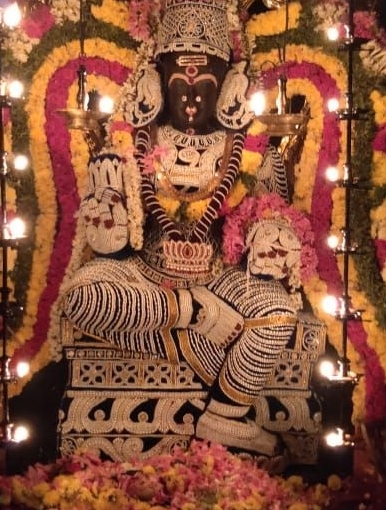
Following in the Ai Generated transcript of the Navavarana Pooja Mantras . Recorded and sent to my Shishyas. This is being made public so that this secret knowledge is not lost to posterity.
Those who want to be initiated may contact me through mail at ramanan50@gmail.com.
Also they can contact through the comment column.
If Her directions are received, the Sri Vidya Aksharas will be initiated.Those with Panchadasakshari only can perform Navavarana Pooja.
Anushtanad are to be observed.
Achyuthaya namaha Ananthaaya namaharivikrama …..Achamana Mantras are to be reccited for Vasudeva. This is to be said as you do in Sandhya Vandana.
Then you have to add following namas to the aforesaid Achamana Mantras.They are,
Om Upendrayai Namaha – keep the right hand on the head, Then Hare on the right shoulder.
Sri Krishna then again to the left shoulder.
Next process is Tattva Achamaniya Now you have take a Utharani theertha. You have it in the hollow of your your right palm.. Achamana Teertha is to taken after recitation of the mantra.
These three sounds are to be recited.
Om Ayam Hreem Shreem Aim Ka Ye Yee Le Hreem Atma Tattvam Shodayami Swaha Then Om Ayam Hreem Shreem Kleem Ha Sa Ka Ha Le Hreem Vidya Tattvam Shodayami Swaha Om Ayam Hreem Shreem Sauh Sagala Sagala Hreem Siva Tattvam Shodayami Swaha Then Om Ayam Hreem Shreem Ayam Ka Ye Yee Le Hreem Kleem Ha Sa Ka Ha Le Hreem Sauh Sa Ka Le Hreem Sarva Tattvam Shodayami Swaha Then Guru Patagaman Patagamitra Then you keep that.
You know Murugimitra. That is a mudra. That is a symbol there which I will tell you in person.
Then you have to remember their Guru. Paramaguru. Your Guru.
Then Your Guru. Paramaguru. Then Paramesthu Guru.
In our Pathadhi, Paramaguru is Jogulamba Saraswati. Paramaguru is Siva. Paramesthu Guru is Swayam Lalitha Tripurasundari Devi .
In between, we have the other Gurus and these will be informed to you in detail in person. The orders of the other Gurus in between are to be maintained and followed in Navavarna Pooja.
They start from Guru your Parameshti Guru – Lalitha Devi, then Paramaguru is Shiva, then after Shiva you have we have Guru as Dattatreya, after Dattatreya you have Parashurama, after Parashurama Hayagriva, after Hayagriva we have then , Lopamudra, then Agastya, after Agastya we have Bhaskararaya, then after Bhaskararaya then will be your present Guru, I mean who is transferring this knowledge to you. Now for this Loka, this Parambarya you have to remember, this is for our system, now you have to remember the Paramaguru, your immediate Guru, Paramaguru Shiva and Lalitha Swayam, Lalitha Mahatriprasundari are the Parameshti Guru. Now this is the Loka we have to With this I conclude this first portion of this Prathama Kanda, then I will be sending you the second portion of this Patuka Prathama Kanda in the next recording..
Removal of Evil eye, Protection from forces that hinder Spiritual development.
Protection from Black magic,Animals.
Increases self confidence and self assurance.
Clarity of thought..
Above all,Mukthi and Gnana are facilitated.
Date of Rig veda in Ramanisblog According to Ramanisblog, the date of the Rig Veda is subject to considerable debate, with modern scholarly estimates generally ranging between 2000 BCE to 1000 BCE[1]. However, Ramanisblog highlights that Hindu tradition considers the Vedas to be timeless and without a specific beginning[1]. Perspectives on Rig Veda Dating Ramanisblog… Read more: Rig Veda Inflenced Civilizations Outside India
Following in the Ai Generated transcript of the Navavarana Pooja Mantras . Recorded and sent to my Shishyas. This is being made public so that this secret knowledge is not lost to posterity. Those who want to be initiated may contact me through mail at ramanan50@gmail.com. Also they can contact through the comment column. If… Read more: Navavarana Pooja 1 Guru Stuthi
Nithya Devathas in Sri Vidya Nithya Devathas, often revered within the Sri Vidya tradition, embody various divine forms that are essential for spiritual growth and understanding. The concept of Nithya Devathas emphasizes the importance of worshipping these deities to achieve higher levels of consciousness and fulfillment. Importance of Nithya Devathas Nithya Devathas in Practice Conclusion… Read more: Exploring Nithya Devathas in Sri Vidya
1 வது ஆவரணத்தின் 3 வரிகள் மற்றும் பல்வேறு தெய்வங்களின் நிலை
பூபுரா என்று அழைக்கப்படும் வெளிப்புற 3 வரிகள் ஸ்ரீ யந்திரத்தின் முதல் ஆவாரணத்தை உருவாக்குகின்றன. இது திரிலோக்ய மோகன சக்ரா என்று அழைக்கப்படுகிறது, மேலும் அதன் உள் ரகசியங்களை அறிந்து வணங்குபவர் 3 உலகங்களையும் மயக்க முடியும். இது பிரகத யோகினி என்ற யோகினி தேவியால் ஆளப்படுகிறது. இதன் தெய்வம் திரிபுரா. இந்த ஆவரணத்தின் பீஜா ஆம் ஆம் சௌஹ் ஆகும். மாணிக்கம் புஷ்பாஸ் ஆகும். நேரம் 24 நிமிடங்கள் (360 சுவாசங்கள்). காட்டப்பட வேண்டிய முத்திரை க்ஷோப முத்ரா ஆகும்.
முதல் வரி: வெளிக் கோடு (3 வரிகளில்) சித்தி தேவிகள் என்று அழைக்கப்படும் 10 தேவிகளைக் கொண்டுள்ளது. அவர்களுடைய பிரகாசம் உருகிய பொன்னைப் போன்றதாகும்; அவர்கள் தங்கள் வலது கைகளில் மணியையும், இடது கைகளில் கயிற்றையும் பிடித்துக் கொள்கிறார்கள். அவை மிகவும் மங்களகரமானவை மற்றும் வணங்குபவருக்கு இரத்தினக்கற்கள் மற்றும் ஆபரணங்களின் குவியல்களை வழங்குகின்றன. கீழே உள்ள படத்தில் காட்டப்பட்டுள்ளபடி அவை வைக்கப்படுகின்றன. அவையாவன:
The 3 lines of the 1st Avarana & the position of the various deities.
2 வது வரி: 2 வது அல்லது நடு வரி எட்டு மாத்ருகா தேவிகளைக் கொண்டுள்ளது. அவர்கள் அனைத்து ஆபரணங்களிலும் அலங்கரிக்கப்பட்டுள்ளனர். அவர்கள் தங்கள் கைகளில் வித்யா (புத்தகம்), திரிசூலம், சக்தி, சக்ரா (வட்டு), கிளப், தண்டர்போல்ட், பேட்டன் & லோட்டஸ் ஆகியவற்றை வைத்திருக்கிறார்கள். அவர்கள் வணக்கத்திற்குரியவருக்கு விரும்பியதையெல்லாம் கொடுக்கிறார்கள்.
எம் 1-ஸ்ரீ பிராமி மாத்ருகா எம் 2-ஸ்ரீ மகேஸ்வரி மாத்ருகா எம் 3-ஸ்ரீ கௌமாரி மாத்ருகா M4-ஸ்ரீ விஷ்ணுவி மாத்ருகா எம்5-ஸ்ரீ வாராஹி மாத்ருகா எம் 6-ஸ்ரீ மஹேந்திரி மாத்ருகா எம் 7-ஸ்ரீ சாமுண்டா மாத்ருகா
M8-ஸ்ரீ மகாலக்ஷ்மி மாத்ருகா
3-வது வரி: மூன்றாவது வரியில் 10 முத்ரா சக்திகள் உள்ளன. அவை சிவப்பு நிறத்தில் உள்ளன, மேலும் பல்வேறு முத்திரைகளை ஆட்சி செய்கின்றன, மேலும் வணக்கத்திற்குரியவருக்கு ஆன்மீக வரங்களை வழங்குகின்றன..
1-சர்வசங்க்ஷோபினி தேவி
2-சர்வவித்ராவினி தேவி
3-சர்வகர்ஷினி தேவி
4-சர்வசங்கரி தேவி
5-சர்வோன்மதினி தேவி
6-ஸர்வமஹங்குஷ தேவி
7-சர்வகேச்சாரி தேவி
8-சர்வபீஜ தேவி
9-சர்வயோனி தேவி…
10-சர்வத்ரிகாந்த தேவி
The Nava Avaranas (Nine Corridors) of the Sri Yantra.
2 வது ஆவரணம்: சர்வாஷ் பரிபூரக சக்ரா என்று அழைக்கப்படும் 16 இதழ்கள் வட்டம் அனைத்து ஆசைகளையும் நிறைவேற்றுபவர் என்று பொருள்.
16 யோகினிகளும் சமஸ்கிருத மொழியின் 16 உயிரெழுத்துக்களைக் குறிக்கின்றனர், மேலும் 16 உயிரெழுத்துக்களை தங்கள் பீஜ மந்திரங்களாகக் கொண்டு வணங்கப்படுகிறார்கள்.
இந்த ஆவரணத்தின் மாணிக்கம் சபையர் ஆகும். தாது என்பது கைல் (உயிரியல் தீயினால் உணவு சிதைவடைவதன் முதல் தயாரிப்பு) ஆகும். நேரம் மூன்று மணி நேரம் (2700 மூச்சு). பீஜா மந்திரம் ஐம் க்லிம் சௌஹ் ஆகும். இந்த ஆவரணத்தின் முத்திரை திரவினி முத்திரை ஆகும்.வரிசையில் உள்ள 16 தேவிகள் பின்வருமாறு.
. காமகர்ஷினி சக்தி
புத்யகர்ஷினி சக்தி
அஹங்கரகர்ஷினி சக்தி
சப்தகர்ஷினி சக்தி
ஸ்பர்ஷகர்ஷினி சக்தி
ரூபகர்ஷினி சக்தி
ரசகர்ஷினி சக்தி
காந்தகர்ஷினி சக்தி
சித்தகர்ஷினி சக்தி
த்யர்யகர்ஷினி சக்தி
ஸ்ம்ருத்யகர்ஷினி சக்தி
நமகர்ஷினி சக்தி
பீஜகர்ஷினி சக்தி
ஆத்மகர்ஷினி சக்தி
அம்ருதகர்ஷினி சக்தி
ஷரீரகர்ஷினி சக்தி.
3 வது ஆவரணம்: சர்வ சங்கோபன சக்ரா எனப்படும் 8 இதழ் வட்டம் ஆகும். இந்த ஆவரணத்தில் லலிதாவின் முதன்மையான வடிவம் திரிபுர சுந்தரி ஆகும். யோகினி என்பது குப்ததர யோகினி. அவள் ஒரு காதல் போதை நிலையில் ஆடிக் கொண்டிருக்கிறாள், அவளுடைய கண்கள் ஆனந்தத்தால் நிறைந்துள்ளன. அவள் பேரார்வத்துடன் புன்னகைக்கிறாள், முத்ராக்கள் பயங்களைப் போக்குவதையும் வரங்களை வழங்குவதையும் காட்டுகிறது.
எட்டு இதழ்களில் ஒவ்வொன்றிலும் உள்ள எட்டு தேவிகள் பந்துகா மலர்களின் நிறத்தைக் கொண்டுள்ளனர். அவர்கள் கயிறு, கோது, நீலத் தாமரை ஆகியவற்றைப் பிடித்துக் கொண்டு பயத்தைப் போக்குகிறார்கள். அவை பேச்சு, வைத்திருத்தல், நடப்பது, வெளியேற்றுவது, இன்பம், கைவிடுதல், செறிவு மற்றும் பற்றற்ற தன்மை ஆகியவற்றைக் குறிக்கின்றன. அவர்கள் எட்டு கா வகுப்பு எழுத்துக்களை தங்கள் பீஜாக்களாக வைத்திருக்கிறார்கள்.இந்த ஆவரணத்தின் பீஜ மந்திரம் ஹ்ரீம் க்லிம் சௌஹ் ஆகும். மாணிக்கம் பூனையின் கண். தாது என்பது மாம்சம். நேரம் இரவும் பகலும் (21600 சுவாசம்).
இந்த ஆவரணத்தின் முத்திரை ஆகர்ஷண முத்திரை ஆகும்.
வரிசையில் உள்ள 8 தேவிகள் பின்வருமாறு:
அனங்க குசும சக்தி
அனங்க மேகலா சக்தி
அனங்க மதன சக்தி
அனங்க மதனதுர சக்தி
அனங்க ரேகா சக்தி
அனங்க வேகினி சக்தி
அனங்கங்குஷ சக்தி
அனங்க மாலினி ஷக்த்.
ஶ்ரீ சக்ரம்.
4 வது ஆவரணம்: 14 முக்கோணங்களைக் கொண்ட இந்த ஆவரணா (படத்தில் வெளி நீல முக்கோணங்கள்) மனித உடலில் உள்ள 14 உலகங்களையும் 14 முக்கிய நாடிகளையும் குறிக்கிறது. இது சர்வ சௌபாக்ய தயாக் சக்ரா என்று அழைக்கப்படுகிறது. தேவியின் தலைமை வடிவம் திரிபுர வாசினி ஆகும். அவள் சிவப்பு மற்றும் மிகவும் அழகாக இருக்கிறாள். முக்கோணங்களின் பதினான்கு தேவிகள் கர்வம் கொண்டவர்கள், தேவையில்லாதவர்கள், இளமையானவர்கள், கோச்சினியல் நிறம் கொண்டவர்கள், ரத்தினங்களால் அலங்கரிக்கப்பட்டவர்கள், கயிறு, மணி, கண்ணாடி, அமிர்தம் நிறைந்த ஒயின் கப் என்று விவரிக்கப்படுகிறார்கள். அவர்கள் சம்ப்ரதாய யோகினிகள் என்று அழைக்கப்படுகிறார்கள்.
இந்த ஆவரணத்தின் பீஜ மந்திரம் ஹைம் ஹ்க்லிம் ஹ்ஸாஹ் ஆகும். மாணிக்கம் பவளம் ஆகும். தாது என்பது இரத்தம். நேரம் வார நாள் .இந்த ஆவரணத்தின் முத்திரை வஸ்ய முத்திரை ஆகும்.
14 தேவிகள்
1.சர்வஸ்ம்ஷோபினி தேவி
2.சர்வவித்ராவினி தேவி
3.சர்வகர்ஷினி தேவி
4.சர்வஹ்லதினி தேவி
5.சர்வஸம்மோகினி தேவி
6.சர்வஸ்தம்பினி தேவி
7.ஸர்வஜ்ரும்பினி தேவி
8.சர்வவசங்கரி தேவி
9.சர்வரஞ்சனி தேவி
10.சர்வோன்மதினி தேவி
11.ஸர்வர்தசாதிக தேவி
12.சர்வசம்பட்டிபுராணி தேவி
13.சர்வமந்திரமயி தேவி
14.ஸர்வத்வந்த்வக்ஷயங்கரி தேவி.
5 வது ஆவரணம்: 10 முக்கோணங்களைக் கொண்ட இந்த ஆவாரணம் (படத்தில் உள்ள சிவப்பு முக்கோணங்கள்) சர்வார்த் சதக சக்ரா என்று அழைக்கப்படுகிறது. இது பஹீர்தாசரம் எனச் சொந்தமானது. லலிதாவின் தலைமை அம்சம் திரிபுரஸ்ரீ ஆகும். அவள் கயிறு மணி, ஒரு மண்டை ஓடு பிடித்து பயத்தை அகற்றுகிறாள். அவள் குங்குமப் பிரகாசம் கொண்டவள். யோகினிகள் குலோத்தேர்ண யோகினிகள் என்றும் குல யோகினிகள் என்றும் அழைக்கப்படுகின்றனர். அவை ஜபகுசும மலர்களின் பளபளப்பைக் கொண்டுள்ளன, மேலும் அவை பளபளக்கும் ரத்தினங்கள் மற்றும் ஜவ்வால்களால் அலங்கரிக்கப்பட்டுள்ளன. அவர்கள் கயிறுகளையும் கோடங்களையும் பிடித்துக்கொண்டு, ஞானத்தின் சைகைகளைக் காட்டி, வரங்களைத் தருகிறார்கள். அவை தசாவதாரங்களையும் 10 உயிர்த் தீகளையும் குறிக்கின்றன.
இந்த ஆவரணத்தின் பீஜா ஹ்ஸ்ஹௌம், ஹ்லீஸ்க்லூம், ஹ்ஸ்ஸௌஹ் ஆகும். ரத்தினமே முத்து. தாது என்பது ஓவா /விந்து ஆகும். நேரம் சந்திர நாள் (திதி).
இந்த ஆவரணத்தின் முத்திரை உன்மத முத்திரை.10 தேவிகள் பின்வருமாறு:
1.ஸர்வ சித்திப்ரதா தேவி
2.ஸர்வஸம்பத்ப்ரத தேவி
3.சர்வப்ரியன்காரி தேவி
4.ஸர்வமங்களகாரிணி தேவி
5.ஸர்வகமப்ரத தேவி
6.சர்வதுகவிமோச்சினி தேவி
7.ஸர்வம்ருத்யுப்ரஸமணி தேவி
8.ஸர்வவிக்ஞனிவாரினி தேவி
9.சர்வாங்கசுந்தரி தேவி
10.ஸர்வஸூபாக்யதாயினி தேவி
6 வது ஆவரணம்: இந்த உள் 10 முக்கோண சக்கரம் (படத்தில் சிவப்பு நிறத்தில் காட்டப்பட்டுள்ளது) சர்வ ரக்ஷகர சக்ரா என்றும், அந்தர்தாசர்தம் என்றும் அழைக்கப்படுகிறது. லலிதாவின் தலைமை அம்சம் திரிபுர மாலினி. அவள் கயிறு மற்றும் கோதையைப் பிடித்திருக்கிறாள், பயத்தை நீக்குகிறாள், ஒரு மண்டையோட்டைப் பிடித்திருக்கிறாள். அவள் குங்குமப் பிரகாசம் கொண்டவள். யோகினிகள் நிகர்ப யோகினிகள் என்று அழைக்கப்படுகிறார்கள். அவை 1000 உதய சூரியன்களின் நிறம், முத்துக்களாலும் ரத்தினங்களாலும் அலங்கரிக்கப்பட்டும், கயிறு, உளியைப் பிடித்துக் கொண்டும், ஞானத்தின் சைகைகளைக் காண்பித்தும், வரங்களைத் தருபவையாகவும் உள்ளன. அவர்கள் 10 உயிர்த் தீகளின் சக்திகளாவர்.
இந்த ஆவரணத்தின் பீஜா ஹ்ரீம் கிளிம் பிளம் ஆகும். ரத்தினமானது மரகதம். தாது என்பது மஜ்ஜை. நேரம் சந்திர பதினைந்து ஆகும்.
ஆவரணத்தின் முத்திரை மகாங்குஷ முத்ரா ஆகும்.10 தேவிகள் பின்வருமாறு:
8 வது ஆவரணம்: இந்த உள் 8 முக்கோண சக்கரம் (படத்தில் பச்சை நிறத்தில் காட்டப்பட்டுள்ளது) சர்வ சித்திப்ரதா சக்ரா என்று அழைக்கப்படுகிறது. தலைமை தாங்கும் தேவி திரிபுரம்பை ஆவார். இங்குள்ள யோகினி ஆதி-ரஹஸ்ய யோகினி ஆவார். அவரது பீஜமந்திரம் ஹ்ஸ்ரைம் ஹ்ஸ்க்லிம் ஹ்ஸ்ரக்லிம் ஹ்ஸ்ரஸாஹ் ஆகும்.
இவர் சம்பத்பிரத பைரவி என்றும் அழைக்கப்படுகிறார். 1000 சூரியனைப் போல, மூன்று கண்களும், சந்திரனைப் போன்ற முகமும், வெண்மையான ரத்தினங்களால் அலங்கரிக்கப்பட்ட முகமும், அழகான உருவமும், வீங்கிய மார்பகங்களும், போதையும், ஆசையும், இளமையும், கர்வமும், புத்தகத்தை ஏந்தியும், பயத்தைப் போக்கியும், ஜெபமாலையை ஏந்தியும், வரங்களைத் தருபவனாகவும் இருக்கிறாள்.
இங்குள்ள 3 தேவிகள் பின்வருமாறு:
1.காமேஸ்வரி
2.வஜ்ரேஷி.
3.பாகமாலினி.
காமேஸ்வரி ருத்ர சக்தி – பார்வதி. அவள் வெள்ளை நிறத்தில், கற்பூரத்தால் அலங்கரிக்கப்பட்டு, முத்துக்களாலும், படிகங்களாலும், வேறு பல ரத்தினங்களாலும் அலங்கரிக்கப்பட்டு, புத்தகம், ஜெபமாலை, வரங்கள் வழங்குதல், பயத்தைப் போக்குதல் போன்றவற்றோடு இருக்கிறாள்.
வஜ்ரேஷி என்பது விஷ்ணு சக்தி – லக்ஷ்மி. அவள் சிவப்பு குங்குமம் போல் பிரகாசமாக இருக்கிறாள், மலர்கள் மற்றும் இரத்தினங்களால் அலங்கரிக்கப்பட்டிருக்கிறாள், விடியல் சூரியனைப் போல. அவளுடைய கண் இமைகள் நீலக்கல் தூசியால் பூசப்பட்டிருக்கின்றன, அவள் கரும்பைப் பிடித்திருக்கிறாள், மலர்ந்த அம்புகள், வரங்களைத் தருகின்றன, பயத்தைப் போக்குகின்றன.
பாகமாலினி பிரம்ம சக்தி – சரஸ்வதி. உருகிய தங்கத்தைப் போல அவள் பிரகாசிக்கிறாள், விலைமதிப்பற்ற ரத்தினங்களால் அலங்கரிக்கப்பட்டிருக்கிறாள், கயிறு, கயிறு, கோது, மற்றும் ஞானத்தின் சைகைகளைக் காட்டுகிறது மற்றும் வரங்களை வழங்குகிறது.
பீஜா என்பது ஹ்ஸ்ரைம் ஹ்ஸ்ர்க்லிம் ஹ்ஸ்ரௌஹ் ஆகும். மண்டலத்தின் ரத்தினமே கோமாயா ஆகும். தாது என்பது கொழுப்பு. காலம் பருவம் (இரண்டு மாதங்கள்). முத்ரா என்பது பீஜா முத்ரா ஆகும்.
ஒன்பதாவது ஆவரணம்: இந்த ஆவரணன் பிந்து – காமேஸ்வரி மற்றும் காமேஸ்வரராக சிவன் மற்றும் சக்தியின் பிரபஞ்ச ஒன்றியம். இது சர்வானந்தமய சக்ரா என்று அழைக்கப்படுகிறது. ராணிகளின் ராணி ராஜராஜேஸ்வரி, மாட்சிமை தங்கிய லலிதா மகேஷ்வரி மகாத்ரிபுரசுந்தரி ஆகியோர் யோகினி ஆவார்.
பீஜா இஸ் கா இ இ லா ஹ்ரீம். மாணிக்கம் மாணிக்கம் ரூபி. தாது என்பது முடி. நேரம் ஆண்டு. இந்த ஆவரணத்தின் முத்திரை யோனி முத்ரா ஆகும்
கட்கமல விதியின் படி ஸ்ரீசக்ர நவாவரண பூஜை அடுத்த பதிவில்.
இக்கட்டுரையின் ஆங்கில மூலம்.
The 3 lines of the 1st Avarana & the position of the various deities
The outermost 3 lines known as Bhupura form the first Avarana of the Sri Yantra. This is known as the Trilokya Mohana Chakra and the worshiper knowing its inner secrets can mesmerise the 3 worlds. It is ruled by a Yogini Devi called Prakata Yogini. The Deity of this is Tripura. The beeja of this Avarana is Am Aam Sauh. The gem is topaz. The time is 24 minutes (360 breaths).The mudra to be shown is Kshobha Mudra.
The 1st line: The Outer line (of the 3 lines) has 10 Devis known as Siddhi Devis. Their luster is like that of molten gold, they hold the goad in their right hands and the noose in their left hands. They are very auspicious and bestow heaps of gems and jewels to the worshiper. They are placed as shown in the above picture. They are:
The 2nd line: The 2nd or Middle line has eight Matruka Devis. They are bedecked in all ornaments. They hold in their hands Vidya (book), Trident, Shakti, Chakra (Discus), Club, Thunderbolt, Baton & Lotus. They bestow to the worshiper everything desired.
The 3rd line: The innermost third line has 10 Mudra Shaktis. They are of red hue and rule the various mudras and bestow spiritual boons to the worshiper.
The Devi (mother Goddess) killed Madhu and Kaidabha as Vishnu Maya (Thamasic-base), killed Mahishasura as Lakshmi (Rajashic form-materialistic) and killed Shumbha and Nishumbha in the form of Goddess Saraswathi (Sathvic-spiritual).
All the three are combined in this Stotra.
It consists of Chapters 74 to 86 (13 chapters) of the Markandeya Purana and has 700 stanzas.
பராசக்திக்கு தொடக்கமோ, முடிவுமோ இல்லை, அவள்தான் உலகம் முழுவதற்கும் அடிப்படையாக இருக்கிறாள். அவளுடைய பிரகாசமான வடிவங்கள் அனைத்தையும் பற்றி எவரும் சொல்ல முடியாது, ஆனால் எனக்குத் தெரிந்தவரை அவளுடைய வடிவங்களைப் பற்றி நான் உங்களுக்குச் சொல்ல முயற்சிப்பேன். முதலில் பிரம்மா தியானம் செய்தபோது அவருக்கு உதவ அவள் வந்தாள். நல்ல விஷயங்கள் நடக்கட்டும்.
Explanation from The six Systems of Indian philosophy, Vedas and interpreting the ancient texts in modern scientific terms including Quantum.To join WhatsApp+919480591538
The 3 lines of the 1st Avarana & the position of the various deities
The outermost 3 lines known as Bhupura form the first Avarana of the Sri Yantra. This is known as the Trilokya Mohana Chakra and the worshiper knowing its inner secrets can mesmerise the 3 worlds. It is ruled by a Yogini Devi called Prakata Yogini. The Deity of this is Tripura. The beeja of this Avarana is Am Aam Sauh. The gem is topaz. The time is 24 minutes (360 breaths).The mudra to be shown is Kshobha Mudra.
The 1st line: The Outer line (of the 3 lines) has 10 Devis known as Siddhi Devis. Their luster is like that of molten gold, they hold the goad in their right hands and the noose in their left hands. They are very auspicious and bestow heaps of gems and jewels to the worshiper. They are placed as shown in the above picture. They are:
The 2nd line: The 2nd or Middle line has eight Matruka Devis. They are bedecked in all ornaments. They hold in their hands Vidya (book), Trident, Shakti, Chakra (Discus), Club, Thunderbolt, Baton & Lotus. They bestow to the worshiper everything desired.
The 3rd line: The innermost third line has 10 Mudra Shaktis. They are of red hue and rule the various mudras and bestow spiritual boons to the worshiper.
The Nava Avaranas (Nine Corridors) of the Sri Yantra
The 2nd Avarana: is the 16 petals circle known as Sarvaash Paripooraka Chakra meaning the fulfiller of all desires.
The presiding form of Lalita in this Avarana is Tripureshi. She is ornamented with all gems, carries a book and a rosary. The Yogini residing here is called Gupta Yogini. The 16 Devis of this Avarana are called the Nitya Kalas, also Nitya Devis, also Akarshana Devis and also Gupta Yoginis. They are of red hue and each holds a noose, a goad, pot of nectar and make the sign of giving boons. They rule the 16 Sanskrit vowels from a to ah. By worshiping them one gets power over mind, ego, sound, touch, sight, taste, smell, intellect, steadiness, memory, name, growth, etheric body, rejuvenation, and physical body.
The 16 Yoginis represent the 16 vowels of Sanskrit language, and are worshipped with the 16 vowels as their beeja mantras.
The gem of this Avarana is sapphire. The dhatu is chyle (the first product of the disintegration of food by the biological fires). The time is three hours (2700 breaths). The beeja mantra is Aim Klim Sauh.
The 3rd Avarana: is the 8 petal circle known as Sarva Sankshobhana Chakra. The preciding form of Lalita in this Avarana is Tripura Sundari. The Yogini is Guptatara Yogini. She is swaying in a love intoxicated state, with her eyes full of bliss. She smiles with passion and shows the mudras dispelling fears and granting boons.
The eight Devis in each of the eight petals have the colour of Bandhuka flowers. They are holding noose, goad, blue lotus and are dispelling fear. They represent Speech, Holding, Walking, Excreting, Pleasure, Abandoning, Concentration and Detachment. They have the eight Ka class letters as their beejas.
The beeja mantra of this Avarana is Hrim Klim Sauh. The gem is cat’s eye. The dhatu is Flesh. The time is day and night (21600 breaths).
The 4th Avarana: This Avarana of 14 triangles (Outer blue triangles in picture) represents the 14 worlds and the 14 main Nadis in the human body. It is called Sarva Soubhagya Dayak Chakra. The presiding form of the devi is Tripura Vasini. She is red and very beautiful. Fourteen Devis of the triangles are described as being proud, wanton, young, colour of cochineal, ornamented with gems, holding noose, goad, mirror, wine cup full of nectar. They are called Sampradaya Yoginis.
The beeja mantra of this Avarana is Haim Hklim Hsauh. The gem is coral. The dhatu is blood. The time is weekday.
The mudra of this Avarana is Vasya Mudra.
The 14 Devis are
# Devi’s Name
1.Sarvasmkshobhini devi
2.Sarvavidravini devi
3.Sarvakarshini devi
4.Sarvaahladini devi
5.Sarvasammohini devi
6.Sarvasthambhini devi
7.Sarvajrumbhini devi
8.Sarvavashankari devi
9.Sarvaranjani devi
10.Sarvonmadini devi
11.Sarvarthasadhika devi
12.Sarvasampattipurani devi
13.Sarvamantramayi devi
14.Sarvadwandwakshayankari devi
The 5th Avarana: This Avarana of 10 triangles ( red triangles in the picture) is called Sarvarth Sadhaka Chakra. It is own as Bahirdasaram. The presiding aspect of Lalita is Tripurasri. She holds noose goad, a skull and dispels fear. She is of vermilion brightness. The Yoginis are called Kulotteerna Yoginis and also Kula Yoginis. They have the lusture of Japakusuma flowers and are adorned with shining gems and jwels. They are holding noose and goads and showing the gestures of knowledge, and giving boons. They represent the dasavataras and the 10 Vital Fires.
The beeja of this Avarana is Hsshoum, Hleesskhloum, Hssouh. The gem is pearl. The dhatu is Ova/Semen. The time is Lunar Day (tithi).
The Mudra of this Avarana is Unmada Mudra.
The 6th Avarana: This inner 10 triangle chakra (shown in red in the picture) is called Sarva Rakshakara Chakra and also as Antardasardam. The presiding aspect of Lalita is Tripura Malini. She holds noose and goad, dispels fear, and holds a skull. She is of vermilion brightness. The Yoginis are called Nigarbha Yoginis. They are the colour of 1000 rising suns, adorned with pearls and gems, holding noose, chisel, and showing the gestures of knowledge, and giving boons. They are the saktis of the 10 Vital Fires.
The beeja of this Avarana is Hrim Klim Blem. The gem is emerald. The dhatu is Marrow. The time is Lunar Fortnight.
The Mudra of the Avarana is Mahankusha Mudra.
The 10 Devis are:
# Devi’s Name
1.Sarvagya devi
2.Sarvashakti devi
3.Sarvaswaryapradayini devi
4.Sarvagyanamayi devi
5.Sarvavyadhinivarini devi
6.Sarvadharaswarupa devi
7.Sarvapapahara devi
8.Sarvanandamayi devi
9.Sarvarakshaswarupini devi
10.Sarvepsitaphalaprada devi
The 7th Avarana: This inner 8 triangle chakra (shown in Green in the picture) is called Sarva Rogahara Chakra. The preciding Devi is Tripura Siddhamba. She is described as the Destroyer of Poison. The Yogini is called Ati Rahasya Yogini. The Yoginis are the colour of pomegranate flowers, wearing red clothes, smeared with red scent, each carrying five arrows and a bow. These Devis are the rulers of Cold, Heat, Happiness, Sorrow, Desire, and the three gunas Sattvas, Rajas, Tamas. They are also called the eight Vasinis and rule the eight Sanskrit letter groups. They also represent the Astha Vasus.
The beeja is Hreem, Shreem, Souh. The gem is diamond. The time is month.
The 8th Avarana: This inner 8 triangle chakra (shown in green in the picture) is called Sarva Siddhiprada Chakra. The presiding Devi is Tripuramba. The Yogini here is Ati-Rahasya Yogini. Her Beejamantra is Hsraim Hsrklim Hsrsauh.
She is also known as Sampatprada Bhairavi. She has coppery effulgent, like a 1000 suns, with three eyes, a face like the moon, adorned with white gems, with a beautiful figure, rising swelling breasts, intoxicated, wanton, young, proud, holding book, dispelling fear, holding a rosary and granting boons.
The 3 Devis here are:
1.Kameshvari
2.Vajreshi
3.Bhagamalini.
Kameshvari is the Rudra Shakti – Parvati. She is white in colour, besmeared with camphor, adorned with pearls and crystal, and various other gems, holding book, rosary, bestowing boons and dispelling fear.
Vajreshi is the Vishnu Shakti – Lakshmi. She is bright as red kumkuma, adorned with flowers and gems, like the dawn sun. Her eyelids are smeared with sapphire dust, she holds sugarcane how, flowery arrows, bestows boons, dispels fear.
Bhagamalini is the Brahma Shakti – Saraswati. She is effulgent as molten gold, adorned with priceless gems, holds noose, goad, and shows the gestures of knowledge and bestowing boons.
The beeja is Hsraim Hsrklim Hsrsauh. The gem of the mandala is Gomaya. The dhatu is Fat. The time is season (two months). The Mudra is the Bija Mudra.
The 9th Avarana: This Avarana is the Bindu – the Cosmic Union of Shiva & Shakti as Kameswari & Kameswara. It is called Sarvanandamaya Chakra. The Yogini is the Queen of Queens, Rajarajeshvari, Her Transcendent Majesty Lalita Maheshvari Mahatripurasundari.
The beeja is ka e i la hrim. The gem is ruby. The dhatu is hair. The time is year. The mudra of this Avarana is Yoni Mudra.
Shreechakra Navavarana Pooja as per the Khadgamala vidhi
The basic Rules: Devi worship must be done only after taking bath and wearing clean clothes. As per the rituals to be observed – various pooja books and websites prescribe long preparations and rituals for poojas. It is not possible for every one to perform a pooja like an ordained Vedic priest. Hence our scriptures allow one to do a pooja “Yatha shakti” or as per ones capability and convenience. Doing it with faith is what really matters. The minimum is: light a lamp and an incense stick and offer some prasad – if you don’t have anything at home then simple milk or sugar will do.
People worship the Shreechakra made of various materials and in shades. The simplest and the best one is a clear diagrammatic picture. In the olden days people used to draw the Chakra on various materials. Now you do not have to go through all the trouble. You can use a simple printed one, which is equally effective. We have enclosed one for your benefit at the top. Take a print out of it to worship. Preferably laminate it so that it is not soiled or damaged.
While doing the pooja of the various deities in the Nine Avaranas, you can worship the Chakra with Akshintas (Turmeric rice) or flowers or with Panchamrut. A still better way is to worship the particular Devi in the places indicated in the pictures given in the previous pages.
The Devi is worshipped in many forms and names – Lalita, Katyayani, Kameswari, Kamakshi, Durga, Chandi, Kali, and Amba etc. The closest matching form of the Shodashakshari Devi as described in the scriptures is that off Goddess Kamakshi of Kanchi. You will find it here>Click to see picture.
The Anganyasas and Karanyasa beejas are the purification ritual before the pooja. The basic Anganyasa & Karanyasa are given for the benefit of those who are conversant with this ritual. If you do not know you can omit it.
If you are conversant with the other pooja rituals like Aachamanam, Bhuta Suddhi, Dehasuddhi, Shankha pooja, Kalasha pooja etc., you can perform them before the actual pooja. If you do not know simply offer a prayer to Lord Ganesha and do the pooja. At the end of the pooja offer the following prayer.
“Avahanam najanami, najanami visarjanam,
poojamchaiva najanamani kshamaswa Maheswari.
Yatkrutam yatkarishyami tathsarvam twamarpanam,
poojam poorna phalam kuru”.
Roughly translated it means – “I am not conversant with the Aavahana, visarjana etc.. pooja rituals and hence forgive me. Whatever I have done and I am doing, I am offering to you. Give me full results”.
This pooja, along with the four other poojas that must be performed before that, will take about 45 minutes time but it is more effective than any other pooja both materially and spiritually.
When you sit facing the east and with the tip of the top triangle pointing at you, at the bottom right hand side corner of the Shreechakra resides Lord Ganesha. The bottom left hand side corner resides Lord Surya. The top left side corner resides Lord Vishnu and the top right corner of the Shreechakra resides Lord Shiva. They must be worshipped before starting the Pooja of the Nava-Avaranas.
After that the eight primordial directions are guarded by the eight Lokapalas. Indra guards the East, Agni guards the South East, Yama guards the South, Nirriti guards the South West, Varuna guards the West, Vayu guards the North East, Soma guards the North and Ishana guards the North East.
Om aim hreem shreem aim kleem souh – these bijas must be added before each of the names from now onwards. After the name add the beejas Shripadukam poojayami namah
If you cannot do this detailed worship, simply worship the Sri Yantra 108 times with the Panchadasakshari Mantra, which is one of the greatest mantras of Devi and next only to the Shodasi Mantra:
Om Mitraya namah
Om Ravaye namah
Om Suryaya namah
Om Bhanave namah
Om Khagaya namah
Om Pushne namah
Om Hiranyagarbhaya namah
Om Marichaye namah
Om Adityaya namah
Om Savitre namah
Om Arkaya namah
Om Bhaskaraya namah
Om Adityaya namah nanavidha parimala patra pushpani samarpayami.
Om Adityaya namah Adityayam shree padukam poojayami tarpayami namah(3 times).
Om Kesavaya namah
Om Narayanaya namah
Om Madhavaya namah
Om Govindaya namah
Om Vishnave namah
Om Madhusudanaya namah
Om Trivikramaya namah
Om Vamanaya namah
Om Sridharaya namah
Om Hrushikesaya namah
Om Padmanabhaya namah
Om Damodaraya namah
Om Mahavishnave namah
I am providing the Navavarana Pooja details with Mantras below.
This is as disclosed by Khadgamala Vidhi.
Begin the Pooja with Ganesha Partishta, Kalasa Pooja and follow the procedures here with Sankalpa.
Use the Diagram of Sri Chakra I have provided in my earlier post Navavarana Pooja,Lallita Devi Tripura Sundari Principle.
Sri Chakram.
Use Akshata, Kumkum or Flowers, preferably red flowers.
Avoid Thulukka Samanthi.
Face The East, preferable, or North.
The Devatas are to be worshiped in the specific places in the Chakra.
Image provided in the Post.
** I am posting this with what little I know of the subject.Corrections,Improvements are welcome.
May people be benefited by these Maha Mantras,
Location of Devis in Sri Chakra.
Five downward pointing triangles representing Devi intersect with four upward pointing triangles representing Siva, forming 43 triangles including the central triangle.
From the five Shakti triangles comes creation and from the four Shiva triangles comes the dissolution. The union of five Shaktis and four Fires causes the chakra of creation to evolve.
At the centre of the bindu of the Shri Yantra is Kamakala, which has three bindus. One is red, one is white and one is mixed. The red bindu is Kurukulla the Female form, the white bindu is Varahi the Male form, and the mixed bindu is the union of Shiva & Shakti – the individual as the potential Shri Cakra. Varahi, the father-form, gives four dhatus to the child and Kurukulla, the mother-form, gives five dhatus to the child. Theses represent the nine dhatus of the human body.
Varahi’s four fires are the 12 (4 x 3) sun Kalas, the 12 Zodiac constellations. Kurukulla’s five triangles are the 15 (5 x 3) Kalas of the moon, 15 lunar Tithis.
These nine triangles also represent the nine stages of growth of the human child in the womb.Surrounding the 43 triangles formed by the intersection of the nine triangles is the 16 petals circle. Surrounding the 16 petal circle is an 8 petal circle. After that the 3 lines and at the outermost part of the Sriyantra there are 3 lines called the Bhupura.
The Form of the Goddess is Kanchi Kamakshi.
*The Poojas to be performed for the other Devatas, Ganesha, Surya, Shiva, Vishnu and Devi are provided ina separate post.
The tip of the top triangle must be pointing at you, at the bottom right hand side corner of the Shreechakra resides Lord Ganesha.
The bottom left hand side corner resides Lord Surya.
The top left side corner resides Lord Vishnu and the top right corner of the Shreechakra resides Lord Shiva.
They must be worshipped before starting the Pooja of the Nava-Avaranas.
After that the eight primordial directions are guarded by the eight Lokapalas. Indra guards the East, Agni guards the South East, Yama guards the South, Nirriti guards the South West, Varuna guards the West, Vayu guards the North East, Soma guards the North and Ishana guards the North East.
Om aim hreem shreem aim kleem souh – these bijas must be added before each of the names from now onwards. After the name add the beejas Shripadukam poojayami namah
Kameswari nityamba – Shripadukampoojayaminamah
Bhagamalini nityamba
Nityaklinna nityamba
Bherunda nytyamba
Vahnivasini nityamba
Mahavajreswari nityamba
Shivaduti nityamba
Twarita nityamba
Kulasundari nityamba
Nitya nityamba
Neelapataka nityamba
Sarvamangala nityamba
Jwalamalini nityamba
Chitra nityamba
Mahanitya nityamba
Parameswara parameswari devi
Mitreshamayi devi
Shastisamayi devi
Uddisamayi devi
Charyanathamayi devi
Lopamudramayi devi
Agastyamayi devi
Kalatapanamayi devi
Dharmacharyamayi devi
Muktakeliswaramayi devi
Deepakalanathamayi devi
Vishnudevamayi devi
Prabhakaradevamayi devi
Tejodevamayi devi
Kalyanadevamayi devi
Vasudevamayi devi
Ratnadevamayi devi
Shriramanandamayi devi
Prathama Avarana pooja
(The 3 outer lines)
The position of the Devis on the 3 lines is indicated by numbers
If you cannot do this detailed worship, simply worship the Sri Yantra 108 times with the Panchadasakshari Mantra, which is one of the greatest mantras of Devi and next only to the Shodasi Mantra:
Ka E i La Hreem – Ha Sa Ka Ha La Hreem – Sa Ka La Hreem
Om aim hreem shreem aim kleem souh
(This must be added before every name)
Shripadukampoojayaminamah
(This must be added after every name)
You must be logged in to post a comment.