Tag: Mesapotamia

  • Rama’s War With Atlantis Ramayanas Missing Chapter

    As the facts mentioned in the Ramayana by Valmiki, stand the test of available resources, Astronomy dating,Carbon dating, literary evidences from both internal and external,etymology of the words , cultural practices being practiced throughout the world, I take Valimiki seriously because of description of landmarks around the world, including the Nazca Lines of Peru, Vaikanasa Theertha in Russia, now called Baikal and many more references.I have written on all these.

    Now One finds the name of Lord Rama, Dasaratha and Bharatha in Sumerian Kings List.

    And there are Rama remains throughout the world.

    Please check my pots on these.

    I have, sometime back published an article Rama’s Empire Covered the world

    One nagging doubt I had.

    If Rama had conquered the world and established his Kingdom, whom did he defeat to gain these areas?

    And how come Rama’s name is found in the Sumerian Kings list.

    There was another powerful group of Kings in India, south of the Vindhyas.

    Rama' Empire.jpg
    Rama’ Empire.

    They were treated as Dasyus since the Vedic period, rebels who though following Sanatana Dharma, were not strict follower of all Vedic thought.

    Yet cordiality existed between the Tamils and the Sanatana Dharma people of the North.

    Yet Rama does not seem to have sought the help of these powerful Kings in his fight against Ravana.

    As a matter of record Ravana concluded a peace treaty with a Pandya King(read my post here )

    Why did Rama choose the Vanaras,despite the fact that the Tamil Kings had cordial relationship with Ikshvaku Dynasty and these Kings were present in the Swayamvara and marriage of Rama with Sita?

    In fact, Rama’s ancestor Satyavrata Manu, father of Ikshvaku, the founder of Ikshvaku dynasty was from the south and migrated to North before the great flood.(read my post here)

    There seems to have been some issues between Rama Empire and the Tamils in between the time, the Tamil kings attending the Swayamvara and the defeat of Ravana.

    Contrary to misinformation Rama though hailed from Ayodhya was originally from South and a part of Lemuria.

    Why , then Rama, should be alienated from the Lemurians, other than Ravana?

    Ravana as not in good terms with the Tamil kings as he repeatedly attacked Pandya Kingdom at Madurai and was defeated..

    He sued for peace and entered into a treaty with the Pandya king.

    So, considering the later empire of Rama throughout the world, could there be some global reasons to this ?

    The answer to this has to found in the empire of Rama and the kings he had defeated to establish His empire.

    I searched.

    As Rama’s name has been found in the Sumerian King List, I checked Mesopotamia and Sumeria back ground.

    We find Sanatana Dharma remains in these areas,not restricted to Rama alone.

    There were three civilizations since 30,000 years ago.

    30,000 BC

    First Illuminatus, Gruad, rules in Atlantis.

    15,000 BC

    Tiahuanaco, the height of the Lemurian remnant, begins construction.

    12,000 BC

    Indian country of Rama existed. Remains of their large cities still exist in the deserts of India and Pakistan (Mohenjodaro). Indian texts from this period tell of anti-gravity space ships called Vimanas, or Astras, and a war with the Atlanteans on the moon. Curiously, Soviet scientists have discovered what they call “age-old instruments used in navigating cosmic vehicles” in caves in Turkestan and the Gobi Desert. The “devices” are hemispherical objects of glass or porcelain, ending in a cone with a drop of mercury inside. Some ancient Indian texts describe a war with Atlantis (who flew Vailixi machines) using flying machines and atomic bombs.,,

    King Atlas (King Of Atlantis) and Prince Osiris (heir to the throne) desired to create secondary domains where they could re-establish the Lemurian Empire . This intention was thwarted by the actions of Osiris’ younger brother, the Emperor Seth. As present ruler of the Libyan/Egyptian Empire (that covered all of Africa), Seth decided that with the fall of Atlantis his Empire (in league with the rebel Sons of Belial) was to be its last stronghold. He made it his goal to re-establish the Atlantean Empire with himself as its all-powerful, ‘divine right’ emperor (of the world).

    ‘conflicting objectives resulted in deadly warfare between Osiris and his brother Seth. Leading Osiris’s Egyptian armies was Osiris’ eldest son Horus. After Osiris’ unfortunate ‘death’, Horus succeeded his father as king of the Libyan/Egyptian Empire. Intuitively, Horus knew what would happen when they landed in Libya. He completely distrusted his uncle. Horus persistently warned his father about Seth’s stubbornness and treachery. Osiris, believing in the goodness of the human heart, initially ignored his son’s advice. Subsequently, Osiris landed in Libya and after Seth’s abdication became Emperor’

    After the demise of Osiris, his son Horus entered into a pact with Rama Empire(Emperor Zata’ar’s eldest son, Prince Rama.) to defeat Seth, the usurper.

    This new Indus river civilization allowed Horus to establish a temporary chain of powerful fortress cities in the Sinai. Thus, Horus was able to attack Seth’s forces and later kill Seth in a mighty battle.
    And when forces attacked Rama at Rishi Valley , they were defeated by Rama.

    Thus for service rendered Rama go the territories in Sumeria.

    Valmiki  concludes the Ramayana with the coronation of Rama and nothing more is heard of him later from Indian sources (at least to my knowledge) except extolling Rama’s virtues and reading Ramayana

    Knowing Valmiki for his graphic details and narration of facts, in my opinion, he would not left this information.

    As there are many versions of Ramayana, we might have lost a chapter detailing  Rama’s empire.

    This could have been before Rama’s departure from this world

    And there followed the first( or second) Great flood after Rama’s period, as recorded in world literature.

    I shall be writing on the Rama Atlantis War in detail.

    Citations.

    http://www.phils.com.au/dot-0.htm

    http://www.speakingtree.in/forum/a-missing-chapter-in-the-ramayana

  • Sivas City Turkey Hinduism Tamil Manu Needhi Chola

    Sivas City Turkey Hinduism Tamil Manu Needhi Chola

    I have written articles on the connection between Anatolia,(Asia Minor), Mesopotamia, Sumeria and Babylon.

    They are,

    Hindu kings of Iraq, Turkey, Syria, Lebanon, Egypt and Italy,

    Mitanni (/mɪˈtæni/; Hittite cuneiform KUR URUMi-ta-an-ni; alsoMittani Mi-it-ta-ni) or Hanigalbat (Assyrian Hanigalbat, Khanigalbatcuneiform Ḫa-ni-gal-bat) or Naharin in ancient Egyptian texts was a Hurrian-speaking state in northern Syria and southeast Anatoliafrom ca. 1500 BC–1300 BC. Founded by an Indo-Aryan ruling class governing a predominantly Hurrian population, Mitanni came to be a regional power after the Hittite destruction of Amorite[1] Babylon and a series of ineffectual Assyrian kings created a power vacuum in Mesopotamia.

    The Mittanni was in northern Mesopotamia , roughly from 1500-1300 BC.

    At its height the empire extended from Kirkuk (ancient Arrapha) and the Zagros Mountains in the east through Assyria to the Mediterranean Sea in the west.

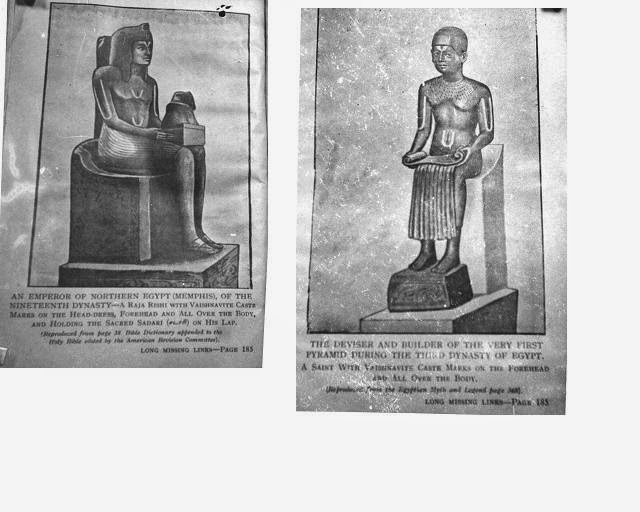
    …These Kings and evena Roman Emperor sported Thiruman, The Vaishnavite marks on their Body.

    Mittani, Hitties

    I had also written on the migration of Shiva with his son Ganesha westwards from the south of Vindhyas, because of a Tsunami.

    This was the time Lord Rama’s ancestor Satyavrata Manu migrated to Ayodhya .

    Satyavrata manu’s son Ikshvaku founded the Sola dynasty, Ikshvaku.

    The traces of Shiva are found everywhere from the Middle east to the Arctic!

    The Chola dynasty traces its origins to ikshvaku dynasty of Rama.

    The story of Chola King Sibi is narrated in the Vishnu Purana, as the ancestor of Rama.

    Apart from the evidence of Hitties being influenced by the Tamils, it might be possible that the Cholas were in Hittie Kingdom,possibly they had a hand in forming the Hittie Empire.

    The Hittites relied on their mastery of chariot warfare. Resembles Manuneedhi Chola, Tamil King of Solar Dynasty
    The Hittites relied on their mastery of chariot warfare. Resembles Manuneedhi Chola, Tamil King

    This is a speculation I have in the light of many of the Hitties customs and the depiction of a chariot  running over a man.

    In the Tamil Classics, King Manu Needhi Chola ran his son down by his chariot because his son ran over a calf and because the cow had complained of this to him by ringing the bell set up by the king for the people to let him know of their problems!

    Monument in Siva, Turkey.jpg Monument in Siva, Turkey.

    It wasn’t until explorer Charles Texier stumbled upon ruins he had hoped belonged to an ancient Roman city that history would gradually begin to allow the Hittites to take their rightful place. Texier made his discovery in the isolated village of Bogazköy, in central Anatolia, roughly half way between Ankara and Sivas. The year was 1834. Though he didn’t know it at the time, he had in fact discovered the imperial Hittite city of Hattusa. However, the road to understanding the Hittites would prove to be a long one.

    Stones covered with mysterious hieroglyphs were being discovered in northern Syria and all over Anatolia and they seemed to relate to the hieroglyphs found at the Hattusa site. Archaeologists were beginning to consider the possibility that these hieroglyphs belonged to an ancient forgotten empire. In 1880, English Assyriologist Archibald Sayce shocked the world with his announcement that this empire and the Hittites of the Old Testament were one and the same people.

    Excavations at the site did not start until 1906, and tablets found in the Hittite’s cuneiform language revealed a surprising twist. The language of the Hittites belonged to the Indo-European languages with the Hittite word for water (‘watar’) for instance uncannily resembling English and German, leading to speculation that the Hittites may originally have migrated from Europe. Other theories, however, claim that Indo-European languages originated elsewhere, perhaps even in Anatolia itself. Whatever the truth may be, English and a host of other languages can thus be traced back to a single root hidden somewhere in the darkness of prehistory..

    ‘Excavations at a mound known as Topraktepe indicate Hittite settlement in the area as early as 2600 BC, though little is known of Sivas’ history prior to its emergence in the Roman period. In 64 BC as part of his reorganization of Asia Minor after the Third Mithridatic War, Pompey the Great founded a city on the site called “Megalopolis”. Numismatic evidence suggests that Megalopolis changed its name in the last years of the 1st century BC to “Sebaste”, which is the feminine form of the Greek name corresponding to Augustus. The name “Sivas” is the Turkish version deriving from the name Sebasteia, as the city was known during late Roman empire. Sebasteia became the capital of the province of Armenia Minor under the emperorDiocletian, was a town of some importance in the early history of the Christian Church; in the 4th century it was the home of Saint Blaise and Saint Peter of Sebaste, bishops of the town, and of Eustathius, one of the early founders of monasticism in Asia Minor. It was also the place of martyrdom of the Forty Martyrs of Sebaste, also 4th century. Justinian I had a fortified wall around it rebuilt in the 6th century…

    …’Historian Christopher Scarre describes Hattusa as “a vast fortress-city sprawling over the rocky terrain, with craggy citadels and elaborate temples. It became the center of a powerful empire that covered not only most of Anatolia but also at times extended far to the south, into Syria and the Levant” (206). Hattusa was originally founded by the Hatti (an aboriginal tribe of Anatolia) in 2500 BCE, and their culture may have provided the basis for that of the Hittites.  This very important complex and those who built it along with their vast empire, however, remained almost unknown until their writings were discovered, first by the Irish missionary William Wright  in 1884 CE, and then by the German archaeologist Hugo Winckler in 1906 CE. By the year 1912 CE, Winckler “had recovered 10,000 clay tablets from the Hittite royal archives” (Scarre & Fagan, 206).  These tablets, on which they had recorded their history and transactions, were deciphered relatively quickly.

    ..

    Sivas (Armenian: Սեբաստիա; Latin: Sebastia, Sebastea, Sebasteia, Sebaste) is a city in central Turkey and the seat of Sivas Province. According to a 2011 estimate, its urban population is 425,297.

    The city, which lies at an elevation of 4,193 feet (1,278 m) in the broad valley of the Kızılırmak river, is a moderately-sized trade center and industrial city, although the economy has traditionally been based on agriculture. Rail repair shops and a thriving manufacturing industry of rugs, bricks, cement, and cotton and woolen textiles form the mainstays of the city’s economy. The surrounding region is a cereal-producing area with large deposits of iron ore which are worked at Divriği.

    Sivas is also a communications hub for the north-south and east-west trade routes to Iraq and Iran, respectively. With the development of railways, the city gained new economic importance as junction of important rail lines linking the cities of Ankara,Kayseri, Samsun, and Erzurum. The city is linked by air to Istanbul.

    Citations.

    http://www.ancient.eu/hittite/

    https://en.wikipedia.org/wiki/Sivas

    http://www.turkeytourism.in/cities/city_c.php?id=321