Tag: malayalam calendar

  • Saptha Rishi Calendar India Oldest Sets Preset Era 6676 BC

    Saptha Rishi Calendar India Oldest Sets Preset Era 6676 BC

    The measurement of Time in India is unique.

    While other calendars take Time to be Linear,that is Time flows in a straight line, yesterday,today and tomorrow,Indian cosmology takes Time as Cyclic.

    It is for our convenience that we follow the Julian calendar,where midnight is reckoned as the end of one day and the beginning of another.

    For Hindus,new day begins at 3.45 am approximately.

    And in Hinduism Time is not Linear,but Cyclic.

    That is Time is Eternal and keeps on recurring,in our Perception.

    In fact Time is reckoned as synonymous with Reality.

    Time is a spectacle,along with Space.

    Both are the tools embedded in our thought processes and as such make us Perceive things only through them.

    Try forming a sentence,or even a Thought, without reference to Time and Space.

    It is impossible.

    Please read my article Time Cyclic,not Linear.

    I also recommend the documentary Time available in Amazon Prime Videos.

    So the calculation of Time in India is different.

    The Indian Calendars are of two kinds.

    One is designed based on the movement of the Sun,Suryamanasa,and another Chaandramanasa,based on Moon’s movement.

    In general there are five calendars being followed in India.

    Vikrama,in North,

    Shalivahana in Deccan,

    Tamil in Tamil Nadu,

    Malayalam calendar in Kerala and

    Bengali calendar in Eastern India.

    There are more regional versions of Calendars.

    These vary.

    Now ,in general,we follow the Julian Calendar in our daily life.

    Here we have a confusion confounded with BC and AD.

    You have two systems of dating one before Christ (BC) and another after Christ,AD.

    This Calendar is linear,that is year 2000,2001,2002…….

    But Indian calendar has sixty years of the same name,running again and again.

    That is one year starts with Prabhava,Vibhava….,runs for sixty years and it again starts with Prabhava.

    So to find the exact date one needs other references,because if you say an event took place in Prabhava, you do not know which Prabhava as Prabhava keeps on occuring once in sixty years.

    But in Jukian calendar you mention 1960,1868 etc and you can locate the year.

    This is because Julian Calendar takes Time as Linear.

    But Calendar of Hindus differ and the names of years get repeated.

    So to pinpoint a specific day or date following parameters are added in Hundu calendar.

    Ayana, movement of the Sun to Cancer or to Capricorn,

    Ritu,Season,

    Samvatsara,

    Month,

    Paksha,waxing or waning of the Moon,Sukla or Krishna Paksha,

    Thithi,the day from the New or Full Moon,

    Nakshatra,the Star of the day.

    This gives you a comprehensive view to arrive at a particular date.

    (Even this elaborate system is not foolproof in fixing exact date. I wilk be writing on this.)

    But to get this date or day,you need a starting point.

    Vikarma,named after King Vikramaditya begins with his time,Shakivahana with his Time ,Tamil ,Malayalam and Bengali begin with Kali,that is Kaliyuga.

    But there is a fundamental base year for Hindu Calendar.

    It is the Saptha Rishi calendar.

    Not many are aware of this.

    There are, according to Hindu cosmology,Seven Seers,Rishis,who do not die at the time of the dissolution.

    The post is Ex officio.

    The Rishis,seven in numbet change for each yuga/Manvantara,a time scale.

    Please refer my article on Manvantara.

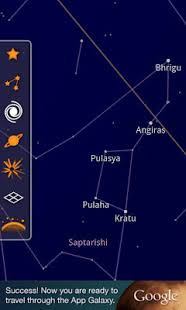
    The seven or Saptha Rishis , for Kakiyuga are,

    Atri,

    Bhrugu,

    Kutsa,

    Vaisishta,

    Gautama,

    Kasyapa and

    Angirasa.

    The Rishis differ in some puranas.

    Saotha Rishi Era, Calendar begins in 6676 BC,that is 8600 years ago.

    This has been mentioned by Kalhana, Indian King and Historian..Greek Historians Pliny and others recird this.

    This would predate events in Indian History.

    The Saptarshi cycle

    A lesser-known Hindu system of time-reckoning is the Saptarshi cycle of 3600 years (possibly based on the 60-year cycle, see ch. 2.4.5. below). At any rate, by the Christian age we find writers who take this concept of a 3600-year cycle literally, and it is hard to either prove or refute that this may have been a much older tradition.

    The medieval Kashmiri historian Kalhana claimed that the previous cycle had started in 3076 BC, and the present one in AD 525. J.E. Mitchiner has suggested that the beginning of the Saptarshi reckoning was one more cycle earlier, in 6676 BC: “We may conclude that the older and original version of the Era of the Seven Rsis commenced with the Seven Rsis in Krttika in 6676 BC, used a total of 28 Naksatras, and placed the start of the Kali Yuga in 3102 BC. This version was in use in northern India from at least the 4th century BC, as witnessed by the statements of Greek and Roman writers; it was also the version used by Vrddha Garga, at around the start of the Christian era.”22 This would roughly coincide with the start of the Puranic dynastic list reported by Greco-Roman authors as starting in 6776 BC.

    Source.

    http://www.indicethos.org/Astronomy/The%20SaptaRishi%20Cycle

  • Great Pyramid Sphinx Built By Mahabali Onam Reference?

    Events mentioned in the Hindu Texts,Vedas,Purana,Ithihasa,Ramayana and Mahabharata lend themselves to three meanings.

    1.The literal, word to word meaning that is verifiable

    2.The philosophical meaning and

    3. Tantric or esoteric meaning that would aid one in self realization.

    Gaza Great Pyramid
    Great Pyramid, Gaza

    Please read my posts on all these aspects by referring to the search term +ramanan50

    I have detailed the Fourteen lokas mentioned in Hinduism in my earlier article.

    I have also referred ho the places mentioned as in Patala loka correspond to places found in the world today.

    Hinduism Fourteen Lokas Multiverse Study

    Americas are a part of Patala Loka

    Naturally formed Vishnu temple is in Colorado,US.

    So are the Quadrilateral Temple of Shiva in US, Hanuman and His son Makaradwaja’s temple In Mexico, Honduras,Marriage customs in central America follow Hindus,caste system of Sanatana dharma was present in  central America , festivals like Makara Sankaranti were celebrated Tamil Style there.

    I have articles on these issues.

    Hinduism  states that the earth is hollow and there are beings that live there and modern research proves this

    I have written on this in my post Hollow Earth Hinduism.

    Researches by Graham Hancock and Robert Bauval as 10,500 BC as the date when the Great Pyramid and the Sphinx were constructed in Egypt.

    Vishnu as Vamana and Mahabali
    Vishnu as Vamana

    ‘Since I identify Rasatala with east coast of Africa, it follows that the civilization that created these structures could be belonging to the Asura Daitya tribe of Mahabali (his predecessors or successors).

    Africa (including Egypt) also falls midway to Patala (identified with South America and Meso America) which was the final destination of Mahabali as per the Onam myth.

    As per this myth Mahabali was sent to Rasatala and Patala by a Kasyapa sage named Vamana who famously measured the Earth in three strides (an allusion to the cartographic measurement of the surface of Earth marking its longitude and latitude).Kerala has yet another calender with New Year (named Vishu, Vaishakhi) celebrated on the day when sun is in the middle of constellation of Aries (skt. Mesha, mal. Medam) around April 15. This calender is the remnant of another ancient calender system when Vernal Equinox was in the middle of constellation of Aries (corresponding to 3100 BCE). Modern Western Astrology which which considers Aries as the first constellation, originated in 2150 BCE in Greece. India’s national calender, (current version:- Saka Era which started at 78 CE) too consider Aries as the first constellation of the year.}’


    ‘In Kerala, Onam is celebrated when the Moon is at the star Sravana during the month when Sun is in the constellation of Leo (skt. Simha, mal. Chingam). People of Kerala, Malayalis, celebrate New Year on the day when the sun enters the constellation of Leo following a calender named ‘Kolla Varsham’. The current version of this calender started in common era 825 CE (the year of death of the famous sage Sankaracharya / the date when the city Kollam is reopened after it was destroyed due to a natural disaster). However this calendar is the remnant of a much ancient calender established when Vernal Equinox was in the constellation of Leo, around 10,500 BCE to 8000 BCE.’

    It may be mentioned that Onam festival is celebrated in Kerala ,India as the day of remembrance  of Mahabali who was pushed back into Earth by Vamana , an Avatar of Vishnu.

    This event might be an allegory just as the Naabhi of Vishnu(belly button) from which Brahma sprang forth to create the World is the explanation of an Astronomical event.

    I have written  on this in detail

    14 Patala-loka
    13 Rasatala-loka
    12 Mahatala-loka
    11 Talatala-loka
    10 Sutala-loka
    09 Vitala-loka
    08 Atala-loka
    07 Bhur-loka
    06 Bhuvar-loka
    05 Svar-loka
    04 Mahar-loka
    03 Jana-loka
    02 Tapa-loka
    01 Satya-loka

    These are the Fourteen Lokas stated in Hinduism

    Reference and citation.

    http://ancientvoice.wikidot.com/article:other-indian-tribes-in-america

    Pyramid Image Credit. http://yournewswire.com/3-unexplainable-facts-about-the-great-pyramids/great-pyramid-of-giza-at-night-2/.

    Vamana Image credit http://www.kuttees.in/2013/09/the-story-of-onam-for-children-king.html