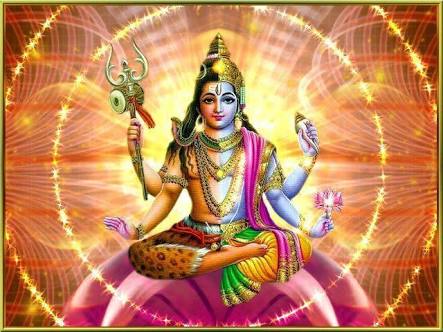
Tag: Krishna on Rudra

  • Rudra And Narayana Are One Krishna in Mahabharata

    Rudra And Narayana Are One Krishna in Mahabharata

    The Reality Brahman is beyond Attributes.

    Worshiped thus it is Nirguna Upasna.

    Worship of Reality with Names and Forms is Saguna Upasna,

    The Truth, The Brahman, the Reality is Knowable, to Be Known.

    That is the Truth.

    This knowledge about Brahman is called ‘Apara Vidya'( beyond this world of names and forms)

    The knowledge about Brahman and its attributes are called Apara Vidya.

    The general descriptions of Brahman  are Sat, the State of Being, Chit(Consciousness) and Ananda(Bliss)

    Apart from this, the Upanishads,a part of The Vedas, the scriptures of Hindus, try to explain the qualities of Brahman by excluding the attributes normally known to us stating that the Brahman is Beyond all this and also this.

    For example the Upanishads,describe Brahman as,

    ‘Neither Tall nor Short, nor of medium height,

    Neither Male, Female,nor transgender ,

    Neither the Knower nor the Known,

    Yet It is All of These’

    You would find this is difficult to comprehend even at the intellectual level.

    Knowledge, if it can not be understood or used is useless.

    Therefore Hinduism devised a way.’

    Read more here .

    To worship through names and forms is Saguna Upasna.

    In fact there is no distinction among the Deities.

    Shankara and Narayana are One.

    Siva and Vishnu in one Form. Saligrama.image
    Shankaranarayana Saligrama

    Krishna declares Narayana and Rudra as One

    Lord Krishna said, ‘Rudra is otherwise called Kapardin. He has Matted Locks on His
    Head, and sometimes displays a Head that is bald. He loves to dwell in the midst of
    crematoriums which constitute His home. He is an Observer of the austerest vows. He is a Yogin of Mighty Puissance and Energy. He is the Destroyer of Daksha’s sacrifice and
    the Tearer of Bhaga’s eyes. O son of Pandu, Rudra should be known to have always
    Narayana for His Soul. If That Deity of Deities, viz., Maheswara, be worshipped, then O
    Partha, is the Puissant Narayana also worshipped. I am the Soul, O son of Pandu, of All
    the Worlds, of All the Universe. Rudra, again, is My Soul. It is for this that I always
    adore Him. If I do not adore the Auspicious and Boon-giving Isana, nobody would then
    adore My Own Self. The ordinances I set are followed by all the worlds. Those
    ordinances should always be adored, and it is, therefore, that I adore them. He who
    knows Rudra knows Myself, and he who knows Myself knows Rudra. He who follows
    Rudra follows Me. Rudra is Narayana – both are One; and One is displayed in two
    different forms. Rudra and Narayana, forming One Person, Pervade All displayed
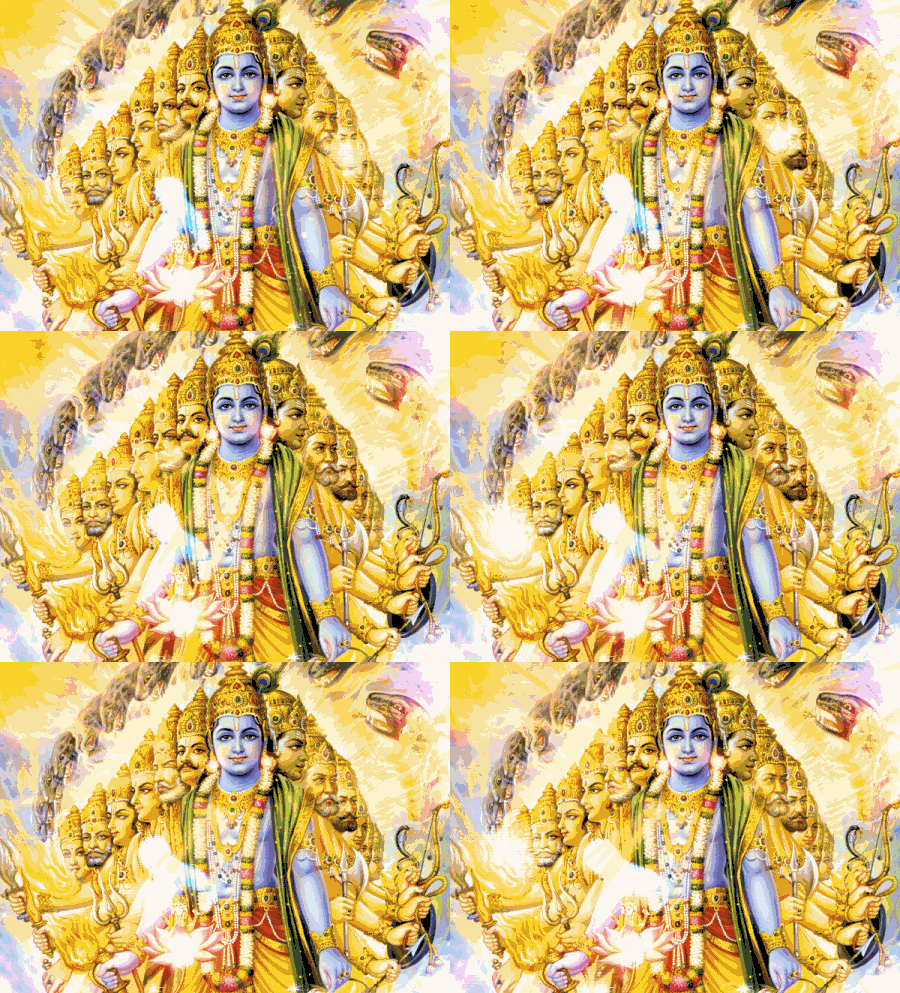
    things and cause them to act. No one else than Rudra is competent to grant Me a boon,
    O son of Pandu.’”
    shrIbhagavAnuvAcha||
    kapardI jaTilo muNDaH shmashAnagRRihasevakaH |
    ugravratadharo rudro yogI tripuradAruNaH ||
    dakShakratuharashchaiva bhaganetraharastathA |
    nArAyaNAtmako j~neyaH pANDaveya yuge yuge ||
    tasminhi pUjyamAne vai devadeve maheshvare |
    sampUjito bhavetpArtha devo nArAyaNaH prabhuH ||
    ahamAtmA hi lokAnAM vishvAnAM pANDunandana |
    tasmAdAtmAnamevAgre rudraM sampUjayAmyaham ||
    yadyahaM nArchayeyaM vai IshAnaM varadaM shivam |
    AtmAnaM nArchayetkashchiditi me bhAvitaM manaH ||
    mayA pramANaM hi kRRitaM lokaH samanuvartate ||
    pramANAni hi pUjyAni tatastaM pUjayAmyaham |
    yastaM vetti sa mAM vetti yo.anu taM sa hi mAmanu ||
    rudro nArAyaNashchaiva sattvamekaM dvidhAkRRitam |
    loke charati kaunteya vyaktisthaM sarvakarmasu ||
    na hi me kenachiddeyo varaH pANDavanandana | -Shanti Parva,Mahabharata.

    ‘Krishnarppanamasthu ‘

  • I Perform Sata Rudreeyam Daily Lord Krishna in Mahabharata

    I Perform Sata Rudreeyam Daily Lord Krishna in Mahabharata

    Let me narrate a legend involving Adi Shankaracharya and Devi before proceeding to the topic.

    After Adi Shankaracharya was accepted as his disciple  by Gaudapada(who is considered to be an Avatar of Vyasa,who in turn is an Avtar of Vishnu),Shankaracharya wanted to write a commentary,Bhashyam.

    (*Adi Shankara’s Guru was Govinda Bhagavadpada and both Govinda Bhagavadpada and Shankara studied under Gaudapada.
    Hence Shankara calls him Parama Guru.)

    He wanted his first work to be on Devi.

    So he fixed Devi in his mind ,meditated and asked his disciple to get the manuscript from the repository.

    When It was  brought,it was found to be the manuscript of Vishnu Sahasranama.

    Shankaracharya was annoyed and asked the disciple to bring the manuscript on Devi.

    What was brought to him,not only for the second time but the third time as well was,

    Vishnusahasranama.

    Shankaracharya meditated on Devi and She told him,

    ‘Before beginning  your work on Me,complete thee work on my  elder Brother Vishnu first’

    Thus was born the Shankara Bhashya of Vishnu.

    It can be identified as Shankara Bhashya when the phrase ‘Om Namo Bhagavathe

    Vasudevaayav’Vishnu’s Mahamantra,The Dwadasa Nama, in the Dhyana sloka before

    ‘ Santhakaaram Bhujaka Sayanam,’and this can not be found in any other  work.

    Such is the unity of Hindu thought and we have Krishna Sthuthi by

    Shiva,Mantrarajapadam by Shiva on Narasimha and Siva Stuthi by Krishna.

    Now there is something more.

    e1386-clipboard01

    Lord Krishna says He performs Satha Rudreeya daily.

    Satha Rudreeyam is on Rudra,an aspect of Shiva as Destroyer.

    Lord Krishna on Satha Rudreeyam.

    ‘Krishna confesses that he recites the Sata-Rudriya every morning, and explains how it is the  best way to please Shiva (Anushasana Parva).
    “Vasudeva said, ‘I shall recite to thee the good that I have acquired and the fame that I
    have won through the Grace of That High-Souled One. Verily, I shall discourse to thee
    on the topic, after having bowed unto Kapardin.

    Oh king, listen to me as I recite to thee
    that Sata-Rudriya which I repeat; with restrained senses, every morning after rising
    from bed…O sire, It is Sankara who Created All the creatures in the Universe, mobile
    and immobile.

    There is no being that is higher, O monarch, than Mahadeva. Verily, He is
    the Highest of All beings in the three worlds…Formerly, when Sankara became angry, the
    deities trembled with fear and bent their heads to Him. Without being appeased, Rudra
    placed on His bow-string a sharp and blazing arrow. Beholding His Prowess, the deities
    and the Rishis became all alarmed. Those foremost of gods began to pacify Him! Joining
    their hands in reverence, they began to recite the Sata-Rudriya Mantras. At last,
    Maheswara, thus praised by the deities, became gratified.’”
    vAsudeva uvAcha||
    hanta te kathayiShyAmi namaskRRitvA kapardine |
    yadavAptaM mahArAja shreyo yachchArjitaM yashaH ||
    prayataH prAtarutthAya yadadhIye vishAM pate |
    prA~njaliH shatarudrIyaM tanme nigadataH shRRiNu ||

    sha~NkarastvasRRijattAta prajAH sthAvaraja~NgamAH ||
    nAsti ki~nchitparaM bhUtaM mahAdevAdvishAM pate |
    iha triShvapi lokeShu bhUtAnAM prabhavo hi saH ||

    tataH praNemurdevAste vepamAnAH sma sha~Nkaram |
    punashcha sa.ndadhe rudro dIptaM sunishitaM sharam ||
    rudrasya vikramaM dRRiShTvA bhItA devAH saharShibhiH |
    tataH prasAdayAmAsuH sharvaM te vibudhottamAH ||
    jepushcha shatarudrIyaM devAH kRRitvA~njaliM tataH |
    sa.nstUyamAnastridashaiH prasasAda maheshvaraH ||’

    Five Methods of Chanting Rudra

    There are five methods of chanting Rudra viz.,

    1. Ordinary method where first Rudram is read and then Chamakam.
    2. Rudra ekadasini where after chanting Rudram, the first anuvaka of Chamakam is chanted, again after chanting Rudram the second anuvaka of Chamakam is chanted and so on till the eleventh chanting of Rudram followed by eleventh anuvaka of Chamakam.
    3. Eleven such Rudra ekadasinis makes one Laghu Rudram
    4. Eleven such Laghu Rudrams makes one Maha Rudram and
    5. Eleven such Maha Rudrams make one Athi rudram.

    Source. P.R.Ramchander