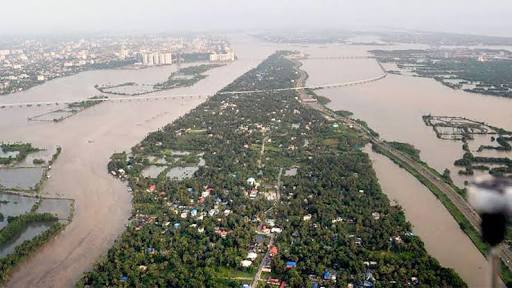
We assume that,while the going is good,it would always be so.
Not so.
There is a saying in Tamil that there is none who has prospered continuously for ten years,nor one who has suffered for ten years.
Life ,which includes Nature,is a Cycle.
Every thing occurs in a Cycle.
So are droughts,Astronomical phenomenon and Natural calamities.
Few seconds of Earthquakes or Volcanic eruption inflict damage for thousands of years .
Man ,in his arrogance,not realising that he can not even be identified as Cosmic speck in the universe, believes ,with his pet toy,Science,he can prevent calamities and Nature.
There is something we do not know.
Hinduism understands this limitation and devised its religious systems.
There are mantras to cure diseases,to bring rainfall.
Conversely there are mantras to induce diseases and to prevent natural calamities, like flood,costing lives.
I am furnishing mantras to prevent calamities ,limit damages from rain,flood.
Tantric system.
Basma,ashes are to be taken from the burning ghat.
Two bricks are needed.
Place one brick on the ground.
Draw four vertical lines on it.
Then place the other brick on it,after chanting the following mantra, 108 Times, in the image.
Contrary to popular belief,there were five Kingdoms of the Tamils and not three kingdoms,Chera,Chola and Pandya.
The five Kingdoms are,
Chera,
Chola,
Pandya,
Mushika and
Ay.
While the Chera Kingdom extended ,
‘By the early centuries of the Common Era, civil society and statehood under the Cheras were developed in present-day western Tamil Nadu. The location of the Chera capital is generally assumed to be at modern Karur (identified with the Korura of Ptolemy). The Chera kingdom later extended to the plains of Kerala, the Palghat gap, along the river Bharathappuzha and occupied land between the river Bharathappuzha and river Periyar, creating two harbour towns, Tondi (Tyndis) and Muciri (Muziris),where the Roman trade settlements flourished.
The Chola and Pandya Kingdoms were in the interior parts of the present Tamil Nadu.
The western coastal areas were ruled by Cheras,Mushikas and Ays Dynasties.
As the first Chera has been mentioned as having participated in the Mahabharata battle, Chera kingdom is mentioned in the Aitreya Aranyaka of the Rig Veda Ramayana,Sumerian texts and by various historians of Greece,these Kingdoms are to be dated at least towards 5000BC,when Ramayana took place.
For date of Ramayana,please read my article on the date of Ramayana.
Rama’s ancestor Satyavrata Manu,also called as Vaiwasvatha Manu was from the south of Vindhya mountains and the region where he reigned was located near and included Madagascar.
And this was a part of Lemuria/MU.
So the date of these Chera kingdoms,of which the present State of Kerala was a part,may safely pushed back to 5000 BC.
And the landmass then was different,it was in Lemuria/MU.
‘The Cheras were an ancient Dravidian royal dynasty of Tamil origin. The first to establish an historical ruling dynasty in the area, they ruled wide-ranging areas of Tamil Nadu and Kerala in south-eastern and south-western India respectively, areas that had been settled since at least 5000 BC, when Neolithic carvings had been left in Edakkal Caves. Chera territory included regions such as Venad, Kuttanad, Kudanad, Pazhinad, and others, encompassing the area between Kanya Kumari in the south to Kasargod in the north (now in the far north of Kerala). Also included in this list are Palghat, Coimbatore, Salem and Kollimalai, although they quite probably did not rule all of these areas at all times as ancient borders could be quite fluid at times. Their core territory was in Kerala, while the later rise of the Pallavaspushed them out of Tamil Nadu. However, they did establish a capital at Vanchi, which was known by the Romans as Muzris after an active sea-borne trade sprang up between the two powers.’
The first Chera King was Vanavaramban” Perumchottu Uthiyan Cheralathan.
He took part in the Mahabharata War as the provider of food both to Pandava and Kaurava armies.
He had two sons,each ruling a part of Chera kingdom.
Mushika Kingdom.
‘The Mushika Kingdom (Mushaka Rajya, also called Ezhimalai Rajya, Puzhinadu, Kolathunadu, Chirakkal Rajya among the more common names) was an ancient kingdom of the Tamil Sangam period in present-day Kerala, India, ruled by a royal dynasty of the same name. Its dominions, for most of its recorded history, covered the present-day regions of Northern Kerala, Tulunadu and Coorg, between the western slopes of the Western Ghats in the East and the Arabian Sea in the West.It was one of the five primary ruling dynasties in the ancient Tamilakam of recorded history, and in the Tamil Sangam Period, along with the Cheras, the Pandyas, the Cholas and the Ays. Ezhimalai Nannan was the most powerful ruler of Ezhimalai. He expanded the kingdom to include Gudalur and Coimbatore in his lifetime.
Reference to Mushikas in Mahabharata.
‘
The Mahabharata mentions the Mushika as one of the kingdoms of South India, and is grouped with the Cheras, Pandyas and Cholas.The Mushika Dynasty in the Mahabharata indicates the Ay Dynasty in Thiruvananthapuram area possibly before the formally known Mushika Dynasty branched out.
The Tamil Sangam period is replete with mention of the Mushika Family, and especially that of their most famous ruler Nannan, who had his capital at Pazhi (Pazhayangadi).
The Greek traveler Strabo, who lived around 100 BCE, mentions the kingdom of Mushika in his accounts. The Greek geographer Ptolemy mentions the Ay Dynasty, the mother dynasty of Nannan (Mushika) in the Second Century C.E, and refers to it as “Aoi”
Ays.
The Ay dynasty (I / Ai dynasty) (later known as the Venad and subsequently the Thiruvithamkur Dynasty) ruled parts of southern India from the early Sangam age, which spanned from c. 3rd century BC to c. 4th century AD, till the Independence of India. At their zenith, the dynasty ruled an area extending from Tiruvalla in the north to Nagercoil in the south including western Ghats inn the east.One part of the Ayi Kingdom was headquartered in Mavelikkara while another was headquartered at Periyaoor, later called Keezhperoor, Aykudi, Alwarkurichi,Tenkasi (Ayiraperi village), .
This king is mentioned in the eighth decade of the century by the poet Arisil Kilar after winning a great victory at Takadur against the Adiyaman and two great kings. However, his position in this list is highly subject to change, and he is never shown in the same place twice in other lists. He also goes by the name of Karuvar-Eryia-ol-val-ko-Perunceral Irumporai. It seems likely that he is the son or descendant of Yanaikat-sey Mantaran Cheral (of the second century AD), but the Barr List places him first (as does the Pillai list), ahead of the more traditional founder of the dynasty, Perumchottu Uthiyan Cheralathan, who is shown as the third ruler.
The succession after Peruncheral is where things become really complicated. The kingdom appears to divide in two or, more probably, forms a boundary region that is governed by a junior member of the royal house. Each of Peruncheral’s sons gain a throne of their own with one, seemingly the Vanavar (Vanavarambanas) branch, being the senior.
Natuvan (or Antuvan) Cheral Irumporai and Udiyan Cheral have been connected together as those two sons, since they are already accepted as being brothers. However, it is not certain that Peruncheral is their father. The accepted story is that Udiyan, carrying the dynastic name Vanavaramban, succeeds his father and conquers territory to the north, but he later places his brother Antuvan in charge there to begin a co-ruling ‘dynasty’ while he rules the main kingdom
Parashurama and the saptarishi Agastya(for a differnt kalpa) are regarded as the founders of kalaripayattu, the oldest martial art in the world. Parashurama was a master in the art of weaponry, as taught to him by Shiva. As such, he developed northern kalaripayattu or vadakkan kalari, with more emphasis on weapons than striking and grappling. Southern kalaripayattu was developed by Agastya and focuses more on weaponless combat. Kalaripayattu is known as the ‘mother of all martial arts’.Bhragava Rama popularly known as Parashurama is the descendant of Bhrigu, one of the Seven Seers, Saptha Rishis., who codify the sacred texts for Humans for every Kalpa.
Kalaripayattu , self defense warfare by Shiva.
He is also known as,
Ramabhadra (रामभद्र) – gracious Rama
Bhargava (भार्गव) – descendant of Bhrigu
Bhrigupati (भृगुपति) – lord of Bhrigu dynasty
Bhriguvanshi (भृगुवंशी) – he who belongs to Bhrigu lineage
Jamadagnya (जामदग्न्य) – son of Jamadagni
Rama was born to Sage Jamadagni an Renuka.
Rama was a staunch Shiva Devotee of Shiva and Lord Shiva granted him the Axe, the weapon wielded by Rama.
This Rama who is also an Avatar of Lord Vishnu is called Bhargava Rama,of Bhargava lineage and Parashurama , , the wielder of Axe, Parashu to distinguish him from his later Avatar Lord Rama.
Not much of Parashurama has come to light except that he exterminated Kshatriyas, lost to Lod Rama and taught Brahmastra to Karna.
Parashurama, slong with Sage Agastya were the bridges to the Dravidian cultures.
They strode like colossus.
Parashurama was responsible for creating Konkan, maharastra, Goa and Kerala regions of India.
He provides a wealth of information on ancient history of South India.
I shall deal with them separately in the coming articles.
Today we speak of Judo, Jujitsu and other forms of defense Technics and warfare.
And the these are attributed to the Chinese.
Not so.
Parashurama and Sage Agastya were the founders of these Martial Arts.
‘
Parashurama and the saptarishi Agastya are regarded as the founders of kalaripayattu, the oldest martial art in the world. Parashurama was a master in the art of weaponry, as taught to him by Shiva. As such, he developed northern kalaripayattu or vadakkan kalari, with more emphasis on weapons than striking and grappling. Southern kalaripayattu was developed by Agastya and focuses more on weaponless combat. Kalaripayattu is known as the ‘mother of all martial arts’.
Bodhidharma, the founder of Zen Buddhism, also practiced kalaripayattu. When he traveled to China to spread Buddhism, he brought the martial art with him, which in turn was adapted to become the basis of Shaolin Kung Fu..
A reader wanted me t know the Gotra details of the Nairs of Kerala.
This is a complex issue.
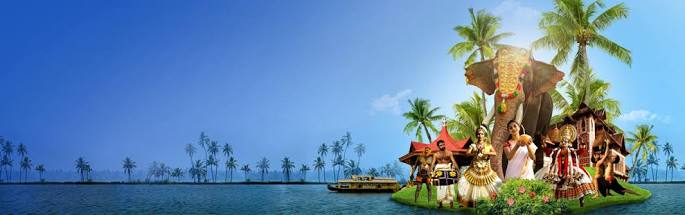
Warriors of Kerala
If one removes the Goggles of regionalism and linguistic chauvinism, one can understand Indian history in its splendor.
Though the people of Kerala formed a part of Tamil kingdom Chera, the Nairs of Kerala had a social system of their own.
Nair comes from the word Nayaka meaning chieftain or a leader.
They were the leaders of a group of army of the Cheras.
‘The Nambudiri Brahmins were at the top of the ritual caste hierarchy and in that system outranked even the kings. They regarded all Nairs as shudra. Below the Nambudiris came the Tamil Brahmins and other later immigrants of the Brahmin varna. Beyond this, the precise ranking is subject to some difference in opinion. Kodoth has placed the Samantan caste below the Kshatriya rank but above the Nairs, but Gough considers that the Pushpagans and Chakyars, both of which were the highest ranked in the group of temple servants known as Ambalavasis, were ranked between the Brahmins and the Nairs, as were several other members of the Ambalavasi group. She also believes that some Nairs adopted the title of Samantan in order to emphasise their superiority over others in their caste. The unwillingness of the higher varnas to engage in what they considered to be the polluting activities of industrial and commercial activity has been cited as a reason for the region’s relatively limited economic development’
‘A theory has been proposed for the origins of the caste system in the Kerala region based on the actions of the Aryan Jains introducing such distinctions prior to the 8th-century AD. This argues that the Jains needed protection when they arrived in the area and recruited sympathetic local people to provide it. These people were then distinguished from others in the local population by their occupation as protectors, with the others all being classed as out-caste. The cross-disciplinary historian Cyriac Pullapilly describes that this meant they “… were given kshatriya functions, but only shudra status. Thus originated the Nair
Taking into consideration the caste system of Sanatana Dharma was practiced by The Tamils , Cheras were Tamils,there was no discrimination in the Tamil land on the basis of caste , the views by western authors seem to be based on the Myth of Aryan dDravidian Theory which is now proved to be false and is a piece of disinformation to divide the people of India.
The fact that the Group who are currently called as Nairs were entrusted with Military duties , they were Kshatriyas.
The Nairs, Chera Period.
Some people think the name itself is derived from nayaka, an honorific meaning “leader of the people”, while others believe it stems from the community’s association with the Naga cult of serpent worship. Christopher Fuller, an anthropologist, has said that it is likely that the first reference to the Nair community was made by Pliny the Elder in his Natural History, dating from 77 AD. That work describes what is probably the Malabar coast area wherein could be found the “Nareae, who are shut in by the Capitalis range, the highest of all the mountains in India”. Fuller believes it probable that the Nareae referred to the Nairs and the Capitalis range is the Western Ghats.’
Matrilineal Society.
Nairs operated a matrilineal (marumakkathayam) joint family structure called tharavad, whereby descendant families of one common ancestress lived under a single roof. Tharavads consisting of 50 to 80 members were not uncommon and some with membership as high as 200 have been reported. Only the women lived in the main house; men lived in separate rooms[clarification needed] and, on some occasions, lived in a separate house nearby. The families split on instances when they became unwieldy and during crisis among its members. When it split, the family property was separated along the female lines. The karnavan, the oldest male member in the tharavad, had the decision-making authority including the power to manage common property. Panikkar, a well-known writer from the Nair community, wrote in 1918 that,
Authority in the family is wielded by the eldest member, who is called karnavan. He has full control of the common property, and manages the income very much as he pleases. He arranges marriages (sambandhams) for the boys as well as the girls of the family. He had till lately full power (at least in practice) of alienating anything that belonged to them. His will was undisputed law. This is, perhaps, what is intended to be conveyed by the term Matri-potestas in communities of female descent. But it should be remembered that among the Nayars the autocrat of the family is not the mother, but the mother’s brother.
The husband visited the tharavad at night and left the following morning and he had no legal obligation to his children which lay entirely with the karnavan. In Nair families, young men and women about the same age were not allowed to talk to each other, unless the young man’s sister was considerably older than him. The wife of karnavan had an unusual relationship in his tharavad as she belonged to a different one and her interests lay there. Panikkar wrote that Karnavan loved his sister’s son more than his own and he believes it was due mainly to the instability of Nair marriages. Divorce rate was very high as both man and woman had equal right to terminate the marriage. Enangar was another family with which a tharavad remained closely related; a few such related families formed a social group whose members participated in all social activities. Nakane wrote in 1956 that tharavads as a functional unit had ceased to exist and large buildings that had once hosted large tharavads were occupied by just a few of its remnants.’
Being a matrilinear society, the Gotra system must have been following the Mother’s Gotra.
Information is not available.
People may contribute with authenric source
The Nairs of Kerala and Bunts of Karnataka claim descent from the naga Śeṣa; these regions include the Nagavanshi clans who migrated from North India associated with the events referred to as the Sarpasatram. The Nairs were organized into various martial clans like Nambiar, Kiryathil Nair, Illathu Nair and Swaroopathil Nairs. The Illathu, Swaroopathil and Kiryathil Nairs have been classified as Kshatriyas of the Nagavanshi lineage Also claims as Nagavamsam in North costal region of Andhra pradesh state, where central government referred them under serial number 81 in NCBC (National Commission for Backward classed)
However, Nairs believe them selves to Belong to Kasyapa Gotra.
‘Vansh/Dynasty : Nagavanshi
Gotra : Kashyapa
Caste : Kshatriya
The Nair Clans of Kerala and Bunts of tulu nadu are the indigenous descendants of Anantha also these regions include the Nagavanshi clans who migrated from North India associated with the events as Sarpasatram. The Nairs were organized into various martial clans like Nambiar and Kiryathil Nair. Currently, warrior Sections of the Nair (Malayala Kshatriya) caste and Bunts of Tulu nadu claim descent from the Nagvanshi dynasty. The Nagavanshi are the known as the Serpent Dynasty.
Nāgas originated from Kashyapa, father of Surya from whom clan of Suryawanshi kshatriyas evolved. The Nether World known as Pathala was the inhabitation of Nagas and Anantha as the Emperor of Naga, Sarpa, Uraga, and Pannaga. The Vedas do not mention Kshatriyas of either Suryavanshi, Chandravanshi, Nagavanshi, Agnivanshi or any such lineage. The Puranas constructed such genealogies. The Nāgvanshis acquired the status of Devas due to their excellent qualities, behavior and actions. Purānas mention Nāgas along with devas. Purānas mention of many Nāga Kingdoms. In ancient times Nāgas were the rulers of entire India. Mathura, Padmavati and Kantipur were capitals of Naga dynasty.
The worshipers of Nāga were supposedly known as Nāgā or Nāgil. Nair, Bunt and some Rajput and Jat clans claim to be of Nagvanshi origin.’
There are some interesting issues here.
1.People of north East India and some portions of central India belong to Nagavanshi.Now we find them in the deep south.
2.In ancient India, the landmass was different and the sea route from the North east of India to south of India was much shorter.
There are references that Ravana visited his In Laws place in central India frequently, his wife Mandodari was from India through this short route from Lanka.
So it needs some more research on this issue as to how the migration took place, whether the Nagavanshis, who were also credited with having been the people of Patala Loka,deep south moved to North during the Great flood, when Vaivaswatha Manu, ancestor of Rama moved to Ayodhya.
3.The issue of the location of the Chera Capital Vanchi.
Considering this and the fact that Lemuria was the location of the early Tamil Kingdoms, I feel that the present theory that Karur was the Capital of Chera needs a look into.My stand is that it might have been located some where down in the Indian Ocean.
3.The present date assigned to Nairs and Kerala needs revision.
Chera King Udiyan Cheralatha,n particpated in the Mahabharata war.
Poompuhar,Tamil Nadu which speaks of Chera Kingdom, the author of Cilapadikaram was the king’s brother, and Poompuhar is dated 20,000 years ago it is safe to postulate that the Nairs of Kerala, who were in the army of the Cheras date back to some 18000 years ago
I have written on the use of weapons in the Mahabharata..
I have also written articles on
Rules of War,
Battle Formations,
Weapons of Mass Destruction,
List of Astras,
Brahmastra Invocation Mantra.
Now a manuscript containing the Mantra for the weapons used in the Mahabharata War has been found in Kerala.
They are a sort of User Manual.
‘A manuscript found from the collections of Ashtavaidyan Vaidyamadham Cheriya Narayanan Namboodiri, who passed away recently, clearly mentions the mantras to use brahmastra, agneyastra, among others. The 63-folio manuscript in palm leaves, believed to be rewritten about 120 years ago, is the only manuscript retrieved so far in the country that tells how to use all the deadly weapons mentioned in the Mahabharata in about 48 well-described mantras.
“It was Cheriya Narayanan Namboodiri’s wish to digitize all his manuscript collections — 1,300 bundles — for the benefit of researchers, students and the future generation. The particular manuscript was noticed while we were digitizing the collections using the most reliable method, reprography,” said A R Krishnakumar, project manager at Central Council for Research in Ayurvedic Sciences (CCRAS). Krishnakumar is part of a team from the Indira Gandhi National Centre for the Arts (IGNCA), New Delhi that has been bestowed with the responsibility of digitizing all the manuscripts available with both public and private parties in the country. “People may wonder why the manuscripts should be digitized. It is because they would throw light on our history, culture, customs, ancient religions besides giving information on the environment, health and science of ancient times,” said Krishnakumar.
“Till now, we haven’t even used 15% of the information from the manuscripts being written on ayurveda. Yet ayurveda is considered to be one of the most accepted system of medicine in the world. Now imagine if the knowledge in five lakh-odd bundles of manuscripts are made available to the society, how much more effective would ayurveda be,” he added.
“We had digitized a portion of the manuscripts available with libraries, colleges, universities and other institutions in Kerala a few years ago. We started the second phase of the initiative from Vaidyamadham at Mezhathur in Palakkad district. Our next destination is Kanippayyur Mana near Kunnamkulam, famous for thachu sasthra (architectural science), and other centres that have hundreds of manuscripts preserved with them. Thankfully, all these private parties are now coming forward to share the knowledge they have been preserving from the past,” said senior reprographic officer of IGNCA Krishnakumar B. ‘
You must be logged in to post a comment.