Tag: Indo-European languages

  • Sivas City Turkey Hinduism Tamil Manu Needhi Chola

    Sivas City Turkey Hinduism Tamil Manu Needhi Chola

    I have written articles on the connection between Anatolia,(Asia Minor), Mesopotamia, Sumeria and Babylon.

    They are,

    Hindu kings of Iraq, Turkey, Syria, Lebanon, Egypt and Italy,

    Mitanni (/mɪˈtæni/; Hittite cuneiform KUR URUMi-ta-an-ni; alsoMittani Mi-it-ta-ni) or Hanigalbat (Assyrian Hanigalbat, Khanigalbatcuneiform Ḫa-ni-gal-bat) or Naharin in ancient Egyptian texts was a Hurrian-speaking state in northern Syria and southeast Anatoliafrom ca. 1500 BC–1300 BC. Founded by an Indo-Aryan ruling class governing a predominantly Hurrian population, Mitanni came to be a regional power after the Hittite destruction of Amorite[1] Babylon and a series of ineffectual Assyrian kings created a power vacuum in Mesopotamia.

    The Mittanni was in northern Mesopotamia , roughly from 1500-1300 BC.

    At its height the empire extended from Kirkuk (ancient Arrapha) and the Zagros Mountains in the east through Assyria to the Mediterranean Sea in the west.

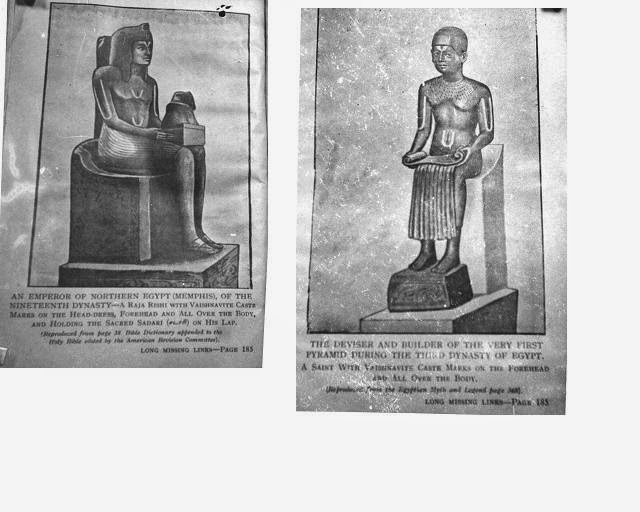
    …These Kings and evena Roman Emperor sported Thiruman, The Vaishnavite marks on their Body.

    Mittani, Hitties

    I had also written on the migration of Shiva with his son Ganesha westwards from the south of Vindhyas, because of a Tsunami.

    This was the time Lord Rama’s ancestor Satyavrata Manu migrated to Ayodhya .

    Satyavrata manu’s son Ikshvaku founded the Sola dynasty, Ikshvaku.

    The traces of Shiva are found everywhere from the Middle east to the Arctic!

    The Chola dynasty traces its origins to ikshvaku dynasty of Rama.

    The story of Chola King Sibi is narrated in the Vishnu Purana, as the ancestor of Rama.

    Apart from the evidence of Hitties being influenced by the Tamils, it might be possible that the Cholas were in Hittie Kingdom,possibly they had a hand in forming the Hittie Empire.

    The Hittites relied on their mastery of chariot warfare. Resembles Manuneedhi Chola, Tamil King of Solar Dynasty
    The Hittites relied on their mastery of chariot warfare. Resembles Manuneedhi Chola, Tamil King

    This is a speculation I have in the light of many of the Hitties customs and the depiction of a chariot  running over a man.

    In the Tamil Classics, King Manu Needhi Chola ran his son down by his chariot because his son ran over a calf and because the cow had complained of this to him by ringing the bell set up by the king for the people to let him know of their problems!

    Monument in Siva, Turkey.jpg Monument in Siva, Turkey.

    It wasn’t until explorer Charles Texier stumbled upon ruins he had hoped belonged to an ancient Roman city that history would gradually begin to allow the Hittites to take their rightful place. Texier made his discovery in the isolated village of Bogazköy, in central Anatolia, roughly half way between Ankara and Sivas. The year was 1834. Though he didn’t know it at the time, he had in fact discovered the imperial Hittite city of Hattusa. However, the road to understanding the Hittites would prove to be a long one.

    Stones covered with mysterious hieroglyphs were being discovered in northern Syria and all over Anatolia and they seemed to relate to the hieroglyphs found at the Hattusa site. Archaeologists were beginning to consider the possibility that these hieroglyphs belonged to an ancient forgotten empire. In 1880, English Assyriologist Archibald Sayce shocked the world with his announcement that this empire and the Hittites of the Old Testament were one and the same people.

    Excavations at the site did not start until 1906, and tablets found in the Hittite’s cuneiform language revealed a surprising twist. The language of the Hittites belonged to the Indo-European languages with the Hittite word for water (‘watar’) for instance uncannily resembling English and German, leading to speculation that the Hittites may originally have migrated from Europe. Other theories, however, claim that Indo-European languages originated elsewhere, perhaps even in Anatolia itself. Whatever the truth may be, English and a host of other languages can thus be traced back to a single root hidden somewhere in the darkness of prehistory..

    ‘Excavations at a mound known as Topraktepe indicate Hittite settlement in the area as early as 2600 BC, though little is known of Sivas’ history prior to its emergence in the Roman period. In 64 BC as part of his reorganization of Asia Minor after the Third Mithridatic War, Pompey the Great founded a city on the site called “Megalopolis”. Numismatic evidence suggests that Megalopolis changed its name in the last years of the 1st century BC to “Sebaste”, which is the feminine form of the Greek name corresponding to Augustus. The name “Sivas” is the Turkish version deriving from the name Sebasteia, as the city was known during late Roman empire. Sebasteia became the capital of the province of Armenia Minor under the emperorDiocletian, was a town of some importance in the early history of the Christian Church; in the 4th century it was the home of Saint Blaise and Saint Peter of Sebaste, bishops of the town, and of Eustathius, one of the early founders of monasticism in Asia Minor. It was also the place of martyrdom of the Forty Martyrs of Sebaste, also 4th century. Justinian I had a fortified wall around it rebuilt in the 6th century…

    …’Historian Christopher Scarre describes Hattusa as “a vast fortress-city sprawling over the rocky terrain, with craggy citadels and elaborate temples. It became the center of a powerful empire that covered not only most of Anatolia but also at times extended far to the south, into Syria and the Levant” (206). Hattusa was originally founded by the Hatti (an aboriginal tribe of Anatolia) in 2500 BCE, and their culture may have provided the basis for that of the Hittites.  This very important complex and those who built it along with their vast empire, however, remained almost unknown until their writings were discovered, first by the Irish missionary William Wright  in 1884 CE, and then by the German archaeologist Hugo Winckler in 1906 CE. By the year 1912 CE, Winckler “had recovered 10,000 clay tablets from the Hittite royal archives” (Scarre & Fagan, 206).  These tablets, on which they had recorded their history and transactions, were deciphered relatively quickly.

    ..

    Sivas (Armenian: Սեբաստիա; Latin: Sebastia, Sebastea, Sebasteia, Sebaste) is a city in central Turkey and the seat of Sivas Province. According to a 2011 estimate, its urban population is 425,297.

    The city, which lies at an elevation of 4,193 feet (1,278 m) in the broad valley of the Kızılırmak river, is a moderately-sized trade center and industrial city, although the economy has traditionally been based on agriculture. Rail repair shops and a thriving manufacturing industry of rugs, bricks, cement, and cotton and woolen textiles form the mainstays of the city’s economy. The surrounding region is a cereal-producing area with large deposits of iron ore which are worked at Divriği.

    Sivas is also a communications hub for the north-south and east-west trade routes to Iraq and Iran, respectively. With the development of railways, the city gained new economic importance as junction of important rail lines linking the cities of Ankara,Kayseri, Samsun, and Erzurum. The city is linked by air to Istanbul.

    Citations.

    http://www.ancient.eu/hittite/

    https://en.wikipedia.org/wiki/Sivas

    http://www.turkeytourism.in/cities/city_c.php?id=321

  • Tamil Heads World Languages With Sanskrit

    Recently I published an article on Sanskrit heading the world languages group.

    Though the source I have cited is a highly reputable educational research oriented site, curiously Tamil the ancient language is found missing.

    Jambai Tamil Brahmi inscription dated to the early Sangam age.‎(2,573 × 935 pixels, file size: 823 KB, MIME type: image/jpeg
    Jambai Tamil Brahmi inscription dated to the early Sangam age. “Jambai Tamil Brahmi” by Tnexplore – Own work. Licensed under CC BY-SA 3.0 via Wikimedia Commons – http://commons.wikimedia.org/wiki/File:Jambai_Tamil_Brahmi.jpg#mediaviewer/File:Jambai_Tamil_Brahmi.jpg

    I belive this is deliberate to divide the Indians as Dravidians and Aryans, meaning Sanskrit.

    The Facts.

    1.The Vedas have, by numerous quotes refer to Tamils,indicate that Tusks,Elephants,Spices were imported from the South, especially from the Chera Kingdom.

    Tamil Image..png
    Tamil Language.

    2.The Puranas repeatedly state that a Cheran King Perunchotru Udiyan neduncherallatha fed both the Panadava and Kaurava armies during the Mahabharata War.

    3.Arjuna and Krishna married Pandyan Princesses.

    4.Lord Krishna attended the Tamil Poets’ Conclave, Tamil Sangam.

    5.Balarama went ona Pilgrimage to south and worshiped Parashurama and Lord Subrahmanya, called as Murugan in Tamil.

    6.Tamil has been dated ,

    The archaeological finds from Attirappakkam northeast of Chennai evidences the existence of Tamils about a million years ago!

    “The prehistoric period during which Lower Paleolithic settlements existed in the Tamil Nadu region has been estimated to span the period from about 1,510,000 BCE[1] until around 3000 BCE.[2] For most part of the lower Paleolithic stage, humans lived close to river valleys with sparse forest cover or in grassland environments. The population density was very low and so far only two localities of this lower Palaeolithic culture have been found insouth India. One of these is in Attirampakkam valley in the northwest of Chennai in Tamil Nadu.[3] Archaeological research has uncovered evidence of fossil remains of animals and primitive stone implements around the northern Tamil Nadu that could be dated to belong to around 3000,000 BCE.[citation needed]Humans inSouth India, belonging to the species of Homo erectus, lived in this primitive ‘old stone age’ (Palaeolithic) for quite a long time, using only crude implements such as hand axes and choppers and subsisting as hunter-gatherers“(wiki)

    The Tamil History based on this, Tamil Literature,Sanskrit Literature and Arikkamedu findings,Puducherry is between   15,000 BCE to 10,000 BCE.’


    7.This is acknowledged.

    8.Sage Viswamitra banished his sons to the south.

    9.Lord Rama’s ancestor Satyavrata Manu, also called Vaivasvatha Manu is from the South.

    10.Sage Agasthya , the giver of Tamil dates back to  5000 BC, by some accounts based on Astronomy 25000 years earlier!


    3.That Time is Cyclic and the events occur in Cycles.


    4.Tamil Language is as old as Sanskrit.


    5..Agasthya existed around 5000 BC and around 25725 years before that.’


    11.Tolkaapiyam , the oldest Tamil Grammar Book is dated, at a conservative estimate,to  3 Century BC.

    12.The earlier Grammar Book Agathiyam by Sage Agastya was destroyed by a Tsunami.

    13.’ The linguistic evidence suggests that Proto-South Dravidian was spoken around the middle of the second millennium BC, and that proto-Tamil emerged around the 3rd century BC. The earliest epigraphic attestations of Tamil are generally taken to have been written shortly thereafter.( wiki Tail Language)

    14.As To Hitti heading the Anatolian languages,

    The Inca Empire was divided into Four Regions as in Ancient Tamils, Kurinji,Mullai,Marutham, Neythal , based on Geography.

    The Fifth one Palai is desert.

    Considering the fact that they were following most of the customs that are similar to the Customs of Sanatana Dharma. I checked and was pleasantly surprised to find that,

    The Ayar-Incas that primitive Aryan words and people came to Americaespecially from Indo-Arya by the island chains ofPolynesia. The very name of the boat in Mexico is a South Indian (Tamil) word: Catamaran.”-

    The Ayar-Incas (2 Volume Set): 1. Monuments, Culture, and American Relationship; 2. Asiatic Origins-Miles Poindexter,Former US Ambassador-

    The Incas celebrated the Makara Sankaranti in the South Indian Style.”

    And Hitti,

    Hittite (nešili) was the language of the Hittite Empire, dated approximately 1650 to 1200 BC, which ruled over nearly all of Anatolia during that time”

    Considering these facts, it is obvious that Tamil headed the Anatolian Group, based on its early date and the impact of Tamil on Hitti.

    Citation.

    Milion Year Old Tamil

    Agastya Canopus Validates Sanatan Dharma Tamil-dates

    Incas of Peru

    Tolkappiyam Wiki.

    Anatolian Languages wiki.

    Vedic Empire.

  • World Language Tree Sanskrit At The Top

    I am providing the world Langauge Tree below.

    Note that Sanskrit heads the list on the Right.

    It may be noted that the other language groups headed by Anatolian ,followed by Hitti and others do have Tamil and Sanskrit Roots.

    I shall be posting on this in detail.

    My researches show that Tamil and Sanskrit head the world language groups at the top.

    In other words world languages have their origins in Tamil, Sanskrit and a combination of both.

    I have posted that Tamil influenced Hitti language.

    Sanskrit.png
    Sanskrit.

    ‘The Sanskrit language, whatever be its antiquity, is of a wonderful structure; more perfect than the Greek, more copious than the Latin, and more exquisitely refined than either, yet bearing to both of them a stronger affinity, both in the roots of verbs and the forms of grammar, than could possibly have been produced by accident; so strong indeed, that no philologer could examine them all three, without believing them to have sprung from some common source, which, perhaps, no longer exists; there is a similar reason, though not quite so forcible, for supposing that both the Gothic and the Celtic, though blended with a very different idiom, had the same origin with the Sanskrit; and the old Persian might be added to the same family, if this were the place for discussing any question concerning the antiquity of Persia. (Fortson, p. 9)

    Sanskrit (/ˈsænskrɪt/; संस्कृतम् saṃskṛtam [səmskr̩t̪əm], originally संस्कृता वाक् saṃskṛtā vāk, “refined speech”) is the primary liturgical language of Hinduism, a philosophical language in Hinduism, Buddhism, and Jainism, and a literary language that was in use as alingua franca in the Indian cultural zone. It is a standardised dialect of Old Indo-Aryan language, originating as Vedic Sanskrit and tracing its linguistic ancestry back to Proto-Indo-Iranian and Proto-Indo-European.

    world Language Tree.png
    Languages of the World, relations.

    Click on the image to enlarge.

    Branches are in order of first attestation; those to the left are Centum, those to the right are Satem.

    Languages in red are extinct.

    White labels indicate categories / un-attested proto-languages.

    * I have deliberately left informing that Tamil ahs not been mentioned in this tree, hoping that some one will point it.

    Within ten minutes, a FacebBook reader has noticed it.

    Am happy that my posts ae being read carefully.

    I shall be posting on the antiquiy of Tamil and its status,on par with Sanskrit.

    And on Telugu and Kannada which are also ancient, with more affinity to Sanskrit.

    Citation.

    http://www.ancient.eu/Indo-European_Languages/

  • Arkaim, Russia Rig Vedic Mandala Swasthika City Of Hindu Gods

    The archeological finds at Arkaim, in the Southern Urals steppe, 8.2 kilometres (5.1 mi) north-to-northwest of Amurskiy, and 2.3 km (1.4 mi) south-to-southeast of Alexandronvskiy, two villages in the Chelyabinsk Oblast, Russia, just to the north from the Kazakhstani border, is treasure trove of archeologists.

    Swastika at Arkaim, Russia.jpg
    Decorative Swastkikas found at Arkaim.

    It is , based on the findings so far, indicates strong Sumerian and Vedic influences.

    Temple built by Yama is found there.

    The whole city seems to have been built by the Mandala concept of the Rig Veda.

    Arkaim,Rusia.jpg
    Arkaim, built with Rig Veda Mandala Principle.


    The site is generally dated to the 17th century BC. Earlier dates, up to the 20th century BC, have been proposed. It was a settlement of the Sintashta-Petrovka culture. Newly found artifacts make the site itself much older; scientists agree on it being at least as old as Troy and the Egyptian pyramids; it dates back to the 4th millennium BC. It is said to be older then Stonehenge (3300 BC)…

    During the excavations of Arkaim no jewellery was found, no masterpieces of ancient art, no unknown writings, nor other such treasures – only fragments of broken ceramic ware, bones of domestic and wild animals, an occasional stone tool and even more rare, bronze tools. But even those common things are not well presented at Arkaim. The collection of artifacts is so poor and unimpressive, that it is not possible to make a museum exhibit appropriate to the site. Therefore, from the point of view of archeologists, the main value of the ruins was, and probably will be, the design of the structures itself and their lay-out.

    Arkaim Settlemen.jpg
    Arkaim Settlement, Russia.

    The structures were tall; they had solid walls, gallery ceilings, wood-paved roadways, second floors and high wooden towers. Nowadays, archeologists have a more complete picture of how the settlement in the Arkaim Valley looked at the time of its peak, and it is quite impressive. First of all it is important to emphasize the point that this large settlement was not a collection of separate structures, but an all-inclusive design and construction. The total area extends to about twenty thousand square meters (twenty-four thousand square yards), and the settlement ground-plan is comprised of two circles, one inside the other, made of massive defensive walls.

    The external wall is about 160 meters (500 feet) in diameter. It was surrounded by a ditch 2 meters (6.5 feet) wide, filled with water. The external wall is very massive, 5.5 meters (16 feet) high and five meters wide. It was constructed of timbered cages filled with soil and added lime, and an outer facing of cob blocks. Four entries were designated in the wall: the largest-one southwesterly and three smaller ones located on opposite sides.

    Inside the city entrance is the only ring-shaped street, about 5 meters (18 feet) wide, that separates dwellings adjoining the external wall from the internal ring-shaped wall. As mentioned above, the street had timbered flooring under which, along its full length, the 2 meter-wide (6 feet) ditch was dug which connected to the external ditch. Thus, the city had their storm water drain, the overflow of water filtered through the timbered roadway into the ditch which then went into the external ditch.

    The circles of the dwellings were divided into sectors by radial walls, spaced in between every two premises. In the plan they look similar to wheel spokes. There were thirty-five dwellings at the external wall and twenty-five dwellings at the internal one.

    One end of every dwelling adjoined either the external or the internal wall, and faced either the main ring-shaped street or the central square. In an improvised hall there was a special water drain which went into the ditch under the main street. Yes, as we saw earlier, ancient Aryans had a water drain! Furthermore, each dwelling enjoyed a well, a furnace and a small dome-shaped storage place.

    From the well, above the water level, two earthen pipes branched off. One of them went to the furnace, another one to the dome-shaped storage place. What for? The most ingenious things are often simple. We all know that if one looks into a well one feels a flow of cool air. And so in the Aryan furnace, this cool air, passing through the earthen pipe, created a draught of such power, that they could mould bronze without use of bellows. It appears that each dwelling had such a furnace and ancient metal smiths only needed to perfect their skills to compete in this art. Another earthen pipe provided air to the storage place, of a lower temperature than the ambient air: some type of a refrigerator?

    The central square that crowns Arkaim is approximately 25 by 27 meters (82 by 88 feet). Judging by the remnants of the fire places which were situated in specific locations, this was the square to fulfill certain sacraments.

    The complicated and well planned internal lay-out of dwellings and ring-shaped streets made a sophisticated trap for uninvited visitors, in the divide between the external defensive wall and other fortifications as well as an efficient storm water drainage system. Even the colors of the “facing materials” used by ancient Arkaim inhabitants were functionally and aesthetically significant.

    Further on, we see the ring of the internal wall with a puzzling purpose. It is even more massive than the external wall, being 3 meters wide (9 feet) by 7 meters high (22 feet). This wall, according to excavation data, has no entry, except for a small doorway in the southeast which isolates the twenty-five internal premises from all the rest. To approach the small entry in the internal ring, one had to go along the whole length of the ring-shaped street.

    They realized that its lay-out, the ground-plan of Arkaim, is related to the Mandala principle, a square inside a circle – one of the basic sacred symbols of Buddhist philosophy.

    The word Mandala is translated as a circle or disk. In the ancient Rig-Veda writings, where it has been first described, the word has a set of values: a wheel, a ring, the country, space, society, gathering.

    The symbolic meaning of a Mandala is understood all over the world as a model of the Universe, even of the entire cosmos, where the two most important principles present in our Universe are represented in the form of a circle and a square. Arkaim, with its dwellings, having adjoining rooms, might possibly represent the “wheel of time”, where every aspect is defined by the previous one and in turn, defines the next one.

    Did these ancient sages, perfectly familiar with the structure of the Universe, see how harmoniously and naturally it is arranged and therefore, constructed their city as a mini-Universe? And the engineering genius of these ancient builders, which we already explored, is equally admirable.

    And now, further into these explorations, come more far-reaching conclusions which can be taken as a key to the most important riddle of Arkaim: In the ‘Land of Cities’, its most amazing distinction is not any richness of artifacts, but it’s surprisingly high level of spiritual culture. It represents a special world that in many aspects is permeated with spirituality, from settlement and funeral architectural forms to sculptured images chiseled into stone.

    Citation.

    Rig Vedic Mandala City

    Fair Use Notice.

    This site contains copyrighted material the use of which has not always been specifically authorized by the copyright owner. We make such material available in an effort to advance awareness and understanding of issues relating to civil rights, religious tolerance, economics, individual rights, international affairs, liberty, science & technology, etc. We believe this constitutes a ‘fair use’ of any such copyrighted material as provided for in section 107 of the US Copyright Law. In accordance with Title 17 U.S.C. Section 107, the material on this site is distributed without profit to those who have expressed a prior interest in receiving the included information for research and educational purposes.