Tag: Hindu Texts

  • Hindu Scriptures List

    To list Hindu Scripture is an impossible task.

    For example, the Ramayana has over 1600 versions!

    We have Languages , other than Sanskrit, of which we are familiar with, we  have Tamil , which has innumerable texts of Religious importance.

    The other Indian Languages, at least 18 of them are quite rich and they have their texts.

    I am furnishing a List which is indicative of the Ocean that is Hinduism.

    This  may be considered as a starting point.

    Corrections suggestions for improvement welcome.

    • Agama – important smriti scriptures. Different denominations understand this term in different ways.
    • Aranyaka (आरण्यक) : Part of the Hindu Śruti that discuss philosophy, sacrifice and the New Year holiday.
    • Atharva Veda: one of the four Vedas; the last one
    • Akilathirattu Ammanai: A 19th century Tamil Vaishnavite text and the primary scripture of Ayyavazhi sect.


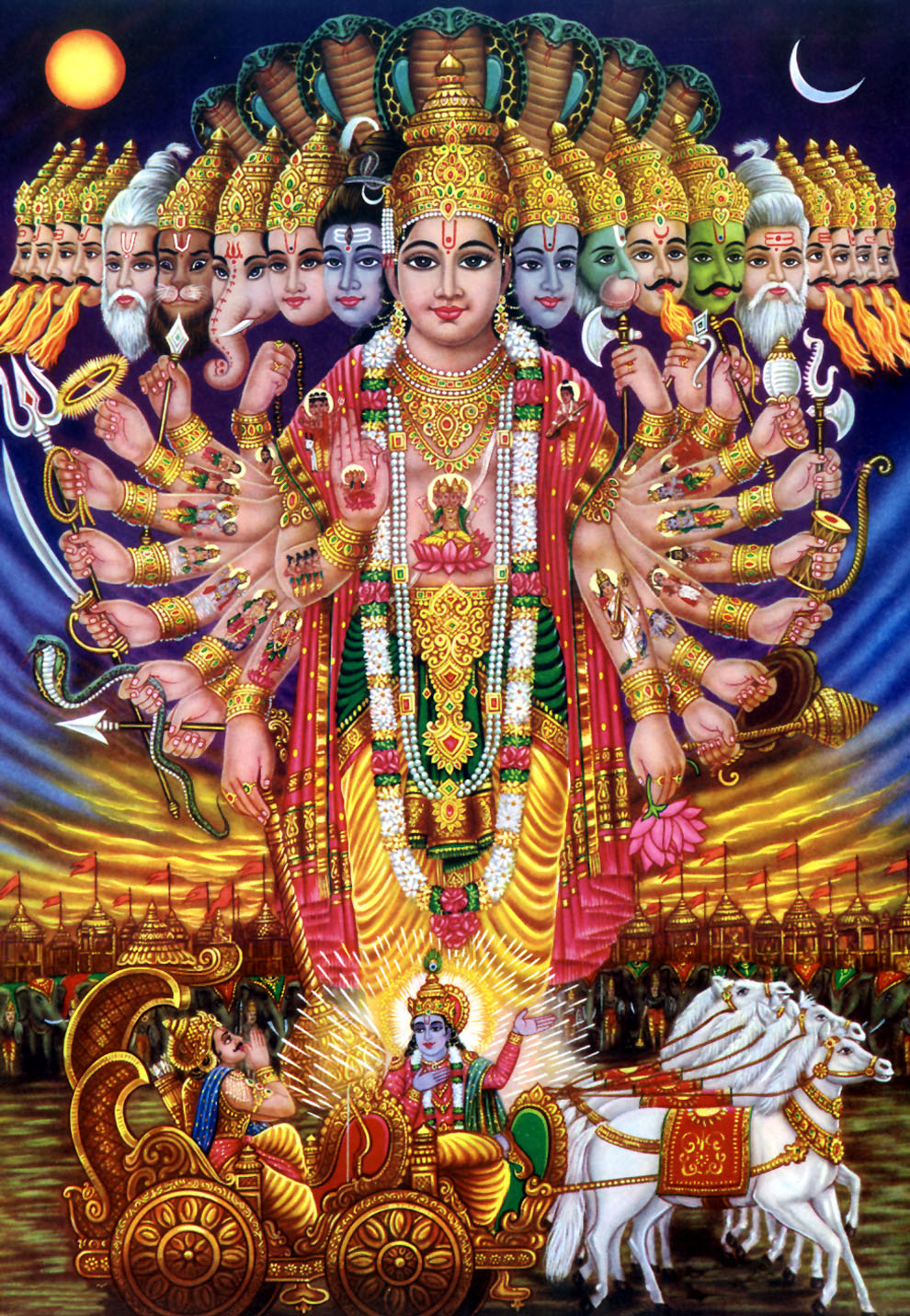
    • Bhagavad Gītā (भगवद् गीता) : The national gospel contained in Mahābhārata, Part of the epic poem Mahabharata, located in theBhishma-Parva[disambiguation needed] chapters 23–40. A core sacred text of Hinduism and philosophy.[4]
    • Bhagavata Purana – one of the “Maha” Puranic texts of Hindu literature, and is Sanskrit for “The Book of God“.
    • Brahmana – one of the parts into which the Vedas are divided.
    • Brahma Sutras – important texts in Advaita Vedanta.
    • Chandas – (छंदः), the study of Vedic meter, is one of the six Vedanga disciplines, or “organs of the vedas.
    • Chandogya Upanishad – is associated with the Samaveda. It figures as number 9 in the Muktika canon of 108 Upanishads. It is part of the Chandogya Brahmana, which has ten chapters.
    • Charaka Samhita: An early Ayurvedic text on internal medicine. It is believed to be the oldest of the three ancient treatises of Ayurveda.
    • “‘Code of Manu”‘ – is the most important and earliest metrical work of the Dharmaśāstra textual tradition of Hinduism

    Time Line of Some scriptures( They may be still older)

    • Rigveda, 1500 – 1100 BCE
    • Samaveda, 1500 – 500 BCE
    • Yajurveda, 1500 – 500 BCE
    • Atharvaveda, 1500 – 500 BCE
    • Upanishads, 1200 – 500 BCE
    • Bhagavad Gita, 500 BCE – 200 BCE
    • Ramayana, 400 BCE – 400 CE
    • Mahabharata, 400 BCE – 400 CE
    • Samkhya Sutra
    • Mimamsa Sutra, 300-200 BCE
    • Arthashastra, 400 BCE – 200 CE
    • Nyaya Sutra, 2nd century BCE[13]
    • Vaiseshika Sutra, 2nd century BCE
    • Yoga Sutras of Patanjali, 100 BCE – 50o
    • Brahma Sutra
    • Puranas, 3rd – 16th century CE
    • Shiva Sutras, 8th century CE
    • Abhinavabharati, 950 – 1020 CE
    • Yoga Vasistha, 10th – 14th century CE
    • Devi Mahatmya also known as Durgā Saptashatī – 700 verses from Mārkandeya Purana giving an account of the Glory of Devi, the Goddess, the most important text ofShaktism – sometimes referred to as the “Shakta Bible”
    • Devi Bhagavata – One of the Puranas which is one of the most important writings in Shaktism.
    • Divya Prabandha – Collection of 4000 verses in Tamil; sung by Alvars saints on Vishnu. Considered as Dravida Veda.
    • Gheranda Samhita (धेरंड संहिता): One of the three classic texts of Hatha Yoga (see also: Hatha Yoga Pradipika and the Shiva Samhita) written in the late 17th century CE.
    • Gītā (गीता): See Bhagwad Gita


    • Hatha Yoga Pradipika: is one of the fundamental text of Hatha Yoga including information about asanas, pranayama, chakras, kundalini, bandhas, kriyas, shakti, nadis andmudras. It was written by Swami Swatmarama in the 15th century CE.


    • Itihasas – in Hindu religious context this term refers to the Mahabharata and the Ramayana but may also be used in reference to all kinds of Indian epic poetry


    • Kamba Ramayanam (கம்ப இராமாயணம்): 12th century Tamil version of Ramayana.


    • Mahabharata (महाभारत): One of the two major ancient Sanskrit epics of India, the other being the Ramayana. The Mahabharata is of religious and philosophical importance in India; in particular, the Bhagavad Gita, which is one of its chapters (Bhishmaparva) and a sacred text of Hinduism.
    • Manu Smriti (मनुस्मृति) : The Manusmriti translated “Laws of Manu” is regarded as an important work of Hindu law and ancient Indian society. Manu was the forefather of all humans and author of Manu Smriti

    The Nalayira Divya Prabandham (Tamil: நாலாயிர திவ்ய பிரபந்தம்) is a collection of 4,000 Tamil verses (Naalayira in Tamil means ‘four thousand’) composed before 8th century AD,[1] by the 12 Alvars, and was compiled in its present form by Nathamuni during the 9th – 10th centuries. The work is the beginning of the canonization of the 12 Vaishnava poet saints, and these hymns are still sung extensively even today. The works were lost before they were collected and organized in the form of an anthology by Nathamuni.]

    • Purana (पुराण): Purana meaning “ancient” or “old” is the name of a genre (or a group of related genres) of Indian written literature (as distinct from oral literature). Its general themes are history, tradition and religion. It is usually written in the form of stories related by one person to another.


    • Rāmāyaṇa (रामायण): Part of the Hindu smriti, written by Valmiki. This epic of 24,000 verses in seven kandas (chapters or books) tells of a Raghuvamsa prince, Rama ofAyodhya, whose wife Sita is abducted by the rakshasa Ravana.
    • Rigveda (ऋग्वेद): The Rigveda is a collection of Vedic Sanskrit hymns counted as the holiest of the four religious texts of Hindus, known as the Vedas.
    • Rudrayamala Tantra


    • Sahasranama – a book containing a list of names of deities
    • Sama Veda – one of the four Vedas
    • Shiva Samhita: is one of the three classical treatises on Hatha Yoga (see also: Gheranda Samhita and Hatha Yoga Pradipika) written by an unknown author. The text is addressed by the Hindu god Shiva to his consort Parvati.
    • Shiva Sutras of Vasugupta – a collection of seventy seven aphorisms that form the foundation of Kashmir Shaivism.
    • Smriti – Hindu scriptures other than the Vedas (e.g. the Itihasas, the Puranas)
    • Śruti (श्रुति): A canon of Hindu scriptures. Shruti is believed to have no author; rather a divine recording of the “cosmic sounds of truth”, heard by rishis.
    • Sūtra (सूत्र): Sūtra refers to an aphorism or a collection of such aphorisms in the form of a book or text. ‘Sutras’ form a school of Vedic study, related to and somewhat later than the Upanishads.
    • Sushruta Samhita: An ancient Sanskrit text, attributed to one Sushruta, foundational to Ayurvedic medicine (Indian traditional medicine), with innovative chapters on surgery.
    • Swara yoga: An ancient science of pranic body rhythms. It explores how prana can be controlled through the breath.
    • Tantras (तंत्र): The esoteric Hindu traditions of rituals and yoga. Tantra can be summarised as a family of voluntary rituals modeled on those of the Vedas, together with their attendant texts and lineages.
    • Tevaram – an important Tamil Saivite scripture
    • Tirukkural – an important smriti scripture in South India
    • Tirumantiram – an important Tamil Saivite work of religious poerty.


    • Upanishad (उपनिषद्): Part of the Hindu Śruti scriptures which primarily discuss meditation and philosophy, seen as religious instructions by most schools of Hinduism.


    • Veda (वेद): Collectively refers to a corpus of ancient Indian religious literature that are considered by adherents of Hinduism to be Śruti or revealed knowledge.
    • Vijnana Bhairava Tantra – a teaching where Bhairavi (Parvati) asks Bhairava (Lord Shiva) to reveal the essence of the way one has to tread on the path to the realization of the highest reality – the state of Bhairava.


    • Yajurveda (यजुर्वेदः): One of the four Vedas, focusing on liturgy, rituals and sacrifices.
    • Yoga Sutra (योग सूत्र): One of the six darshanas of Hindu or Vedic schools and, alongside the Bhagavad Gita and Hatha Yoga Pradipika, are a milestone in the history of Yoga.
    • Yoga Vasistha, the discourse of sage Vasistha to prince Rama. It is an important text of Yoga as well as Advaita Vedanta. The book consists of around thirty thousand slokas as well as numerous short stories and anecdotes.
    • Yoga Yajnavalkya (योगयाज्ञवल्क्य): a classical treatise on yoga traditionally attributed to sage Yajnavalkya.

    Sources.

    Wiki-Hindu Texts..

    Sacred Texts Hinduism.

    Enhanced by Zemanta
    The Digitized copies  of The Rigveda Brahmanas: the Aitareya and Kausītaki Brāhmanas of the Rigveda are in American Libraries.
  • Wireless Genetics DNA Quantum Field In Vedas

    The world is composed of Atoms.

    Its configuration makes things as different.

    A Table, A Pot or a Galaxy are essentially the same if one were to take into account their atomic structure.

    Each looks different  because its Atoms are arranged differently.

    Things appear the way they do is because of the wave length of the one who perceives things.

    We are endowed with some qualities to perceive certain things, hear some things……

    For instance, our eyes can see light rays falling in between the Ultraviolet and the Infra-red of the Spectrum because the Wave length of the Ultraviolet

    rays are longer than what we can see and the Infra-red shorter.


    All these vibrate, right from the Massive objects in the galaxies to the sub atomic particles.

    These particles ,when they vibrate create Motion and energy.

    When thee energies/ vibration are in such a frequency that can be perceived by the instruments they are known.

    If we can set our frequencies to this level we can perceive them.


    Now as things vibrate they are also susceptible to being affected by the vibrations of the other objects.


    This means any vibration in the Universe affects every one/ every thing else.

    This forms the Fundamental element of Unified Field Theory of Higher Physics.

    At a still advanced level in Quantum, this field id is a Vacuum, called the Quantum Vacuum Filed (QVF)

    Till this point Quantum has reached a level of agreement with Hindu philosophy.


    Mohan Je Daro Seals
    Vedic Seals Moha Je Daro

    Hindu philosophy goes further and Quantum is yet to understand this.

    Things that vibrate affect the things that are seen and perceived and they alter the seen, perceived object.

    It is to say that your mental thoughts have the power of altering what you see or perceive.

    This too has been accepted and proved by Quantum

    What is to be understood by the Quantum is that these vibrations are applicable to genetics too.

    DNAs vibrate , they affect other DNAs, yours and others as well.


    Read these from ancient Hindu Texts, excerpts are given below.


    Accepted theory about the DNA is that it was first isolated by Swiss physician Friedrich Miescher in 1869. Its double helix structure was first revealed by Watson and Crick in 1953 which is the acceptable structure till date.Dr Trivedi claims that the evidence of the discovery of DNA and the cell division process are visible in the archeological seals and stones of the Mohenjo and Daro settlements. 

    “The DNA was termed as Tvashta and Vivasvat in Vedas. Its pictorial representation is visible on the seals of the Indus Valley civilization,” says Dr Trivedi.According to the scholar, group of tiny seals expresses evolution of the creation from pre-cosmic condition to evolution of man symbolically in chronological order. The pictorial representation on the seals is akin to the detailed structure of DNA and the gene transfer process as depicted in the modern day science, he says. 

    Dr Trivedi earlier wrote to the prime minister office about his claims on DNA. “The PMO forwarded my request to the department of culture, Government of India. But nothing has happened since then,” he rues. Dr Trivedi has presented several papers on evidence of DNA in Vedic interpretations abroad. “I recently presented my paper in Athens and my findings received great appreciation there,” said Dr Trivedi. “


    The first-created: water consists of H2O, it has been expressed by three warm the Earth while holding water reservoir, and from their separation came the letter, and two of these convey the murmuring moisture is H+ & OH־ ions.  It expresses the phenomena of ionization Rig-Veda 10- 27-23.”


     The DNA replication is regulated by the Triple bond of Hydrogen  H ≡ H Rig-Veda 1-163 .


    The building block of the Creation is Atom and the building block of the living-beings is DNA De oxy ribose Nucleic Acid Rig-Veda 4-58. The Creation has evolved from the single unified force- fundamental energy under the laws of thermodynamics Rig-Veda 10-90.

    The first life has generated in water Rig-Veda 1-163-1.

    The living-beings have evolved from the DNA with genetic recombination and the Mendel’s laws of inheritance. The life on the earth is supported by the ozone layer O3.  The conversion of the hydrogen into Helium H3 on the surface of the sun, and the water molecules H2O.

    The triple bond of Hydrogen H Ξ H  has the key for the genetic recombination of the DNA Rig-Veda 1-163- 2,3,4

    Maxmüller        Science of Religion

    Hymns of Rigveda – Griffith, Motilal Benarasidas, New Delhi.


    The creation has evolved from the fundamental energy with energy transformation. The laws of thermodynamics have been expressed by the three faces of the symbolic Man showing origin.

    The horned hood express the synthesis of DNA from the atoms and molecules. They have synthesized the cell and the genomic chromosome. The surrounding animals have been evolved from the single cell with genetic recombination and crossing over.

    The U shape structure is the symbol for the genomic chromosome and the fish like structure is symbol for the cell.”


    Flashback #1

    All these days modern scientists used to think that 90% of the DNA is useless and even termed it junk DNA! Why? Because they only knew the functionality of 2% of the human DNA which was about manufacturing proteins. Since they did not SEE via experiments what other 98% of the DNA did, they had concluded that it is junk (non-coding DNA in scientific terms, as if God has given us a bond saying that DNA would be only about coding proteins :)

    Flashback #2

    Ancient vedic seers had always said that human body is capable of being influenced by sound and light, that the core of creation is represented by the ultimate sound OM and that the positive light emanated from fire rituals called Yagnas would create universal harmony. They had designed specific hymns with specific areas of influence, and had always advocated chanting of these hymns in specific pitches or frequencies, and performing specifically designed yagnas on a regular basis. One would recognize this if one listens to the chanting of the vedic hymns, the highlight of which is laser sharp focus on pronunciation and pitch. The ancients had also strongly advocated that we should always think only about positive thoughts and speak good.

    The Missing Link

    Now if you are wondering about the relations between the above mentioned Flashback #1 and Flashback #2, a Russian experiment has proved that, what was thought to be junk DNA till yesterday is actually the DNA which creates aBiological Internet – which of course is wireless in nature, communicating via light and sound waves! That the genetic code is similar to that of the grammar of human spoken languages. The syntax and semantics of these genes are similar to the way human languages are designed, and also that it responds to precisely focused vibrational patterns of human languages! In other words, it looks like the languages we speak actually evolved from the nature of our DNA itself!

    You call it sound therapy or DNA therapy or whatever it takes, you can converse with your body (ie your genetic material) via vibrations and waves and can heal ailments, fine tune your health, control body functions etc without the need of anyphysical intervention like surgery or medicinal drugs!

    The expirements by Pjotr Garjajev, the Russian Biophysicist, and his colleagues about the vibrational behavior of our DNA has proved that DNA responds toextremely focused light and sound vibrations at particular frequencies and hence can be instructed to perform tasks or exchange information accordingly!
    So things like intuition, self-healing, telepathy, light-auras surrounding spiritual masters, influences of positive thinking, etc are no longer a domain to be studied outside the boundaries of modern science. The truth is that modern science itself had a blind belief about these otherwise scientifically valid facts all these days. As I have always been saying, modern science is NOT AN ABSOLUTE SCIENCE, it is always a work under progress, parts of it which are accepted as facts today might turn out to be wrong tomorrow, things which modern science considers as blind faith today might turn out to be real science tomorrow. So anybody who talks the language of – modern science being 100% accurate ..”
    Citations.


    Enhanced by Zemanta