Tag: Hindu pilgrimage

  • Shiva’s Marriage Fire Still Burns Triyuginarayan Temple

    Some central thoughts in Sanatana Dharma, Hinduism, remain firm.

    One is that there is no difference between Hari and Hara  and they are quite close.

    Marriage Ceremonial Fire,Akahan Dhuni.image.jpg
    Marriage Ceremonial Fire,Akahan Dhuni .Shiva Parvati Marriage. Triyugu Narayan Temple. Image credit.http://imagesofincredibleindia.blogspot.in/2011/03/triyugi-narayan-temple-marriage-place.html Click to Enalrge.

    As an evidence of this Lord Shiva’s Marriage  with Parvati was conducted specially for Lord Vishnu.

    The Marriage Ceremonial fire still burns.

    Scroll down for Video.

    The marriage is between Shiva and Parvati, the Homa kunda is for their marriage.

    Yet the Temple is dedicated to Lord Vishnu!


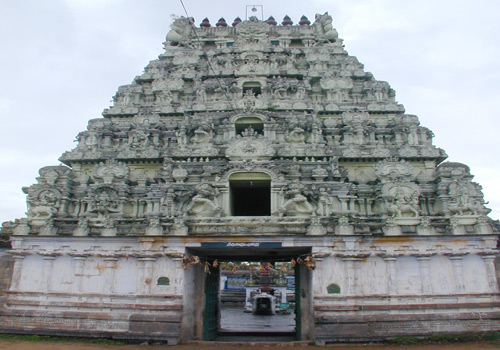
    Triyuginarayan Temple (Sanskrit: त्रियुगी-नारायण) is a Hindu temple located in the Triyuginarayan village in Rudraprayag district,Uttarakhand. The ancient temple is dedicated to god Vishnu. Its fame is credited to the legend of god Shiva’s marriage to goddessParvati witnessed by Vishnu at this venue and is thus a popular pilgrimage centre.[1][2] A special feature of this temple is a perpetual fire, that burns in front of the temple. The flame is believed to burn from the times of the divine marriage.[3] Thus, the temple is also known as Akhand Dhuni temple.

    The temple courtyard is also the source of a water stream, which fills four sacred bathing ponds (kunds) nearby.


    The word “Triyugi Narayan” is formed of three words “tri” means three, “yugi” denotes the period of time – Yuga and “Narayan” is another name of Vishnu. Pilgrims have been offering wood to the fire in the havana-kund (fireplace) since the three Yugas – hence the place is given the name “Triyugi Narayan”.[1] Yuga in Hindu philosophy is the name of an epoch or era within a cycle of four ages. The four Yugas are Satya Yuga (1,728,000 human years), Treta Yuga (1,296,000 years), the Dvapara Yuga (864,000 years) and finally Kali Yuga (432,000 years), which is the present Yuga.

    The name “Akhand Dhuni temple” also originates from the eternal flame legend, “Akhand” means perpetual and “Dhuni” means flame…

    According to Hindu mythology, goddess Parvati was daughter of Himavat or Himavan – the personification of the Himalayas. She was the rebirth of Sati, the first wife of Shiva – who sacrificed her life when her father insulted Shiva. Parvati initially tried to allure Shiva by her beauty, but fails. Finally, she won Shiva by practising rigorous penance at Gauri Kund, which is 5 kilometres (3.1 mi) away from Triyuginarayan. Pilgrims visiting Triyuginaryan temple also visit the Gauri Kund temple, dedicated to Parvati. Mythology states that Shiva proposed to Parvati at Guptakashi (on the road to Kedarnath) before they got married in the small Triyuginarayan village at the confluence of Mandakini and Sone-Ganga rivers.

    Triyuginarayan is believed to be the capital of Himavat. It was the venue of the celestial marriage of Shiva and Parvati, during the Satya Yuga, witnessed in the presence of the holy fire that still burns eternally in front of the temple in a Havana-kund or Agni-kund, a four-cornered fireplace on the ground. Vishnu formalized the wedding and acted as Parvati’s brother in the ceremonies, while the creator-godBrahma acted as the priest of the wedding, that was witnessed by all the sages of the times. The exact location of the wedding is marked by a stone called Brahma Shila, in front of the temple.The greatness of this place is also recorded in a sthala-purana (a scripture specific to a pilgrimage centre). According to the scripture, pilgrims who visit this temple consider the ashes from the burning fire as holy and carry it with them. It is also believed that ashes from this fire are supposed to promote conjugal bliss.

    Before the marriage ceremony, the gods are believed to have taken bath in three kunds or small ponds namely, Rudra-kund, Vishnu-kund and Brahma-kund. The inflow into the three kunds is from the Saraswati-kund, which – according to legend – originated from Vishnu’s navel. Hence, the water of these kunds is considered to cure infertility. The ashes from Havana-kund are supposed to promote conjugal bliss.

    Airport. New Delhi


    http://en.wikipedia.org/wiki/Triyuginarayan_Temple

  • Vettukorumakan ,Son Of Hunter Kiratha Shiva

    After Lord Shiva granted the Pasupatha Astra to Arjuna, Lor Shiva and Parvathy had a son.

    He is worshiped as Vettukorumakan in Kerala and some parts of Tamil Nadu.

    Vettukorumakan, means son of Hunter.

    Vettukkorumakan, Son of Shiva.image.jpg
    Vettukkorumakan, Son of Shiva.

    Shiva in His amsa Rudra is called Kiratha, Hunter.

    Rudra (/ˈrʊdrə/; Sanskrit: रुद्र) is a Rigvedic deity, associated with wind or storm, and the hunt. The name has been translated as “the roarer”. In the Rigveda, Rudra has been praised as the “mightiest of the mighty”.The Shri Rudram hymn from the Yajurveda is dedicated to Rudra, and is important in the Saivism sect.

    ōm–namō–bhagavatë–rudrā-yā | ōm–namastë–rudra-man-yava–uto-ta–isha-vë-namah(a) || namastë–astu-dhan-vanë–bāhu-byām–(m)uta-të-namah(a) ||

    | Om Salutations to the God who is Rudra.

    Salutations to your Ire, Rudra and also salutations to your arrow.

    Salutations to your bow and also to your both arms. yā-tạ-ishu(ḥ)–siva-tamā–sivam-babū–vatë-dhanu(hu), |

    sivā-sarav-yāyā–ta-vata-yā–no–rudra-mrudayā ||

    Bless us with happiness our Lord, With that arrow of thine, which is holy, With that bow of thine, which is begetter of good, With that quiver of thine, which is sweet. Sri Rudra Anuvaka 1

    The episode is detailed in Bharavi’s Kiratharjuniya.

    Description of Kiratha.

    Body black in color, two shoulders holding bows and arrows, hair falling on the forehead, posing comfortably, with two piercing eyes, blossomed nice face, with feathers and fragrant flowers in his head, wearing the skin of tiger, Terrific, I meditate that Hunter (kirAta), the thief (hara).

    Shiva is describes as Black only in this Form.

    Vettukorumakan Legend


    Vettakkorumakan is the son of Siva and Parvati. When Shiva appeared before Arjuna in the form of a hunter in his Kirata Avatar to grant him His personal weapon, Pasupata, Devi Parvati was also with him dressed as a huntress. After giving Arjuna the Pasupata the divine couple wandered in the forest in the same form for some time. During this period they had a son born of extraordinary effulgence and that is Vettakkorumakan or son born during hunting, to put it roughly. The boy was very mischievous. During his hunting he killed many asuras. But making free use of his bow and arrows he also gave endless trouble to the Devas and Rishis. Unable to bear his mischief they first approached Brahma who expressed his helplessness as the boy was the son of Shiva. Then they besought the help of Shiva Himself who however dismissed them by saying that he being a boy would be naturally naughty and he would be all right when he grew up. As a last resort they approached Mahavishnu who took the form of an old hunter and went to the boy. Vishnu displayed before the boy a golden churika,(dagger-cum-sword) which was so beautiful that it attracted the boy who begged him to make a present of it. Vishnu agreed provided he would behave in a responsible manner by giving up his bow and started protecting the people instead of harming them. The boy accepted the condition and with the churika took leave of his parents from Kailasa and went to the land of Parasurama, Kerala. He crossed several mountains and forests and rivers and reached North Kerala where he first entered the Balussery Fort. Hence the importance of the Balussery temple dedicated to Vettakkorumakan though the Lord later visited other places where He was revered and worshipped.”

    Vettakkorumakan Temples in Kerala

    Balussery Vettakkorumakan Temple

    Nilamboor Kovilakom Vettakkorumakan Kavu

    Thiruvananthapuram Kottaykkakam Vettakkorumakan Temple

    Kayamkulam Krishnapuram Vettakkorumakan Temple

    Padinjareppattu Mana Vettakkorumakan Temple

    (Padinjareppattu Mana Vettakkorumakan Temple)

    Eruvattikkavu Vettakkorumakan Temple

    Alappadamba Vettakkorumakan Temple

    Neeleswaram Vettakkorumakan Temple

    Kottakkal Vettakkorumakan Temple

    Kozha Kottakkal Vettakkorumakan Kavu

    Kozha Vettakkorumakan Kavu is located near to Kuravilangadu bus stand in M.C Road.

    Olassa Vettakkorumakan Kavu

    Olassa Vettakkorumakan Kavu is located near Kottayam.

    Temple website.

    http://www.balusserykottavettakkorumakantemple.com/

    Citation for Temple List.

    http://www.vaikhari.org/Vettakkorumakan.html

    http://en.wikipedia.org/wiki/Vettakkorumakan

  • Shiva Temple With a Secret Powerhouse Thiruvayamkudi

    The Chidambaram Temple dedicated to Lord Nataraja, has a an enclosure , which contains nothing to indicate Akasa Roopa of Shiva,

    It is considered a Secret which many have tried tom unravel.

    Thiruvayamkudi Temple.image.jpg
    Thiruvayamkudi Temple,Kerala. Image Credit.http://www.vaikhari.org/Shivakottayam.html

    The Nataraja temple, Chidambaram,Tamil Nadu,India is a representation of the Microcosm and Macrocosm and the temple architecture is designed to resemble Human activities including the number of Breaths taken in a day and the number of Nerve endings in Human Body.

    Detailed post follows.

    There is a Temple near Kottayam in Kerala, India.

    Dedicated to Lord Shiva as Mahadeva, there is a secret room which is believed to be a powerhouse, is kept locked most of the times, while a lamp is lit.

    A serpent is reported to be guarding it.

    The temple houses a Rahasya Ara (secret cabin) where the divine power is located. This is considered a reservoir for the power of the idol. The cabin is well protected with granite stones. A lamp is lighted every day in front of it, before the other main lamps are lighted. A serpent is believed to be sitting in front of this to safeguard the place.

    There is also a water well, with a perennial spring of cool water. This believed to have a connection with the Ganges, originating from the divine head of Lord Shiva. Although the well is in the uppermost part of the village, its water has never gone below a certain level, even when most of the wells in the village have dried up.

    How to reach.

    Ayamkudy is only slightly off from the road linking Kottayam and Ernakulam. Public buses are the best way to access Ayamkudy. There are few dozen buses plying between Kottayam and Vaikom, many of which have stops in Ayamkudy. Alternatively, one can hire a taxi/auto rickshaw from the nearby town of Kaduthuruthy, which is well connected to other cities and towns in the state.

    Kottayam and Ernakulam are the nearest major railroad stations; Cochin International Airport (IATA: COK) is the nearest airport. The major place near Ayamkudy is Jeriyappan Kavala.

    Legend.

    The history of the temple or its origin could be dated back as early as 1000 AD. The main idol is a Shivalingam, supposed to have appeared on its own in the homagni (sacred fire) in a Brahmin’s house at Ayamkudy. This Brahmin, Namboothiri, was an ardent devotee of Vaikathappan, a temple 15 kilometres (9.3 mi) away. According to legend, he was unable to get to the temple for worship due to his old age, so the deity of that temple (Vaikathappan) appeared in his Upasana Homagni. The temple was constructed later and it stands presently as the top center of the village. There seem to have been seven Ooranma families (owners) of the temple; however, only five still have living members. The present Ooranma Families include Pattamana Illam, Ettikkada Mana, Irishi Illam, Marangatta Mana and Neithasseri Mana.

    Festival is Mahasivaratri.

    http://en.wikipedia.org/wiki/Ayamkudy

  • Lingam Discovery By Rama Gupteshwar Mahadev Odisha

    Lord Rama, while He was in Dandkaranya discovered a Swayambhu(self-made) Shiva Linga in a Cave in Odisha.

    This is the Gupeshwar Mahadev Temple, in a Cave.

    The shrine is called “Gupteswar” which means the “Hidden God”. It is so named because it was lying hidden in the cave for a very long period. One can reach it by climbing the 200 steps flanked with rows of champak trees. The entrance of the cave is about 3 m wide and 2 m in height. There are also several other caves nearby. Inside the second cave there is a large stalactite. People worship it as the udder of God Kamadhenu (the divine cow) and wait under it with outstretched palms to collect drops of water which fall only at long intervals.

    However, with the passing of time, the temple was abandoned. Later, in the last part of the 19th century, a hunter of the Ramgiri area found the lingam. Since then the lingam has been worshipped by the tribes of Koraput region. In Shivaratri (a Hindu festival) Gupteswar Temple draws over 200,000 devotees from Odisha, Andhra Pradesh and Chhattisgarh. People suffering from incurable diseases come here to worship the God and remain here for months in the hope of getting cured.

    How to reach

    Gupteshwar is  55 Km fromJeypore, Koraput District in the state of Odisha, India.

    Gupeshwar Mahadev,Odisha.image.jpg
    Gupeshwar Mahadev,Odisha

    There is no direct public transport available to reach Gupteshwar, you have to hair a vehicle from Jeypore or from nearby places. Usually rugged vehicle or MUV are better choice for this hill road. Even though it is tar road but in several places ditches are there and in some places high slops are there.

    Ater travelling 12 KM from Jeypore you will cross Patraput bridge, this is one of the picnic spot of Jeypore residents. After crossing the bridge within 1 KM distance you will reach a Y junction. Straight road will go to Boipariguda ( 9 KM ) and then Gupteshwar, left side road will take you to Lamtaput ( 22 KM ), Machakund ( 45 KM ), Jalaput ( 59 KM ), Vizag (198 KM).

    &nbs