Tag: Gaya

  • Vishnus Foot Prints At Kaaba and United Kingdom

    Vishnus Foot Prints At Kaaba and United Kingdom

    As one wades through ancient Indian History,one finds astounding information that makes one sit up and check what has been passed off as Indian history.

    One finds that,

    Alexander did not defeat Porus,

    Rig Veda is the oldest literary work by Man,

    Rama,Krishna and other persons mentioned in Indian Puranas are not fictitious characters,but Real persons who lived,

    Indian history dates back to thousands of years,

    All Major Religions have borrowed extensively from Hinduism,

    Many of the sacred sites of these Religions were Hindu sites,

    Sanatana Dharma, Hinduism was prevalent throughout the world,in all world cultures…….

    That Kaaba is a Hindu temple,

    Muslims worship Shiva Linga,

    786 is Flipped OM,

    Vedic practices are followed in Kaaba,

    The temple complex in Kaaba is after Vedic construction,

    I have written and also more on these subjects.

    The concepts of Shiva,Vishnu,Subrahmanya,Devi….all are found in world Religions.

    Now more on Kaaba.

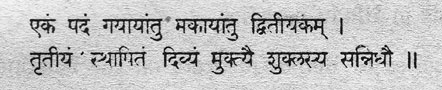
    An ancient Sanskrit couplet from Harihsreswara Mahatmiya mentions the Foot Prints of Lord Vishnu being sanctified in three places.

    They are

    Gaya,India,

    Kaaba,Saudi Arabia and

    Avebury/ United Kingdom

    Lord Vishnu’s holy footprint consecrated at three main centres in the world, namely one in Gaya (in India), the other in Mecca, and the third near Shukla Teertha, i.e. Abiry.

    Feet of Vishnu,Gaya,India.image

    Vishnu’s feet,Gaya,India

    Abiry circle UK.image

    Abiry UK , Vishnu’s Feet sanctified

    The Vishnu Statue in Britain

    In the opening part of the introduction to the volume titled A Complete History of the Druids [1], it is stated, “It will be necessary to give an explanation of the pillars, the Circle and Serpent.”

    On page 9 of the same book it is observed, “This Serpent was the symbol of light and wisdom. Its name Seraph, particularly is so expressive.”

    The term Seraph is a malpronunciation of the Sanskrit term Serp (i.e. Serpent), which indicates that the ancientmost language of the British Isles, as also of other parts of the world, was Sanskrit.

    On page 15 of the same book, it is asserted, “It may rationally be concluded from the various opinions of the best historians that this island received its first inhabitants from the eastern parts of the world.”

    Since people from the East (i.e. India) were the earliest inhabitants of Britain, they naturally erected a statue of Lord Vishnu, the progenitor of the world.

    The name “Isle of Angelsey” in Britain derives from the Sanskrit name of Lord Vishnu as Angulesh, i.e. the Lord of the Angul country. The British Isles were designated Angulsthan, i.e. a finger-size, finger-length country. If the European continent is likened to a palm, then the British Isles appear to be an extended finger. Therefore Sanskrit-speaking explorers named it Angulsthan. It is that same term which later came to be pronounced as Angul and i.e. England.

    The book on Druids mentioned above states on page 36 that “Many temples of the Druids are said to be yet in part remaining in this island (i.e. the Isle of Man) and that of Angelsey … many of them were made of extraordinary large stones as at Abiry and Stonehenge.”

    Page 54 describes:

    “Abiry [now known as Avebury] is founded on the more elevated part of a plain … the entire figure of it (the ruins) is a Seraph or winged serpent transmitted through a circle. … The outer part of the grand circle is a vast and lofty Vallum, with a very deep ditch on the inside of it near 80 ft or 45 cubits broad. Its diameter 750 cubits, its circumference 225 cubits, the enclosed area about 22 acres. Within the ditch was formed a circle of 100 enormous stones set upright, which were generally 15, 16 or 17 ft high, and near as much in breadth. … Out of these 100 stones, 44 were still visible when Dr. Stukeley was there in the year 1722, whereof 17 were standing and 27 thrown down or reclining. Ten of remaining had been demolished by Tom Robinson in the year 1700, the vestigia of the rest were still discernible. With this mighty colonnade of 100 such stones in perfection, there must have been a most agreeable walk between them and the ditch. It is scarcely possible for us to form a notion of the grand and beautiful appearance it must then have made.”

    On pages 56 to 59 is added:)

    “Most of the houses, walls and outhouses of this town are built with the materials of these stones that have been fired and broken. … Let us walk out now by the southern entrance of the town, passing the Vallum. This is Via Sacra … the summit of the Overtone Hills is the hak-pen (a compound oriental word signifying the Serpent’s head), which is 4000 cubits from the Vallum of Abiry. The people have a high notion of it and still call it the Sanctuary… which when in perfection was without question the most glorious temple of the kind which the world has ever heard of. That it was really a temple sacred to the ever-blessed and undivided Trinity, every circumstance, every consideration tends to persuade us… The name itself of Abiry (ABIRY, Potentates), signifying in the language of its founders “The Mighty Ones”.

    The temple was a gigantic and glorious sanctuary of world fame, and the Vedic trinity of the three Mighty Ones, via Brahma the creator, Vishnu the sustainer and Shiva the destroyer were all there in the form of gigantic statues. The Druids supervised the temple. The above description makes it clear that the Isle of Angelsey was famous in the ancient world for its majestic and massive temple depicting the Vedic Trinity in gigantic stone-statuary as the divine governors of the world.

    http://hindureligionn.blogspot.in/search?updated-max=2013-12-10T14:56:00%2B05:30&max-results=20&reverse-paginate=true&start=14&by-date=false

    This information, when coupled with the information from Muslim sources that there were 360 idols in the temple, indicates that Lord Vishnu was surrounded by an entourage of other deities, of which Lord Shiva was one. But the Muslims being iconoclasts, they destroyed the idols of other deities, while Shiva’s emblem, a round, cylindrical, dark, black-red stone, they retained as a central, featureless object of reverence...

    Kaaba Ground floor plan.image

    Kaaba,Ground floor plan

    ..

    the ground-plan of the hoary Kaba (Vishnu) temple constructed on the esoteric, Tantric, octagonal Vedic pattern in Mecca, Saudi Arabia.

    The eight corners occupied the images of the sentinel Vedic deities Indra, Varun, Yama, Agni, Vayu, Juber, Ishan and Nirut.

    The central square represents the present truncated Kaba, the central sanctum housing the image of the Reclining Vishnu “in labour”. Therefore this shrine is remembered even in convert, Islamic tradition as the Navel of the World.

    Its other name “Haram” is the Sanskrit term “Hariyam”, i.e. the shrine of Lord Vishnu alias Hari.

    Note the rectangular dent near the upper left corner of the central square. That marks the spot where the cylindrical Shivling stone is vertically partially embedded on the exterior of the southeast corner of the Kaba wall. Therefore perambulation of the Shivling involves circling the entire Kaba building. Even after conversion, Muslims feel compelled to observe the seven-fold ancient Vedic perambulation. The Kaba sanctum itself is always kept secretively shut to hide its Vedic interior.

    The seven-stories-high Kaba building is covered perpetually by a ghilaf, i.e. a black burqa, hiding its Vedic saffron-colour stone surface, lotus designs and what are believed to be Sanskrit inscriptions on the inner side of the sanctum walls. International pressure on the Saudi government should continue to be exerted by all countries until the Kaba is thrown open to all people as in pre-Muslim times.

    Reference and citation.

    Vishnu in Kaaba

    http://hansadutta.com/VEDIC/Vishnu-statues.html

  • Gaya In Greece Palasha Dweepa Greeks Ancestor Pelasgus From India

    There is a sloka for the Palnet Ketu in Hinduism,

    ‘Palasa Pushpa Sanakaasam Thaarakarka Mastakam,

    Roudram Roudraatmakam Goram Tham ketum Pranamaamyakam’

    This is a Navagraha Mantra dedicated to Ketu.

    The Flower palasa is dedicated to him.

    ‘Butea Frondosa’ is the botanical name for what is known in Sanskrit as ‘Palasha’ (पलाश) tree, commonly called ‘the Flame of the Forest’ in English.

    Palasha Flower.jpg
    Palasha’ (पलाश) The Sanskrit name for ‘Butea Frondosa’ The Greek name ‘Pelasagus’ originates from Sanskrit ‘Palasha.

    The Puranas while describing the Earth, state that there is an Island Palasa dweepa.

    Petra Jordan Temple.jpg
    Petra Jordan Shiva Temple? The Petra Temple in Jordan has also been identified as Rekem-Gaya which means ‘Red-Gaya
    https://ramanisblog.in/2014/02/16/petra-jordan-ancient-shiva-temple/

    In Greek history, Pelasgus was the ancestor of the Pelasgians, a population that were the ancestors of the Greeks – that is they preceded the Greeks and were the source of all knowledge that one sees later in the so-called Greek civilization.

    There is no translation for the name ‘Pelasgus’ in Greek , because Pelasgians spoke a language that pre-dated Greek.

    “”Godlike Pelasgus, on the mountain chase,
    The sable (black) earth gave forth her mortal race.

    The couplet is originally in Greek, and Asius uses the Greek word ‘gaia’ in the couplet which later interpreters translated as ‘earth’. But Edward Pococke in his book ‘India in Greece’ written in 1851 AD clarifies. He says that it was the word ‘Gaya’ that was tweaked by interpreters into ‘gaia’ in Asius’s work – it was Gaya (in Bihar in India) that ‘gave forth Pelasgus its race’.-Asius,Greek Poet ,700 BC.

    The word ‘Gaya’ that was tweaked by interpreters into ‘gaia’ in Asius’s work – it was Gaya (in Bihar in India) that ‘gave forth Pelasgus its race’

    “It is entertaining to view the process by which the Greeks first misunderstood a Pelasgic term, then fitted out a tale upon on their own translation of what they imagined to be Greek….”

    “The history and origin of ancient Greece were not clearly written down by the Greeks themselves, but ancient Indian writings such as the Puranas, the Mahabharata, and the Rajput genealogies may hold keys to solving some of these questions.”-Coen Vonk.

    The ancient Sanskrit texts Mahabharata, YoginiTantra, and the Vayu Purana mention the city of ‘Gaya’ in Bihar, then called ‘Pelasa’. According to the Vayu Purana the city of Gaya was named after an asura by the name ‘Gayasura’ – who practiced asceticism by praying to God Vishnu. He chanted and sang praises in the name of Vishnu, hence ‘geya’ (गेय) or ‘song’ – from Sanskrit ‘gai’ (गै), to ‘sing’, ‘chant’, or ‘sing praises’.

    ‘a race that in its slow migration towards the West took along with itself the glories of ancient Gaya, they have left their footprints on way. For en-route in their journey is the temple of Rekim-Gaya! The original Aramaic texts (Aramaic was the language that Jesus Christ spoke) say that the name of Petra, the ancient temple of Jordan, was Rekem-Gaya. ‘Rechin’ Gaya translates as Red-Gaya from Sanskrit – ‘rechin’ (रेचिन्) means ‘red’ as against the ‘black’ Gaia that Asius, the Greek poet wrote about in his verses on Pelasgus.

    Pococke traces the exodus of a huge number of people from Bihar (then called by various names including Pelasa and Magadh) towards the Western reaches of the world. In fact, he traces the name Macedonia to Magadha via Makadonia.

    The Greek language is a derivation from Sanskrit, therefore Sanskrit speaking people, i.e Indians must have dwelt in Greece, and the dwelling must have preceded the settlement of those tribes which helped to produce the corruption of the old language; or in other words, the people who spoke that language – i.e., the Indians, must have been the primitive settlers, or at least, they must have colonized the country so early, and dwelt their so long, as to have effaced all dialectic traces of any other inhabitants…

    References.

    Mysteries of Ancient Greece, Coen Vonk.

    India In Greece by Edward Pococke (1851)


    Citation.

    Vedic Cafe.

    Petra Jordan Ancient Shiva Temple?

    1. Varaha Avatar Validated By Continental Shift Triassic Animals
  • Gaya, Devi’s Breast Shakti Peeta.

    Devi‘s Breast fell in Gaya, Bihar,India

    “sarvamangaLa mAngalyA gayA mAngalya gaurikA /
    arthadA mOkSHadA dEvi akSHayya phaladAyinI //-Anon.

    Hari kshetre Kama rupi, Prayage Madhaveshwari /
    Jwalayam Vishnavi devi, Gaya Mangalya gourika // Ashtdasa Stotr, Adi Shankaracharya.

    This slideshow requires JavaScript.

    How to reach.
    Nearest Bus stand.                      Gaya, 3 to 5 km
    Nearest Railway station.           Gaya . 4 to 5 km
    Nearest Airport is Bodhgaya Airport which is in 8 to 10 km distance.
    Mangala Gauri temple is very nearer to Vishnupada temple .

    Autos,Ttaxis available.

    Mangalagauri is worshiped as the Goddess of Benevolence.

    This temple constitutes an Upa-Shakti Pitha – where it is believed that a part of the body of Shakti fell – according to mythology.

    Here Shakti is worshiped in the form of a breast symbol, a symbol of nourishment.The temple is facing east, and is built on top of the Mangalagauri hill.

    A flight of steps and a motorable road lead to the temple.

    The sanctum houses the symbol of the Goddess and it also has some finely carved ancient relief sculptures.

    A small hall or mandap stands in front of the temple.

    Legend.

    “The city derived its name from the demon, Gayasur who is said to have resided in this area.

    It is said that Lord Vishnu killed the demon by crushing him under his feet. On his being crushed, the demon got transformed into numerous rocky hills that form the topography of the city today.

    Then the deities decided to sit over the dead demon and that is the reason why one can find numerous temples over these surrounding rocky hills.

    It is said that any one who touched him or looked at him were fred of all sins.

    Mangla Gauri, Rama Shila, Brahmayoni and Shringa Sthan are the places where one can find temples on the hill tops and which comprise of the pilgrimage circuit of the city.

    The Mangla Gauri shrine in Gaya, one of the most holy sites has two rounded stones which symbolizes the breasts of the Goddess Sati, who is regarded as the first wife of Lord Shiva.

    Vishnu pad Temple is marked by a footprint of Vishnu.

    This footprint is the significance of the act of Lord Vishnu crushing Gayasur under his foot.

    The temple that stands today was rebuilt by Devi Ahilya Bai Holkar in the 18th century.

    As per the Buddhist tradition and culture, this footstep mark is regarded that of Lord Buddha who is said to be the avatar of Vishnu.

    Citation:

    Shakti Peeta.


    Gaya Srardham

    Enhanced by Zemanta
  • Gaya Srardham Pindas Tharpana Sastrigal Details

    Vishnu Pada at Gaya, India
    Vishnu Pada,Gaya.

    Performance of Srardham or obeisance to ancestors and visit to Kasi/Varanasi is a most sacred duty of the Hindus.

    Performing the prescribed Rites for the departed as laid by ht e Sastras is an important aspect of Hinduism.

    Locating the Sastris or Vadhyar in both the places is an arduous task.

    Not that the Sastrigals are unavailable.

    There are n number of these.

    But unfortunately greed for money has taken precedence over the Duty of Brahmins.

    Before any one jumps the gun , let me add that I am a Brahmin and knows a bit about the Sastras, especially of Saucha and Asaucha Vidhis.

    And I understand from those who have availed the services were bitter.

    I had been to Gaya ,Allahabad and Varanasi recently.( by the way, why is it Ilahabad is spelled Allahabad while the Hindi script is Ilahabad?)

    I presume that the purpose of those who visit these places have the performance of the Rites in mind rather than personal comforts and Five Star facilities in  mind.

    The information provided here is for the former.

    Gaya and Kasi Srardham expenses are quoted between Rs. 25, 000 to 50,000 .

    The important places to sit in Gaya are ;

    Vishnu Padam , where the Pinda Pradhanam is to be performed.

    The River Phalguni is more or less dried up ( at  this time of the year ,November) and is dirty.

    One can take bath in the place where they stay and have the Prokshana at the River.

    After Prokshana, th rites are conducted.

    Normal Tarpanam is followed by Pinda Pradhanam for Three generations, on the Paternal side and the Maternal side.

    This accounts for 12 Pindas(Six on the paternal side, six on the maternal side)

    Remember the Names of Great Grand Father and Gothras.

    In addition Pindas can be offered to those who have expired in your gothra and your wife’s gothra.

    Pindas can be offered to those whom you know.

    One can also offer Pindas for Self, irrespective of the fact whether they have children or not.

    This is called Atma Pinda and is sanctioned by the Sastra.

    Pindas are also offered to the following.

    Those who died in Accidents( normal Samskaras are not allowed for these people)

    Those who died at a young age(Akaala Mritu)

    Pregnant women , who expired.

    Further a Pinda also offered to those who expired without issues or with out relatives living.(Yesham Na Matha,Na Pitha,,Na Bandhu, naanya Gothrinah:this need not be from the Brahmin community and it is for any one who is no more.

    Bootha Pinda and for animals are also offered.

    Total is not to exceed 32.

    Pinda is made of Wheat Flour which id provided by the Puro.

    You may offer money for Brahmana Bhojanam at your convenience, not less than Rs.201 per Brahmana.

    The charges are Rs 250 in total for the entire Ritual.

    The Dasa Dhanams are offered  for this Budget.

    Excepting Go Dhaana, all the Dhanams are accommodated in this.

    In case you want to spend more, you can do it by purchasing them and perform the additional Dhana.

    However the Mantras and the Dhanas offered by the Purohit are adequate and as per the Sastras.

    The Pindas are left at the Tree in the Vishnu Pada temple (For Brahmins)

    For others the Pindas are to be left in the Phalguni River.

    The Pavithra is to be discarded at the Tree in the Temple.

    I am providing the address at the end of this post.

    You may also offer a voluntary Dakshina to the Purohit, though not compulsory.

    After the ceremonies,, visit one of the Sakthii Peedas in Gaya.

    As the Bodh Gaya is nearby, about 13 kms , one may visit the Bodhi Tree where the Buddha is reported to have been enlightened  and the Buddhist Monasteries and Temples run by Tibet,Sri Lanka ,Japan and  Bangla Desh.

    Important Contact Details.

    Gaya.

    Sastrigal. Narayanan (Nannu), settled in Gaya for Five generations;well read in Sastras, not greedy, accepts what you offer and no short-changing in Mantras or Dhanas) Mobile: +91 88 73 22 22 86.

    Auto driver Subodh for Local trips including Bodh Gaya.-Reliable,non bickering and reasonable.Mobile.+91 80 83 80 3772.

    For Railway Reservations Contact. Sanjay +91 99 34 47 64 60

    For Stay.

    Nattukkotai Nagara Satram,171,Chan Chowra,Gaya-823001.Phone; 0631 2226480. Ask for ‘Natkot’ ,people will guide you.

    Advisable to contact the Manager in 15 Days in advance for Reservations.

    Only those who speak Tamil  are allowed.

    The facilities are basic and adequate, though not as found in lodges .

    However, it is decent and the people are friendly and help you in local arrangement for Sastrigal and conveyance.

    They charge a nominal entrance fee of Rs.60 ; one can use the common facilities.

    For rooms with Bath Rs. 150 is charged.

    South Indian Food is served at a nominal price.

    They also arrange for the preparation and  distribution of Anna Dhaana.

    Good place for the Religiously inclined and, as I said earlier, is for those who want to perform the Rites and not recommended for the luxury prone.